







©2006-2010 Frans Devriese. All Rights Reserved.
  • Overview
  • Private Jet Options
  • Private Yacht Options
  • Suggested Itineraries
  • Our Special Services

Treasures of India's Northwest

Asia's Top Tees | Indochina by Private Jet | Western China by Private Jet | Eastern China by Private Jet
Map
5000 years of history and legend come to life in Rajasthan

Many of India's iconic sights are in Rajasthan, a northwest province in India. By exploring this region by private jet, you will not only save hours of flying and driving, you will also have the opportunity to view Rajasthan’s fantastically diverse terrain. Remote Lands takes you to the majestic Taj Mahal in Agra, the pink-hued city of Jaipur, the ruins in the Thar Desert and many other awe-inspiring destinations.


Day 1

VIP arrival in Delhi with a private car and driver to transfer you to the historic, Art Deco-era Imperial Hotel.


Delhi is the capital of India and the third largest city on the subcontinent. Delhi can be compared to Washington DC, as it is the center of political power in India, and is slightly more traditional than the rapidly changing business and media center of Mumbai.


Have lunch at The Manor, a boutique hotel in Friends Colony, an exclusive enclave of New Delhi. The intimate restaurant and garden terrace are a wonderful escape from the clamor of the city.


Your private car and driver will take you around the city for an overview of New Delhi, with stops at major monuments, parks, gardens and government buildings, all designed by British architect Sir Edwin Lutyens as a grand statement of the imperial power of the British Raj. Ironically, India gained its independence not long after the last phase of this world-famous and much-studied urban development was completed in 1930s.


Drive to the Baha'i Lotus Temple, considered an architectural wonder of the modern world. Inspired by the form of a lotus blossom, the temples was designed with 27 free-standing marble-clad “petals” arranged in groups of three to form nine sides. Nine doors open onto a central hall, which holds up to 2,500 people. The symmetry continues outside with nine ponds, above which the shining white “lotus” can appear to float, completing the illusion. The Lotus temple stands apart from the rest of the city for its profoundly quiet and serene atmosphere.


A visit to Delhi would be incomplete without seeing the stupendous Qutb Minar or victory tower, a brick minaret that towers to a height of 237 feet, making it the tallest such structure on earth.

Visit Connaught Place, also designed by Lutyens in the late 19th century, as a shopping arcade for the elite. The building is well known for its circular structure and houses many shops for fabric, textiles and handicrafts, as well as noted art and antiques galleries.


Tonight’s dinner will be at Veda, currently one of the most fashionable restaurants in New Delhi, which serves modern interpretations of the rich and flavorful cuisine of northern Indian.


Day 2

Begin your day with a lesson on the earlier cultures of Northern India with a visit to the Red Fort, built of local red sandstone by the Mughal Emperor Shah Jahan (builder of the Taj Mahal) as his palace and seat of government.


Visit the nearby Jami Masjid Mosque, which was built by Shah Jahan in 1656 and is one of the oldest and largest mosques in India.


Among the most important sites to visit in Delhi is Humayun’s Tomb, the final resting place of the second Mughal emperor, and one of the earliest and finest examples of the Mughal garden tomb style. Humayun’s Tomb inspired many later architectural masterpieces, including the Taj Mahal in Agra. A brief stop here will give you interesting perspective into the region’s dynastic history.


Have lunch downtown at the Taj Palace hotel’s Masala Art - which puts a light, contemporary spin on classic Indian dishes in a chic, modern setting.


Continue your afternoon at a site dedicated to one of India’s most recent cultural heroes: The Ravi Shankar Foundation and Musical Center in New Delhi, an interesting and unique destination for musicians, composers and music lovers. The center houses a school, theater, art gallery and extensive archives of music. Meet with local musicians over tea or cocktails.


Dinner tonight will be at the Spice Route Restaurant at The Imperial Hotel. Condé Nast Traveler has named Spice Route one of the 10 best restaurants in the world and it serves excellent South and Southeast Asian cuisine.


Day 3

Spend the morning shopping at the Santushti Complex. The shops include Anokhi, which is well known for its hand-blocked cotton fabrics and clothing.


Pause for lunch at Basil and Thyme Restaurant, a local favorite within the complex.


An interesting and often enlightening diversion while in Delhi is a consultation with Ma Prem Usha, the world famous astrologer. An appointment can be scheduled for you to meet with her at your convenience to gain insights into your life and destiny.


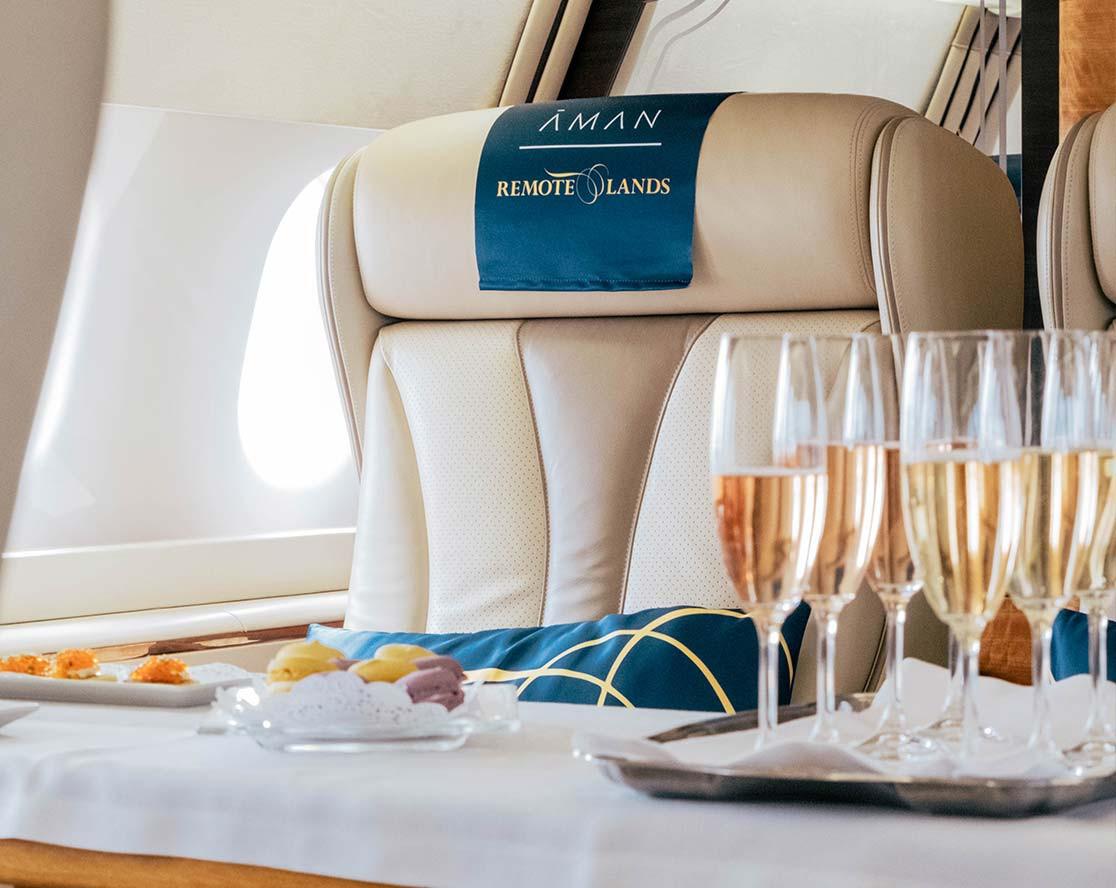
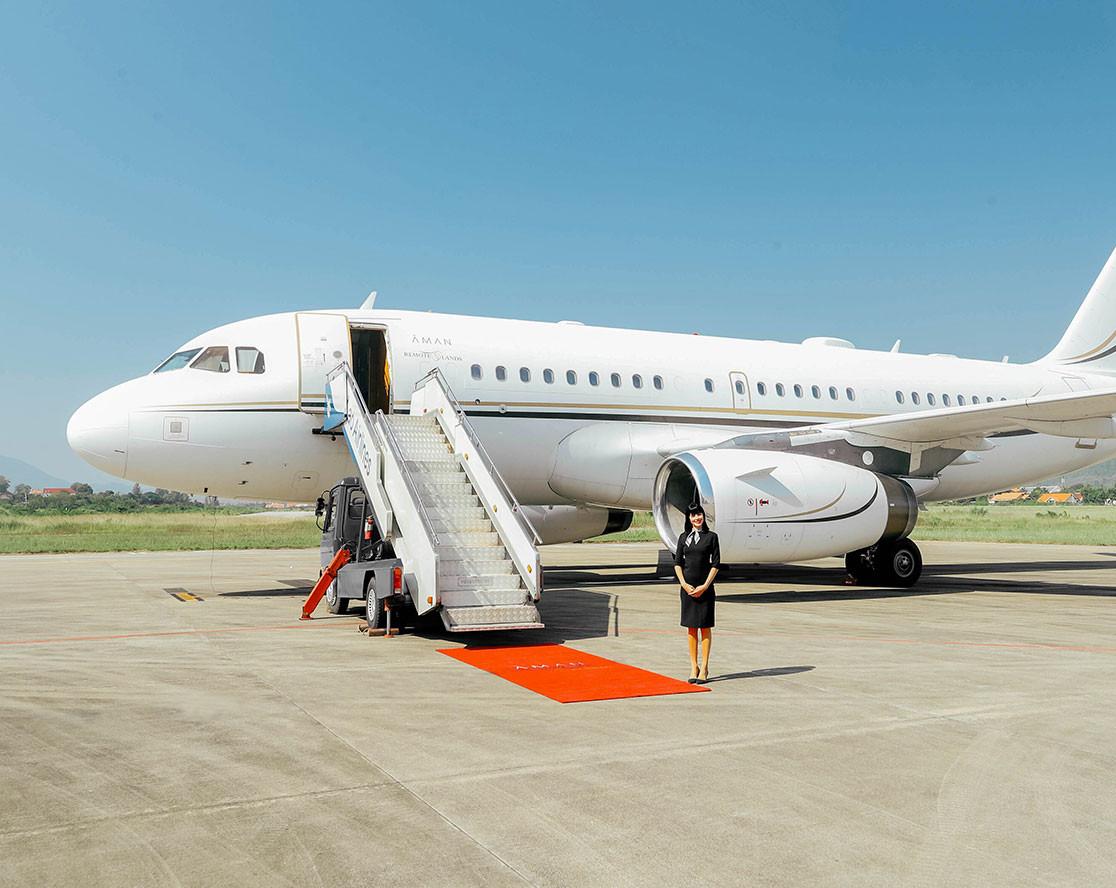
In the afternoon, meet your luxurious private jet, such as a King Air 350, for a quick 40-minute flight to the Mughal city of Agra, home of the magnificent Taj Mahal, one of the great manmade wonders of the world that everyone must visit during their lifetime. Built out of white marble by Mughal ruler Shah Jahan in memory of his favorite wife, Mumtaz Mahal, who died in 1631, the Taj was created by 20,000 artisans who labored for 12 years. A mirror-image replica in black marble was supposed to have been built across the Jamuna River, but this structure was never realized. Believed to have been designed based on one of the houses of paradise, the Taj is most beautiful at sunset and sunrise; you will be the last to leave at sunset and the first to arrive just before sunrise. You will first see the Taj in the late afternoon and early evening when when the white marble appears to glow in the fading light. You will be met an expert in the Taj’s architectural history, who will give you a private tour of the grounds.


Check in to the opulent Oberoi Amarvilas hotel, which has stunning views over the famous monument’s minarets and domes, and have dinner at the hotel’s elegant Esphahan restaurant.


Day 4

Have a quick cup of coffee or tea as you will take a private car back to the Taj Mahal, only five minutes from the hotel, and see the sunrise from there. Bathed in the pink light of morning, the Taj will appear even more magnificent than the previous day.


Return to the hotel for breakfast and a rest.


Visit the colorful markets of Agra, as well as Agra Fort, known as the Red Fort, an imposing citadel built by Emperor Akbar and descendents in the 16th and the 17th centuries. A number of lovely mosques and palaces are inside the Fort, including Jehangiri Mahal, Khas Mahal and Musamman Burj, the infamous place where Shah Jahan was imprisoned and eventually died, and from which he ironically looked out at the Taj Majal, the monument he made for his beloved.


Visit Fatehpur Sikri, the Mughal capital for a brief 14 years, which was also built by Emperor Akbar. Fatehpur Sikri was constructed from 1571-1585 in honor of Salim Chishti, a famous Sufi saint of the Chishti order. In 1568, Salim Chishti famously predicted that the then-childless Emperor Akbar would have a son, which his wife did soon thereafter. In thanks, the Emperor built Fatehpur Sikri and he also walked all the way from Agra to Ajmer, a distance of 226 miles. The architecture blends Hindu and Islamic styles, reflecting Emperor Akbar’s secularism as well as his style of governance. The royal complex of Fatepur Sikri contains the private and public spaces of Emperor Akbar’s court, which included the harem and the treasury. Unfortunately, the site was abandoned due to a purported lack of water, and Fatehpur Sikri’s treasures were plundered. Preservation efforts were spearheaded by the viceroy, Lord Curzon, a legendary conservationist. What remains of Fatehpur Sikri today is largely due to his work.


For dinner, a private Mughal feast will be served to you in a pavilion overlooking the hotel gardens with a view of the Taj Mahal and the Red Fort in the distance.


Day 5

Rise for an early breakfast, and then fly 45 minutes to Jaipur, the capital of Rajasthan, known as “the pink city” because of its hallmark pale-pink stucco architecture. You will arrive at your hotel, the historic Rambagh Palace and check in to a suite decorated in sumptuous style, with marble floors and Rajasthani artwork, and surrounded by gardens, fountains and courtyards.

Visit the City Palace Museum, home to the ruling families of Jaipur since the mid-18th century. Highlights include miniature paintings, royal costumes, musical instruments and Mughal-style carpets.


Adjacent to the City Palace is the very impressive Jantar Mantar, an observatory built in the early eighteenth century by Maharaja Jai Singh II. The complex of fourteen massive astronomical instruments and structures was a wonder of science when originally built; even today the Samrat Yantra, a huge sundial, can be used to tell local time within a margin of two seconds.


Have a late lunch in the Rambagh Palace’s Suvarna Mahal restaurant, where the menu is drawn from the kitchens of the region’s aristocracy.


Visit the Hawa Mahal, or Palace of the Winds, which dates to 1799. Legend states that it was built to allow the ladies of the royal court of Jaipur to view a public parade and spectacle organized by the British. Although the building appears to be five solid stories tall, it is in reality only one or two rooms deep surrounding an interior courtyard. The side of the building facing the street is a highly ornate sandstone screen of several hundred windows that catch the breeze, or hawa, and cool the palace.


Pause for a drink or tea at the Narain Niwas Palace, previously the country retreat of a noble family, and now one of the most atmospheric of the Heritage hotels. The Palace is decorated with original Rajasthani antiques and artifacts, as well as vividly colored frescoes.


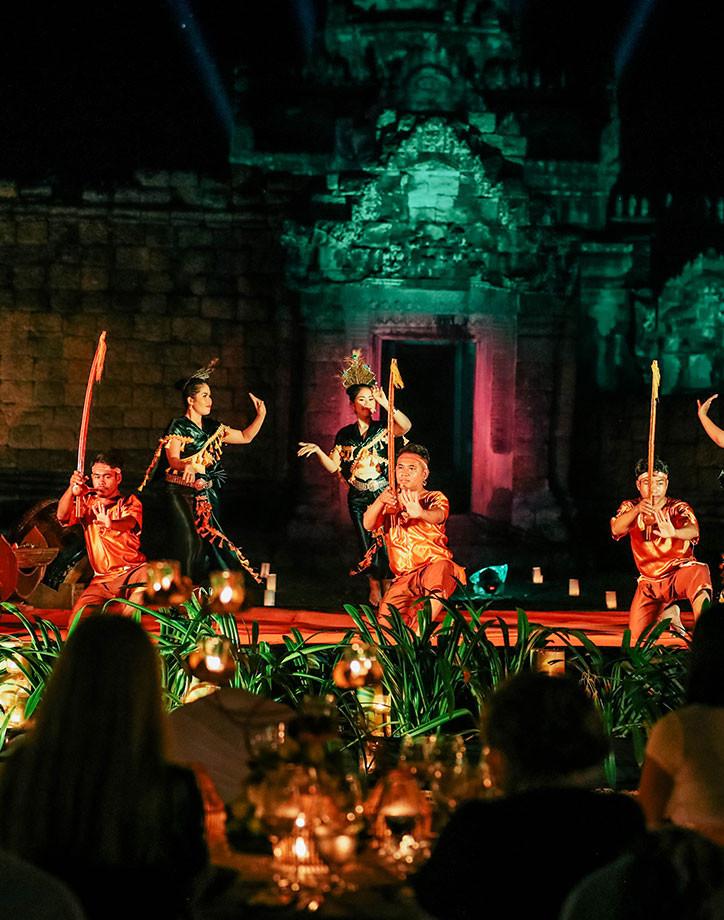
Have dinner at the Oberoi Rajvilas Hotel, located just outside the city limits of Jaipur, about 20 minutes from your hotel. The Rajvilas Hotel’s restaurant is one the best in Jaipur for northern Indian cuisine. Dinner is served outdoors in the beautiful Surya Mahal courtyard, with performances of traditional music and dance set against the atmospheric backdrop of the Rajvilas Fort.


Upon your return to the hotel, cap the evening with drinks at the Polo Lounge, a Jaipur institution, where you can sample fine single malts and Cuban cigars, if you wish, surrounded by memorabilia and paintings of the royal sport, sometimes played on elephants in this part of the world.


Day 6

Every stay in Jaipur must include a visit to Amber Fort, a 30-minute drive by private car from your hotel. Amber is the ancient capital of this region and was an active center until 1727, when the rulers moved their court to Jaipur. Your guide will provide you with in-depth information about Ganesh Pol, the imposing gateway to the former royal apartments; the magical Sheesh Mahal, a chamber decorated with thousands or mirror fragments; the Jas Mandir, a magnificent private audience hall; and the ornately carved silver doors at the entrance to the Shila Devi Temple. Amber overlooks several surrounding valleys and has beautiful terraced gardens in the middle of the adjacent reservoir.


In the valley below Amber is the simple and elegant Jal Mahal, or Monsoon Palace, which seems to float in the middle of Man Sagar Lake during the months following the rainy monsoon. The Palace was used as a location for royal picnics and duck-hunting parties and is inspired by the Lake Palace in Udaipur, which will be your hotel in that city.


Dinner tonight will be at the home of a prominent Jaipur family, where you will be welcomed in traditional Indian style. You will spend time with them in a relaxed and intimate atmosphere while tasting wonderful examples of the local cuisine.


Day 7

Depart in the morning by private car for a trip to Alwar, Rajasthan (1.5 hours). Alwar is a former princely state that reached its height of importance in the 18th century. Alwar is off the beaten path and rarely visited by tourists on the typical Rajasthani itinerary. The Amanbagh is an oasis of luxury and comfort in this remote area.


Several interesting historic and architectural sites are located nearby and can be visited on excursions from the hotel.


Bala Qila is an ancient fort perched high on a hill above the city of Alwar with beautiful views. Originally built in the 10th century as a mud structure, it was expanded and improved over the centuries by the Mughals and Jats. Today, the fort comprises six gates, 15 large and 51 small ornate towers surrounding the frescoed palace of Nikumbh Mahal.


The picturesque Ajabgarh Fort is known as the “place of mysteries” with its marble fronted temple and well-preserved courtyard of twenty-four pillars. The area surrounding the fort was a favored hunting ground of the local nobility in the 10th century.


Also in the area is Bangarh, the remains of the 17th-century Alwari princely city. The site is considered to be of great archaeological importance and contains the spectacular ruins of palaces, temples, bazaars and formal gardens. Legend has it that Bangarh was deserted overnight just a generation after its completion, as a result of a successful curse put on the city by a spurned suitor of the local maharani.


We also suggest that you see the Narayani Temple, the most sacred pilgrimage site for the people of Alwar, and the site of the first sati, or immolation by fire, in northern India. Nearby the temple is a spring, unusual in this arid region, which is considered holy by the locals.


Enjoy outdoor cocktails and a musical performance at the Amanbagh prior to dinner in the hotel’s restaurant. The Amanbagh offers a wonderful regional Indian menu as well as continental choices.


Day 8

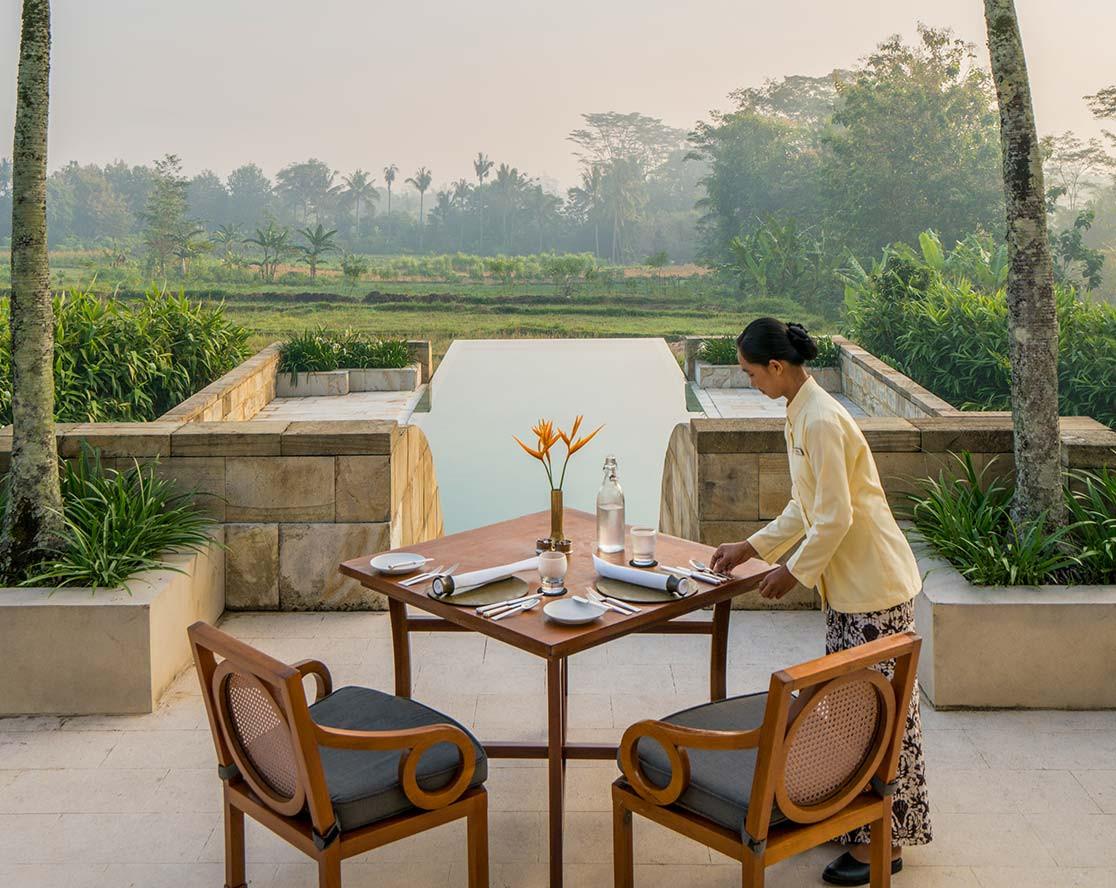
Breakfast on Amanbagh’s outdoor terrace overlooking its spectacular pool and striking Mughal-inspired architecture.


Spend the morning relaxing at Amanbagh by the pool, or with a spa treatment or massage. The spa therapists are also trained in the art of traditional henna body painting.


Have a private kitchen tour and cooking demonstration with the Amanbagh chef before lunch at the hotel.


Go by horse, camel or elephant to Madar Baba Ki Chattri. The 360-degree panorama of the surrounding countryside is spectacular, especially around sunset, and the site is dominated by the tomb of the Alwari Prince, Maharajah Baktawar Singh, who died in 1815. Legend has it that his mistress committed suicide here after the Prince’s death.


In the evening, relax with cocktails on the resort’s open-air roof deck, before having a special meal served to you on your own private terrace.


Day 9

After breakfast at Amanbagh, depart for the drive to Jaipur (1.5 hours). On the way to Jaipur, make a stop for tea and refreshments at a remote tribal village of the Meena minority people who have maintained their own separate and distinct customs as a result of their isolated lifestyle.


Meet your jet for a short flight to Udaipur (45 minutes). Your driver will meet you at the airport and take you into the city in a vintage car. Sitting on the edge of the picturesque Lake Pichola, Udaipur is called the “fairy tale city” for its many ornate marble buildings, and is the capital of the Mewar region of Rajasthan.


You will stay at the spectacular Taj Lake Palace Hotel, which is located on a small private island in the middle of Lake Pichola. A launch will ferry you to the hotel for check-in.


After lunch, visit the City Palace, the largest palace in Rajasthan, which has been continuously enlarged by the rulers of Udaipur since the 16th century. The highlights of the City Palace include the Tripolia entrance gate built in 1713, and the Chandra Mahal, famous for its beautiful columns, fretwork windows and marble reliefs of Rajput women.


Walk from the City Palace to Fateh Prakash, which contains a magnificent durbar, or ceremonial hall, an excellent portrait gallery and the famous gallery of crystal furniture and chandeliers.


The Jagdish Temple is in close proximity to the City Palace and you may choose to walk there through the narrow streets of Udaipur and look into the many shops and galleries along the way. The Jagdish Temple was constructed in the first part of the 17th century and dedicated to Lord Jagannath. Climb a steep stairway to enter the temple and view the pyramid-shaped spire, decorated with carved friezes of women, elephants, musicians and horsemen. The interior is a tour de force of carved stone, and contains shrines dedicated to local deities.


Dine privately this evening on the roof of your hotel with a special menu of your choosing. You may opt to have local musicians entertain you while enjoying one of the best views in Udaipur.


Day 10

Breakfast at the Lake Palace is served at Jharokha, an all-day restaurant in a 17th-century white marble palace with 100 windows overlooking the lake.


Today, your driver will take you to the Jain temple complex at Ranakpur (one hour’s drive), considered by many to be among the most important temple sites in northern India, and one of the five great holy places of the Jain faith. Jainism, founded in the 6th century BC, is a based on a doctrine of non-violence toward all living beings. Jains are strict vegetarians and take great precaution against harming any living organism. Note that no leather (not even a belt!) is allowed on the premises.


The Ranakpur site is dominated by the magnificent Adinath Temple, where an exterior of simplified marble blocks gives way to interior spaces of white marble so intricately carved that they must be examined closely to appreciate their fine detail. This construction is symbolic of the Jain belief in the insignificance of outward display and the importance of a rich inner life.


Lunch will be a picnic prepared by the hotel to enjoy en route.


After Ranakpur, visit the nearby Kumbhalgarh Fort, a massive 15th-century structure with 22 miles of protective wall running along a strategic point on the border of the Marwar and Mewar regions. Kumbhalgarh was known to be the most impregnable fort in all of Rajasthan. Within the fort’s walls you will see the 19th-century Badal Mahal, with its painted chambers as well as the 15th-century Neelkantha Temple, which is still in use today.


Back in Udaipur, take a private boat for a romantic champagne sunset cruise around Lake Pichola, which is surrounded by a ring of hills. Take in the stunning views of architecture of Udaipur, and the surrounding countryside. You will understand why Udaipur is sometimes referred to as the "Venice of Rajasthan".


Finish your boat trip on the other side of the lake, as you stop for dinner at The Oberoi Udaivilas Hotel. Feast on Indian specialties with the lights of Udaipur twinkling in the distance.


Day 11

Meet your jet for a short flight to Jaisalmer (40 minutes – 1 hour, instead of the several hours and connection in Jodhpur required for a commercial flight). Jaisalmer is an ancient fortified city at the edge of Rajasthan, in the depths of the Thar Desert. Known as the “Golden City” for the yellow-gold color of the local sandstone, Jaisalmer is crowned by a fairy-tale, 12th century fortress hovering above the city on a high plateau. The rulers of Jaisalmer, bolstered by their city’s importance as a trading stop on overland caravan routes, were among the last of the princely clans to submit to British colonial rule.


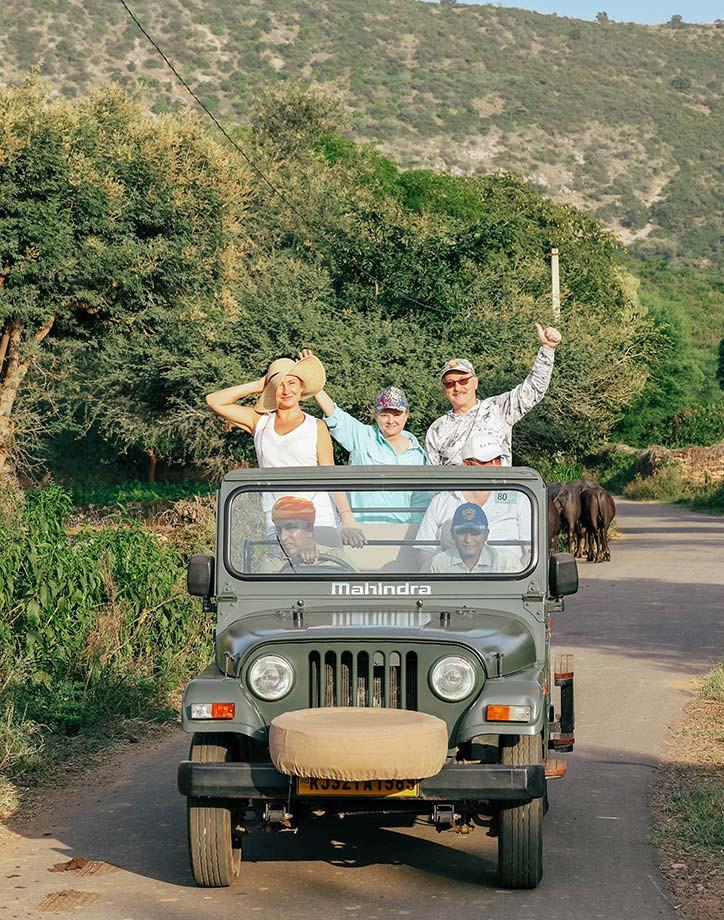
Upon arrival in Jaisalmer, drive by jeep into the desert where you will meet your personal camel caravan and drivers for a trek into the Thar along these ancient trading routes. Ride into the desert stopping at spectacular dune fields, oases, and the remote villages of the camel herders. Visit a family for tea and snacks, and learn about their lives in this arid region.


Camp for the evening in a luxurious tent in the heart of the dunes, and feast on a meal of regional specialties prepared for you under a spectacular display of stars.


Day 12

Return to Jaisalmer by jeep and check in to the small, but tastefully appointed Garh Jaisal Hotel, in an historic haveli inside the fort itself.


Have lunch and a cup of chai tea on the hotel’s lovely roof terrace and take in the splendid views of the surrounding city and landscape.


Step out of the Garh Jaisal and spend the morning wandering the car-free ancient city within the fort, where 25% of Jaisalmer’s population still resides. Homes and small shops selling regional jewelry, textiles and goods made of camel leather are crowded along both sides of its narrow, stone-paved lanes. Satyajit Ray, India’s most celebrated director, was so struck by the evocative fort that he first wrote a book, Sonar Kila (The Golden Fort), using it as a setting, and then turned it into a film.


Visit some of the havelis, homes of the area’s wealthy traders and court officials, such as the Salim Singh Ki haveli, a five-story masterpiece of intricately carved sandstone, topped with a colonnaded terrace and cupolas. The Nathmal Ji Ki haveli was built for a former prime minister of Jaisalmer, and is decorated with a dizzying array of carvings, including birds, elephants, flowers, soldiers and even bicycles and a steam engine.


Make your way to the ramparts of the fort for sunset, when the golden walls glow in the low-angled light.


Have dinner at the Trio restaurant, outside the ramparts, where the simple setting belies the excellence of the cuisine – some say it is one of the best restaurants in Rajasthan. At a table on their rooftop terrace, sample a delicious array of local specialties such as murgh-e-subz, strips of chicken stir-fried with shredded vegetables, or ker sangri, desert beans with capers, and toast the end of your journey with the illuminated walls of the fort for a backdrop.

Day 13

Meet your jet for your return flight to Delhi from Jaisalmer (1 hour 45 minutes - 2 hours, instead of the 3 hours it would take to fly commercially with a layover in Jodphur), and fly home from Delhi.


^Top

Bangladesh - Bhutan - Cambodia - China - Hong Kong - India - Indonesia - Laos - Japan
Malaysia - Maldives Mongolia - Myanmar (Burma) - Nepal - North Korea - Papua New Guinea
Philippines - Singapore - South Korea - Sri Lanka - Thailand - Vietnam

Home | Bespoke Travel | Private Jet Journeys | Giving Back | News | Destinations | About Us | Site Map | Contact

Japan Luxury Vacation | North Korea Tours | North Korea Travel

© 2006-2010 Remote Lands, Inc. All Rights Reserved