


“I wouldn’t go there. That place is haunted. Everything is black and filled with bones and ugly things. I’ve never been, and I don’t know anyone who has.”
That’s what a shop owner in Chiang Rai told me more than twenty years ago when I asked about the Black Temple. At the time, there were no signs and almost no information about the place.
“Go to the White Temple,” everyone said. “Very beautiful.”
But if it weren’t for the Black Temple, there may never have been a White Temple.
Today, both sit high on the list of attractions in Chiang Rai, Chiang Mai‘s smaller and less touristed northern sister city.
In many ways, the two are alike. Both are the singular creations of well-known artists. Both offer alternative interpretations of Buddhism. Both remain active centers for art and dharma. Both have faced criticism.
But they are yin and yang.
I recently returned to the Black Temple to see what had changed and experience it again.
It is no longer difficult to find. There are signs now, a café, parking lots, a small entrance fee, and optional guided tours. Visitors are still free to wander and explore on their own, which a few of us were doing.
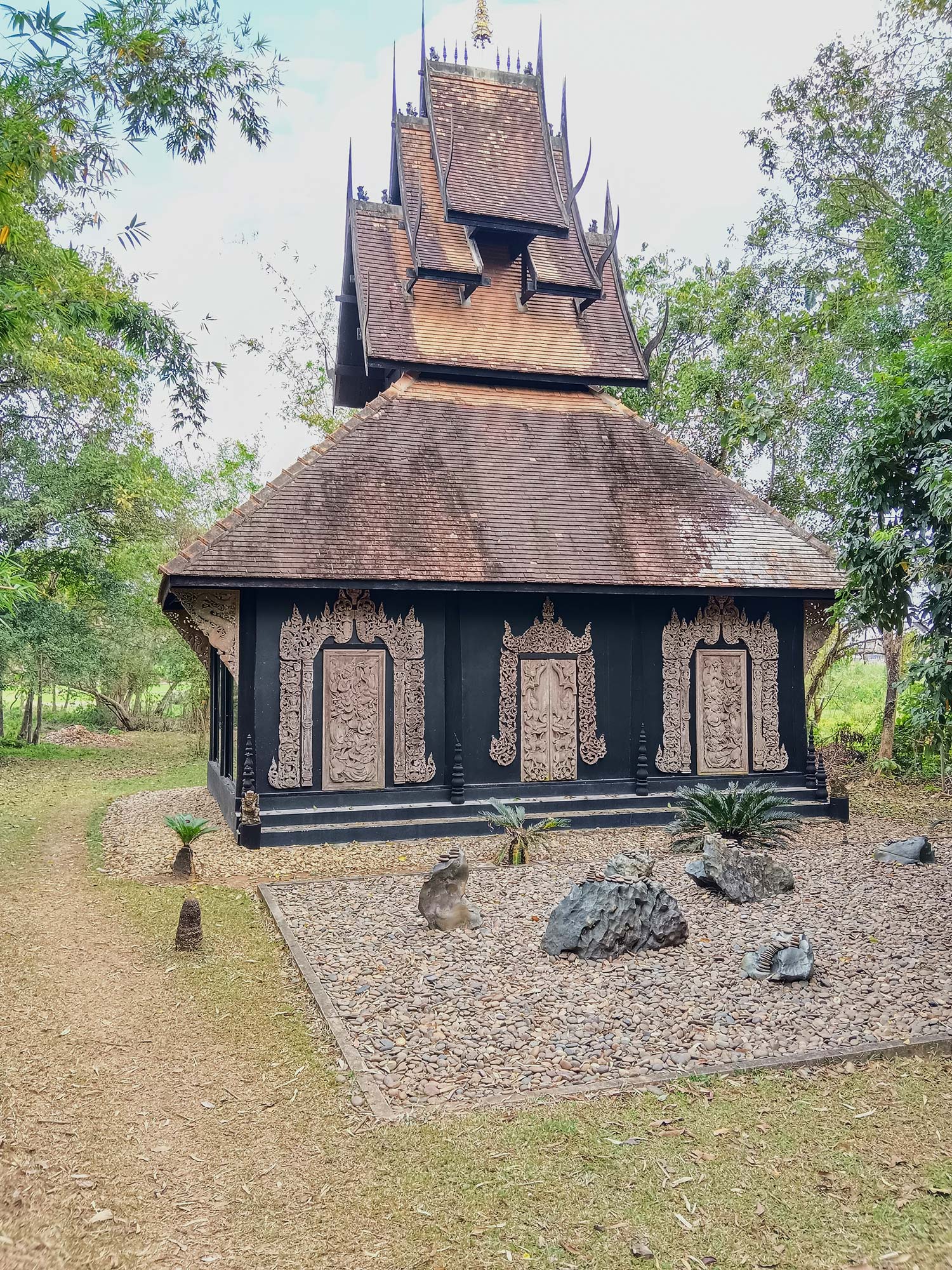
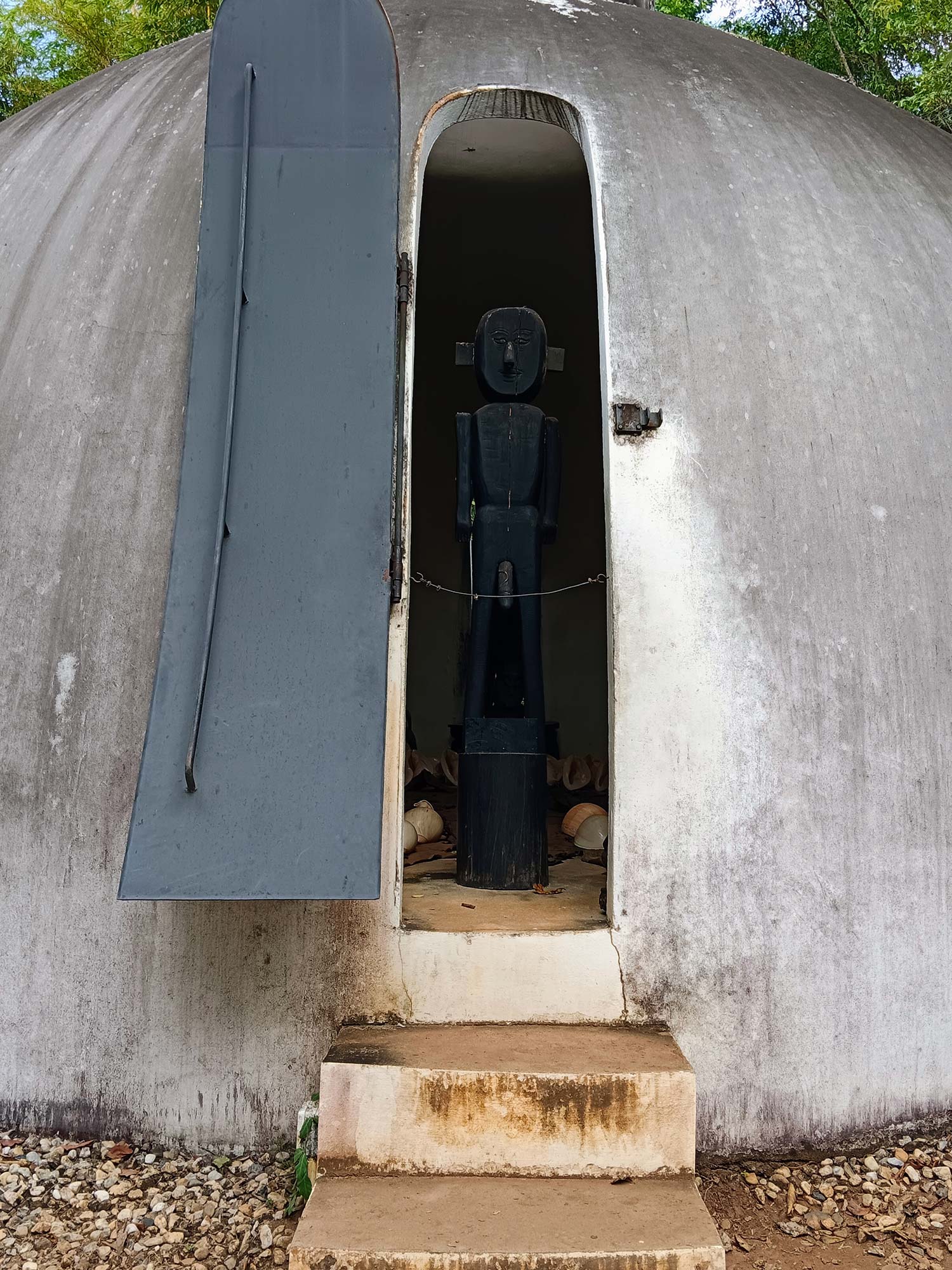
The complex contains around 40 buildings spread across 160,000 square meters beneath old-growth trees and beside a small lake. It doesn’t feel quite like a temple complex or a museum. It feels more like a cult village abandoned by its followers, with only the symbols and artifacts of belief left behind.
Thawan Duchanee, the artist who created it, was born into a poor family in the mountains outside Chiang Rai when the city was still little more than a provincial town. He grew up surrounded by forests and a blend of Buddhist teachings and animist beliefs. He learned to hunt and fish from his father and to respect the forest as both provider and punisher.
He also possessed a natural talent for drawing, one that eventually took him from his village to Chiang Mai and then Bangkok, where he studied under Silpa Bhirasri at Silpakorn University. Born Corrado Feroci in Italy, Bhirasri founded Thailand’s first modern art school.
Bhirasri was demanding. He once told Duchanee that his paintings had no life: “His fish didn’t smell, his birds didn’t fly, his dogs had no bark.”
But he also challenged him.
“Mr. Mountain Man, you are a hard-working, stupid man. The harder you work, the more you fail. Think before you do things.”
According to one biographer, Bhirasri urged him not simply to work harder, but to work more intelligently.
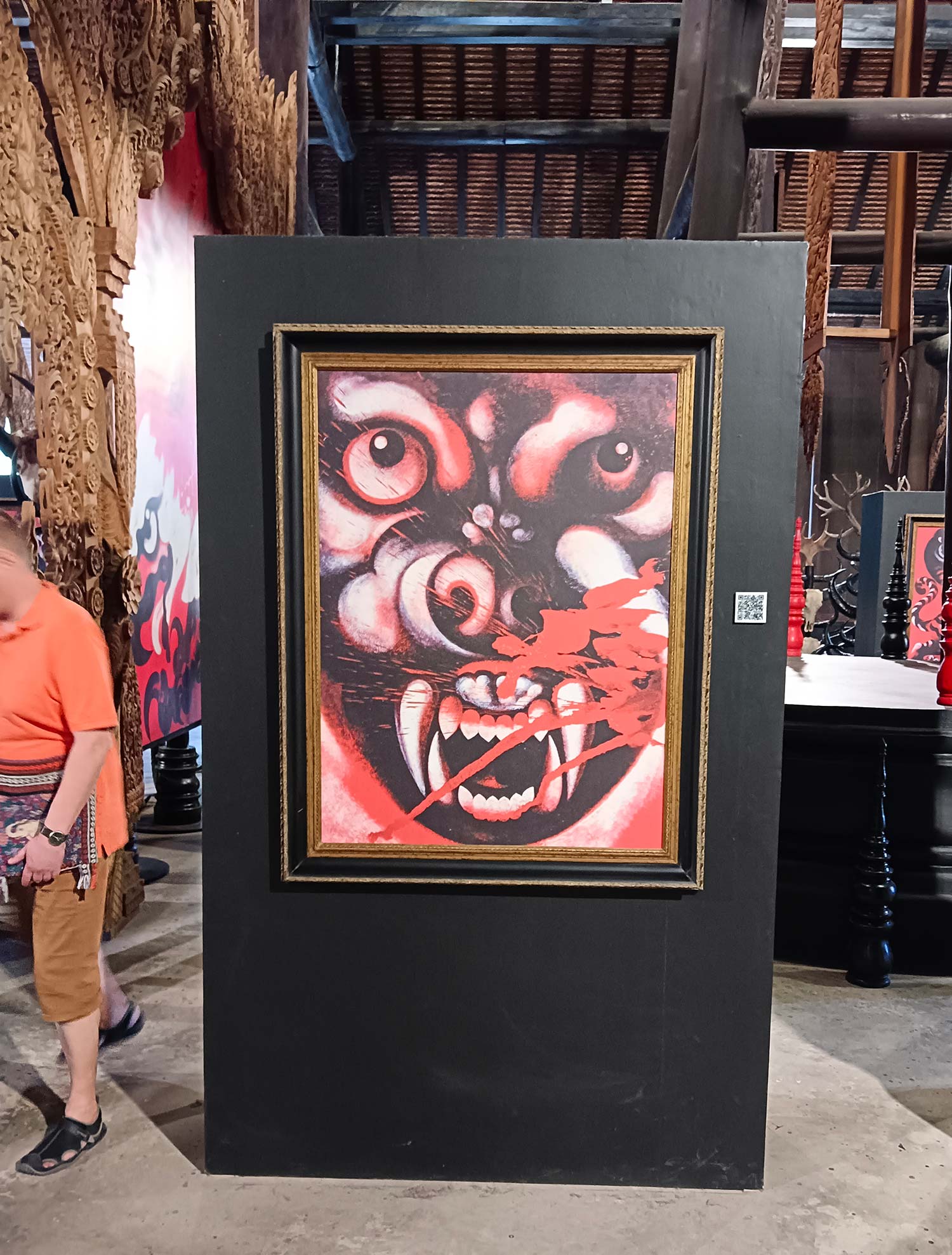
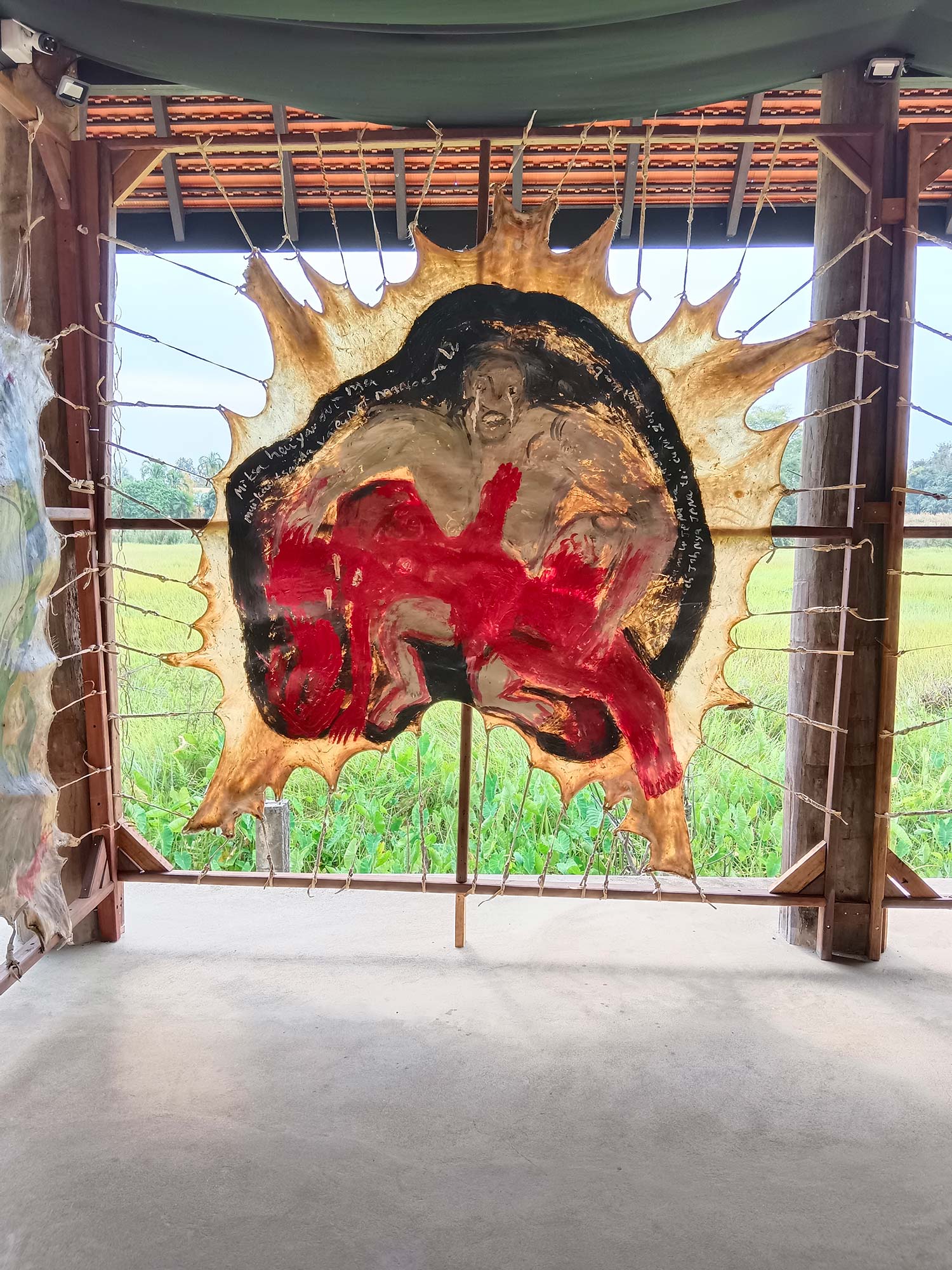
Duchanee continued painting and later studied in Holland, where he absorbed European modernist influences. There, he developed the style that became synonymous with his work: predominantly red, black, and white paintings filled with movement and tension. Wild bulls, galloping horses, and spiny fish executed with a kind of punk-rock energy that seemed to spill from the canvases.
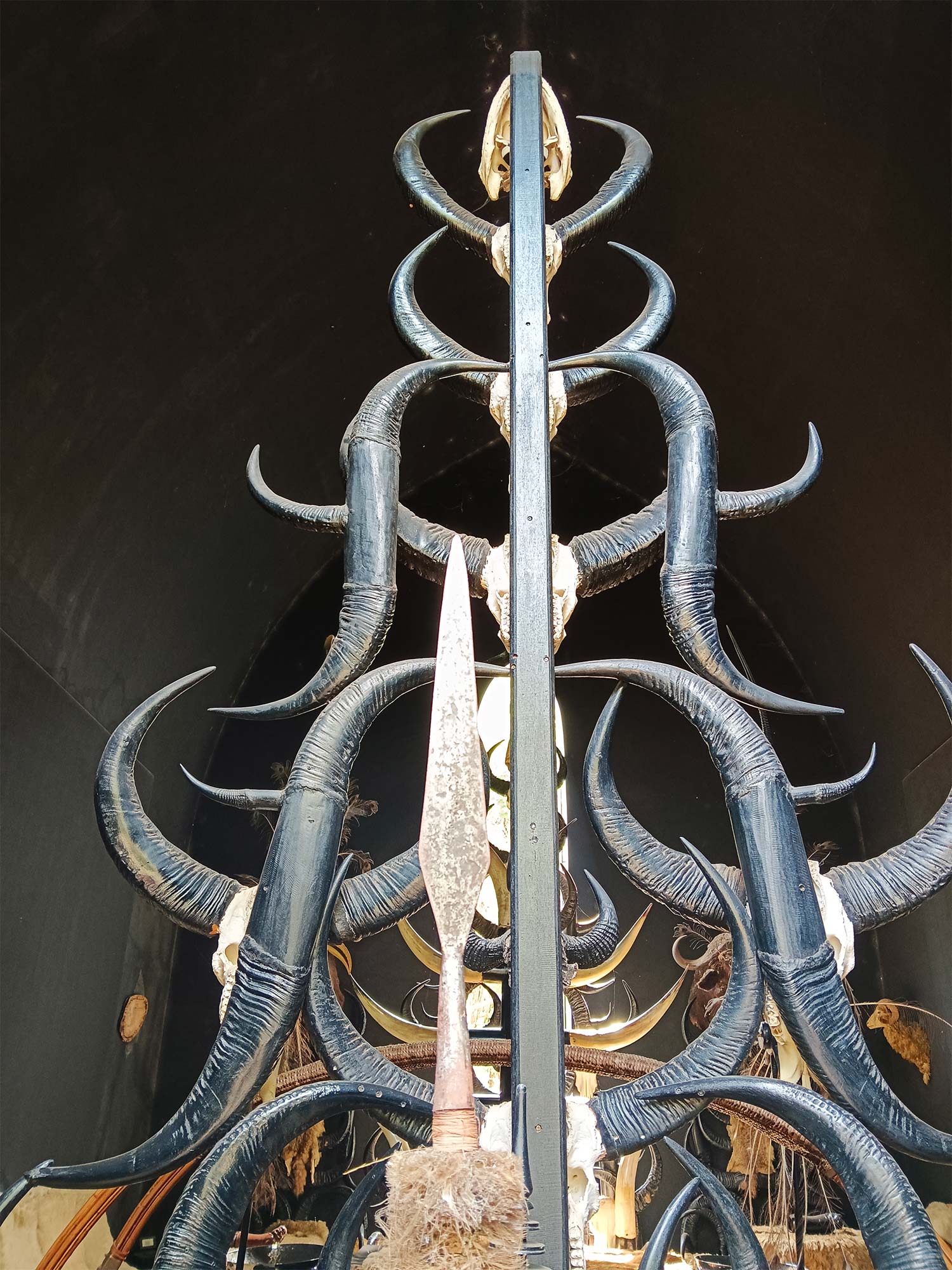
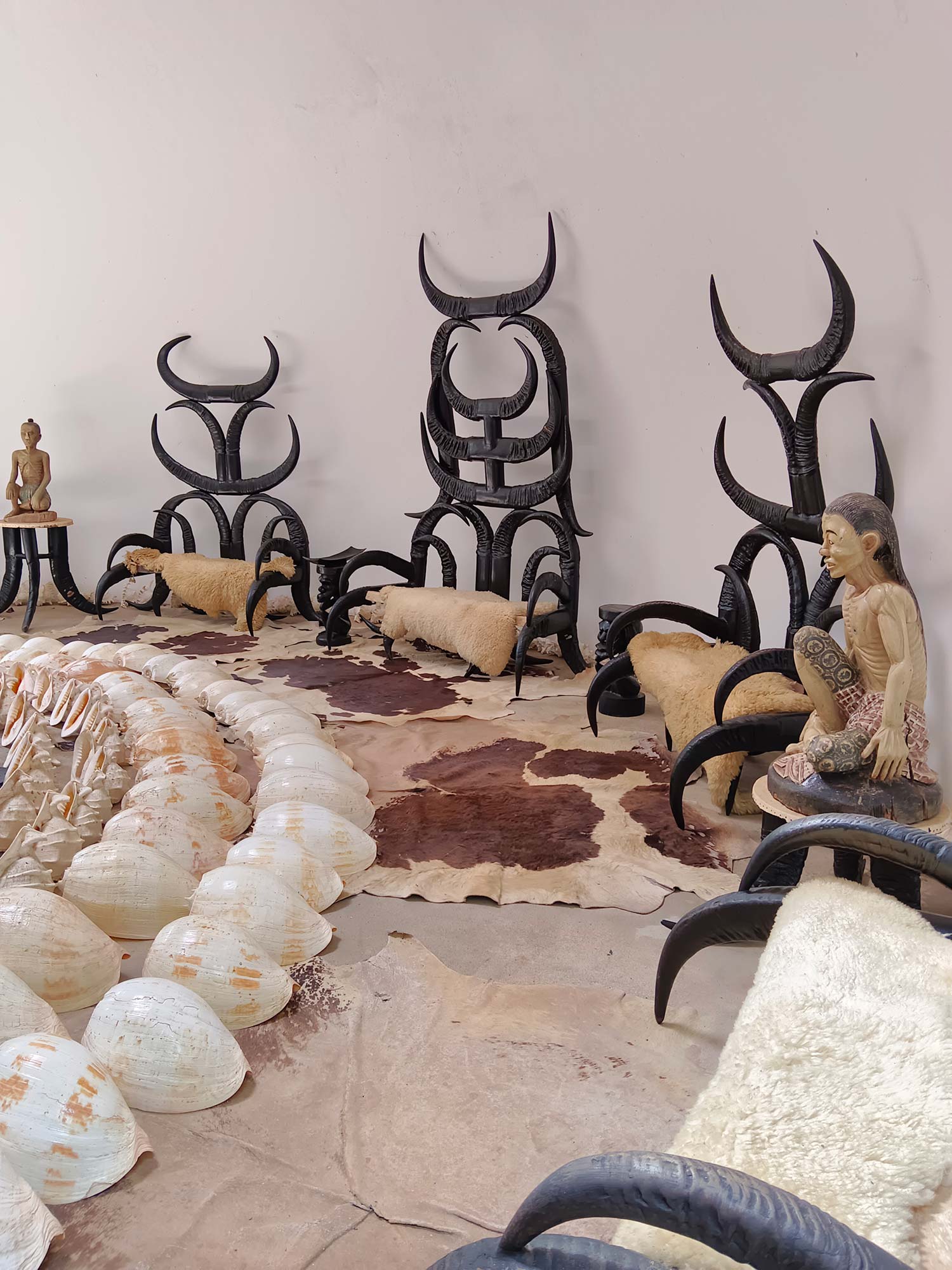
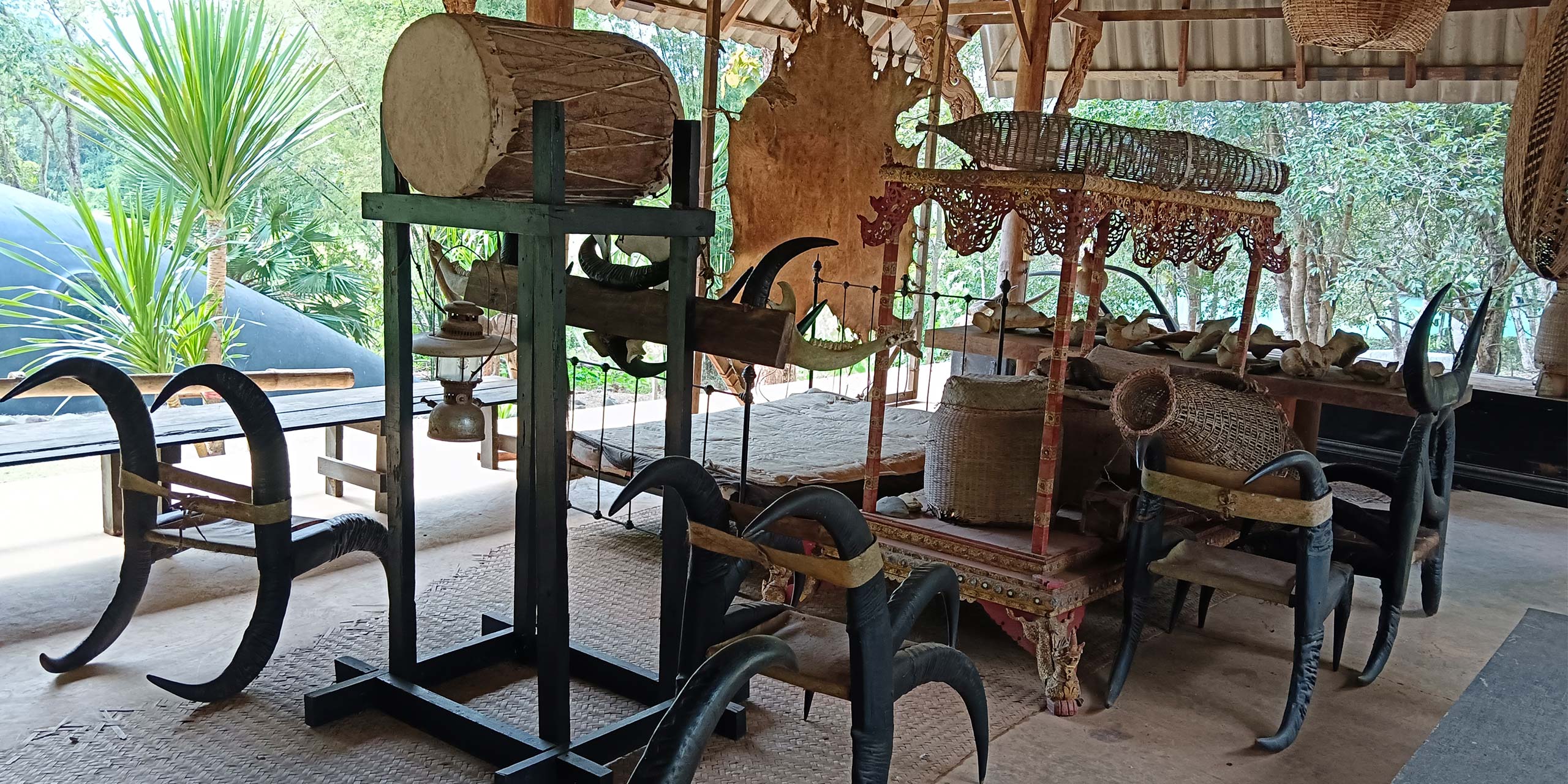
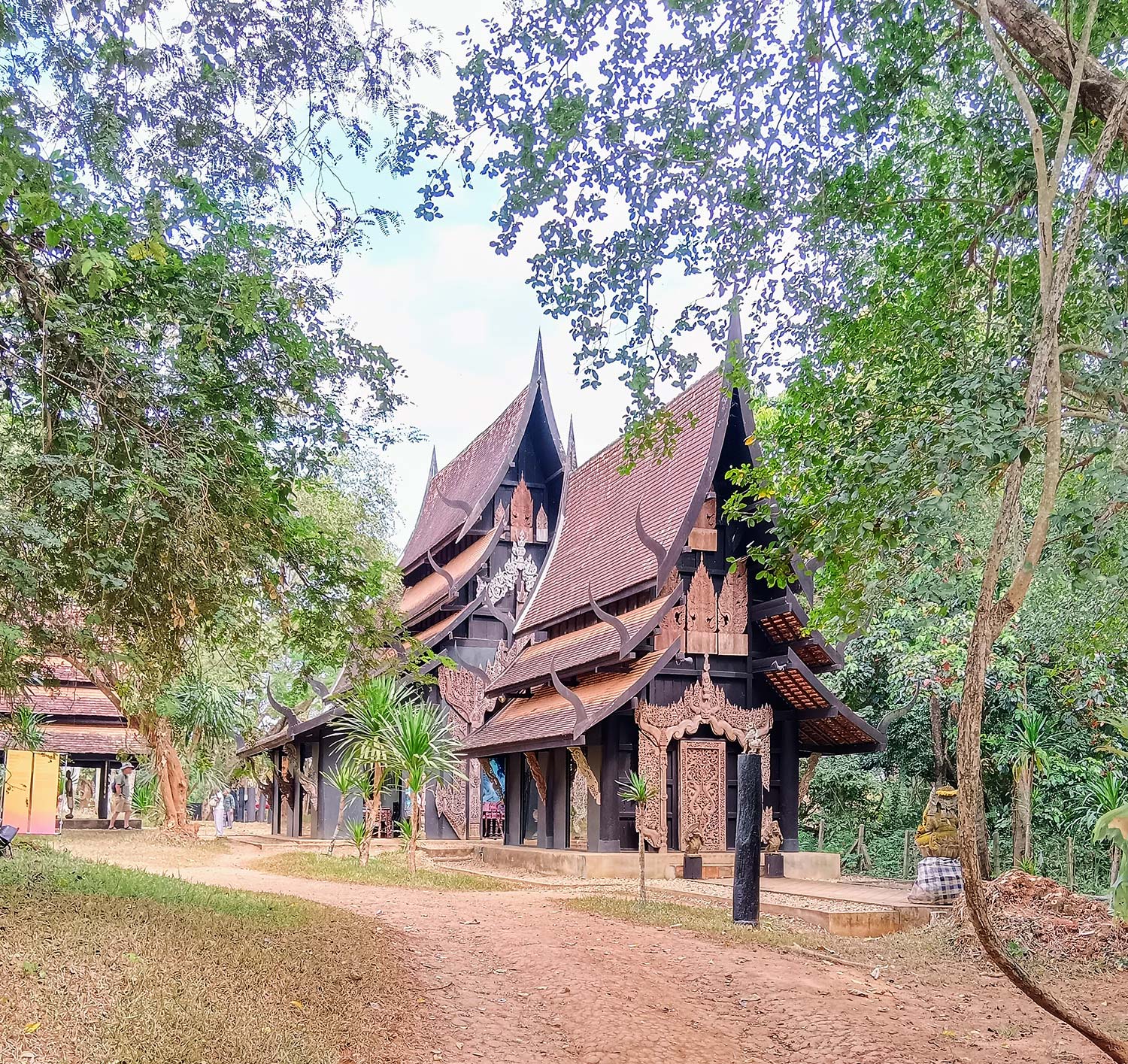
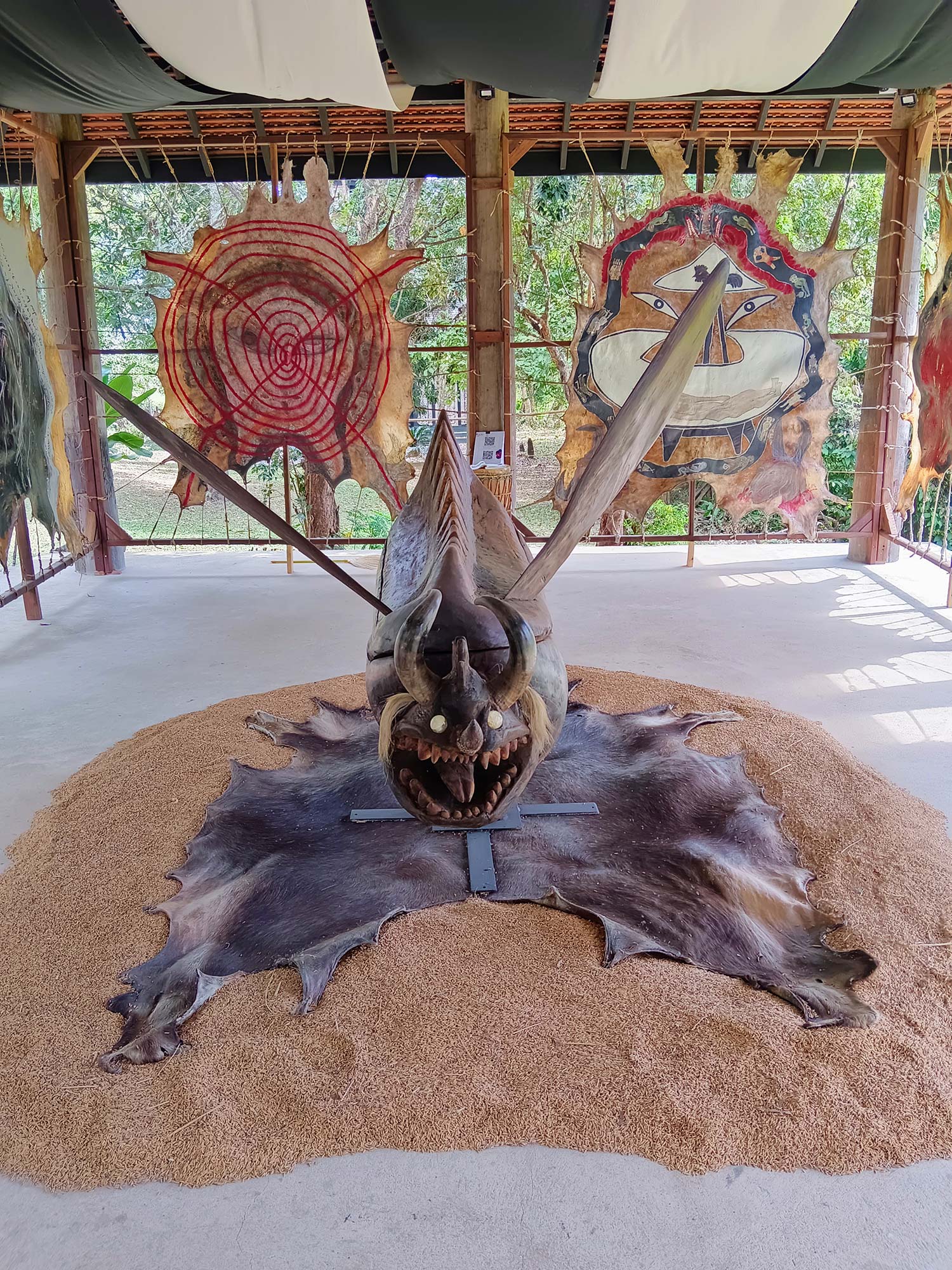
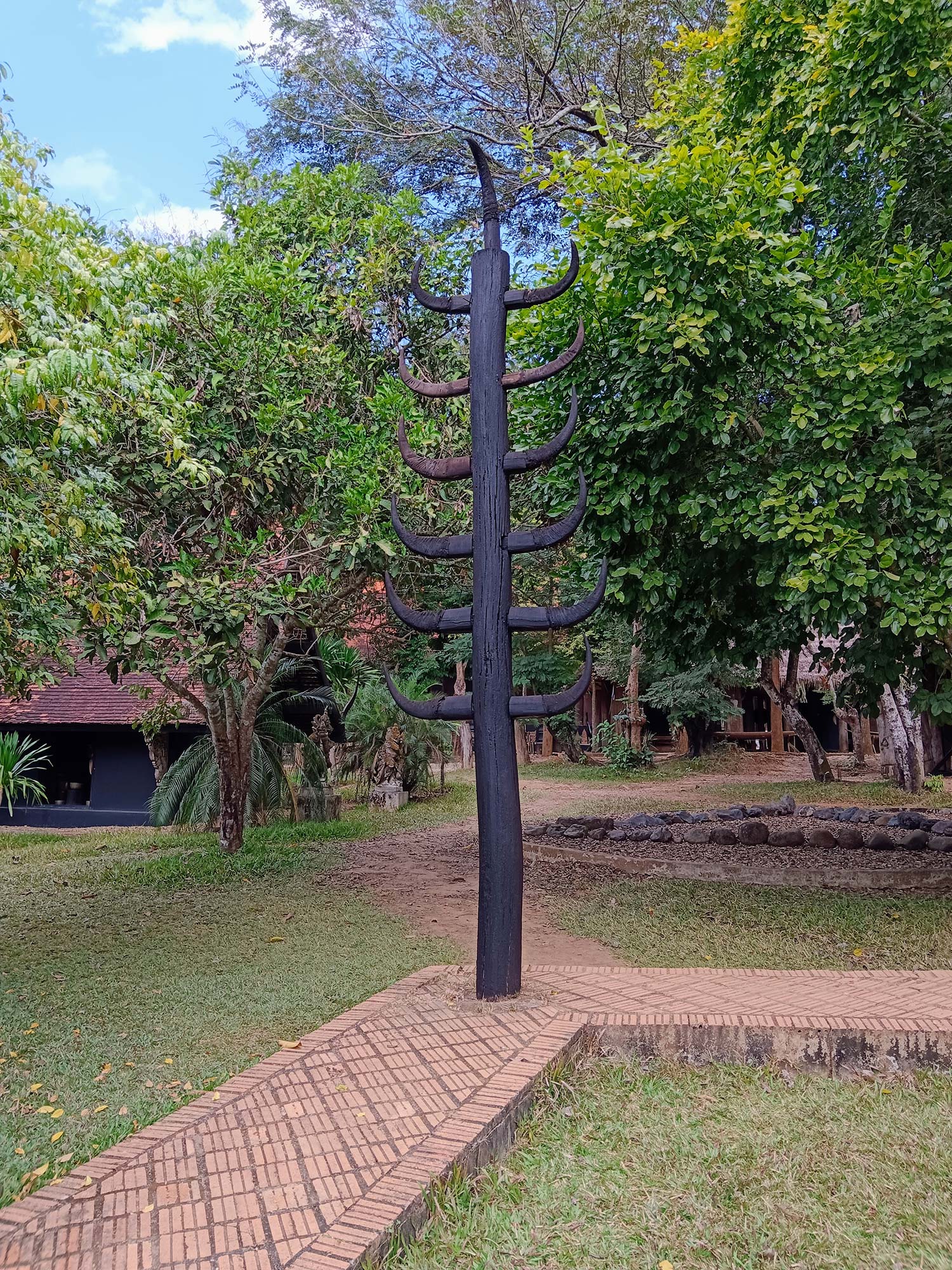
The buildings of Ban Dam are rooted in Lanna architecture, a style Duchanee would have grown up with. Natural wood and black-painted structures dominate the grounds. Inside, certain materials appear repeatedly: horns, skins, bones, and heavy timber.
Buffalo horns form altars. Crocodile skins cover surfaces. Chairs are built from bones.
It feels like Buddhism filtered through older animist symbols, imagery tied to life, death, and everything in between.
The main building, or ubosot, looms at the entrance atop a rise. At first glance, it resembles a traditional northern Thai temple with steep rooflines and carved details, but something feels slightly off. The angles are sharper. The lines are more aggressive. The gables rise like blades. It carries the familiarity of tradition pushed just far enough into something unsettling.
Inside, a long wooden table carved from a single slab of hardwood cuts through the space, covered with skins and surrounded by chairs made from hide and buffalo horns. Paintings line the walls while bones, skins, carved wood, and artworks in violent reds and blacks crowd the cavernous interior.
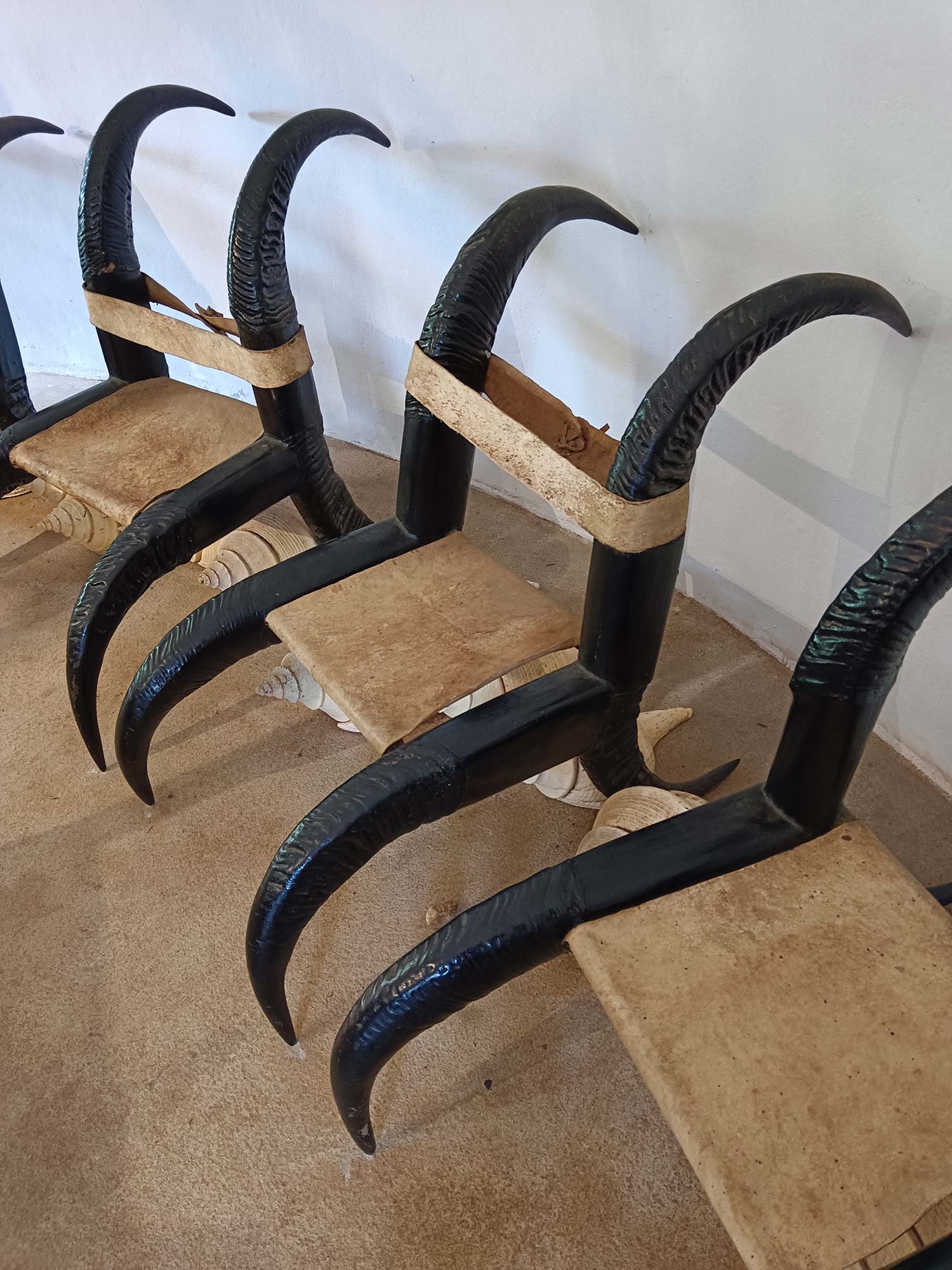
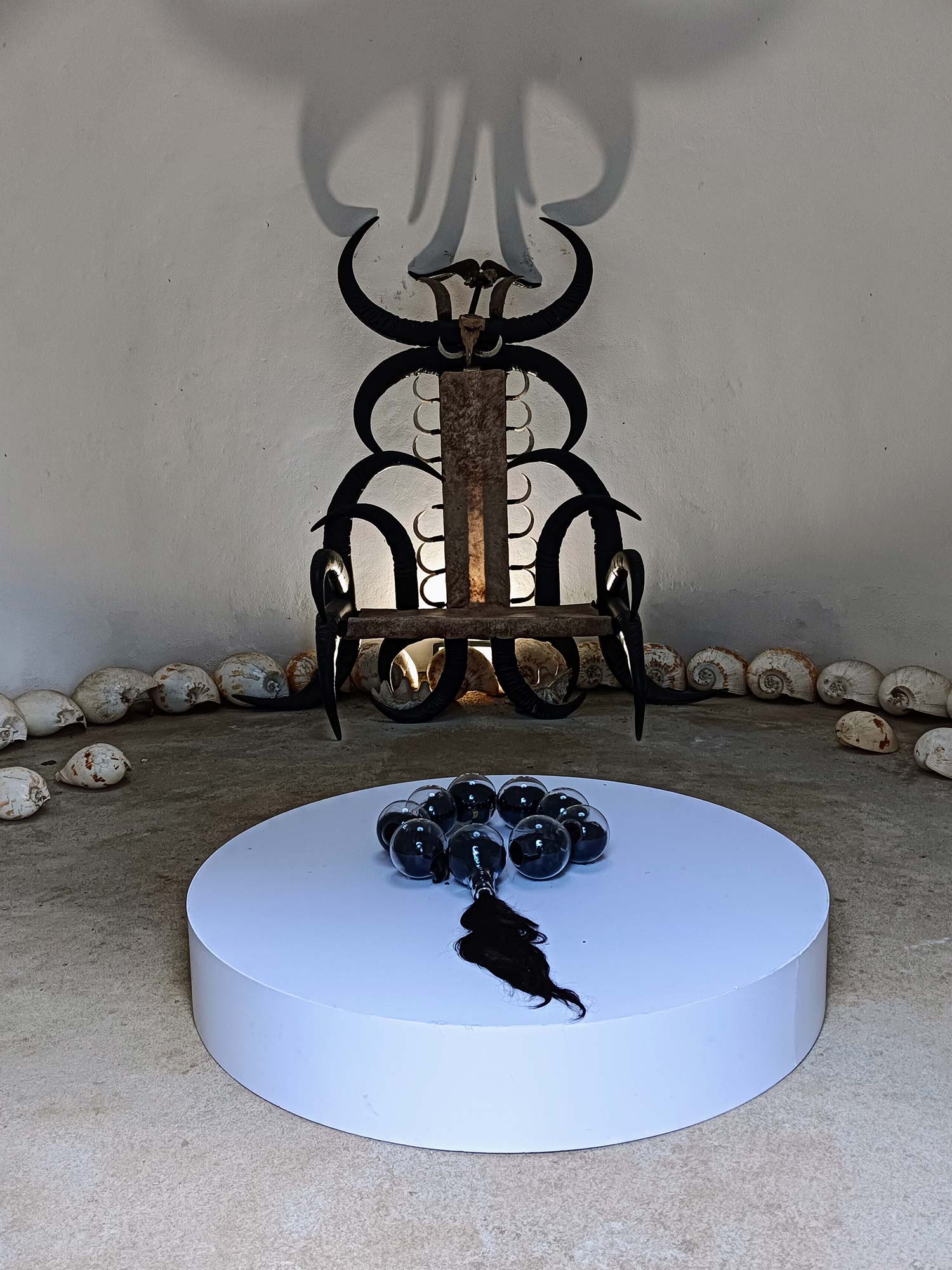
When I first came here, the building reminded me of the Catholic churches of my childhood. The soaring ceiling, the altar packed with religious imagery, the paintings of thrashing beasts and bloodied animals all felt strangely familiar, much like the stained-glass windows in my own church that depicted the crucifixion.
Ban Dam is now firmly on the tourist trail. There are more people, more structure, and guided groups moving through the grounds. Selfies are taken beside dramatic installations. Couples sit by the lake and picnic.
Yet despite the changes, it still feels like one person’s worldview carried all the way through without compromise. Like any great work of art, it creates a world of its own while reflecting the one we inhabit.
Duchanee was a devout Buddhist despite accusations that his work mocked the religion. Some called him a madman. He saw things differently. He believed Buddhist art in Thailand had become too superficial. What interested him was the relationship between everyday life and dharma and how the two coexisted.
The Black Temple offers questions rather than answers. In some ways, the White Temple attempted to answer those questions.
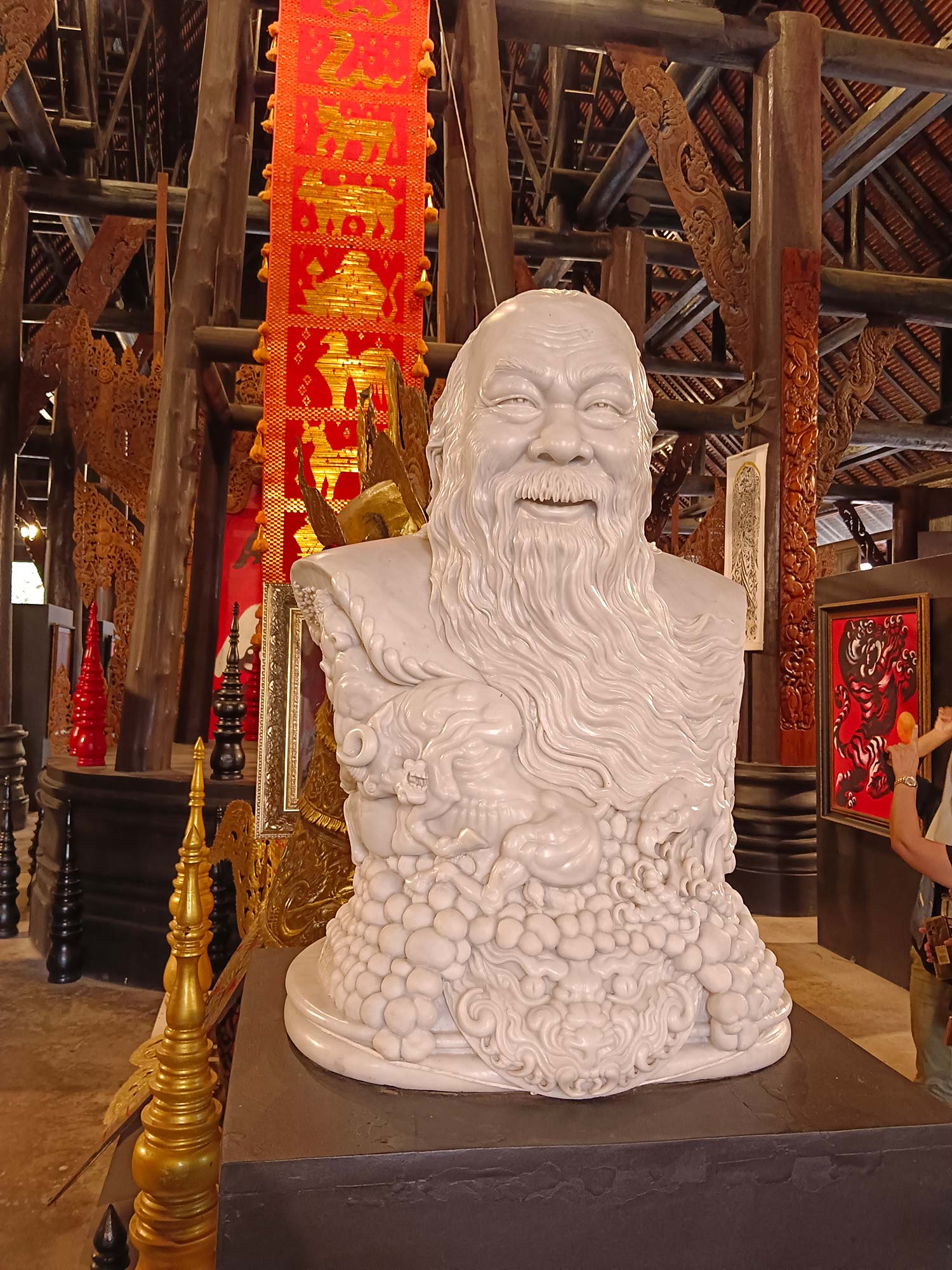
Designed by Chalermchai Kositpipat, a former student of Duchanee, the White Temple emerged in 1997 as a response to his mentor’s dark masterpiece. Their worldviews differed, but Kositpipat still honored his teacher, even gifting him a life-sized plaster bust that sits near the entrance of Ban Dam like a smiling Buddha surrounded by charging bulls and darting fish.
Kositpipat’s temple presents heaven and hell through a shimmering white vision filled with superheroes battling evil. It feels worlds apart from Duchanee’s universe of charcoal structures, skin, bone, and mortality.
Duchanee began building Ban Dam in 1975, funding it through the sale of his paintings. It became his life’s work. He lived there with his wife and invited younger artists to live and create alongside him. Construction never truly stopped. Neither did the creation of new icons and altar pieces.
After more than forty years working on his Black Temple, Duchanee died at the age of seventy-four.
Returning after twenty years, what struck me was not what had been added but what had survived unchanged. Students still carve wooden pillars. Visiting artists still come and go. The place remains alive.
Before his death, Duchanee likened his inevitable passing to a stone that would one day disappear beneath the water. But standing there, it felt as though the ripples were still spreading.