Festivals & Events

So much in Asia depends on the calendar. In February in Beijing, more than 20 million people all set off fireworks to celebrate Chinese New Year. In Nagaland in India, tribes from all over the region meet to compete, dance, and celebrate. In Thailand, spectators look on as celebrants perform bizarre rituals at the Nine Emperor Gods Festival.

With an intimate and unique knowledge of Asian culture, Remote Lands knows the importance of experiencing culture the right way. Whether you want an up-close view of the Sing-Sing festival in the Asaro Valley of Papua New Guinea or a quiet walk through the Sapporo Snow Festival in Japan, Remote Lands can give travelers the best possible experience on their celebrations throughout Asia.

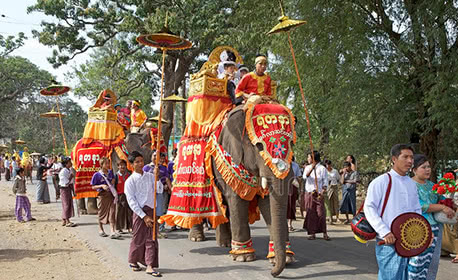
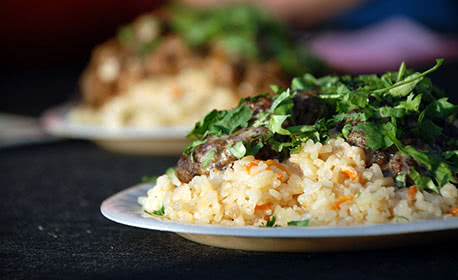
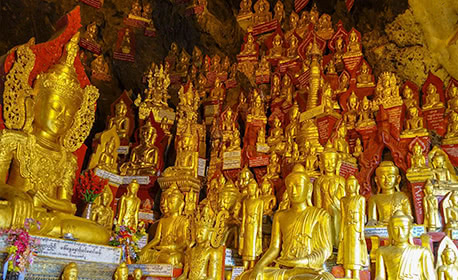
Visitors and locals sink their teeth into different sticky rice delicacies with various toppings at the Maha Muni Pagoda Festival in Mandalay. Lasting two days, the festival celebrates the revered Maha Muni Buddha Image covered in thick gold. Bonfires decorate the festival grounds during the cold month of February.

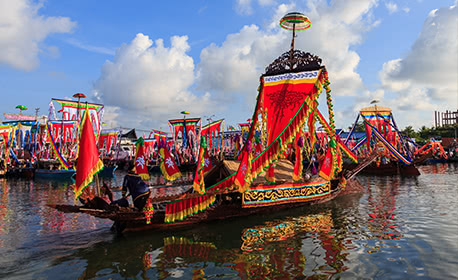
An elaborate pagoda serves as the pinnacle of the largest Pagoda festival in a small town on the border of Shan and Kaya in Myanmar. Four days are filled with sprawling markets selling everything from candles, grilled whole pigs and illegal motorbikes. Visitors also enjoy cultural dance performances.

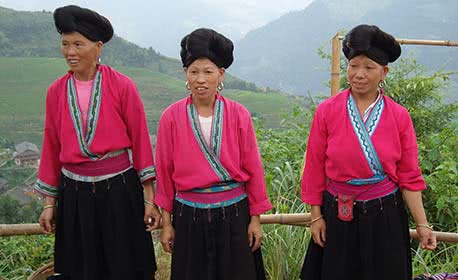
Occupying the northwest corner of Myanmar, the Naga people are a small culture living in the hilly country. A traditional Naga New Year Festival is a rare cultural treat, where gifts are exchanged, and traditional music and dance are performed for local and international entertainment.

This eight-day livestock fair, taking place in Jodhpur, Rajasthan, is the second-largest fair in India, involving 70,000 bullocks, camels and horses. The event also includes sports and games, such as tug-of-war, camel races and cock fights. A large bazaar presents a wonderful opportunity for picking up unique souvenirs. 

Celebrated with family, New Year in Armenia involves a feast into the night of pork leg, Armenian dolma, and spicy blinchik, as well as spirits that include Armenian cognac and wine. After the clock strikes midnight on January 1, Armenians often leave their home in the dead of winter in the middle of the night to visit with their neighbors.

Recognized on January 14, The Old New Year or the Orthodox New Year is an informal holiday following the Julian calendar. The Georgian Orthodox church still uses the older Julian calendar, and serves as the final day for the weeks-long celebrations that accompany Christmas and New Year holidays. 

The day before Chinese New Year, people clean their houses to clear away bad luck and welcome good luck. Homes are decorated, new clothes are bought and families hold a reunion dinner comprised of fish and dumplings to symbolize wealth. Many people visit the temple at midnight to light incense and pray for a prosperous new year.

From December to March, visitors to the Maolin National Scenic Area can see migrating purple Euploea butterflies. Millions them make a stop-off here in the south of Taiwan, and thousands of tourists from across the world are drawn in by their beauty.

Republic Day is a national holiday in Armenia marking the anniversary of the short-lived First Armenian Republic in 1918, celebrated with fireworks, concerts, and parades. The Republic was declared in 1918, shortly after the Armenian genocide, and only a short while later, Armenia would become part of the Soviet empire and would not celebrate Republic Day again until 1988.

The Riyadh Season Festival is a mega entertainment event that begins in October and lasts for three months. The festival hosts more than 100 different events that take place across over 10 main areas in the city. It brings unique entertainment to Saudi Arabia such as the K-pop band BTS, international and Arabic artists, and Michelin star restaurants.