
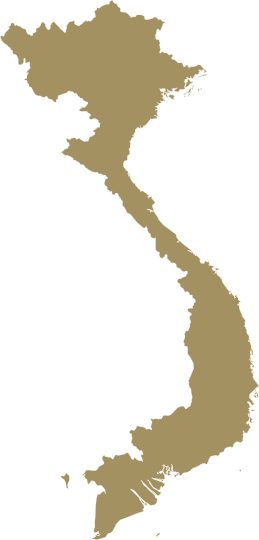

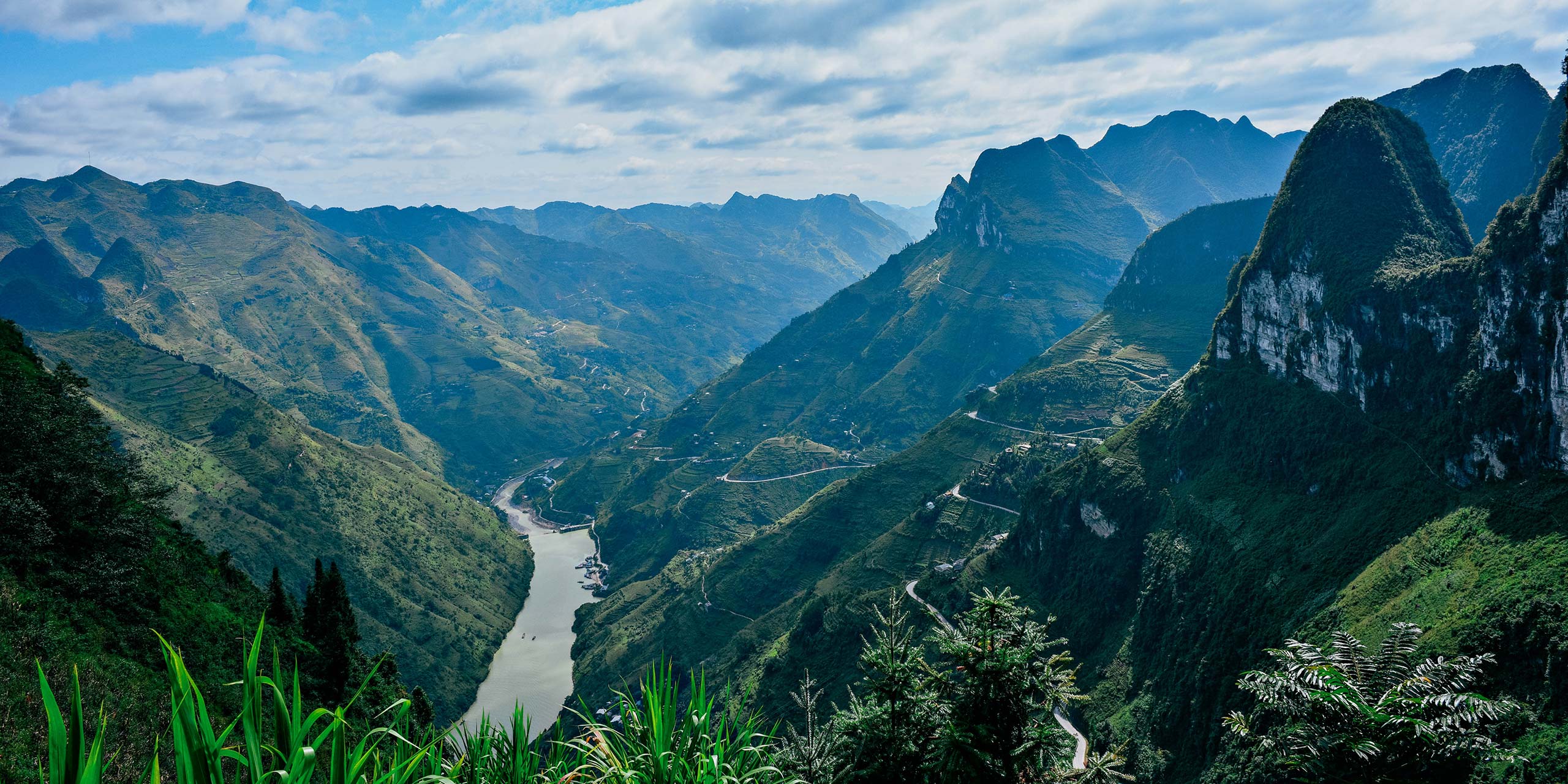
For decades, Thailand dominated motorcycle touring in Southeast Asia. Still, as Vietnam has expanded and improved its road network, more and more riders have turned their attention to the country’s mountainous north, where spectacular roads now make long-distance touring far more accessible.
Twenty years ago, riding across northern Vietnam meant accepting breakdowns, dirt roads, and a fair chance of getting lost. Today, much of the region is connected by smooth mountain highways, boutique hotels have appeared in towns that barely saw tourists a decade ago, and some of Southeast Asia’s finest motorcycle touring has quietly emerged.
I first explored Vietnam by motorcycle in 1998 on an old Honda Win 110, an extremely basic machine that could be repaired almost anywhere with simple tools and improvised parts. Backpackers bought and sold them along the tourist streets of Hanoi, usually with little more than a handshake and a vague promise that the bike would survive the journey north. At the time, Vietnam’s road network was poor, and the tourist infrastructure that did exist was basic at best. Large parts of the country, especially the northern border regions, remained largely inaccessible.
Today, the situation has changed dramatically. Routes like the Ha Giang Loop have become almost as popular as Thailand’s Mae Hong Son Loop, and many riders now consider northern Vietnam even more scenic and rewarding.
The Ha Giang Loop is normally ridden over four or five days and covers up to 450 kilometers, depending on side trips and weather conditions. The route follows the QL4C, known locally as the Happiness Road. It climbs and twists through limestone mountains, river valleys, and ethnic minority villages before reaching some of the country’s most remote terrain along the Chinese border.
The climate in the highlands varies enormously. One day may bring blue skies and dry asphalt, while the next sees thick fog, landslides, and cold mountain rain reducing visibility to only a few meters. During winter, temperatures at higher elevations can fall surprisingly low, making proper riding gear essential.
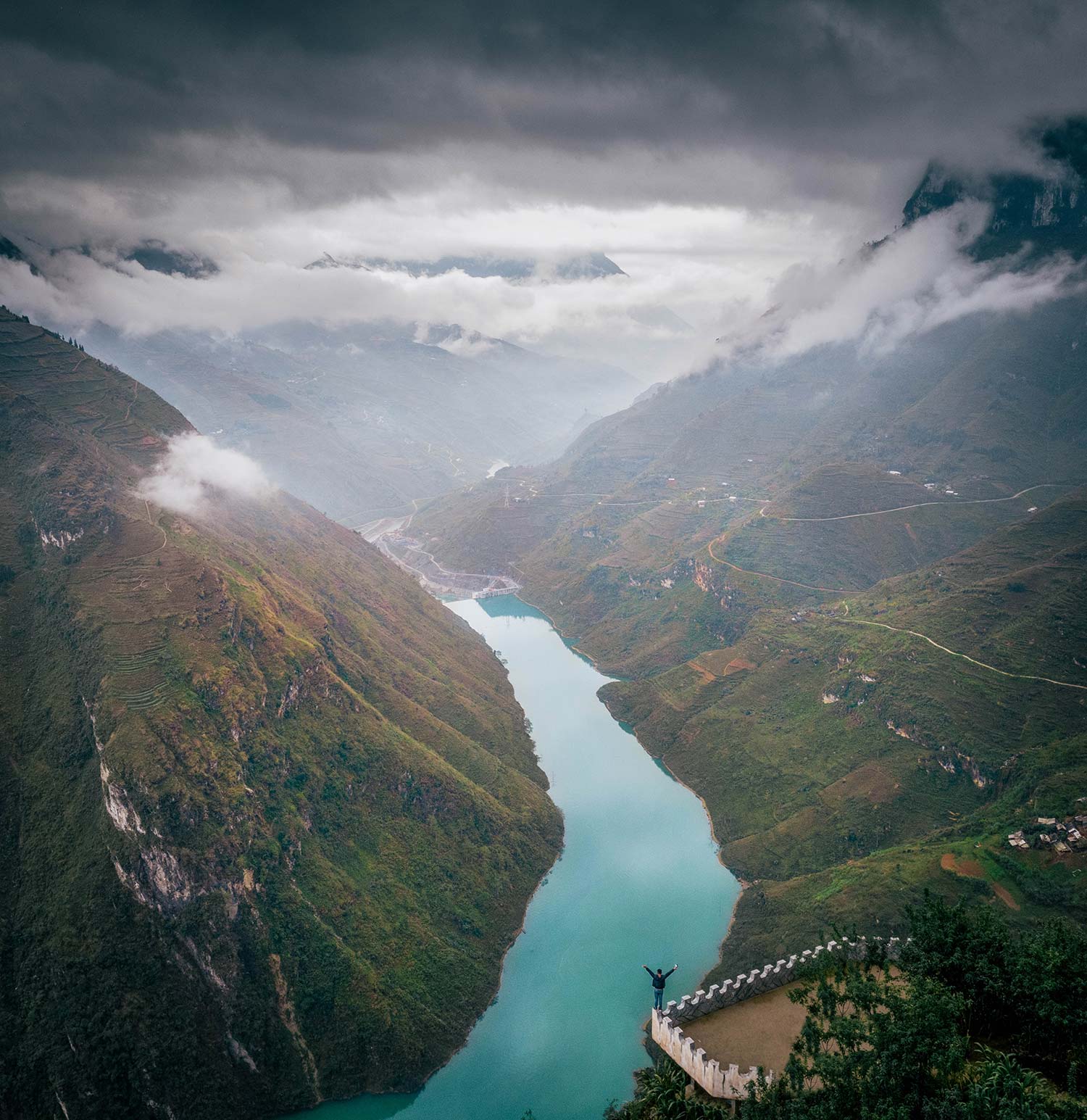
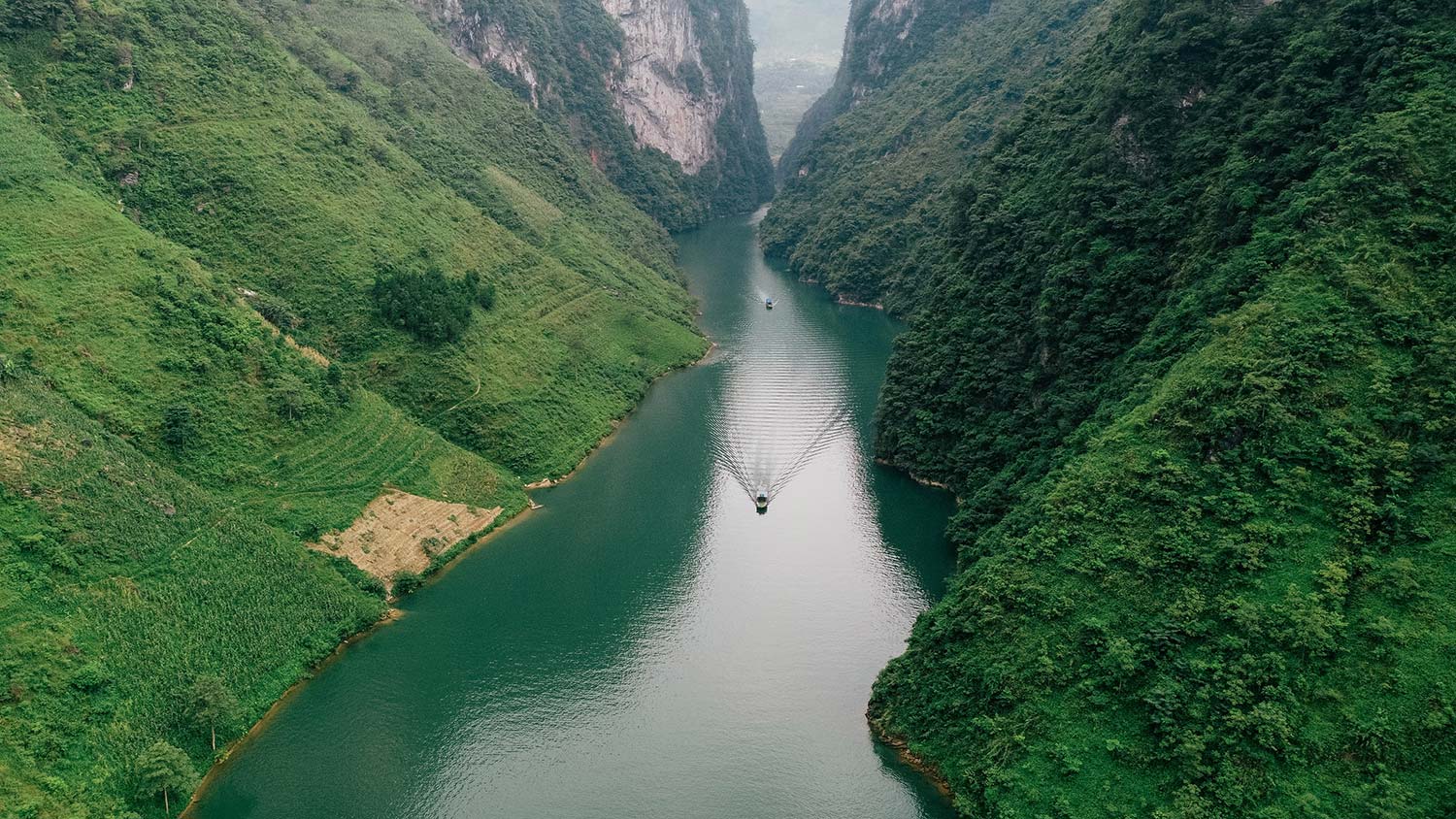
Early mornings bring mist rolling through the valleys, while late-afternoon sunlight turns the limestone peaks into shades of gold and copper. Below Ma Pi Leng Pass, boat trips through Tu San Canyon offer a different perspective, revealing the immense scale of the mountains as they squeeze the emerald-green Nho Que River into a narrow gorge.
The loop passes through Hmong and Dao communities where life still revolves around terrace farming, livestock trading, and mountain markets that have existed for generations. The undisputed highlight is Ma Pi Leng Pass, the spectacular stretch between Dong Van and Meo Vac that many riders regard as one of Asia’s greatest mountain roads. Here, the road clings to sheer limestone cliffs high above the Nho Que River, twisting through a landscape that often appears too steep and jagged to support a road at all.
Tourism has inevitably begun to change many of the mountain towns along the loop. Even once-isolated Meo Vac, nestled among dramatic limestone karsts, has evolved rapidly. Espresso bars, bakeries, craft beer pubs, well-appointed hotels, and wood-fired pizza restaurants now sit alongside traditional markets and family-run eateries. The infrastructure remains simple, but comfort has arrived without overwhelming the town’s frontier character.
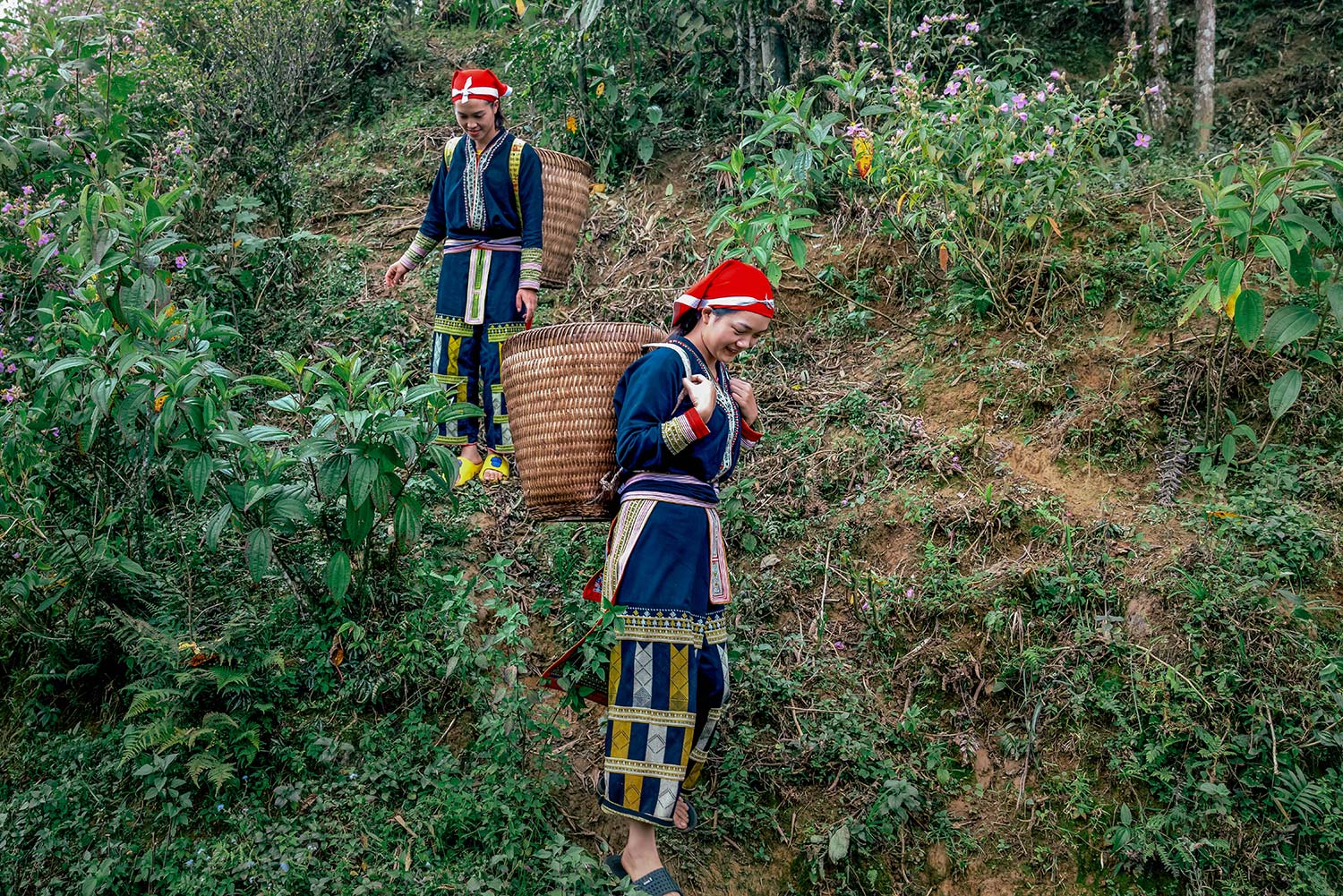
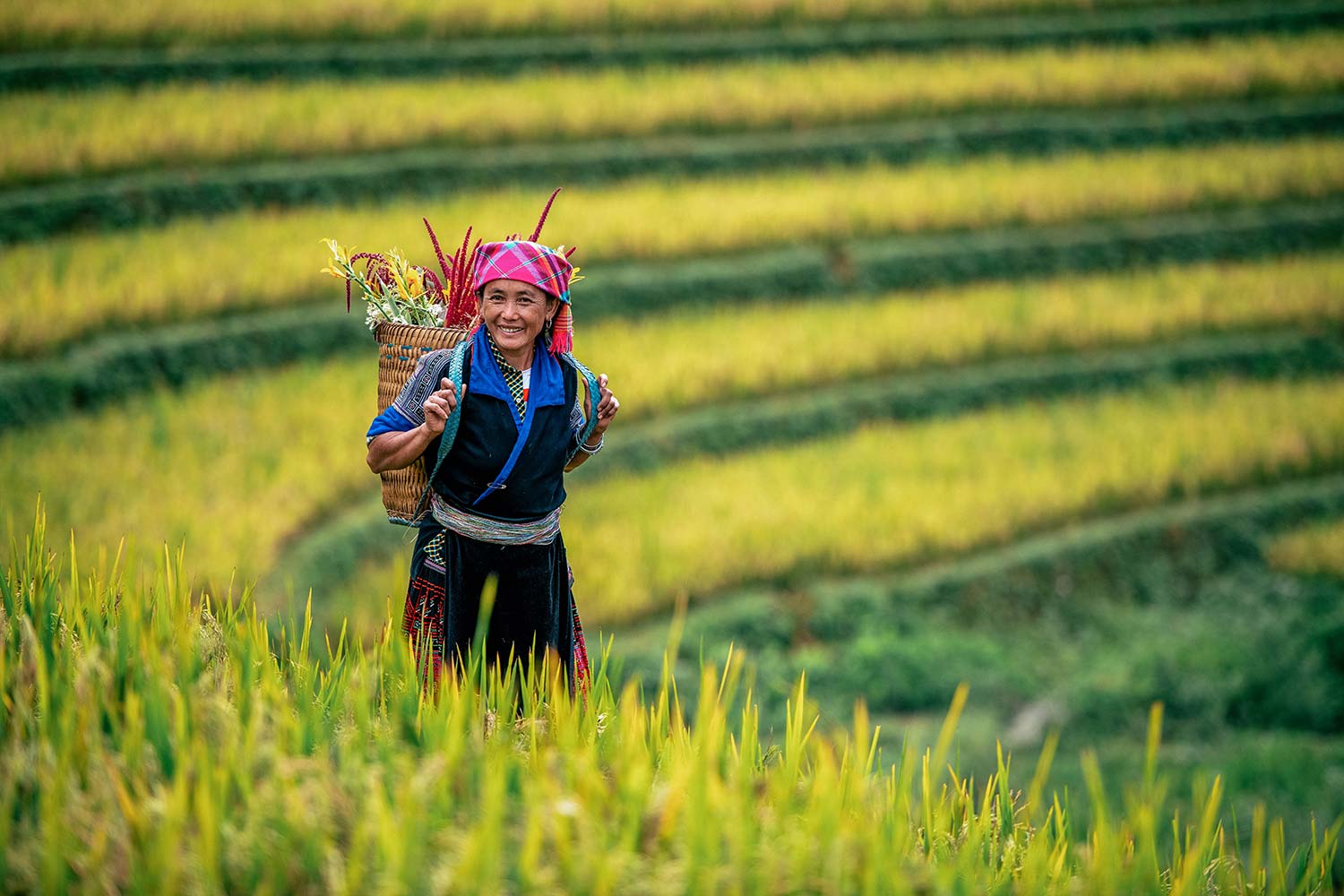
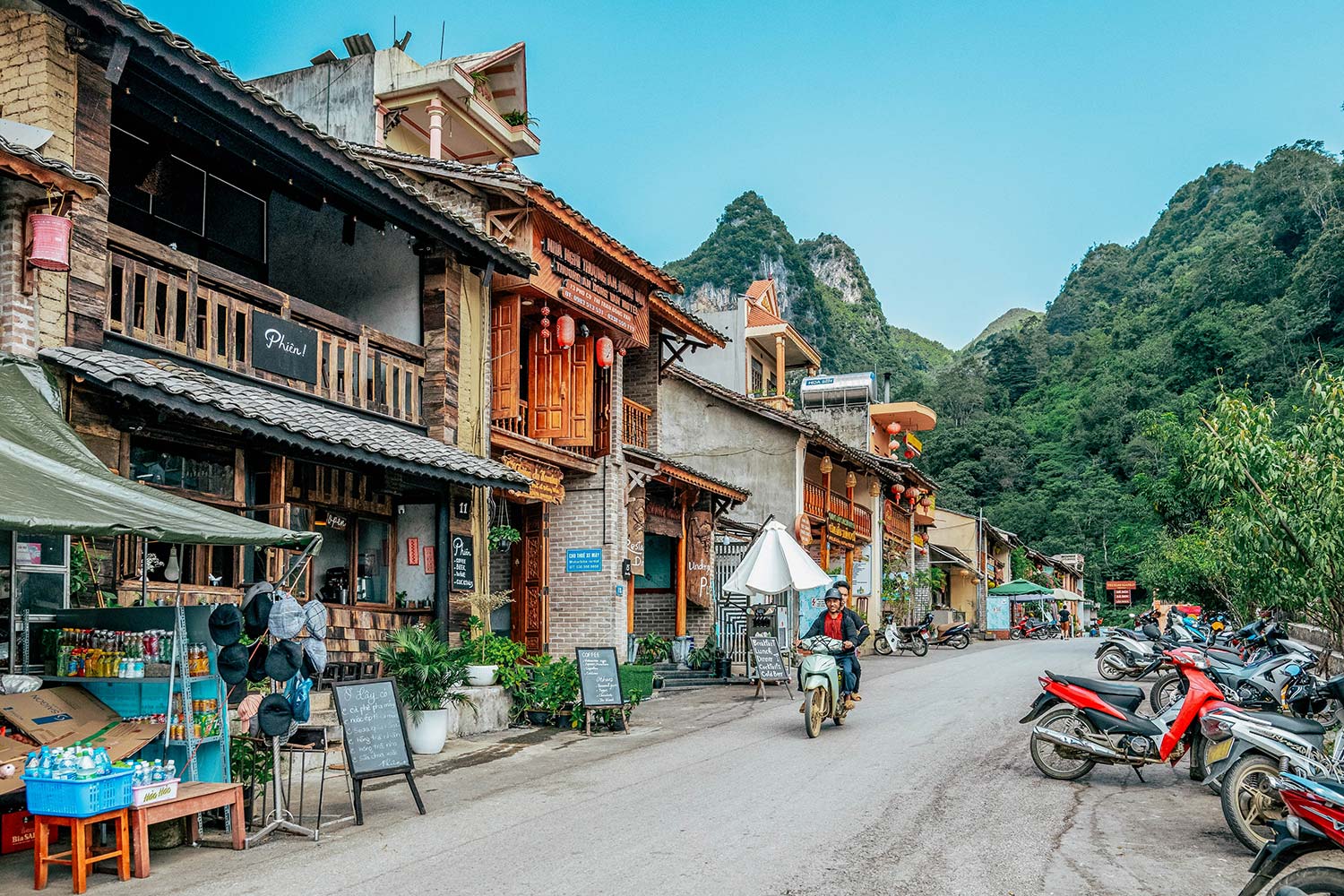
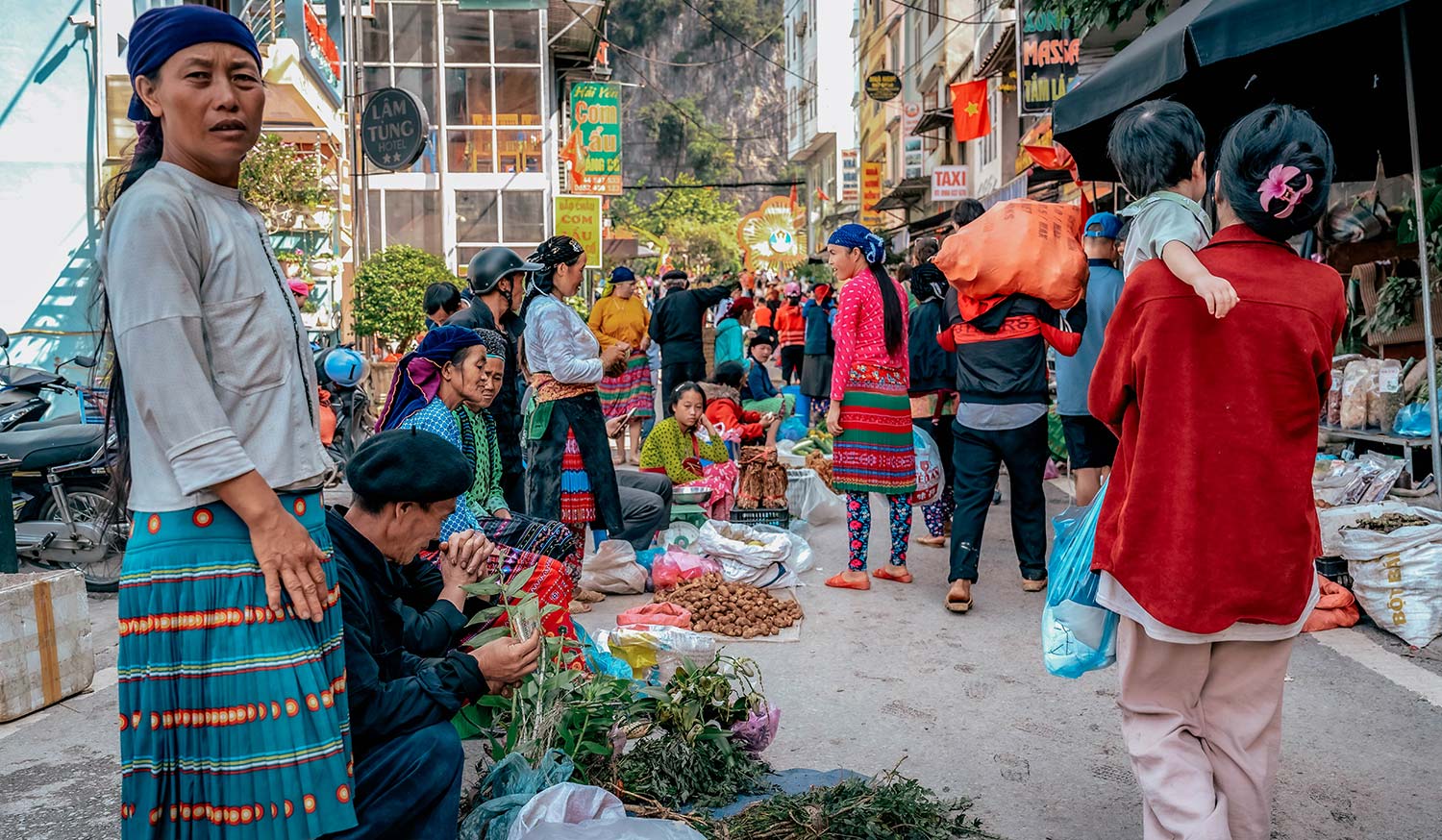
Mornings begin with the smell of wood smoke drifting from charcoal grills as markets fill with people arriving from the surrounding hills in traditional dress, carrying produce, herbs, and livestock to trade. Roads are often damp, and visibility can be poor early in the day, making it worth lingering over a cup of strong Vietnamese coffee while the fog slowly burns away.
Food in the northern highlands differs markedly from the lighter cuisine associated with Hanoi or southern Vietnam. Hmong cooking relies heavily on mountain herbs and wild peppercorns unfamiliar to most visitors, while thắng cố, a rich stew traditionally prepared from horse meat, remains a staple at upland markets.
After years of touring on large adventure motorcycles loaded with electronics, riding an old Honda Dream with nothing more than a small pack strapped to the seat is unexpectedly liberating. On rough dirt tracks or stretches where newly paved roads have collapsed beneath landslides or heavy rain, the little Honda simply finds a way through, as it always has.
Heading east into Cao Bang Province, the atmosphere changes once again. A network of narrower, quieter roads runs close to the Chinese border through heavily forested mountains and isolated farming valleys. Compared with Ha Giang, the riding is more solitary, rougher, and noticeably more remote. Long stretches pass with almost no traffic, and villages become increasingly scattered across the landscape.
Motorcycle touring has never been about arriving somewhere quickly. The pleasure comes from rhythm and concentration: reading the road surface, selecting the right gear before a corner, and balancing throttle and brake through an endless sequence of bends.
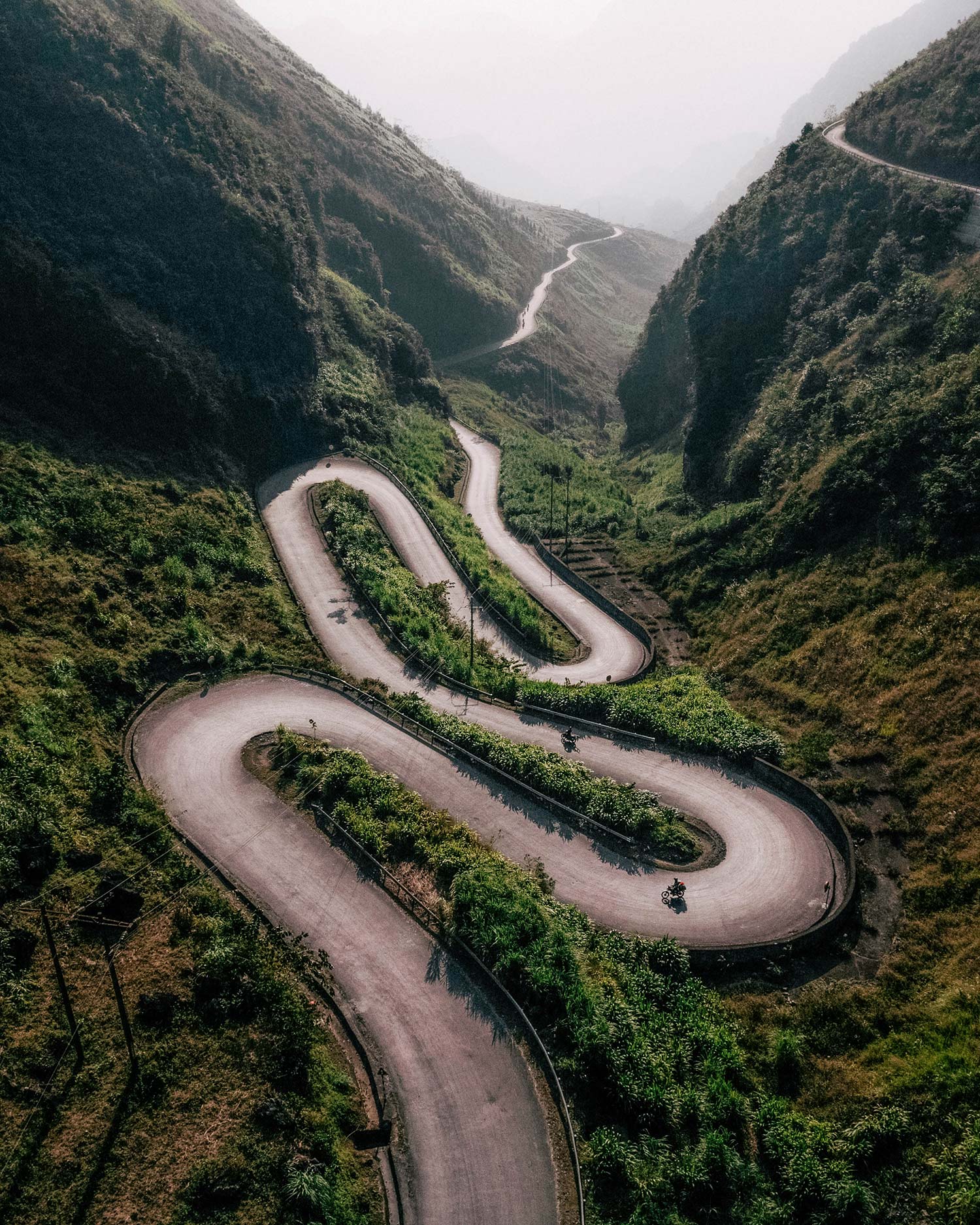
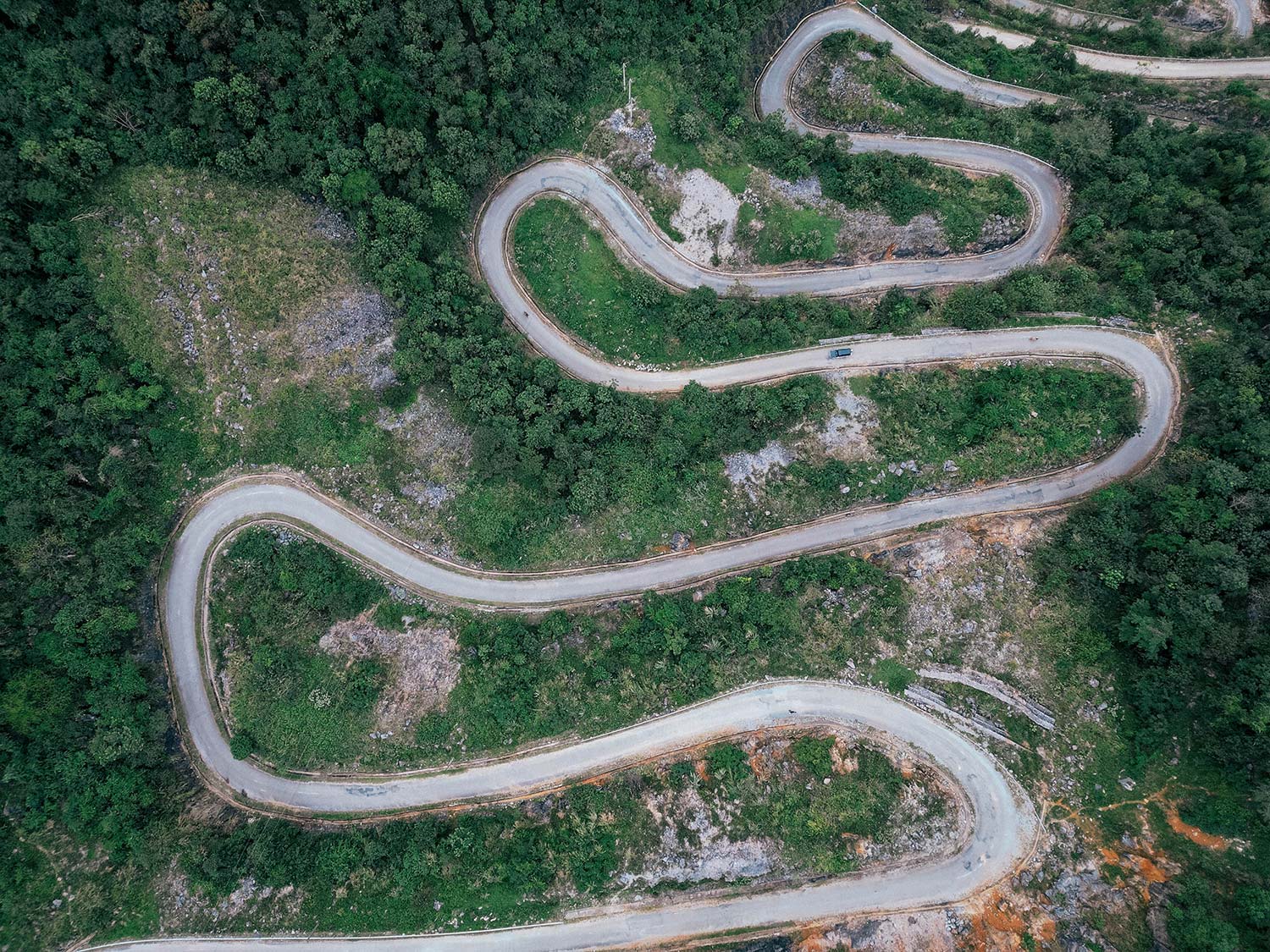
Few roads reward that rhythm better than Me Pia Pass, better known among riders as the Dragon’s Spine. One section packs fourteen tight hairpins into barely two and a half kilometers, while another unfolds through a flowing chain of sweeping S-bends climbing into the mountains. From the viewpoints above, the road appears slashed back and forth across densely forested slopes. Technical without being intimidating, it remains one of Southeast Asia’s most satisfying rides.
Towns such as Bao Lac and Cao Bang still retain something of a frontier atmosphere compared with the increasingly busy Ha Giang Loop, making the journey feel closer to the Vietnam many riders first discovered two decades ago.
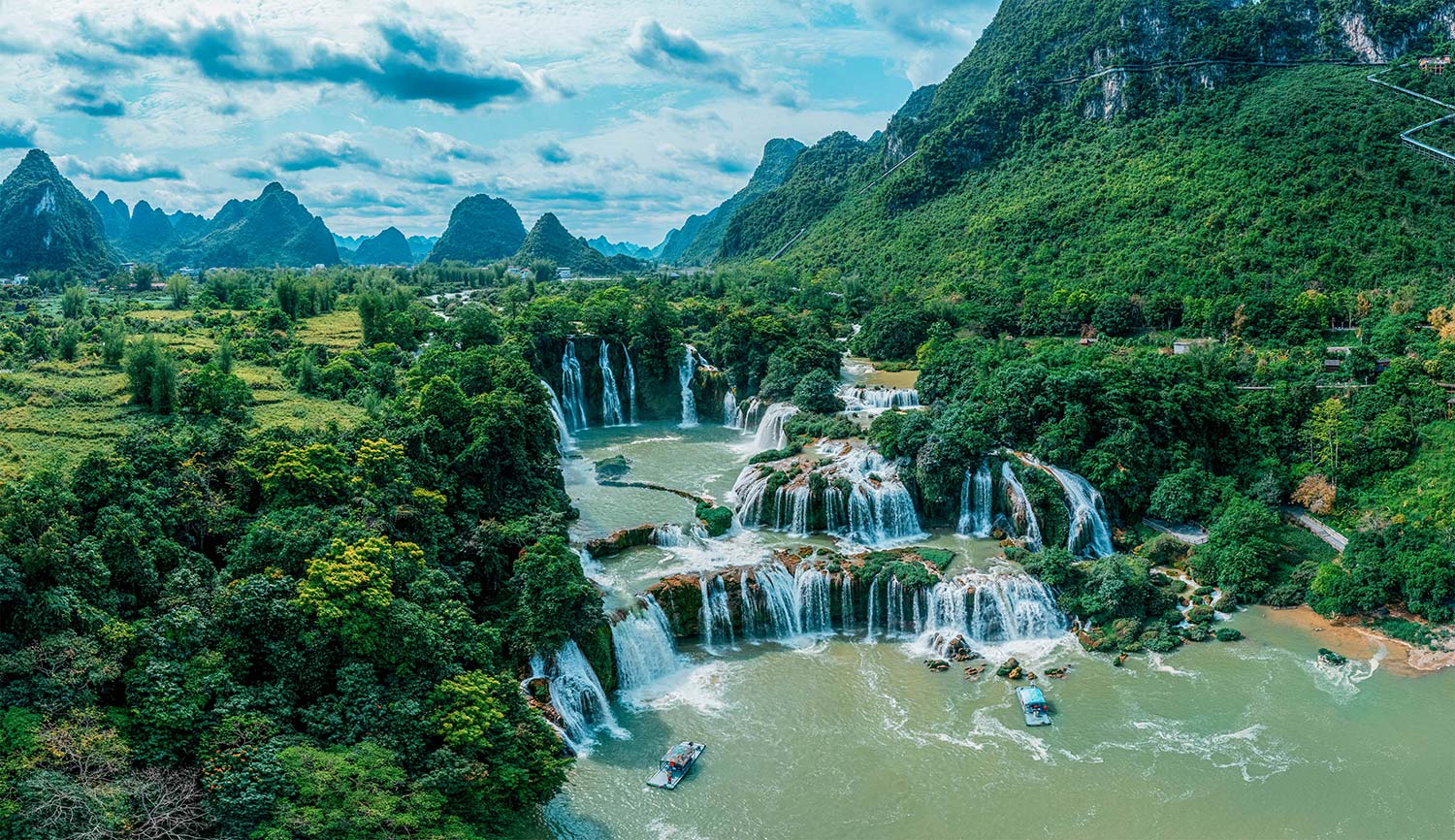
One of the province’s must-do stops is Ban Gioc Waterfall, which straddles the border with China. Here, brilliant white water pours over multiple jungle-clad tiers into a striking mineral-blue pool below. Surrounded by limestone karsts, bamboo groves, and rice fields, reaching the falls via the narrow backroads is as rewarding as the destination itself. Although swimming beneath the main falls is prohibited, visitors can wade downstream in the icy water to soothe tired feet after a long day in the saddle.
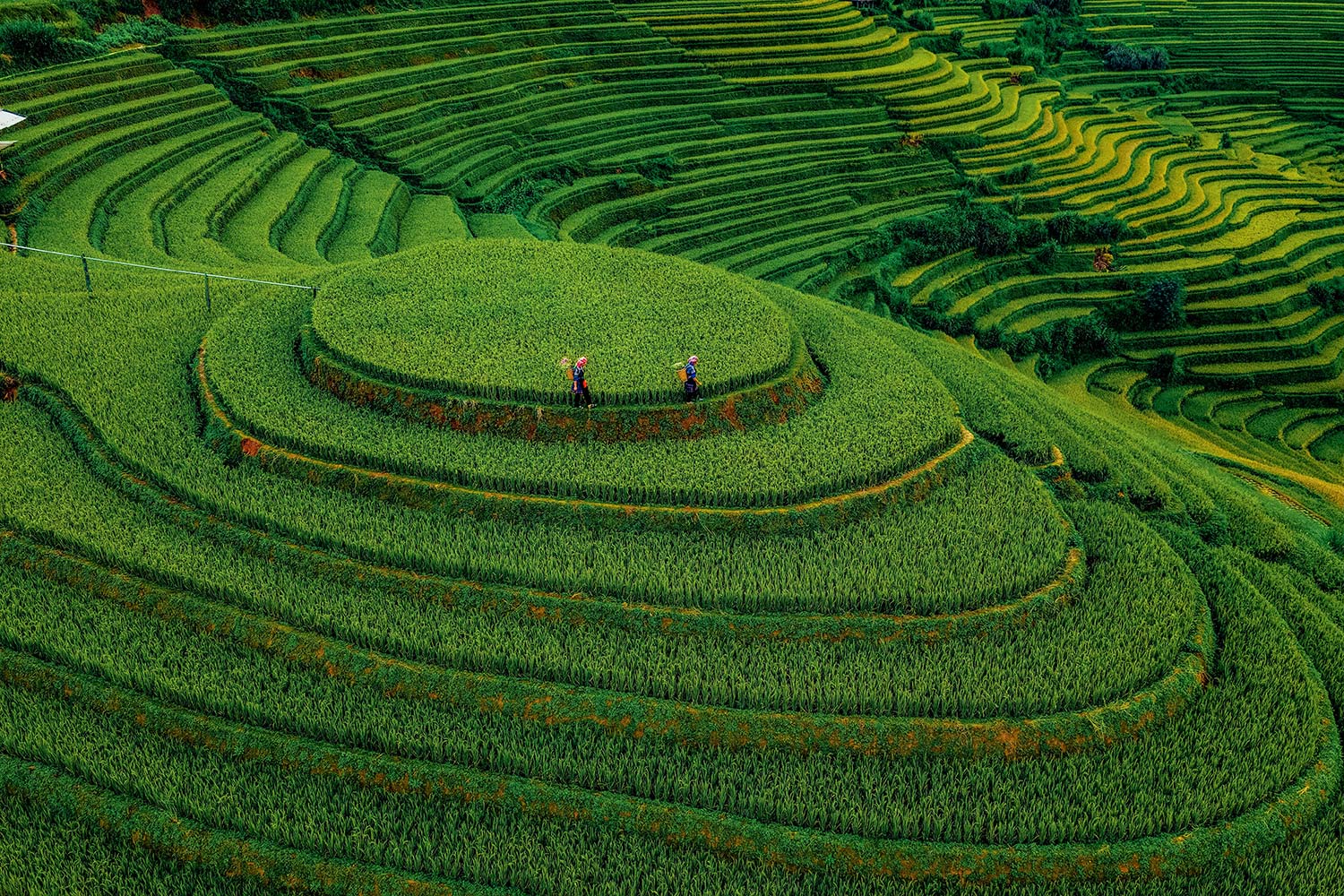
Further west, the roads around Mu Cang Chai and Sapa reveal yet another side of northern Vietnam. This is the country’s most iconic mountain landscape, where impossibly steep rice terraces carve entire hillsides into geometric patterns, and roads disappear into cloud forests along the Hoang Lien Son range. Riding alternates between high passes, dense fog, and sudden panoramic views across valleys whose colors shift dramatically with the seasons.
Although Sapa itself has become a major tourist destination, much of the surrounding countryside still feels remote once riders leave town behind. Red Dao and Black Hmong communities dominate the uplands, while muddy dirt roads branch into isolated villages where daily life remains shaped far more by farming cycles and mountain weather than tourism.
A complete northern Vietnam journey should also include the Northwest Loop through Lai Chau, Dien Bien Phu, and Son La. These roads follow former colonial and military supply routes across some of the least-visited mountain terrain in the country. The region still bears the legacy of the decisive 1954 battle that ended French colonial rule in Indochina. Abandoned outposts, military cemeteries, and memorials remain scattered across heavily forested passes and broad valleys stretching toward Laos.
Northern Vietnam still occupies a rare sweet spot between accessibility and genuine adventure. The roads are good enough to make long-distance touring practical, yet the mountains remain unpredictable, culturally distinct, and rugged enough to deliver some of Southeast Asia’s finest riding. Northern Vietnam has a habit of getting under your skin. Every rider I know who has tackled these roads ends up planning the next trip before the first one is over.