
“Sak yant are becoming increasingly popular with foreigners,” says Ajarn Neng. “These days, visitors don’t just drop by. They communicate before they arrive. Some come solely for the tattoo; others combine it with their vacation.”
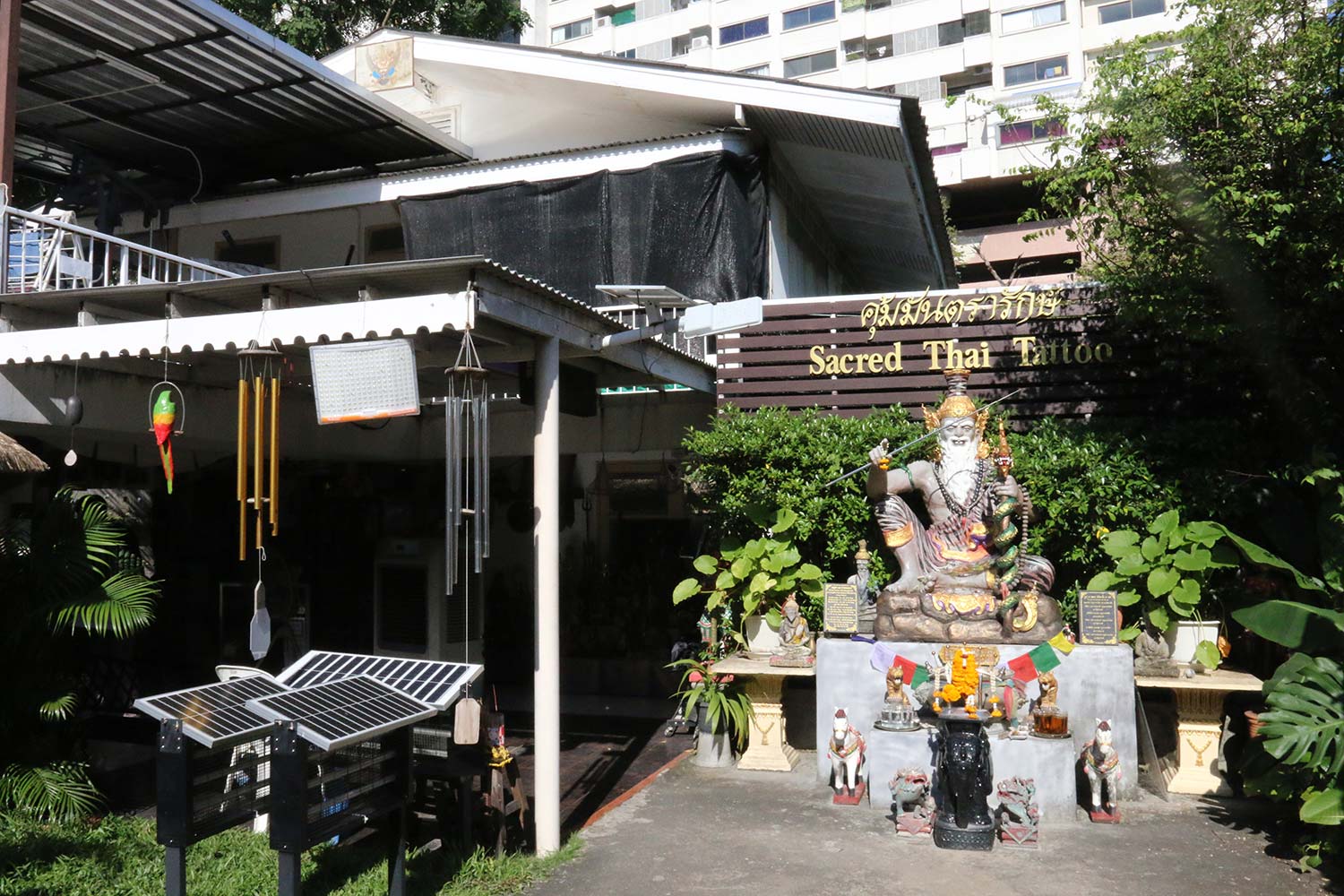
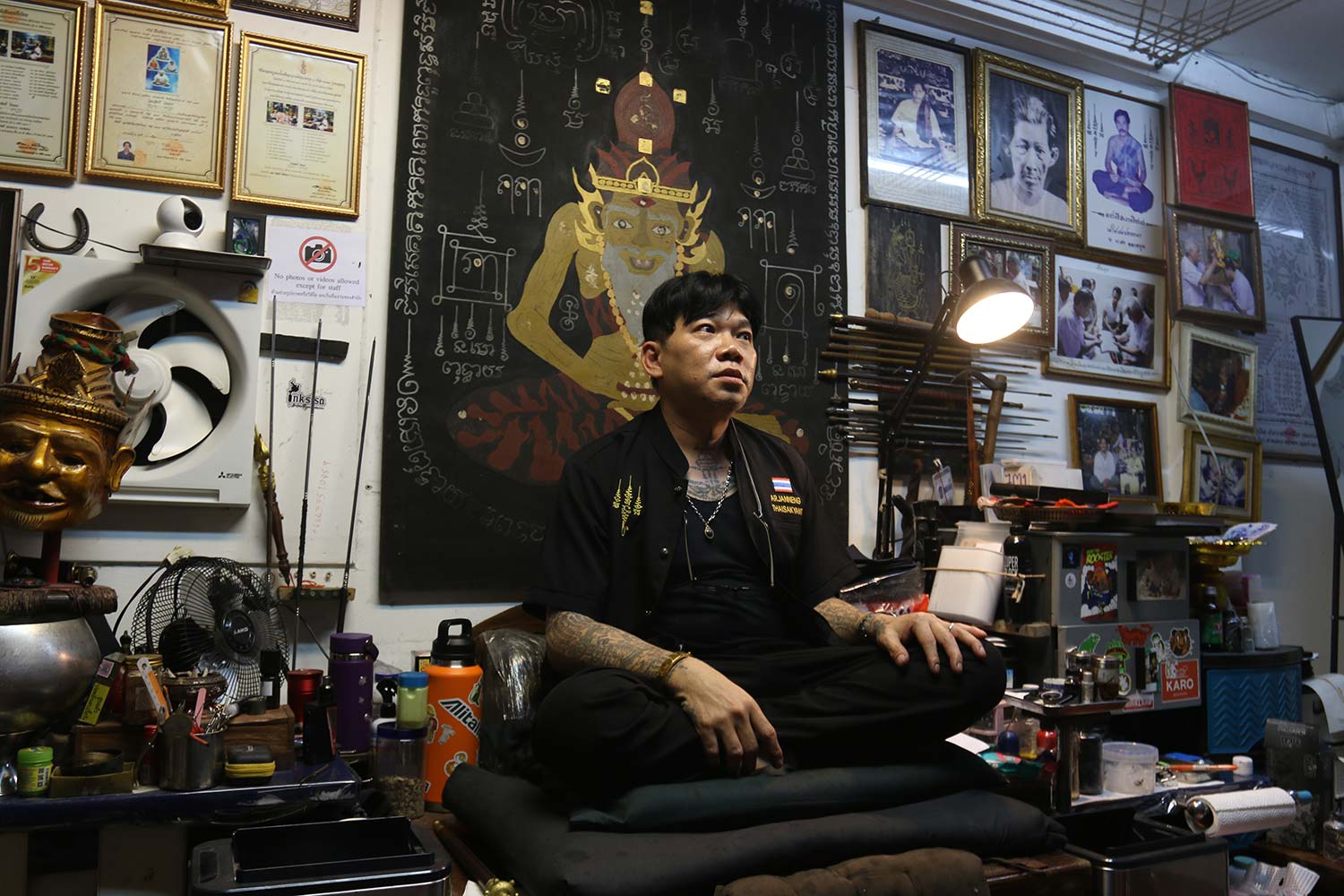
Ajarn Neng sits in his work chair inside his studio on a quiet soi in On Nut, eastern Bangkok, reflecting on a remarkable career. He tattoos sak yant—spiritual tattoos traditionally applied by a Buddhist monk or a so-called ajarn (teacher), believed to bestow their wearers with supernatural powers.
Now 49, Neng has been inking both the famous and the entirely unknown seven days a week, from morning until evening, for the past 20 years. He oversees a thriving business with clients from around the world. Thais, Americans, Brazilians, Japanese, and Europeans flock to his studio daily.
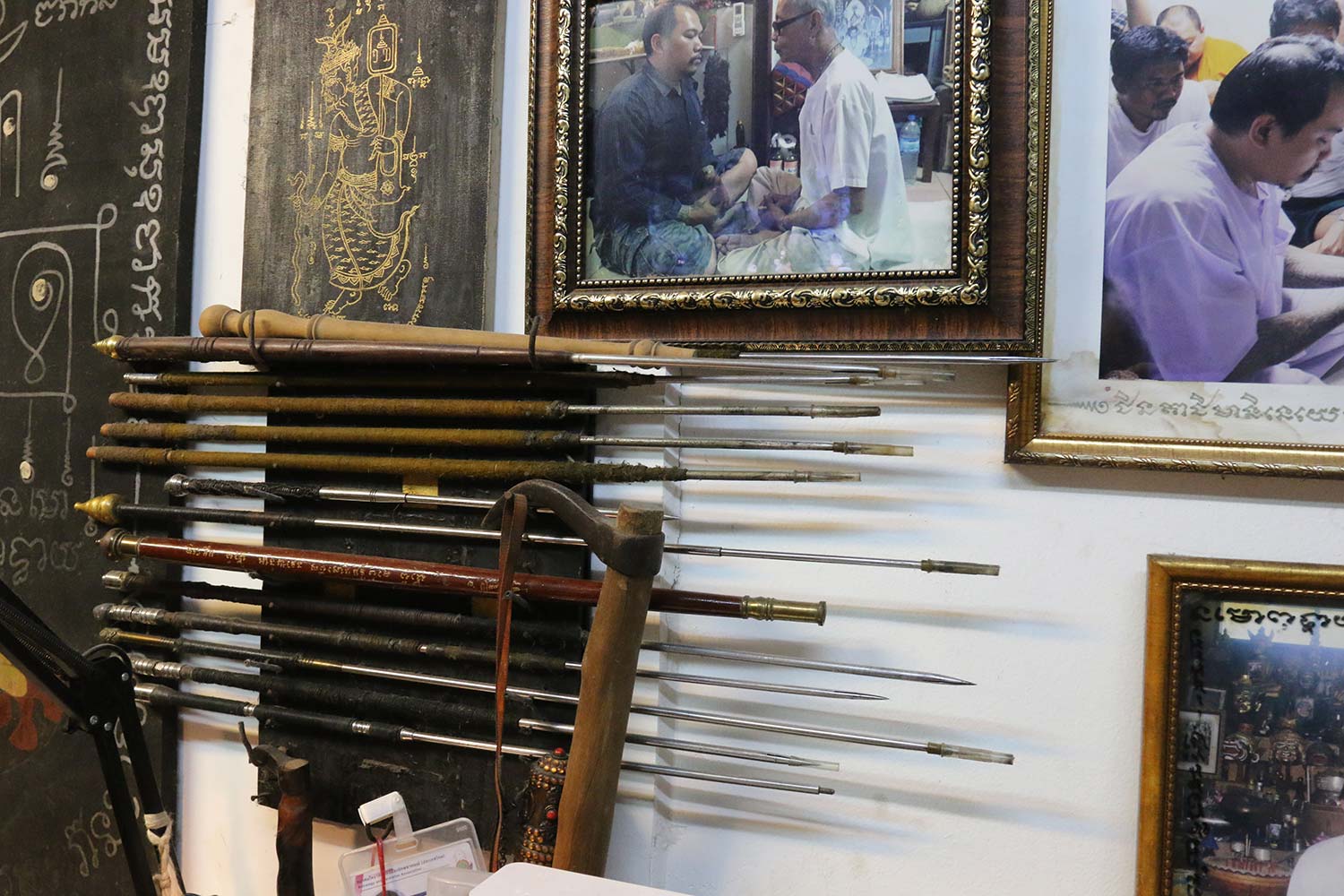
Sak yant—Thailand’s spiritual tattoos—have existed for centuries. Their origins can be traced to India, where yantras, sacred geometric diagrams used for meditation, have been practiced for thousands of years, traditionally inscribed on cloth, wood, metal, or stone.
As maritime trade expanded from the 3rd century onward, Brahmins left India during the reign of the Buddhist emperor Ashoka, settling across Southeast Asia and bringing yantra traditions with them. The Chinese diplomat Zhou Daguan, who lived at the court of Angkor in the 13th century, recorded how people placed yantras—often rolled into copper tubes—beneath their skin.
No one knows exactly when these designs migrated directly onto human skin, though legends recount royal messengers during the Ayutthaya period tattooing their heads with yant to carry secret messages. Over time, the geometric diagrams were joined by imagery drawn from animist and Buddhist sources across Southeast Asia, including Himaphan animals, human figures, and phallic charms.
For Thais, sak yant are woven into everyday life. For foreigners, the tradition remained largely obscure until 2003, when Angelina Jolie received a sak yant tattoo in Thailand, propelling the practice into international consciousness.
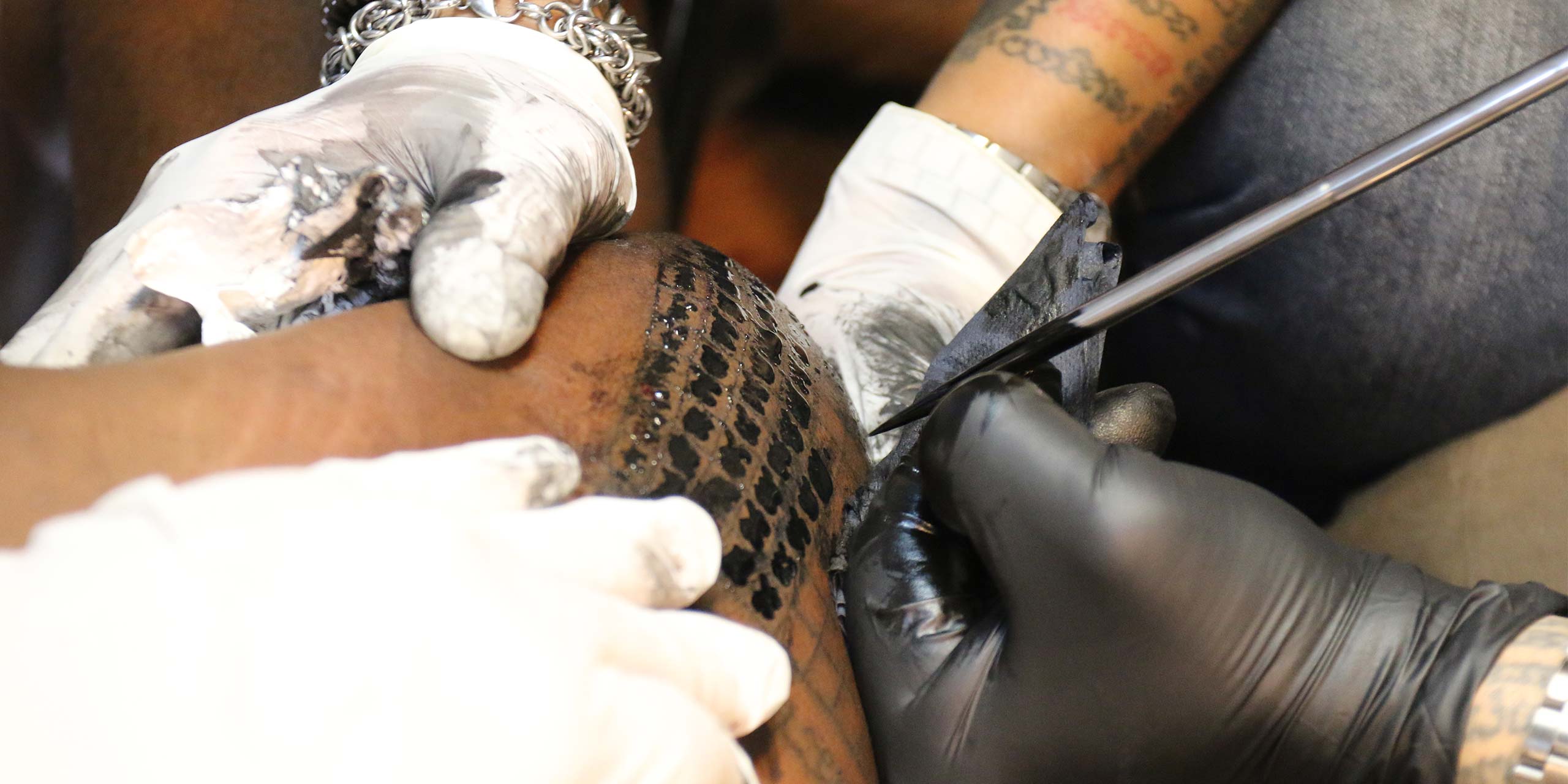
Across Thailand, monks in temples and ajarns in private studios serve devotees by applying sak yant. Each yant contains mantras written in Pali, the liturgical language of Buddhism, transcribed into Khom, an ancient Khmer script. Each tattoo is therefore unique, both for the wearer and the master. The process is accompanied by a kata, a mantra recited by the master as he inks the devotee.
“I choose the tattoo for the client depending on their needs,” Neng says. “The social aspect of this tradition is very important. I’m here to help people who arrive with questions and a desire for a new life.”
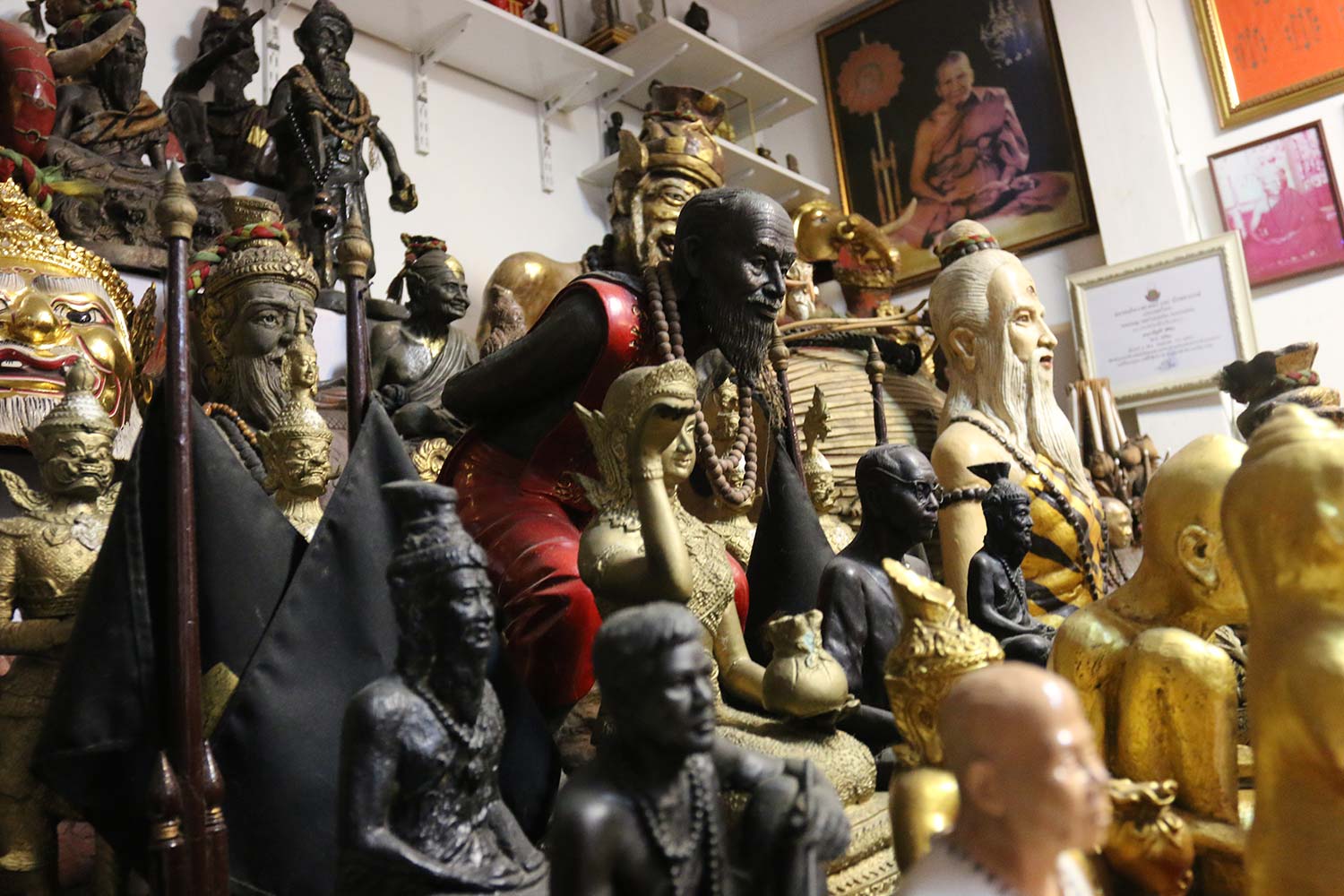
Neng’s studio is perpetually busy. He employs around 20 staff, and there is a constant flow of clients. Amid statues of ruesi (hermits), Buddhist iconography, and posters of international entertainers he has tattooed, his multilingual team advises and reassures first-time customers.
“Since Covid, I’ve had more and more foreign clients,” Neng says. “They book far in advance—sometimes years ahead. Thais prefer to walk in, so it’s become harder for them to get appointments. Right now, I’m booked solid for the next six months.”
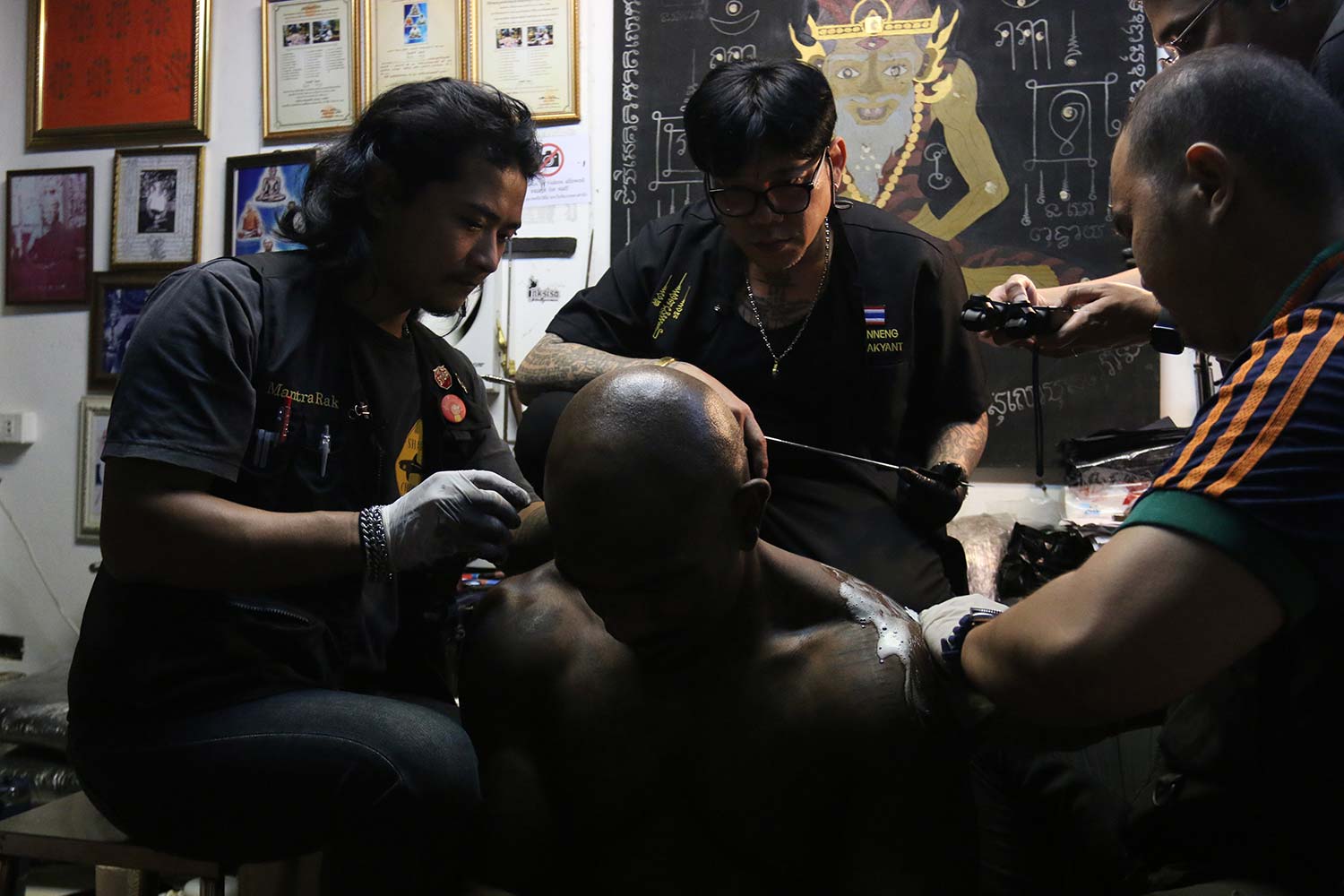
The relationship between master and devotee is central to sak yant practice. Neng often acts as a community counselor for locals and visitors alike. “People are drowning,” he says. “I throw them a life vest—but they have to climb out of the water themselves.”
Khalil Rountree Jr. is currently ranked the #4 UFC fighter in the world. Originally from Las Vegas, he has lived in Thailand to study Muay Thai and dreams of one day opening a boxing school in the kingdom.
“Training for Muay Thai in the US is extremely limited,” he says. “That’s why I came here. As I got deeper into the sport, I started noticing the tattoos many fighters wear.”
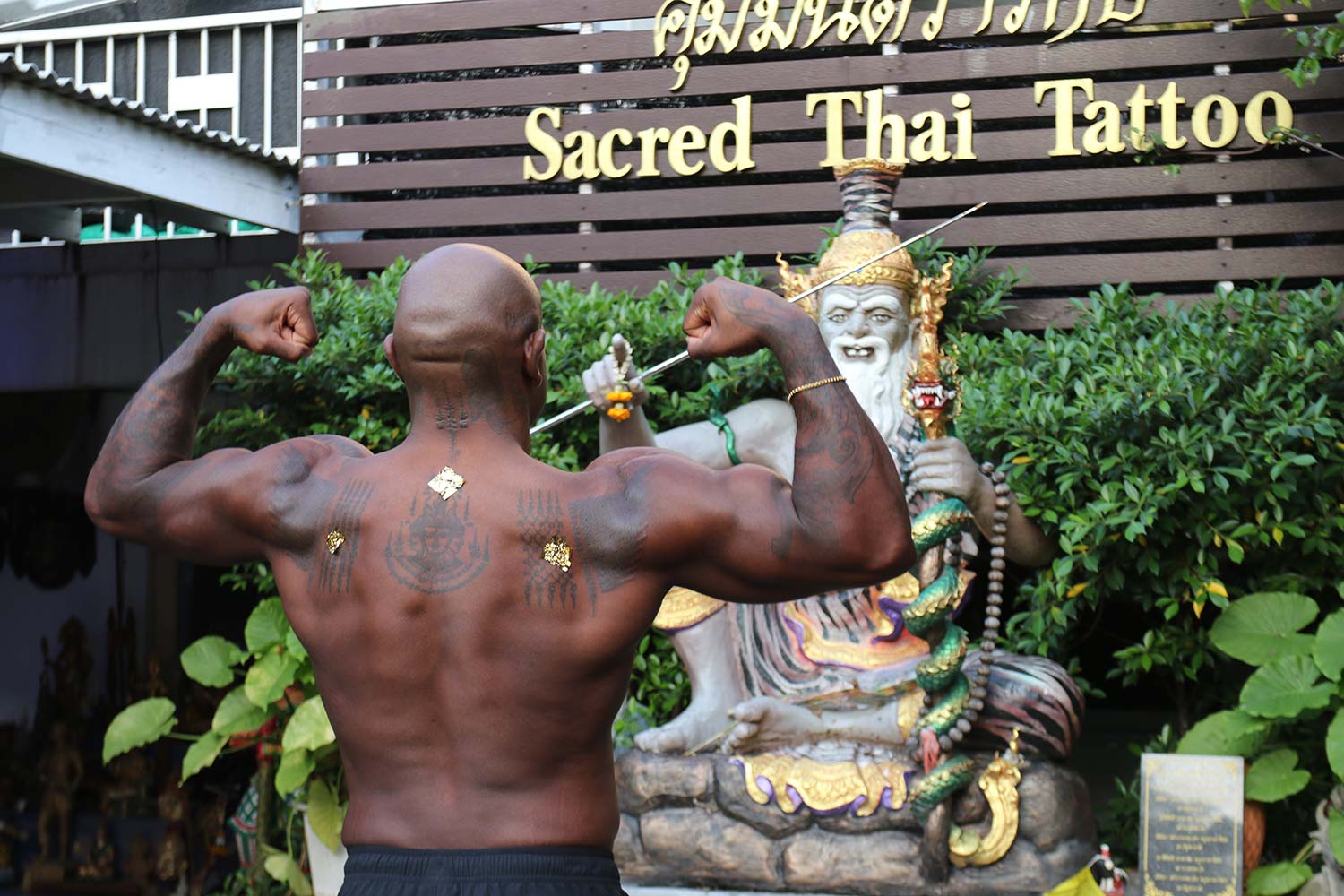
Rountree asked Thai friends about the tattoos’ spiritual benefits. “My trainer took me to an ajarn in Ayutthaya. I told him I was seeking protection and guidance—to stay on the right path. It was the most meaningful tattoo I’ve ever received. From that moment, I felt peace and pride wearing it. That led me to receive more sak yant and eventually to Ajarn Neng.”
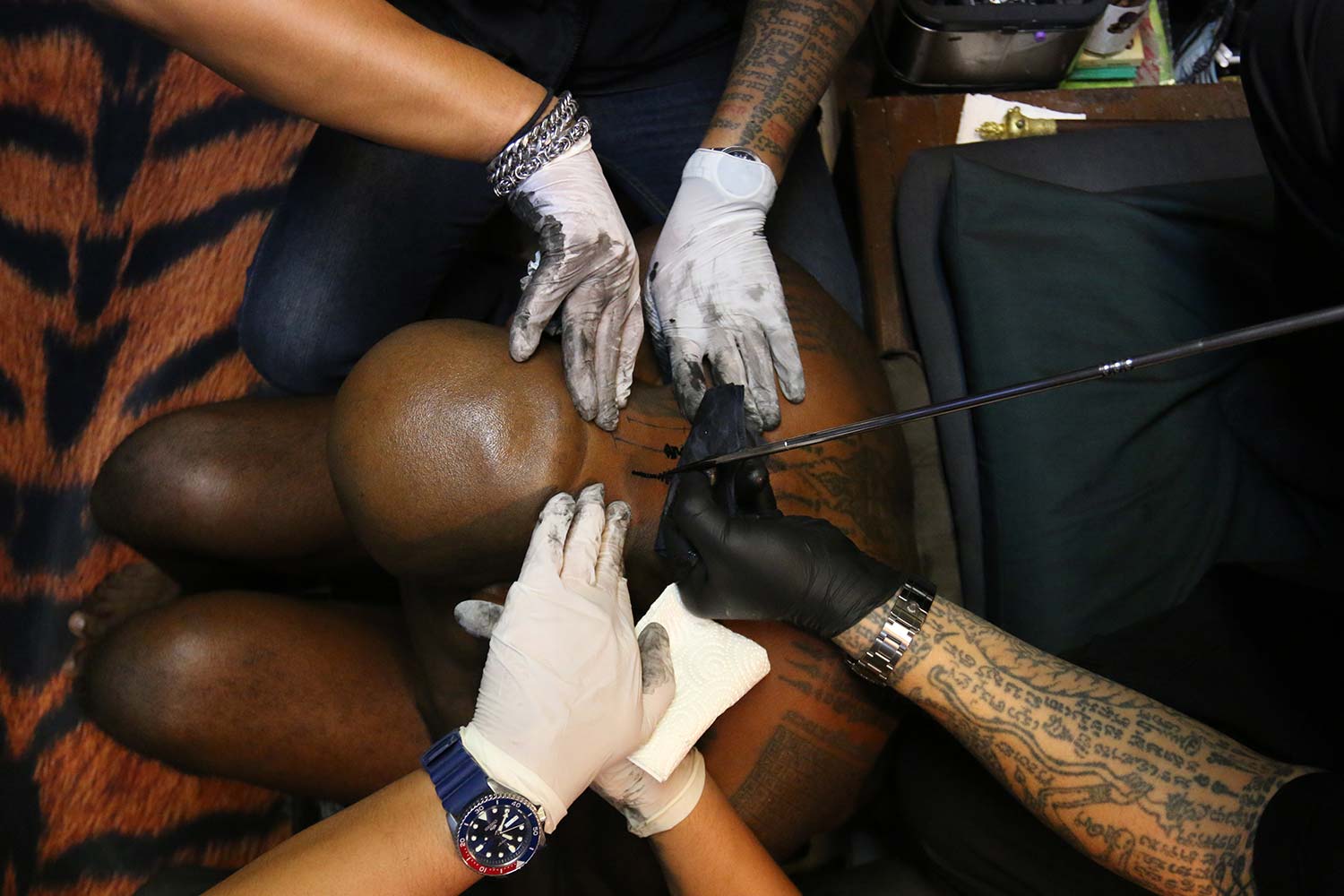
Today, wide victory flags span Rountree’s shoulders. “The prayers in the squares on my back focus on my vision for building a future in Thailand. In a few days, I’ll return to Las Vegas. I want to take this feeling with me—how grounded and clear I feel here.”
Neng selects the yant for each client. “Typically, Thais want help running a better business. Chinese clients often seek financial fortune. Farang—Westerners—are looking for yant to help solve problems in their minds. I try to help all of them.”
Traditionally, devotees have no say in the design. “We make things a bit easier now,” Neng explains. “My team speaks with the client first—about their goals, their work, what they need. Some bring designs. If it looks like sak yant but isn’t correct, we explain how it should be done properly. I have my own versions of all sak yant. If clients have placement preferences, we guide them to where the tattoo will be most effective. Generally, we don’t tattoo below the belly button.”
For the tattoo’s power to function, devotees are expected to follow certain rules—starting with the five Buddhist precepts—along with specific prohibitions set by the ajarn.
“Sak yant have become fashionable,” Neng reflects. “Young commercial tattooists create new designs, but the roots are no longer the same. The spirit has changed. They don’t understand the mantras because they can’t read Pali or Khom. The tattoos become purely aesthetic and lose their supernatural power.”
“I’m sought after because I do things the ancient way,” he continues. “If an artist doesn’t understand the kata they tattoo, they may unleash negative energies. A lack of knowledge can cause harm.”
Neng’s son, Ake, has followed his father’s work since his teens. Now 26, he is building his own client base. Clearly proud, Neng ensures his son is thoroughly prepared. “We want to maintain quality among every master trained here,” he says. “Some people become masters after studying online. They may get the image right, but attach the wrong spell.”
Neng is open to teaching foreigners and would consider training a female sak yant practitioner. “In the past, menstruation was considered impure. That’s no longer true. Of course, sitting ten hours a day, seven days a week, can be physically demanding.”
Rountree Jr. is far from the first celebrity Neng has tattooed. Steven Seagal was an early admirer, and Brooke Shields also visited. More recently, British singer Ed Sheeran received a sak yant.
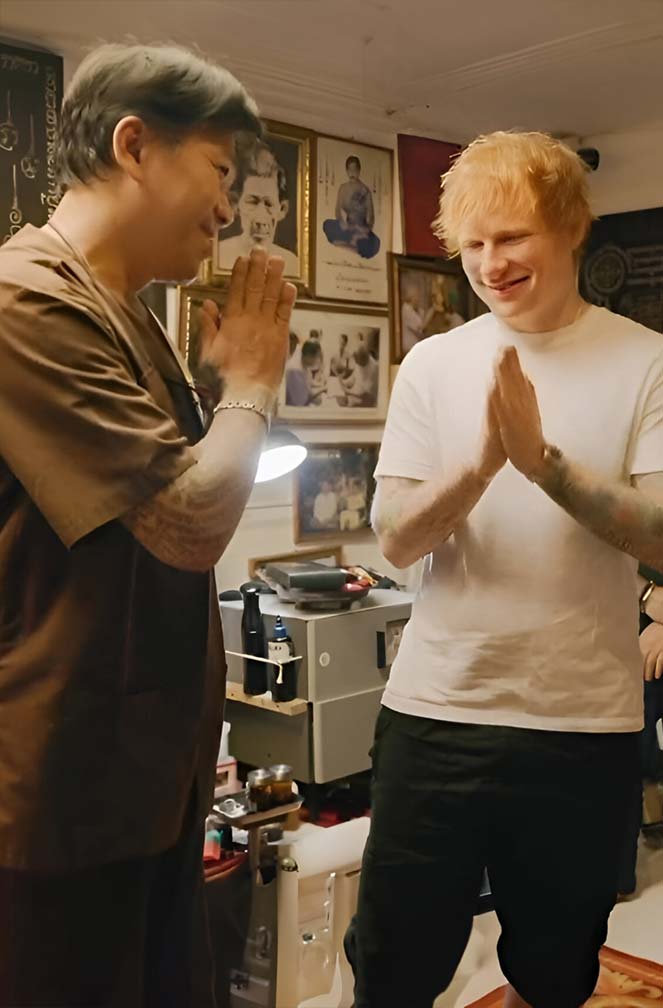
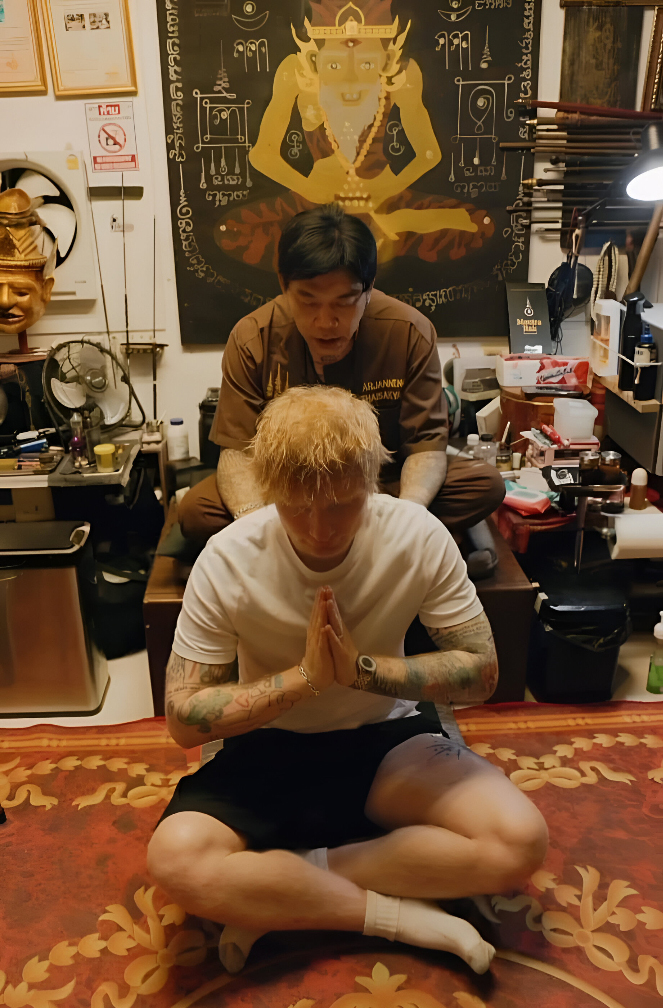
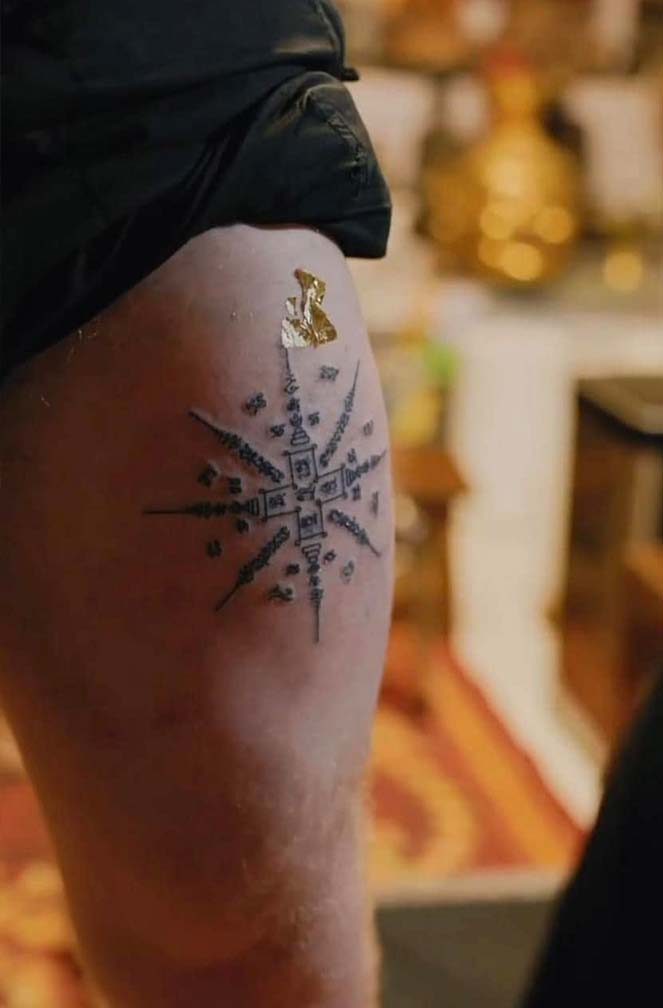
“Ed had a concert in town, and his Thai team contacted me,” Neng recalls. “He came by, I tattooed him, and he loved Thai food and culture—that’s why he wanted a sak yant.”
Rountree feels similarly. “I’ve fought in Azerbaijan, Australia, Scotland, and Argentina,” he says. “But my goal is to train and teach here. I want to start a family, and I don’t want to do that in the US.”
Ajarn Neng remains devoted to his calling. In the coming months, he will travel to Japan, China, France, and the Philippines to share sak yant culture. “I’m fortunate to work in something I love. It’s my mission to keep the tradition alive. I’m opening a second studio on Ratchadamnoen Road, which my son, Ajarn Ake, will run.”
He pauses, smiling. “My dream is to meet Whang-od Oggay. She’s been tattooing since she was 11 and is now 108. Tattoo masters need heroes too.”