

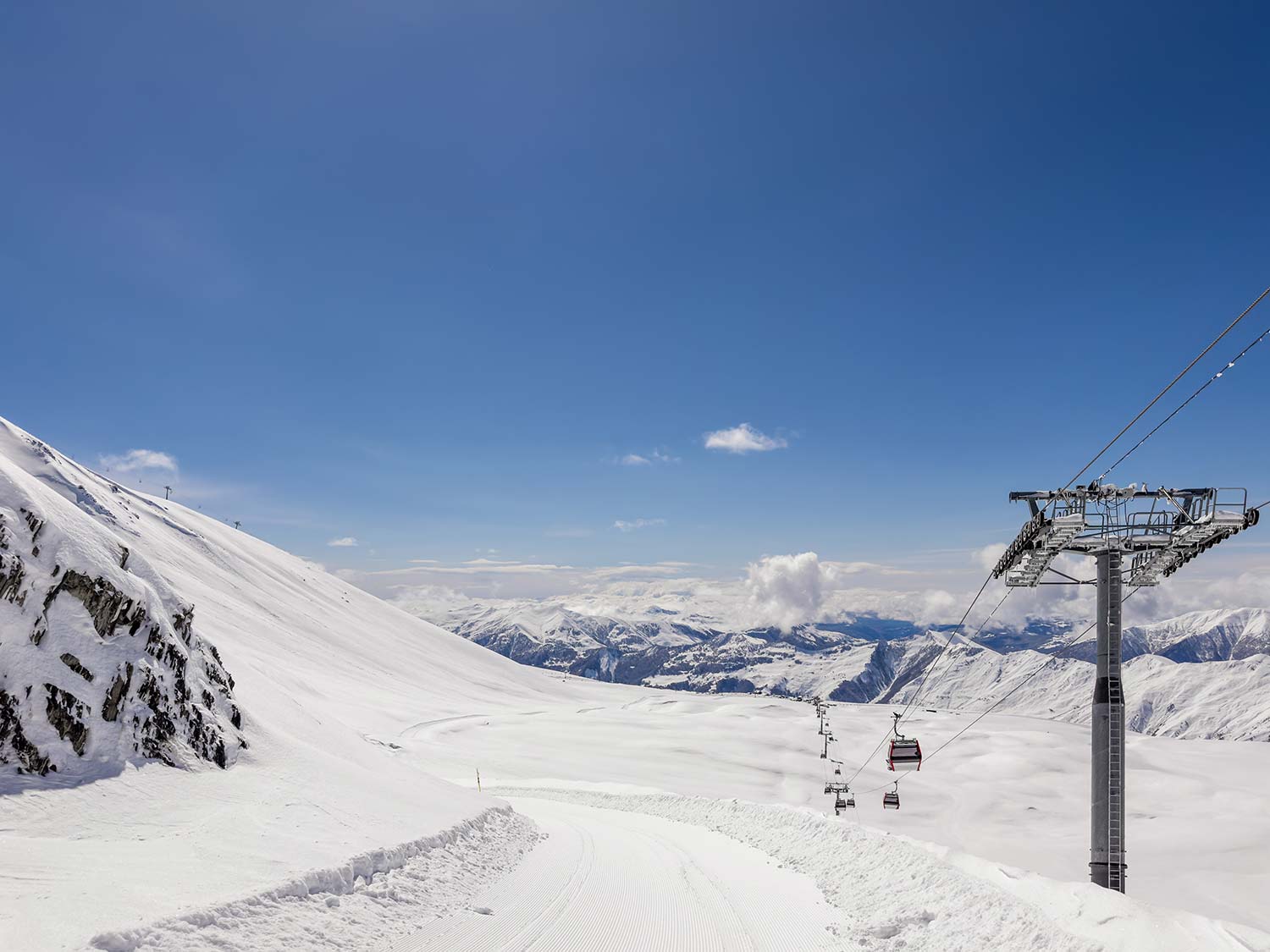
The first time I went to Gudauri, I was learning to ski. The mountain was buzzing: a white dome crisscrossed with tracks from hundreds of skiers and snowboarders drawn by low prices, easy access from Tbilisi, and broad, treeless slopes.
The second time, the ski season was over. The snow had melted, and the jagged spine of high mountains beyond Gudauri was calling to hikers and trail runners instead.
Georgia may be best known for its wine, but its mountain adventures are fast becoming an equally powerful draw.
More than ever, the Caucasus offers a genuine year-round circuit. From Svaneti’s high peaks to Borjomi’s pine-covered ridges, you can run forest trails in summer and fall, ski above deep valleys in winter, and hike alpine meadows scented with wildflowers in spring.
Easy adventures from Tbilisi
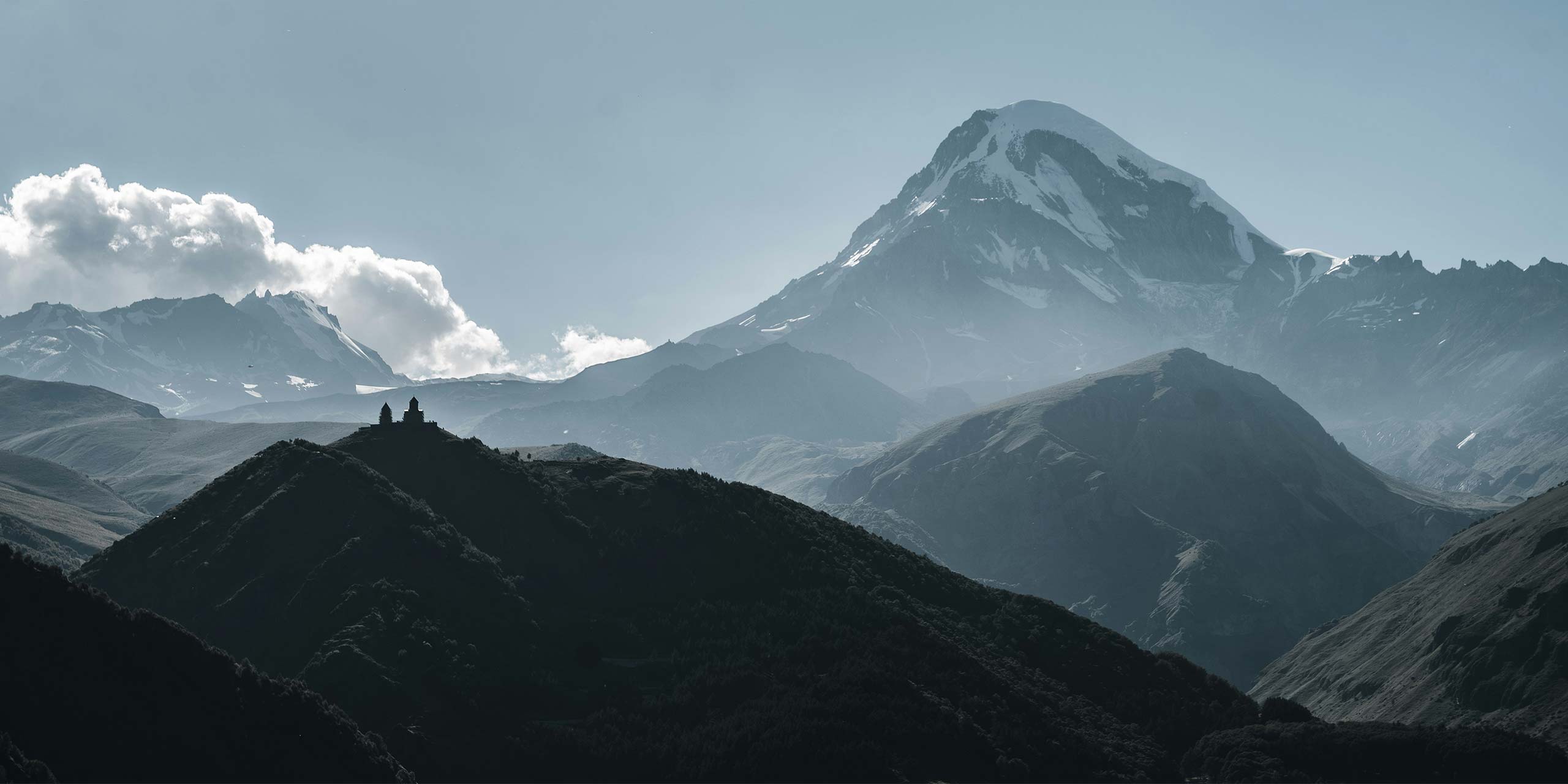
Georgia’s northern border is defined by the Greater Caucasus, including the towering 5,054-meter (16,581-foot) Mount Kazbegi, one of the country’s three 5,000-meter giants.
Most travelers come to see the iconic peak, staying overnight in Stepantsminda. And for good reason. The arrival of the homegrown luxury brand Rooms Hotel cemented the town’s appeal, making it one of the capital’s best year-round escapes.
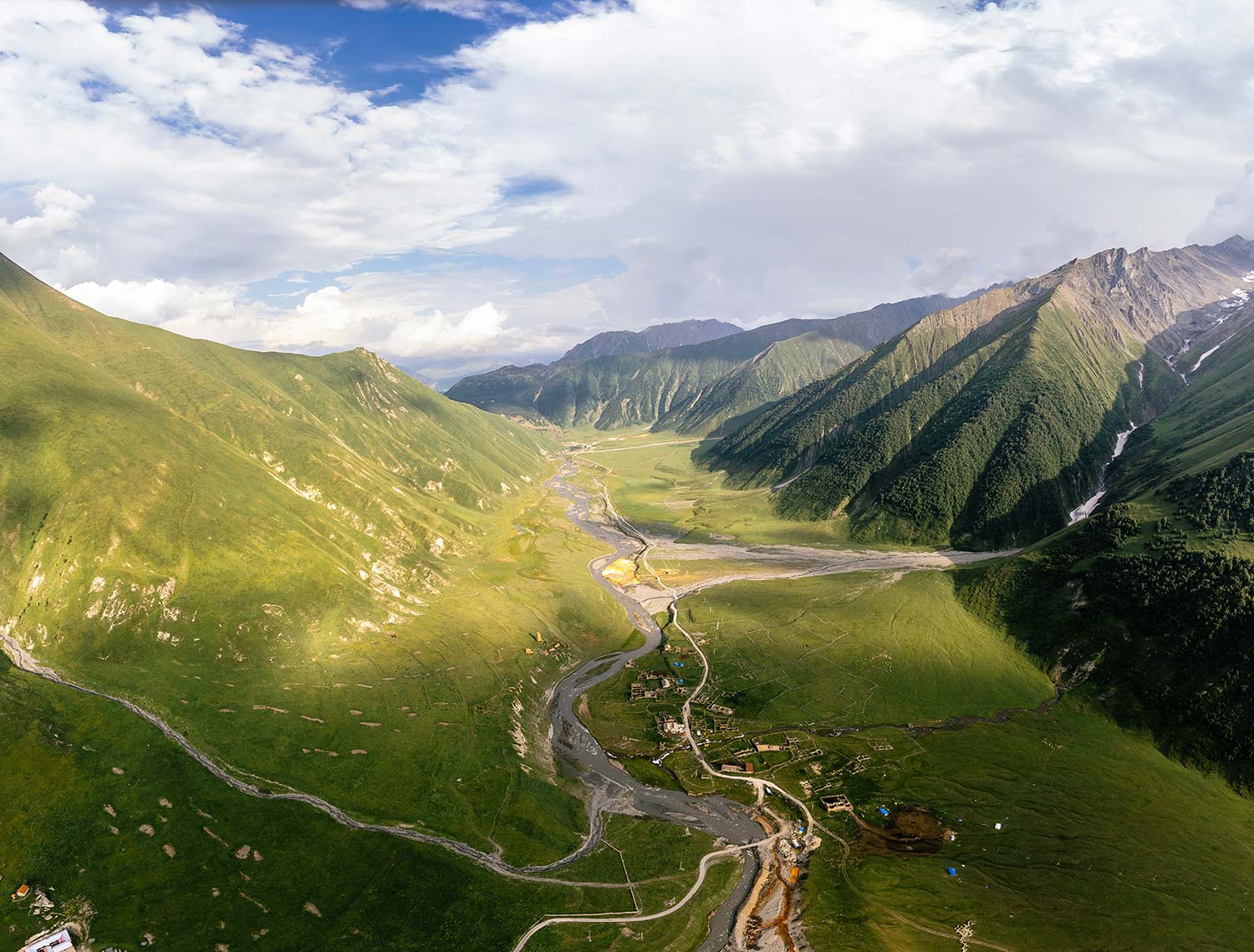
From here, hikers fan out toward summer trails in Juta and the Truso Valley, or push past the iconic silhouette of the Gergeti Trinity Church toward Kazbegi itself. In winter, attention shifts to Gudauri, a well-equipped ski resort just 30 minutes south of town and two hours from Tbilisi.
Georgia also has a growing trail-running culture, and Stepantsminda has become a flagship destination. Each August, TrailLab, the country’s busiest race organizer, stages long, technical mountain races across Kazbegi’s high terrain—one of the highlights of the annual calendar.
Svaneti’s high peaks
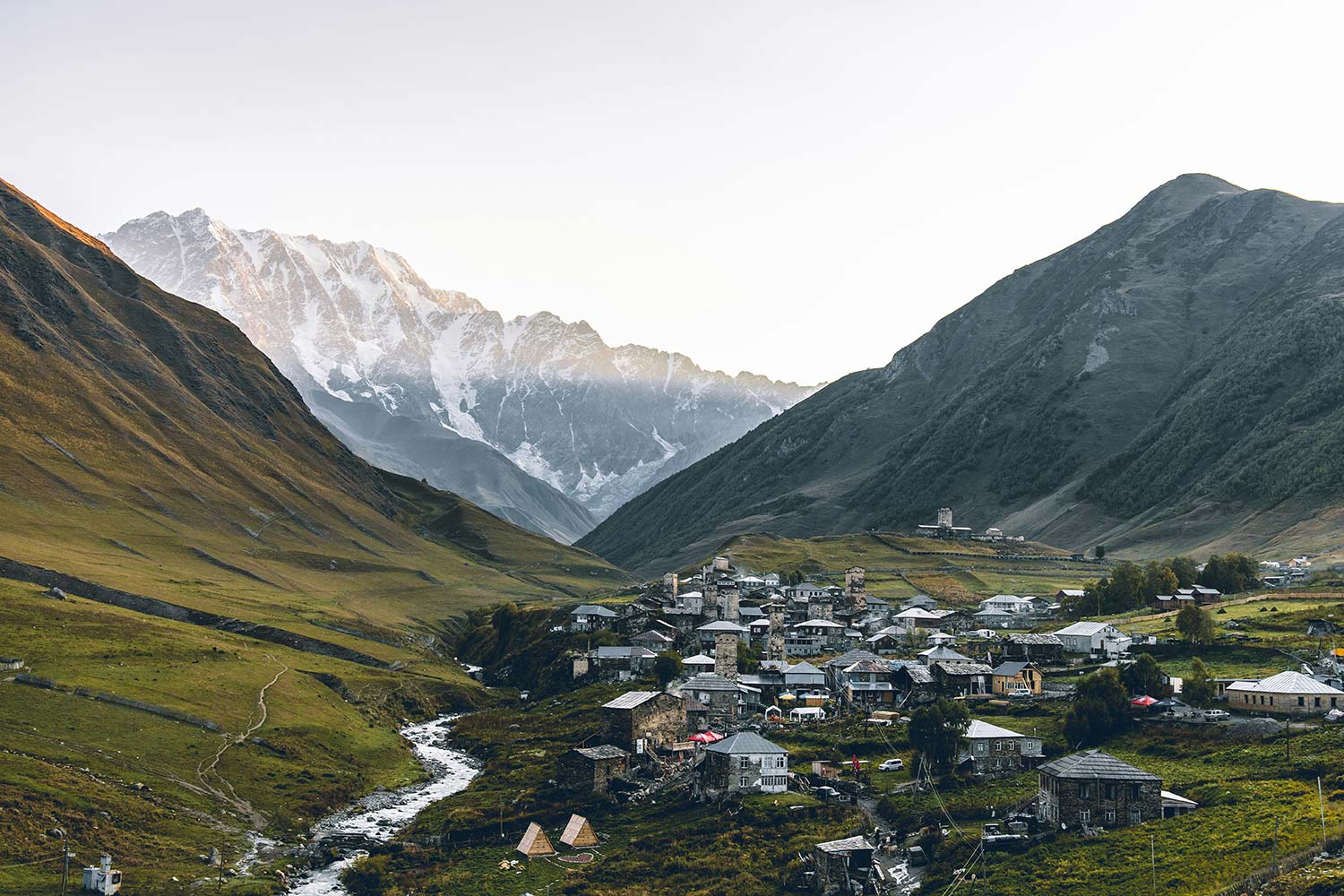
While Kazbegi has long been the most popular gateway to Georgia’s mountains, Svaneti has emerged as a formidable rival.
Home to Europe’s highest continuously inhabited settlement at Ushguli, and dominated by Ushba’s icebound twin summits above Mestia, this is where Georgia’s mountain scenery reaches its apex. What has changed is accessibility.
Once a multi-day commitment, Svaneti now works as a long weekend thanks to much-improved road and air access.
Most visitors come for the classic four-day trek from Mestia to Ushguli. From June through October, hikers pass through traditional villages, growing familiar with the northern peaks and the medieval stone towers that define the region.
In summer, fields glow green with wildflowers, yet mornings remain crisp. When I visited for a half-marathon in July, I’d sit on the terrace with coffee, watching turboprops lift into the mist.
Thanks to improved access, Svaneti also shines in winter.
Two ski resorts—Tetnuldi and Hatsvali, just outside Mestia—offer groomed runs alongside freeride and backcountry terrain. During the race, I ran beneath Hatsvali’s slopes, eyeing its cable cars longingly as I climbed through the pines.
Pine forests and hot springs
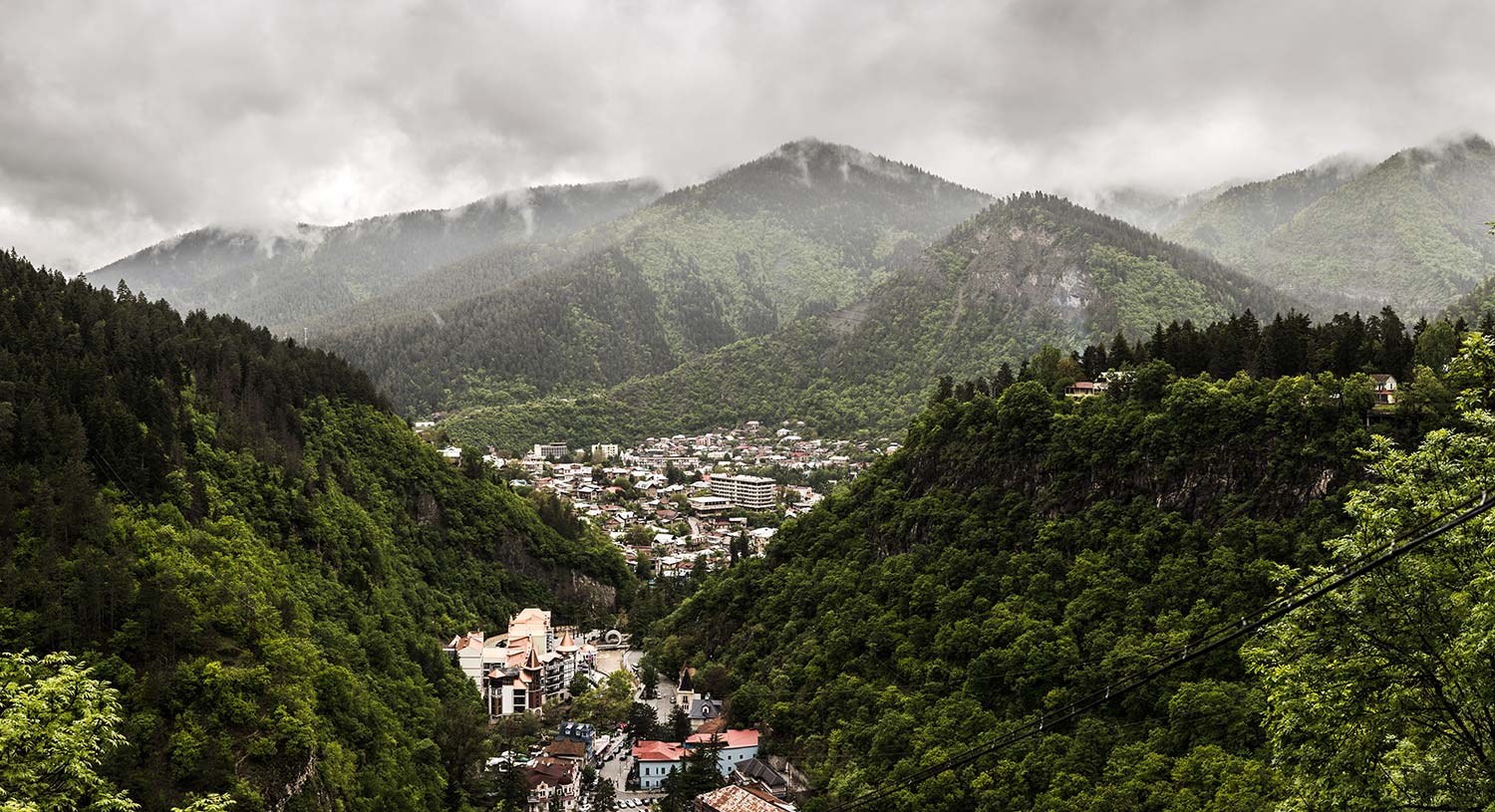
South of Svaneti, Borjomi marks the entry point to Georgia’s lower mountain terrain, thick with pine forests.
Once hunting grounds for Georgian kings, and later a restorative retreat for Russian nobility, Borjomi still bears traces of its past. Restored dacha houses, rattling cable cars, and sulfur pools built atop nineteenth-century tsarist baths dot the town. The famously divisive (due to its highly mineralized flavor) Borjomi mineral water flows from natural springs nearby.
But this is trekking country. Just outside town, the 85,000-hectare (210,000-acre) Borjomi-Kharagauli National Park offers well-marked routes linking simple wooden shelters across long, quiet ridgelines.
Wildlife adds to the appeal. Brown bears, lynx, and red deer roam the forests, while golden eagles and Caucasian black grouse are among the park’s 200-plus recorded bird species.
Trekking is best in spring, summer, and especially fall, when fir needles soften the trails and oak and birch leaves turn gold. With more modest elevations than the high Caucasus, the park is ideal for long days on foot without the demands of altitude.
When I trekked here in late October, snow was already dusting the mountaintops. Frosted pines and white-capped peaks made for dramatic scenery. The fresh bear tracks in the mud were less welcome.
For those who prefer to avoid bears, winter brings an alternative. Bakuriani, a low-key ski base 40 minutes south, is Georgia’s most family-friendly ski destination, with gentle slopes, reliable snow, and an easygoing resort atmosphere.
Quiet valleys and vacant ridges
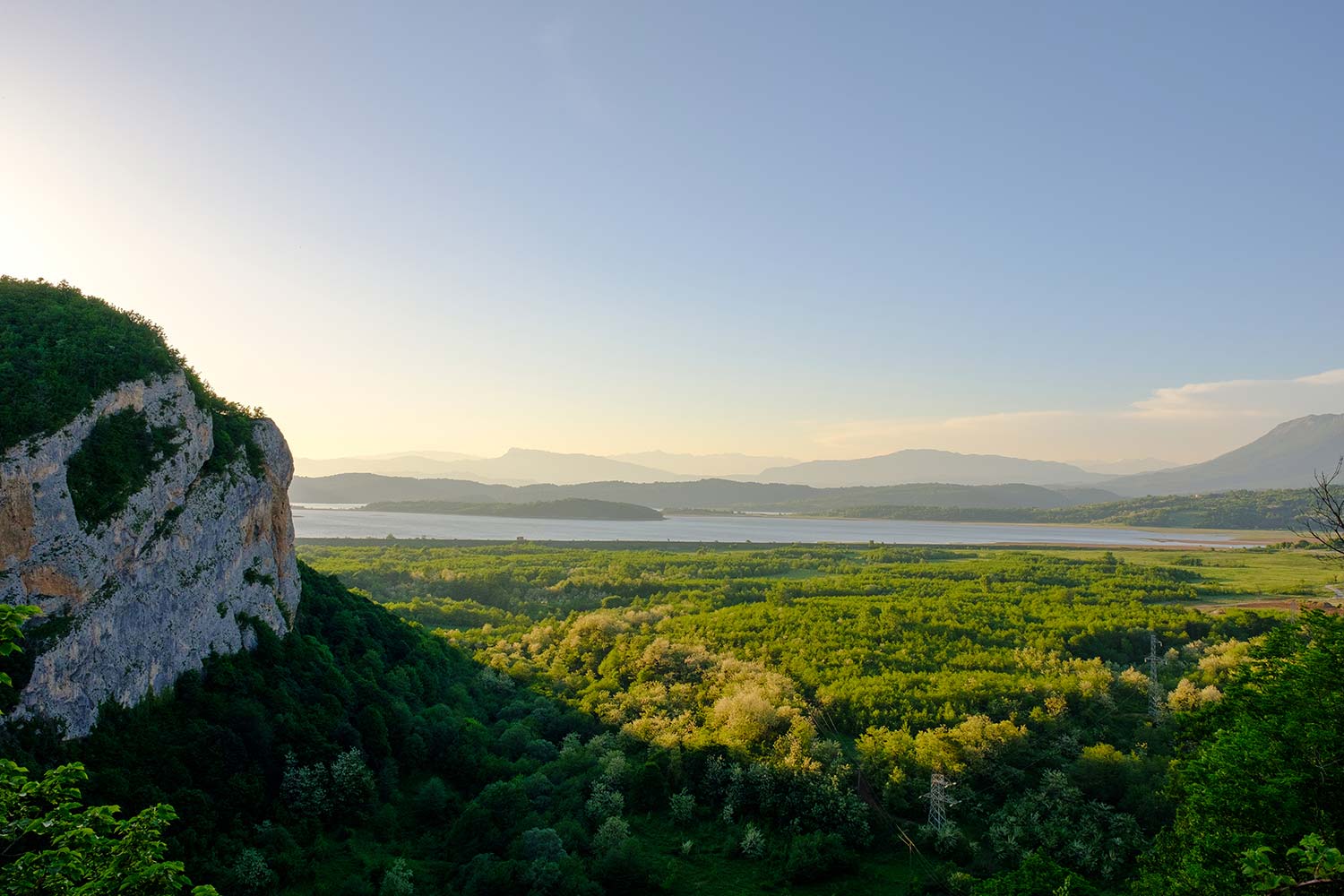
Wedged between Svaneti, South Ossetia, and Russia, Racha remains one of Georgia’s least-visited mountain regions—and, for those who make the journey, one of its most rewarding.
Shaori Lake is often the first stop: a mirror-still reservoir ringed by dense woodland that turns fiery gold and copper in October.
From there, the road climbs toward Tskhrajvari, a sacred site that rewards the steep ascent with sweeping views of the surrounding valleys and, on clear days, the high Caucasus beyond. New stairs and handrails installed in 2022 have made the short but vertiginous hike more accessible.
Deeper into Racha lies the riverside town of Oni. Its historic synagogue, built in 1895 and restored after the 1991 earthquake, is among the region’s most important cultural landmarks. According to legend, a stone from Jerusalem’s Second Temple landed here when it was destroyed, and the synagogue was built on that spot.
Oni also marks the end of a 74-kilometer (46-mile) section of the Transcaucasian Trail. A newly connected, still-unmarked stretch now links Imereti—home to Kutaisi and former mining towns like Chiatura—with Racha, opening up multi-day trekking routes that were once difficult to access.
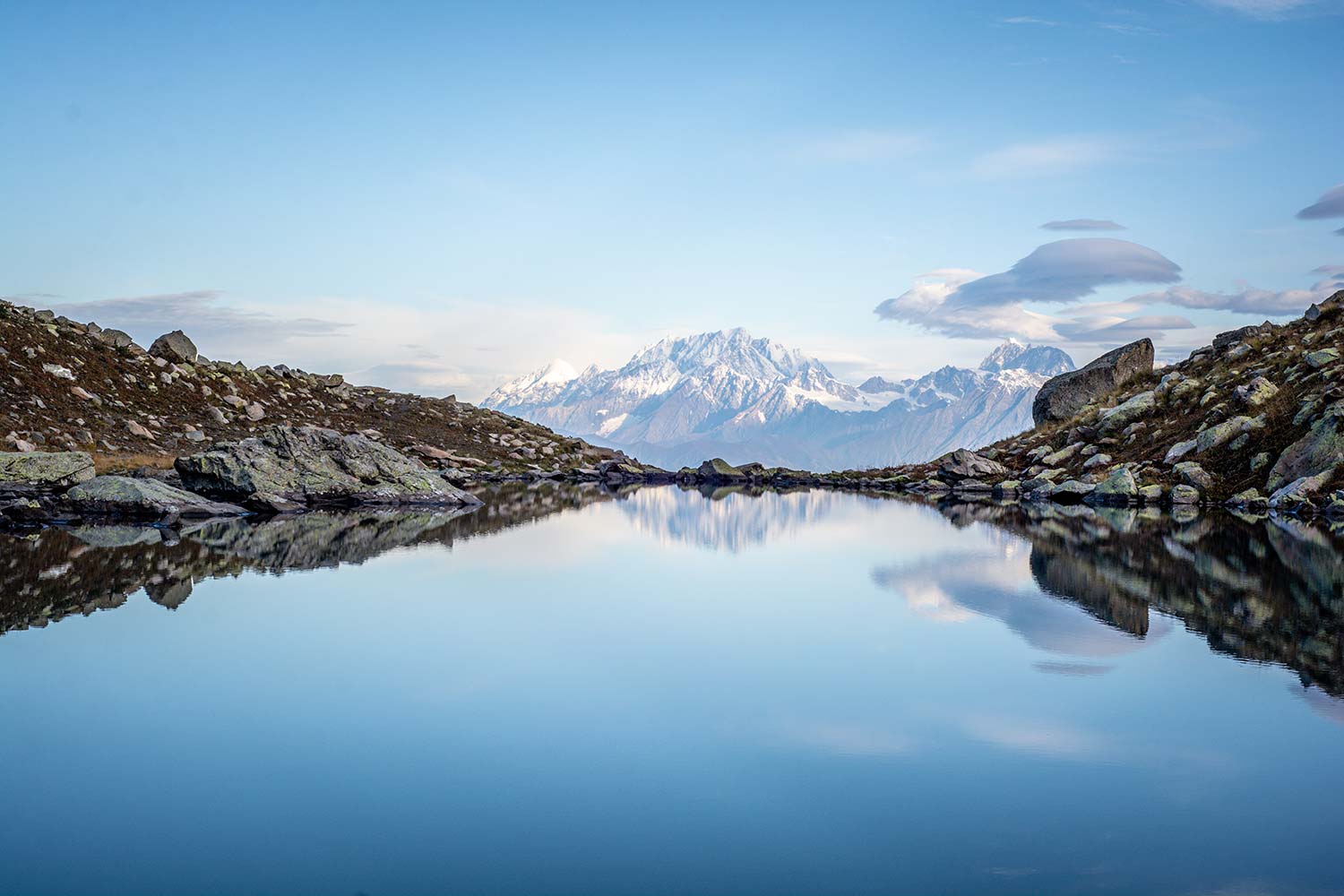
From Oni, hikers can push on to Udziro Lake, a high-altitude loop with one of the region’s best panoramic payoffs, or tackle the Buba Glacier trail, which climbs through remote alpine terrain to a sweeping glacier viewpoint.
As with any good Georgian retreat, evenings in Oni revolve around food and wine. At Family Guesthouse, local schoolchildren performed traditional songs and dances while we drank homemade orange wine and khvanchkara, the semi-sweet red made from Aleksandrouli and Mujuretuli grapes grown only in Racha.
It was a fitting end to a long day in the mountains.
In winter, Racha offers a different kind of thrill. Its broad ridges and empty bowls hold serious backcountry skiing potential for experienced skiers willing to earn their turns.
After a year on Georgia’s trails and ridgelines, I came to the same realization shared by everyone who explores these mountains: there’s always another valley, another ridge, another season waiting.