


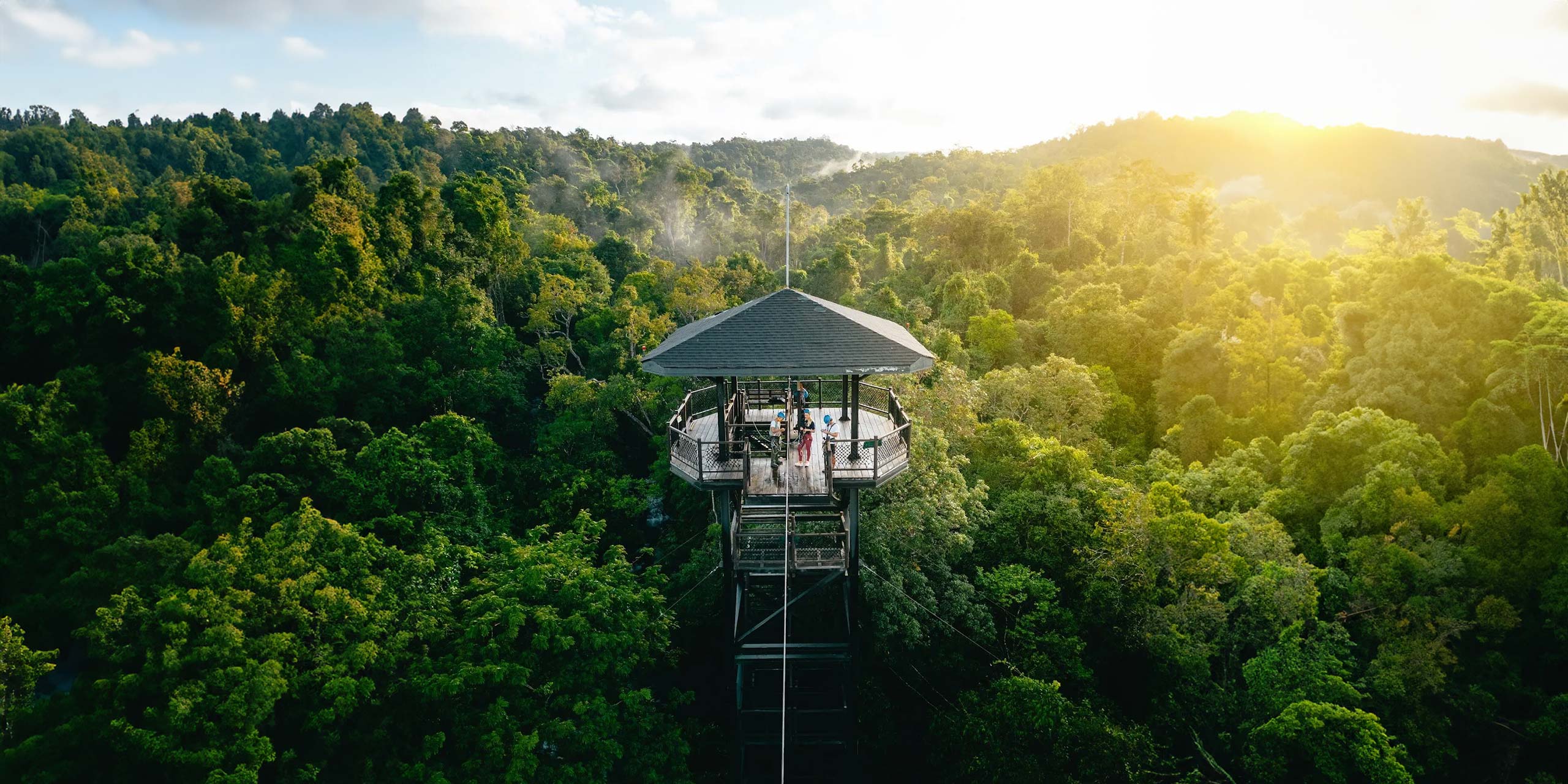
When Bill Bensley designed Shinta Mani Wild in Cambodia’s Cardamom Mountains, he was thinking about Jackie Kennedy.
The former First Lady famously visited the country in 1967 to see Angkor Wat, which she called her “girlhood dream come true.” So Bensley wondered, “What if King Sihanouk had invited her on safari to the Cardamom Forest in 1967? What would she have experienced? How would she have arrived? What would the tents look like? This was my driving inspiration and the DNA behind Shinta Mani Wild.”
It’s easy to see and feel this origin story, even if you stay in one of the camp’s other 14 guest tents. And while Jackie travelled as royalty, she was also passionate about historical preservation, a champion of the arts, and an unofficial ambassador for the United States.
It’s fitting, then, that within the framework of her iconic elegance, Bensley has placed the true purpose of Wild front and centre. He was smitten with this area the first time he visited, and when he learned of the threats posed by logging and mining companies, he felt compelled to act.
“I didn’t choose this place because it was easy,” he says. “I chose it because it needed protecting.” This sense of responsibility resonates throughout the camp and connects directly to the Shinta Mani Foundation, which works to “open doors, open hearts” through programmes that provide education, healthcare, small business development and environmental preservation.
Every guest at Wild becomes an active character in this interwoven saga of adventure, conservation and community service.
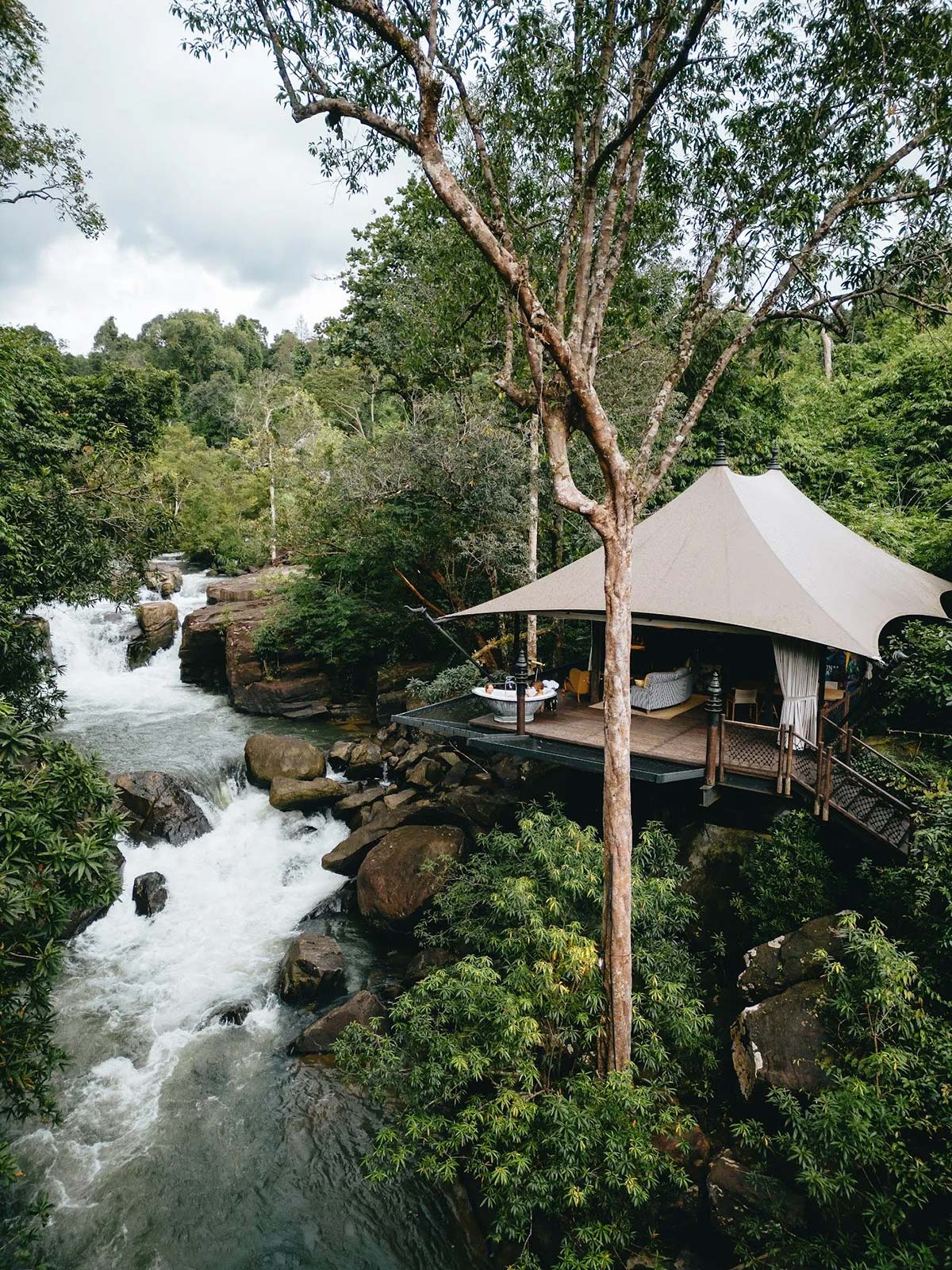
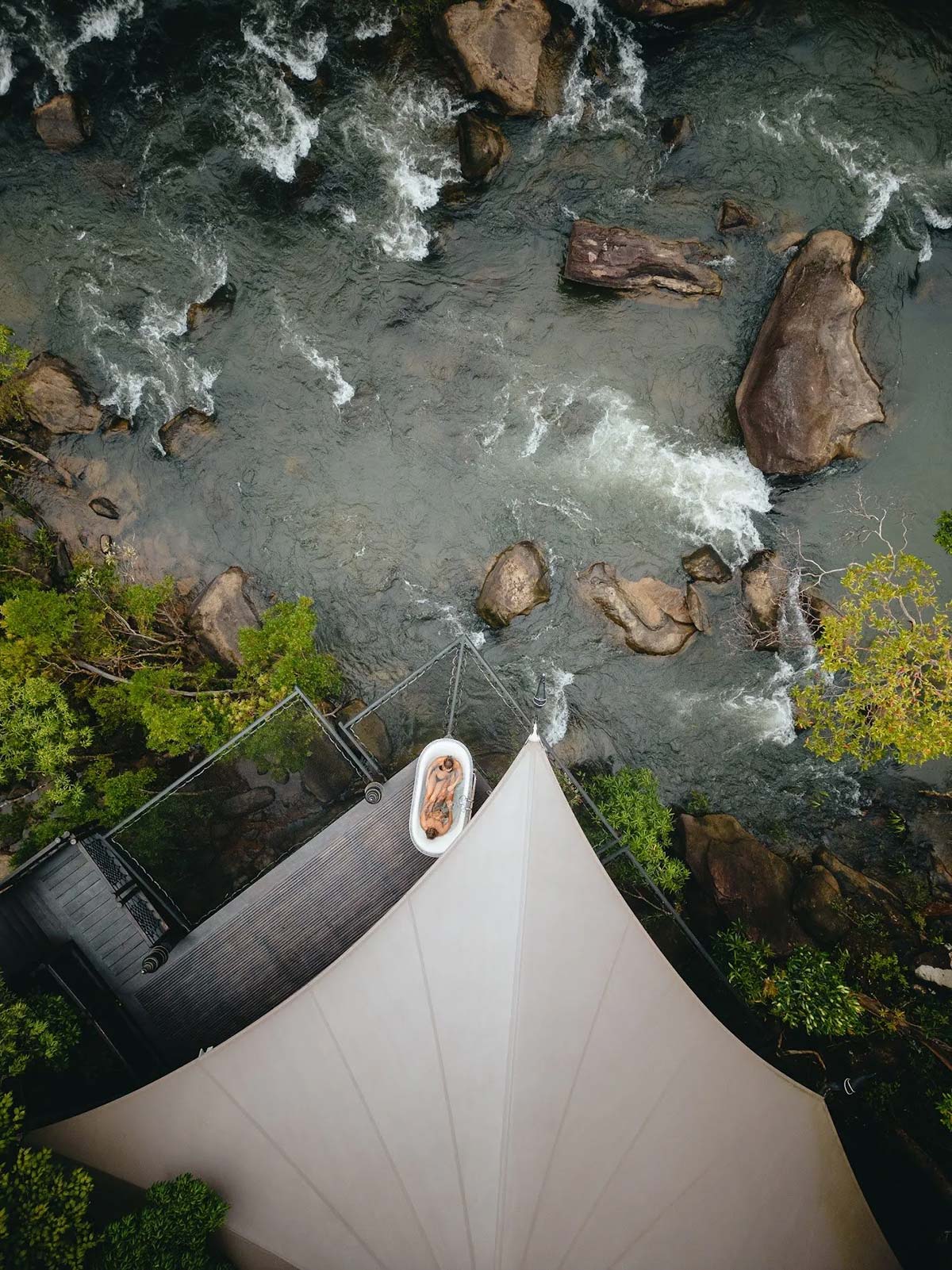
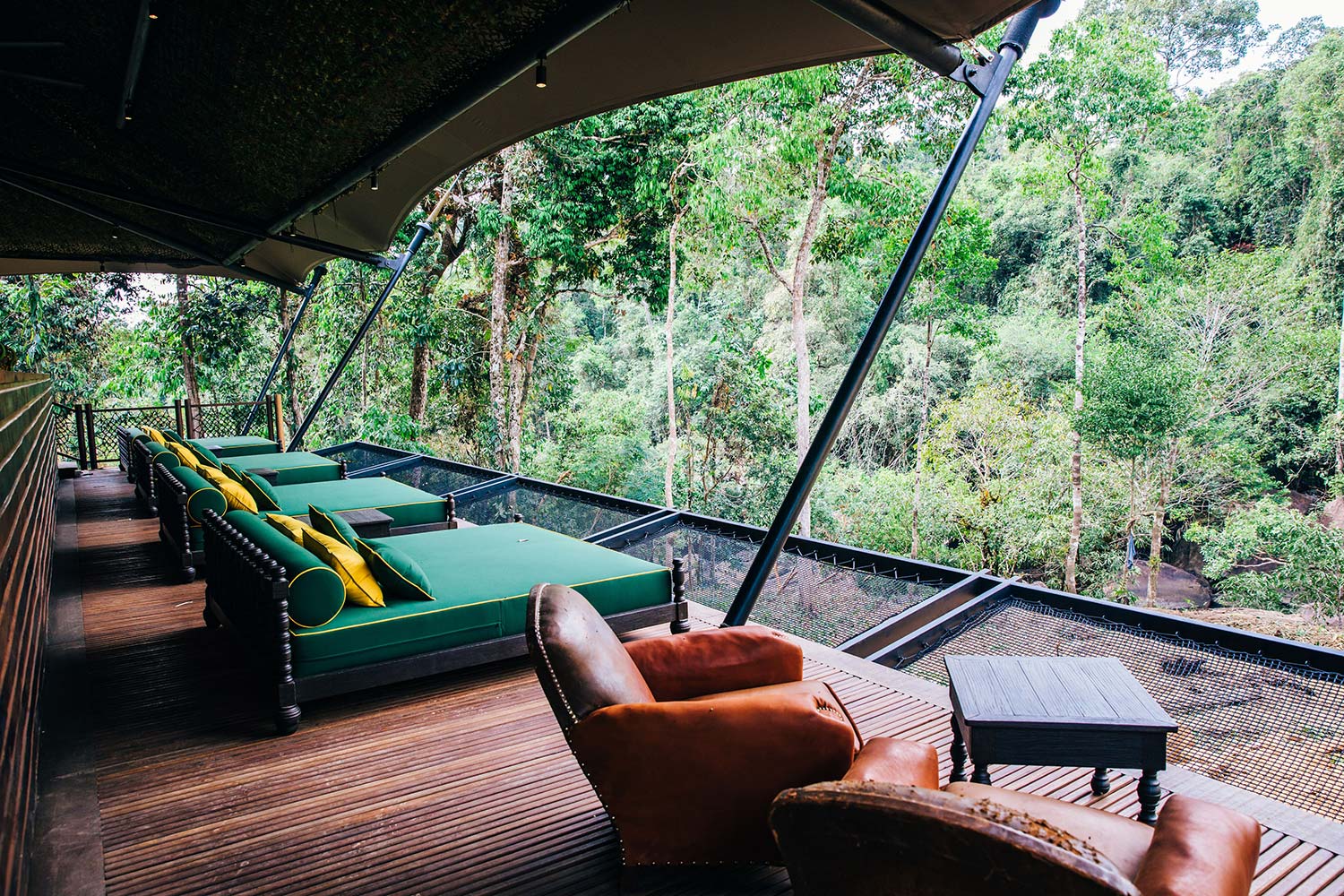
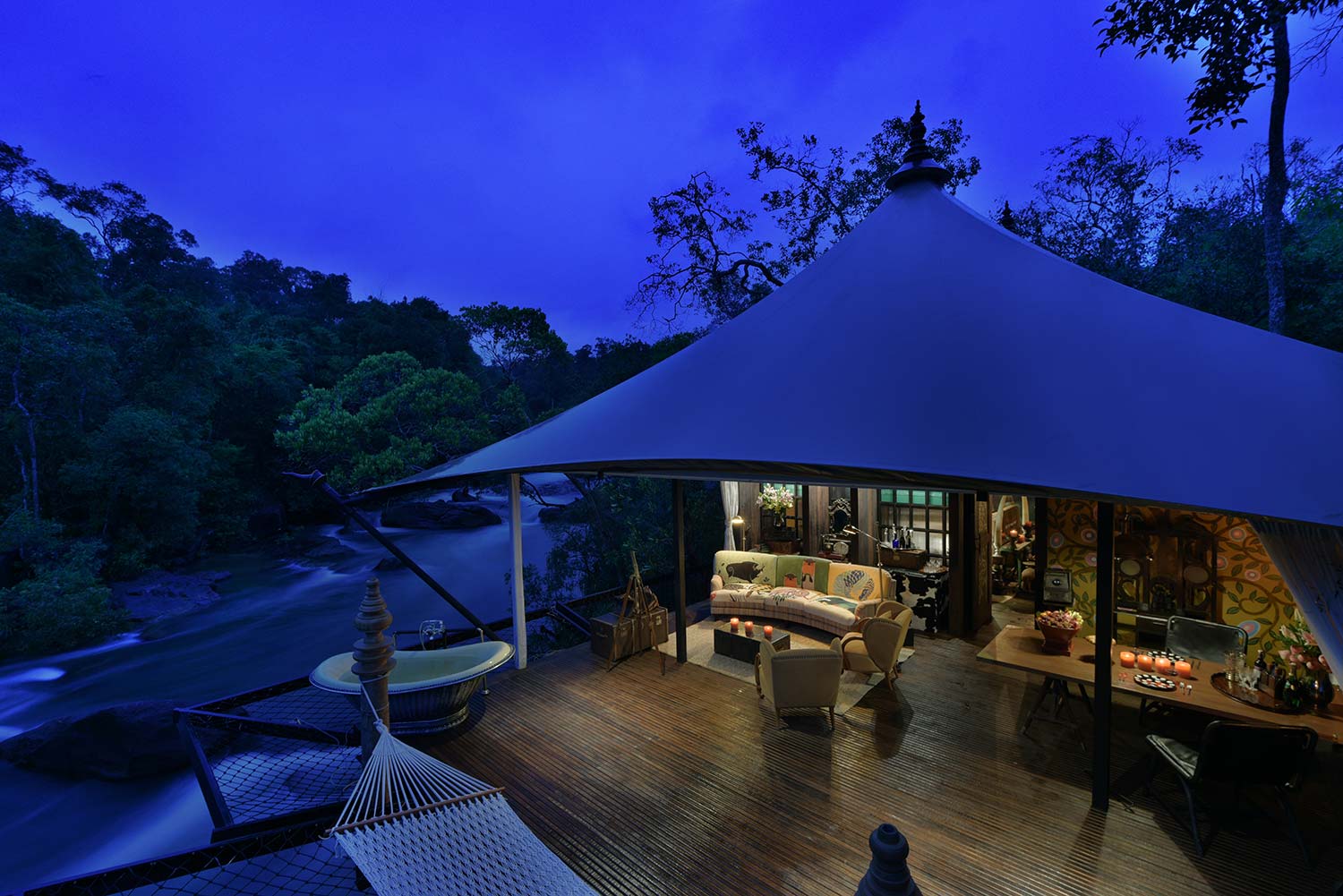
When our butler takes his leave, my wife, Yupin, and I find ourselves entirely alone, surrounded by jungle, perched on a rocky bluff above the tumid Tmor Rung River. There are no other tents within sight. No sign of human activity beyond the borders of the hammock-like netting that stretches from our deck. The outdoor bathtub needs no curtain. The combination of heavy, old-time canvas and a treasure trove of antiques firmly sets our adventure in the golden age of travel.
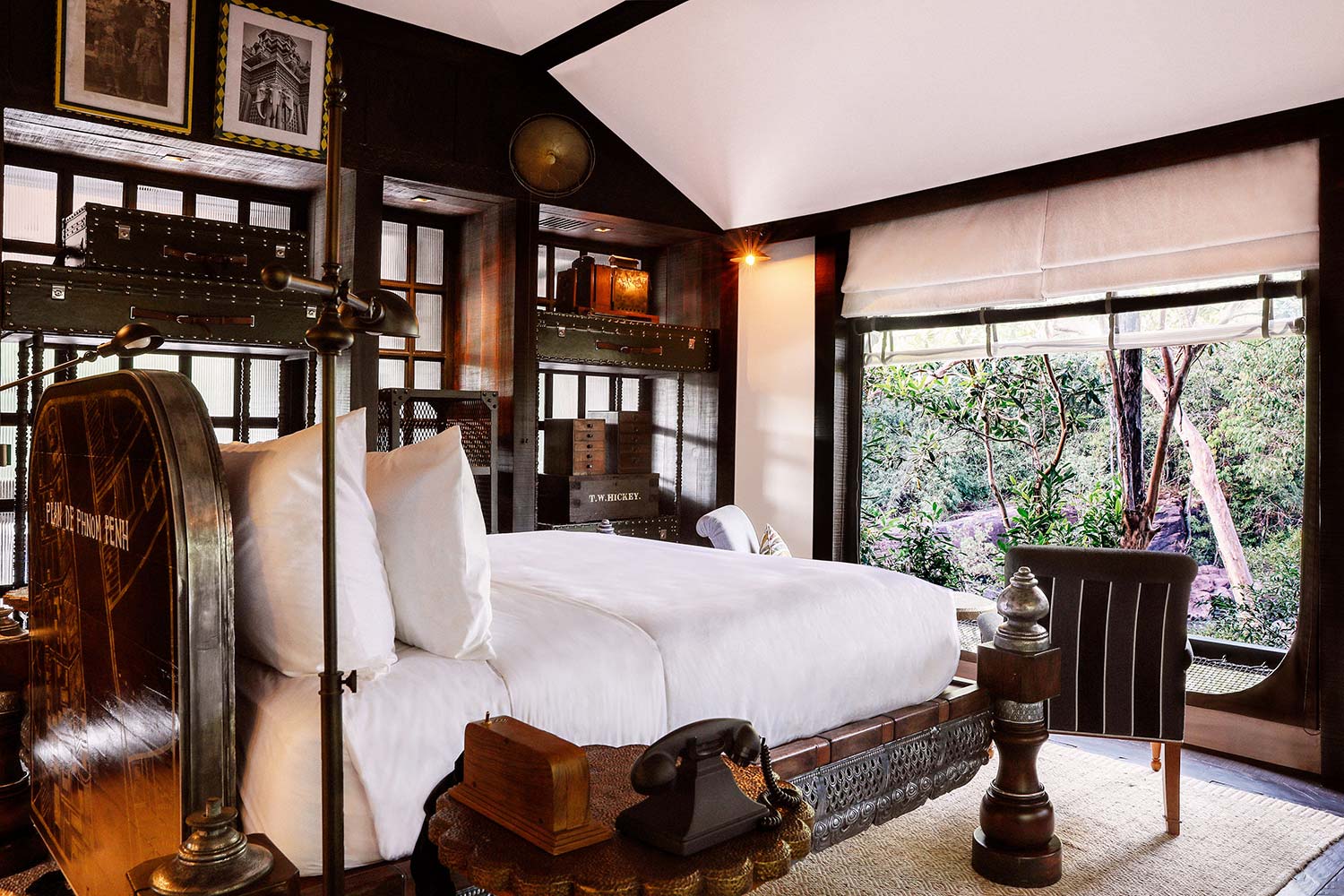
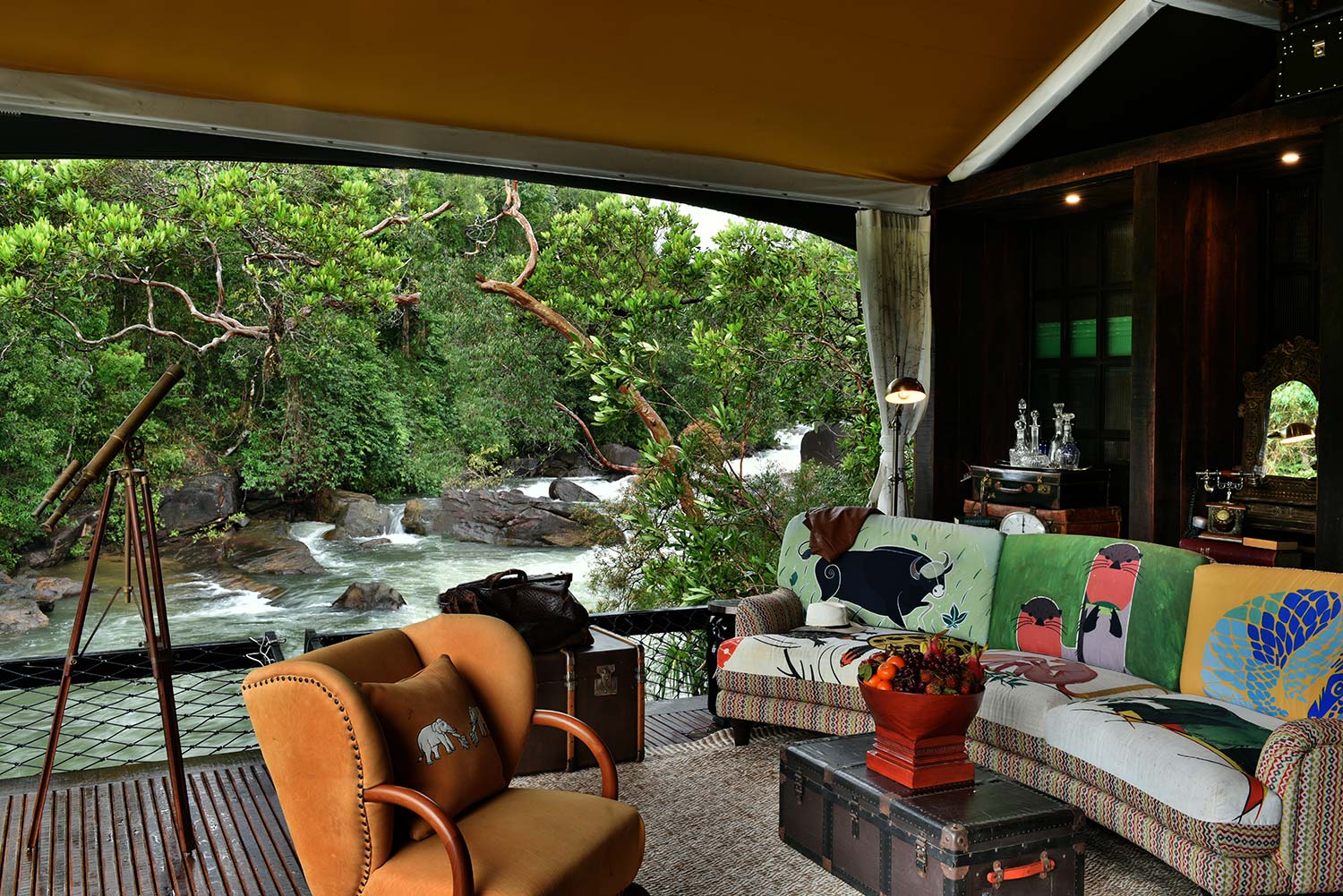
Yes, our home for the next three nights has electricity, Wi-Fi and hot running water. But aside from these invisible comforts, the illusion is complete. We are one with a time out of time, and as our senses fill with the scent of leaves and earth, and the sounds of insects and the river, we are also one with the jungle.
It’s easy to imagine ourselves, fully immersed, in the company of the former First Lady, sipping gin or whisky as we watch the rapids swirl below.
This is the languid, total immersion Jackie would have known, something rare in modern travel, yet faithfully recreated here. When I think of true immersion, I think of the ocean or learning a language. You have to dive in completely. No dipping your toes.
That commitment reveals itself at Shinta Mani Wild from the very start. Guests arrive at the top of a seven-storey fire tower, from which a zipline runs 400 metres across the valley and into the jungle. Harnessed in, I step off the platform into open air and into the awaiting story, like Tarzan, albeit with a much stronger vine. I land, follow our butler down a short path to a second launch point beside a thundering waterfall, then take flight again, zipping over the falls before coming to a stop at the Landing Zone bar.
Staff wait with fresh coconuts, wooden signs and wide smiles. Up close, the signs reveal themselves as selfie-ready markers of arrival. “No longer zipline virgin.” We have arrived.
As we acclimatise to this world of adventure, we are already helping to defend the largest uninterrupted rainforest in Southeast Asia. Every guest stay contributes to funding park rangers and the Wildlife Alliance, the NGO that combats poaching in the region.
One of Bensley’s core aims was to demonstrate that conservation can be more profitable, both economically and ecologically, than extraction. The camp stewards 865 acres of jungle within a protected corridor at the convergence of three forests, including the South Cardamom National Park.
“I knew we could turn that protection into something permanent,” Bensley says. “That’s what Shinta Mani Wild became: a conservation project disguised as a hotel.”
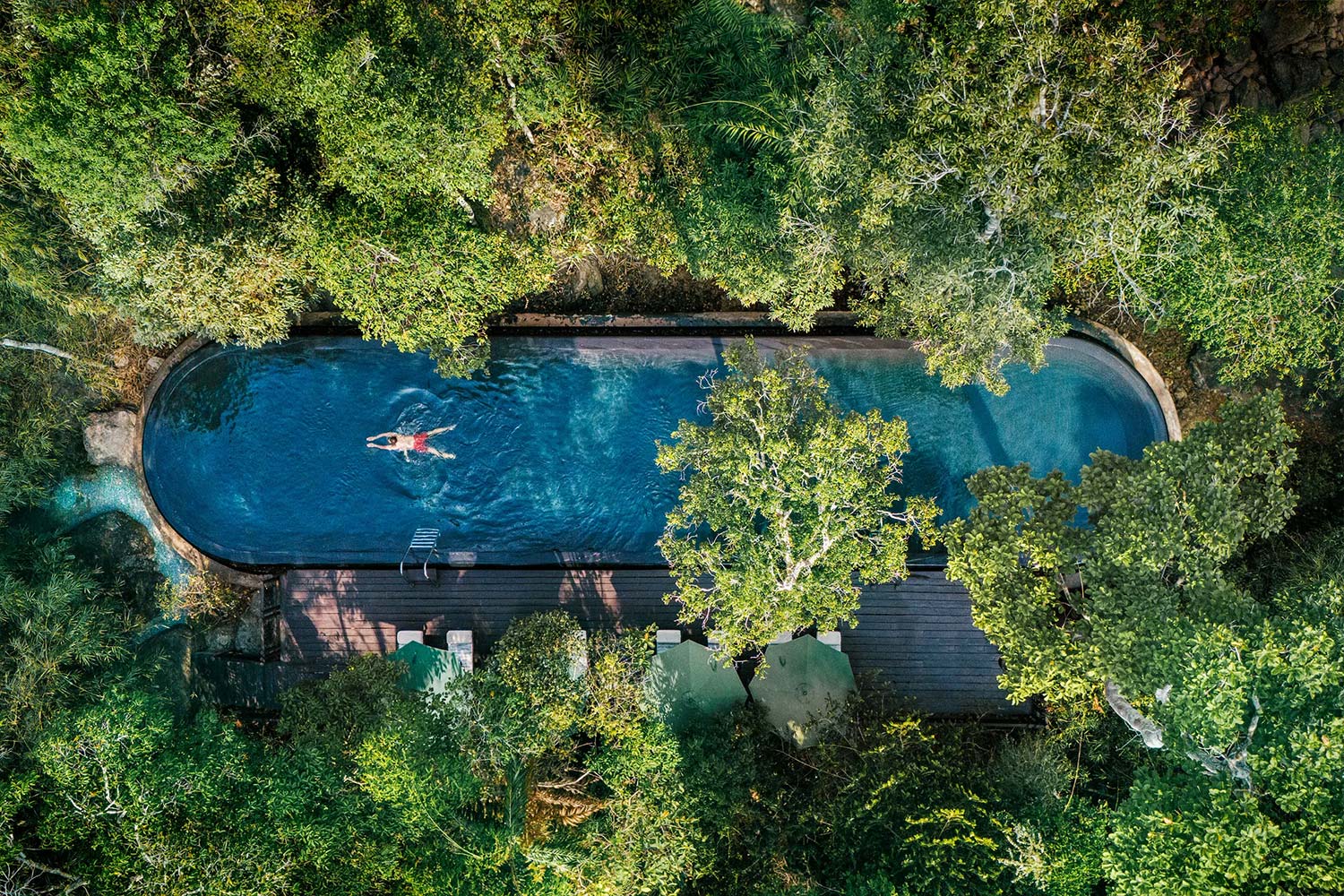
It took seven years of studying the land to design and build the camp’s tents, because the true star here is the jungle itself. Thanks to the zipline arrival, that truth is felt almost immediately. The forest envelops you at every turn, on every path to the Headquarters restaurant, the Cistern pool and the Khmer Tonics Spa.
Afternoons are spent in 90-minute spa treatments in what feels like a treehouse deep in the forest. Macaques scramble into the canopy. Banana spiders lie in wait on vast webs. One afternoon, the therapists come to us, setting up portable massage tables on our deck. The soundtrack is not spa music, but the river below.
Nightfall brings Wild’s immersion into its sharpest focus. After dark, we head out with Bun Phanna, one of Shinta Mani’s two professional naturalists. Rain has fallen all afternoon, and rivulets spill into creeks as the jungle thrums with cicadas. We spot frogs, a snake draped lazily overhead and the ever-present spiders, while Phanna explains that the South Cardamom National Park shelters endangered species including Siamese crocodiles, royal turtles, Asian elephants and Indochinese tigers.
He hopes we might see gibbons, but they remain elusive. It feels primal out here, almost unsettling in its otherworldliness. Yet Phanna moves through the forest with total ease, and being out with him feels like a privilege, one normally reserved for daylight hours.
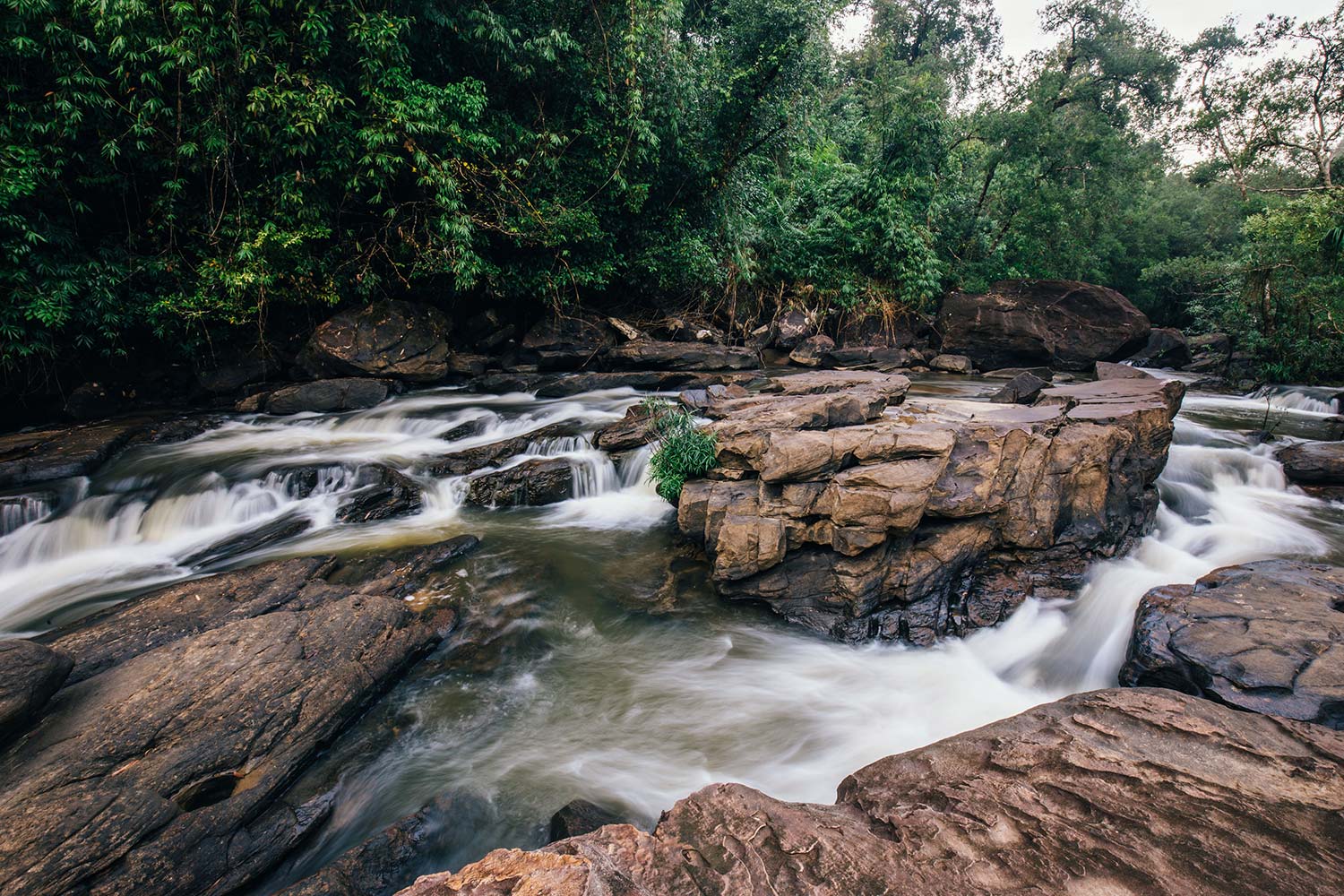
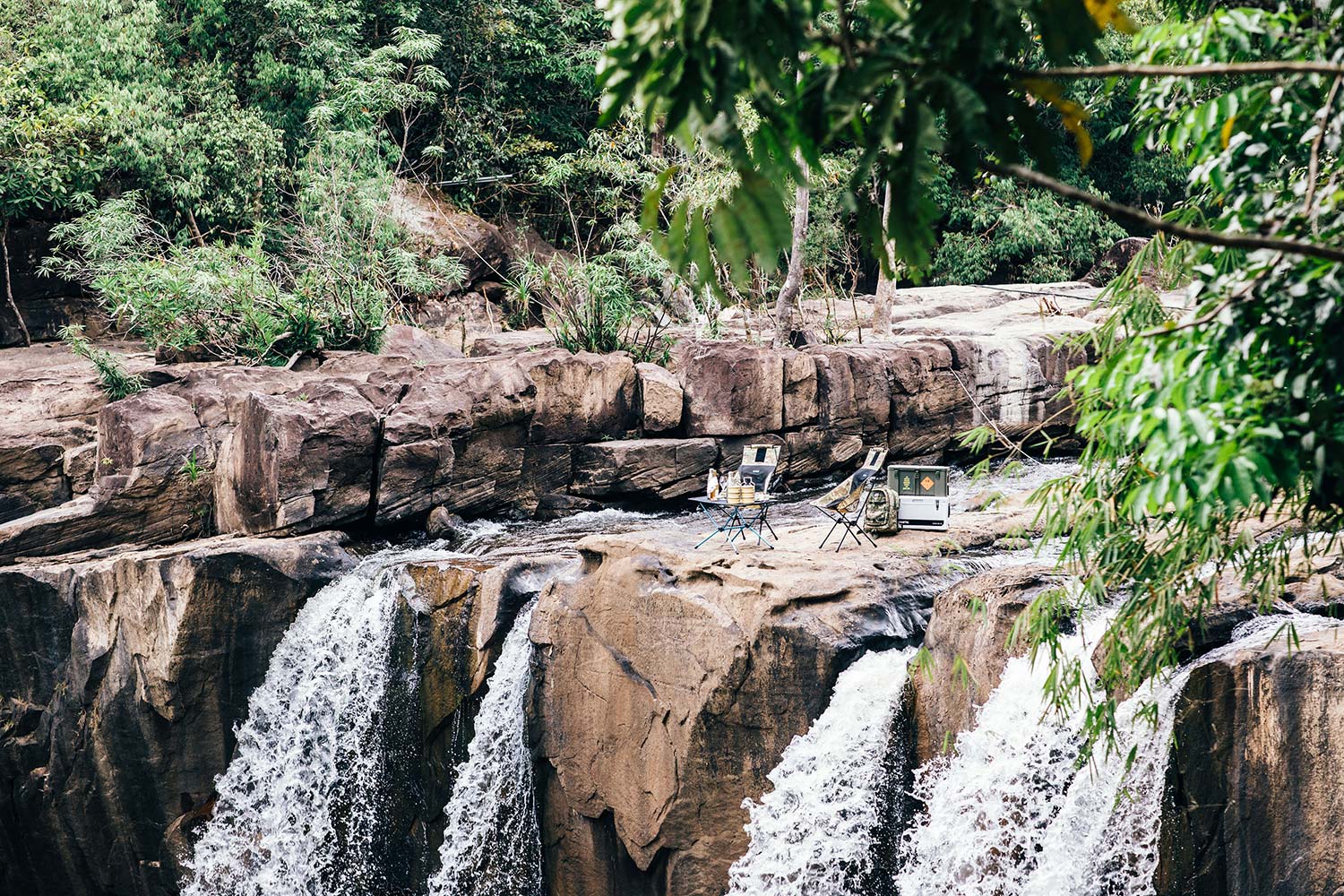
On our final morning, we hike directly from Headquarters, climbing narrow jungle paths for about 30 minutes before emerging into a meadow zone that leads to a ridge. The summit remains distant, but the view opens to a sweeping 200-degree panorama. Waterfalls cascade down the far side of another mountain across the valley. Villages and roads lie somewhere below, unseen. All we can see is nature.
It seems endless, and yet it sharpens the stakes of this place. Everything that might have been lost is laid bare. That, ultimately, is the point.
“While you’re not supposed to have a favourite child, Shinta Mani Wild would be mine,” Bensley says. “None of this would have happened without the extraordinary people around me. First and foremost, Sokoun Chanpreda, my dear friend and business partner in all things Shinta Mani, who shared the vision from day one.
“He understood this wasn’t going to be just another luxury tented camp, and he backed it every step of the way. It’s one of the things I am most proud of. In many ways, it is my dream hotel. There is nothing like waking to the chorus of the jungle and stepping onto the deck, knowing you play a part in protecting it.”