

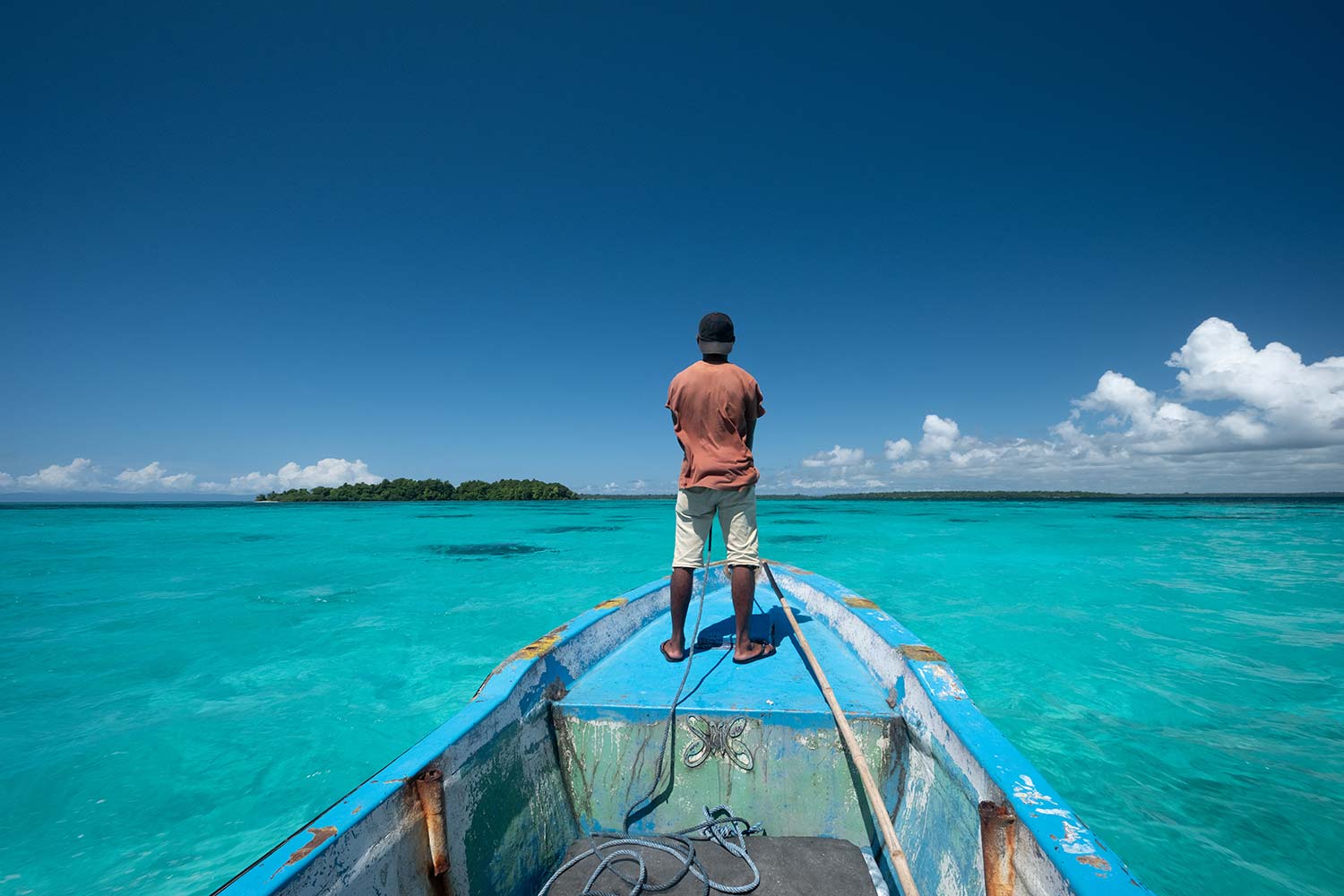
The remote Kei Islands are an antidote to Bali’s over-touristed beaches, boasting some of the most turquoise water you’ll ever see in Southeast Asia.
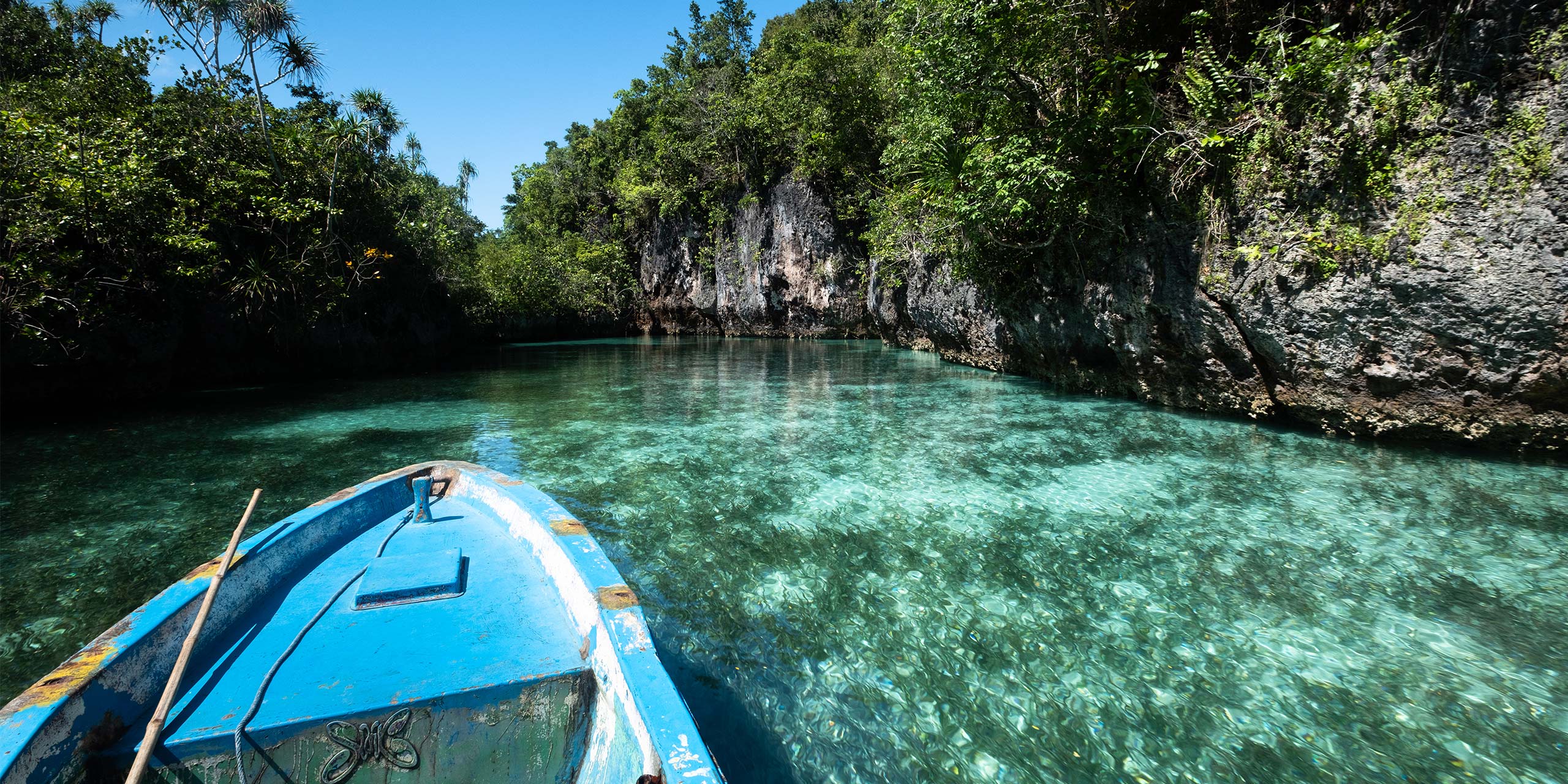
The sea around me is the color of aquamarine diamonds, as if nature had wanted to make this unique maritime world, encased by razor-sharp limestone rocks, look even more precious. Tall and jagged like ancient blades, sea boulders fan out around us, their crevices forming an open-air labyrinth of water and stone.
The strangest thing is that no one else is here, apart from another group of four Indonesian tourists. Even in this paradise, they stay on the sidelines, despite Pulau Bair’s growing reputation on Indonesian social media as an alternative to Raja Ampat, one of the country’s most visited destinations in far-flung West Papua.
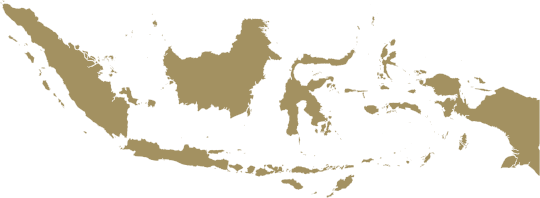
I float on my back in the otherworldly waters of Pulau Bair, a remote, uninhabited islet on the northernmost fringe of Kei Kecil, the smaller of the two main Kei Islands. The Kei archipelago comprises about 250 islets, some of eastern Indonesia’s lesser-known gems, lying closer to Darwin, Australia, than to Jakarta.
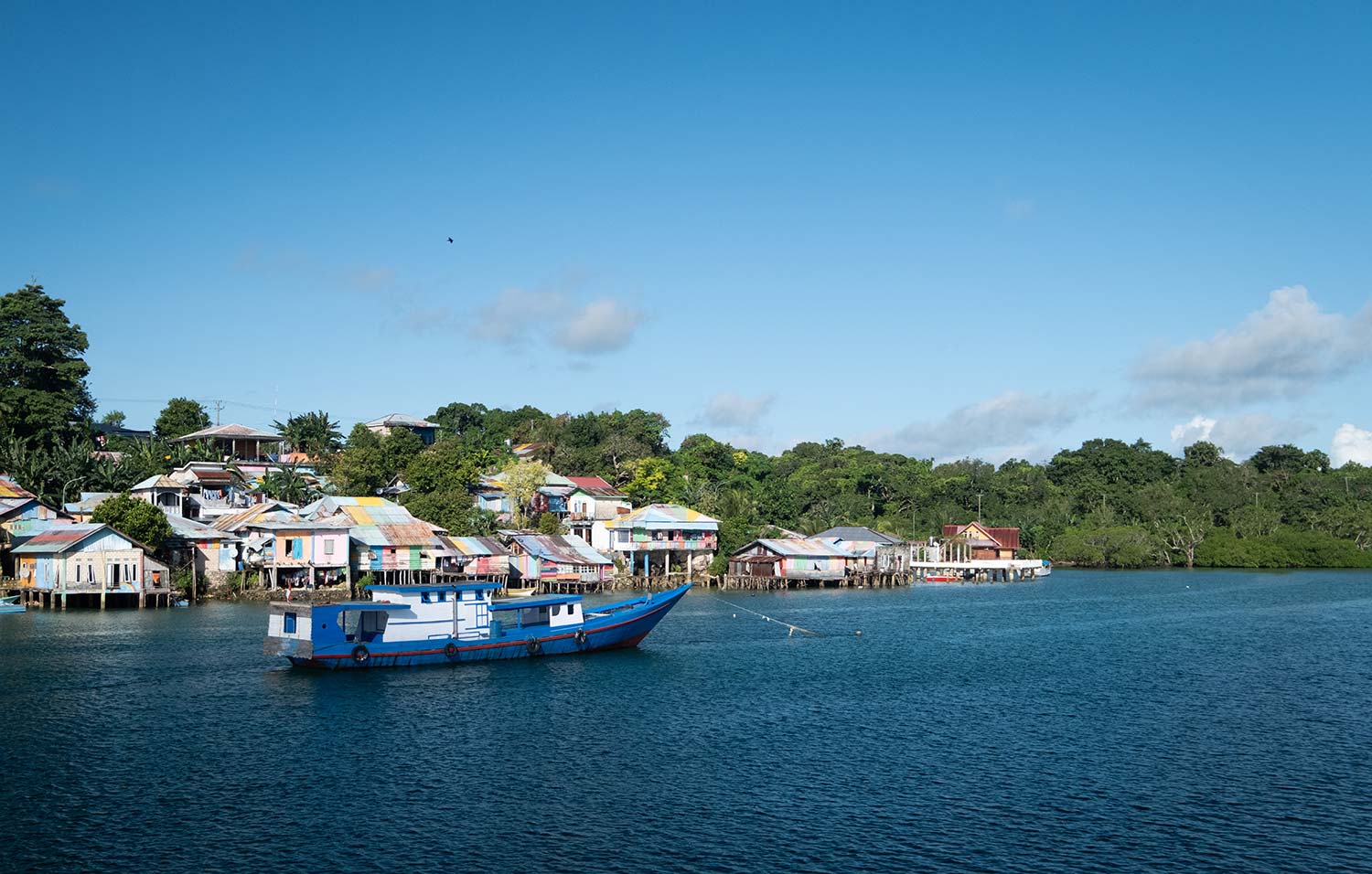
Connected by the covered Jambatan Usdek bridge, the twin towns of Tual and Langgur sit across the central islands of Kei Kecil and Kei Dullah. These towns hold little of interest for travelers, aside from a cluster of rainbow-colored homes on the southern bank of the bridge on Tual’s side. Known as Kampung Pelangi, this urban beautification project has faded over time but still offers insight into Tual’s blend of Muslim and Catholic cultures, including descendants of Arab migrants who arrived from the Middle East some 250 years ago.
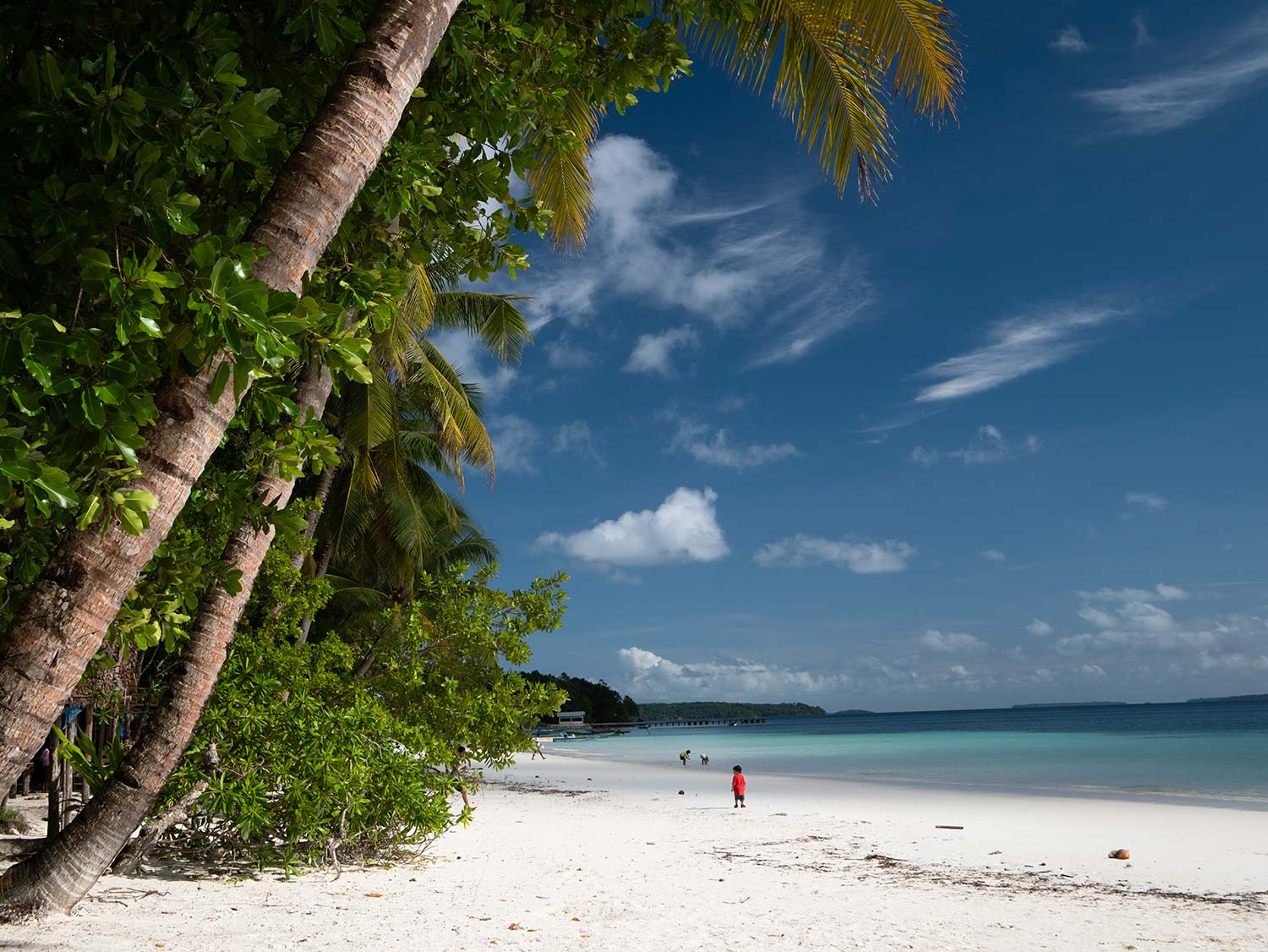
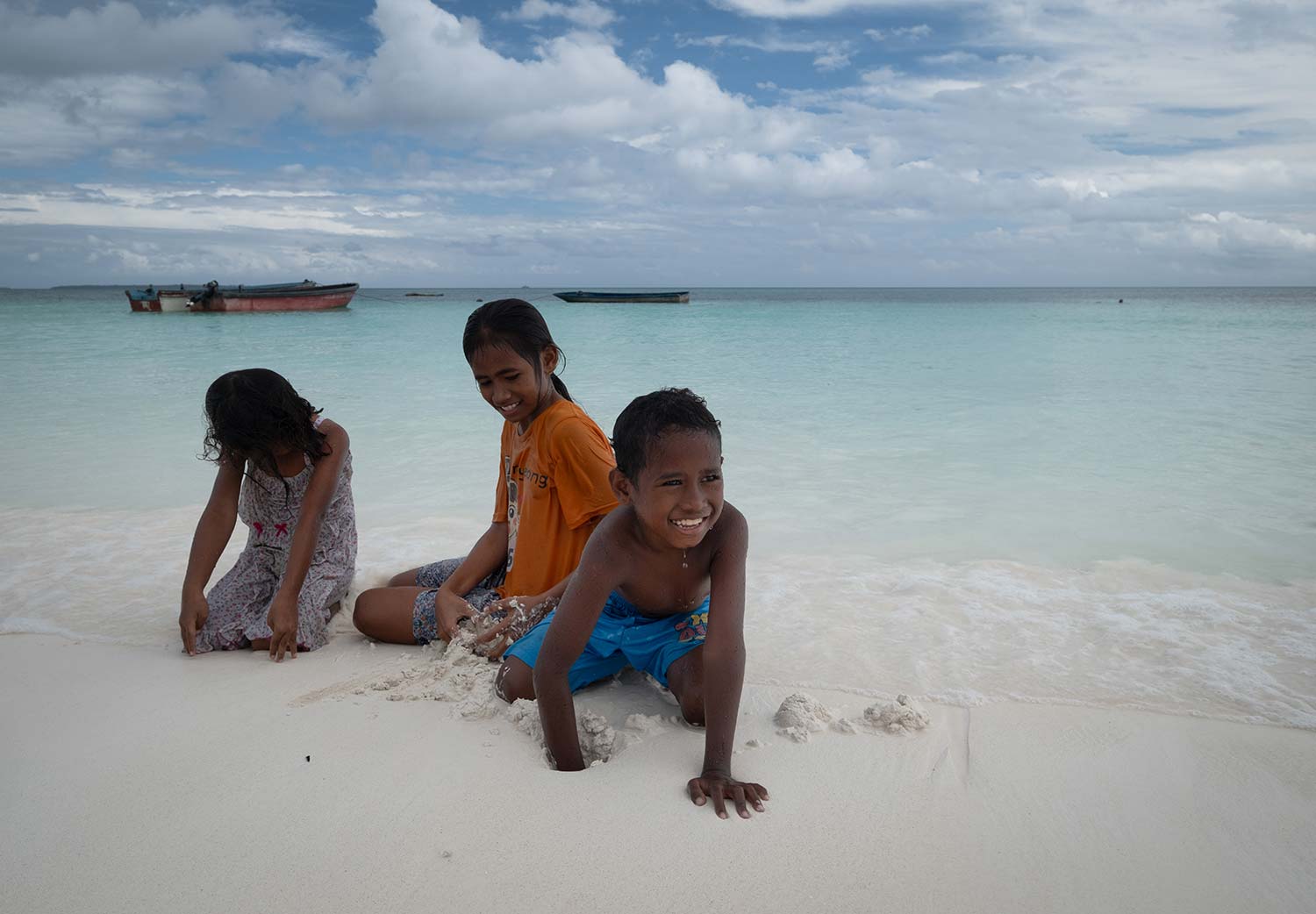
Most visitors to the Kei Islands base themselves on the northwestern coast of Kei Kecil, where Pantai Pasir Panjang, or Long Sand Beach, stretches for three kilometers. Its flour-fine white sand is framed by a lush belt of coconut palms that sway in the breeze like tall spoons tied with green ribbons. The beach is divided into the southern area of Ngur Bloat and the northern seaside village of Ohoililir.
Another beachside hub lies on the island’s northwesternmost bay, where the homes of Ohoidertawun village line a mesmerizing shoreline. At low tide, the bay opens into a vast white-sand flat, creating a striking seascape that seems to stretch endlessly toward the horizon. Farther offshore, coral reefs fringe the bay, while to the east, rocky coastal cliffs are marked with mysterious red-and-orange prehistoric petroglyphs.
Nearby, on the southeastern side of the bay, rises Bukit Masbait, Kei Kecil’s highest point at 300 meters. A pilgrimage path adorned with statues depicting the Stations of the Cross leads to the summit. There, a statue of Jesus stands atop a globe, gazing out over the deep blue waters separating this cape from Tual and Langgur.
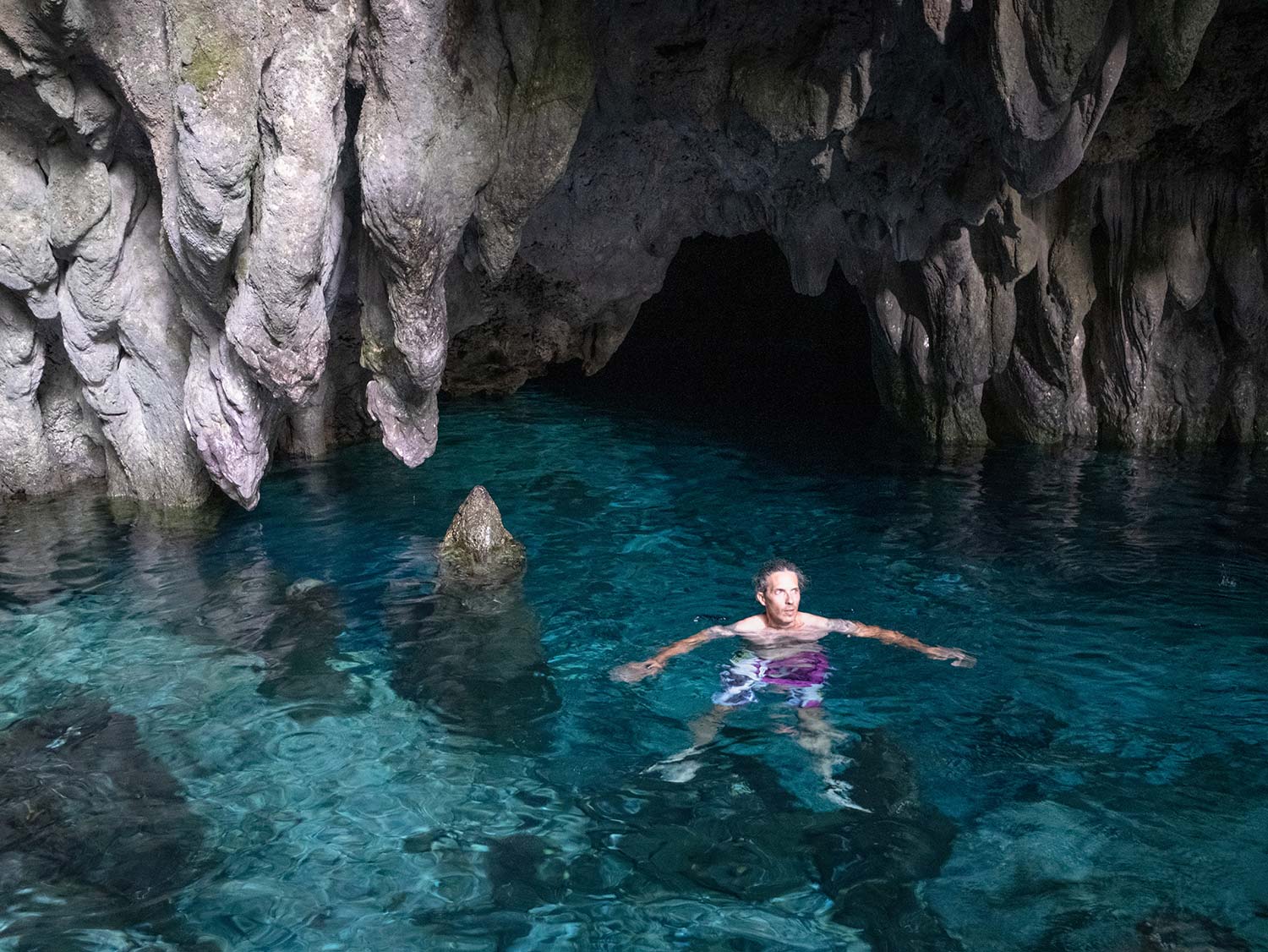
Kei Kecil’s beaches are undeniably beautiful, but the island’s interior holds equally compelling sights. Along the central west coast lie the limestone grottoes of Goa Hawang. A short descent leads to a cavern lined with stalactites that extend toward a pool of crystal-clear water, shimmering in shades of blue and turquoise. Deeper inside, the cave grows darker, echoing with the sounds of bats overhead.
Farther south, on the island’s southwesternmost cape, Pantai Ohoidertutu reveals another sweep of pristine white sand, an unspoiled stretch of beach that feels far removed from the rest of the world.
As with Pulau Bair, some of Kei Kecil’s most impressive landscapes lie just offshore. Pantai Ngurtavur, a narrow ribbon of sand near Pulau Wah, emerges dramatically from the Banda Sea. Often cited as the longest sandbar in Indonesia, it appears as a fleeting, luminous path across the water, one of the archipelago’s most striking natural phenomena.