

It’s a hot, sultry evening in northeast Thailand, and a storm is brewing at the Thunder Castle.
I’m mingling with fans outside the home of Buriram FC, officially titled the Chang Arena but better known by its affectionate nickname, as they gather for a Thai Premier League clash with rivals Chonburi.
The game is a vital fixture for the hosts. The Thai equivalent of Real Madrid or Manchester United, Buriram has been an all-conquering force in the Southeast Asian nation, winning the country’s top club competition, seven times in the last decade.
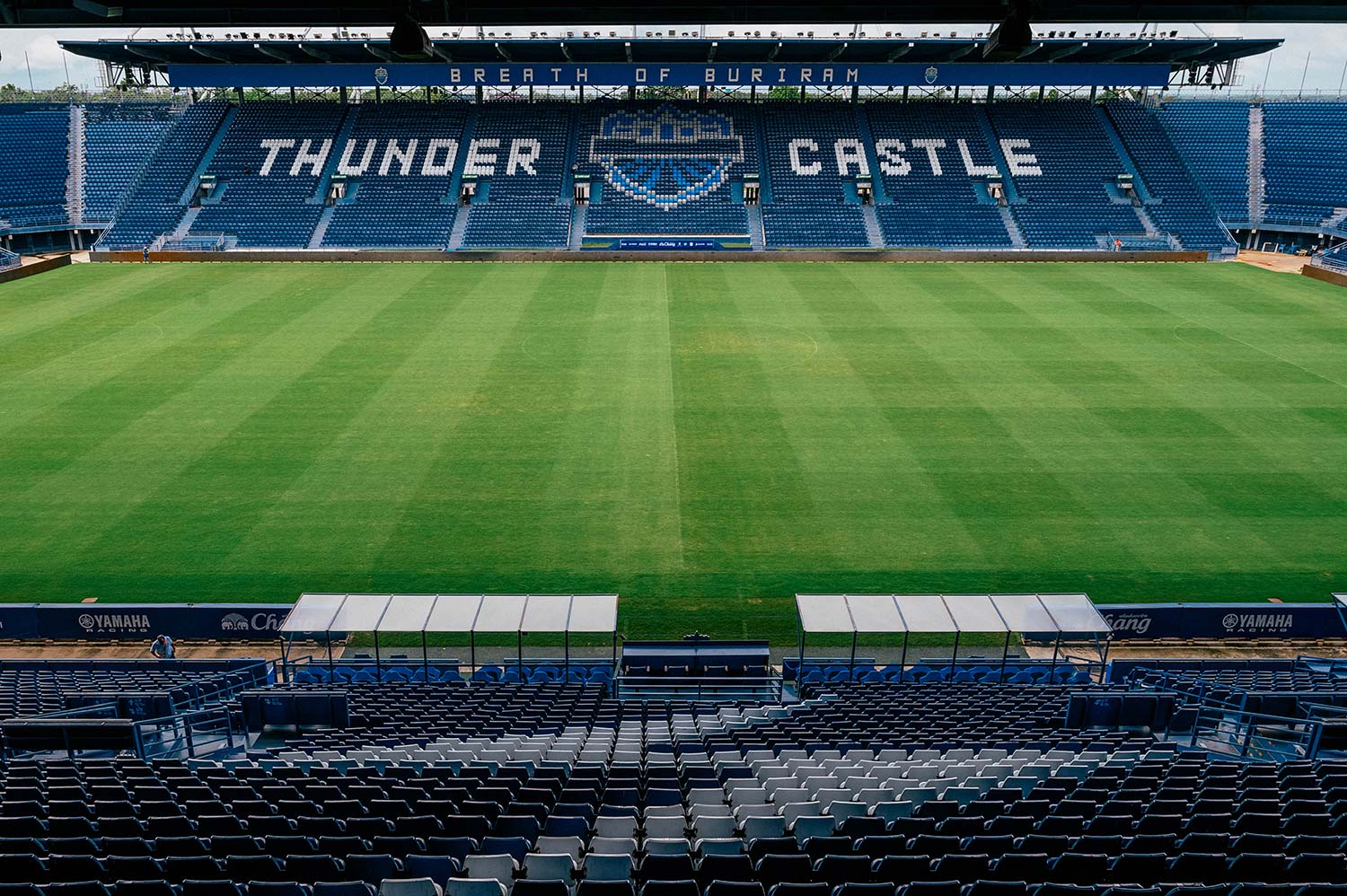
After a lukewarm start to the campaign, however, their fans are anxious. Nervous chatter fills the air as I sip pre-match beers and fill up on spicy delicacies such as som tam (papaya salad) and gai yang (grilled chicken) at a row of food stalls near the 30,000-seat stadium.
I’m here in Buriram to follow a thread through the centuries from sporting idols to the imperious Khmer god-kings who once ruled this part of Thailand from their power base at Angkor.
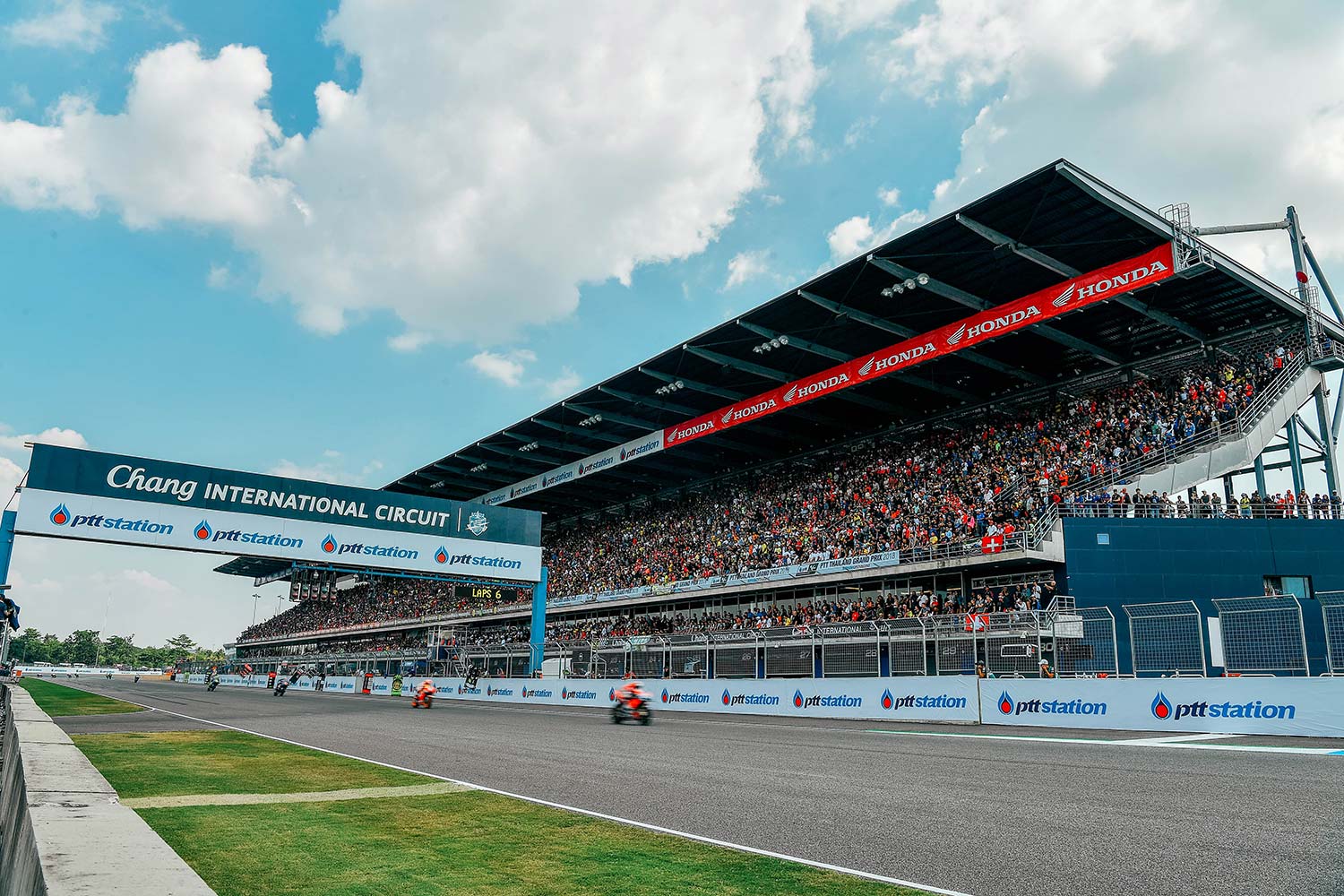
I’ll start in the here and now, where soccer heroes raise the roof at the Thunder Castle and speed demons glide through the bends at the neighboring Chang International Circuit, the country’s first Formula One-certified track and host of the PTT Thailand Grand Prix, a stop on the prestigious MotoGP circuit.
Then I’ll chart a figurative path south along the Khmer Highway toward the Cambodian border. Now long vanished, the route once linked Angkor with important outposts in Buriram and other provinces in Isaan, the collective name for northeastern Thailand, under the sway of the Khmer Empire.
First, though, there’s a nail-biting encounter to negotiate.
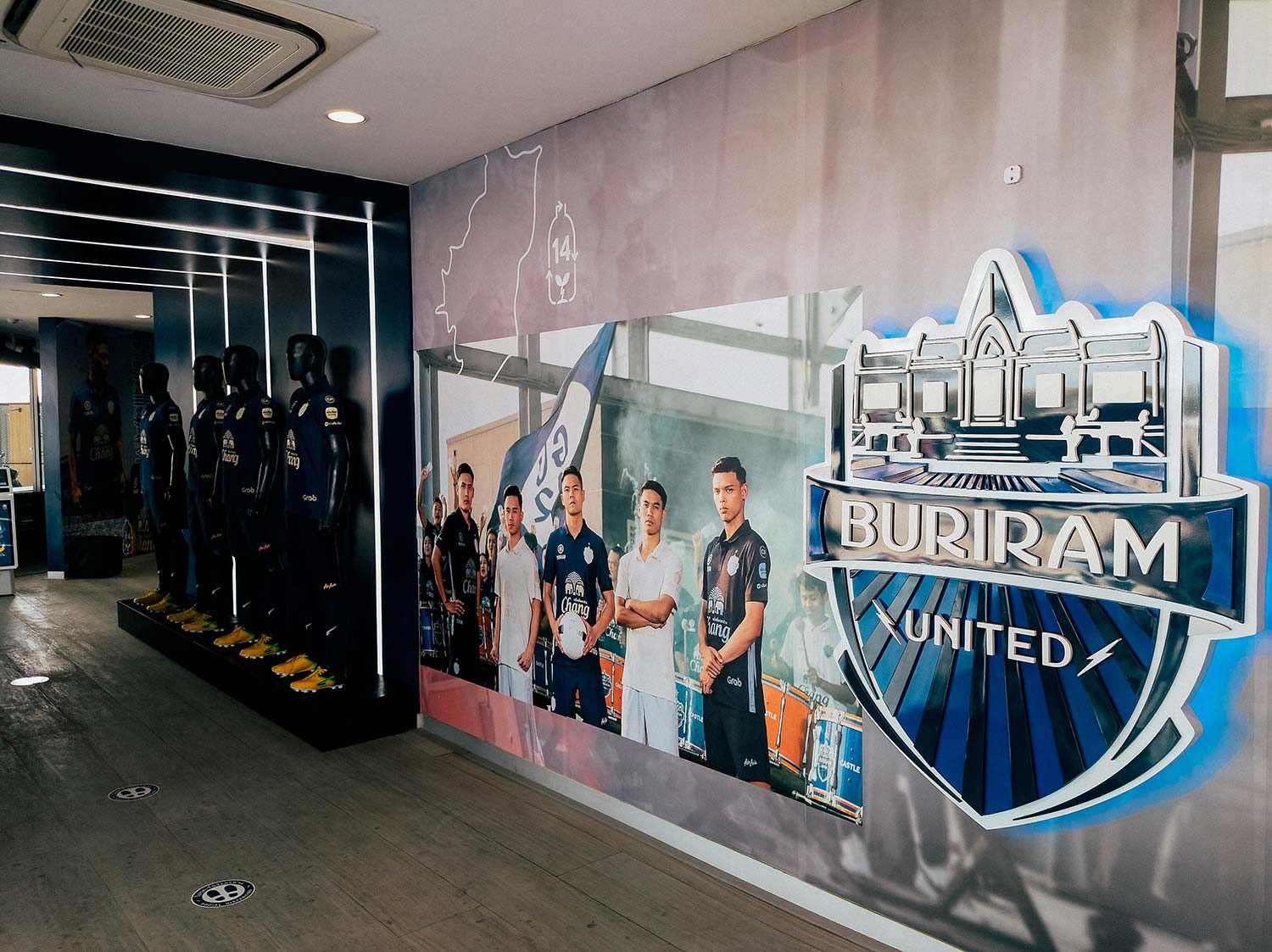
“I’ve got a bad feeling about this,” says supporter Nalika Pananon as she clings tightly to the giant orange club flag she is holding.
The tension remains palpable inside the arena as the game kicks off. Chonburi dominates the opening stages, and their supporters, spurred on by energetic drummers, dictate the atmosphere.
Home nerves are quickly eased. With five minutes on the clock, the deadlock is broken for Buriram. Twenty minutes later, the team’s young striker completes a first-half double to send his side on its way to a comfortable 4–0 victory.
As the referee blows for full time, the victorious players take a bow, the supporters rising in appreciation of their heroes.
Buriram locals have become accustomed in recent years to celebrating such success. Once a poor, overlooked rice-farming fiefdom best known for its scattering of Khmer relics and native crafts such as silk weaving, the province has forged a fresh identity as a Camelot for elite sport in the Kingdom.
Much of the credit can be attributed to colorful local politician and Buriram FC president Newin Chidchob. With his deep pockets, fanatical sense of civic pride, and formidable connections driving investment, Buriram—not Bangkok—is leading the race to become Thailand’s premier sports city.
“On race weekends this area is absolutely packed with fans,” says Olivier, manager of Oli’s Bar and Restaurant, surveying the expansive concrete parking lot in front of his French restaurant.
“The success of the football team helped put Buriram on the map. And MotoGP has taken the place to a totally different level. These days, we’re catering to race fans from around the world.”
Sitting on Oli’s outdoor terrace, eating merguez sausage and a plate of pungent French cheese, I can easily picture a piazza filled with a cosmopolitan international crowd. Buriram city and the wider province remain more of a sleepy backwater than a global village, its unassuming charms carrying a distinctly local flavor.
This is not the Thailand of travel-brochure fame. There are no paradise beaches, gold-spired royal palaces, or trek-worthy mountains in Buriram. Indeed, the landscape is largely featureless and flat.
Nevertheless, on the drive south toward the Khmer relics clustered near the Cambodian border, the morning after the big match, I’m struck by the stark beauty of the countryside.
Monks clad in saffron robes walk along the sides of the arrow-straight highway, passing from village to village collecting alms. On the banks of the Huai Talat reservoir, migrating birds shelter from the harsh sun in the long grasses surrounding the water.
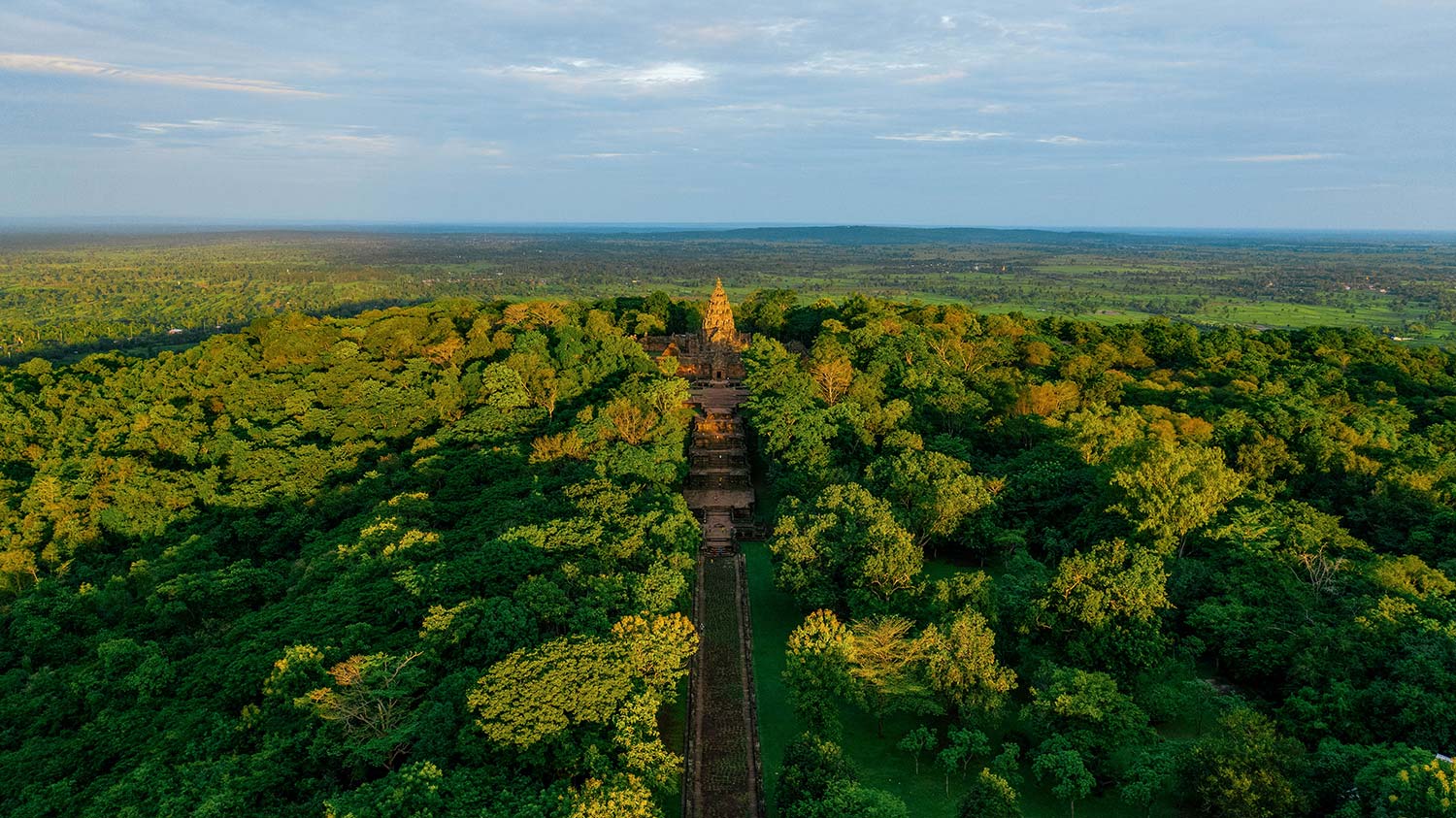
After about an hour on the road, the scenery begins to shift. I leave the rice paddies behind and drive up the thickly forested slopes of an extinct volcano toward Phanom Rung.
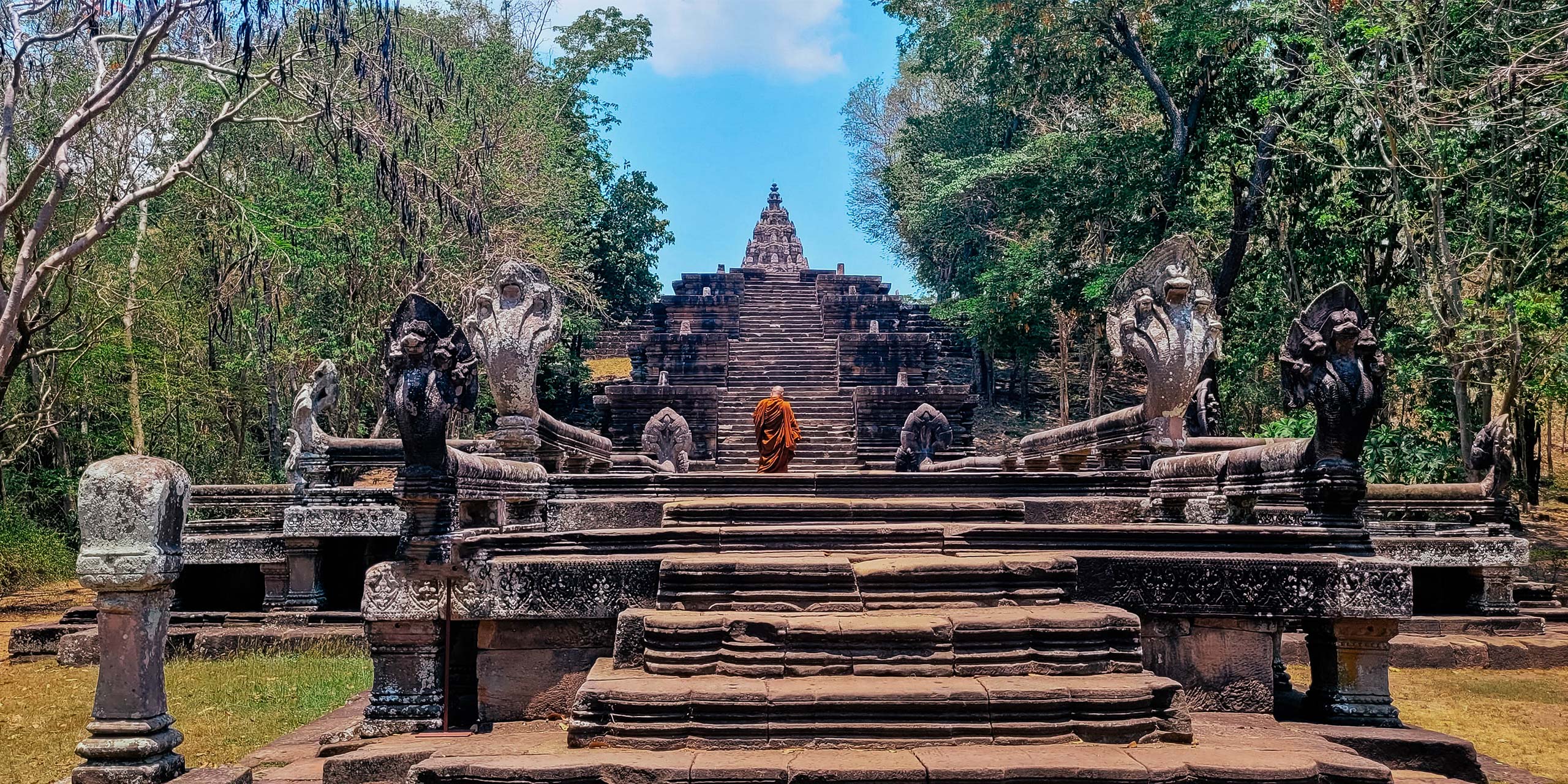
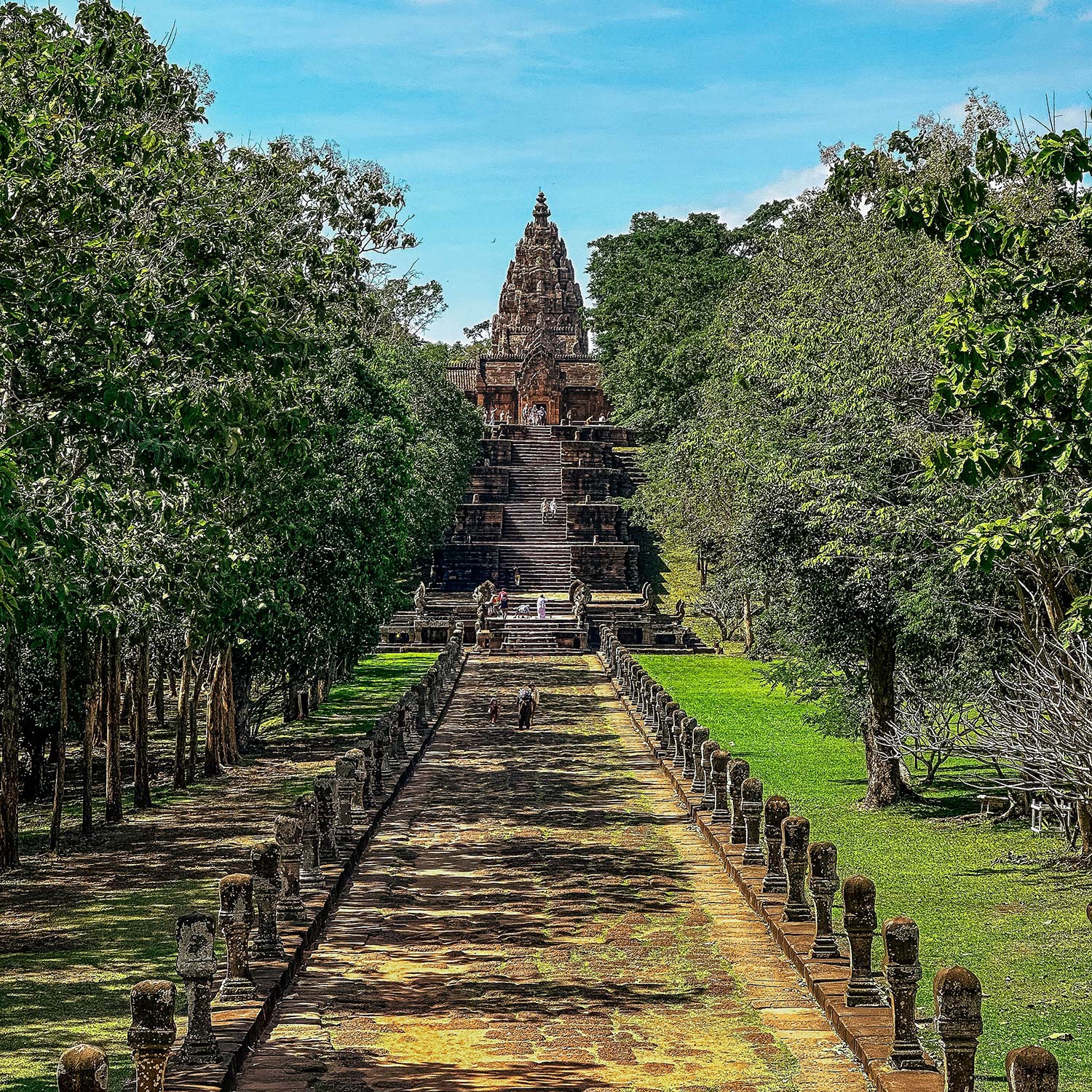
Regarded by many as the most spectacular Angkor monument in Thailand, the temple complex, built as a Hindu monument to the god Shiva between the 10th and 13th centuries, is the symbol of the province. In fact, the sanctuary’s main tower adorns the club badge of Buriram FC, providing another link between ancient and modern glory.
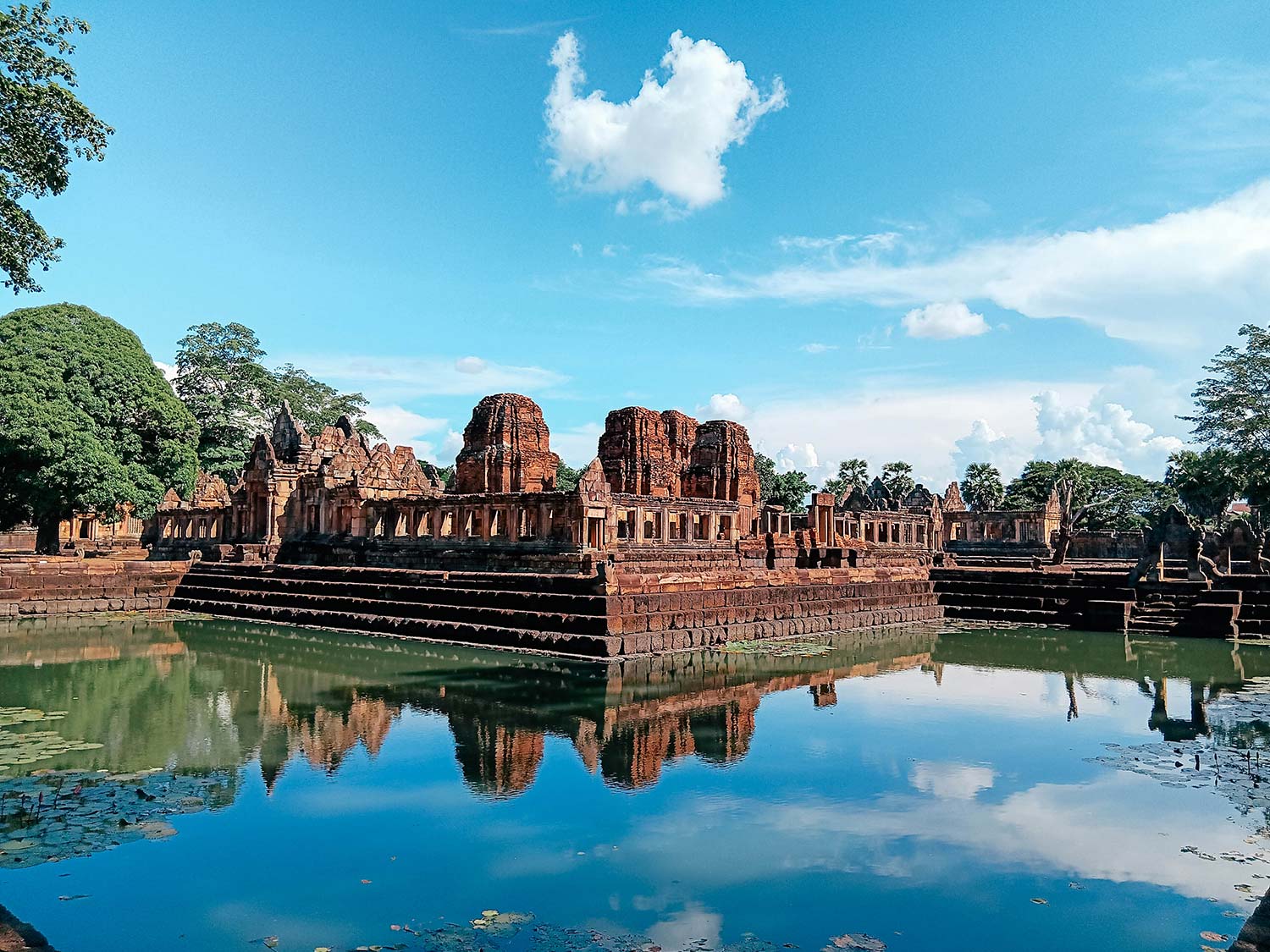
It’s an awe-inspiring place. Up close, lintels and pediments above the doorways reveal sculptures of Shiva and Vaishnava deities. Other highlights include a Nataraja (Dancing Shiva) and the Narai Bandhomsindhu lintel, which represent the destruction and rebirth of the universe, respectively.
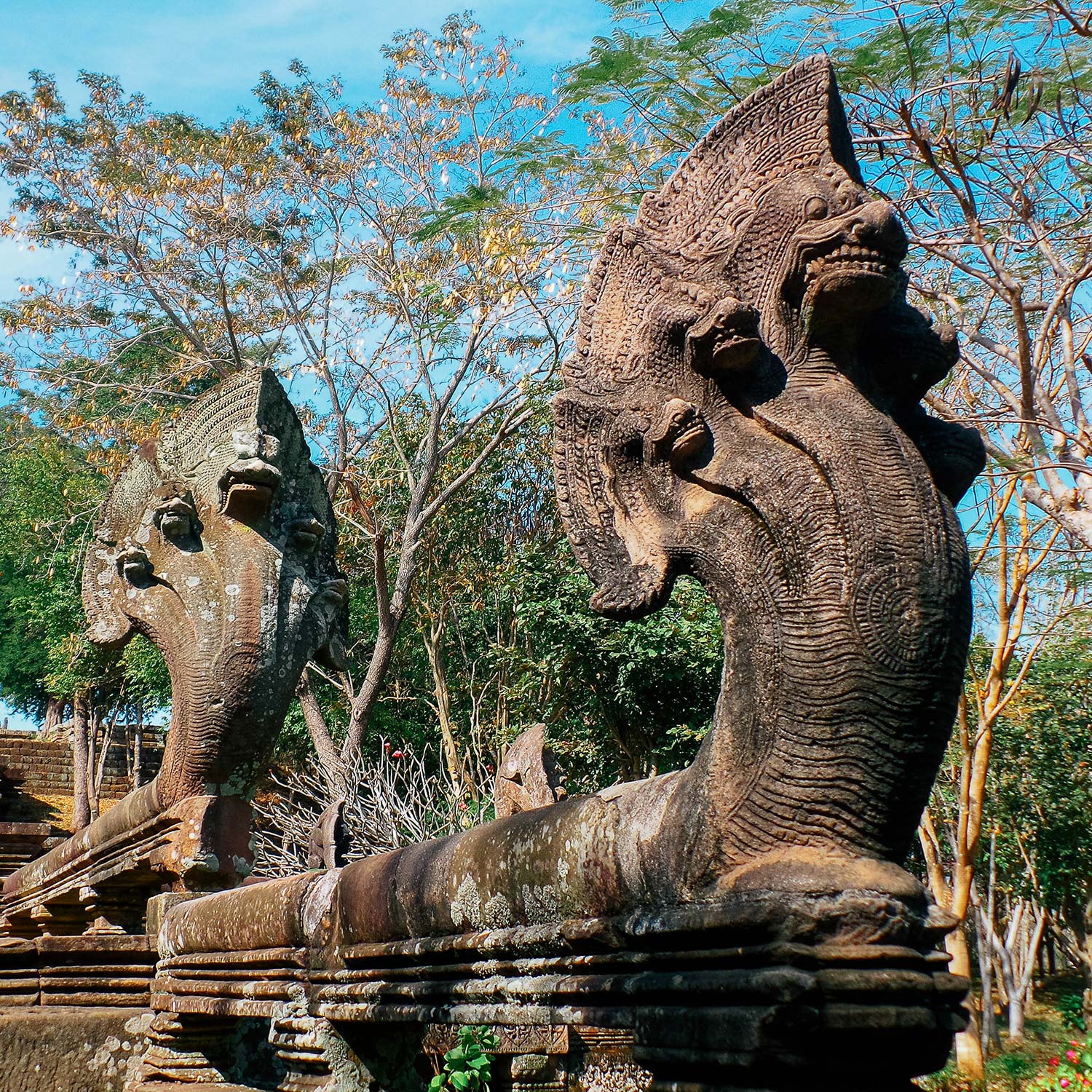
What’s equally magical is the lack of crowds. These days, a visit to the temples of Angkor is akin to attending a major rock concert, with visitors jostling for elbow room at every major relic. At Phanom Rung, it’s significantly less frenetic. As I survey the temple complex in all its majesty from a naga bridge on the processional walkway leading up to it, there’s not a soul in sight.
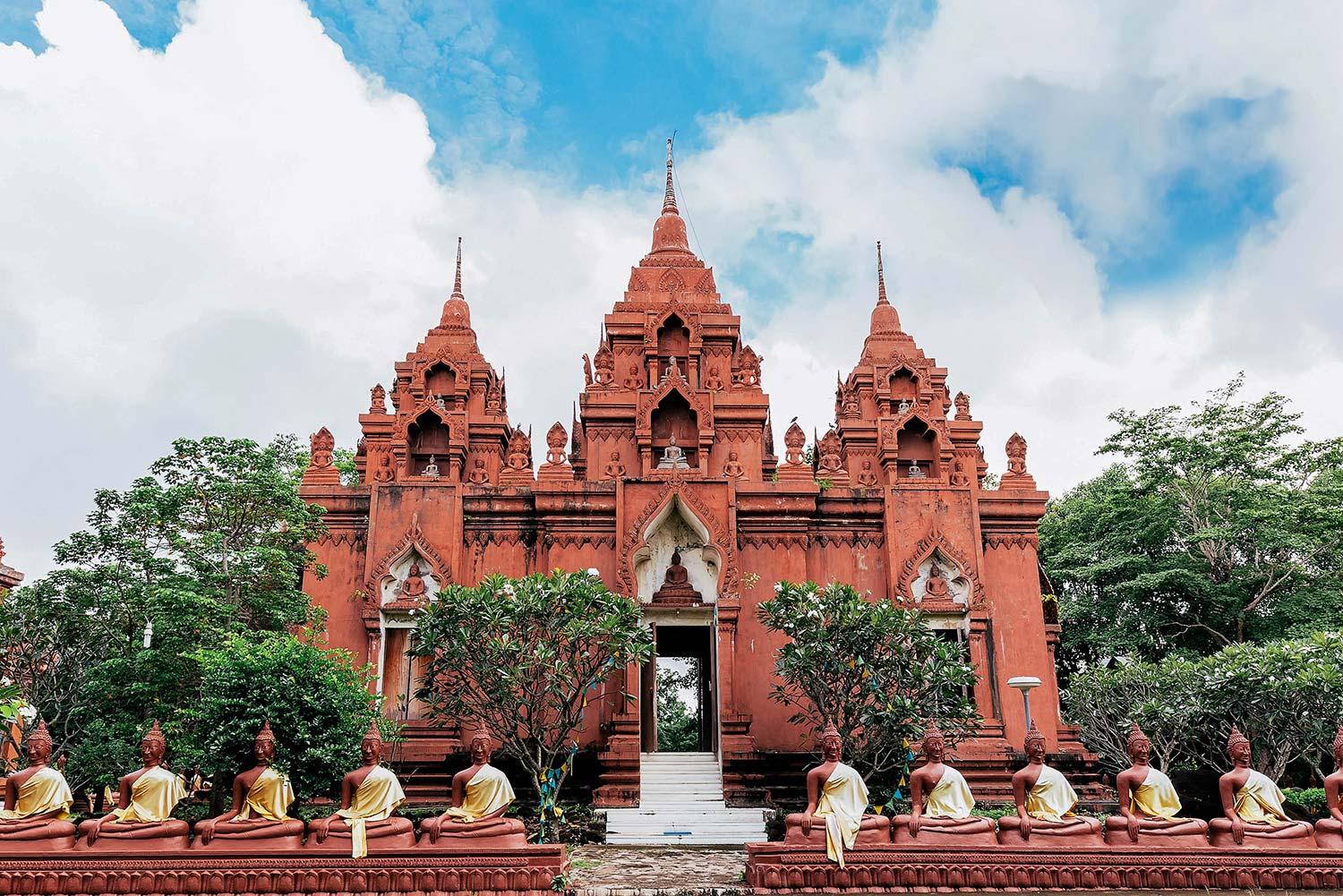
Splendid isolation can be found at other Khmer relics in the province. At Muang Tum, located beside Phanom Rung at the foot of the hill, I’m hypnotized by temple spires reflected in the lily-covered waters of surrounding ponds. Later, at Wat Khao Angkhan, I meditate beneath the beatific gaze of the temple’s 29-meter-long golden reclining Buddha.
Feeling spiritually replenished, I spend my final day in the province exploring the rest of Buriram city.
My first stop is the Lower Northeastern Cultural Center, the city’s main museum. It is by turns fascinating and amusing. Old city plans, maps, Buddhist relics, and a giant elephant skeleton offer clues to the area’s human and natural history, while Doraemon keychains sitting beside cultural knick-knacks lend a surreal edge to the souvenir shop.
A fuller sense of satisfaction comes from a walk along Khlong La Lom. The 1,800-year-old moat now encircles only half the city center, but its tree-shrouded banks provide a gathering place for joggers, couples, and wandering dreamers alike. I end my stroll at Gaiyang Sida, where deliciously smoky gai yang is served alongside other Isaan staples such as larb (spicy meat salad) and khao niew (sticky rice).
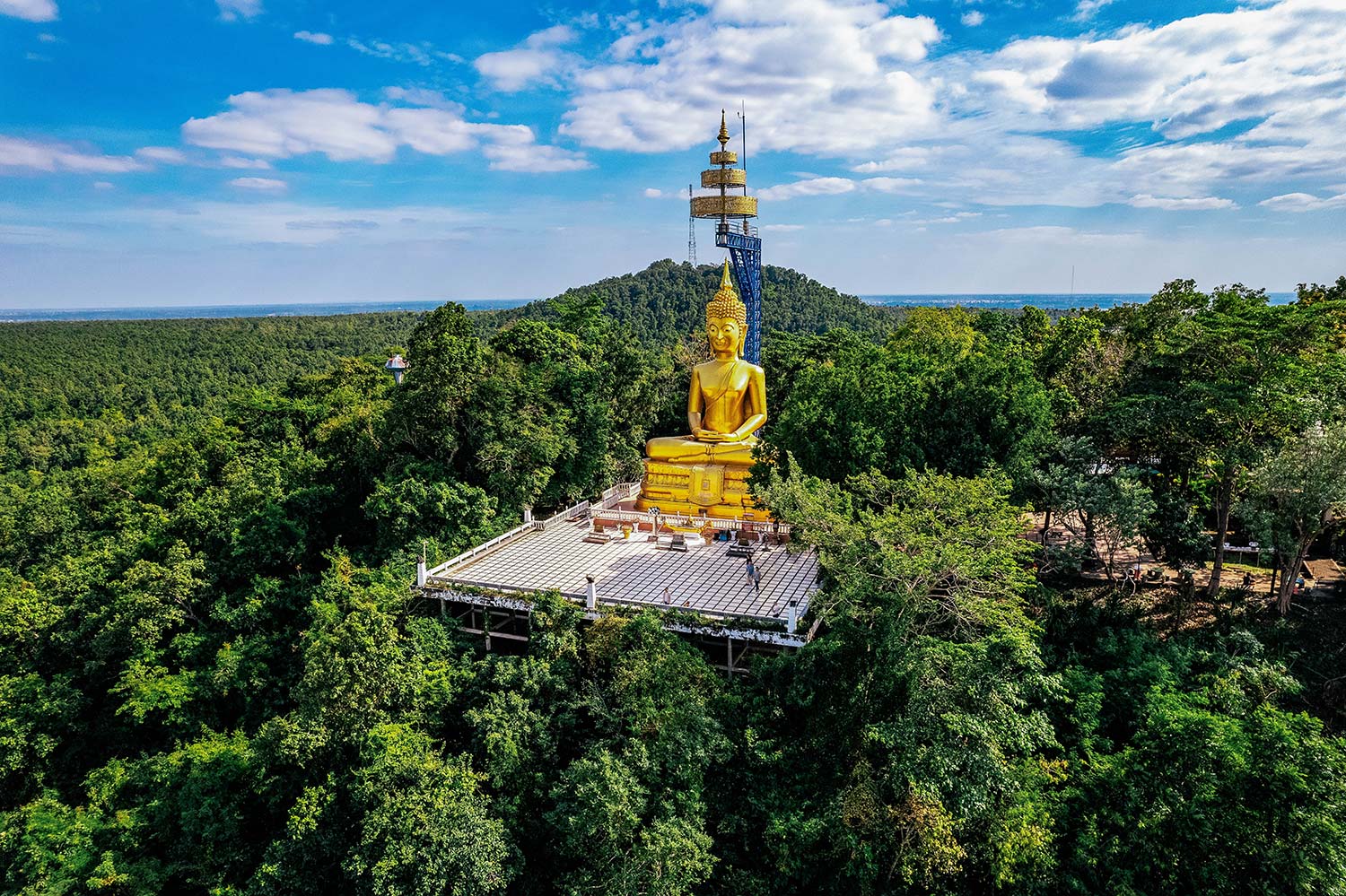
Later, I take one final look at the city from the summit of Khao Kradong Forest Park. With daylight fading, locals gather around the Suphatthara Bophit Buddha that crowns the hill to chat, snack, and strum acoustic guitars.
In the distance, the flat landscape stretches seemingly forever, a patchwork of dusty highways and rice fields. Closer at hand, I can make out the international circuit and the Thunder Castle. Both are silent now, but it’s never long until the next tempest arrives in Buriram, a place that combines modern Thailand’s sporting ambitions with ancient treasures of championship-worthy value.