
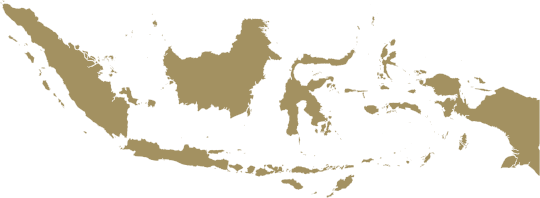

We travelled deep into the highlands of Sulawesi to understand what lies behind one of the world’s most intricate and haunting funeral traditions.
The road into Toraja wound through forests of bamboo and coffee, rising toward a fog-wrapped plateau where everything felt suspended, the clouds, time itself, even the idea of death.
For the Toraja, death is not an end but a crossing, a passage that reshapes the rhythms of daily life and the bond between the living and those who are no longer quite so. Here, death is not hidden or feared. It is lived with, welcomed, and kept close.
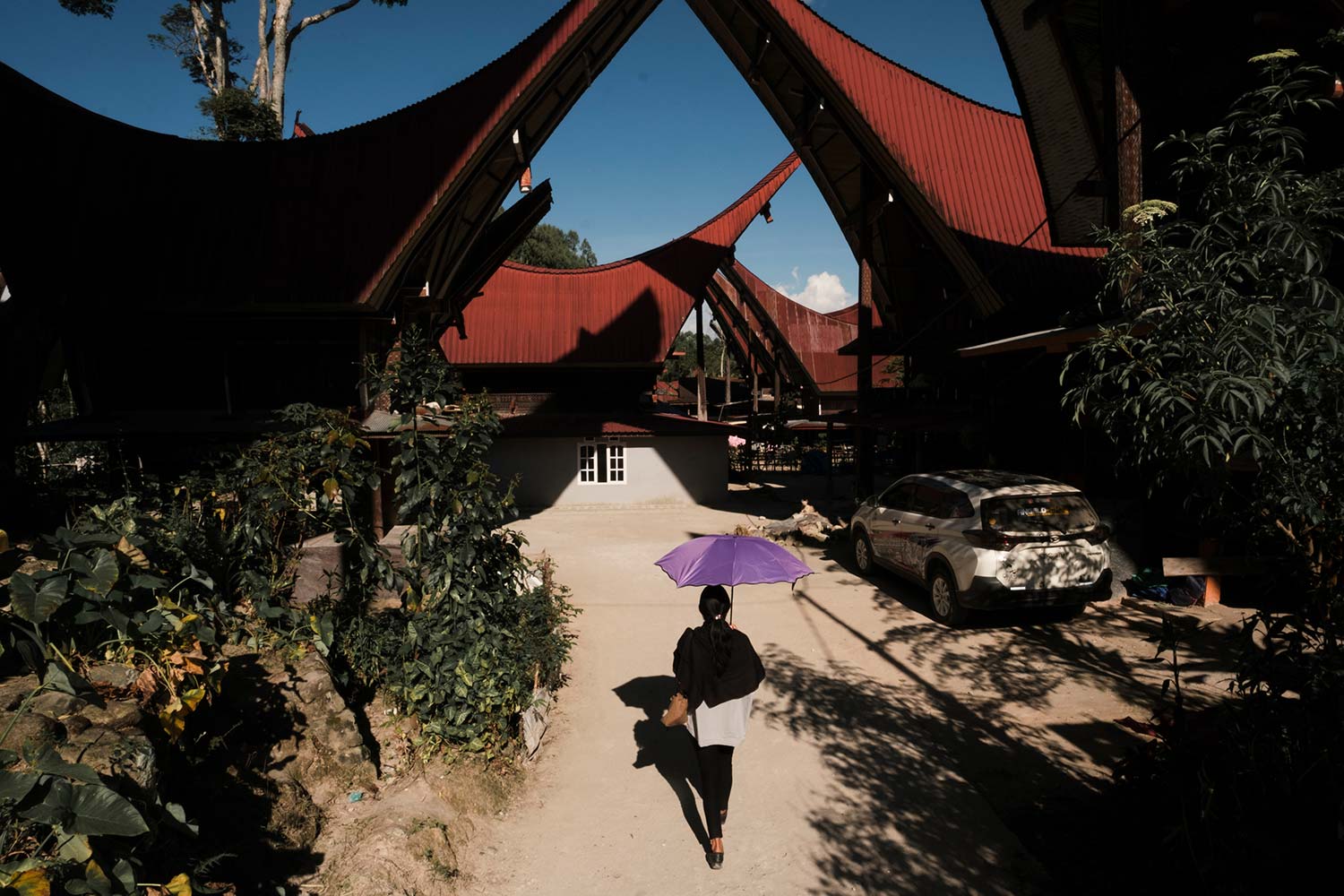
We reached Rantepao at night. By morning, we were driving toward a mountain village, the air thick with the smell of wet soil and tobacco. Along the roadside, men in wide-brimmed hats washed their buffaloes, caressing the sleek hides and studying the rippling reflections as if appraising living artworks.
For the Toraja, the buffalo is more than livestock. It is wealth, status, and the vehicle that carries the soul to the afterlife. Each sacrifice shortens the spirit’s journey. Some animals are worth as much as a house, raised for years and destined to accompany their master beyond life. At first, it was hard to unravel this tangle of devotion, economy, and belief. But watching families bargain softly, with a patience that bordered on tenderness, we began to sense the equilibrium that holds their world together.
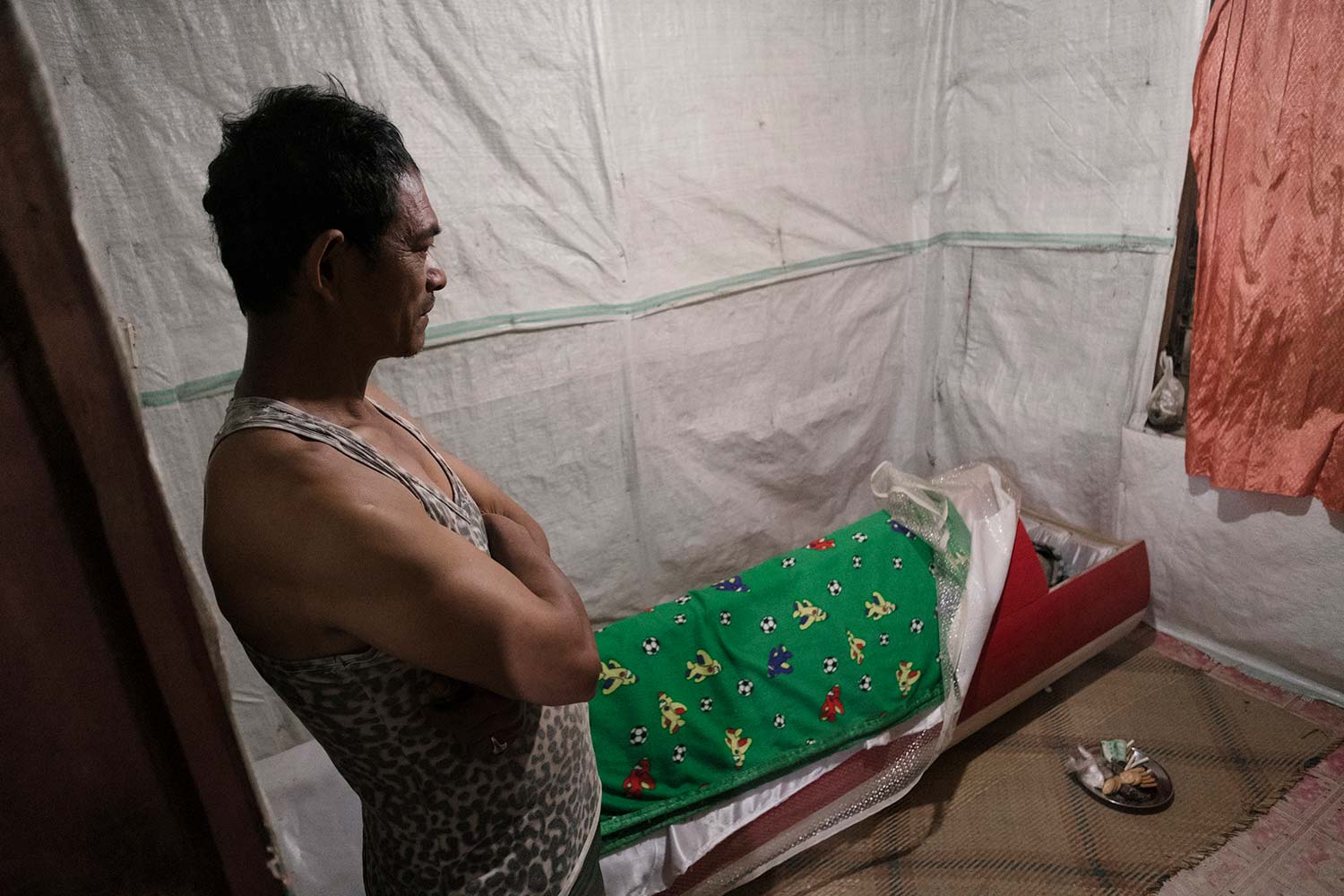
“Here the dead stay at home for months, sometimes for years,” said Luter, our friend and guide. “Relatives visit daily. They bring food, speak to them, and care for them as if they were simply ill. The deceased are called “sick people,” not gone, only waiting.”
This intimacy with death unsettled and moved us. In our culture, death is pushed away and draped in silence. Here, it sits at the table and shares the same air. It breathes with the living.
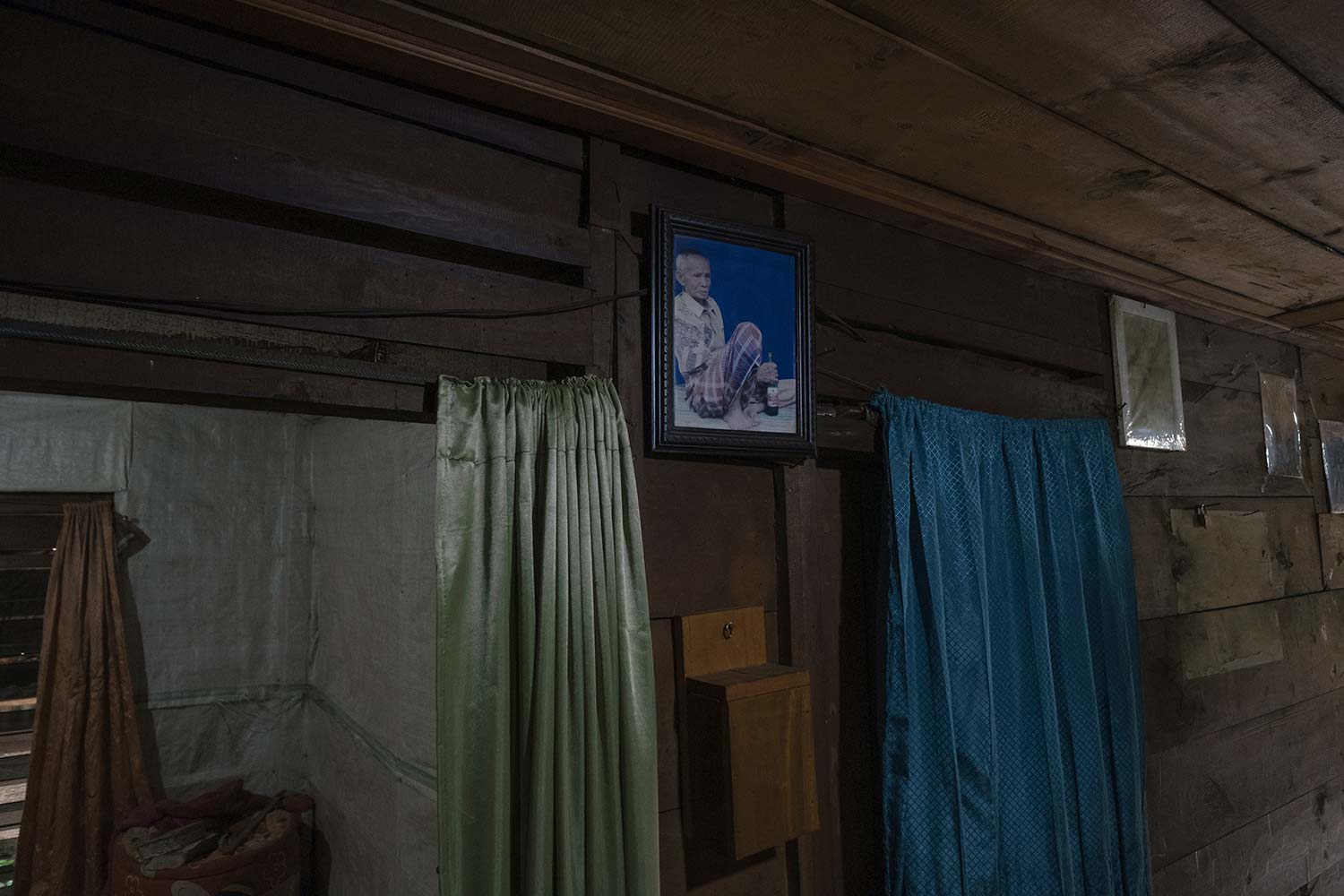
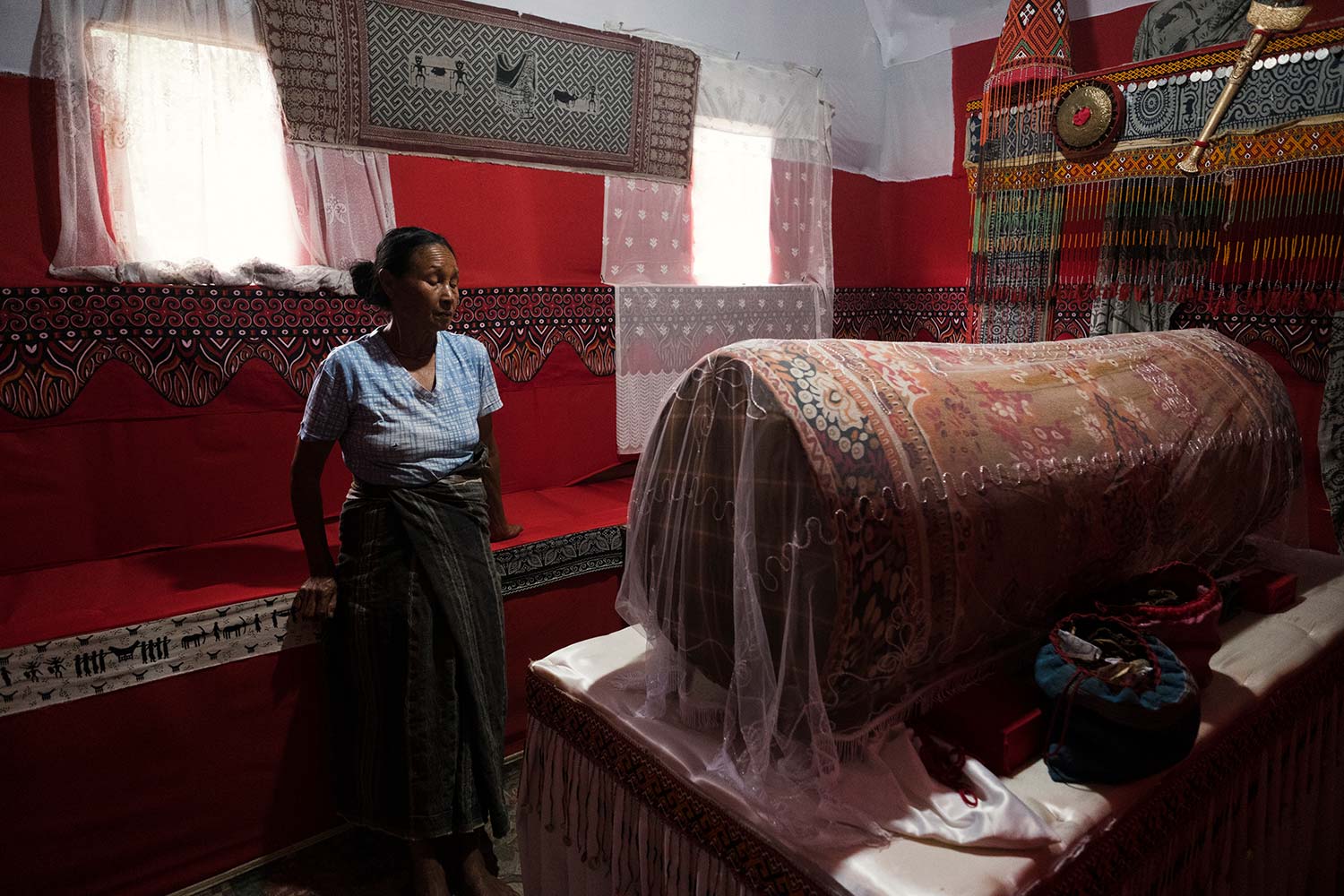
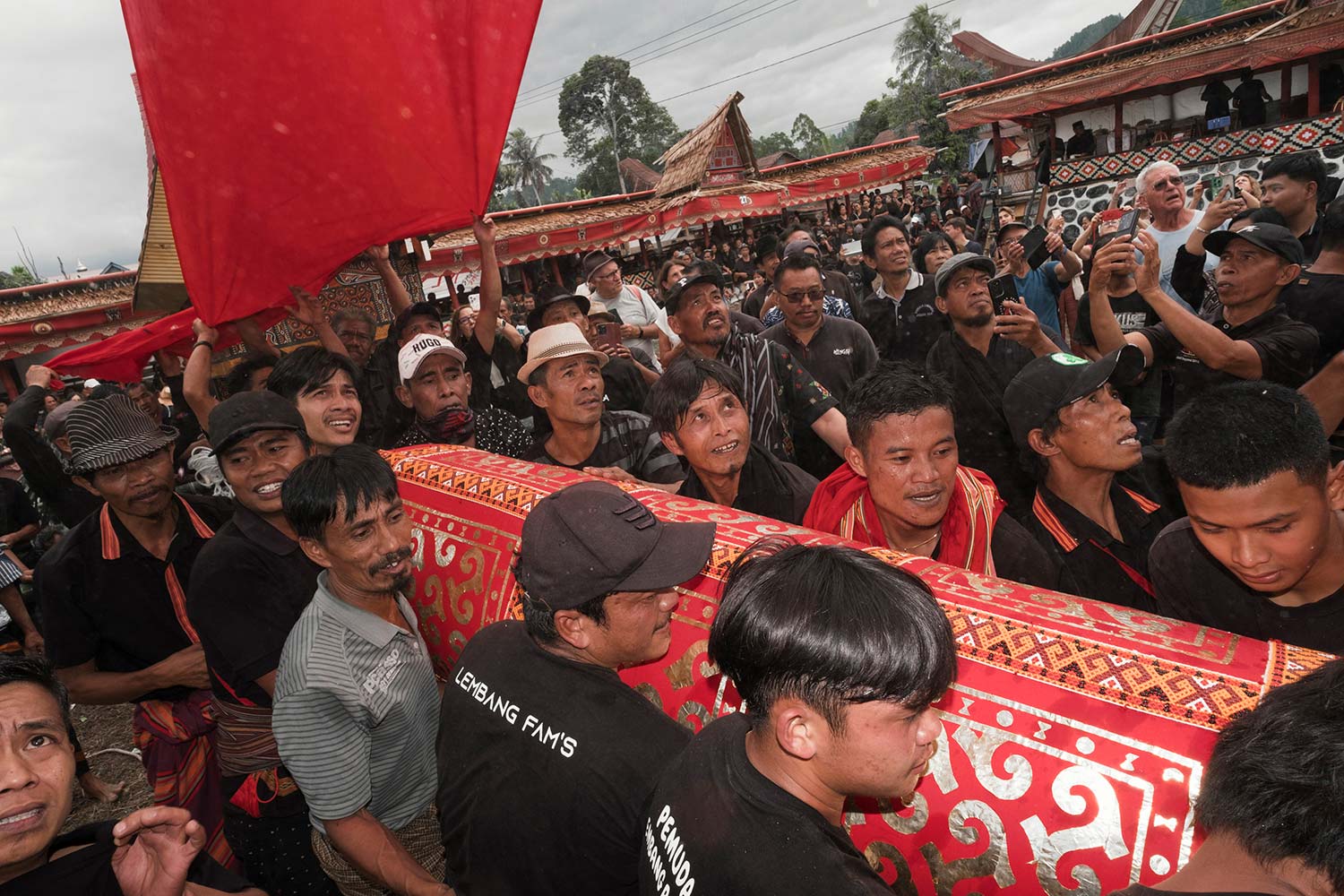
Later, we attended a funeral, a large one, Luter said, for a family of high rank. Red and black filled the crowd. Women prepared food for every guest, since hospitality is sacred and extended as much to the deceased as to the living. Then came the drums, slow and rhythmic, followed by chants that rose like waves. In a ringed enclosure, buffaloes and pigs were carried in one by one, offered amid prayers and ritual cries. The sacrifices were public and intense, yet never cruel. Each drop of blood was a message to the gods that life continues.
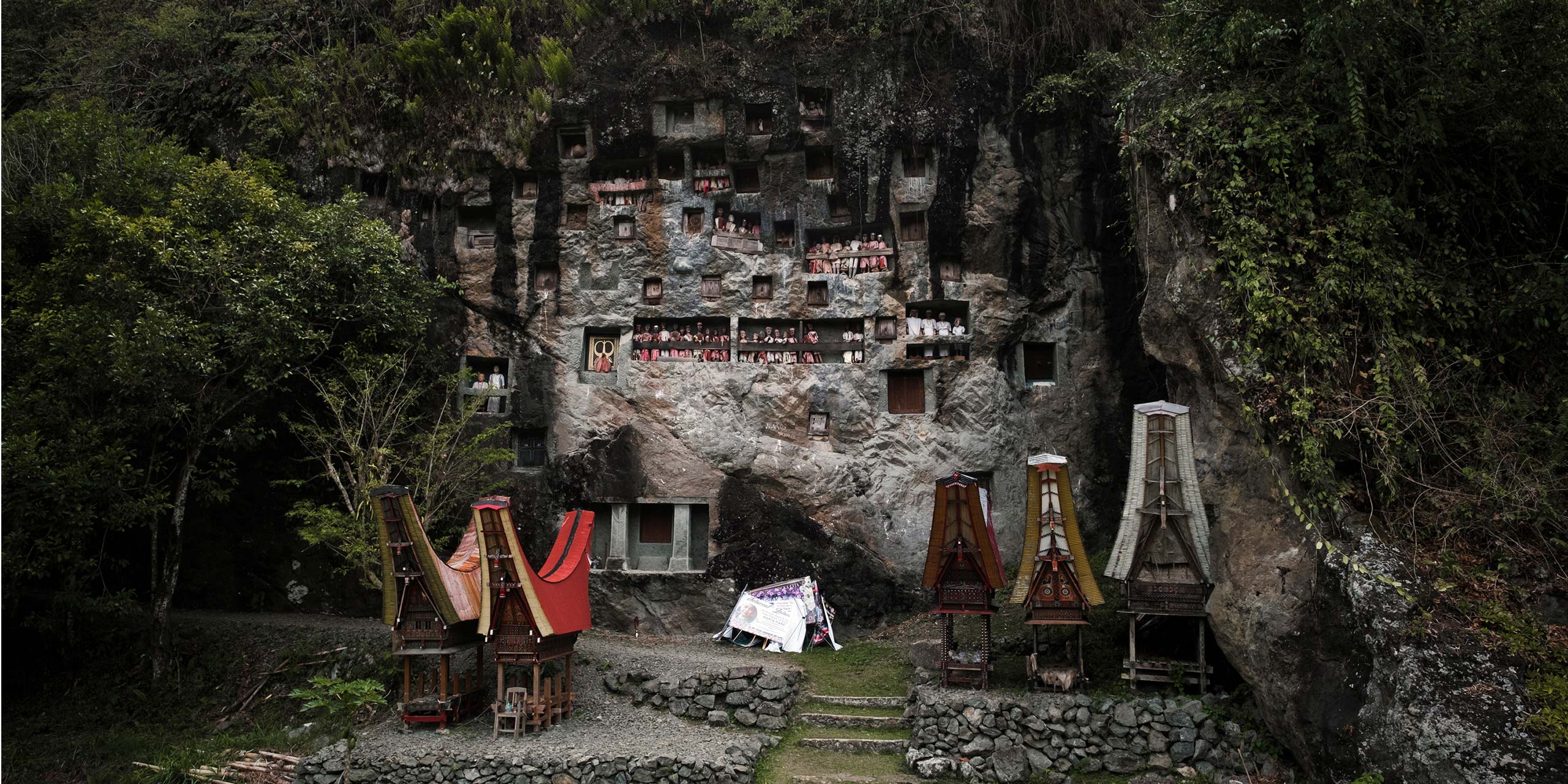
In the days that followed, our eyes kept drifting toward the tongkonan, the traditional houses with curved roofs that reach skyward. We were told they resemble buffalo horns, but to us, they looked like boats ready to cross between worlds. Inside, everything speaks of continuity: ancestors, children, and those yet to come. Every carving, every skull, and every symbol reinforces belonging. Here, nothing disappears. Everything transforms.
We saw this most clearly during Ma’nene, the “cleansing of the dead.” Every few years, families exhume their loved ones, dress them in new clothes, and welcome them home. When we arrived, the preserved body was lifted with a gentleness that silenced us. Layer by layer, the wrappings came away. There was no fear or grief, only love, unguarded and unashamed, refusing the finality we so readily accept.
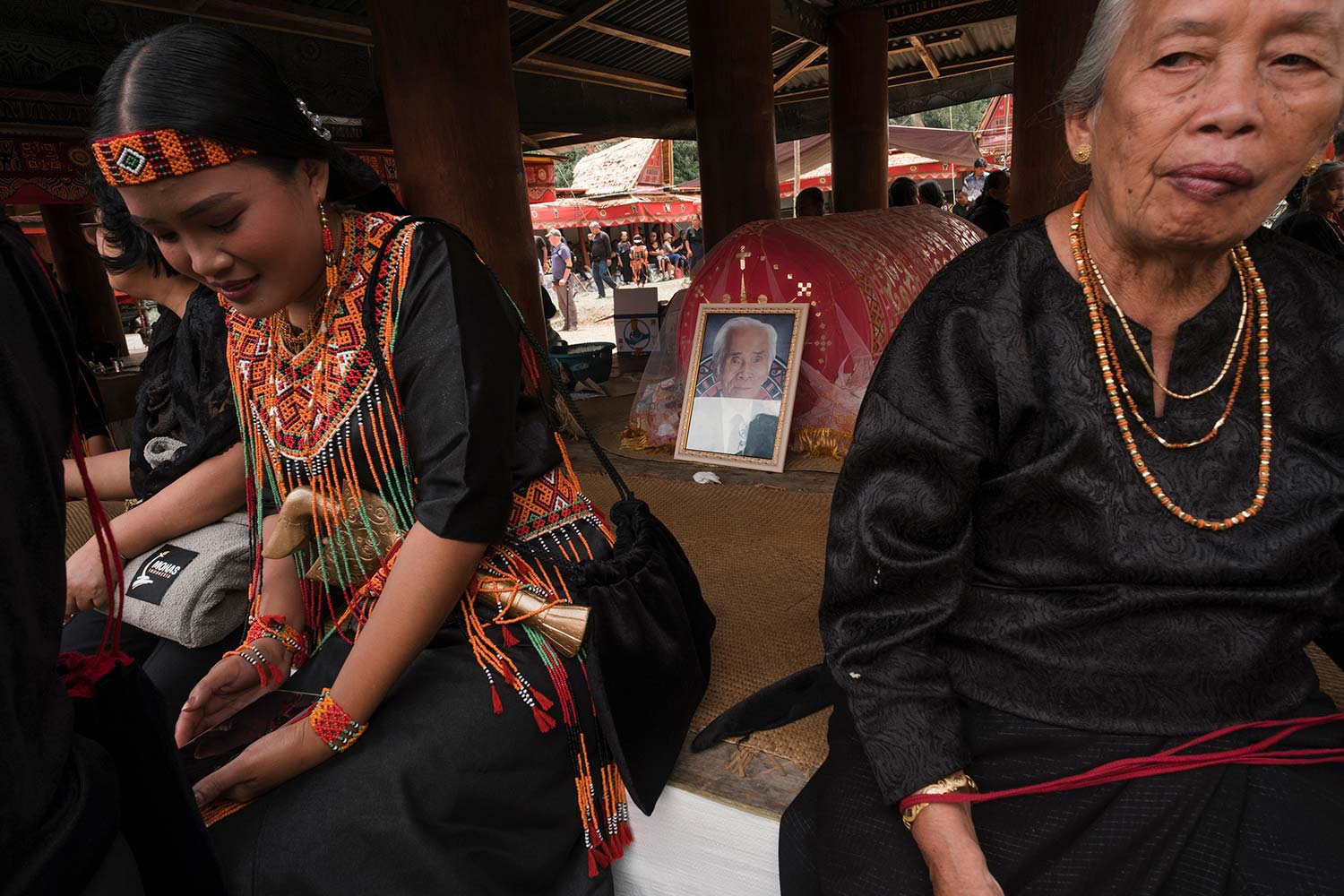
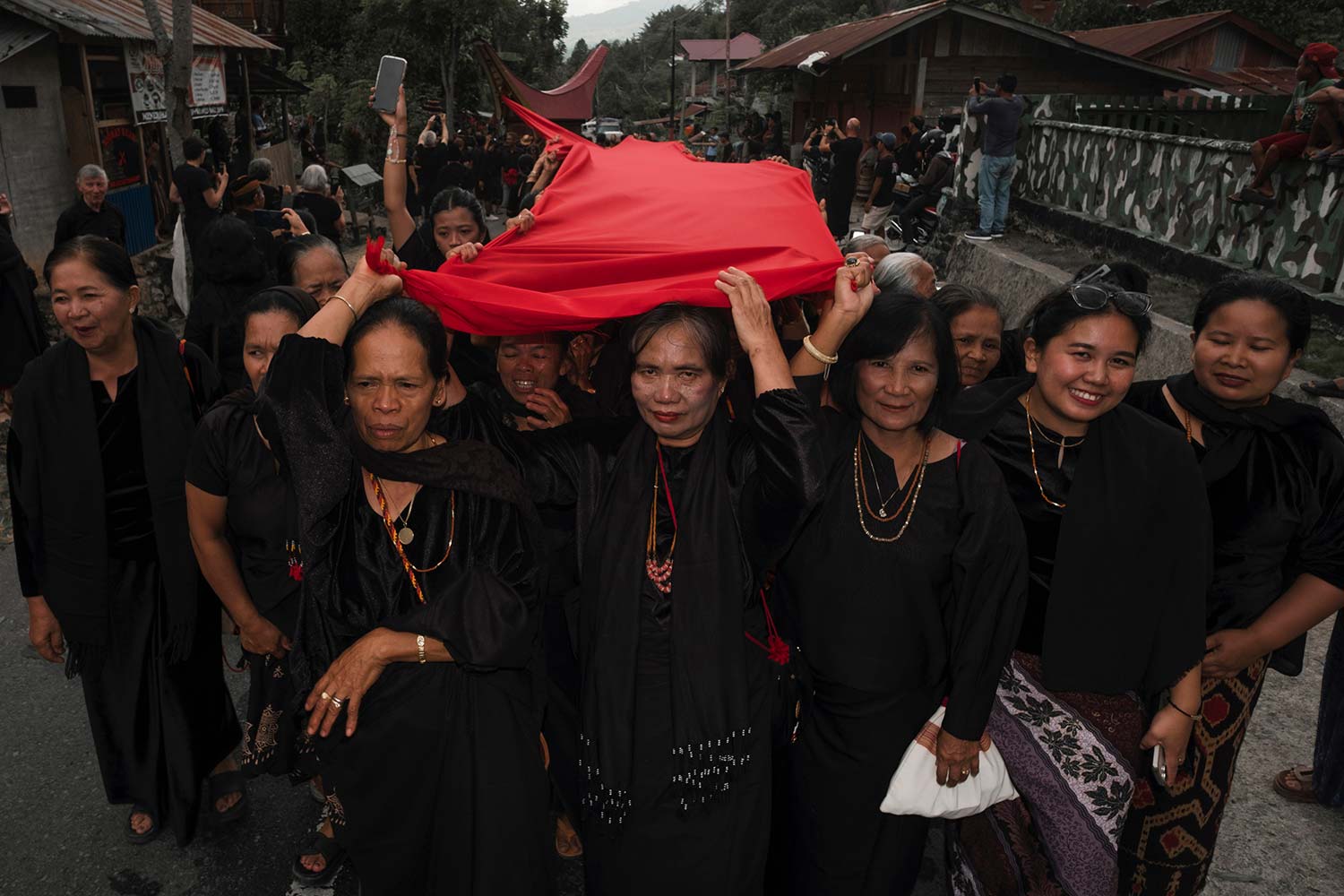
What we witnessed was not death, but dialogue. It was an exchange between worlds and generations. Here, combing a dead man’s hair, placing sunglasses on his face, or posing with him for a family photograph is not macabre. It is a memory kept warm.
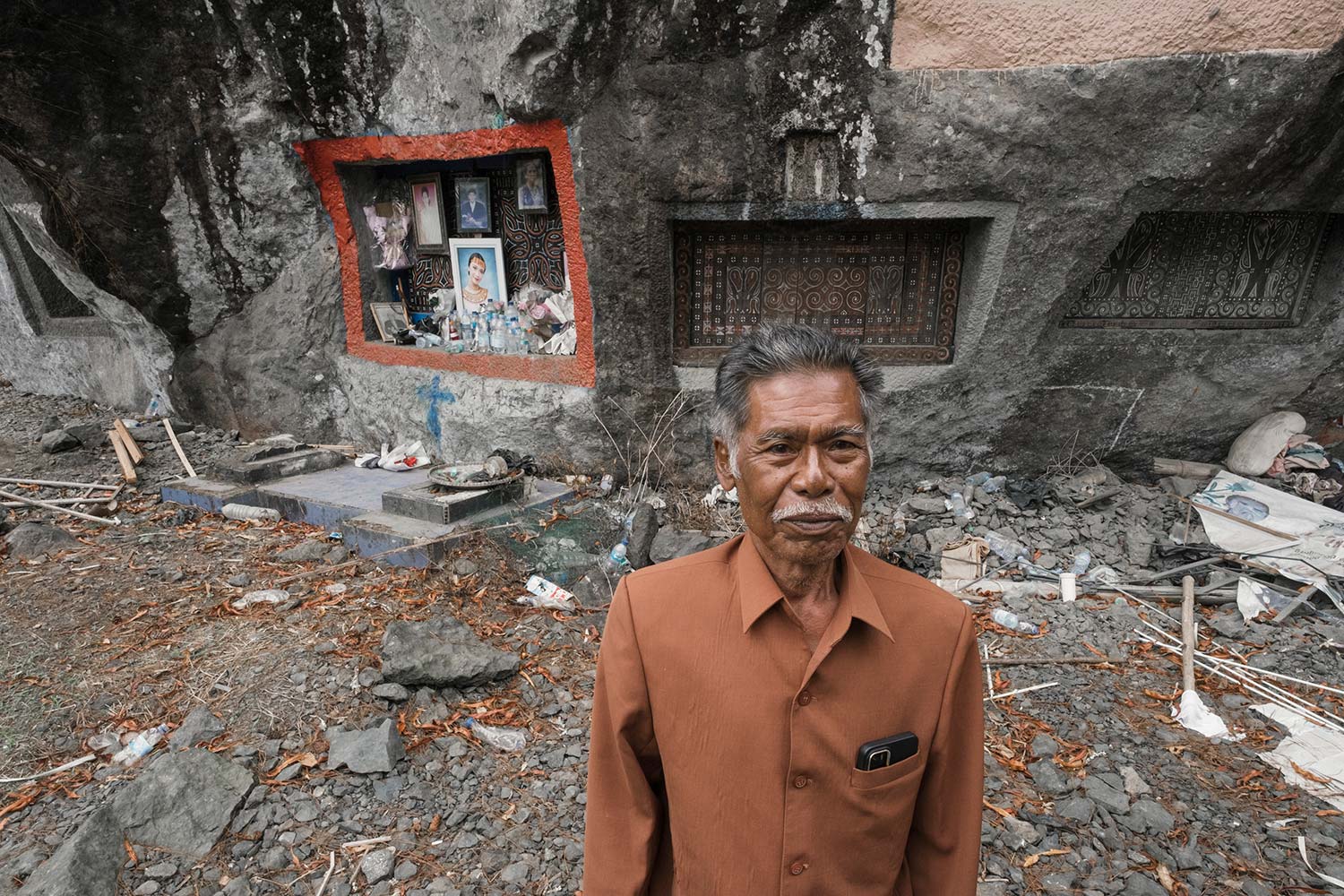
We felt this same tenderness in the tau tau, the wooden effigies carved into cliffs and gazing eternally over the valley. We saw it in the smile of a man placing flowers beside a tomb hollowed from rock, in the tree believed to cradle the souls of unborn children, and in the ossuaries where moss and humidity wrap the bones in their own quiet ecology of remembrance.
Perhaps what we call “death” is only a mistranslation, an imperfect word for something far broader. Among the Toraja, life and death are not opposites. They are two directions of the same river. The rituals, chants, and sacrifices all point toward one understanding: matter and memory share a single essence.
To live in this place is to prepare. To die is to return, not to nothingness, but to the heart of the community.
As we left Rantepao, the road dropped through sudden rain and slanting sunlight. The mountains faded, but the songs, faces, and quiet grace of that place stayed with us, a reminder that somewhere in the clouds of Sulawesi, the dead are still dressed, celebrated, and loved. Not as ghosts, but as the living centre of life itself.