

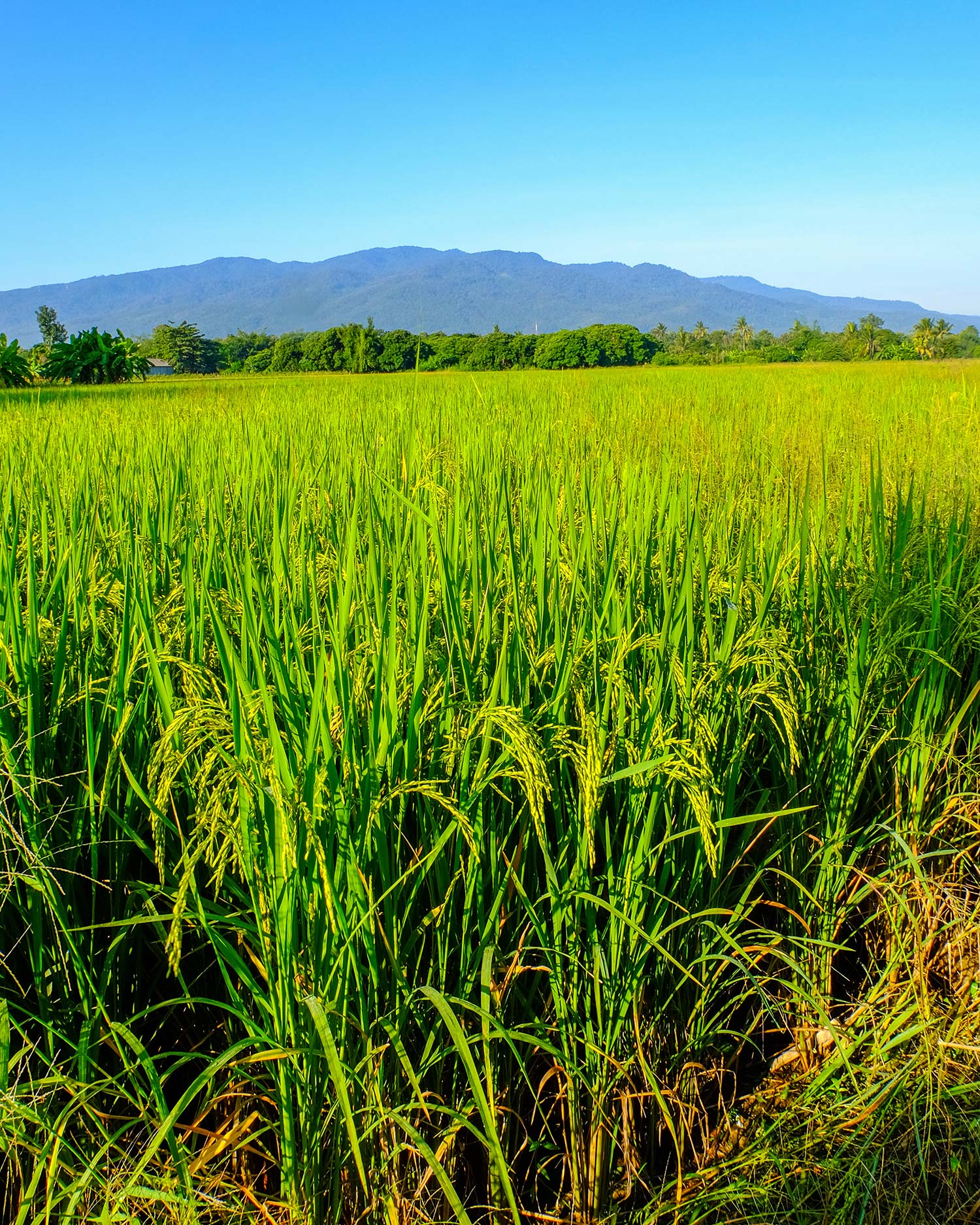
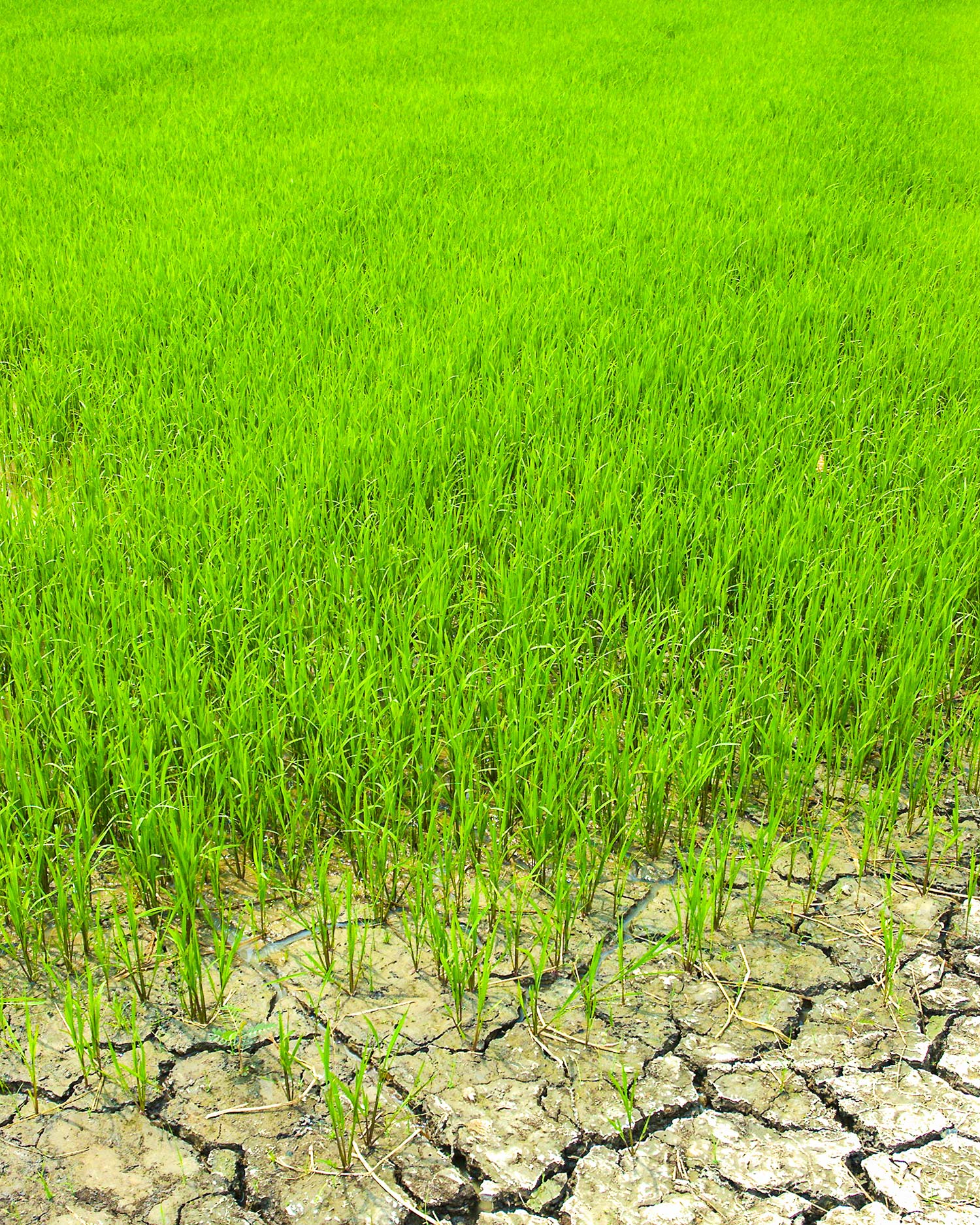
While traveling around Thailand in the rainy season, whether by plane, train, bus, motorbike, or car, visitors can’t help but notice that vast tracts of the countryside look like a sea of vibrant green.
This photogenic landscape is produced by the nation’s principal crop, rice, which is usually planted when the first monsoon rains arrive in June and harvested at the end of the season in November.
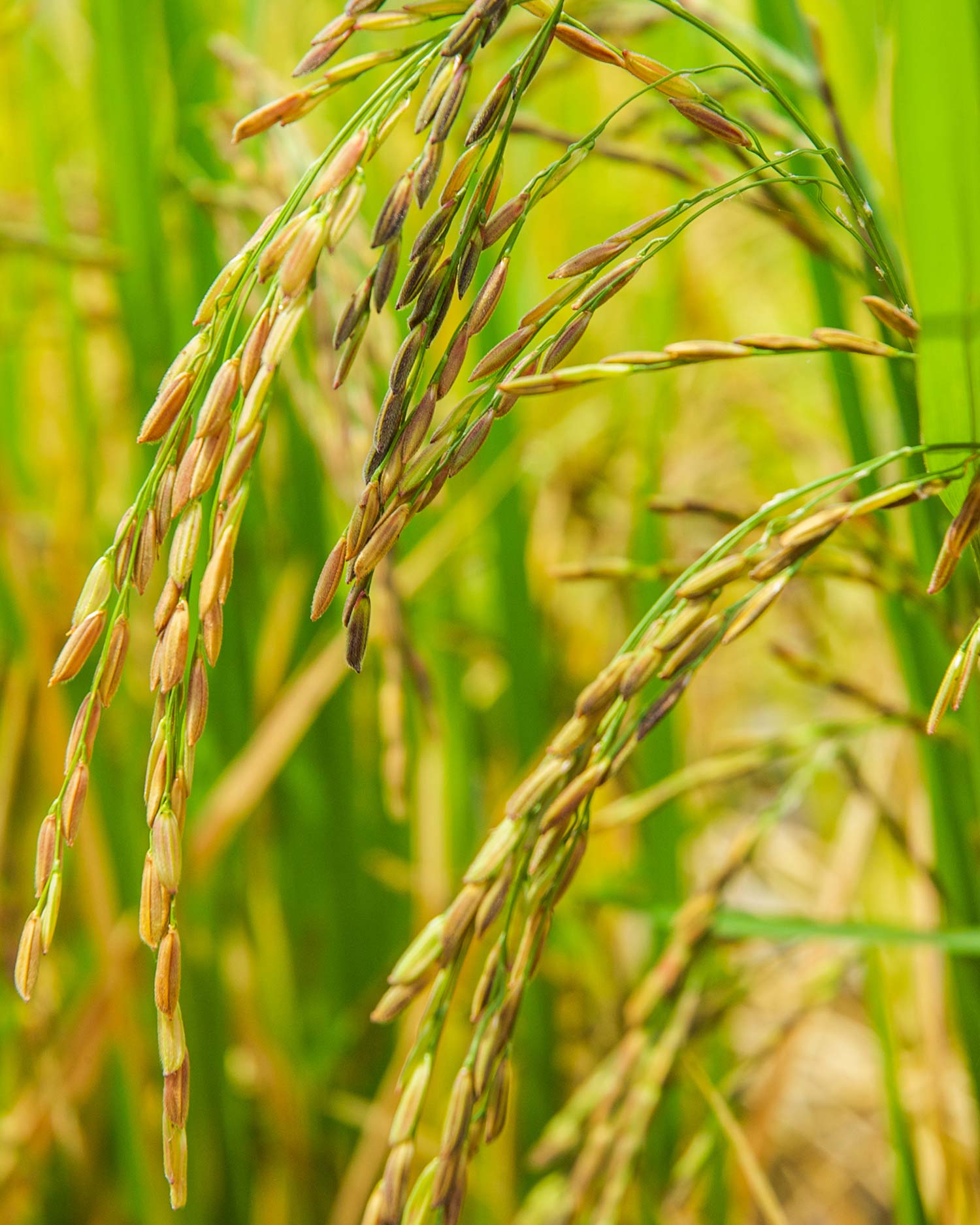
The various stages of the rice cycle, from planting to harvest, require not only the cooperation of entire communities but also the blessing of Mae Phosop, the rice goddess. To assure her goodwill, ceremonies are held throughout the season. Mae Phosop is typically represented in paintings and statues as an attractive woman, seated or standing, holding a sheaf of rice panicles in her right hand.
Rice production and consumption are so integral to Thai culture that it’s difficult to overstate their importance. When Thais meet, they often greet one another not with “How are you?” but “Have you eaten rice yet?”, a reflection of the belief that a full stomach equates with well-being.
Nutritionally, rice is a powerhouse. Just 100 grams provide around 350 calories, making it an easily digestible, high-energy food. It’s rich in protein, calcium, iron, zinc, and vitamins E and B; it’s cholesterol-free; and it has long been valued as a remedy for diarrhea, nausea, and high blood pressure. Eating rice is also believed to encourage serotonin production in the brain, boosting mood. It’s little wonder that Thais eat rice whenever the opportunity arises, or that a reverence for the crop is woven into all stages of its cultivation.
The rice-growing year begins with the Royal Ploughing Ceremony, a Brahman ritual dating back to the Sukhothai era (1257–1350). Held at an astrologically auspicious time, usually in May, the ceremony features bulls plowing a small section of Sanam Luang, next to Wat Phra Kaew in Bangkok. Following behind, the Lord of the Plough scatters seeds blessed by the king and forecasts the harvest’s abundance based on which foods the bulls choose from seven proffered troughs.
At the ceremony’s conclusion, barriers are removed and farmers scramble to collect scattered grains, believed to ensure a bumper crop. Though the practice faded in the early 20th century, it was revived by King Bhumibol in 1960 and has been held annually ever since.
As the first rains arrive in May or June, farmers throughout the country plow their paddies and prepare for planting. Before sowing, they build shrines to Mae Phosop, make offerings, and invite her to dwell in the fields. They also mix new rice seeds with remnants of the previous year’s harvest to sanctify them.
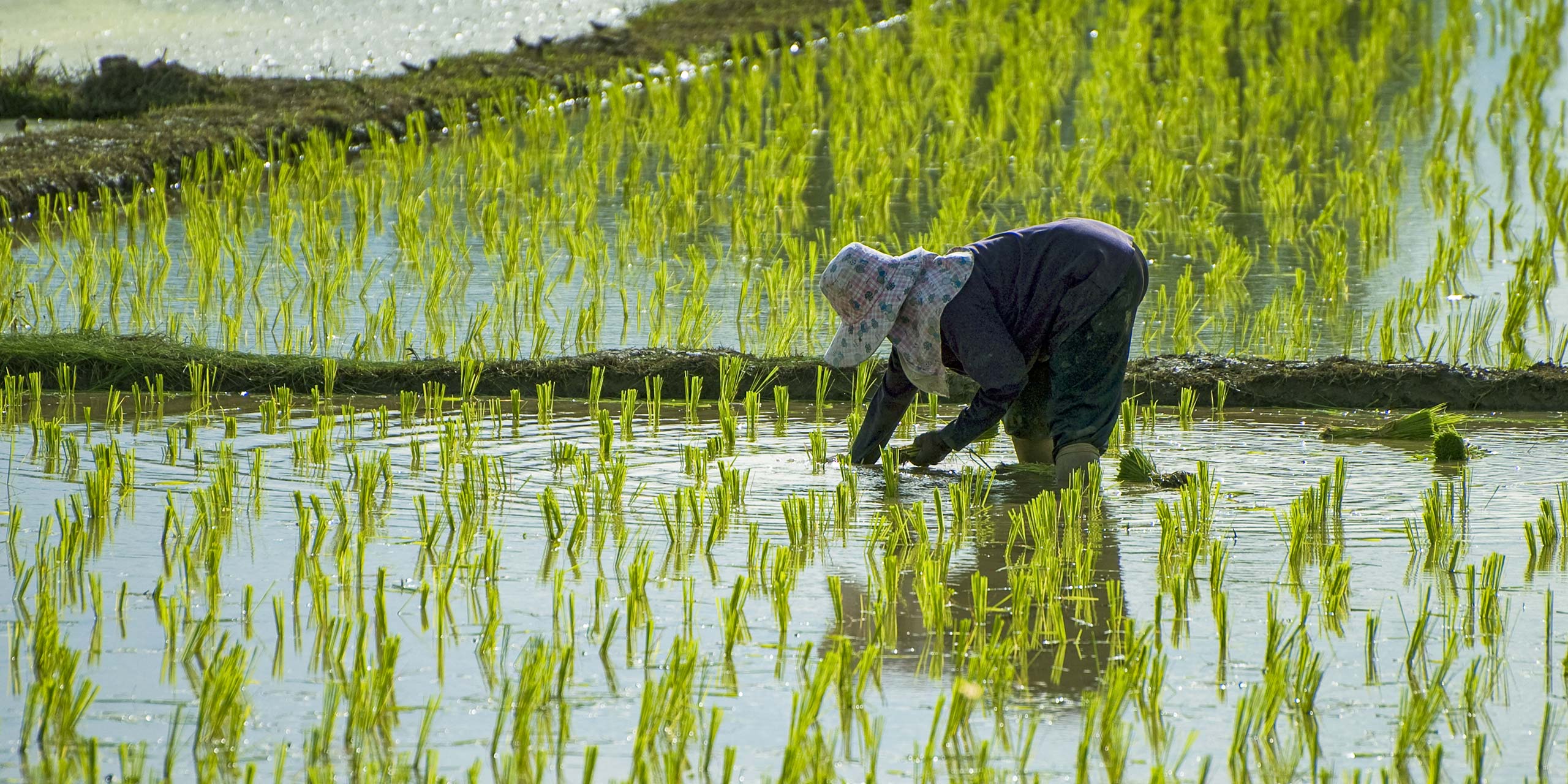
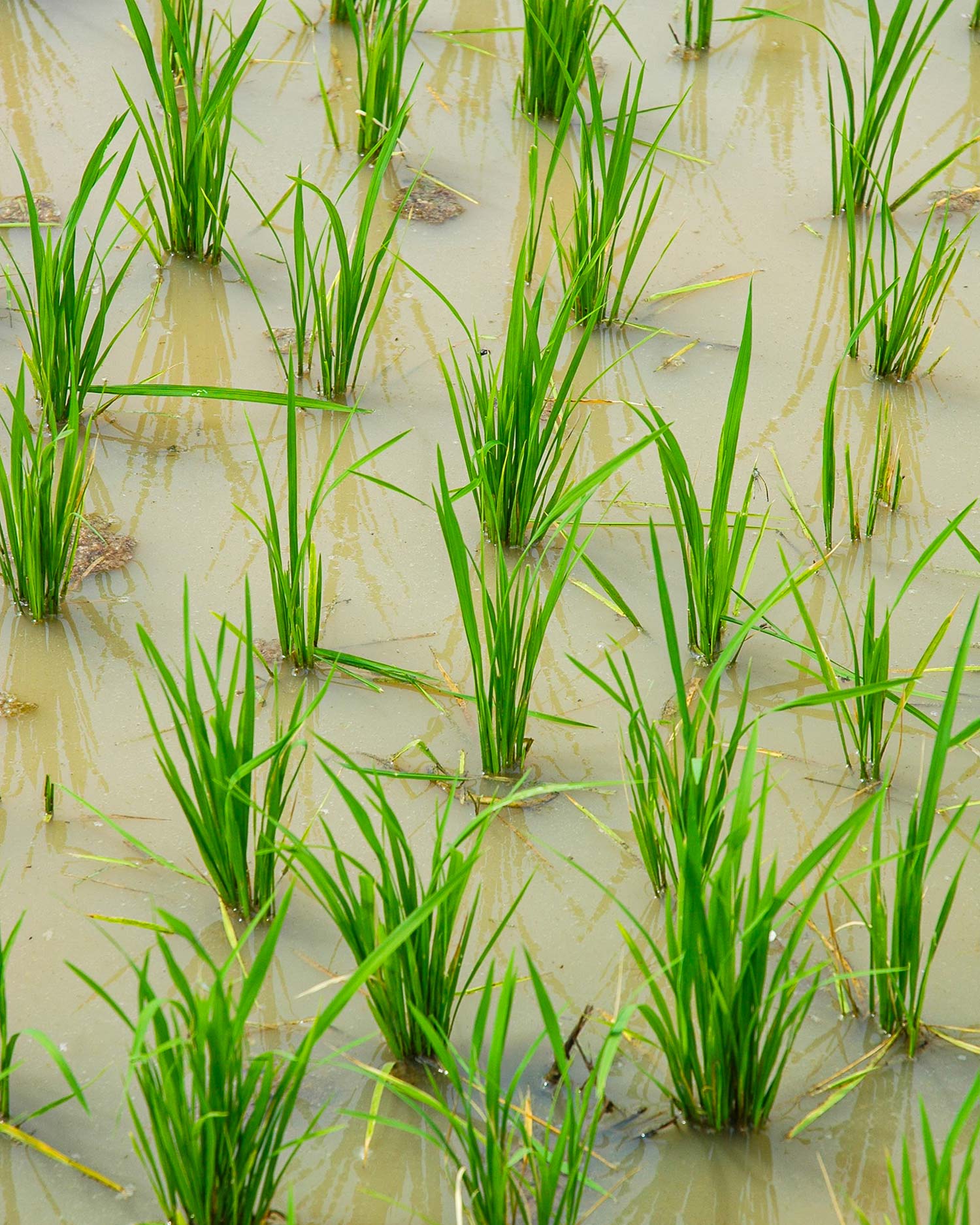
Seeds are first planted in seedbeds, and once the shoots reach about six inches high, they are transplanted into flooded paddies. The labor-intensive process involves plucking small clumps of shoots and thrusting their roots into the soft mud, leaving 30-centimeter spaces between clusters. The result is a striking sight: young rice shoots reflected in water in dramatic, symmetrical patterns.
Transplanting is shared by the whole community. Despite hours of standing “with backs to the sky, faces to the earth,” as a Thai saying puts it, groups of planters maintain high spirits, swapping jokes and songs as they work ankle-deep in mud. Simple shelters dot the landscape, providing shade for midday meals and naps.
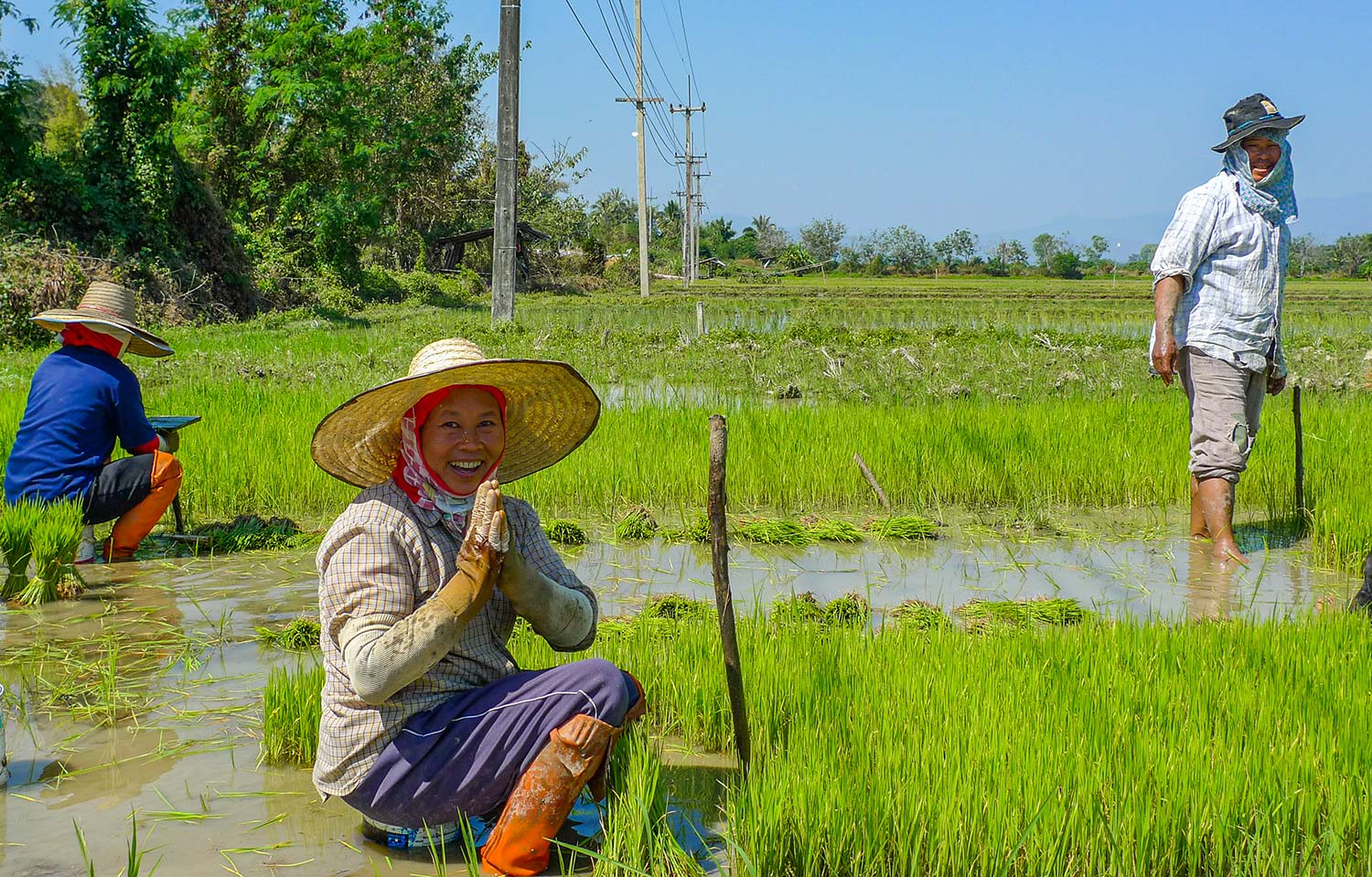
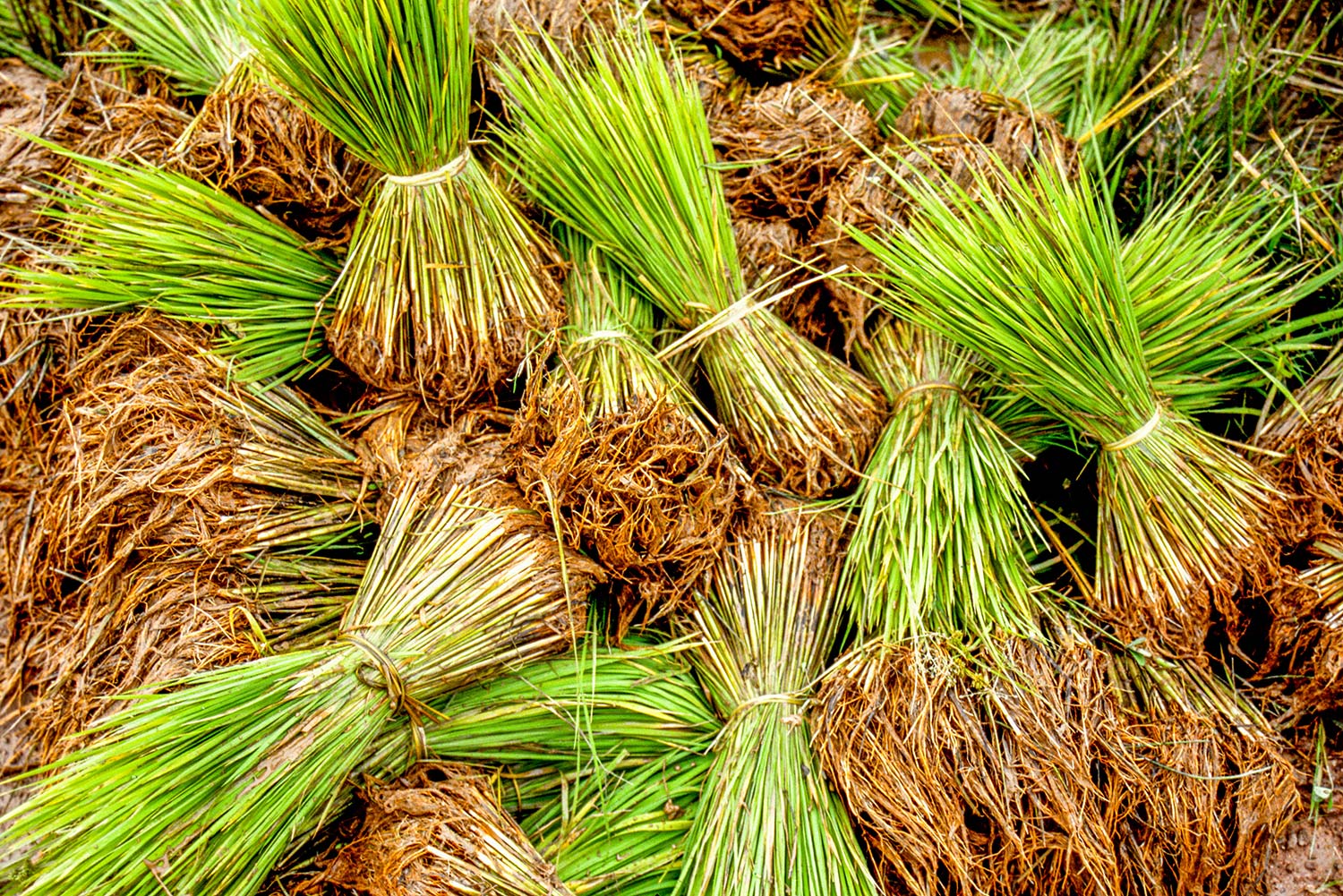
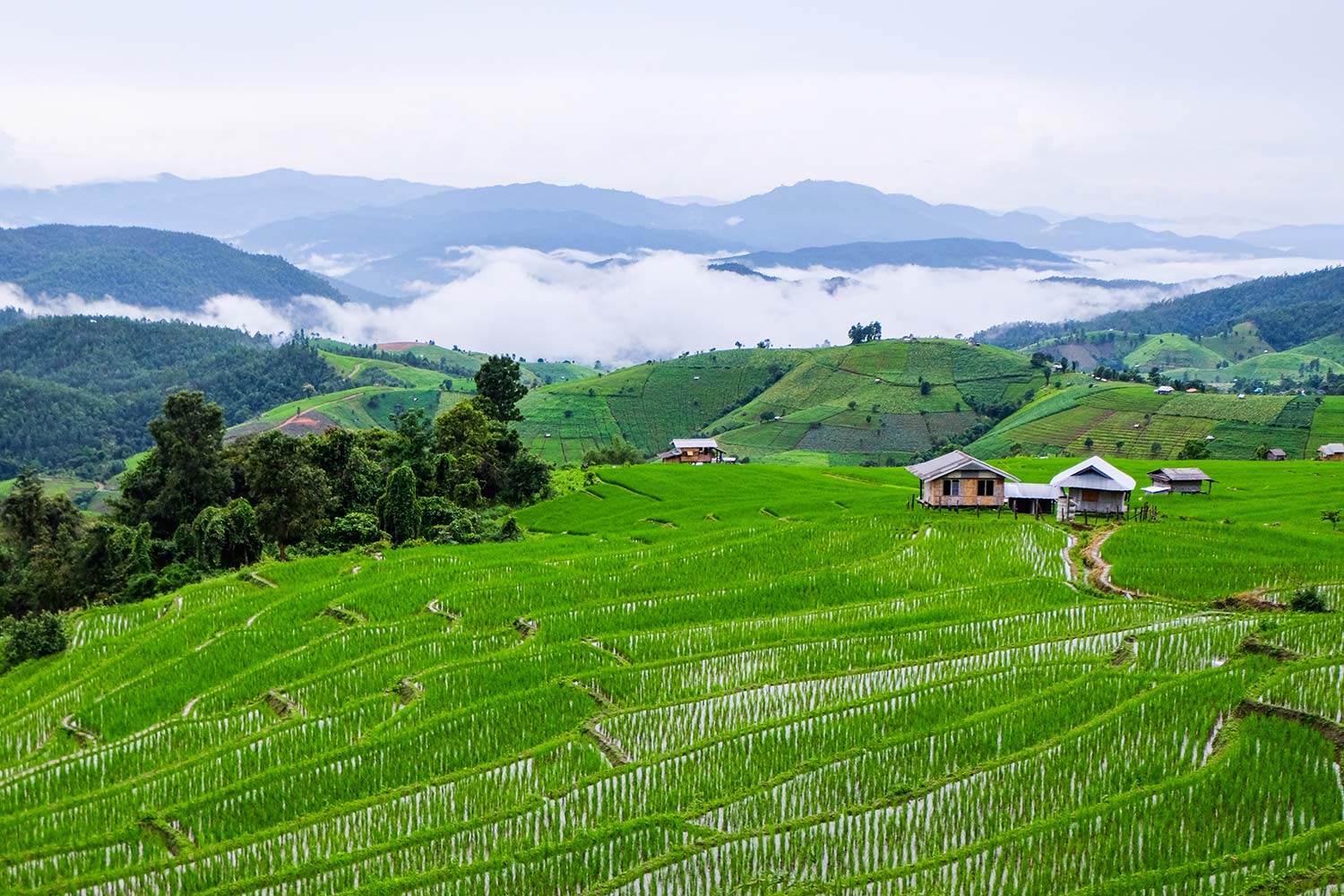
For travelers, this is one of the most vivid times to explore the countryside. Visitors stopping for photos are often invited to pitch in. Even without a local invite, several guesthouses and tour operators offer rice-planting experiences.
As the rice grows, it enters its “pregnant” stage in September or October, when grains begin to form. Villagers mark this with another ritual for Mae Phosop: women bring sour fruits (lime and tamarind, associated with pregnancy cravings), along with perfume, combs, and mirrors, placing them in bamboo baskets hung in the fields. Bamboo talismans known as taleo are also set around the borders to ward off evil influences.
Throughout the season, farmers must keep pests—birds, rodents, and insects—at bay. By November or December, the fields have shifted from green to gold, and the heavy heads of rice bend toward harvest. Using sickles, farmers cut the stalks, then thresh and winnow them by hand to separate the grains. The rice is stored in traditional barns, which often feature carved balconies, ornate rooflines, and sturdy teak pillars. Some barns today have been repurposed into luxury accommodations at countryside boutique resorts.
The final rituals of the season include offerings of the new crop to animals and an invitation for Mae Phosop to leave the fields and take residence in the rice barn, protecting the harvest from pests and disease. Traditionally, women perform this ritual; legend has it that if a man were left alone in the barn with the goddess, he might be tempted to “plant another kind of seed.”
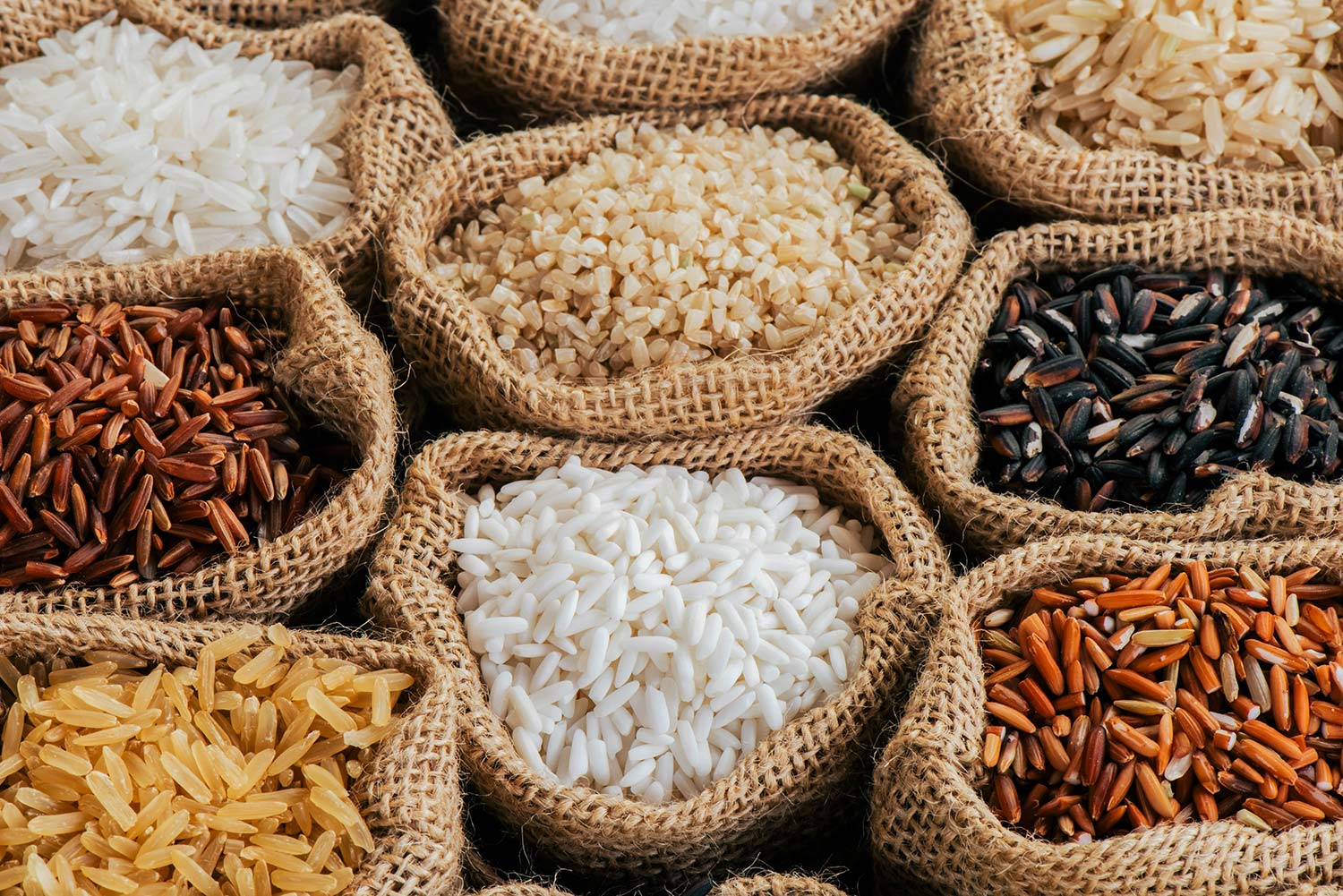
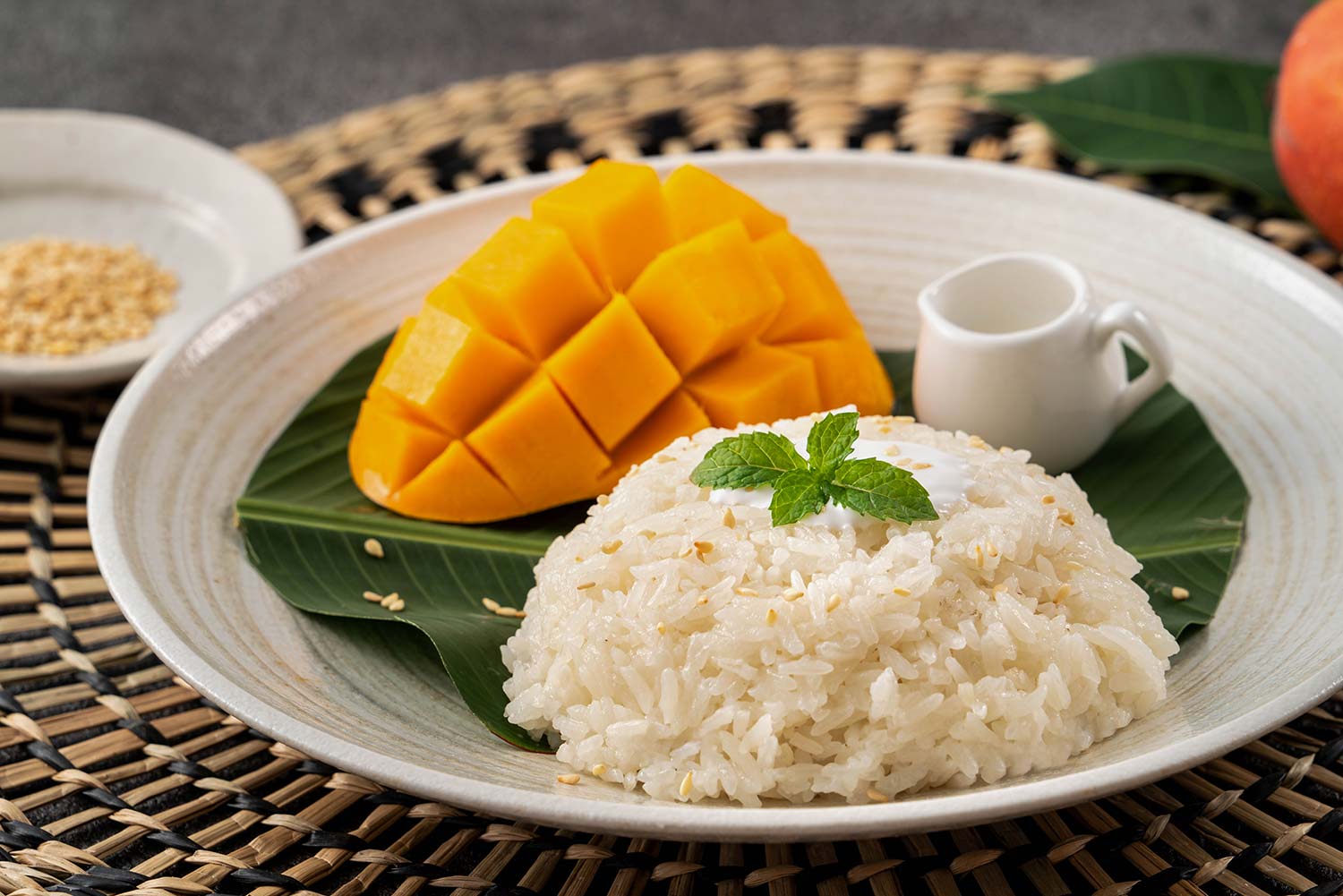
Once the harvest is secured, farmers enjoy a respite during the dry, cool months. It’s a time to savor rice in its many forms. Fragrant jasmine rice (khao hom mali) remains the nationwide favorite, although purple-hued riceberry has gained popularity for its antioxidants and fiber. In the north and northeast, sticky rice is the staple, eaten by rolling it into small balls and dipping it into sauces.
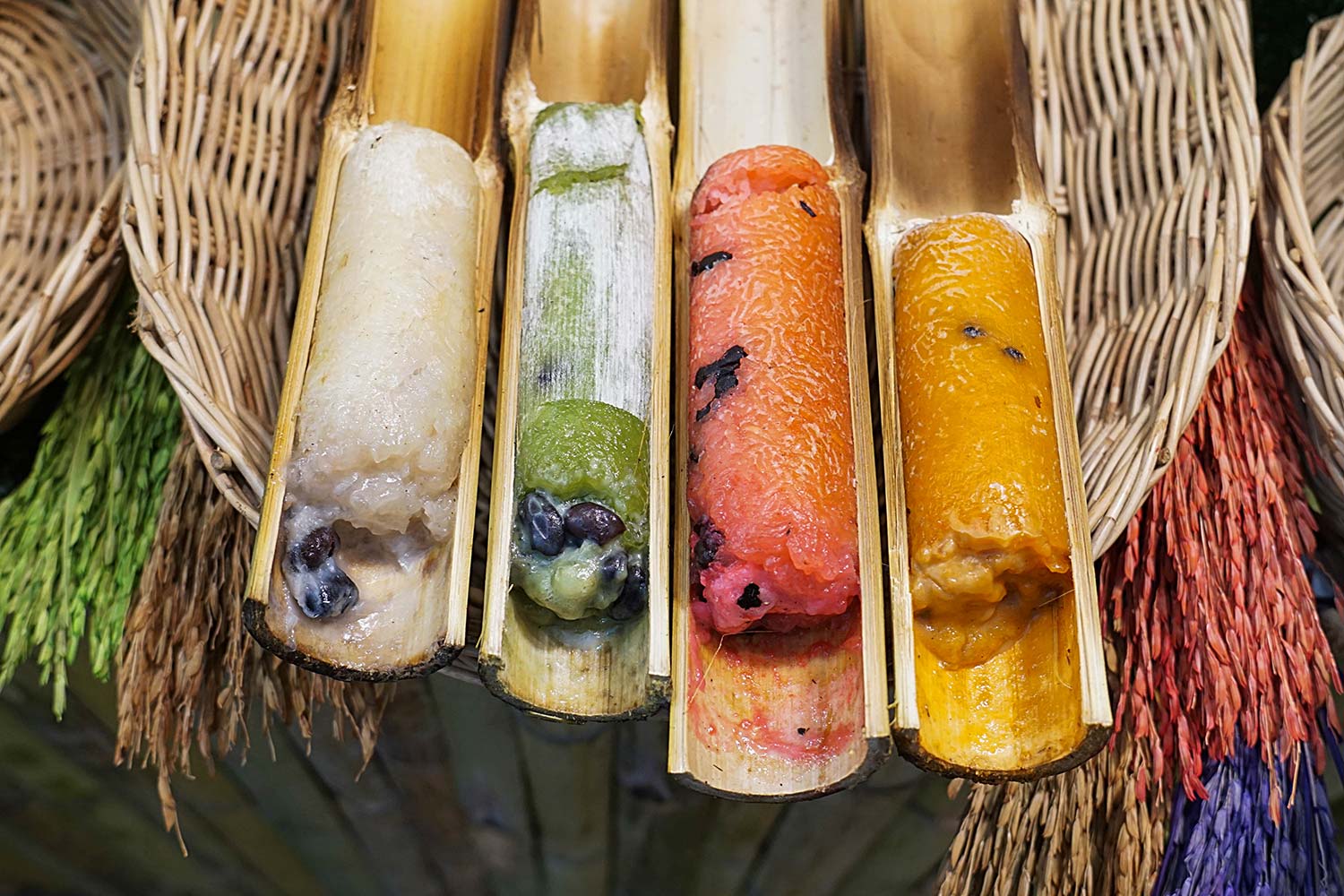
Sticky rice also plays a starring role in desserts. Khao lam—a mixture of sticky rice, beans, sugar, and coconut milk baked in bamboo tubes—is a popular roadside snack. The best-known treat, however, is mango sticky rice, a beloved combination of sweet fruit and creamy grains found in restaurants across Thailand.