

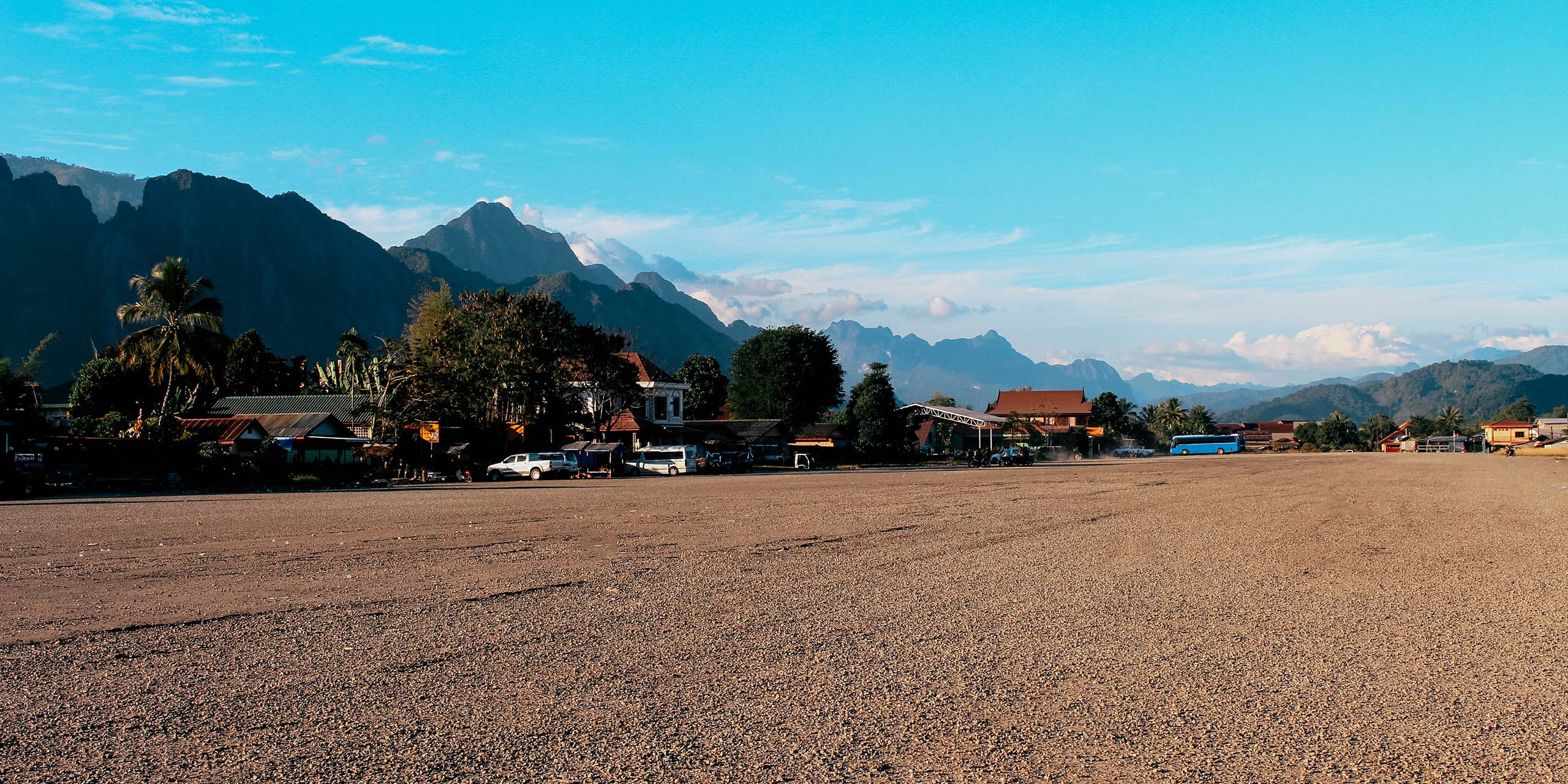
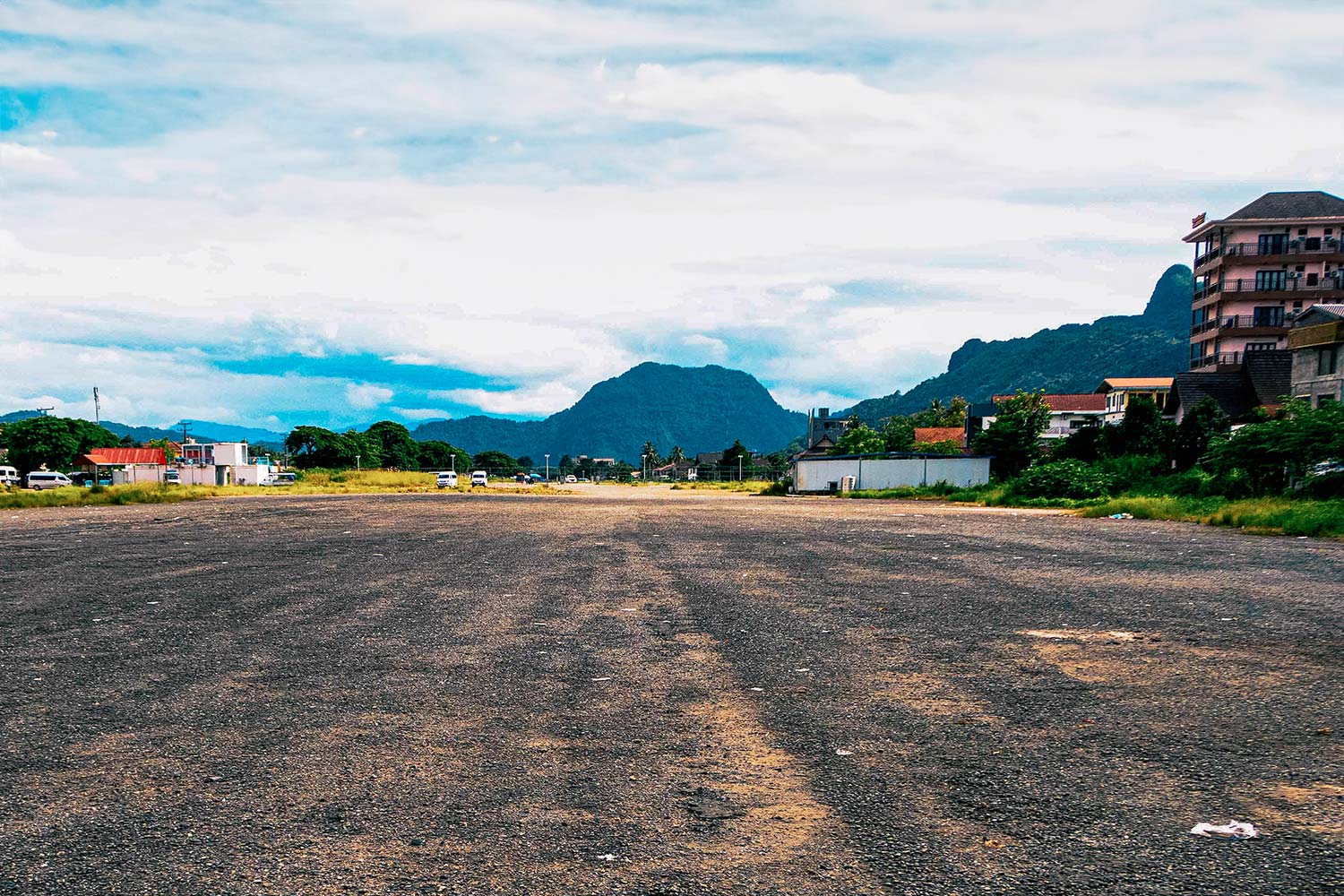
The runway at Lima Site 6 lies abandoned beneath a haze of heat and dust, a strip of cracked asphalt edged by limestone peaks.
There is little to mark what it once was. A plastic water bottle crushed into the gravel. A discarded medical mask. A faded Queen of Spades. The detritus of modern Laos scattered across what was once one of the most active covert airstrips in Southeast Asia.
Fifty years ago, this was part of the CIA’s “secret war” in Laos, a sprawling, largely hidden conflict that paralleled the Vietnam War. From sites like this, small aircraft lifted off and landed throughout the day, ferrying soldiers, refugees, supplies and the dead across a country that was, for a time, one of the most heavily bombed places on earth.
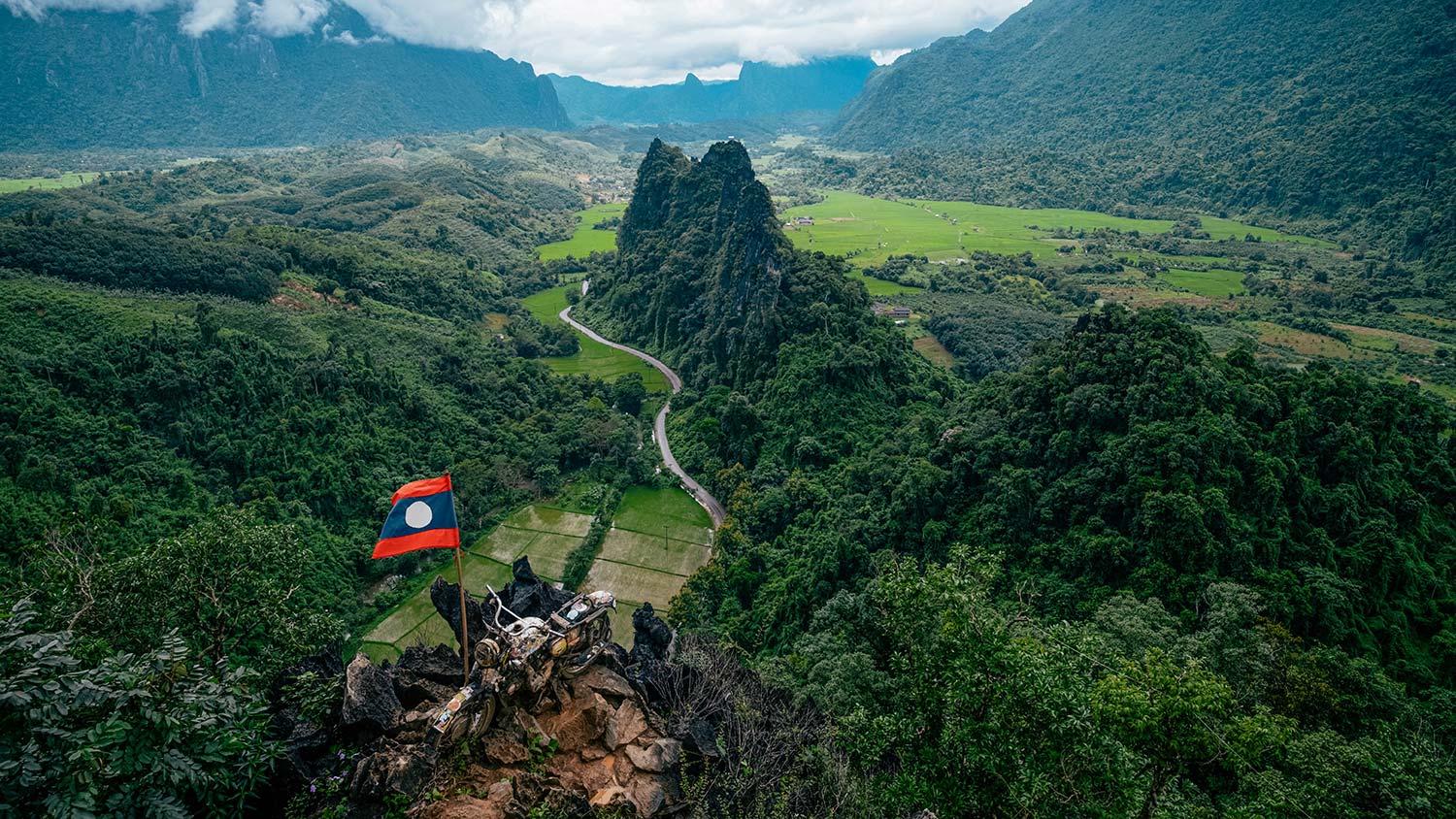
The network of so-called Lima Sites—more than 200 scattered across Laos—formed the backbone of that effort. Operated in secrecy, they supported Air America, the CIA’s airline, which flew missions ranging from reconnaissance to rescue.
Pilots flew light aircraft capable of landing on short, improvised strips carved into mountainsides. They transported American personnel, Thai troops and thousands of Hmong fighters recruited into a proxy war against communist forces.
The risks were constant. North Vietnamese and Pathet Lao troops targeted the aircraft, and many never returned. Those that did depended on these isolated runways to refuel, regroup and launch again into a conflict that was both pervasive and, at the time, largely unacknowledged.
Behind the flights was a war conducted on an extraordinary scale. Between 1964 and 1973, the United States dropped more than two million tons of ordnance on Laos—the equivalent of one ton for every person in the country at the time. Much of it was aimed at disrupting the Ho Chi Minh Trail, the network of supply routes used by North Vietnam.
To sustain that effort, the CIA built up remote strongholds such as Long Tieng, a once-secret base that grew into one of the busiest air hubs in the world during the war. Thousands of flights passed through each day, supporting operations that blurred the line between covert intelligence work and open conflict.
The human cost was borne largely by local populations. More than 27,000 Hmong and other minority fighters were recruited and trained by American and Thai forces, drawn into a war that would leave many displaced or forced into exile after the communist victory in 1975.
Some aspects of that war remain deeply controversial. Allegations of brutality, including mutilations carried out by CIA-backed fighters, have lingered for decades. So too have claims that Air America flights were used to transport heroin produced in the region, feeding addiction among U.S. troops in Vietnam—accusations long denied by officials.
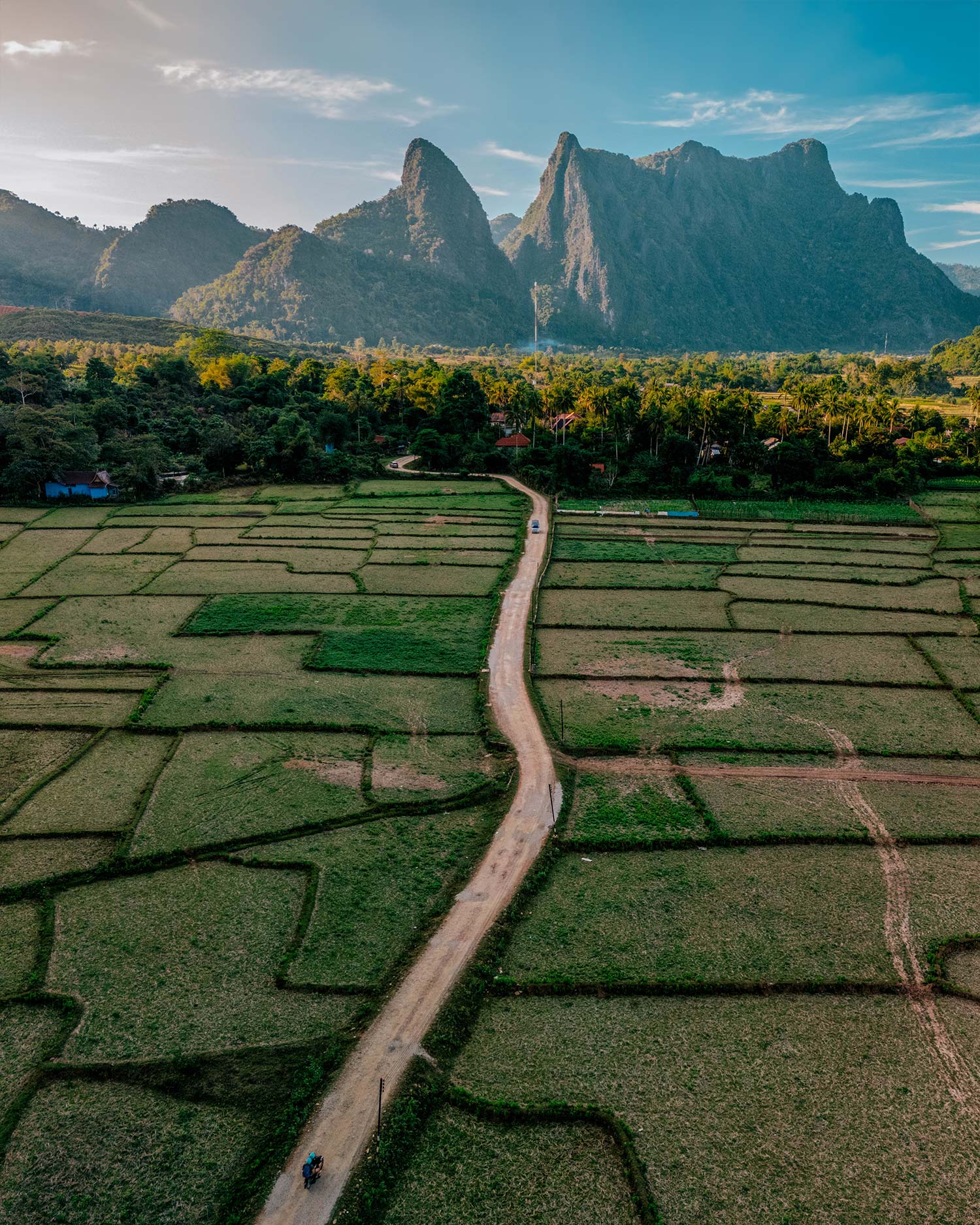
Today, little of that history is visible at Lima Site 6. The runway remains, but its purpose has vanished. Around it, Vang Vieng has transformed.
Once a quiet riverside settlement, the town is now a stop on Laos’ emerging tourism circuit. Hotels and guesthouses line the streets. Night markets spill over with snacks, souvenirs and cheap clothing. Backpackers drift between riverside restaurants and bars, while a newer wave of regional tourists—from China, South Korea and beyond—arrives in organized groups.
The shift is abrupt. A short walk from the airstrip leads into a town shaped less by memory than by momentum. Karaoke bars blast Mandarin pop songs into the night. Neon-lit clubs and massage parlors sit alongside travel agencies offering tubing trips, cave tours and hot air balloon rides above the surrounding karst landscape.
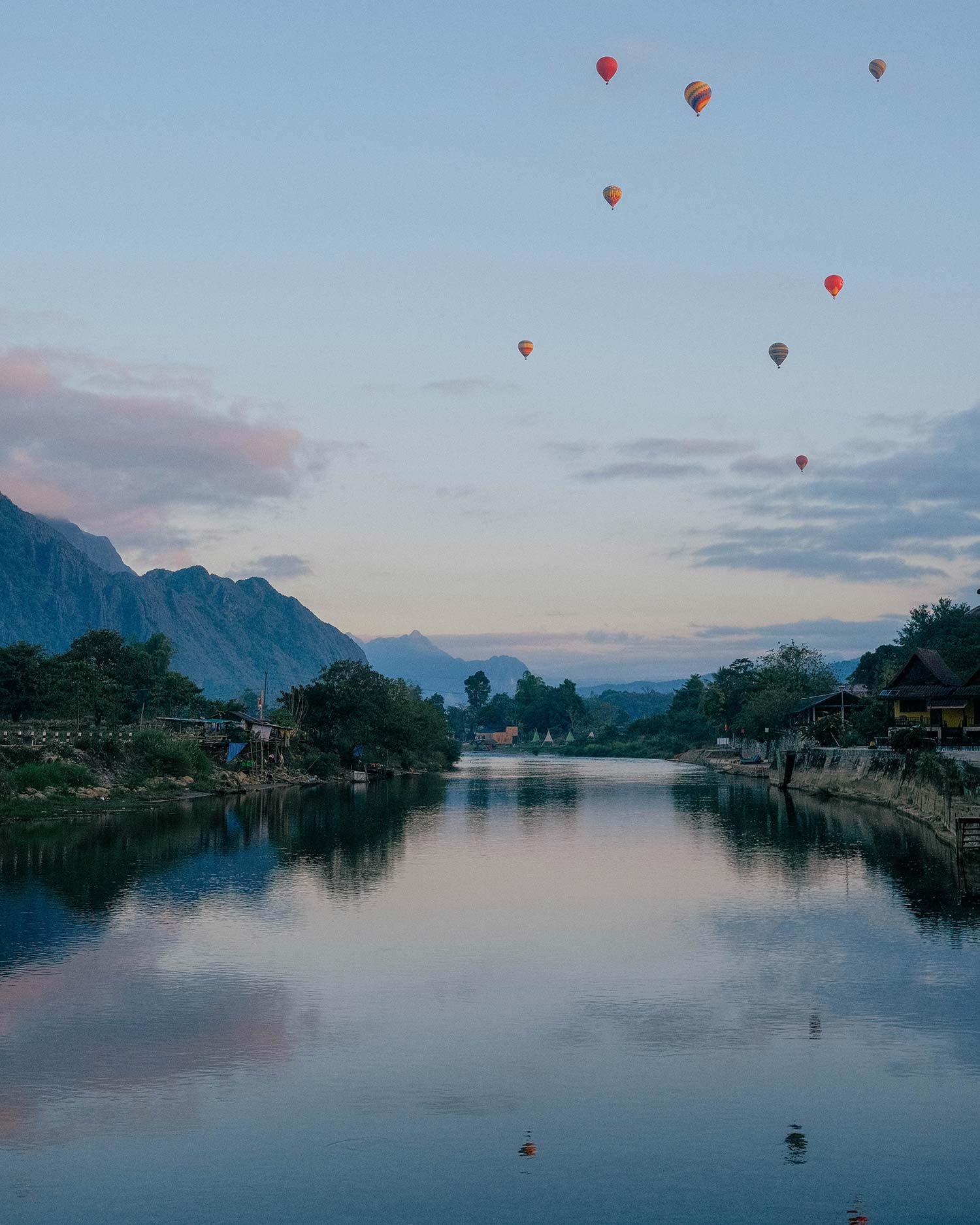
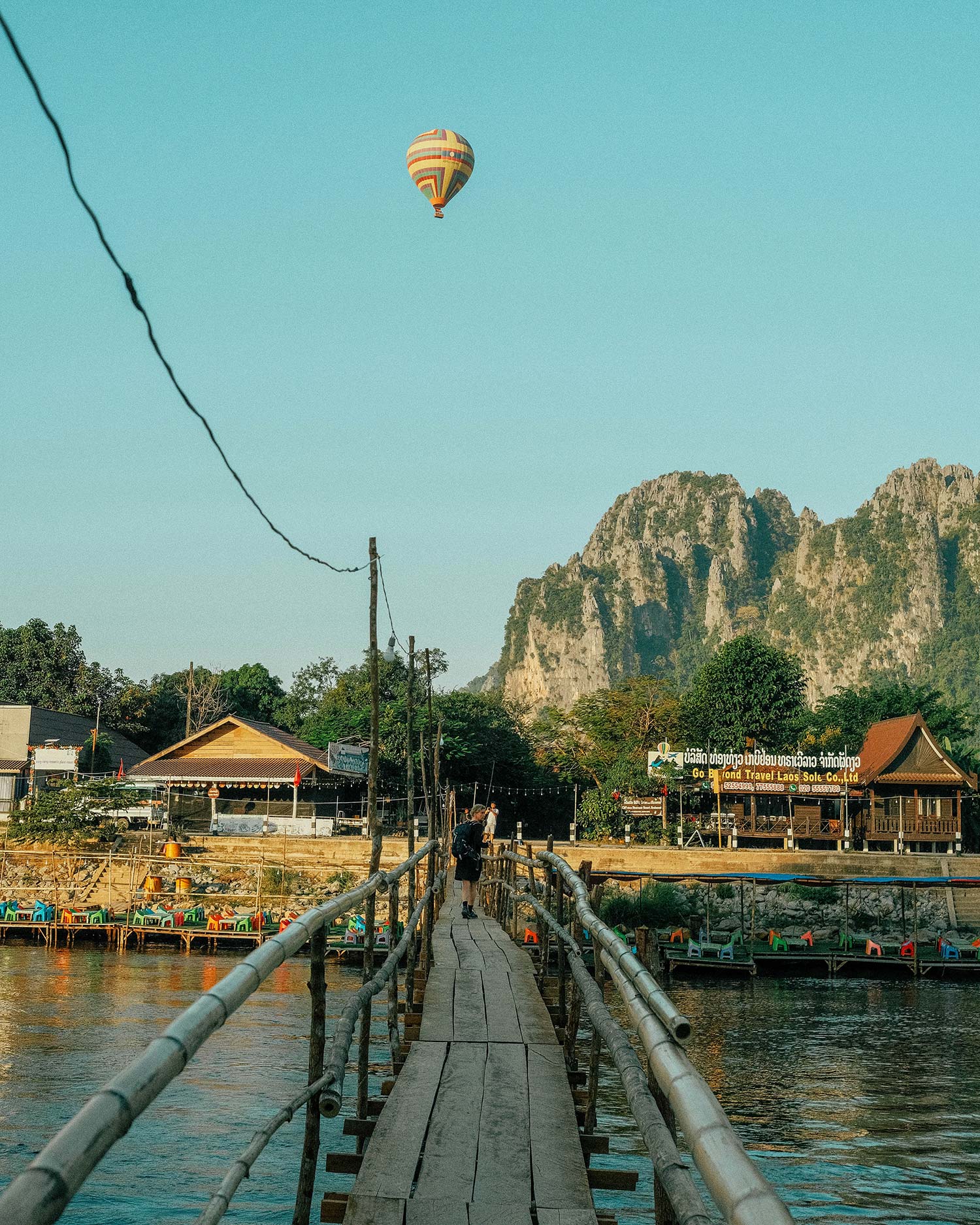
For a time, Vang Vieng became synonymous with excess, attracting backpackers drawn by cheap alcohol and lax regulation. A government crackdown a decade ago curbed some of the worst excesses, but the town remains in flux, caught between its past and its reinvention.
That reinvention is being driven, in part, by forces far beyond Laos itself.
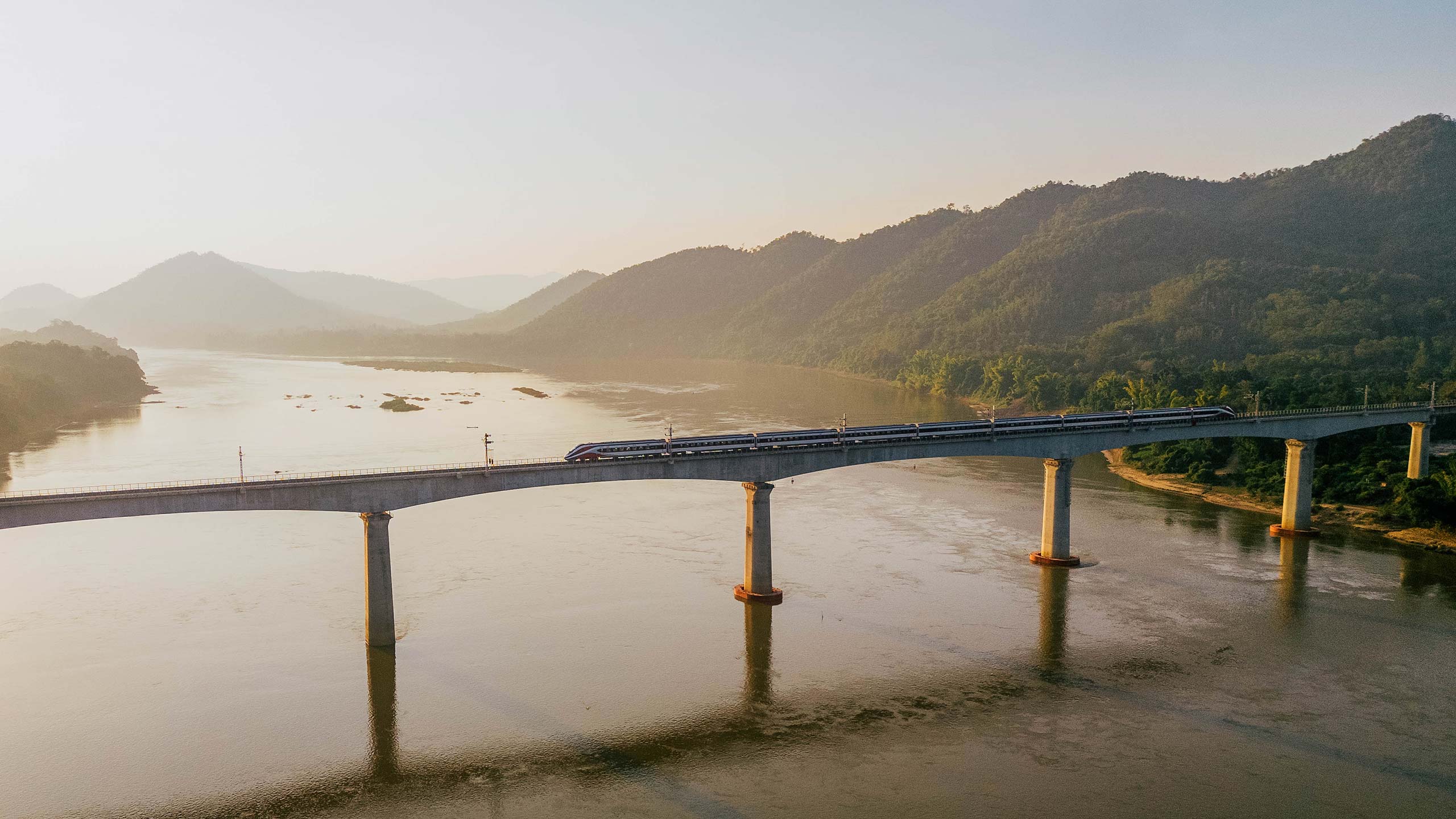
Since 2021, high-speed trains financed and built by China have cut through the country from north to south, linking Vientiane with China’s Yunnan province. The line stops in Vang Vieng, bringing a steady flow of visitors into what was once a remote outpost.
The trains are fast, clean and tightly controlled, with airport-style security and multilingual announcements. They are also part of a much larger project: China’s Belt and Road Initiative, which has poured billions into infrastructure across Laos.
The railway is only one piece of that transformation. Hydroelectric dams now line the Mekong and its tributaries, generating power for export to neighboring countries. Mining, agriculture and special economic zones have drawn foreign investment, even as concerns persist over debt, environmental impact and governance.
Laos has branded itself the “battery of Southeast Asia,” exporting electricity while relying on external capital to fund its development. The result is a country increasingly shaped by outside influence—a familiar pattern in its history, though the actors have changed.
In the capital, Vientiane, that tension is visible in quieter ways. French colonial architecture sits alongside new construction. Government buildings fly red communist flags, while shops stock imports from China and Thailand. Economic growth has brought opportunity for some, even as political life remains tightly controlled.
Relations with the United States, once defined by war, have shifted towards cautious cooperation. Efforts to recover the remains of American servicemen continue in remote parts of the country, where unexploded ordnance still poses a daily risk.
Yet the legacy of the secret war lingers most strongly in places like Lima Site 6, where the past has not been erased so much as neglected.
Standing on the runway, it is difficult to reconcile the stillness with what once took place here. There are no markers, no official recognition, nothing to indicate that this strip of asphalt was once part of a vast covert network that helped shape the course of a regional war.
Instead, there is only the landscape—the same jagged peaks, the same humid air—and the quiet evidence of a different present encroaching.
Tourists pass nearby without noticing. Music drifts across from the town. The runway gathers dust.
In Laos, the secret war was never entirely hidden. It was simply left behind.