


Even at 6am, the traffic on the Grand Trunk Road is chaotic. Cars, trucks, scooters, and cycles jostle for space. It is hard to believe that this narrow stretch, barely 40 feet wide in places, is part of an ancient highway that once connected central and south Asia.
The road threads through dusty business districts and old settlements beyond the northern suburbs of Kolkata. On my right, I catch glimpses of the grey expanse of the River Ganges, framed between rambling old mansions once owned by wealthy Bengali families who settled along the sacred river during the days of the British Raj.
I am on a trip from my home in Kolkata to visit towns along the Hooghly—the name given to the Ganges in its final stretch to the Bay of Bengal—that once served as trading posts for European adventurers and seafarers, long before the British ventured to this part of the world.
The Danish den
The listless structures and potholed streets of Serampore, my first stop, belie its past as a centre of education, linguistics, and publishing in the early 19th century. The Danish East India Company established a colony here in 1755, naming the town Frederiksnagore in honour of King Frederick V of Denmark. The historic town square once housed magnificent neoclassical buildings—white mansions with expansive porticoes and green Venetian blinds—but much of this was demolished by the British after they acquired the town in 1845 for a paltry sum of 1.2 million INR.
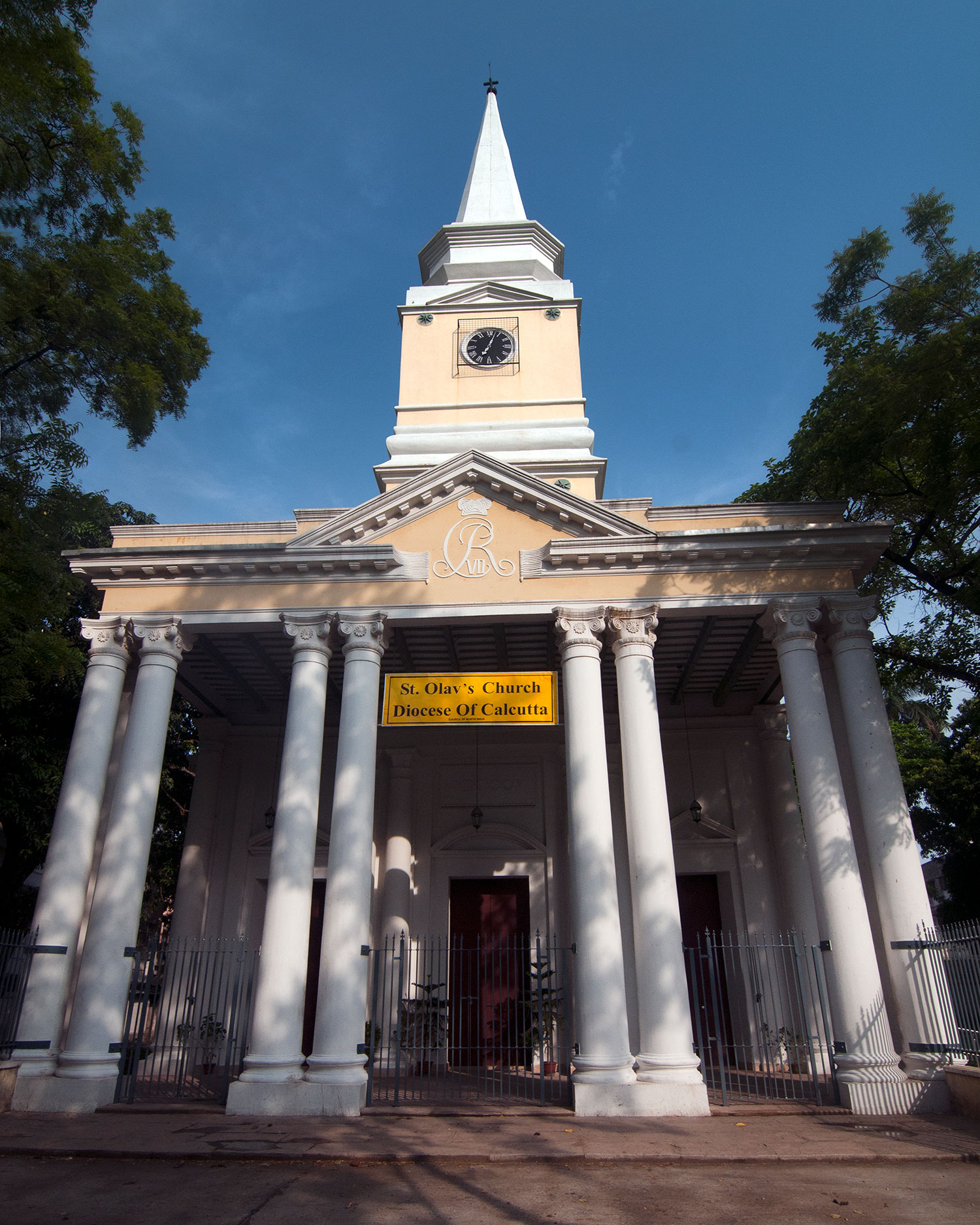
The riverfront is now lined with concrete structures that have all but erased what must once have been an elegant promenade. Yet, turning a corner, I find myself face to face with a majestic edifice: Serampore College, founded in 1818 by Baptist missionaries William Carey, William Ward, and Joshua Marshman, known collectively as the Serampore Trio. Created under a Royal Danish Charter granted by King Frederick VI, it is the second-oldest college in India. Not far away, St. Olave’s Church—the town’s most visible landmark—rises with its double-columned portico and bell tower, added in 1805 with generous donations from Kolkata and Copenhagen. Inside, the surprise is its more British in design: Gothic columns flank the hall leading up to the altar.
Going Dutch
Driving further north along the Ganga, I pass Chandannagar, saving it for the return journey, and reach Chinsurah, a former Dutch trading post that thrived for nearly two centuries on saltpetre, spices, cotton, and indigo. Eighteenth-century accounts describe Dutch mansions with pleasure gardens and ornate steps leading down to the river. Today, little remains of that grandeur. Fort Gustavus is gone, replaced in part by the Hooghly Madrasah, though four Dutch cannons still lie scattered on the site.
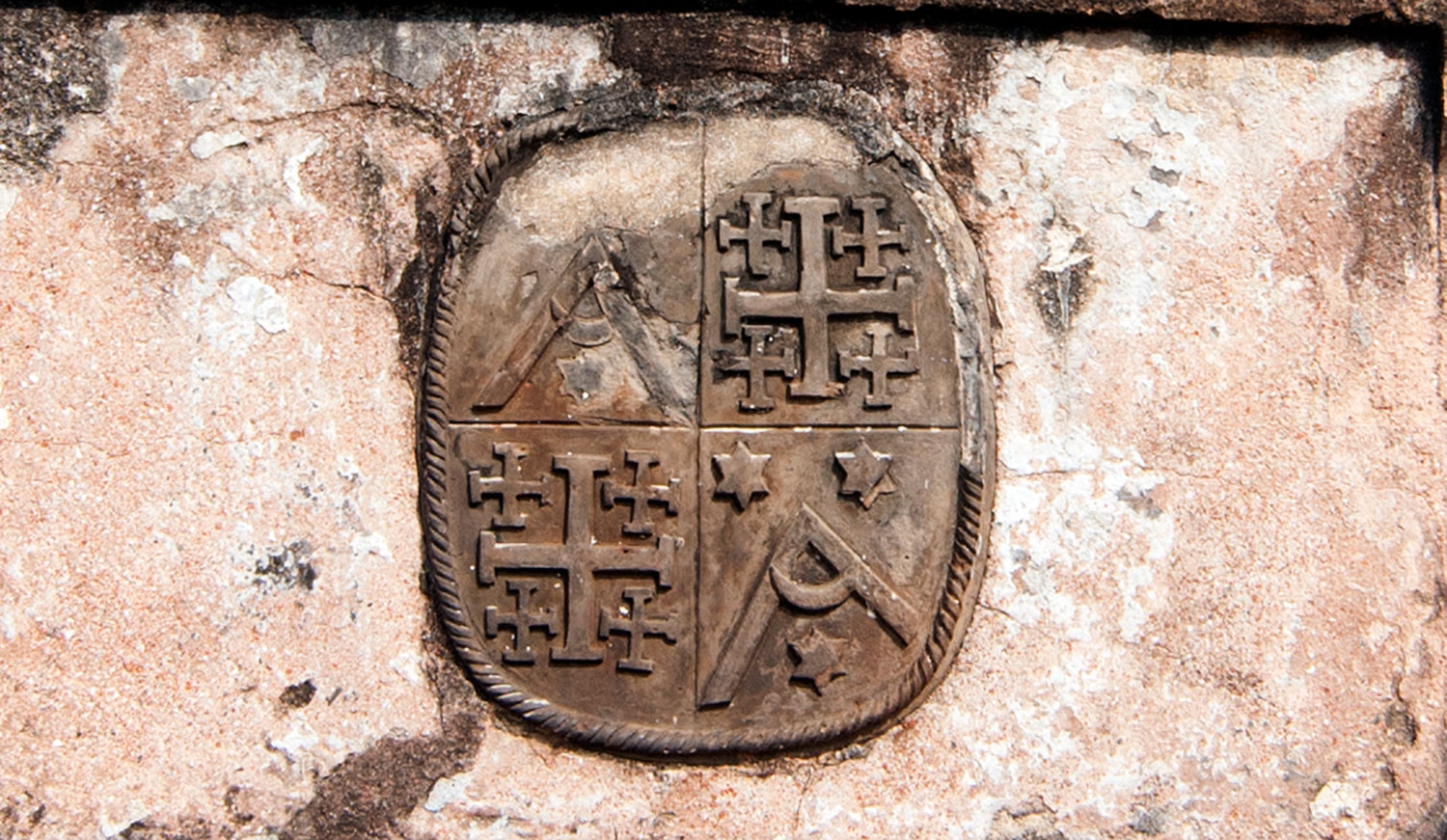
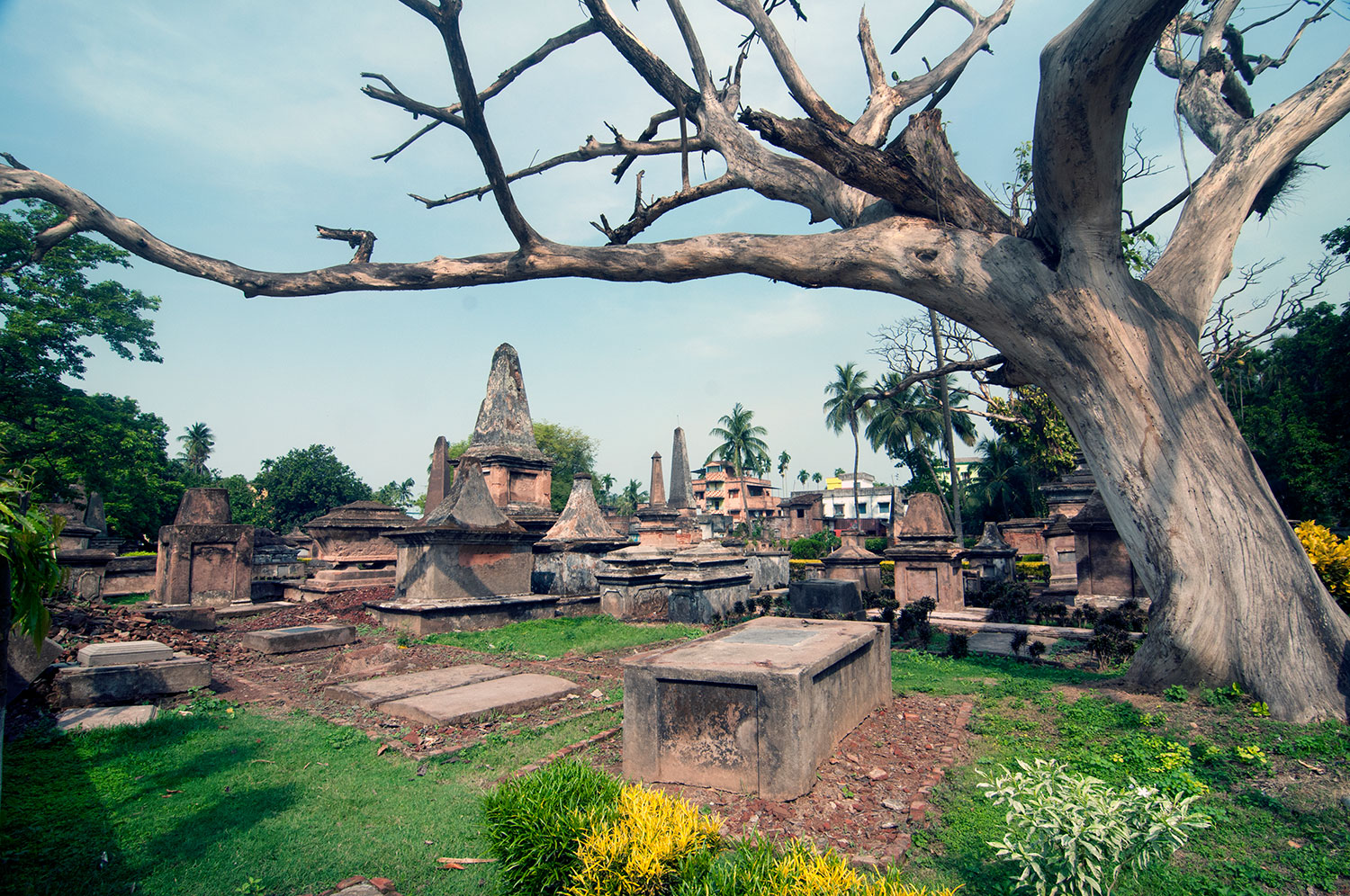
Nearby, the leafy Dutch cemetery remains well-preserved. Its oldest tombstones, etched with the Dutch coat of arms and Masonic compasses, hint at a lost era. From there, I navigate a jumble of rickshaws and motorbikes to Baro Seal Bari, the 1763 mansion of Nilambar Seal, a wealthy merchant. Its Ionic columns and semi-circular balconies merge Indo-Dutch styles with striking elegance.
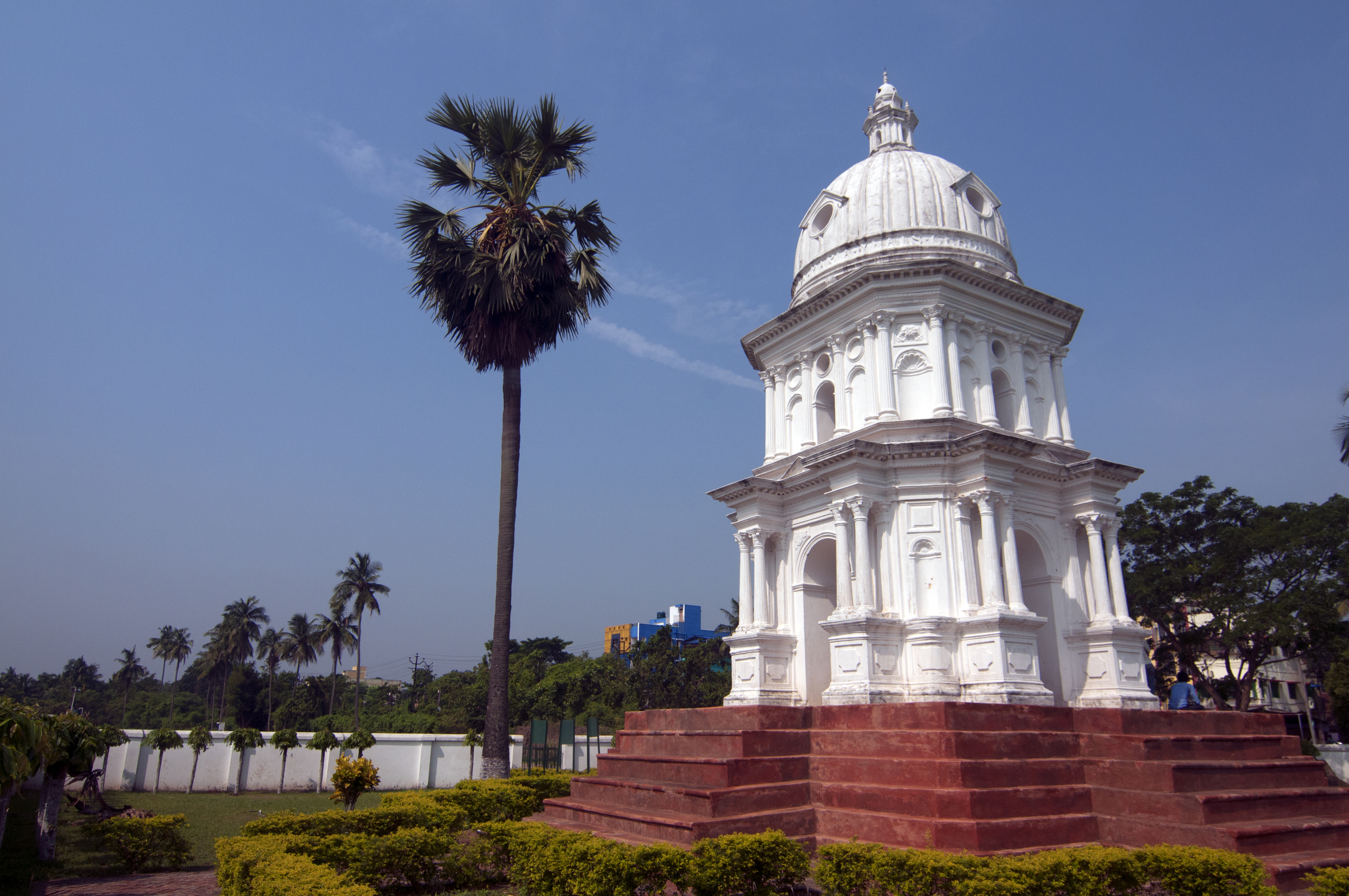
The most enchanting example of this fusion lies just outside town: the mausoleum of Susanna Anna Maria, a Dutchwoman reputed—though not proven—to have had seven husbands. Surmounted by a dome and steeple, the tomb resembles both a temple and a European monument. Ruskin Bond later immortalised her legend in Susanna’s Seven Husbands.
Portuguese pioneers
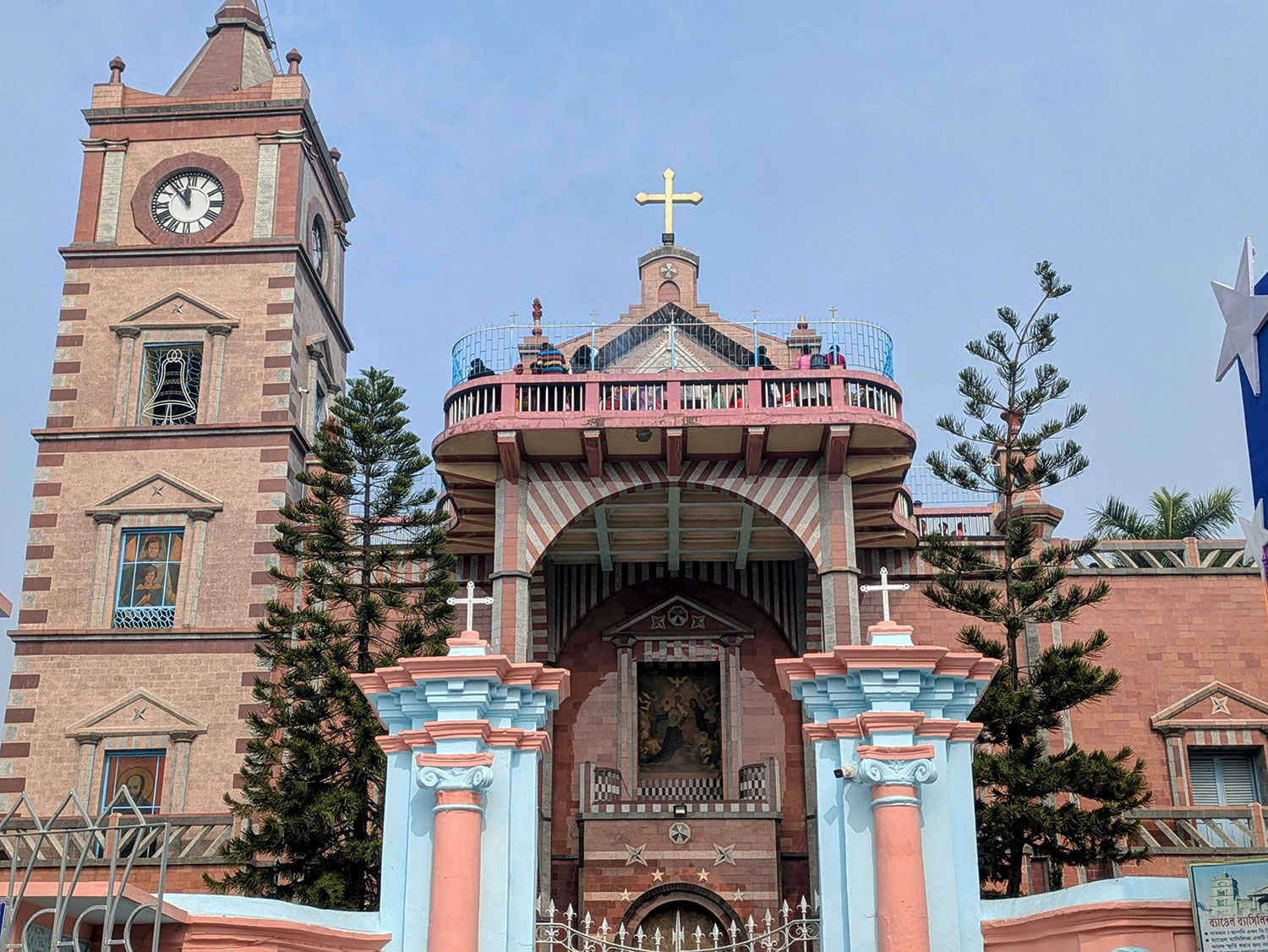
The Portuguese arrived in Bengal over 400 years ago, after Vasco da Gama’s historic voyage. One of their largest settlements was Bandel (from bandel, meaning a ship’s mast), where they built a friary in 1599. Destroyed by Mughal Emperor Shah Jahan in 1632, it was repeatedly rebuilt, eventually evolving into the modern church that stands today. On a blazing midsummer morning, I join the line of Sunday mass-goers outside, many with umbrellas raised against the sun.
Though little remains of Portuguese dominance, echoes linger. The Bandel Church bell still tolls across the landscape, and Bandel cheese—crumbly, smoky, and distinct—remains a culinary legacy. Locals grate it over salads, pasta, and risottos, or pair it with fresh strawberries.
French connection
From Bandel, I retrace my path along the Grand Trunk Road to Chandannagar, a French outpost from 1673 until 1950, when it was annexed into the Indian Republic by referendum. Once celebrated for French cuisine and wine, its neighbourhoods are now crowded with street-side shops. At a sweet shop, I sample peas kachori (small pastry bites) and baked rasmalai (sweetened balls of paneer cheese) before following directions to the riverfront.
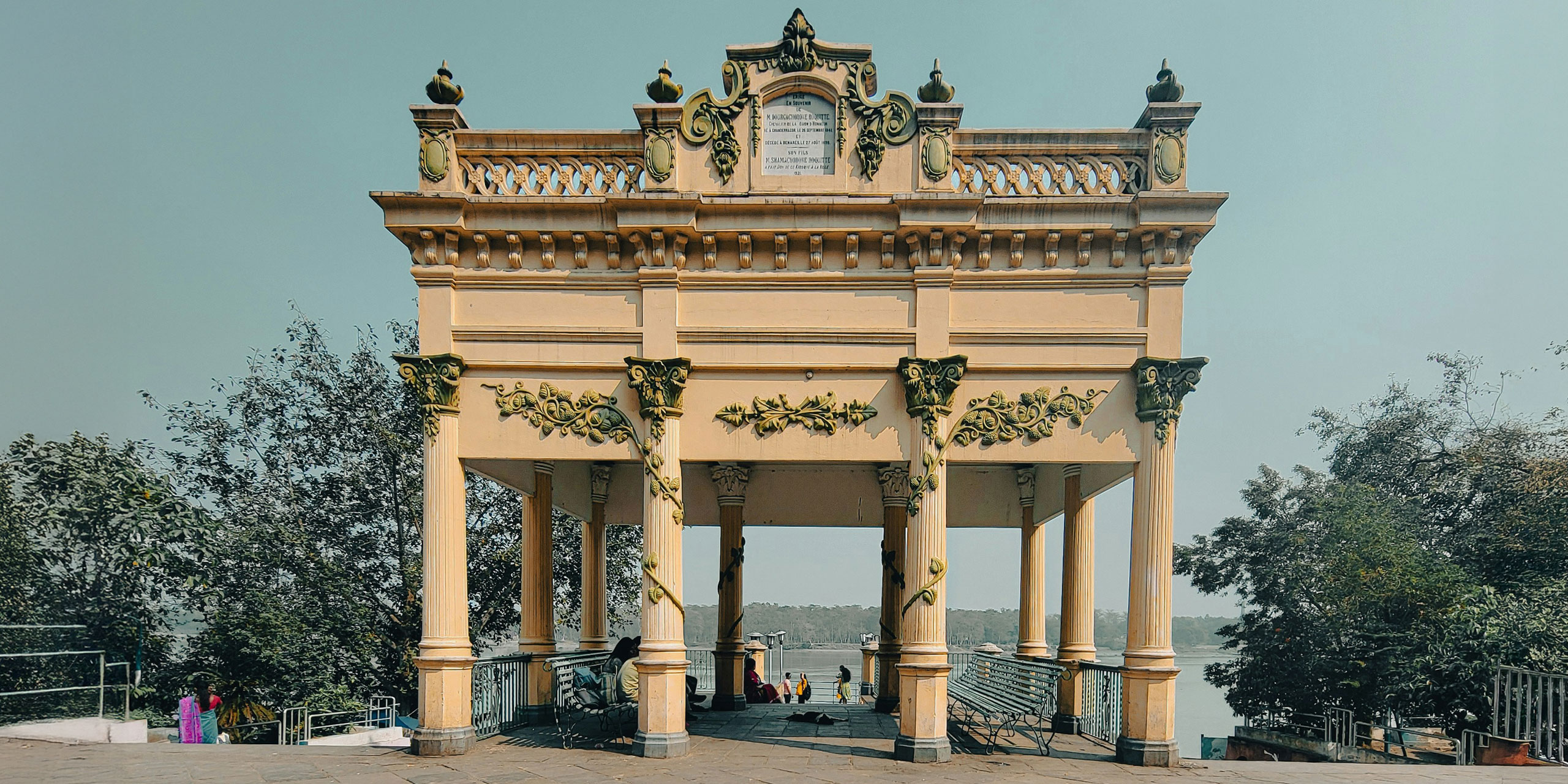
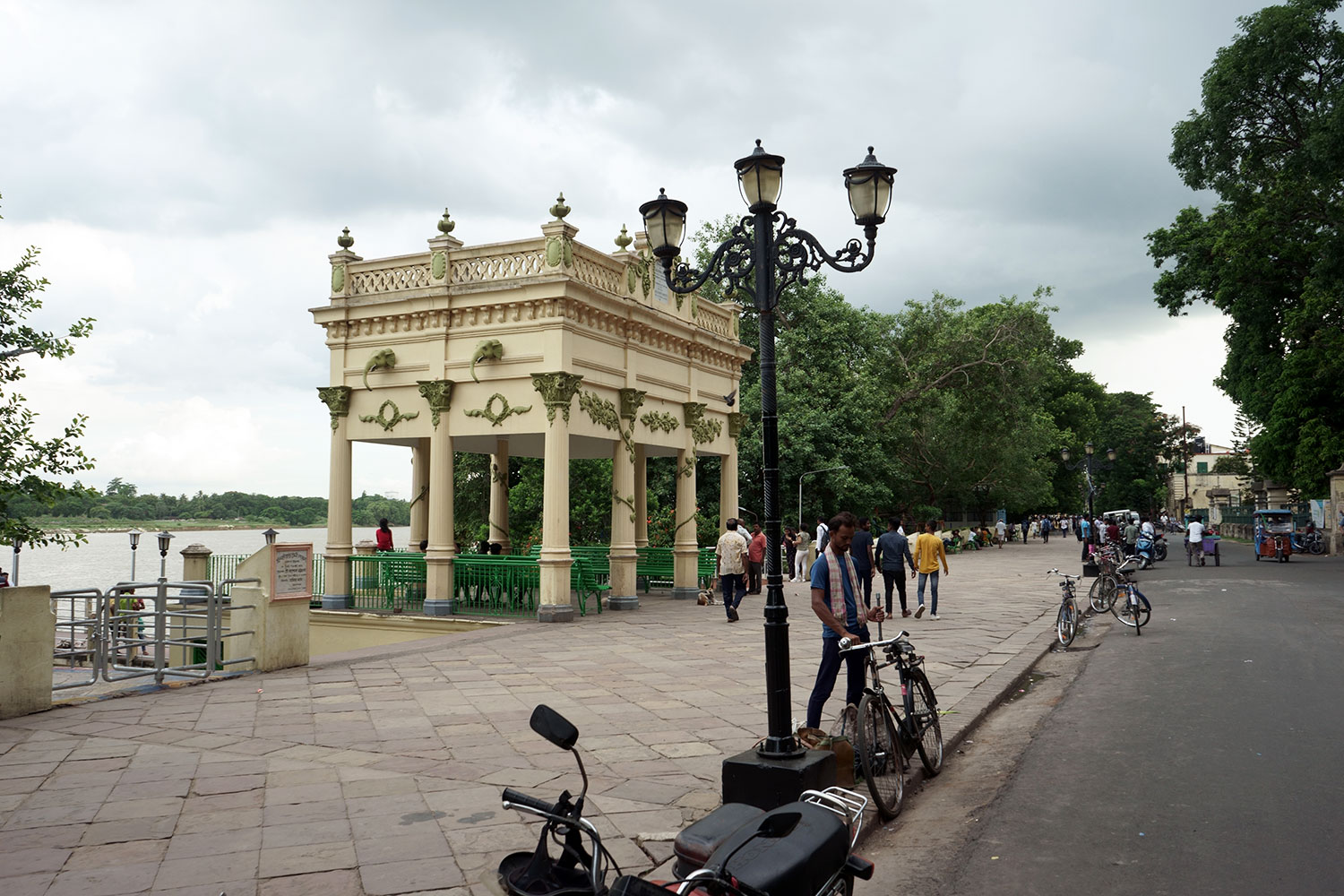
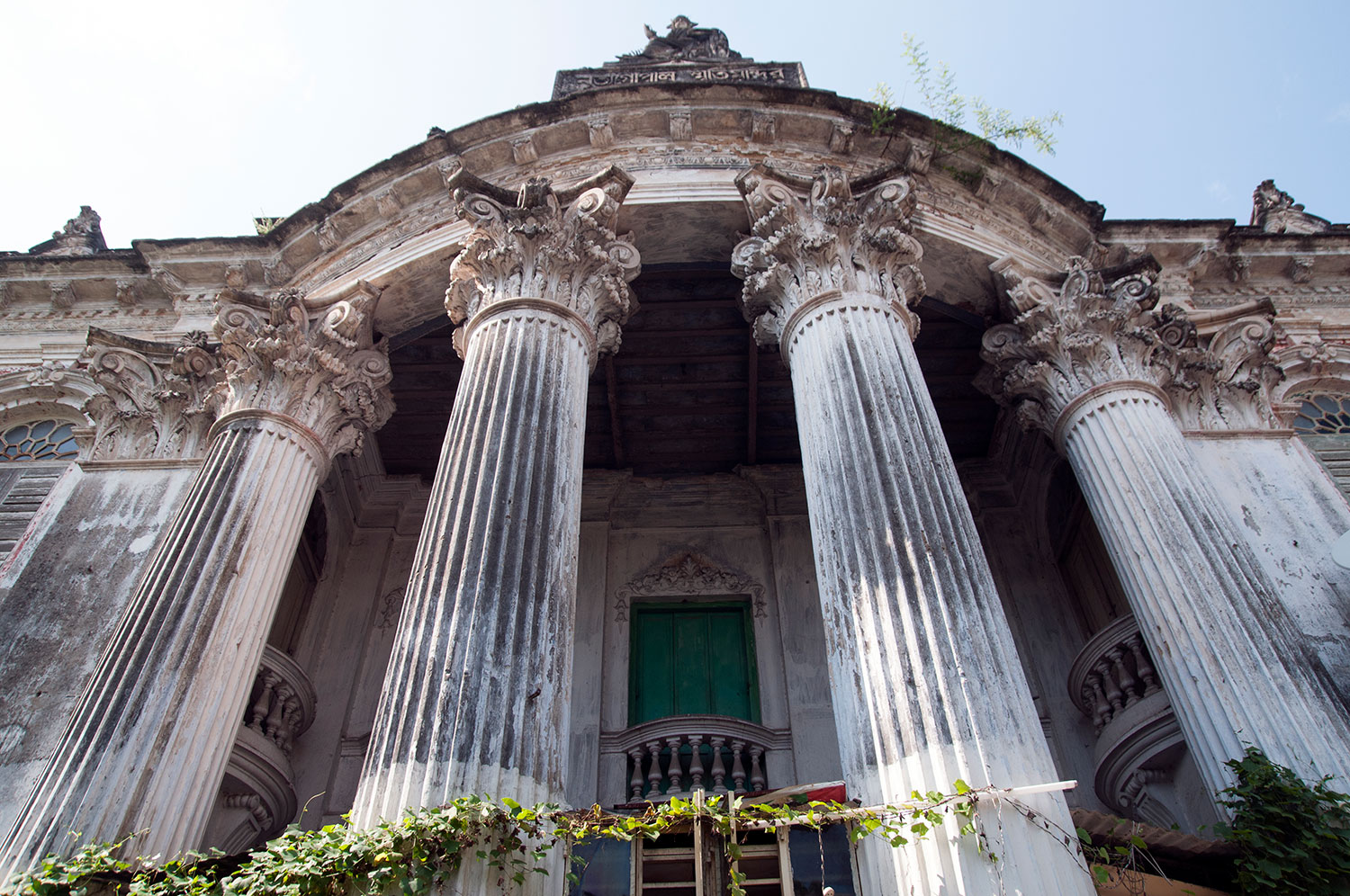
There, a broad promenade opens before me, lined with elegant pastel façades and anchored by a peach-coloured pavilion that resembles a smaller Arc de Triomphe. Built in memory of Durgachourone Roquitte—the first Bengali recipient of the Légion d’honneur in 1841—it fuses French stucco with oriental motifs.
Further along stands the Institut de Chandannagar, once the residence of the French governors, now a somewhat haphazard museum of artefacts, maps, and Dupleix’s personal effects. Across the way, the Patal Bari—or Underground House—extends down into the river. Tagore, a frequent visitor, immortalised its architecture in his writings.
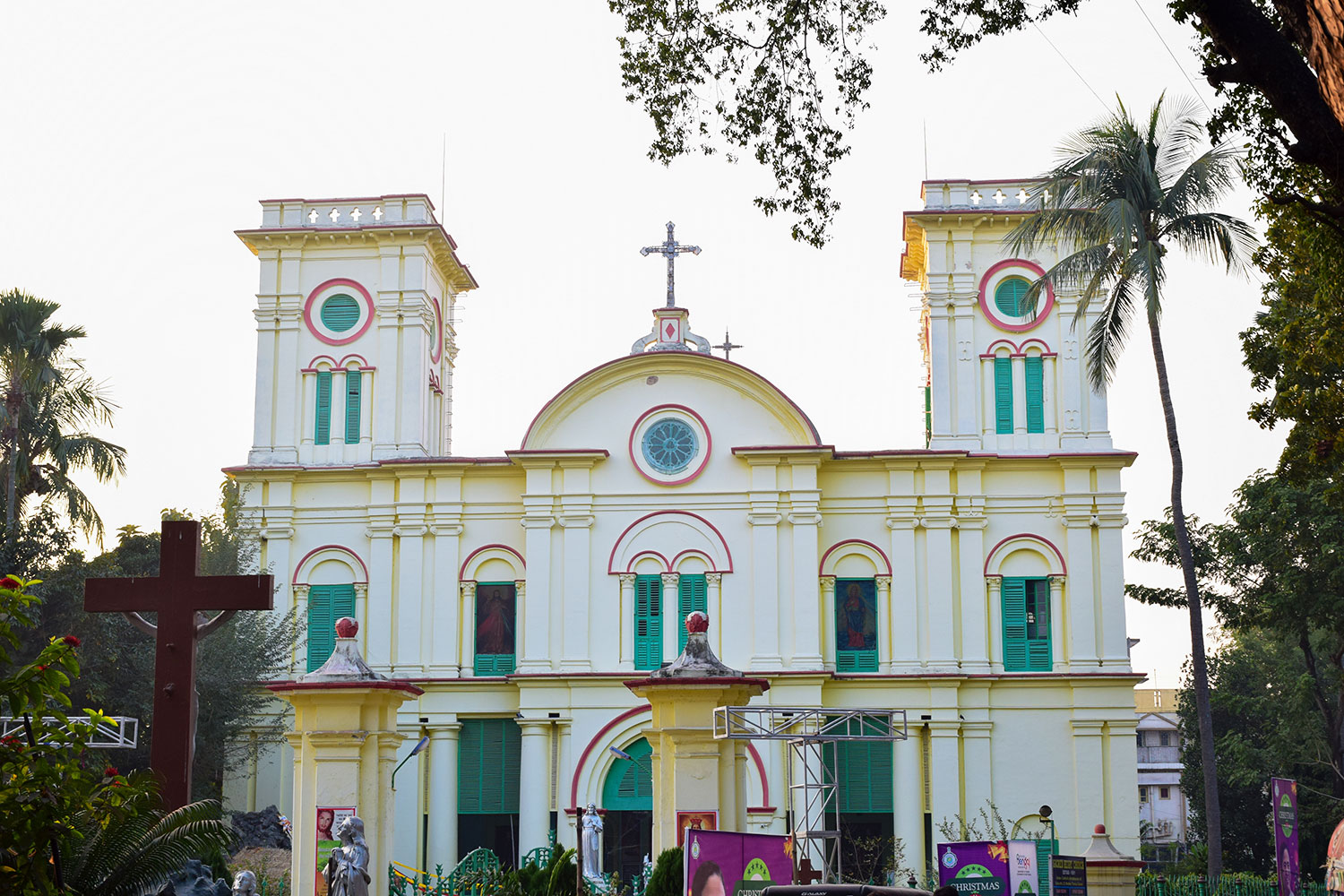
Tucked behind the Strand is the late-19th-century Sacred Heart Church, whose bell was imported from France. Its whitewashed exterior conceals a glow of stained glass and altar lights, lending the interior a hushed beauty.