


I’ve got a bit of George Mallory in me when it comes to mountains. He’s the English climber whose mummified remains were found at 8,000 meters on the north side of Everest in 1999. Mallory is legendary for saying “Because it’s there” when asked why he wanted to climb Mount Everest, and for presumably coming within 300 meters of the summit before disappearing with his climbing partner Sandy Irvine in 1924, during one of the earliest attempts to reach the top.
So far, I’ve managed to return from all my mountain expeditions in one piece, but I do share Mallory’s curiosity and drive whenever I see a great protrusion rising out of the earth in front of me. Mount Kinabalu, Malaysian Borneo’s 4,095-meter summit and the highest mountain between the Himalayas and the Carstensz range in New Guinea, certainly fits the bill.
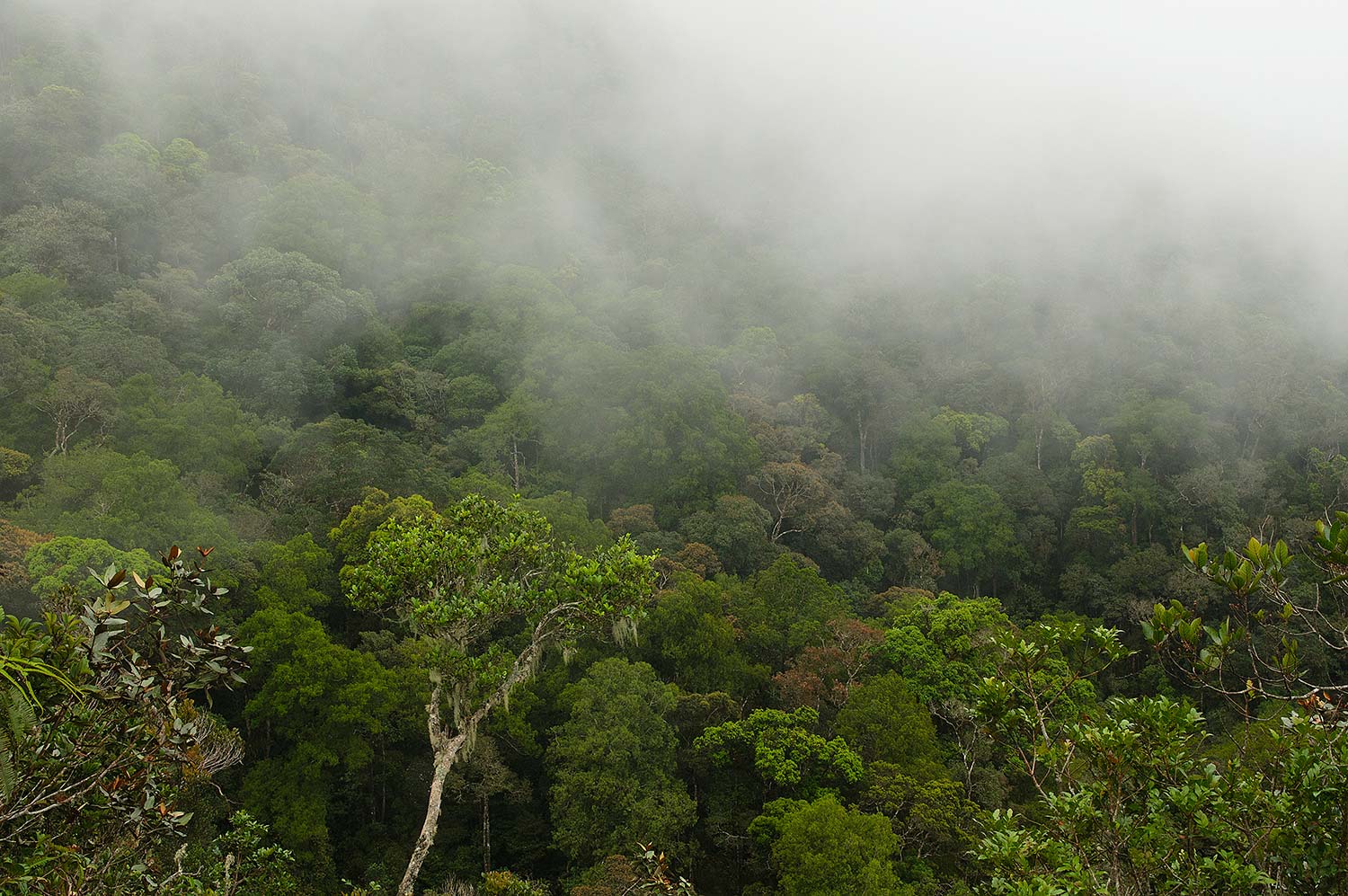
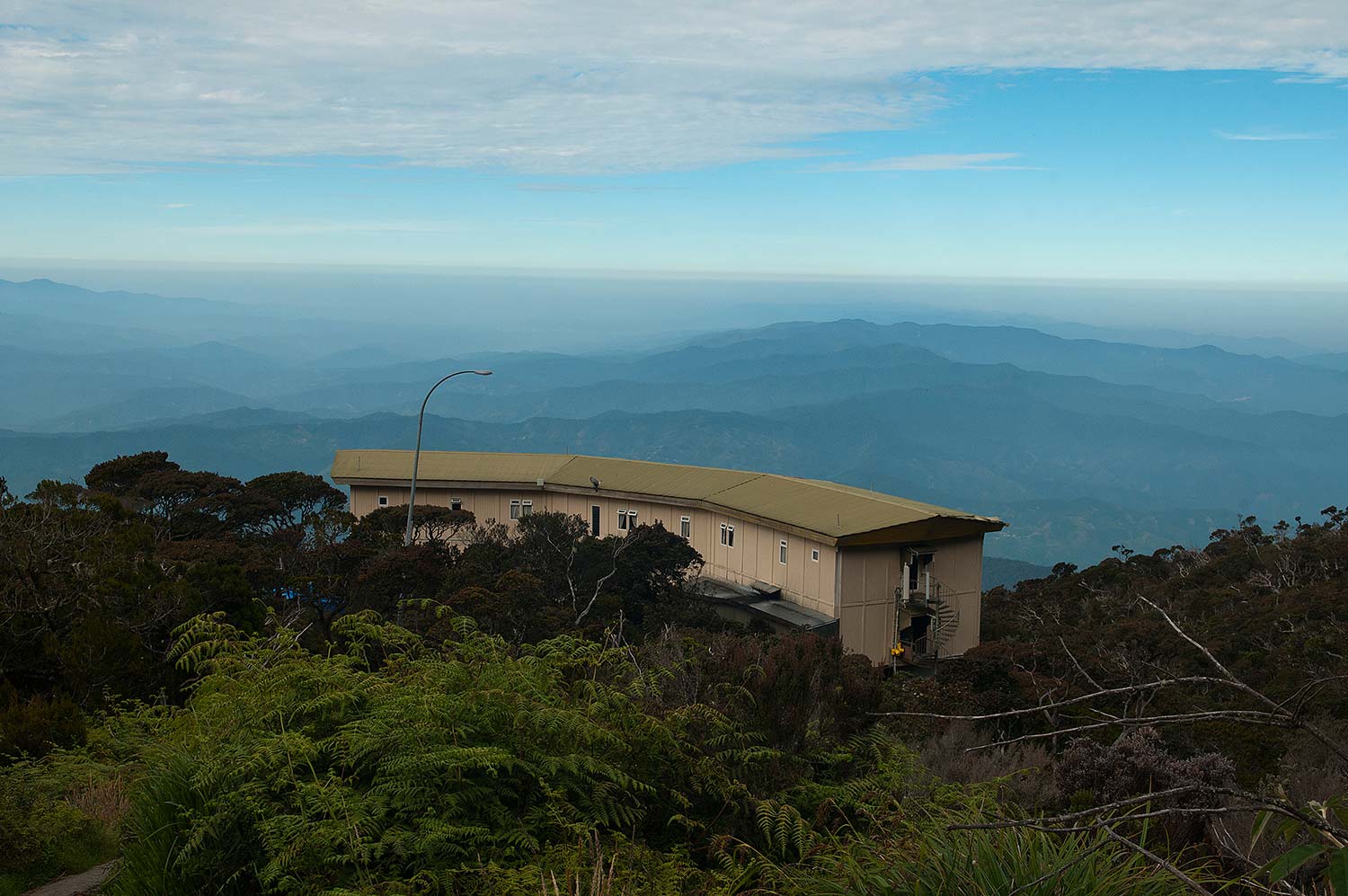
Set in the state of Sabah in Malaysian Borneo, Mount Kinabalu is a massive presence. It is the 20th most prominent mountain in the world when measured by topographic prominence, and thanks to its lack of surrounding foothills, it appears to roar straight up into the sky, towering over Sabah’s tropical rainforests.
Kinabalu spans a remarkable range of altitudinal zones, beginning with lowland rainforest that gives way to montane and cloud forests, before transitioning into subalpine and alpine terrain near the summit. As a result, the mountain is home to an estimated 5,000–6,000 plant species, more than 350 bird species, and a host of elusive natural wonders, from giant Rafflesia flowers to carnivorous pitcher plants, with wild orangutans hidden on its slopes. The entire Kinabalu Park has been designated a UNESCO World Heritage Site.
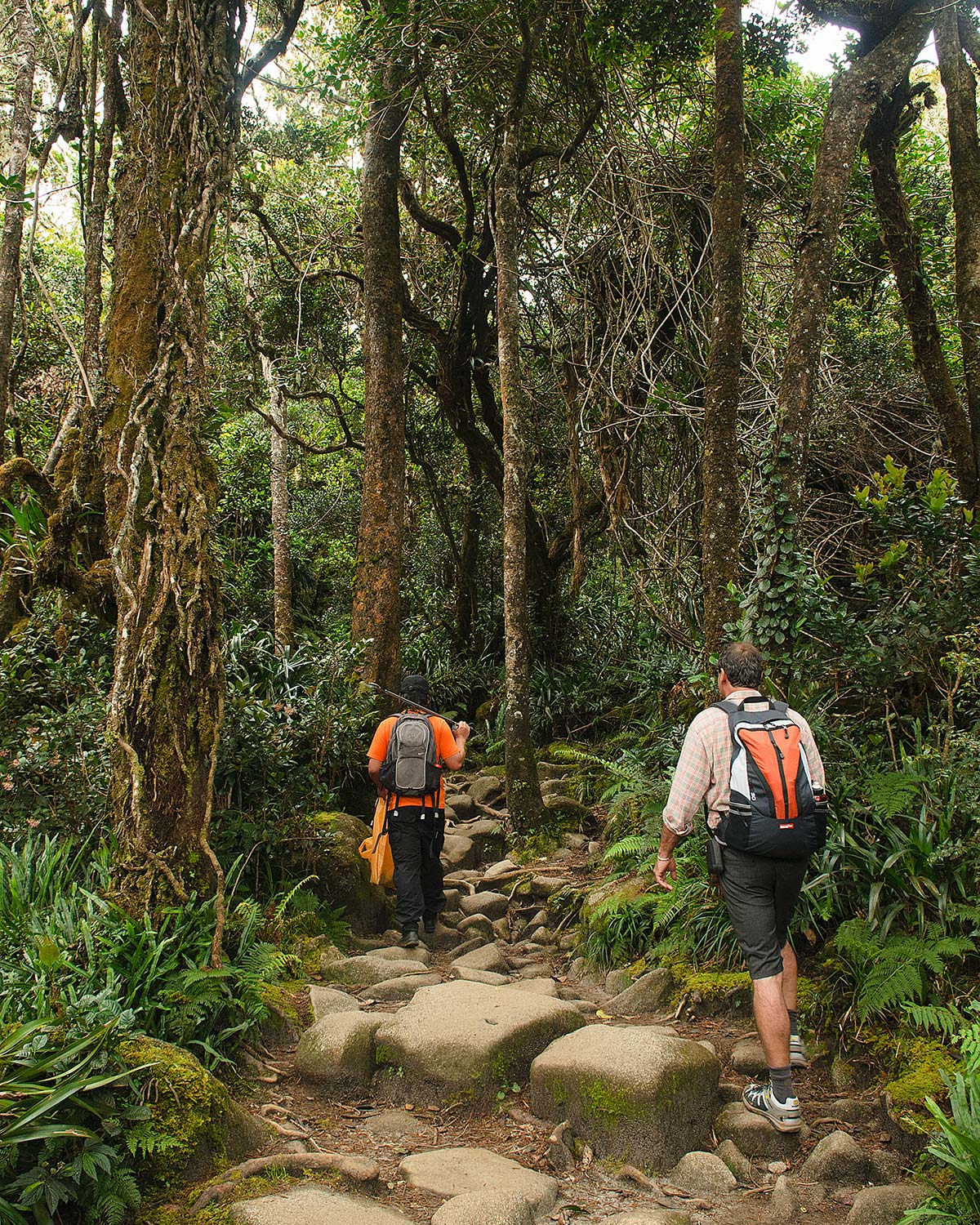
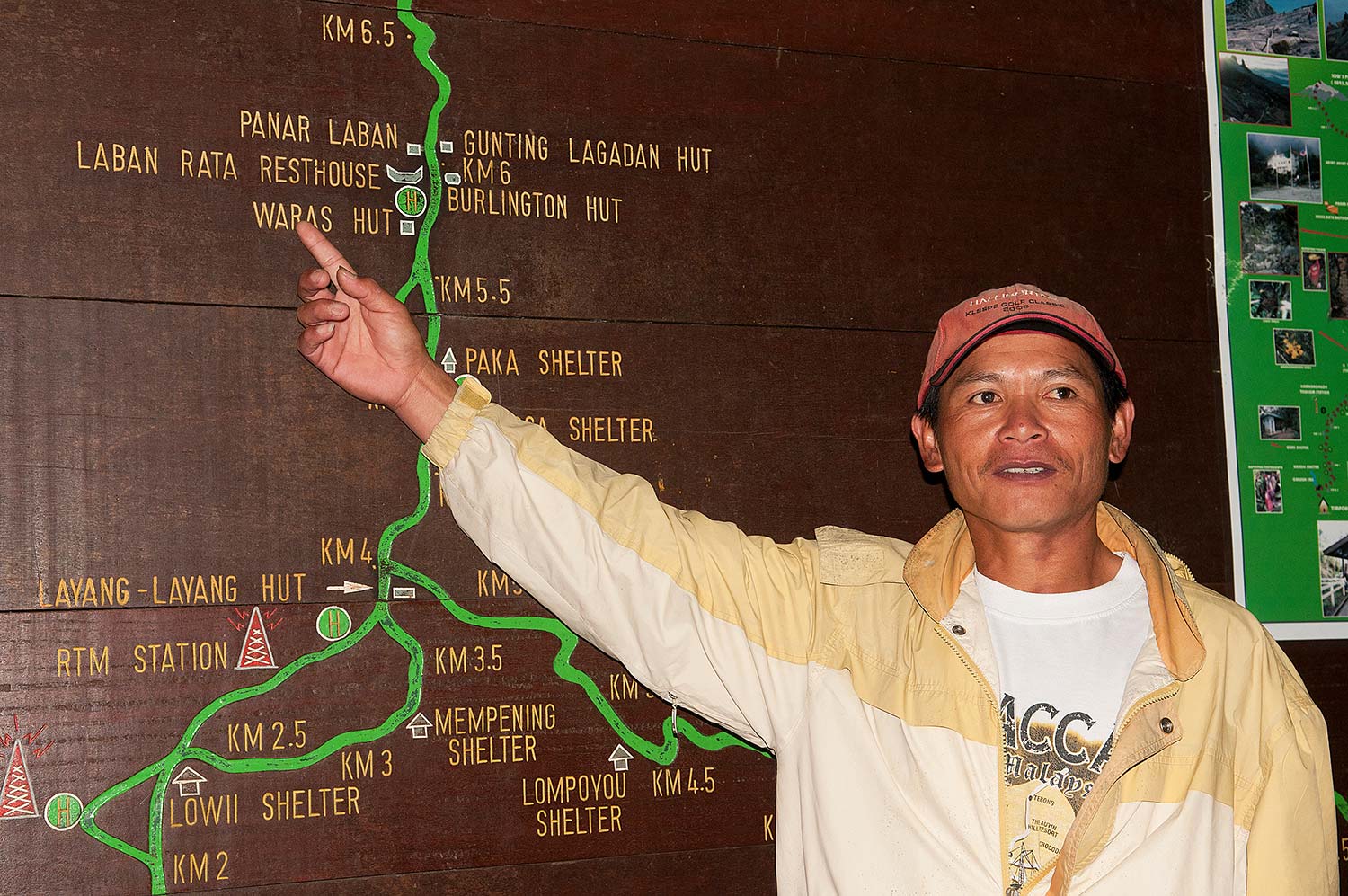
While Kinabalu’s summit looks intimidating from below, anyone with a decent pair of legs, along with the required permits and a guide, can make it to the top. The climb includes an overnight stay at the comfortable Laban Rata resthouse, perched on a ridge at 3,270 meters. I began my ascent at the park service’s Timpohon Gate in balmy, humid 15°C weather. The trail quickly plunged into dense jungle, and after climbing steep stone steps, even at 1,850 meters, I was soon drenched in sweat. My guide, who had completed dozens of ascents, navigated the terrain effortlessly, pausing often to point out flora that would be easy to miss without a trained eye.
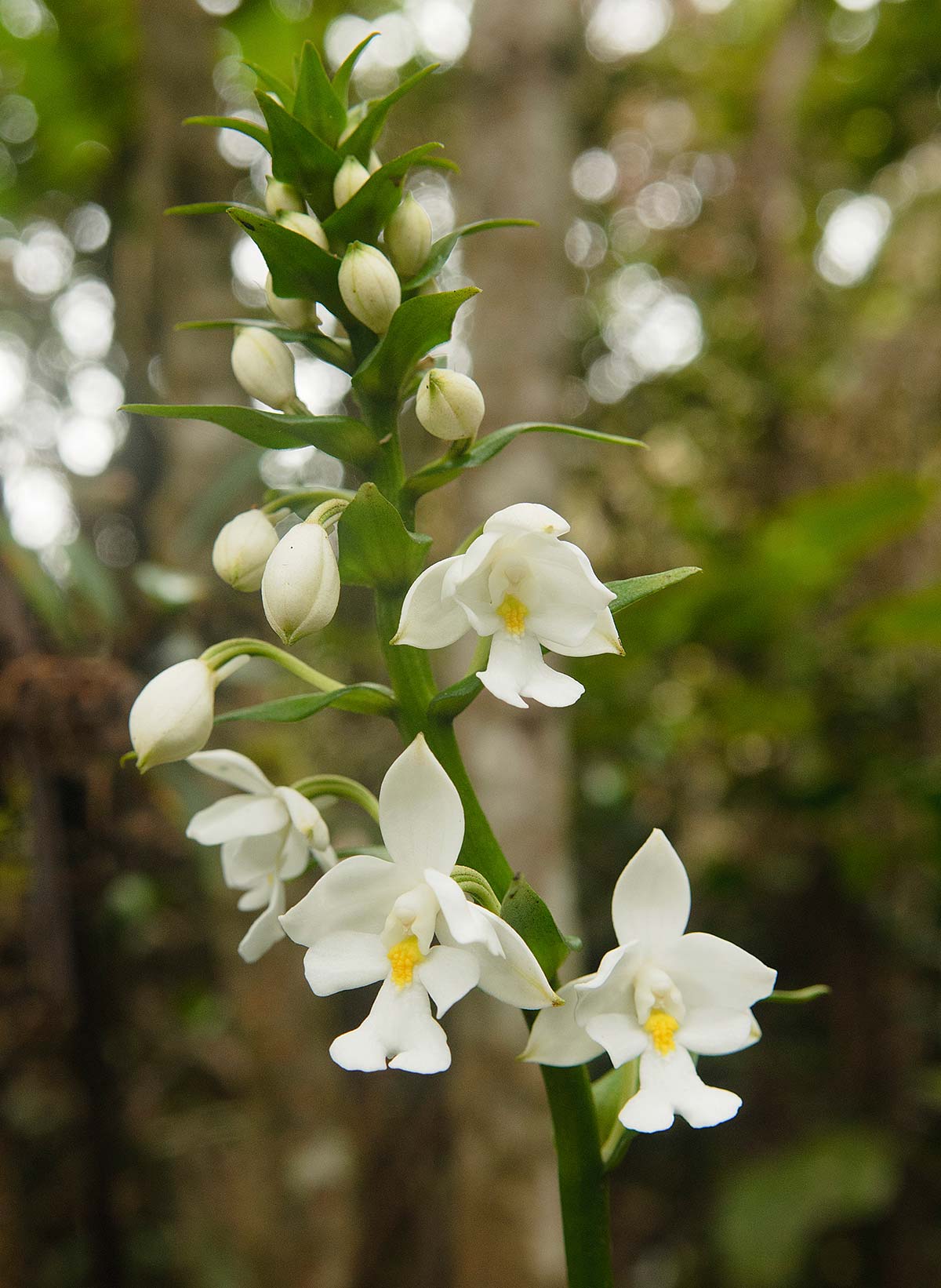
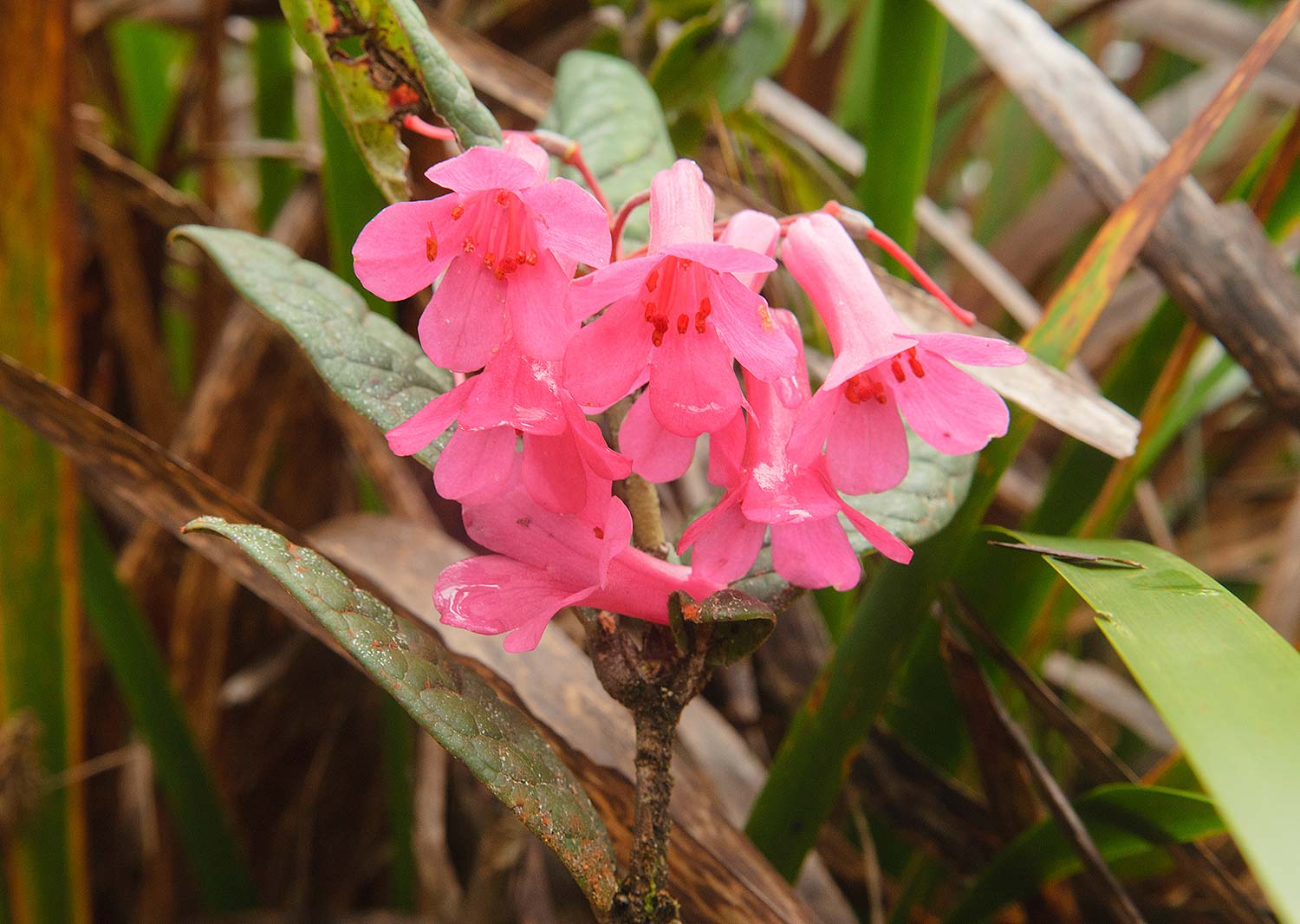
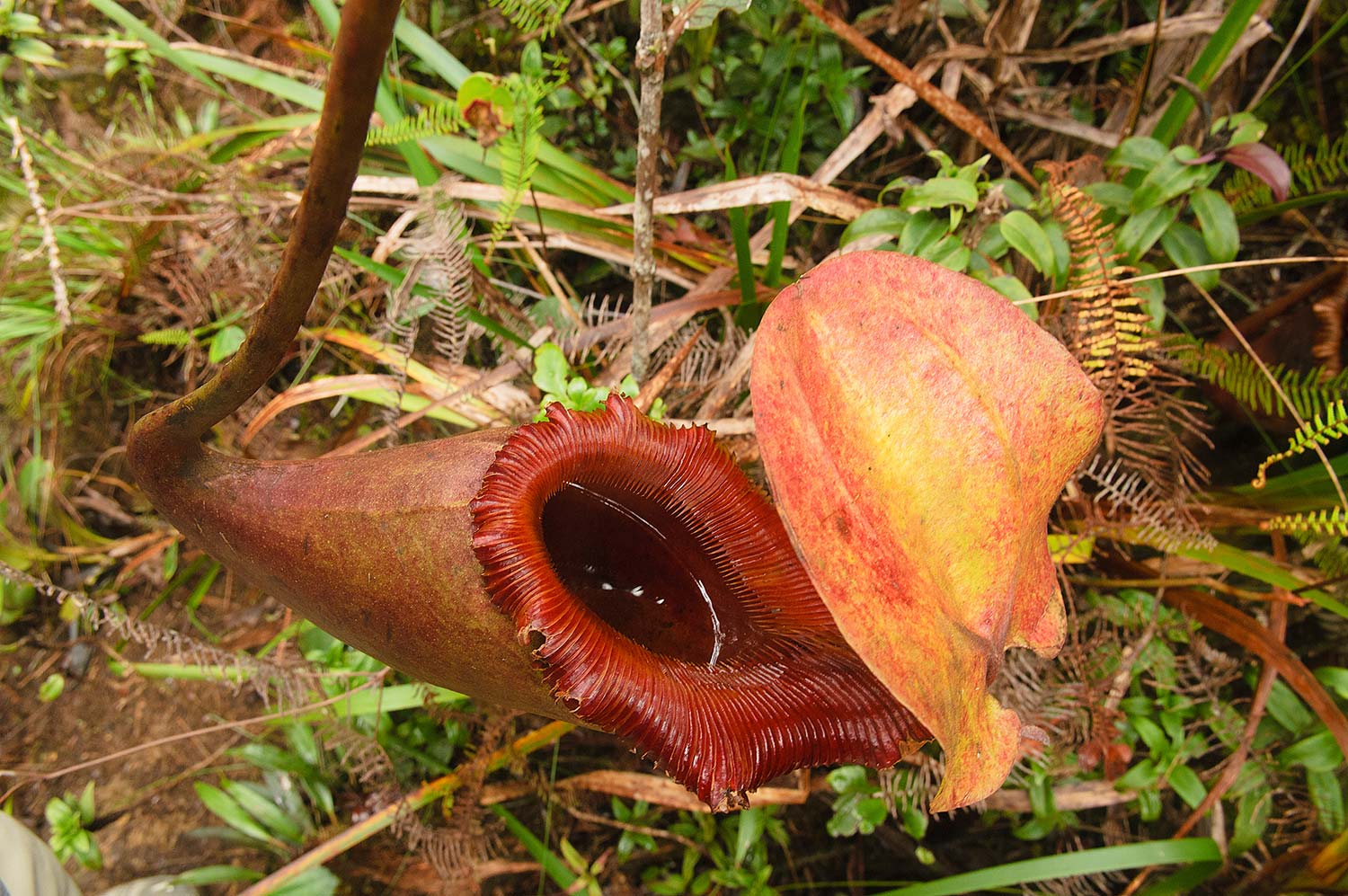
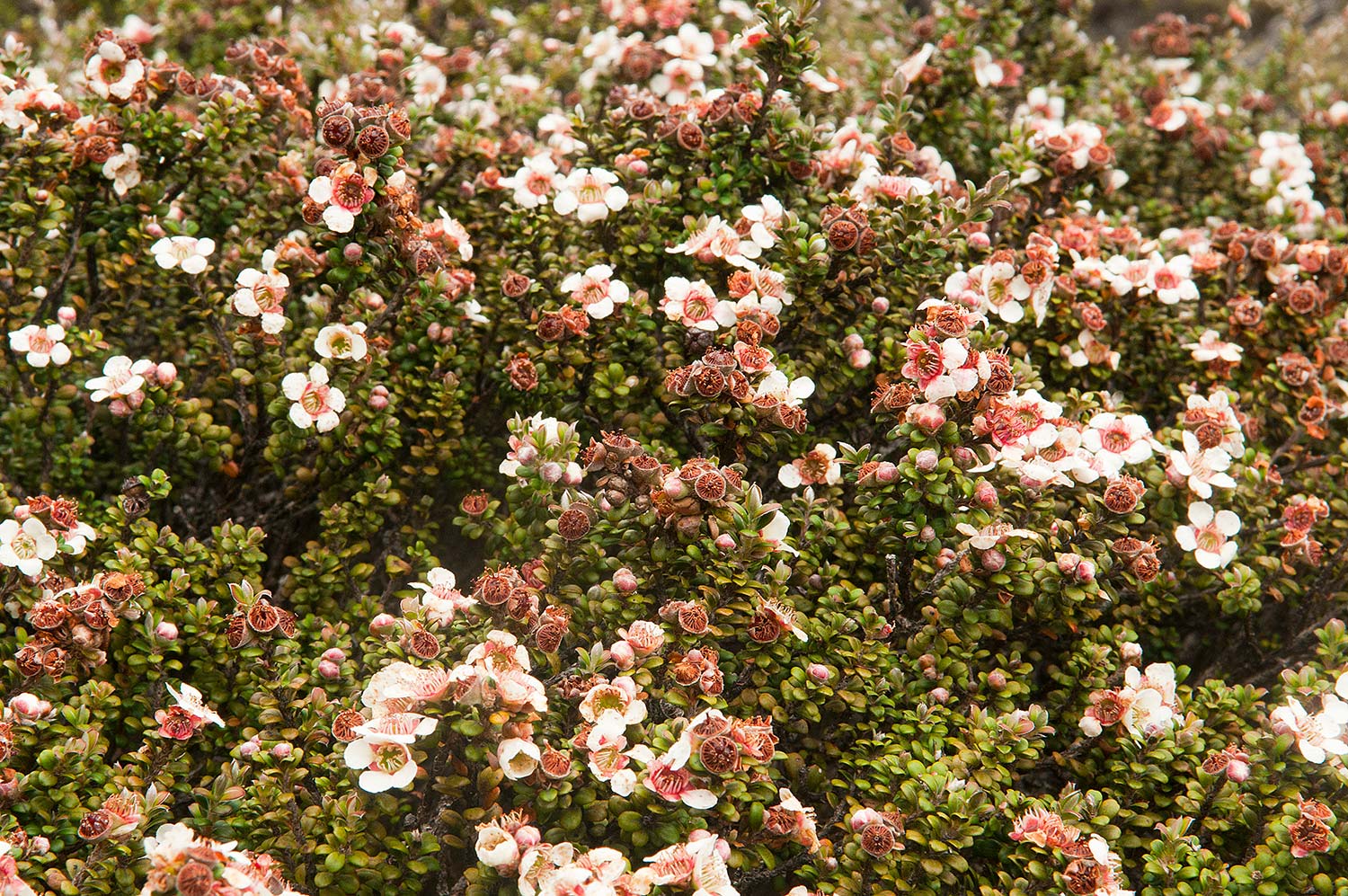
We stopped to admire rare epiphytic orchids clinging to tree trunks, absorbing moisture from rain and air. Farther along, we encountered our first Nepenthes pitcher plants, carnivorous species that trap insects in cup-shaped leaves. My guide explained that Kinabalu’s slopes support nearly 900 orchid species, some 600 types of ferns, and the world’s greatest diversity of pitcher plants, many of them endemic to the park.
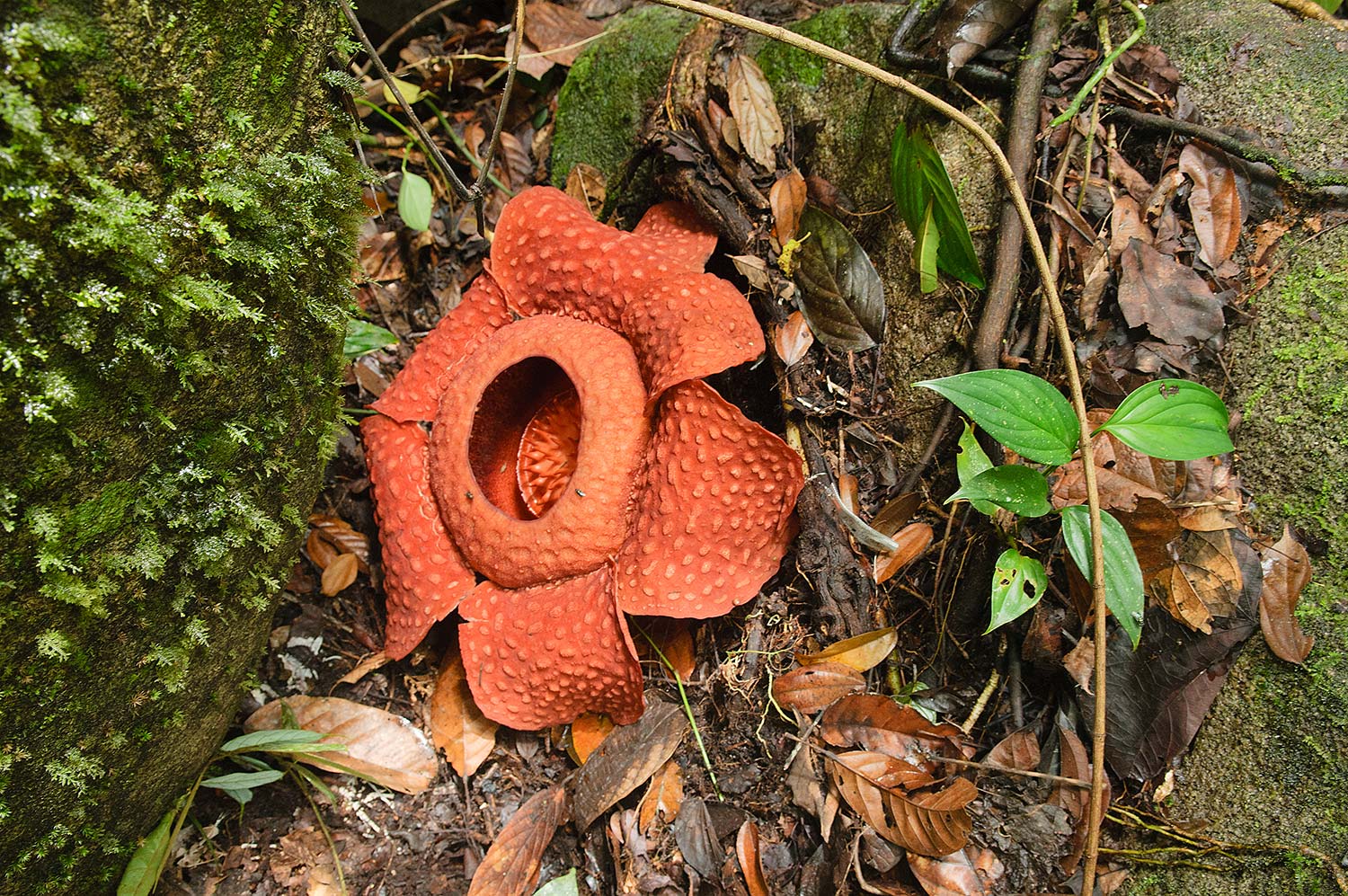
As we climbed higher, my guide slipped off the main trail and motioned for me to follow. Clambering down a side path, we reached a slope where a massive Rafflesia—one of the largest flowers in the world—had burst through the jungle floor. Its scale and beauty were astonishing, though the flower’s odor, reminiscent of rotting flesh, discouraged us from lingering too long.
Much of the trail up to the alpine zone at Laban Rata consists of stone steps—some 600 of them. You hardly notice them on the ascent, but you certainly feel them afterward. At Kota Kinabalu airport on my way home, it was easy to spot fellow climbers: all of us were limping, walking as though we’d just finished marathons.
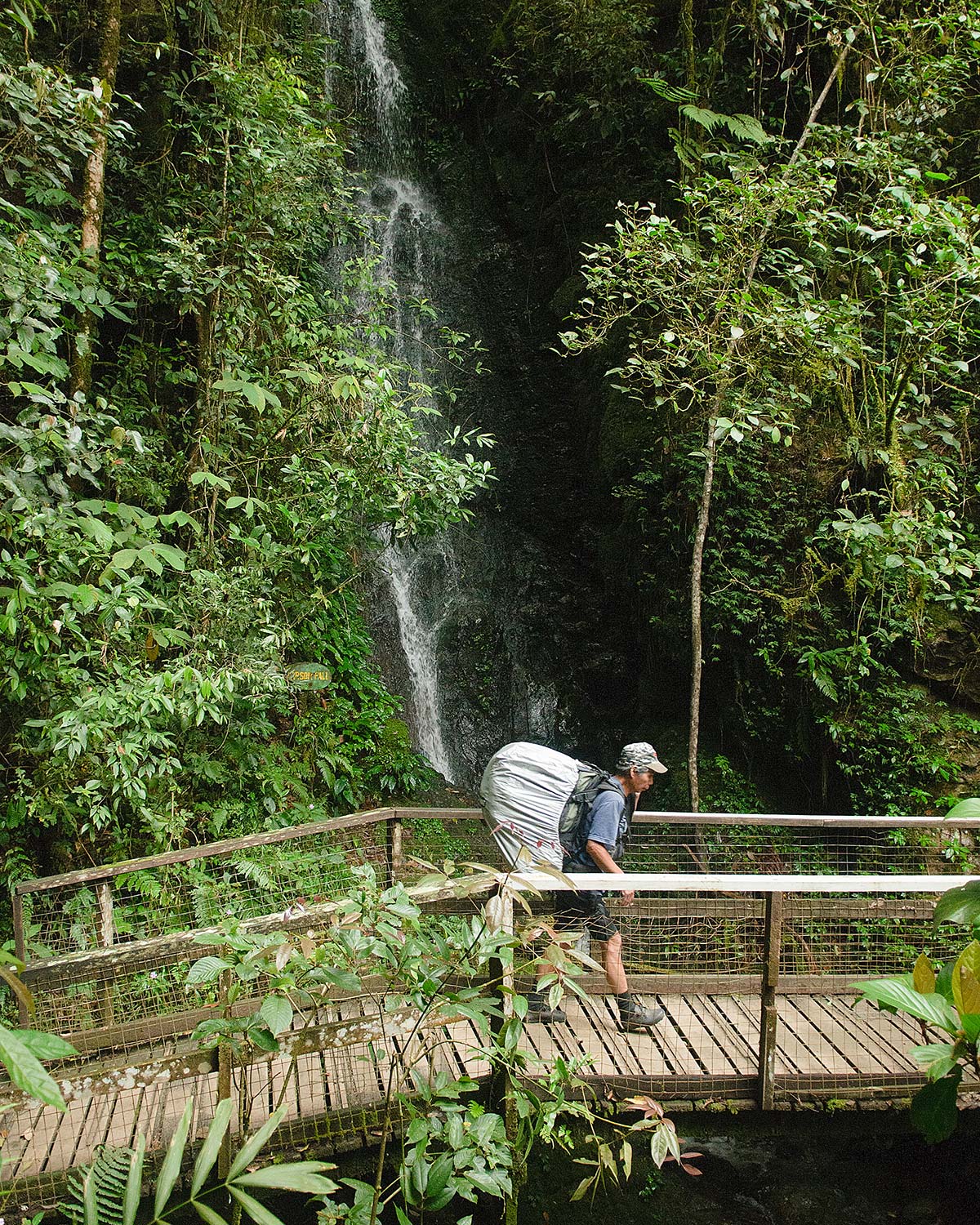
The only people seemingly unaffected by the climb are the guides and porters, who do the trek regularly. Women porters are as common as men, many from the nearby Kadazandusun community. They carry loads weighing up to 50 kilograms, hauling food, linens, gas cylinders, beer, soft drinks, and even injured climbers up and down the mountain. While most visitors take around seven hours to cover the six kilometers to the lodges, porters often complete the journey in four hours or less.
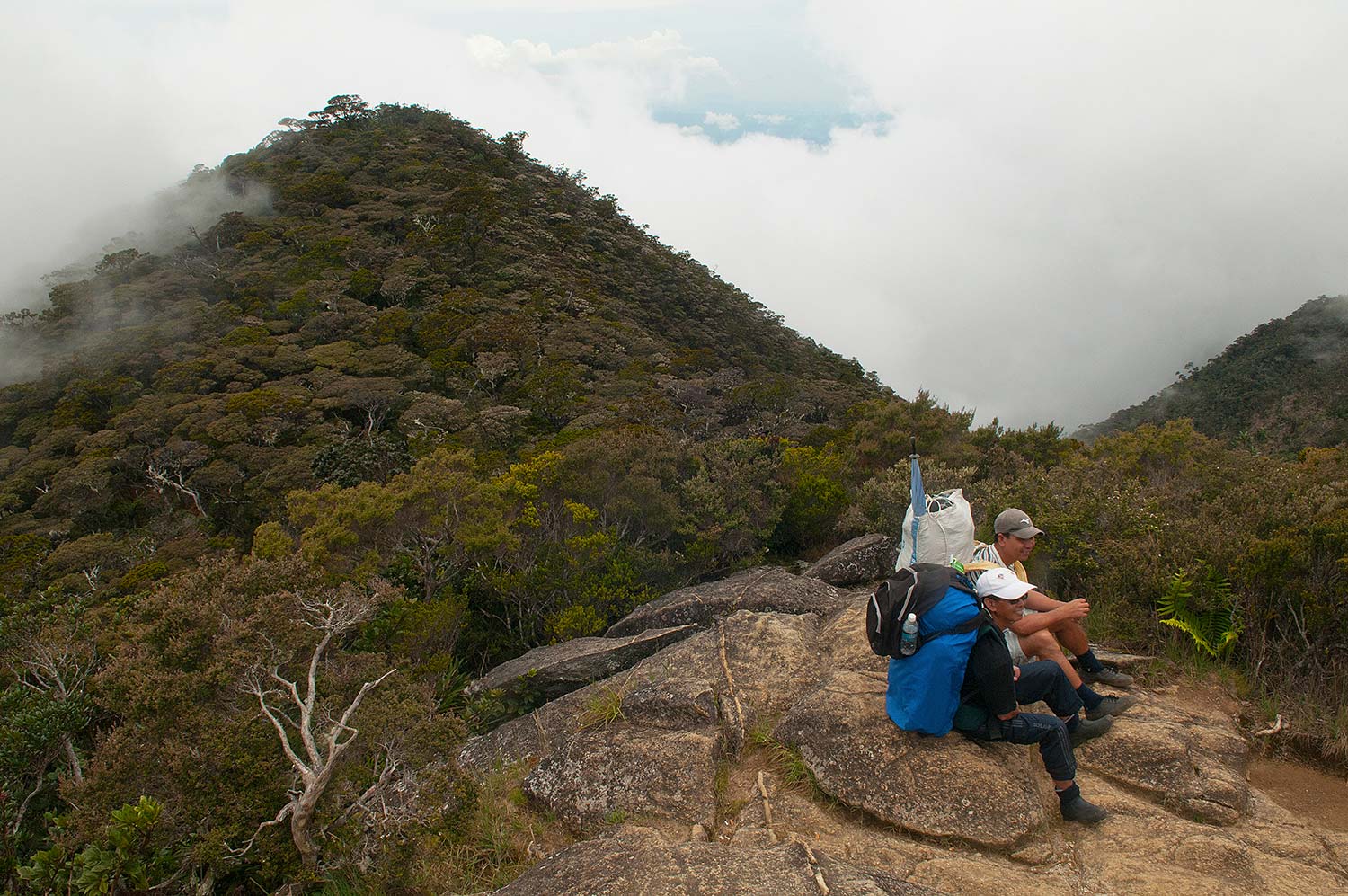
We passed through bamboo and fern forests before climbing into an area filled with rhododendrons and wild begonias. The air grew misty and cool, and we eventually emerged onto an exposed ridge known as Layang Layang, or “place of the swallows,” at 2,700 meters. The trees here were gnarled and twisted, many stripped of bark by constant wind and rain.
Eventually, we reached Panalaban, a clearing along the ridge that houses several huts, a hostel, and the more comfortable Laban Rata resthouse, complete with private rooms, dormitories, and—most importantly—a communal dining hall serving hot meals. We had it far easier than Hugh Low, the British colonial administrator who made the first documented ascent of Kinabalu in 1851 with a local guide. Low reached this point, gazed up at the higher peaks, and declared them “inaccessible to any but winged animals.” That pronouncement didn’t stop British zoologist John Whitehead, who reached the summit later named Low’s Peak—at 4,095 meters—some 37 years afterward.
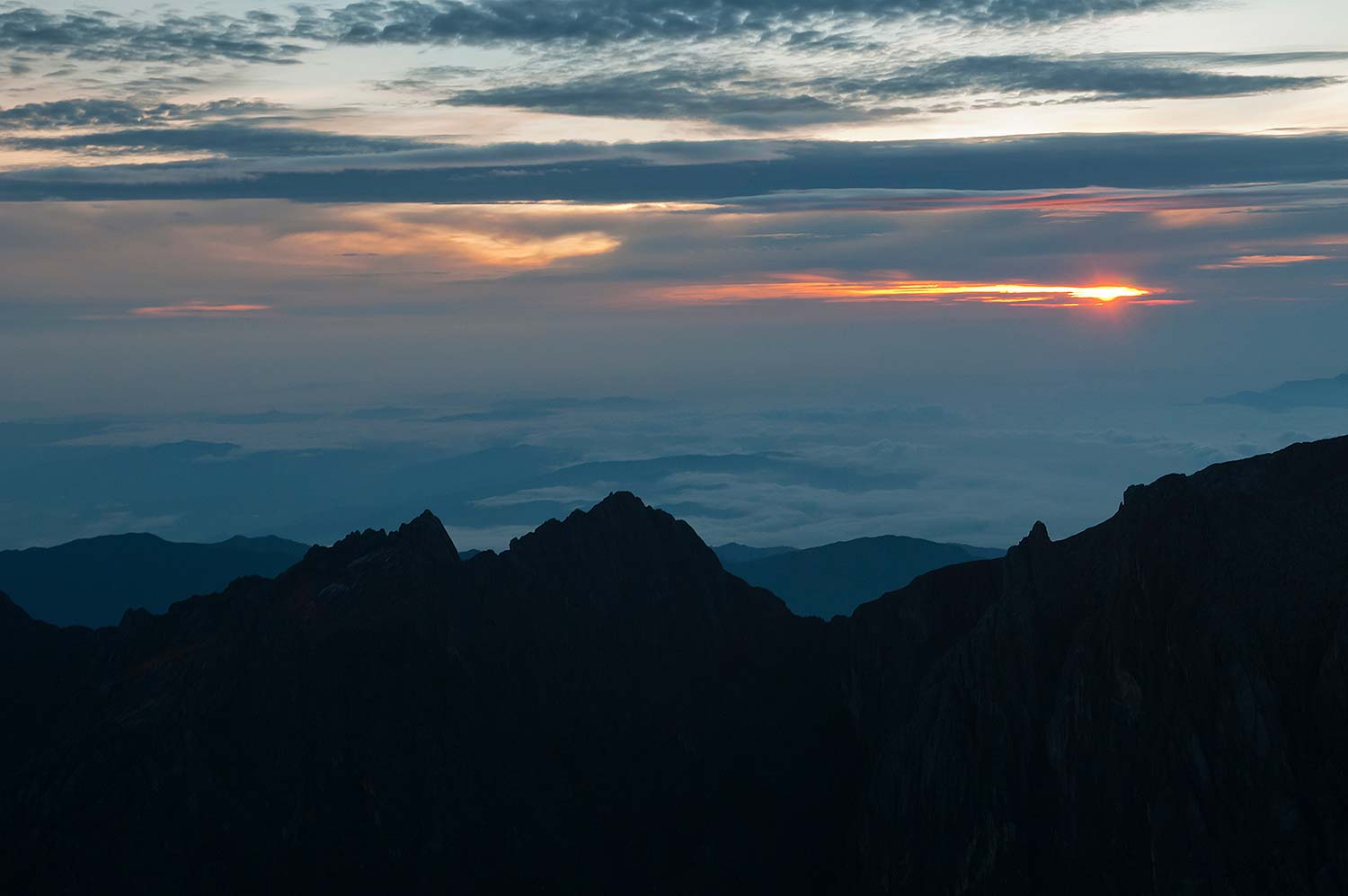
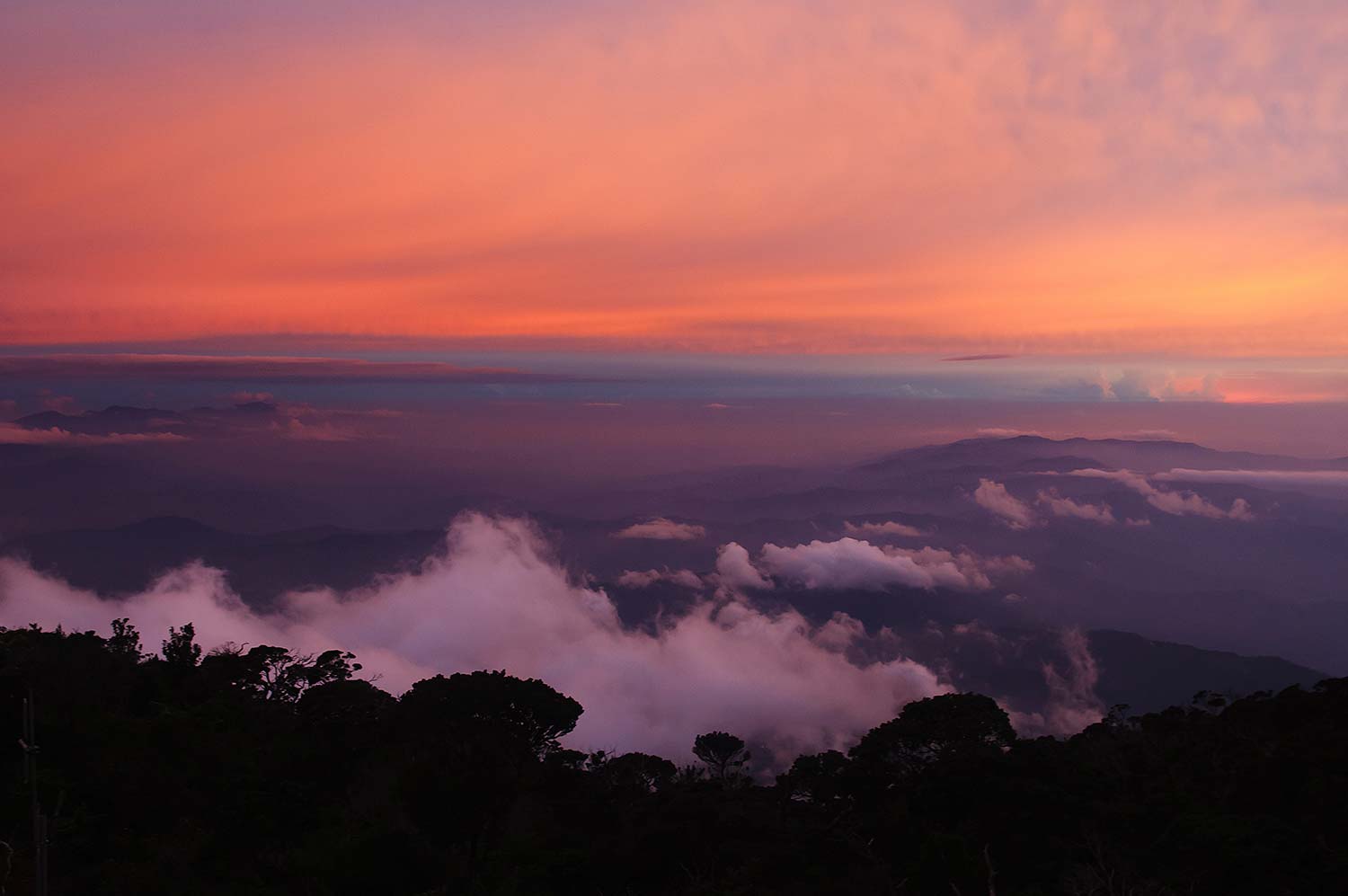
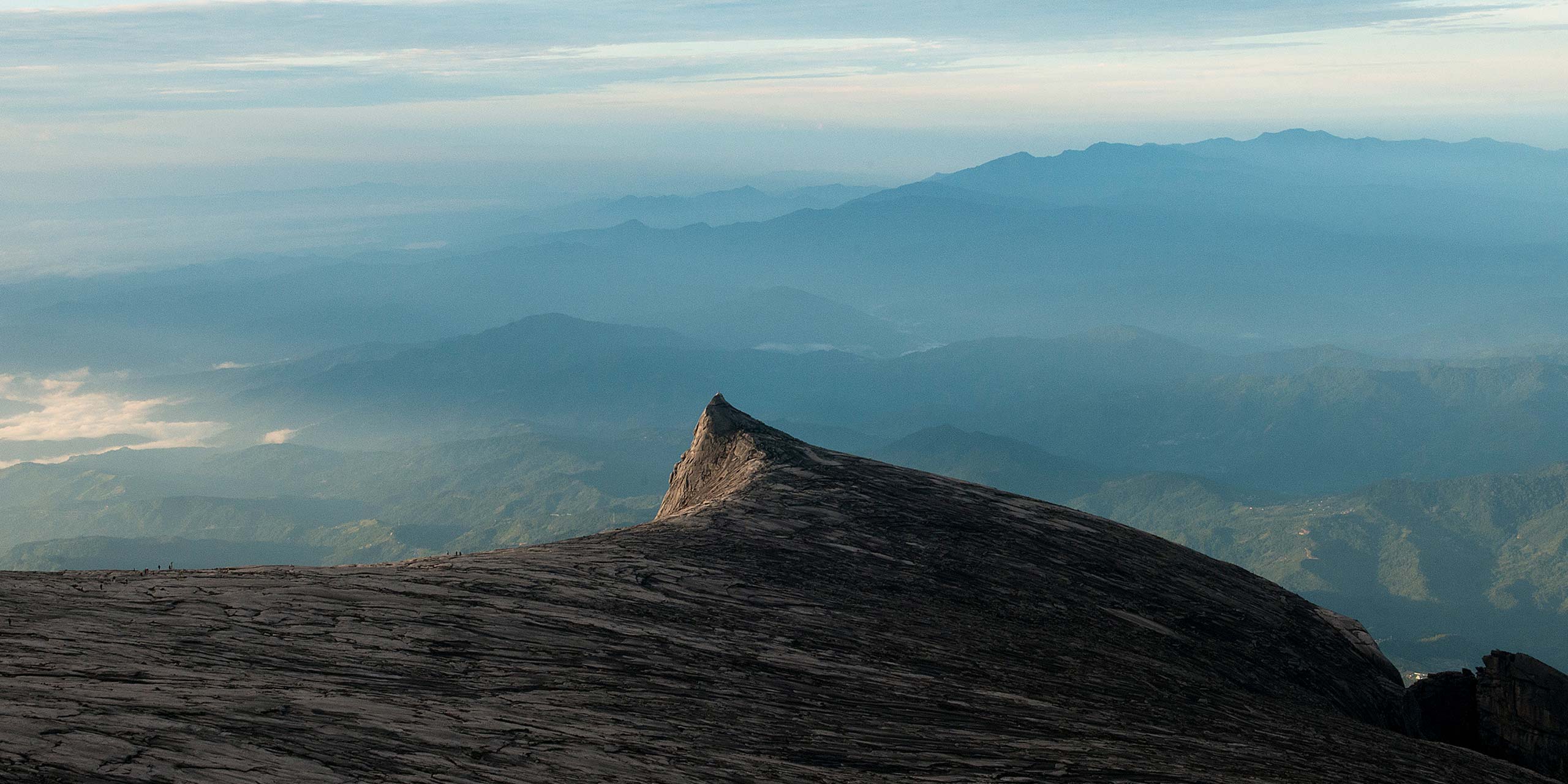
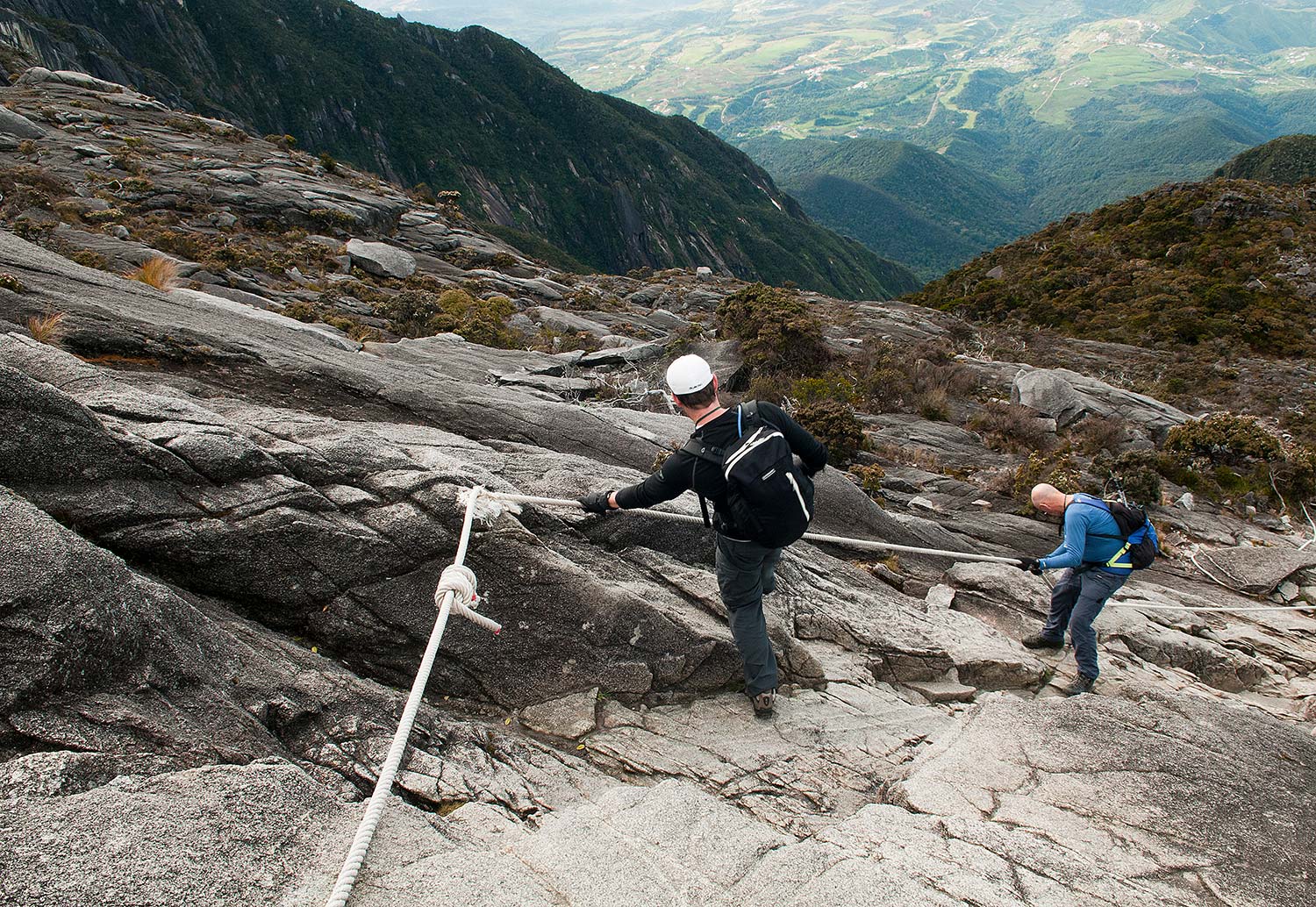
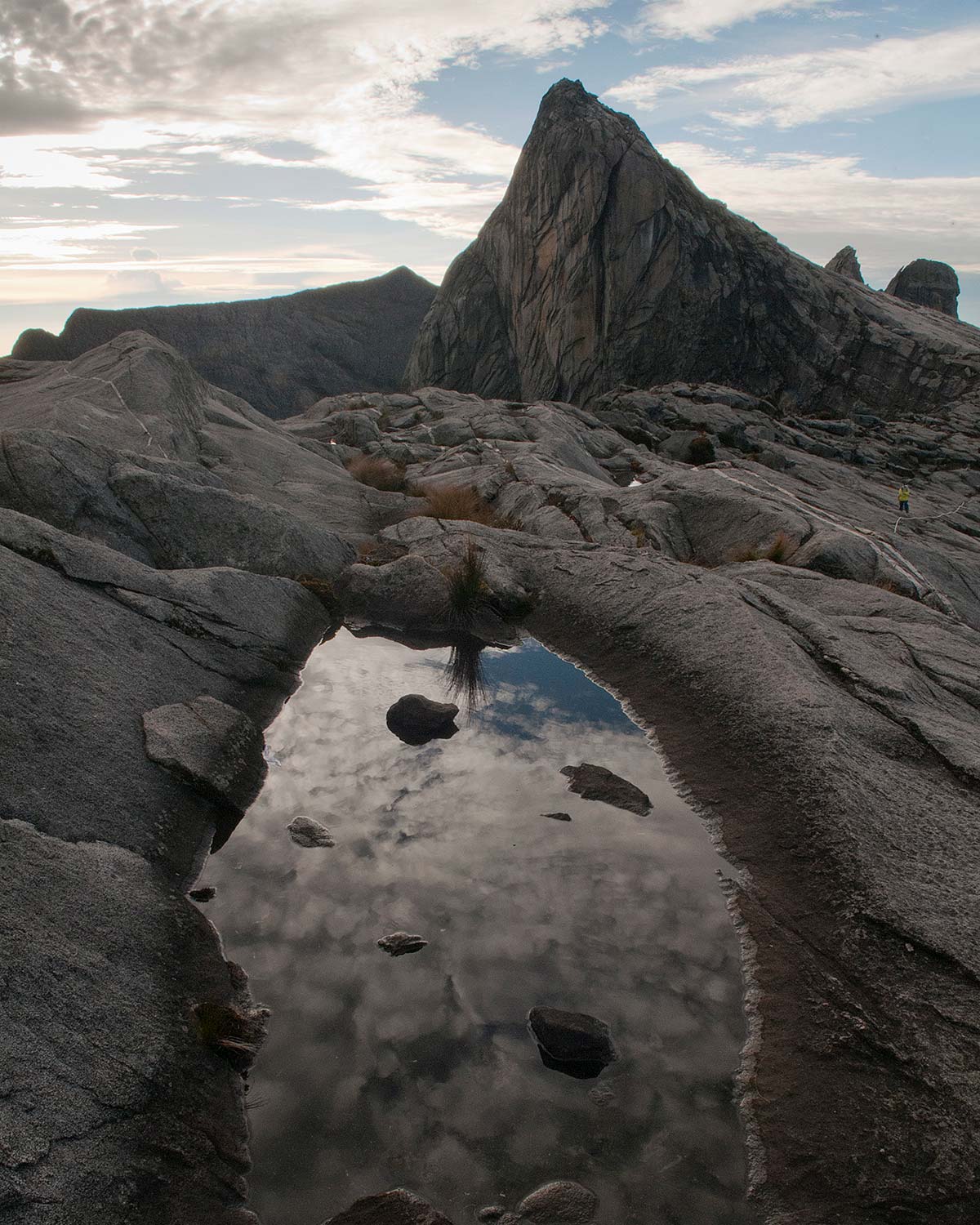
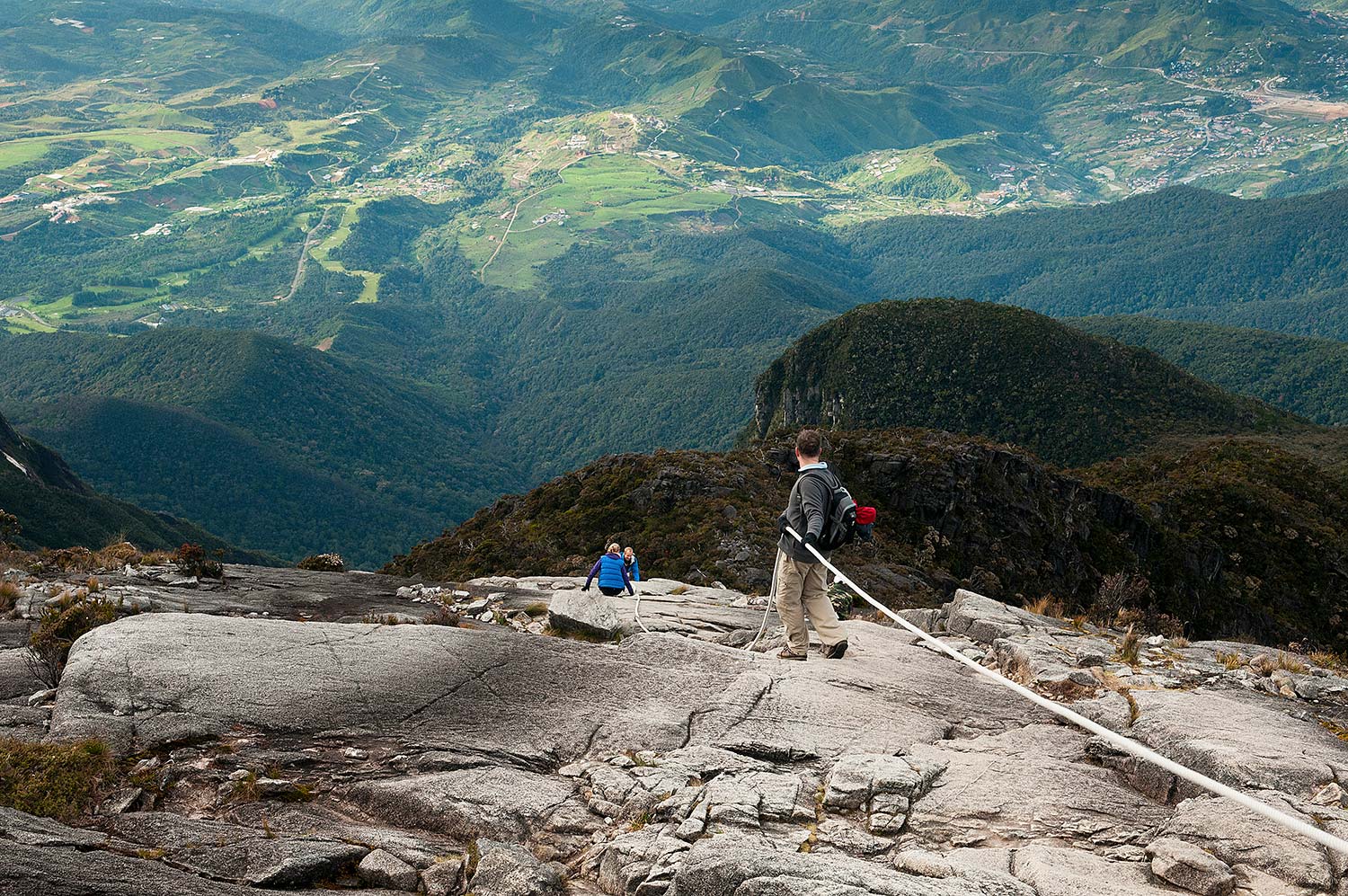
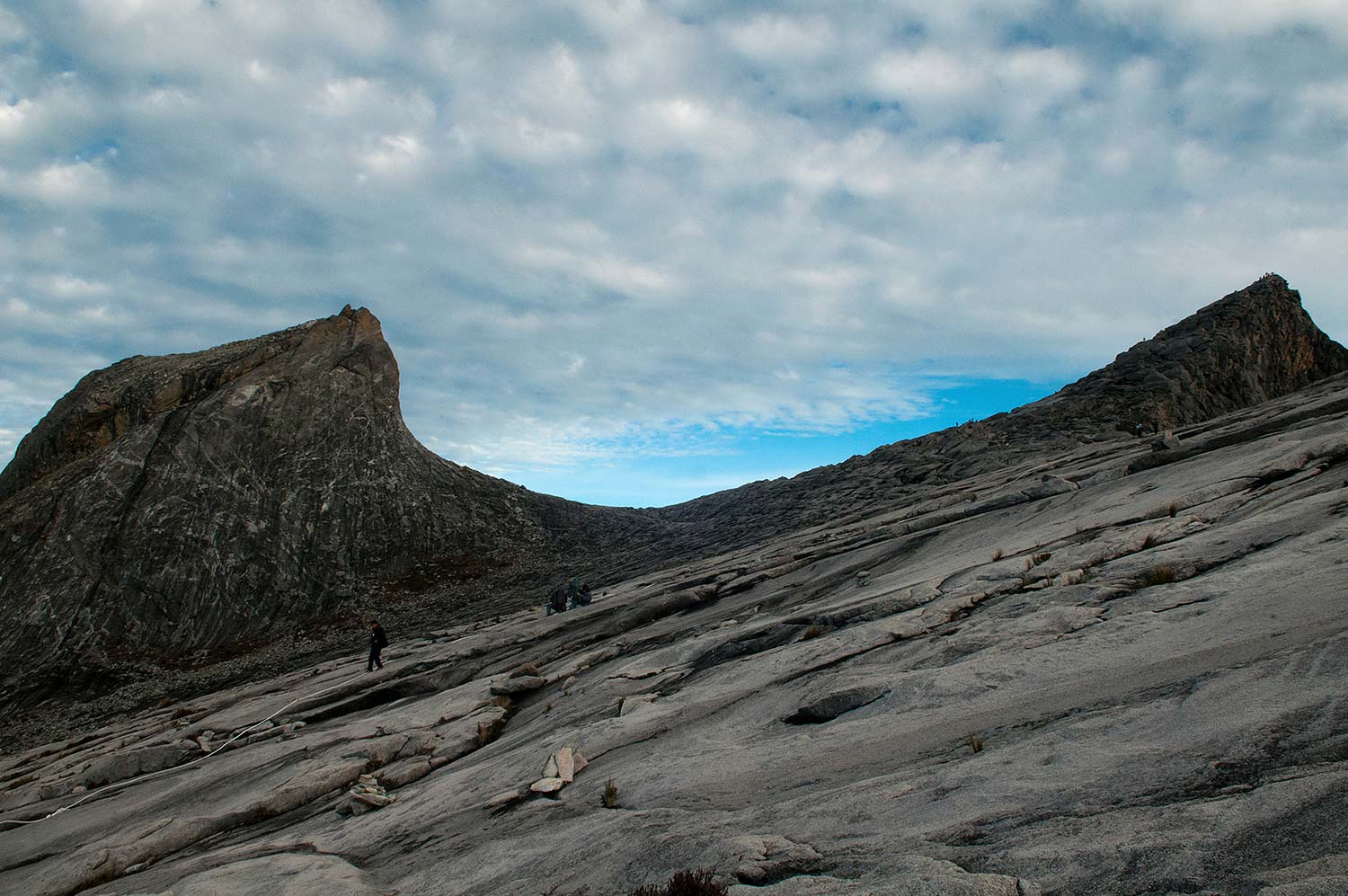
Mount Kinabalu is a broad massif, with Low’s Peak as its highest point. Nearby St. John’s Peak is just five meters lower, while South Peak sits another 100 meters below. From the summit plateau, climbers can look out toward 4,090-meter Victoria Peak, watch the sun rise, and gaze across to the aptly named Donkey Ears at 4,025 meters. The plateau itself is an immense sweep of granite. On my first visit, a decade earlier, I regretted the park’s restrictions on alpine climbing, as the rock seemed ideal for multi-pitch routes. I was pleased to learn that several first ascents have since been completed, and that a via ferrata now allows less technical climbers to explore sections of the plateau using iron rungs and cables, adding both excitement and access to this tropical alpine landscape.
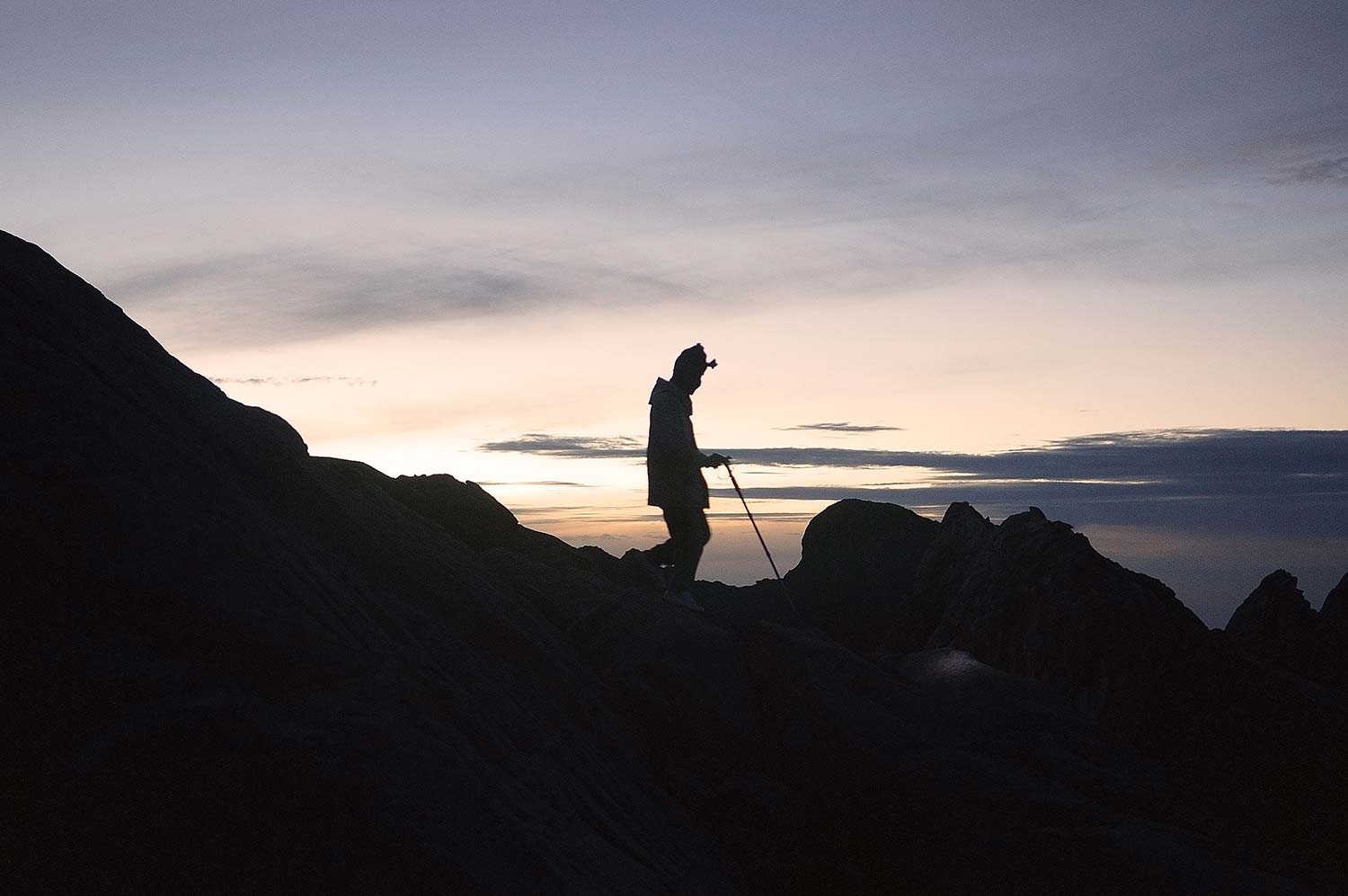
We began our summit push at around 3 am. On my previous climb, I had left earlier with the main group, only to be caught in a bottleneck on a steep, rope-assisted section. In freezing temperatures and total darkness, losing momentum is the last thing you want, especially among climbers who are clearly inexperienced at altitude.
This time, our timing was perfect. We crossed the granite moonscape and stepped onto the rocky crown of Low’s Peak just as the first sunlight spilled across the plateau. From the summit, we could see the full bulk of the mountain and peer down into Low’s Gully, a glaciated gorge plunging nearly 2,000 meters down Kinabalu’s northern face.
As we descended back into the clouds, my guide congratulated me, and my thoughts drifted to the Poring Hot Springs waiting below—because they were there, of course.