

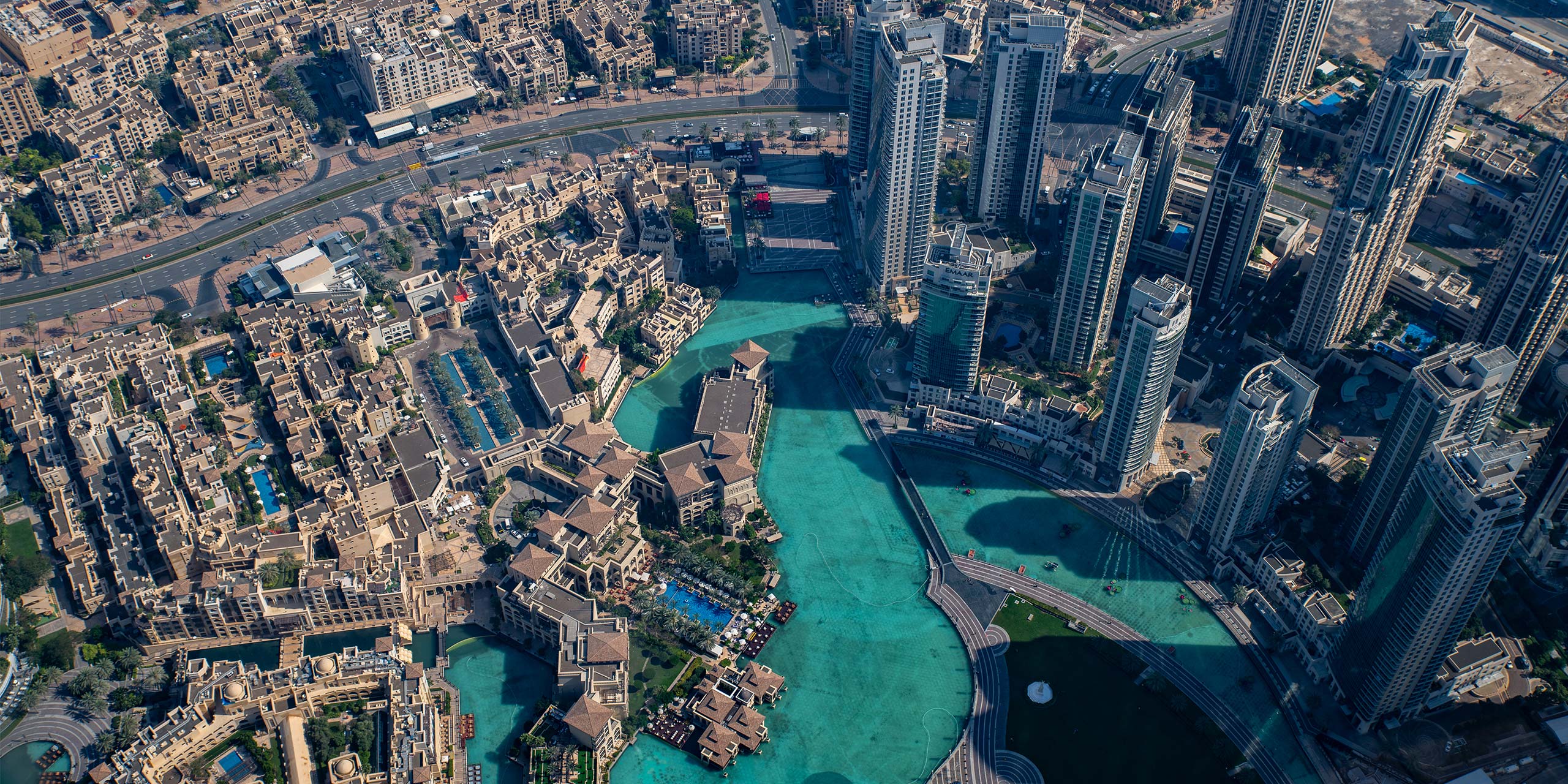
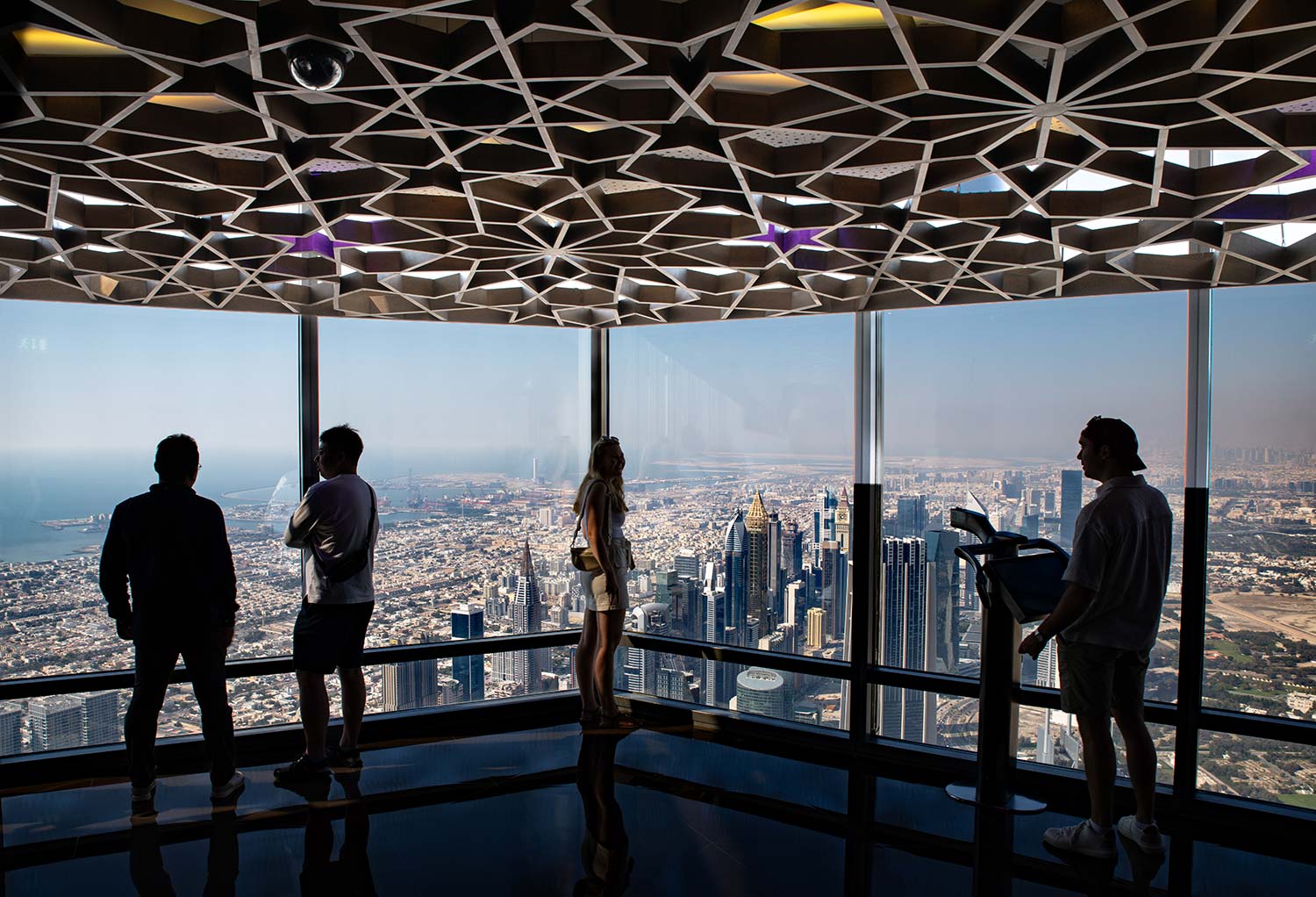
No matter which direction I look, the horizon seems remarkably distant. To my left and right, the sandy UAE coastline stretches on and on, eventually fading from view as it dissolves into smog. Behind me looms a giant, gleaming tangle of human creation: hundreds of skyscrapers rising above hulking malls, lavish hotels, vast museums, eight-lane highways, and modern monuments.
I can’t decide which vista I prefer. So I spend an hour gradually absorbing both outlooks, until their color, scale, and beauty feel burned into my memory. This is decidedly unusual for me. I’m an impatient traveler, constantly on the move—largely due to my passion for photography, an art form that rewards frequent shifts in perspective.
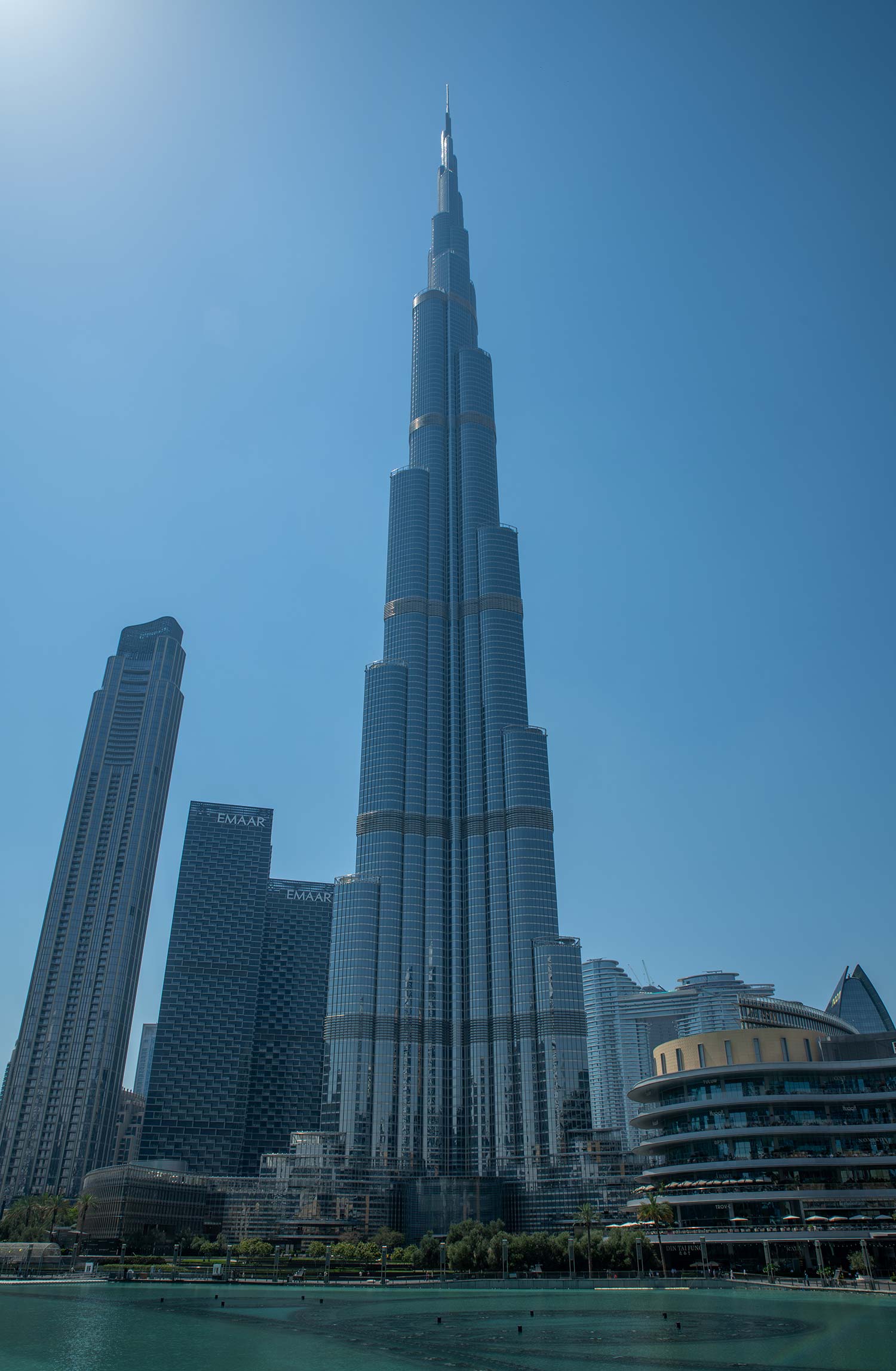
But in this moment, I’ve been subdued by the Burj Khalifa. Or, more specifically, by the outrageous optics provided by At The Top—the viewing platforms on floors 124, 125, and 148 of the world’s tallest building. When Burj Khalifa claimed that title in 2010, it marked the first time since Egypt’s Great Pyramid of Giza, some 700 years earlier, that the world’s tallest structure stood in the Islamic world.
As with any vast man-made construction that isn’t a hospital or a school, debate has long swirled around Burj Khalifa’s necessity, utility, and sustainability. Those arguments persist. What is beyond dispute, however, is its impact on tourism.
Some 17 million people visited Burj Khalifa in 2024. It anchors a dense cluster of tourist-friendly landmarks, bordered by Burj Park’s green lawns, the turquoise Burj Khalifa Lake, the glassy Dubai Opera, and the gargantuan Dubai Mall. The latter houses more than 1,200 shops, alongside dozens of cafés and restaurants, plus family attractions ranging from the Dubai Aquarium to an ice rink, VR zones, and children’s play centers.
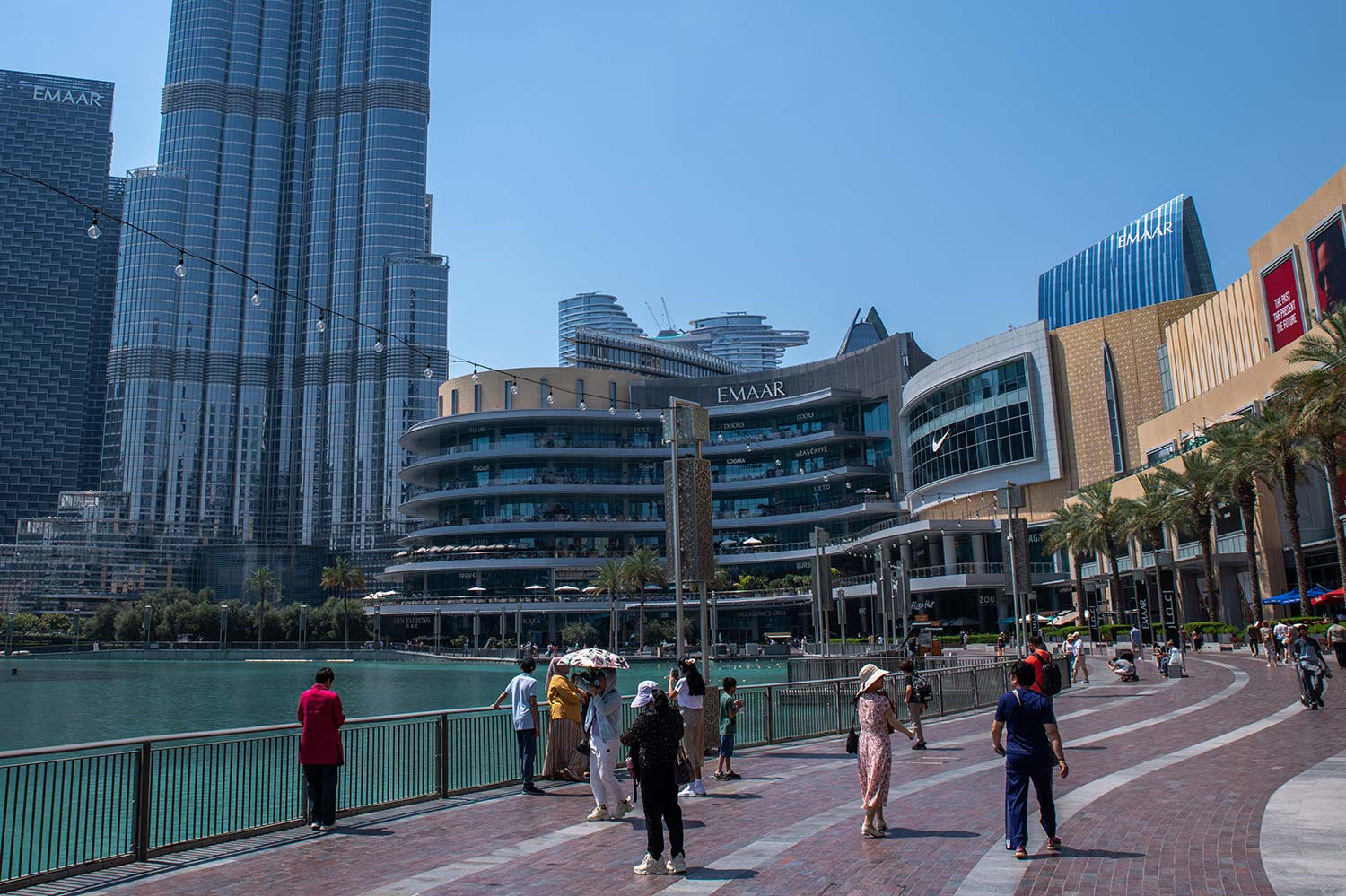
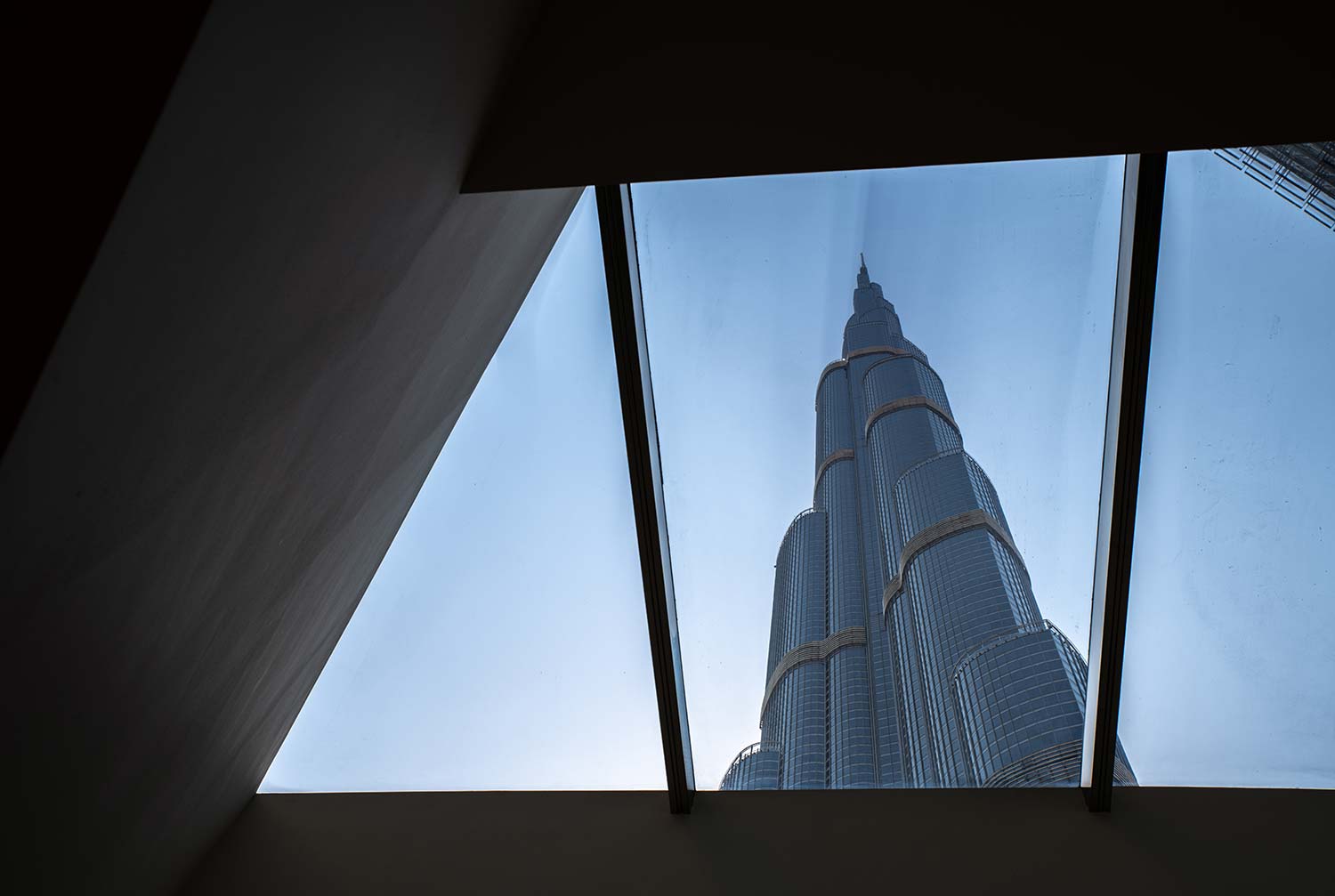
Dubai Mall also serves as the primary gateway to Burj Khalifa. Perhaps the defining visitor experience in the city, At The Top sends guests quite literally into the clouds. The experience begins with a ride in one of the world’s fastest elevators, shooting up from the ground floor in around 60 seconds. During the ascent, digital displays relay a stream of statistics about the tower.
The numbers are staggering. Construction required 22 million man-hours. The building contains 330,000 cubic meters of concrete, 39,000 tons of steel reinforcement, 103,000 square meters of glass, and 15,500 square meters of embossed stainless steel. Of its roughly 200 floors, 160 are inhabitable.
Once outside the elevator, visitors loop around enclosed observation decks offering a full 360-degree panorama through towering glass panels. Those inclined to raise their pulse can step onto the 125th floor’s unnerving glass-floor attraction, which theatrically simulates cracking beneath your feet. Others may prefer to descend to level 122, where dark leather, red velvet, and hushed luxury define At.mosphere, a fine-dining restaurant serving a 13-course tasting menu, alongside a Champagne and oyster bar with equally vertiginous views.
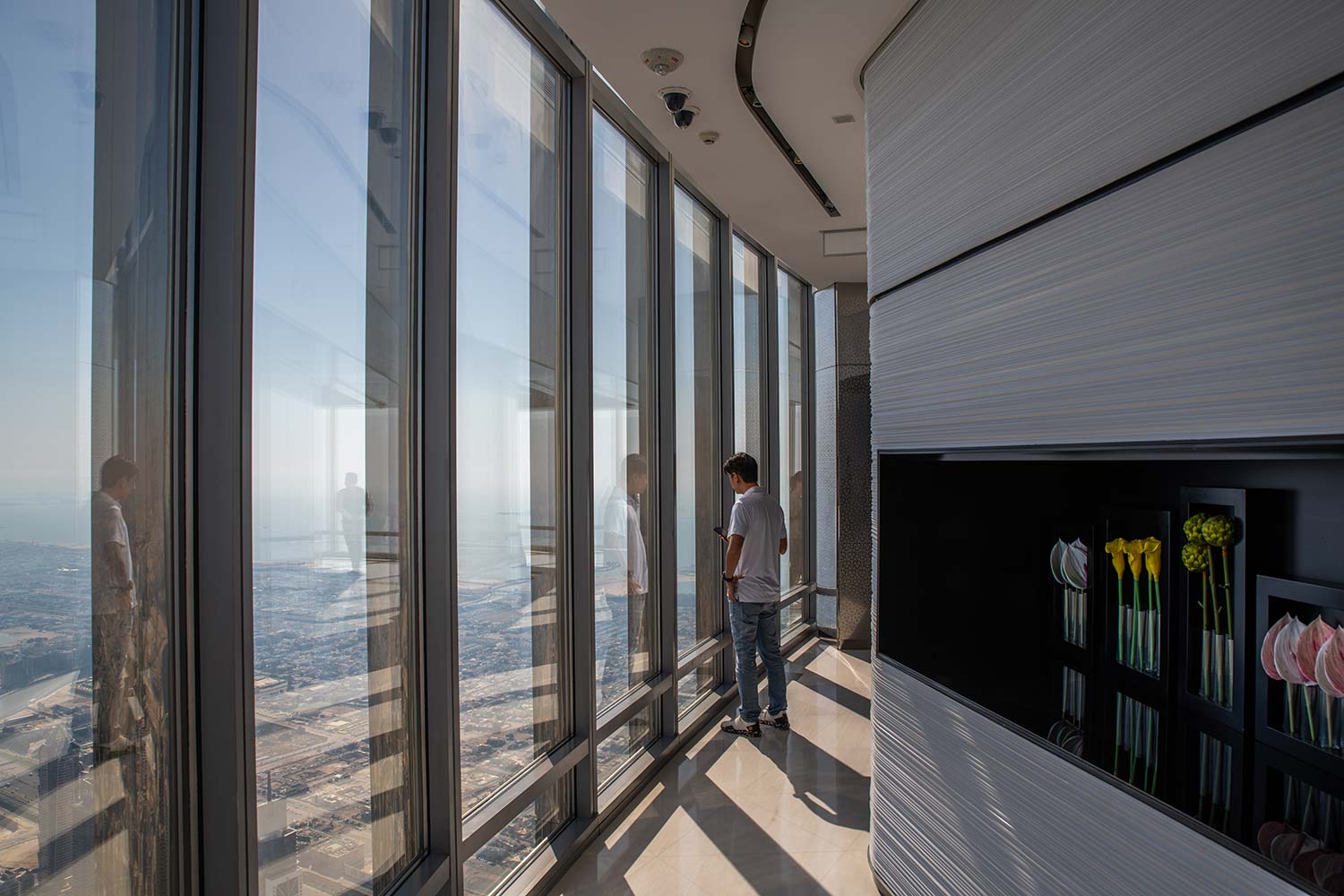
In this sense, At The Top offers far more than the single viewing deck typical of landmark skyscrapers—making the experience worth the considerable effort it took me to get here.
Because an apocalypse, of sorts, stood between Burj Khalifa and me.
The day before my visit, in April 2024, the UAE was hit by the worst storm in its modern history. In just 24 hours, parts of the country received more than 250mm of rain—roughly a year’s worth. Roads between Abu Dhabi and Dubai were shut, bus services canceled, and floodwaters rose to four feet in places.
I had only one day to complete a crucial photo shoot at Burj Khalifa, so I persuaded a taxi driver to take the gamble. As we drove north from Abu Dhabi, we passed thousands of abandoned vehicles stranded along the highway. Even Bentleys, Ferraris, and Porsches sat unoccupied, windows open, discarded like debris—luxury casualties of a sudden deluge.
What is normally a 90-minute journey took four hours. When we finally reached downtown Dubai, Burj Khalifa appeared like a mirage: a gleaming vertical oasis rising above sodden chaos. I was relieved to find floodwaters hadn’t compromised access to the tower.
That relief wavered once I reached the observation decks. Looking down, I could see epic gridlock still clogging the streets below. Soon enough, I would have to descend and face it myself on the long journey back to Abu Dhabi.
Instead, I lingered. The same clouds that had unleashed such fury now drifted calmly past the windows. High above the flooded roads, Burj Khalifa lifted me—quite literally—out of the mess below, restoring my spirits along with my perspective.