
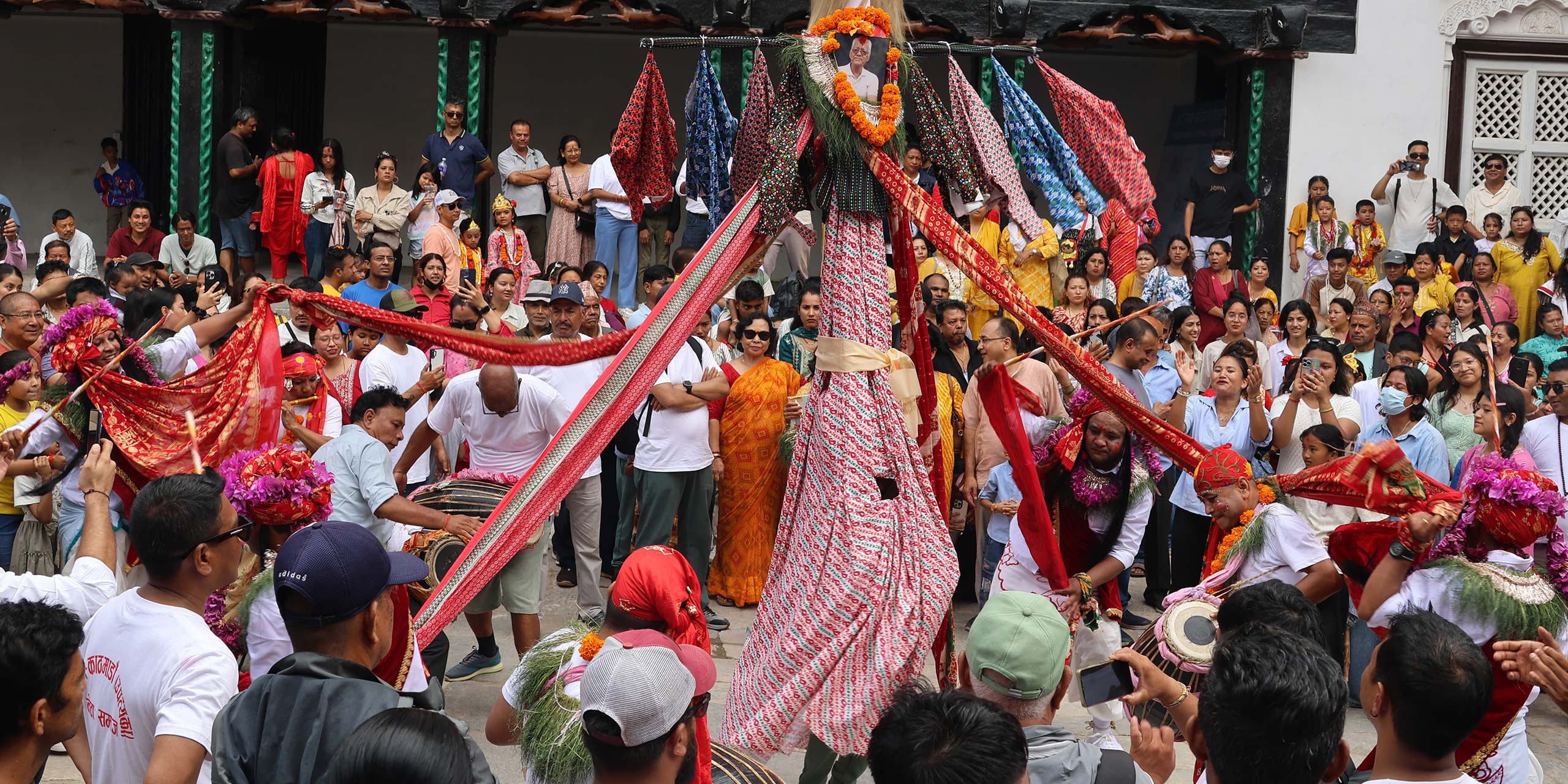
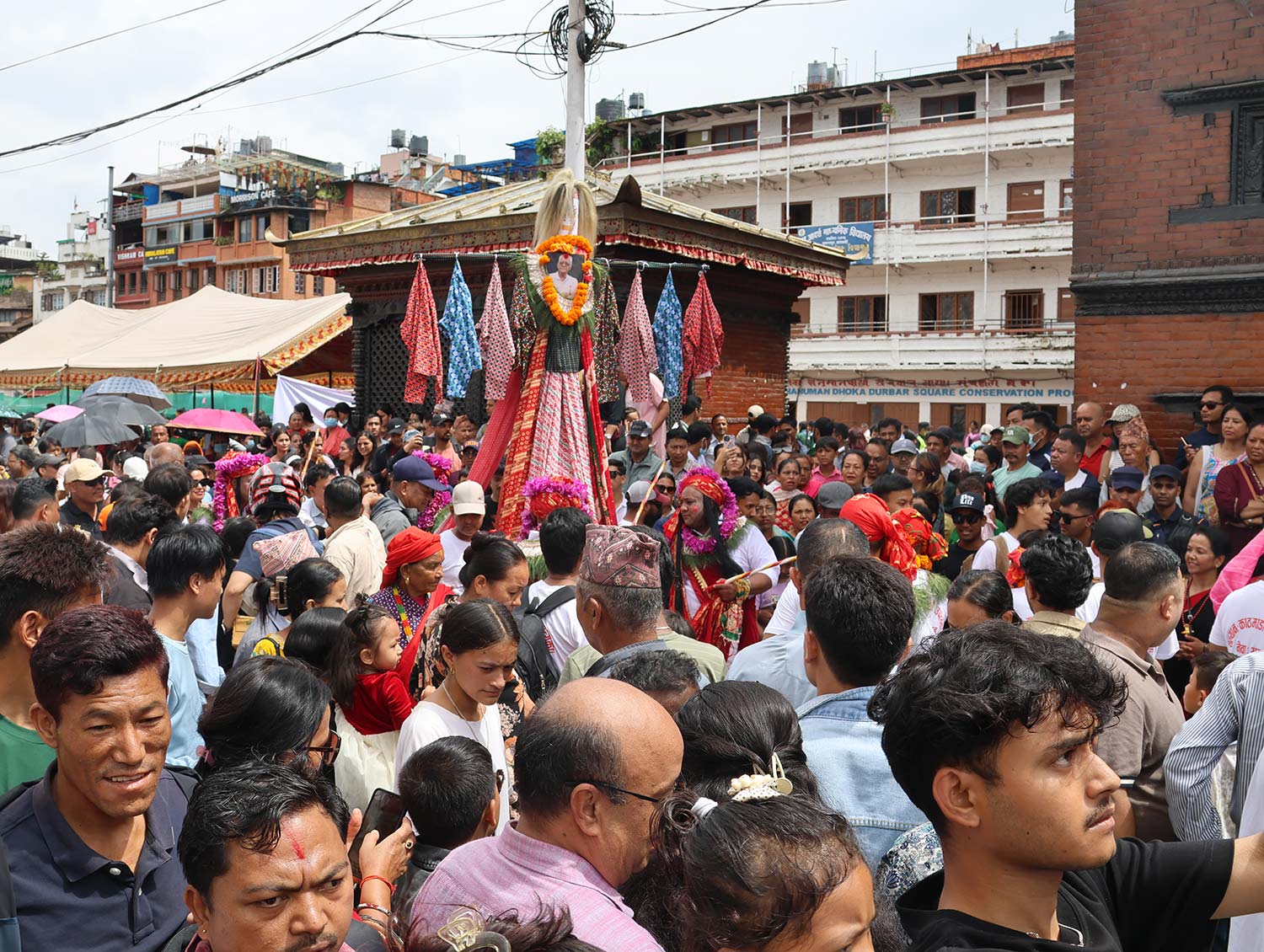
Kathmandu’s Durbar Square, lined with spectacular temples and palaces, is packed with thousands of people. The steps of Maju Dewal and Trailokya Mohan, the pyramid-style temples in the center of the square, are overflowing with hundreds of spectators: women decked out in their finest saris, older men in traditional topis. Since morning, noisy processions have been crisscrossing the Nepali capital’s historic center, a UNESCO World Heritage Site.
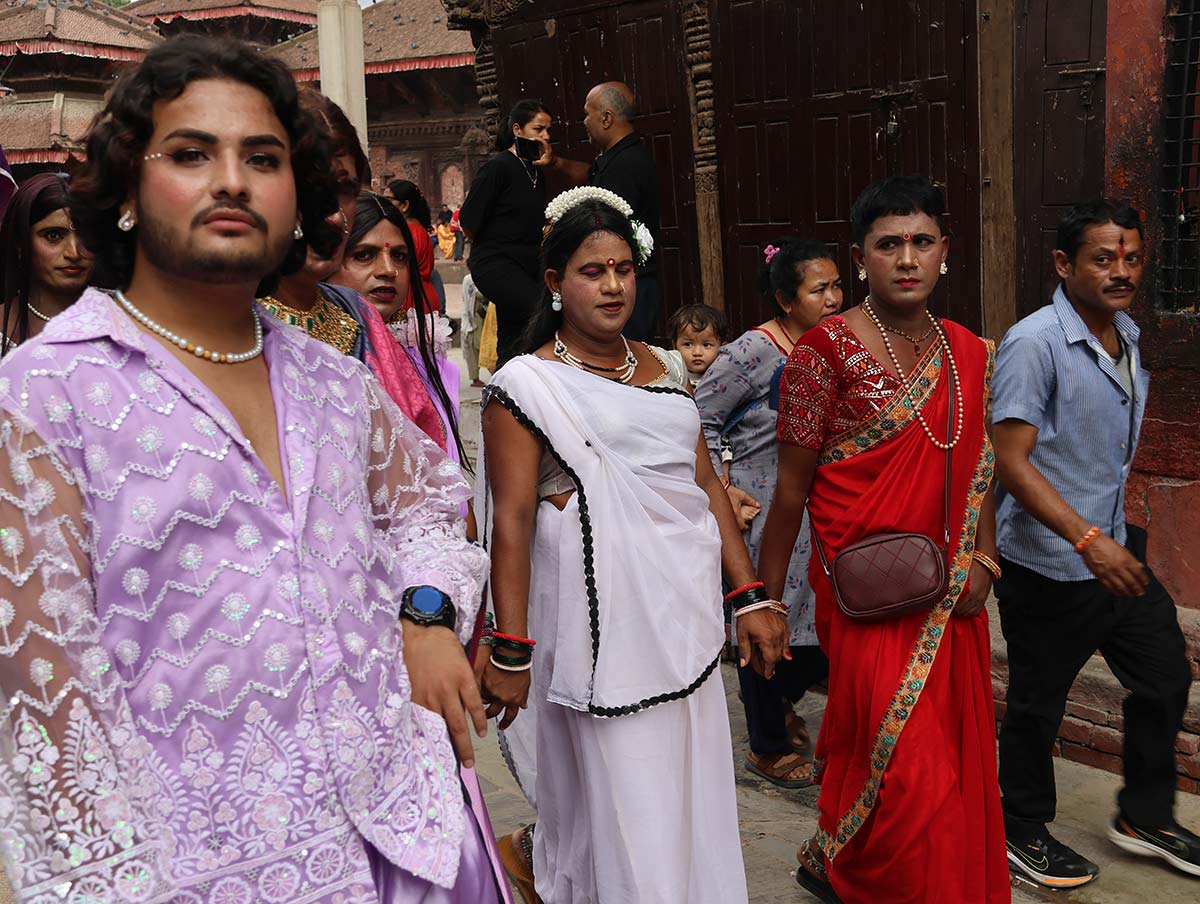
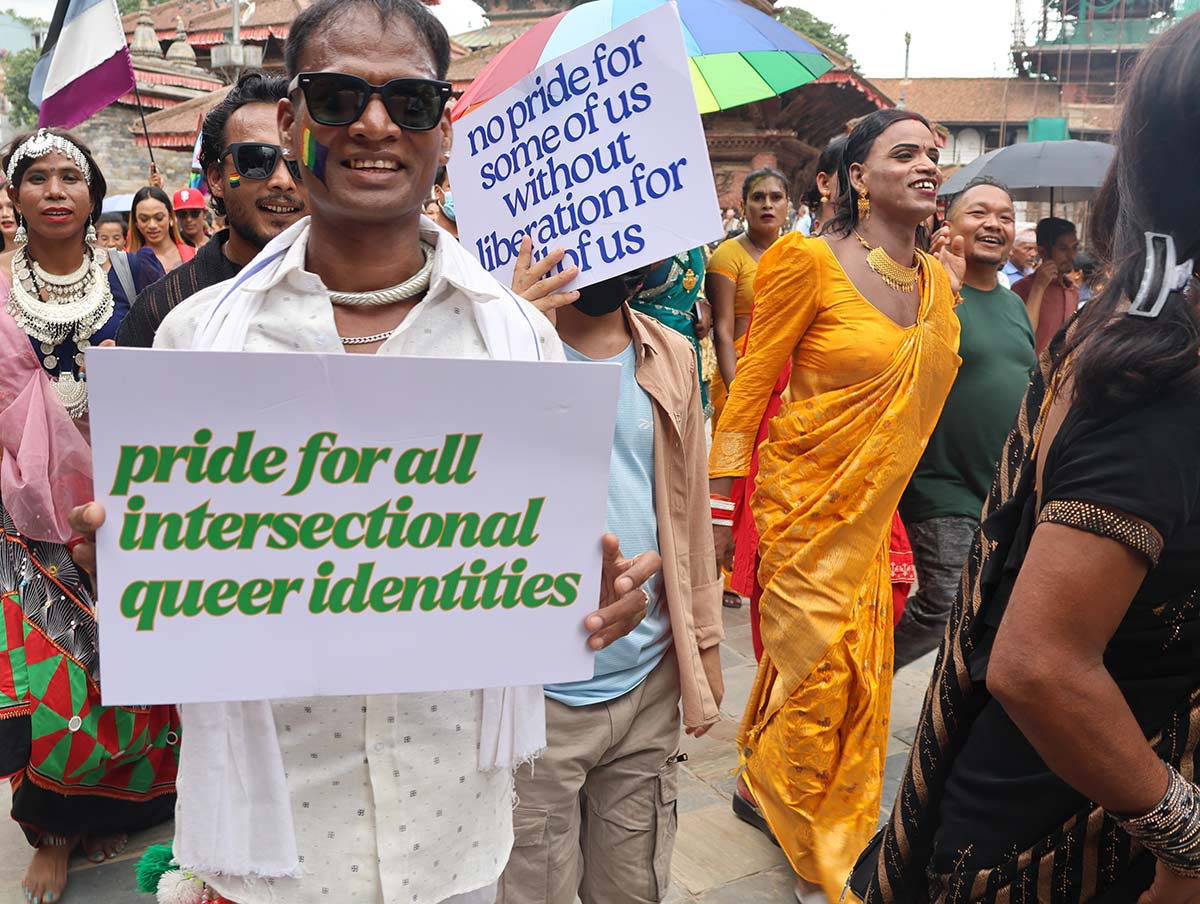
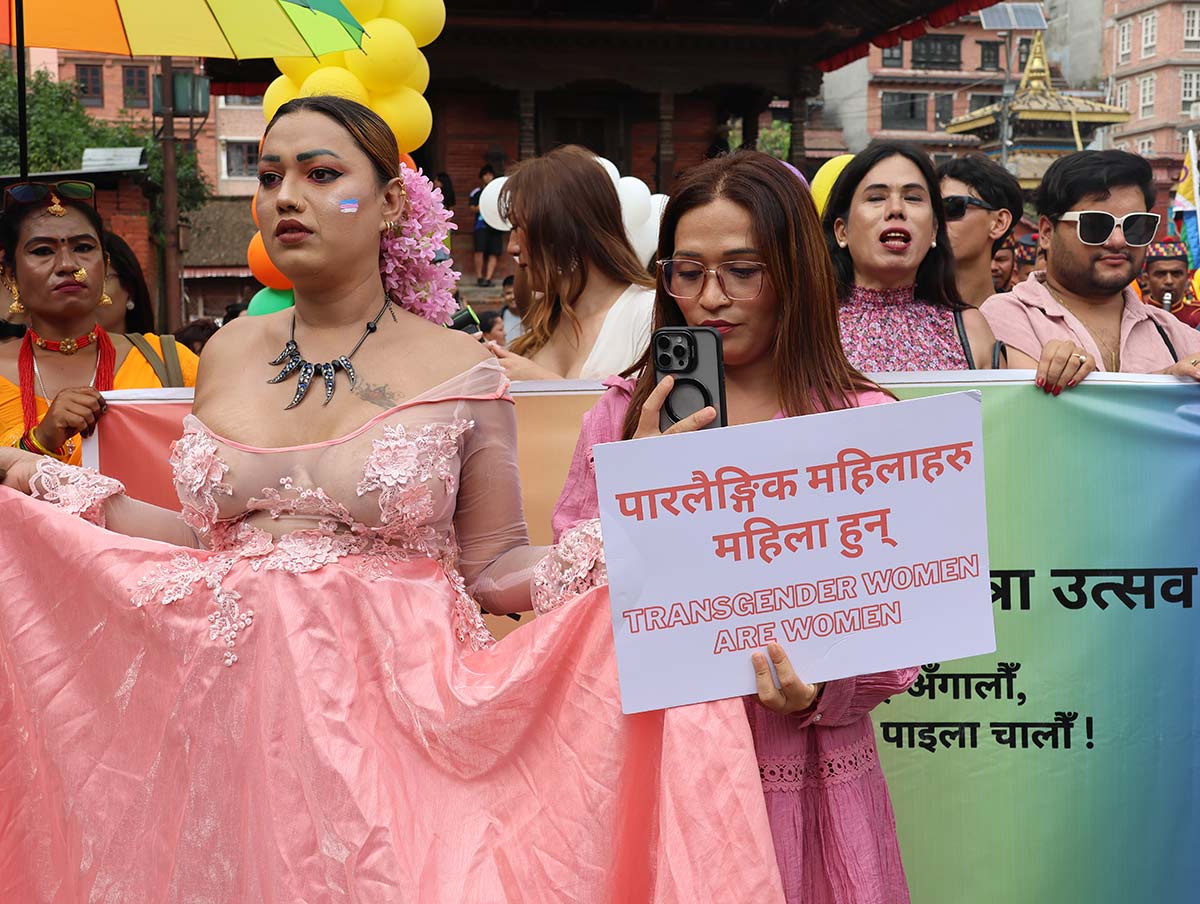
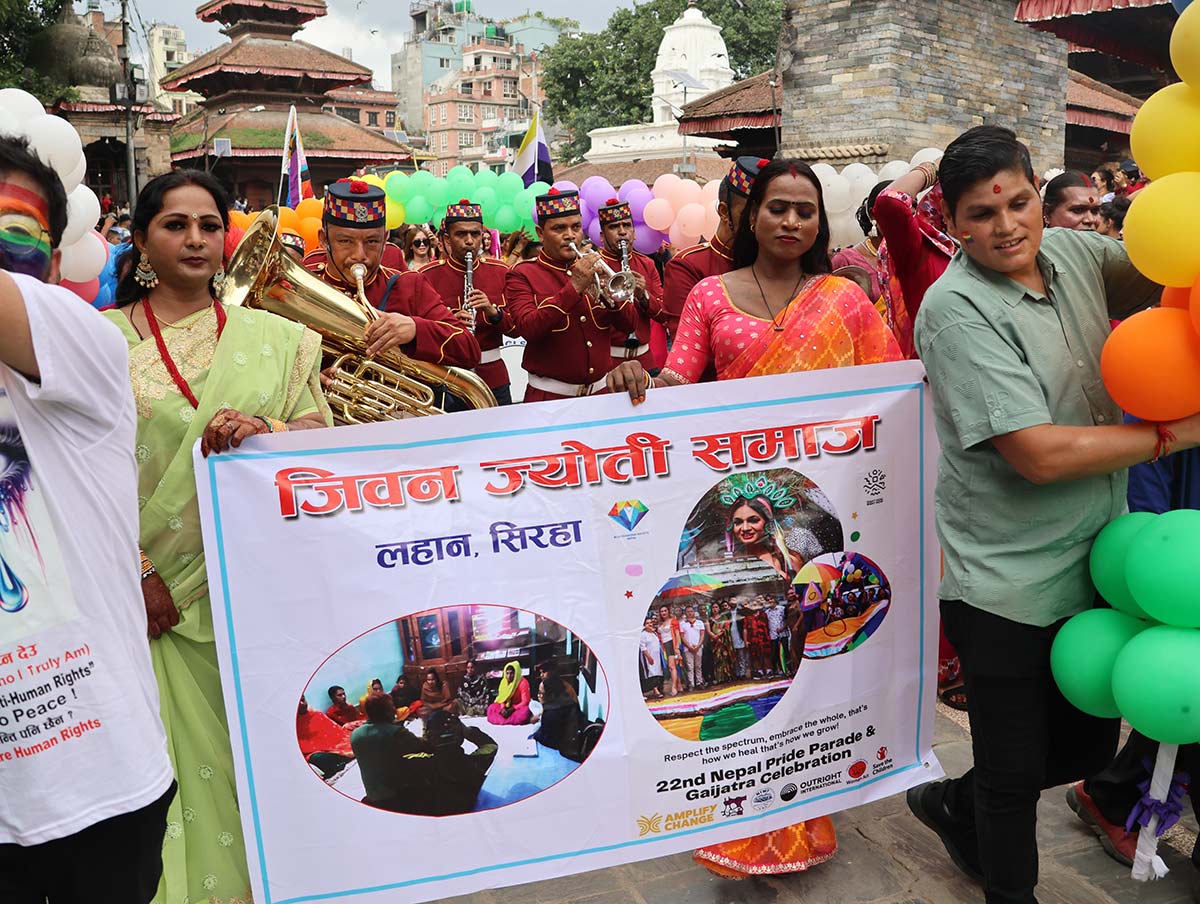
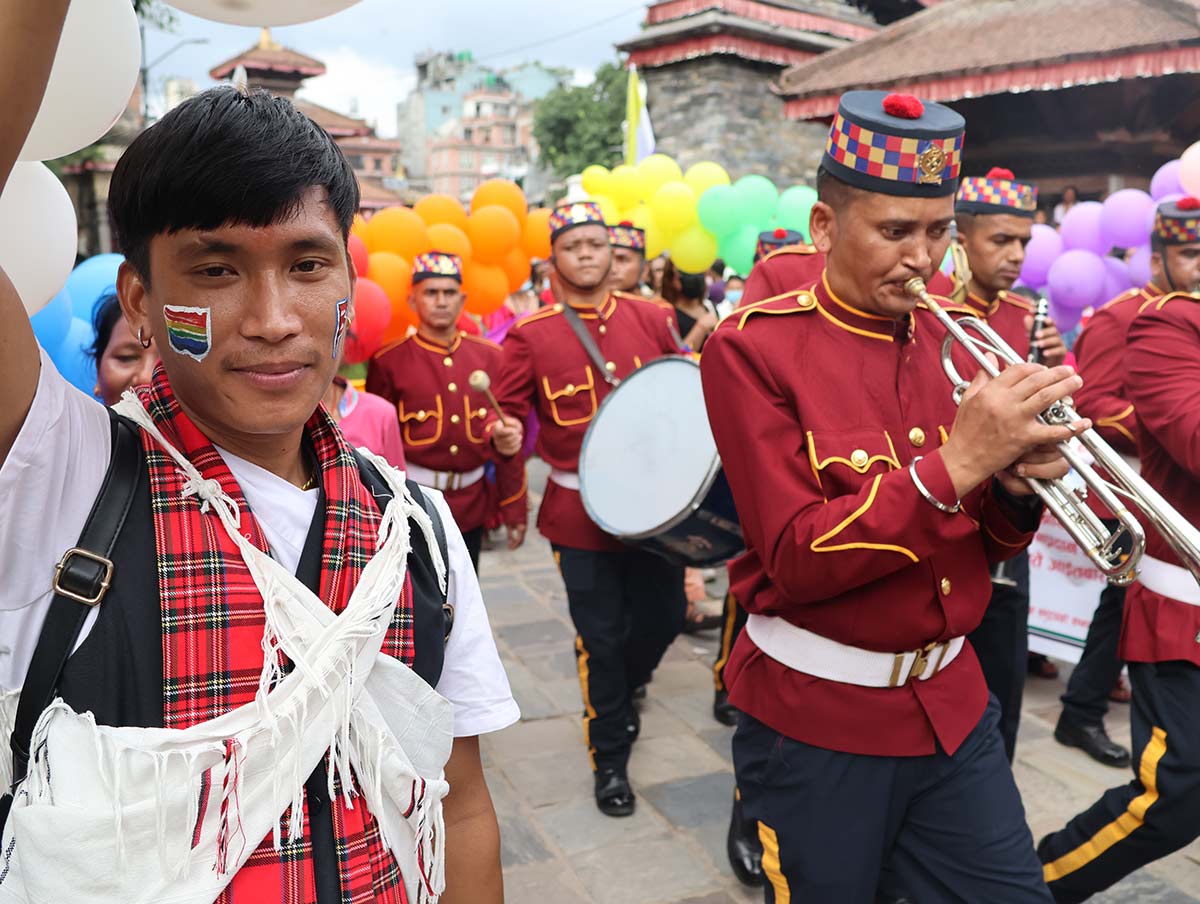
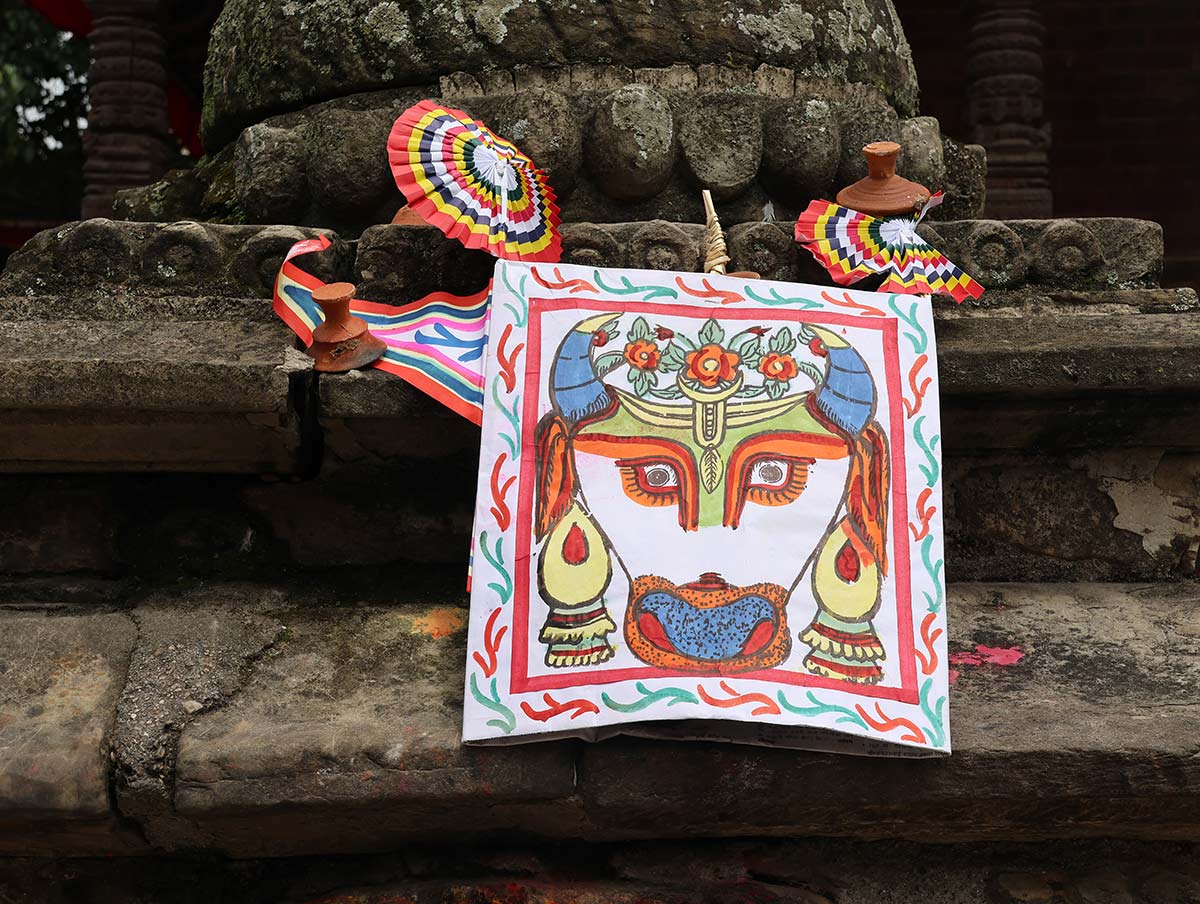
Some groups feature children wearing hats shaped like cows, followed by marching bands. Others dance around towering effigies bearing photos of recently deceased family members. Still others are made up of representatives of the country’s vocal transgender community, carrying balloons in rainbow hues. All are boisterous, despite the somber reason for this special day — the Gai Yatra is an occasion for the Newar, the people of Kathmandu, to remember family members who died in the previous year.
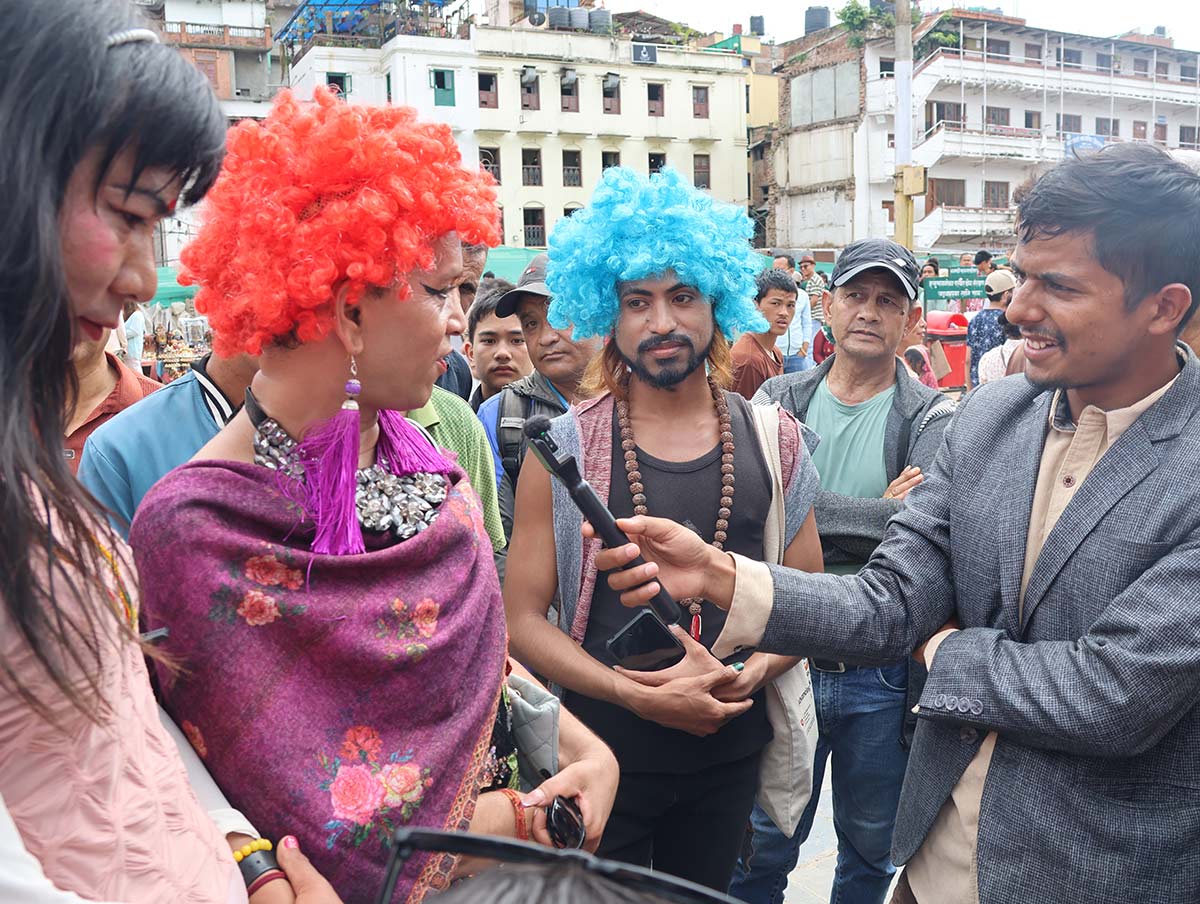
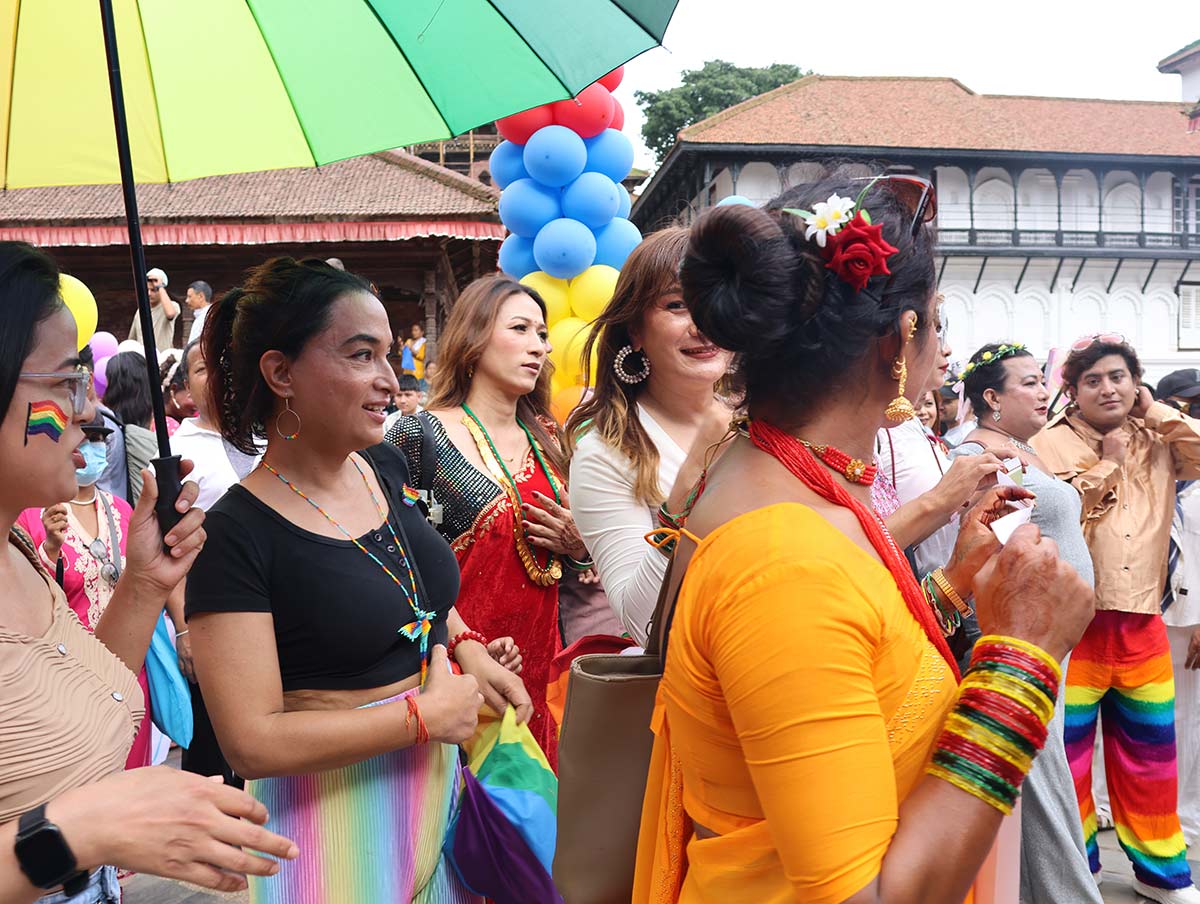
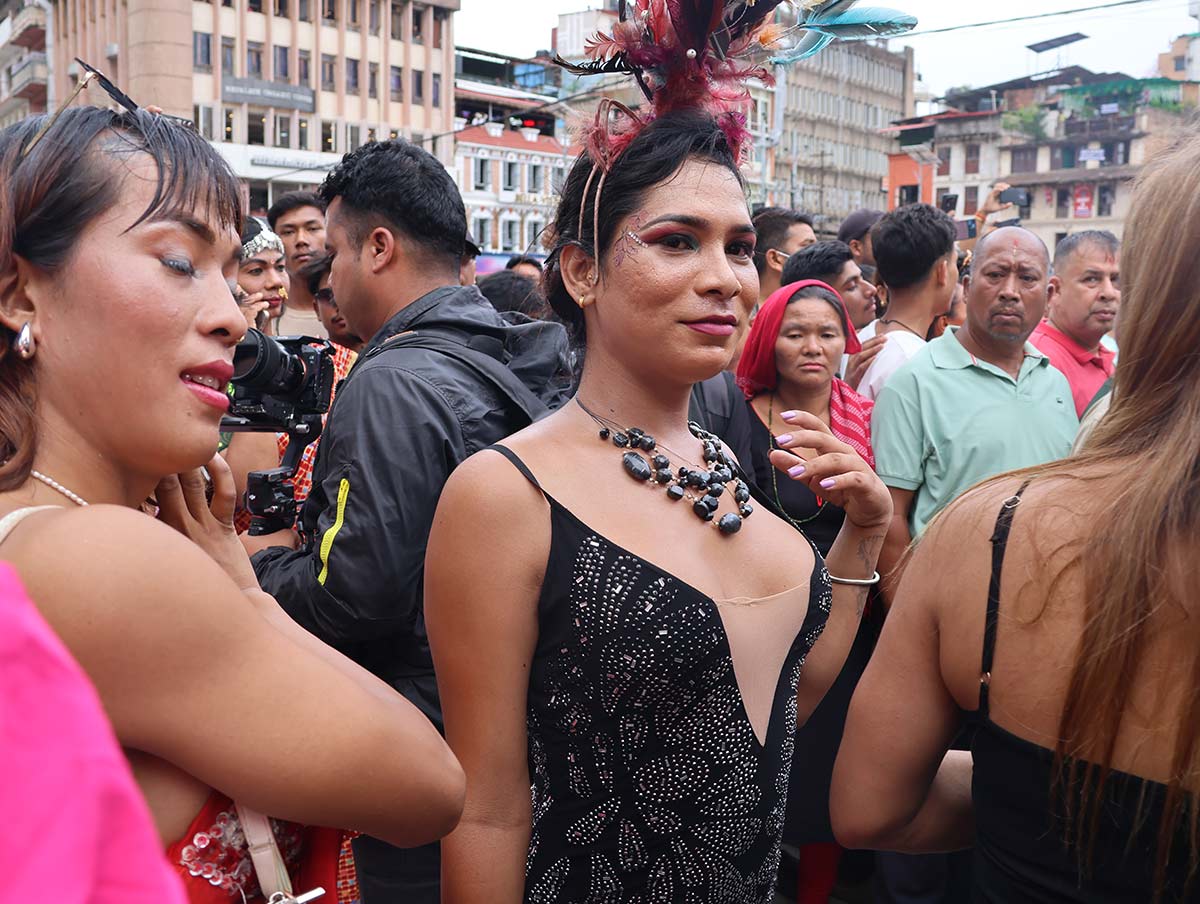
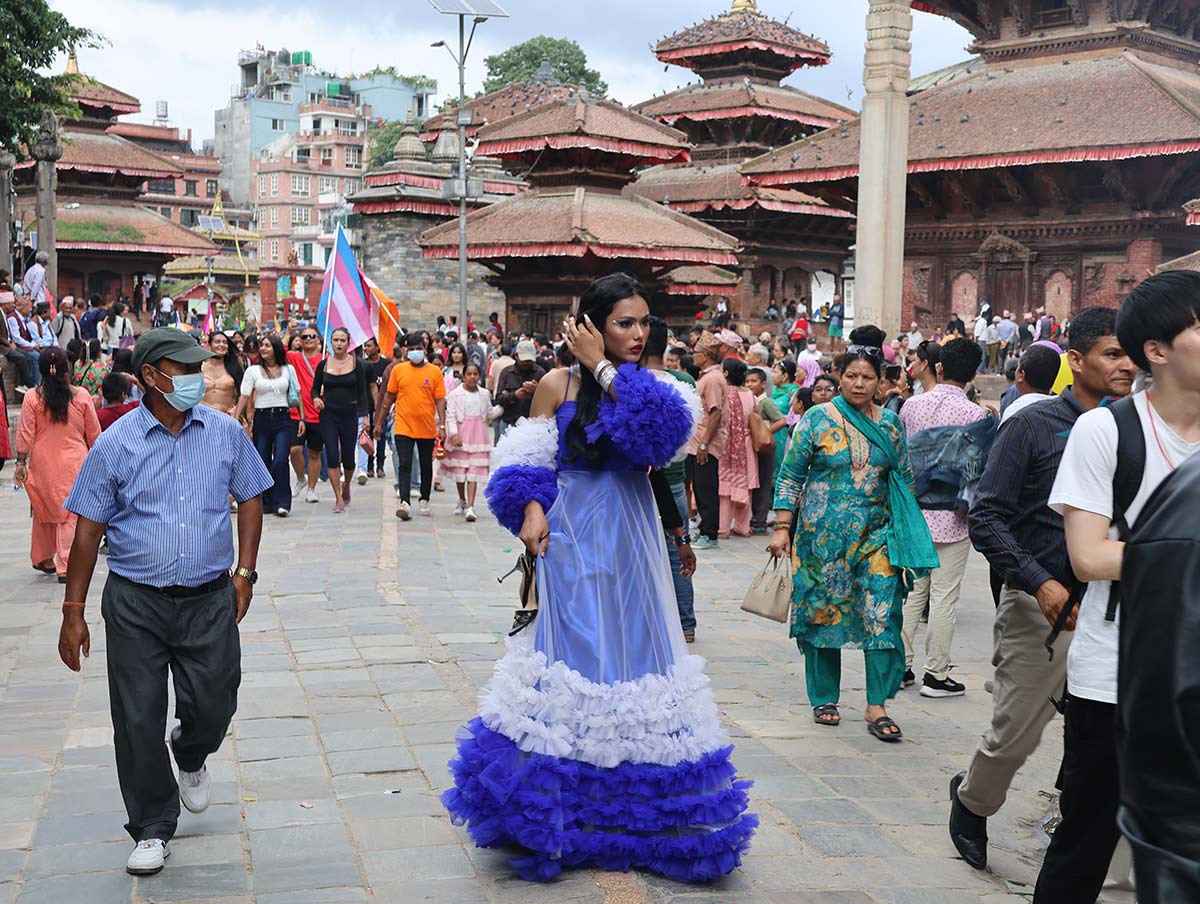
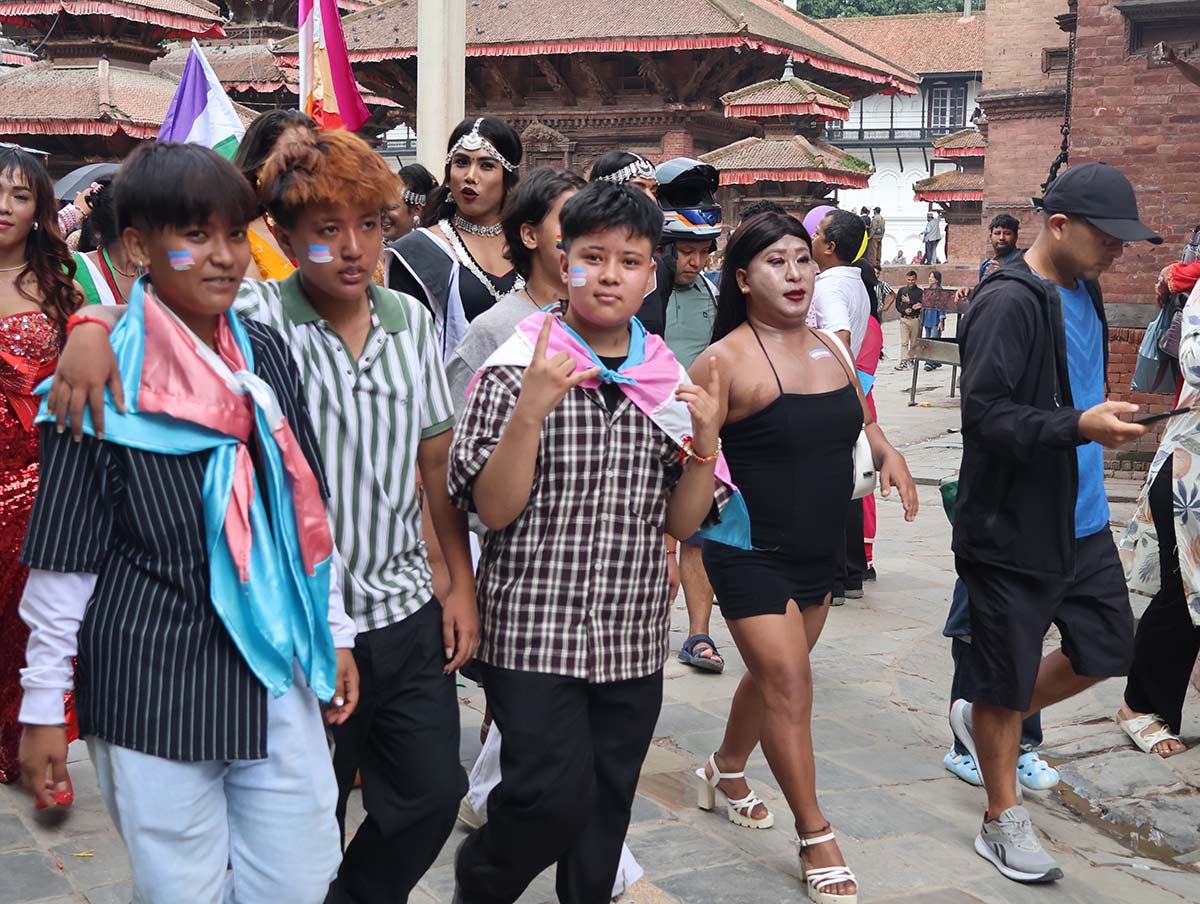
The Kathmandu Valley’s Gai Yatra is one of the more unusual festivals in South Asia — and an opportunity for Nepal’s LGBT community to express themselves.
“The LGBT community wants to remember friends who have died, just like everyone else, so we joined in 2002. It helps us to publicly represent our cause and our sexuality,” says Lakshmi Ghalan, founder of Mitini Nepal, an organization advocating for the rights of lesbian, bisexual, and transgender individuals.
Also known as Sa Paru, the Gai Yatra has been celebrated throughout the Kathmandu Valley—most prominently in Kathmandu, Bhaktapur, and Patan—since the 17th century. When the teenage son of King Pratap Malla (1624–1674) died, the monarch created the event to console his grieving wife and to ensure their son’s smooth passage into the next life. The king inaugurated a tradition of humor and satire that has evolved into a festival of social commentary. Performers often mock politicians and lampoon social issues. Every family that has lost a relative in the past year participates in a procession leading a cow; if no cow is available, a young boy dressed as one serves as a substitute.
“Traditionally, there are three parts to the festival,” explains Gunaraj Luitel, editor-in-chief at Nagarik Daily. “In the first year after a family member’s passing, men dress up as women and women as men. In the second year, people dress as cows. In the third year, they feed the community. The cross-dressing tradition gave the LGBT community an opening to join.”
Gender equality has been a long time coming in Nepal. The 2015 constitution, drawn up in the wake of a ten-year civil war waged by Maoist rebels against the monarchy and conservative establishment, guarantees equal rights to women, ethnic minorities, and gender minorities.
Manisha Dhakal, one of Nepal’s most high-profile transgender figures, is a member of the Blue Diamond Society, an organization that has championed gender minority rights since 2001. Out in the square with her friends, she says, “There is not much awareness of human rights and LGBTQ issues in our society yet. The issue often becomes a question of prestige and social status — same-sex relationships are considered bad for a family’s reputation.”
After years of struggle, Dhakal is cautiously optimistic about Nepal’s progress in the regional context. “I’m encouraged by what’s happening in Bhutan—homosexuality is legal and we’re hoping for same-sex marriage to become legal too. In India, there are homosexual and transgender deities, but I’m not sure the government will make things easier for sexual minorities. There’s no chance of that in Bangladesh or Pakistan, but in Sri Lanka, the political situation could be changing. Nepal is the most progressive country in South Asia when it comes to equality for sexual minorities. And the Gai Yatra allows us to show Nepalis who we are.”
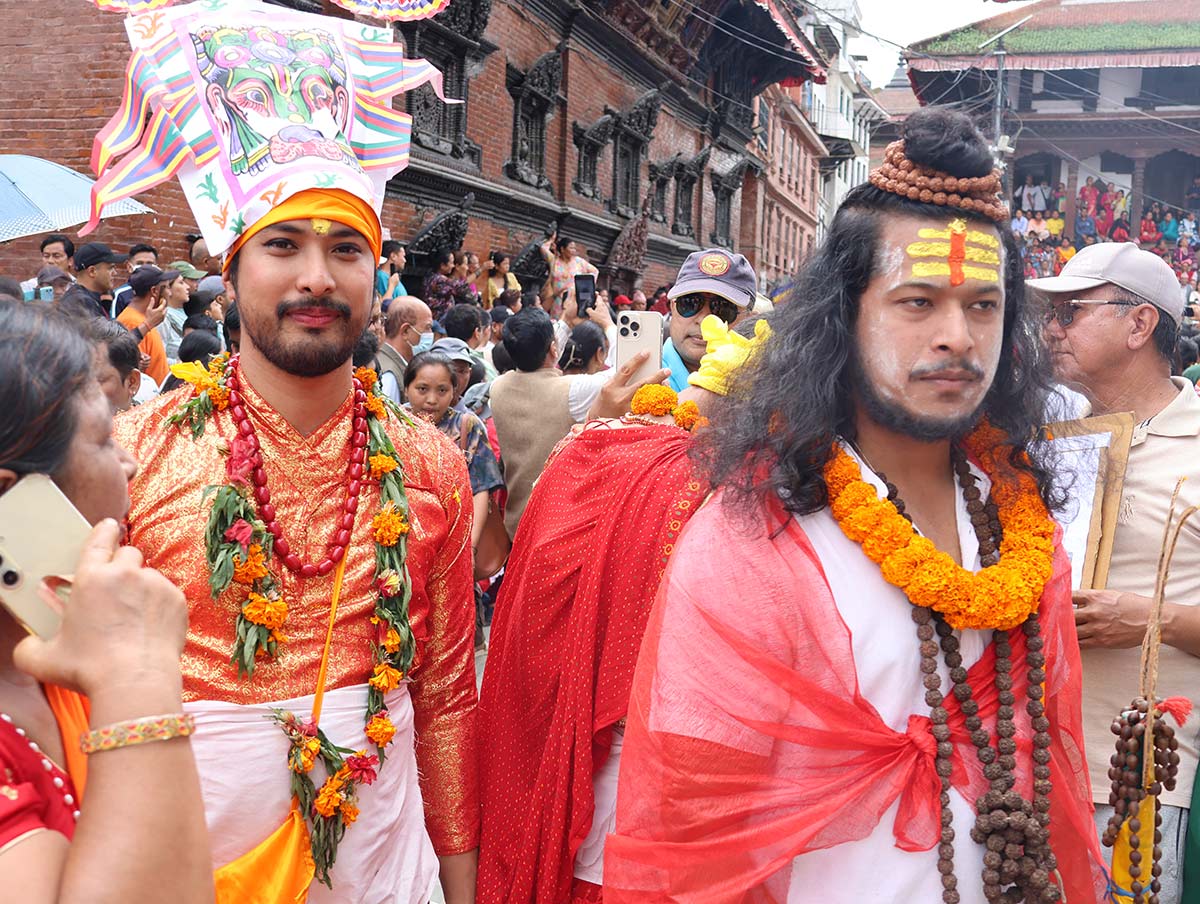
The drive to come out and introduce ordinary citizens to openly LGBT celebrants has brought the country’s media to the square. Honey Mahajan, a Newar transgender woman sporting a red wig, has travelled from Kirtipur, a town five kilometres southwest of Kathmandu. She’s in demand for TV interviews, explaining her community’s daily struggles. “Many of us cannot wear these clothes on other days,” she says. “So, for trans people, it’s an important moment.”
But Mahajan also strikes a somber note echoed by other speakers on the square. “My community organization gets no donations, no financing, nothing,” she says. This is partly due to US funding drying up. While the American Embassy in Kathmandu publicly celebrated the first same-sex marriage between a Nepali and an American man late last year, funding for gender equality initiatives has since been discontinued.
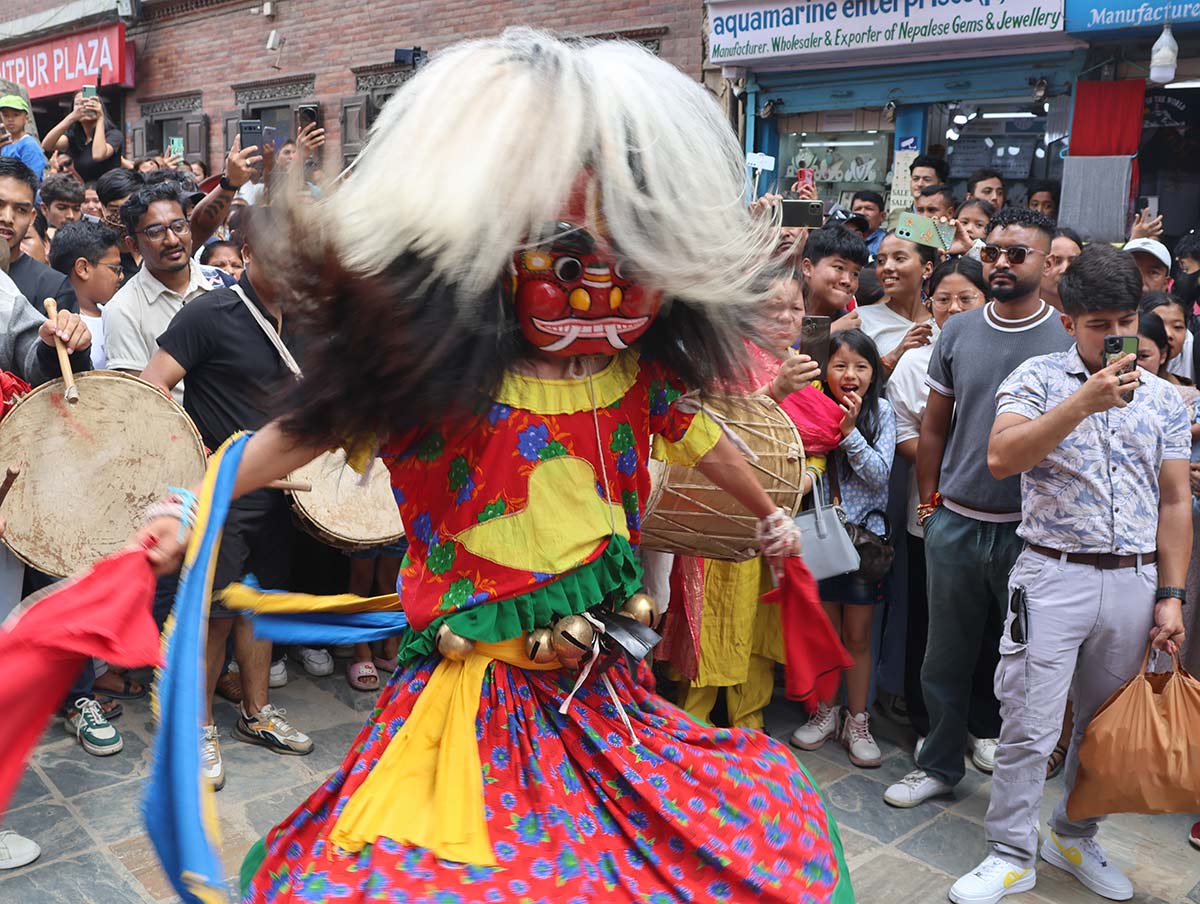
On Durbar Square, tradition dictates that each procession is preceded by one or several Lakhey — wild, demonic dancers. These performers, accompanied by groups of drummers, wear heavy wooden masks with ferocious faces and protruding fangs, topped by manes of black hair. They whirl and stamp in frenzied fashion, leading both the children dressed as cows and the trans participants around the square, pushing their way through the dense crowd.
As different bands of musicians follow in their wake, the air fills with a cacophony designed to wake the gods. The atmosphere is rowdy and freewheeling; the crowds look thoroughly entertained. And today, at least, Nepal’s LGBT community can rejoice in public.