


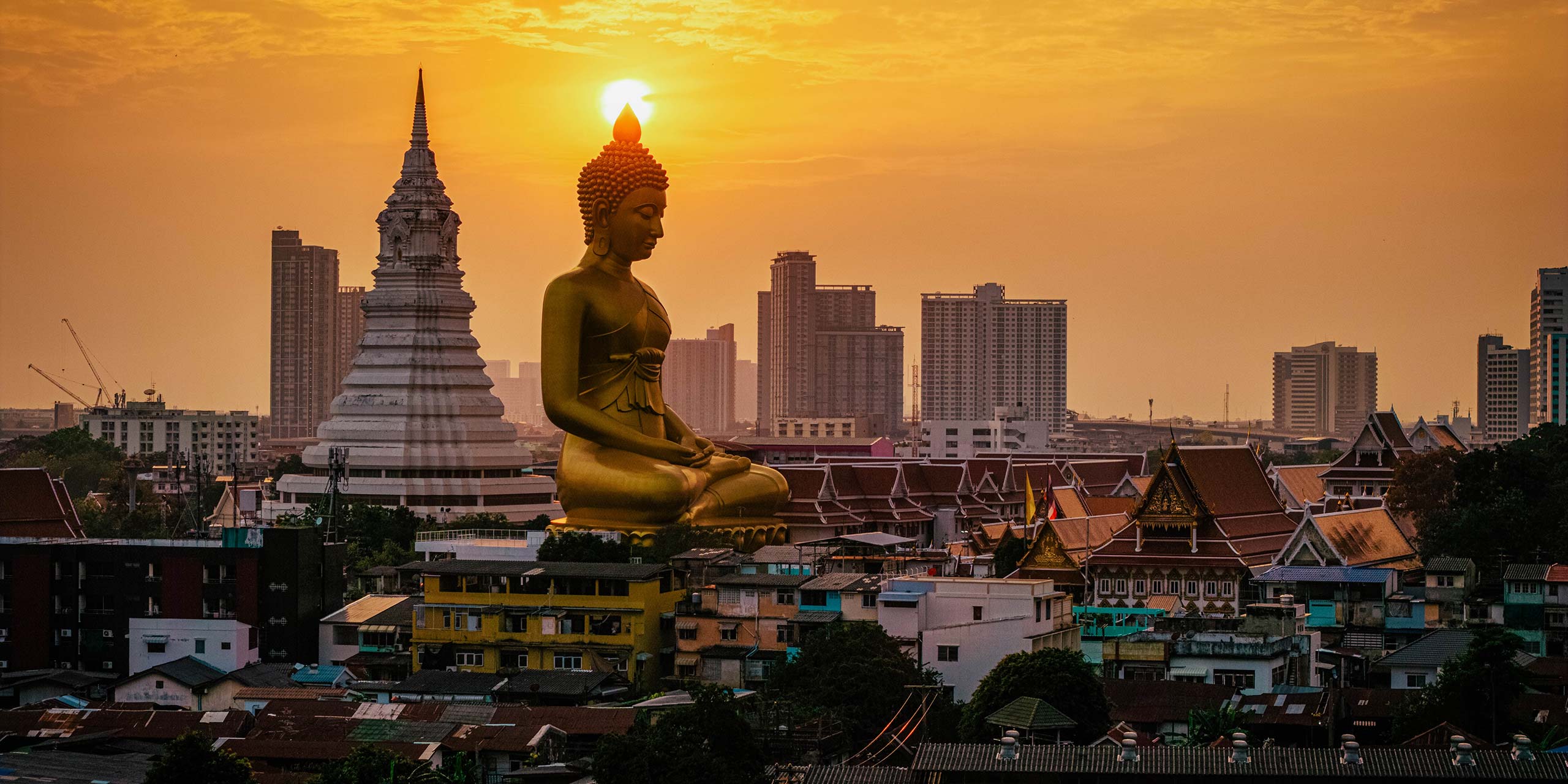
Almost every visitor to Thailand is drawn into a Buddhist temple compound at some point during their stay, attracted by the glittering mosaic decorations, the soulful chanting of monks and nuns, the carvings of curious mythological figures, and the tranquil atmosphere within the temple’s walls.
These visitors may not realize it at the time, but one reason the experience of visiting a temple (wat in Thai) stands out is that they are practising mindfulness, the basis of Buddhist meditation. As the word suggests, ‘mindfulness’ means giving the full attention of the mind to the object of our consideration, a skill that comes easily when we encounter something for the first time.
Yet for most newcomers, the significance of the different elements of a temple—the viharn, ubosot, chedi, and kuti, not to mention the bo tree and mythical beasts—remains a mystery. So, let’s look at what’s in a wat.
Entering the wat
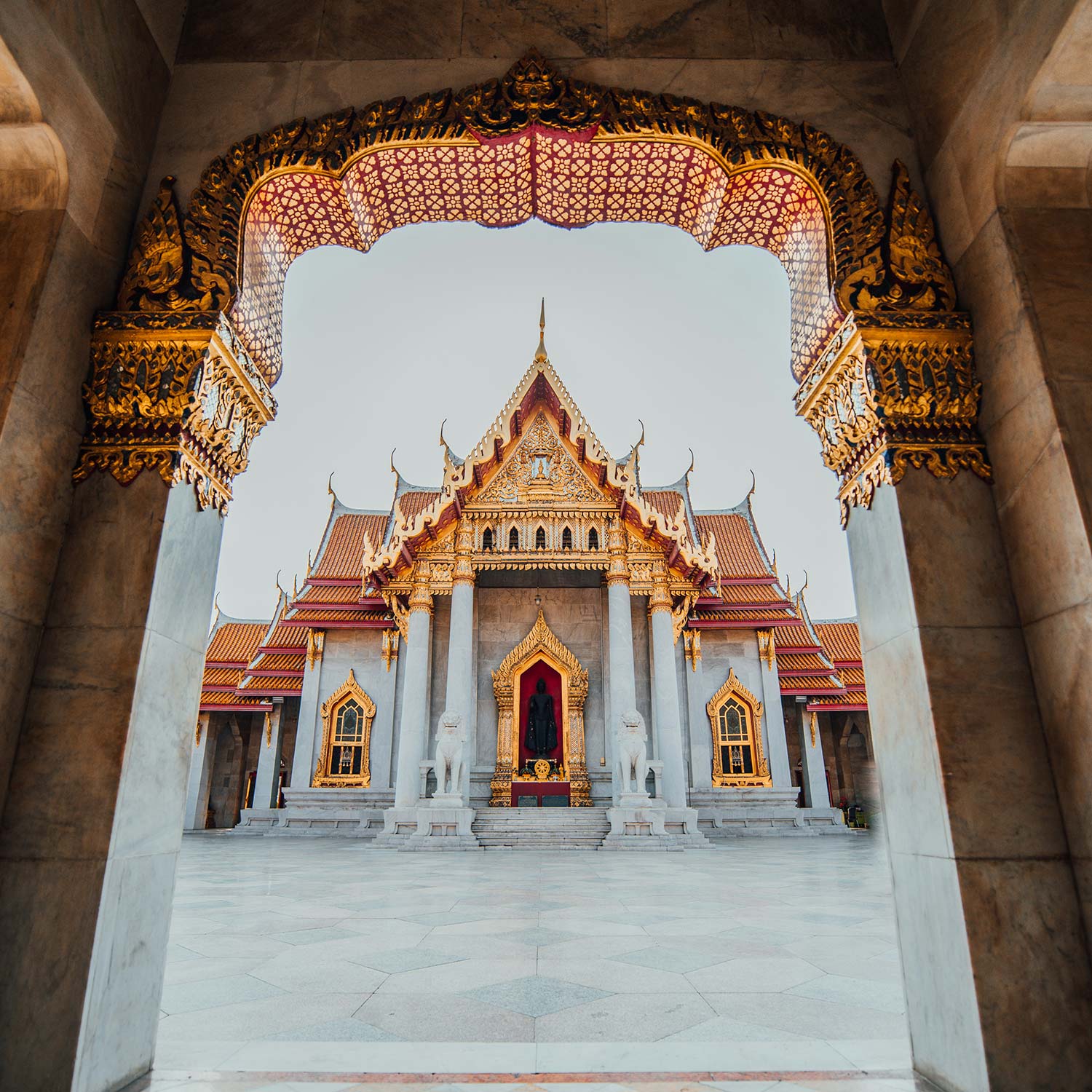
A high wall surrounds a temple complex to distinguish secular and spiritual spaces. The main entrance usually (though not always) faces east, the direction of sunrise and a symbol of birth and beginnings, and the gateway is often guarded by sculptures of singha (mythical lions) seated high on pillars. The main buildings, such as the viharn and ubosot, also face east, which is why it’s a good idea to visit Thai temples in the morning, when the sun sparkles off the glass mosaics and has not yet generated the oppressive heat of the afternoon.
The language of the temple
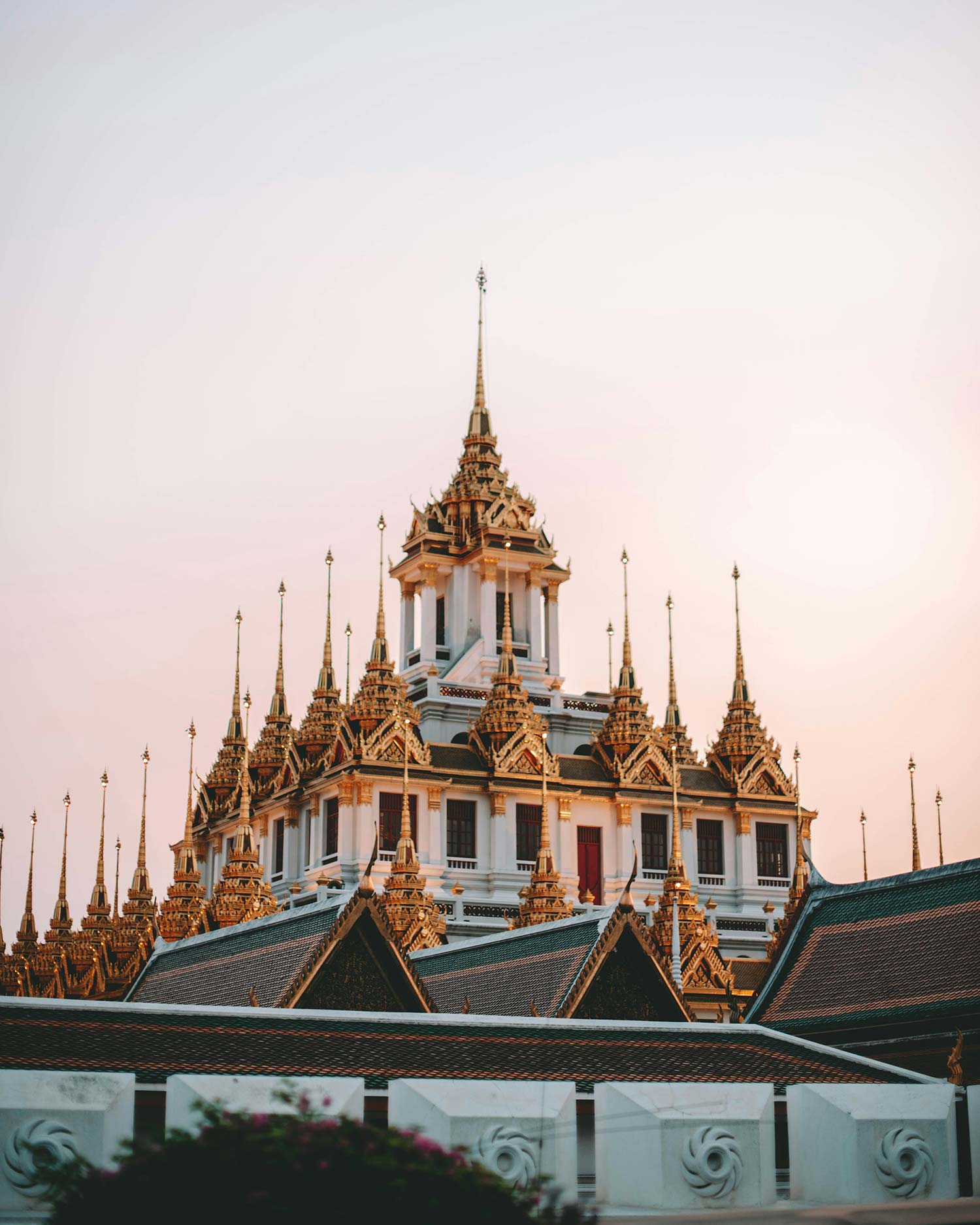
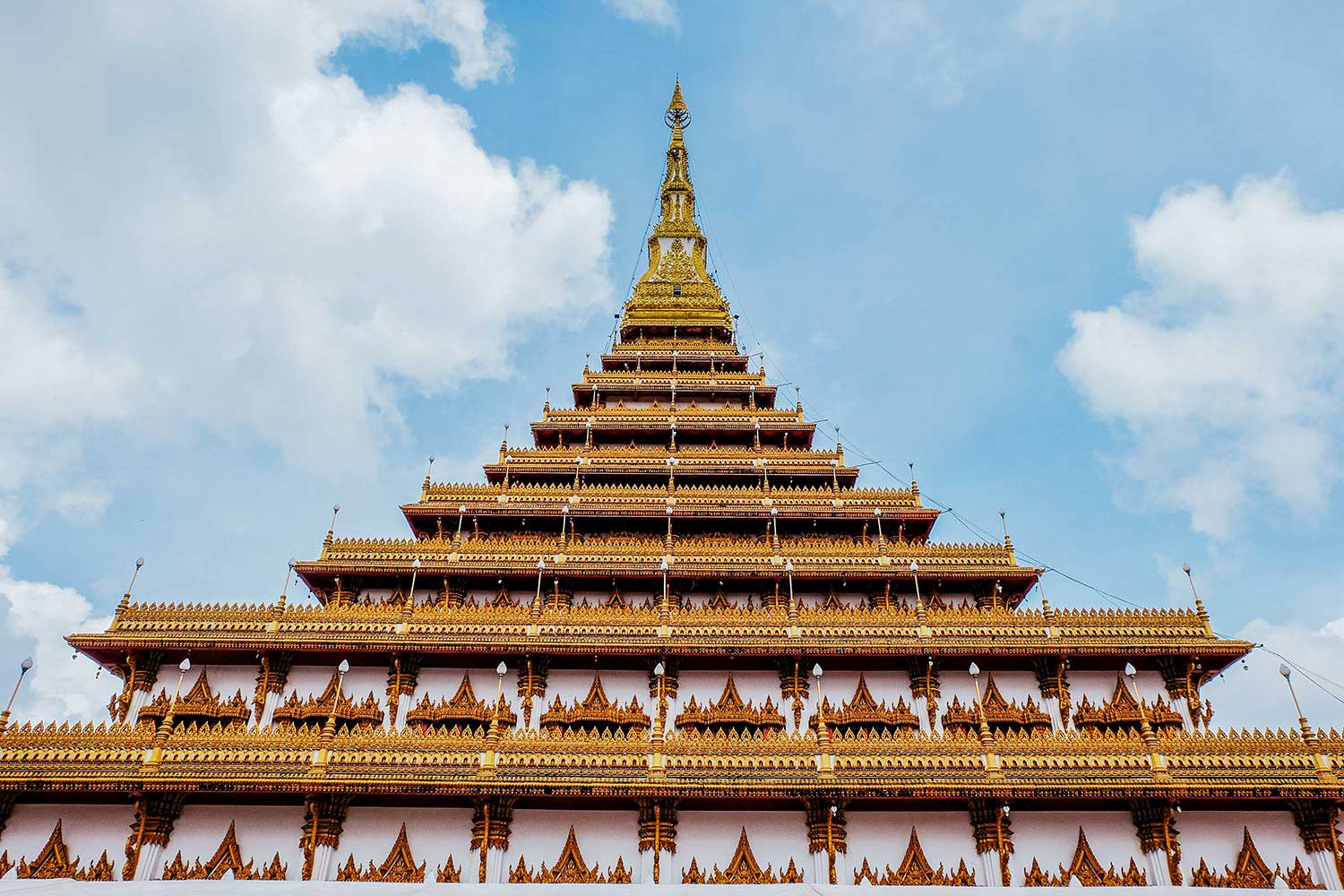
The largest building in most temple compounds is the viharn, or assembly hall, which is used by lay people to worship, listen to sermons, meditate, and consult with resident monks. Most compounds also have an ubosot (sometimes shortened to bot), or ordination hall, which is usually (but not always) smaller than the viharn. It is technically off-limits to women, though this restriction is not always enforced.
Both the viharn and ubosot are usually elaborately decorated inside and out, featuring murals depicting scenes from the Buddha’s life or local culture within, and eye-catching glass mosaics on the gables and eaves outside. However, the focus of both buildings, often brightly illuminated, is the central Buddha image.
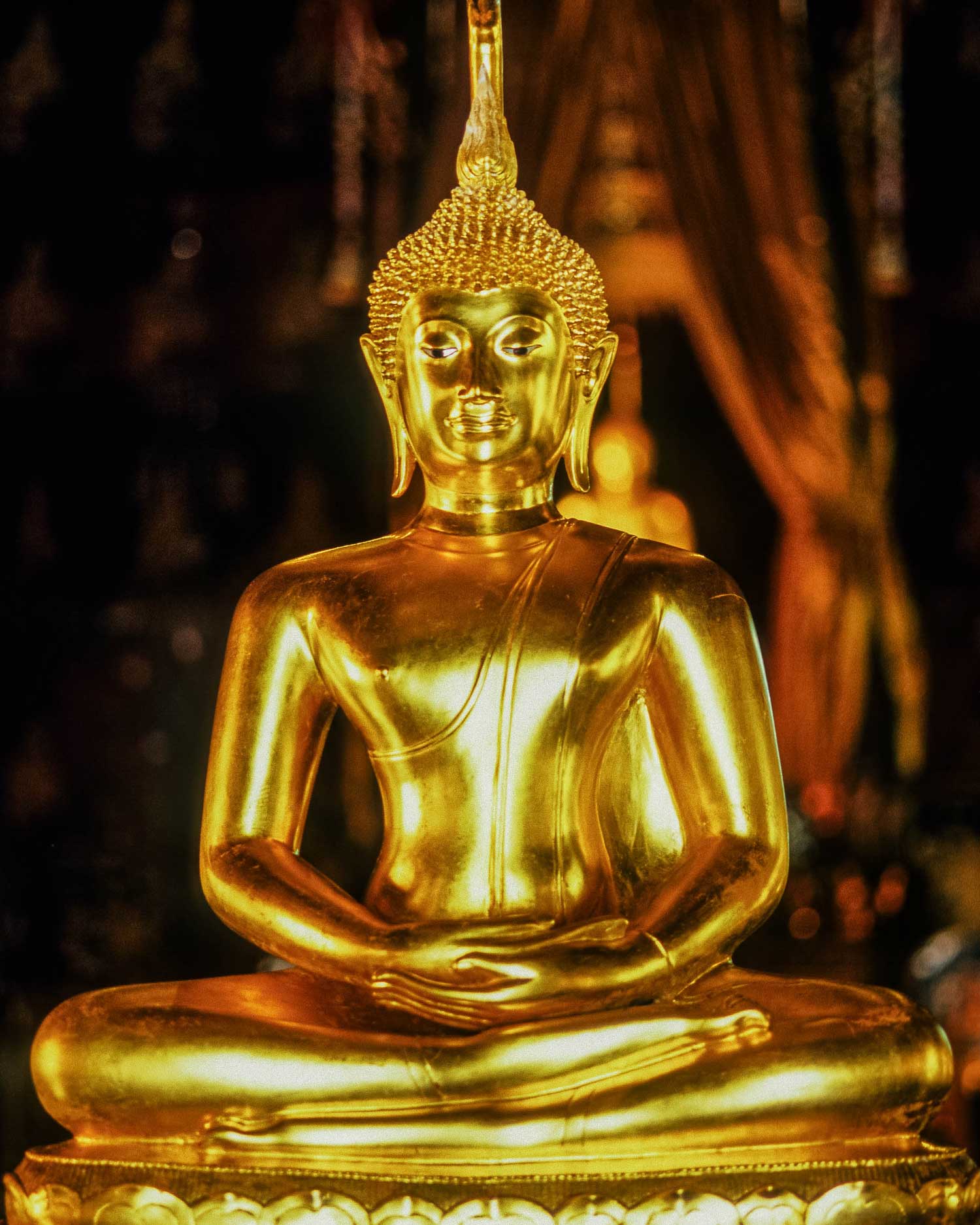
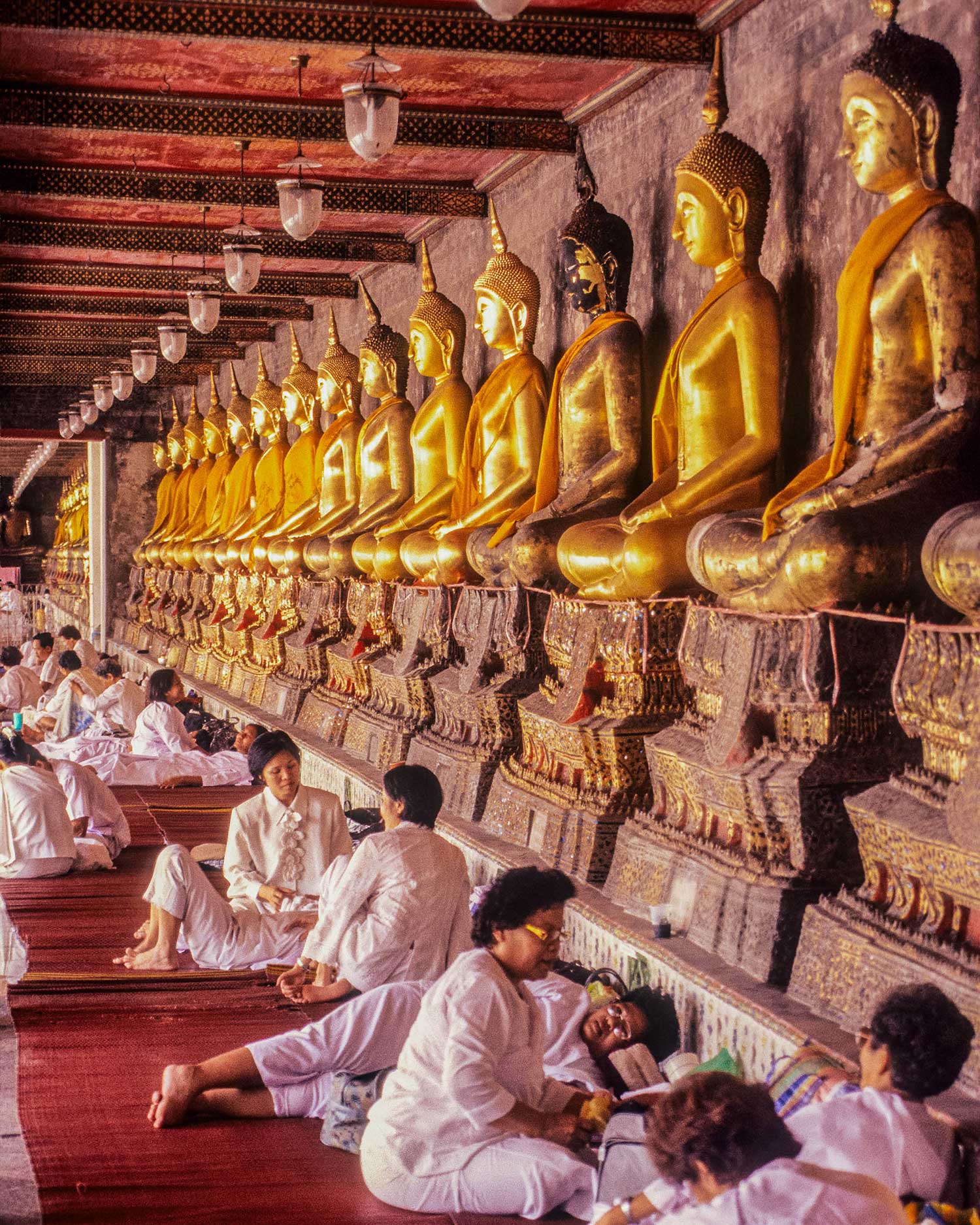
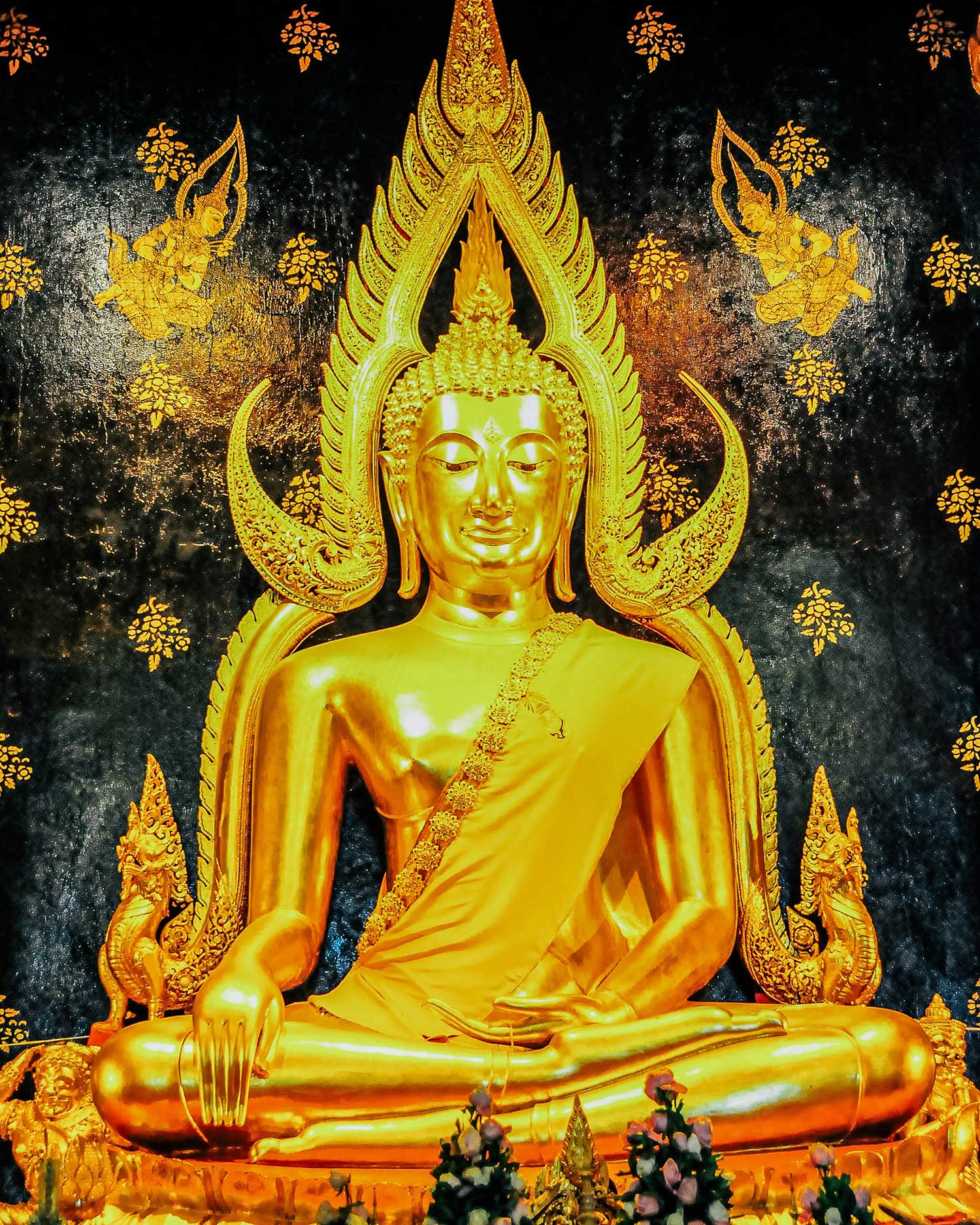
These images, usually made of brass, generally display a blissful expression on the Buddha’s face. For devotees, however, the various gestures of the Buddha’s hands, known as mudras, communicate as much as his expression, conveying blessing, teaching, and the struggle to resist worldly desires.
The most common mudra seen in Thai Buddha images is called the Bhumisparsa mudra, in which the seated Buddha’s left hand rests upturned in his lap, while the right hand bends over the knee to touch the ground. In English, this is termed ‘subduing Mara’ or ‘calling the earth to witness’. The gesture symbolizes the Buddha summoning the Earth Goddess to witness his Enlightenment, which took place beneath a bo tree.
Symbols of enlightenment
A bo (or bodhi) tree (Ficus religiosa) can be seen in most temple compounds, offering welcome shade beneath its heart-shaped leaves. Many of these trees are believed to be descendants of the one under which the Buddha attained Enlightenment in Bodh Gaya, India, and they are often protected by a low wall or fence with a shrine for offerings.
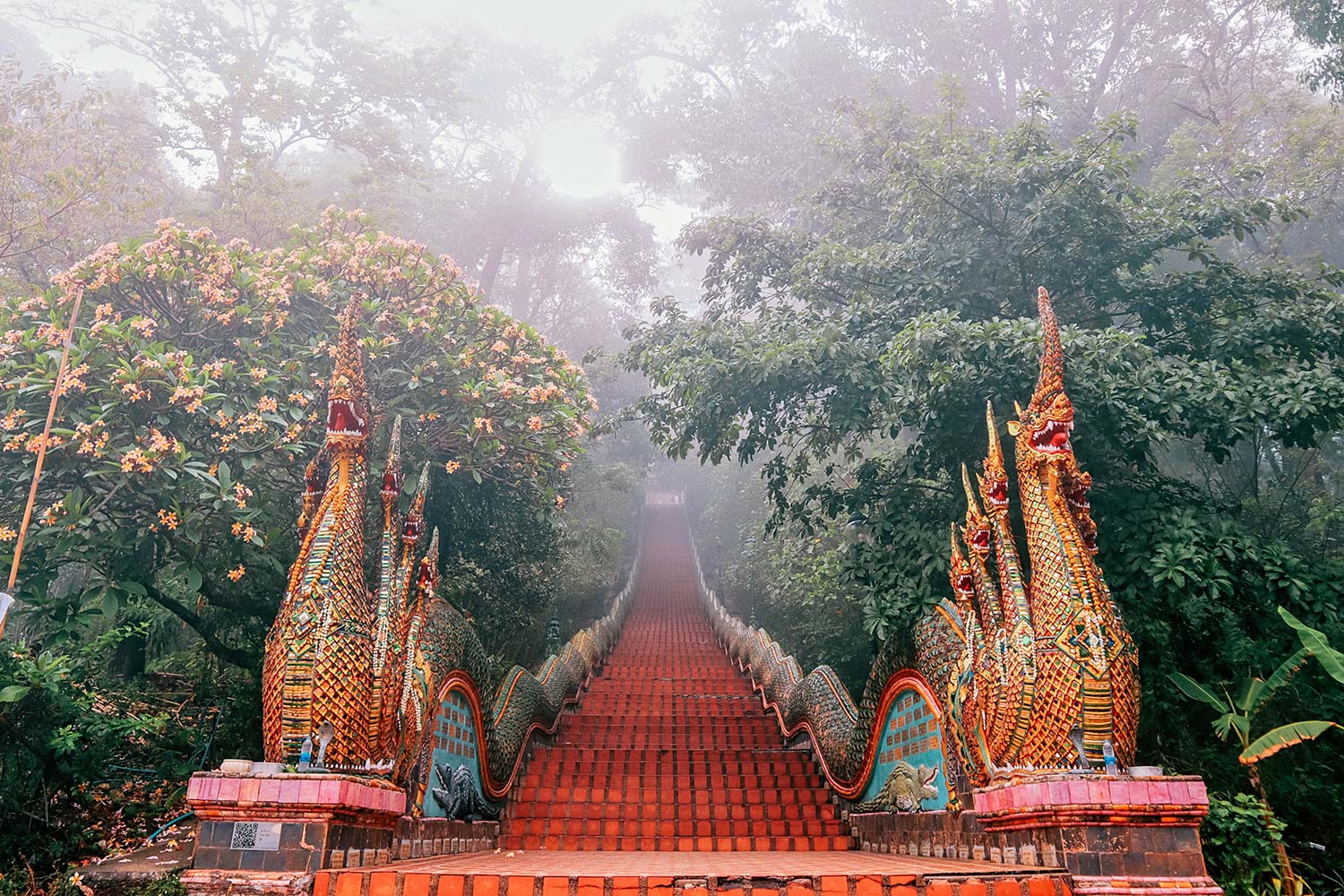
The steeply sloping roofs of the viharn and ubosot, often arranged in multiple tiers, help keep the interiors cool, while the eaves are usually decorated with naga – serpent-like creatures that act as guardians. As with the gables, these are frequently made of reflective glass mosaics, and they look both fearsome and beautiful when caught by the sun’s rays.
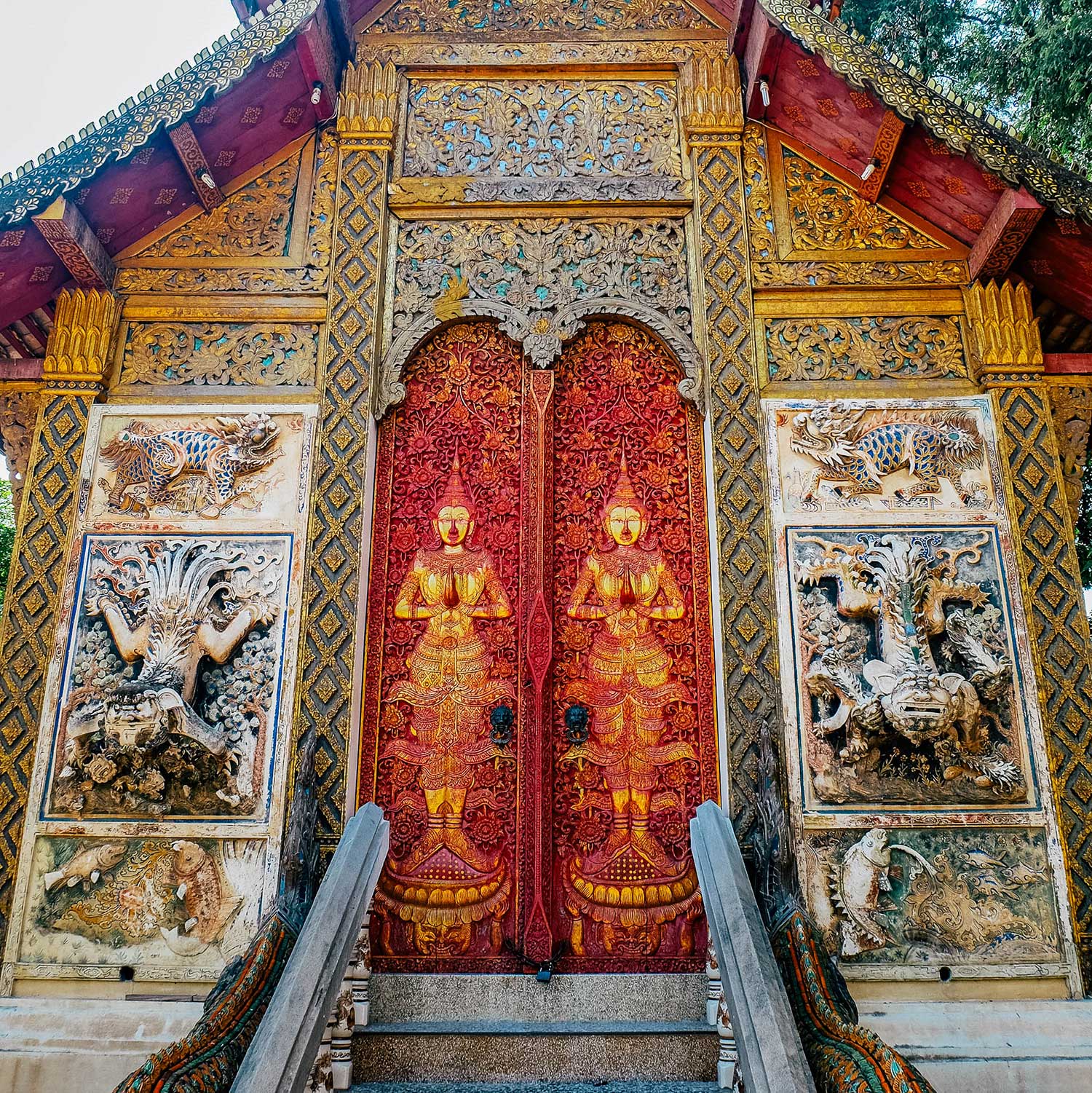
Naga also flank the steps leading to temple doors, while other mythical creatures that adorn Thai temples include thewada, or angels, and garuda, which combine the features of humans and birds. The doors and windows of the viharn and ubosot are often carved with figures performing a wai (palms pressed together in a gesture of respect), or with designs featuring the kanok, a swirling flame-shaped motif found throughout Thailand.
The spiritual heart of the compound
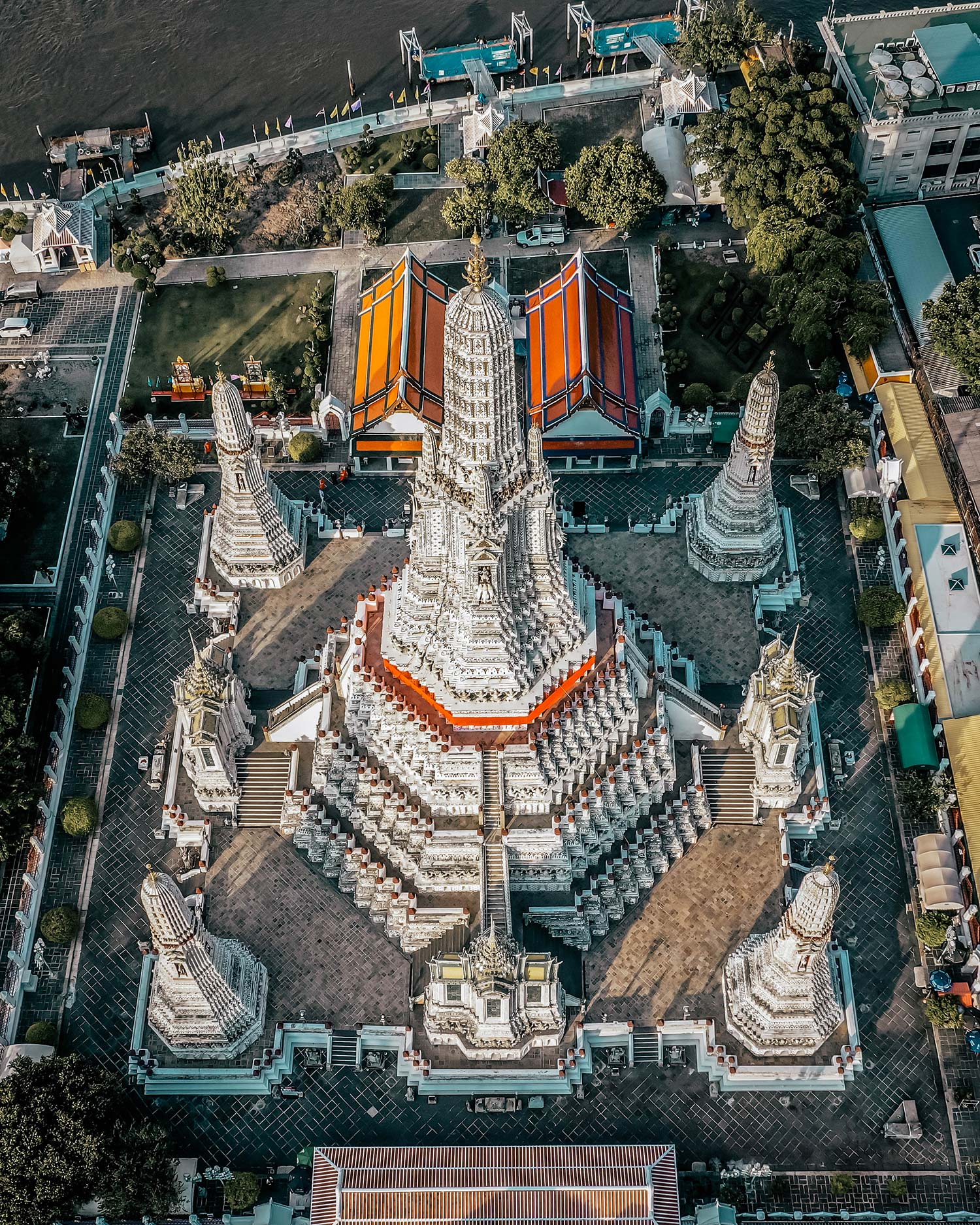
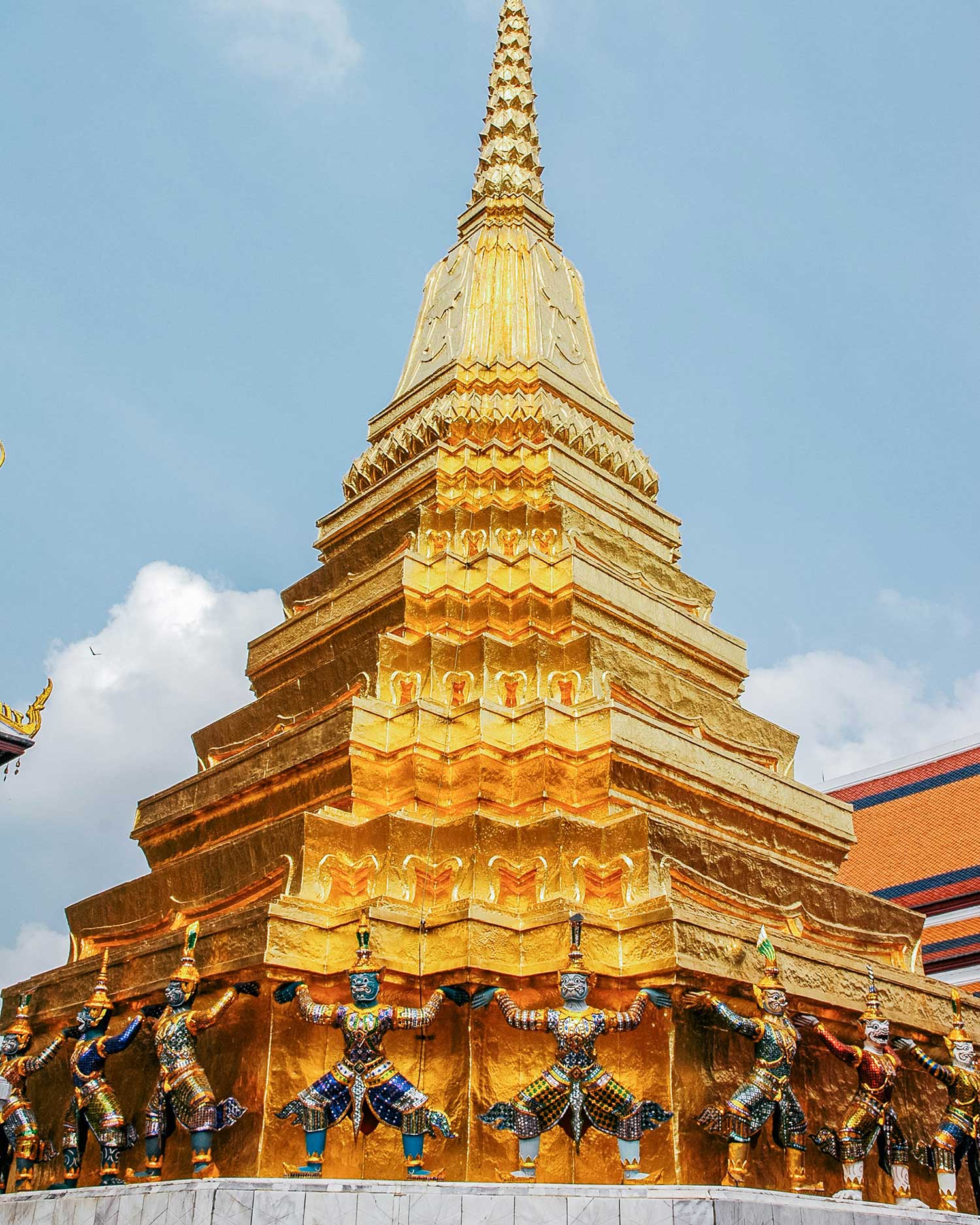
The cone- or bell-shaped chedi, meaning a stupa or pagoda, is the most spiritual element of a temple compound and is usually located directly west of, or behind, the viharn. Covered in copper or bronze plating, or a fresh coat of whitewash, such structures are often claimed to hold a relic of the Buddha himself, though more frequently they contain the ashes of revered monks. Besides cone and bell shapes, chedi can also be pyramidal, hexagonal, or formed as a series of diminishing spheres resembling monks’ alms bowls.
Three times a year, puja celebrations focusing on the Buddha’s life centre around each temple’s chedi. After listening to a sermon by the temple’s abbot, locals join an evening candlelit procession, circumambulating the chedi clockwise three times while clutching flickering candles, lotus buds, and glowing incense as they reaffirm their faith—a touching sight.
The lotus flower grows up out of the mud to form exquisite blooms, showing that it is possible to transcend impure origins. The flame flickering atop a candle symbolizes the Enlightenment or Awakening Buddhists aspire to, while the fragrance of incense represents the virtue that should pervade our actions.
Many temple compounds also house a hor trai, or scripture library, where ancient religious texts written on palm leaves are stored. These libraries are often built on stilts above ponds to protect their contents from termites. Others occupy tall buildings with steep staircases leading to the upper floors.
Some temples also boast a hor rakang, or bell tower, used to summon monks to prayers or meals. Temples without a bell tower often have a line of free-standing bells that visitors ring for good luck.
The monks and their world
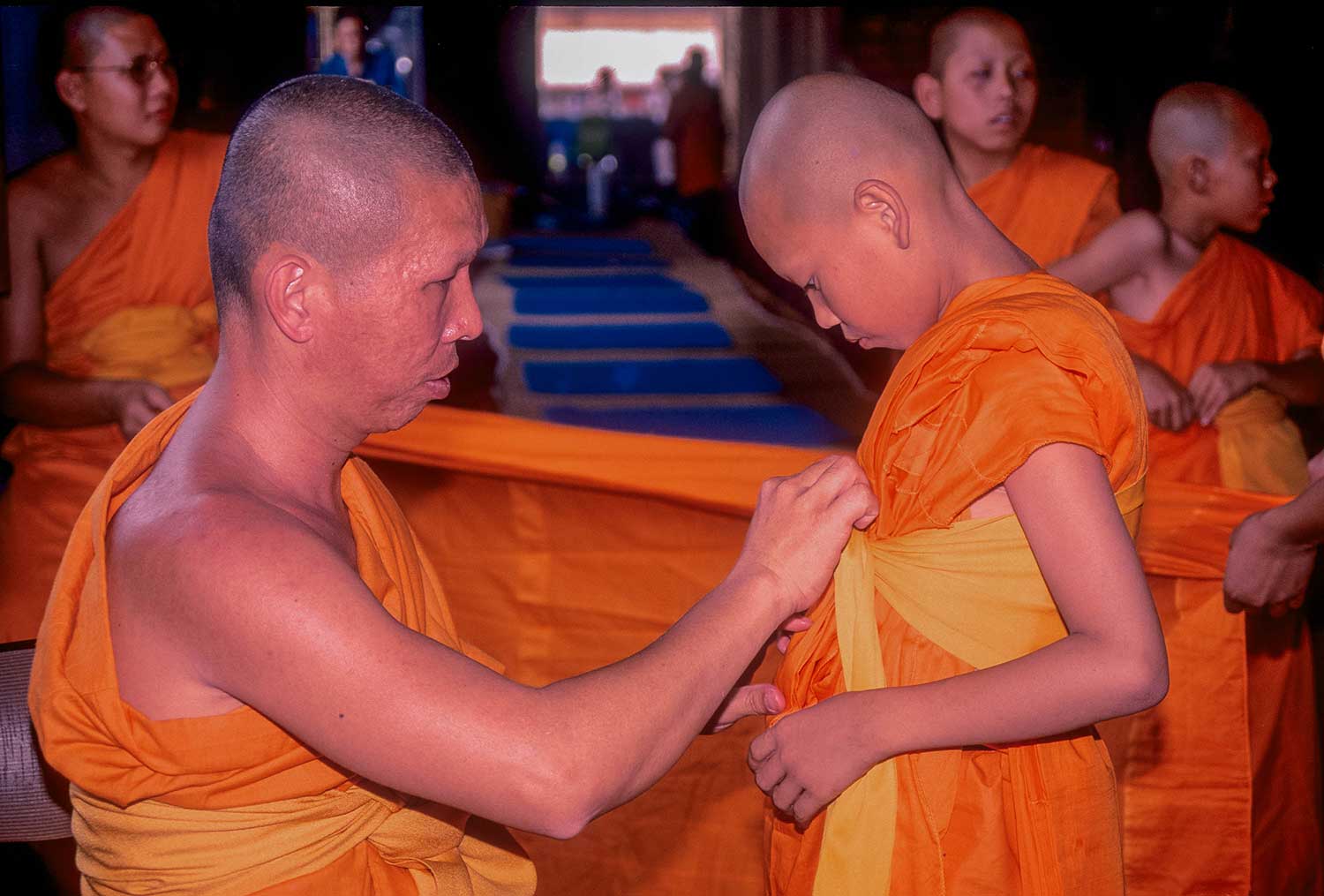
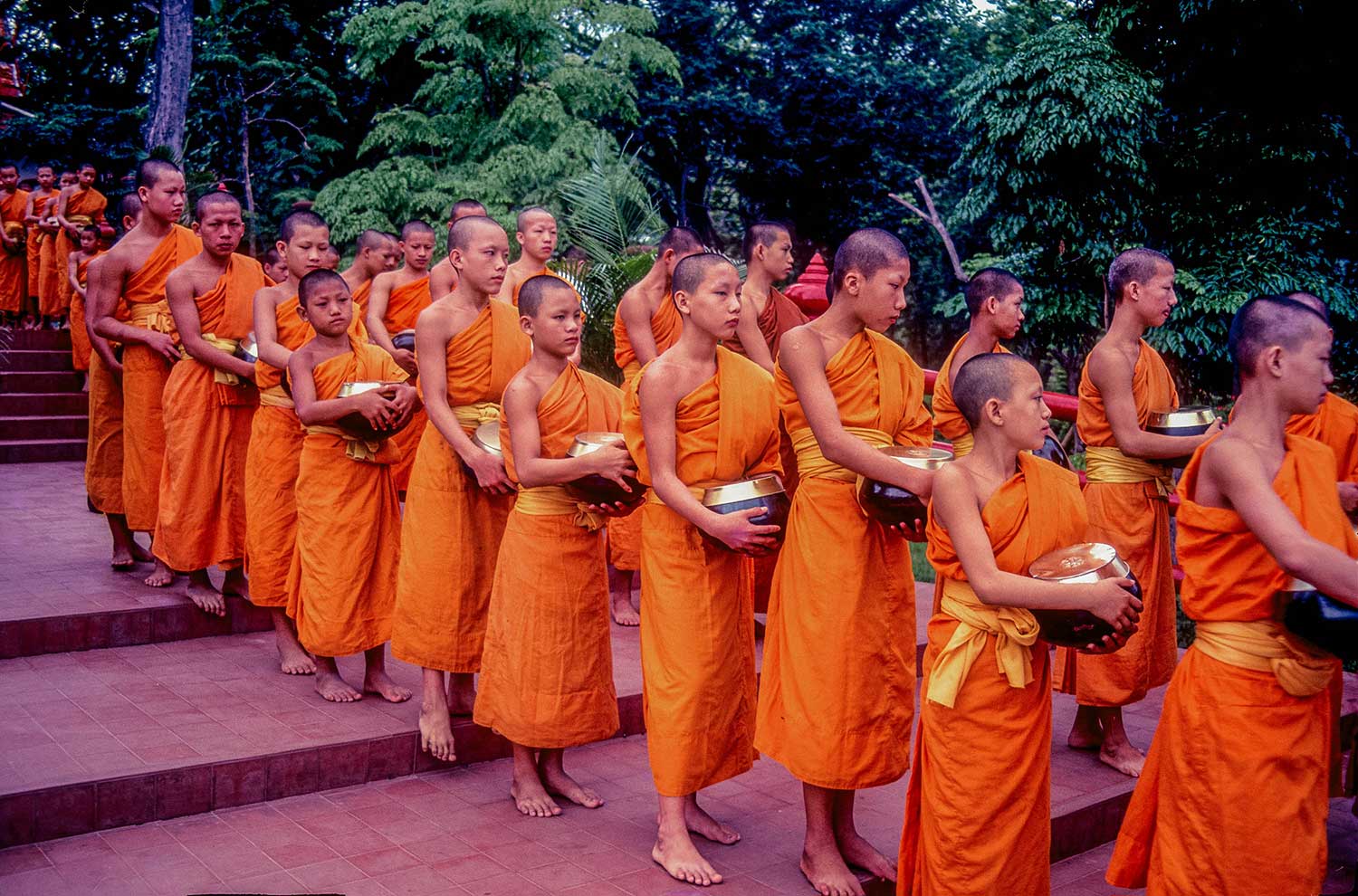
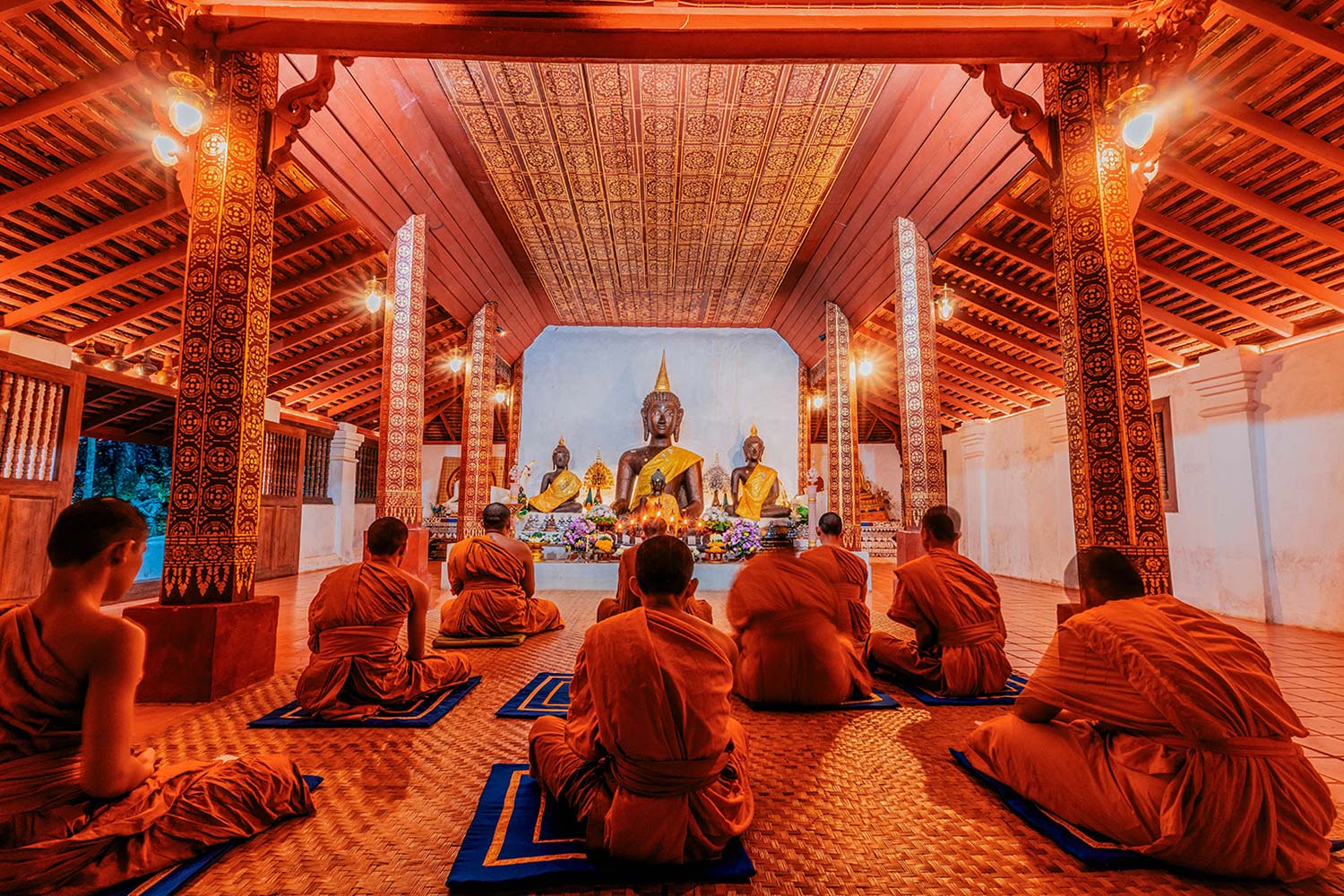
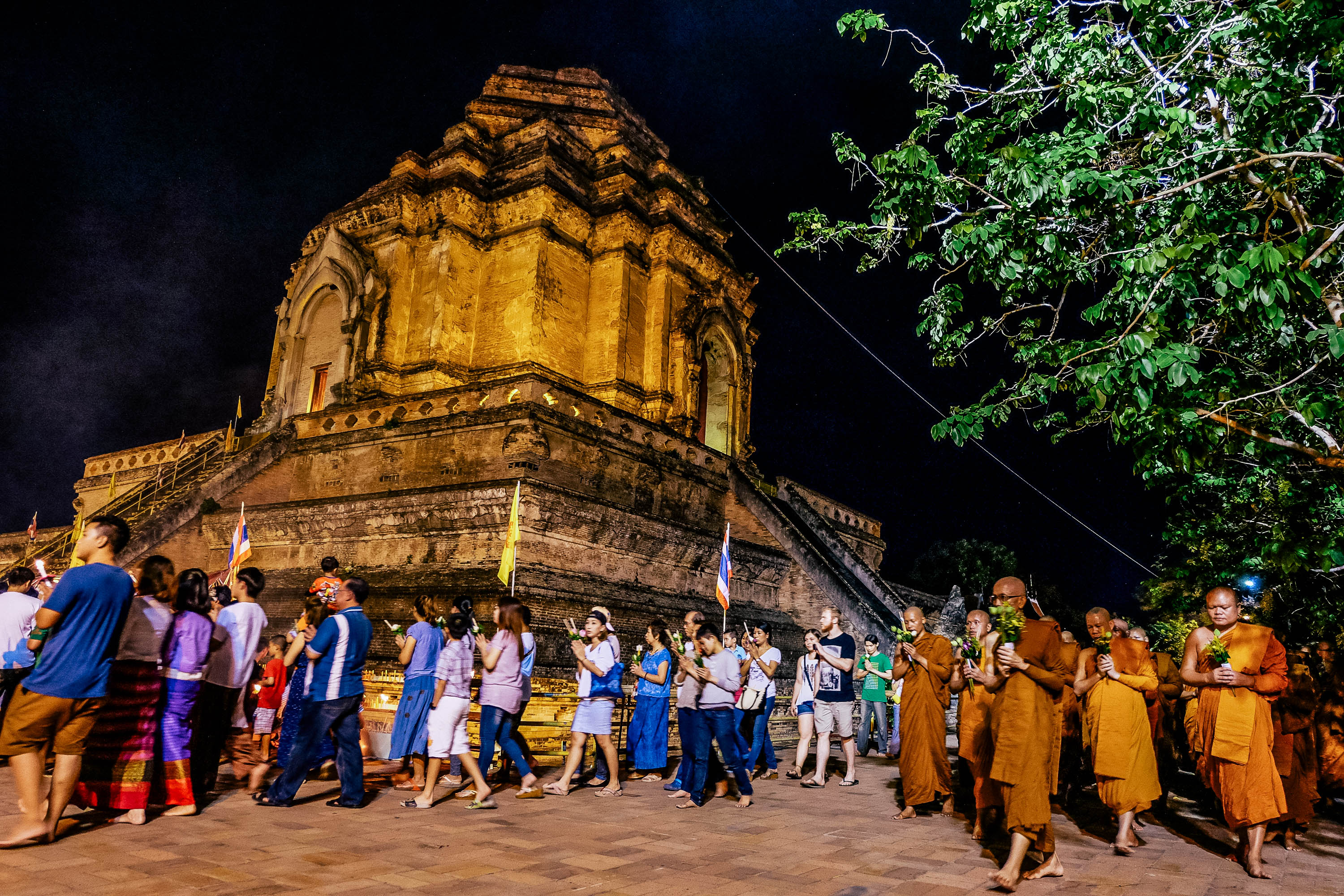
Finally, let’s consider the temple’s inhabitants. The monks’ simple kuti, or living quarters, stand in stark contrast to the lavish adornments of the main temple buildings. They are generally located away from the spiritual centre of the compound, often on stilts in the shade of trees near the boundary wall. Since monks are expected to live frugally, their kuti contain only the essentials—a thin mattress, a table, perhaps a kettle and, if they are lucky, a private bathroom.
With their saffron robes, bare feet, shaved heads and eyebrows, Thai monks seem to epitomize the spiritual life. During the ‘rains retreat’ from July to October, they do not leave the temple unnecessarily, dedicating themselves to meditation practice and the study of Buddhist sutras.
One of Thailand’s most memorable sights is that of lay people kneeling to offer food to monks during the early morning alms round, then receiving a blessing in return. In materialist societies, it is usually the receiver who gives thanks for a gift and the giver who accepts gratitude, humbly or otherwise. Seeing these roles reversed can feel quietly profound.
Many visitors leave a Thai temple compound feeling uplifted, particularly if they have wandered through it at their own pace, attentive to the symbolism around them and open to the lessons within. Some may find it difficult to rationalize this sense of piety, but the explanation is not hard to find: when people act out of mindfulness and humility rather than selfishness and greed, the world’s burdens can seem lighter, if only for a while.