


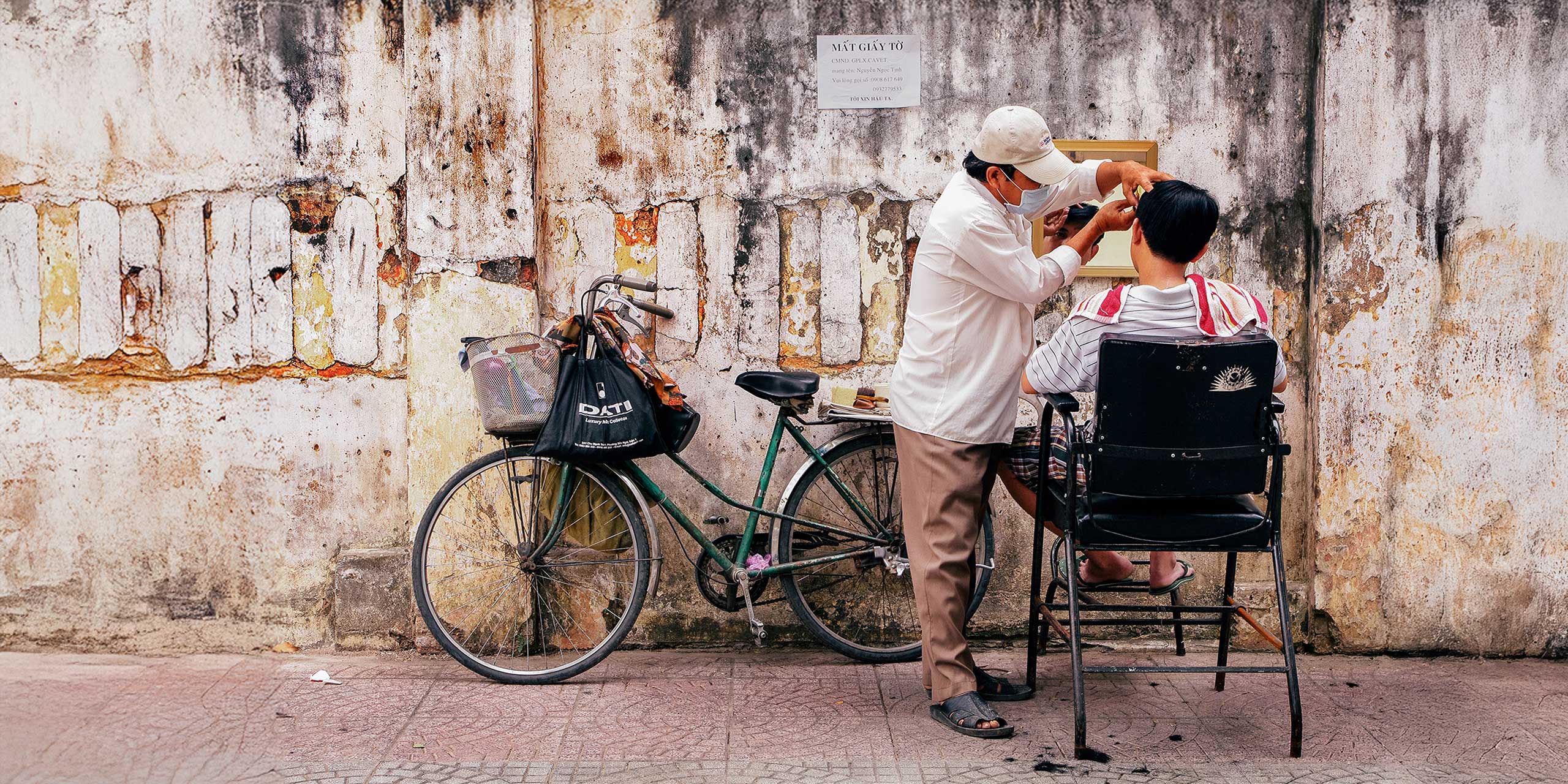
I never knew it was possible to shave an eyelid. But there I was, tilted slightly in a vinyl-backed chair, the air thick with heat and motorbike fumes, as a man I’d met minutes earlier pressed a razor blade against mine. I tried not to blink. I tried not to think of Un Chien Andalou…
I’d sat down expecting a quick haircut. However, street barbers in Ho Chi Minh City (HCMC) don’t really do fast work. Not in the usual sense. There are no cold towels. No soft jazz. No cucumber water. Just a chair, a mirror, and the slow rhythm of routine. It’s part grooming, part ritual—and increasingly rare.
I’d arrived the night before for a short stopover, just enough time to reacquaint myself with a few favorite spots. Sunset happy hour had taken me to Saigon Saigon rooftop bar at The Caravelle, that old haunt of foreign correspondents and war-weary diplomats.

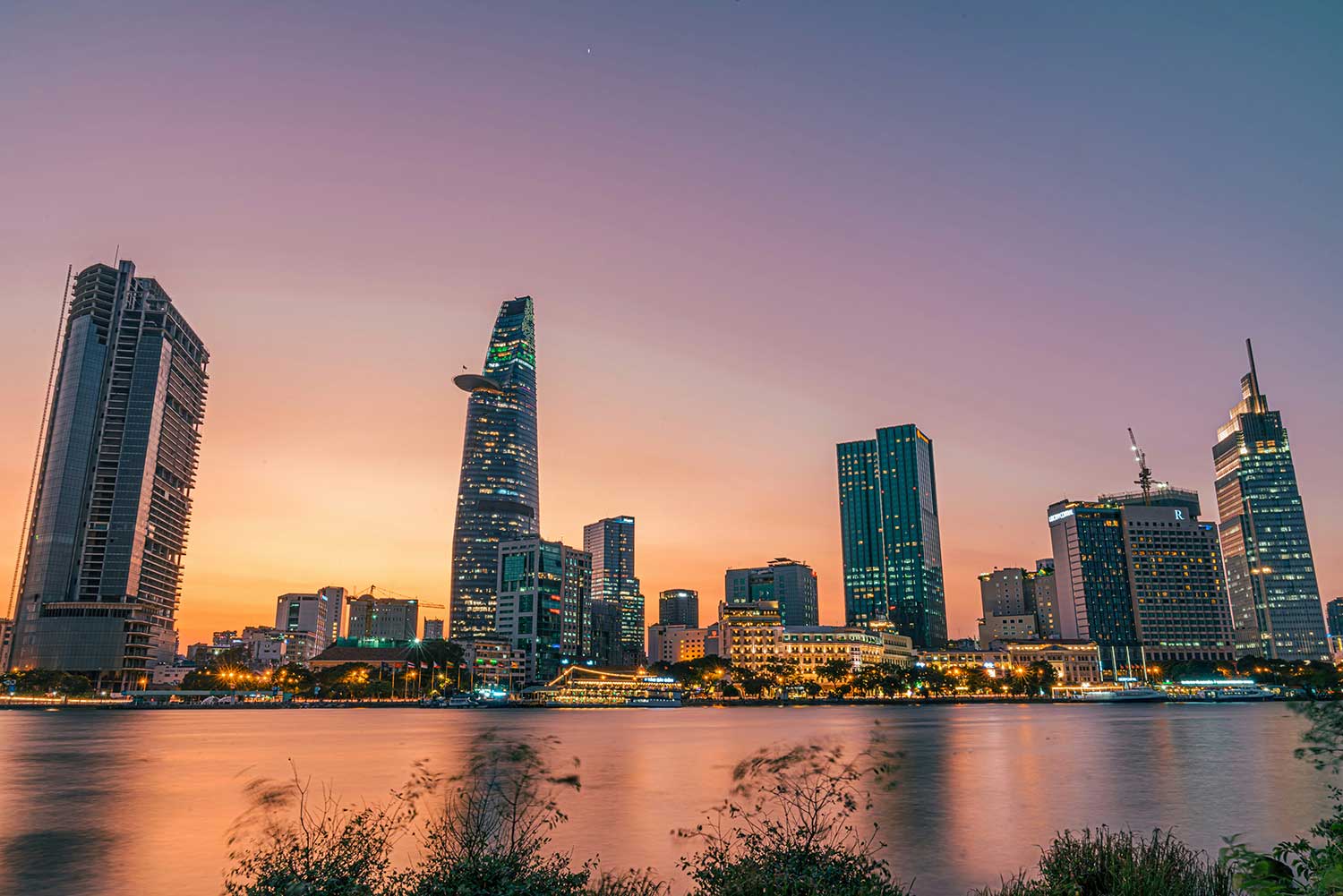
After leaving, I wandered toward a go-to banh mi stall around the corner. Along the way, I passed the Louis Vuitton flagship, all backlit glass and polished chrome, jostling for attention with the yellowed façade of the Opera House across the street.
I turned down a side road where I remembered drinking cheap beer on red plastic stools years ago. It’s a bubble tea shop now, with air conditioning and neon lighting. The bia hoi crowd is thinning. The smoke, the laughter, the low-slung chatter of the city seems harder to find these days.
The banh mi stall was gone too. Pizza and a glass of wine instead, then.
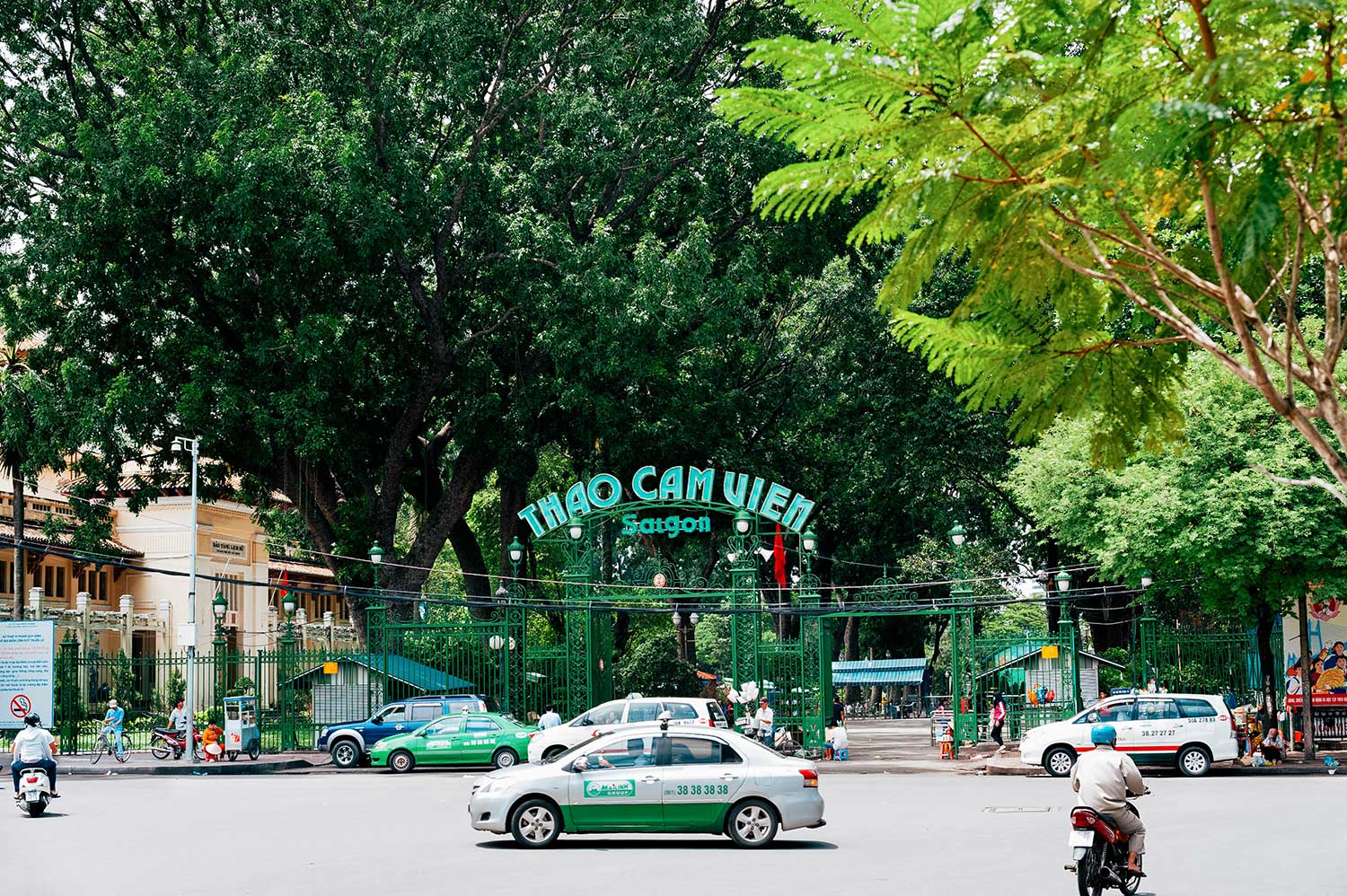
The next morning, seeking something slow in the already fierce July sun, I set out toward the Saigon Zoo and Botanical Gardens. I’d read that Nguyen Binh Khiem Street, which runs along the edge of the grounds, had once been lined with street barbers. Men who’ve spent decades cutting hair under trees and tarpaulin.
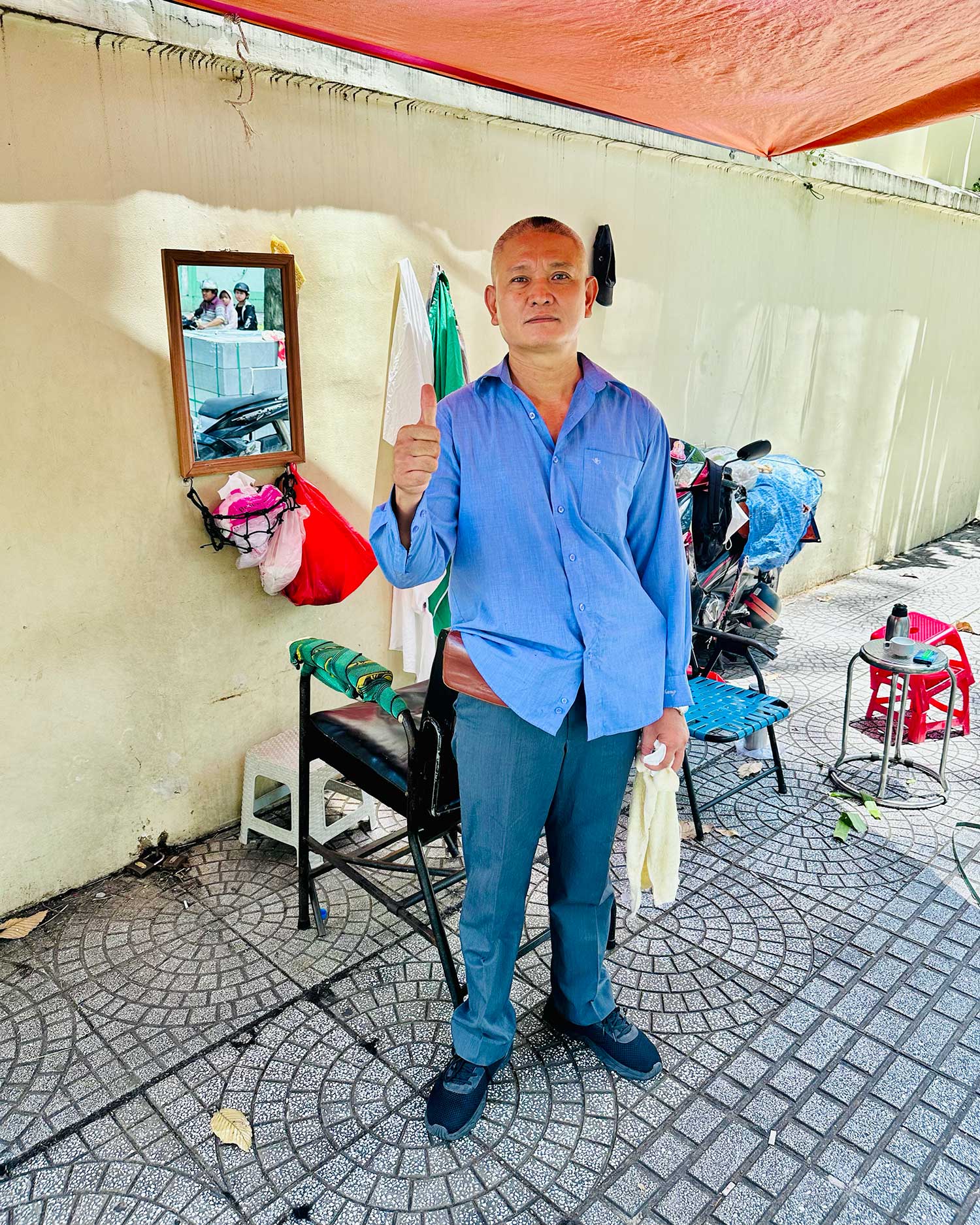
At first glance, the sidewalk was bare. Clean. A little too orderly. But a few hundred meters on, heading southeast from the main gate, a streak of faded orange canvas caught the light. Beneath it, tucked against the wall, was a row of low plastic stools, a mirror, a barber’s chair, and two men quietly smoking.
The older of the two, late fifties, trim haircut, pale blue shirt, looked up. A moment of faint confusion passed between them before he stood, smiled, and brushed off his trousers. His name, I would later learn, was Phuong.
His friend offered me a cigarette and then disappeared, leaving Phuong to his craft. The stereo behind him crackled, pushing out a slow Vietnamese ballad through bursts of static. I gestured toward my hair and mimed trimming my beard. He nodded, draped a sheet around my shoulders, and clicked the clippers into life.
The next 30 minutes were a kind of choreography. Hair first, trimmed lightly around the sides. Then the beard, shaped with care and a few decisive tugs. Then a rustle. A blade. Phuong slipped a new disposable razor into a battered steel handle, dabbed water on a cotton pad, and motioned for me to tilt my chin.
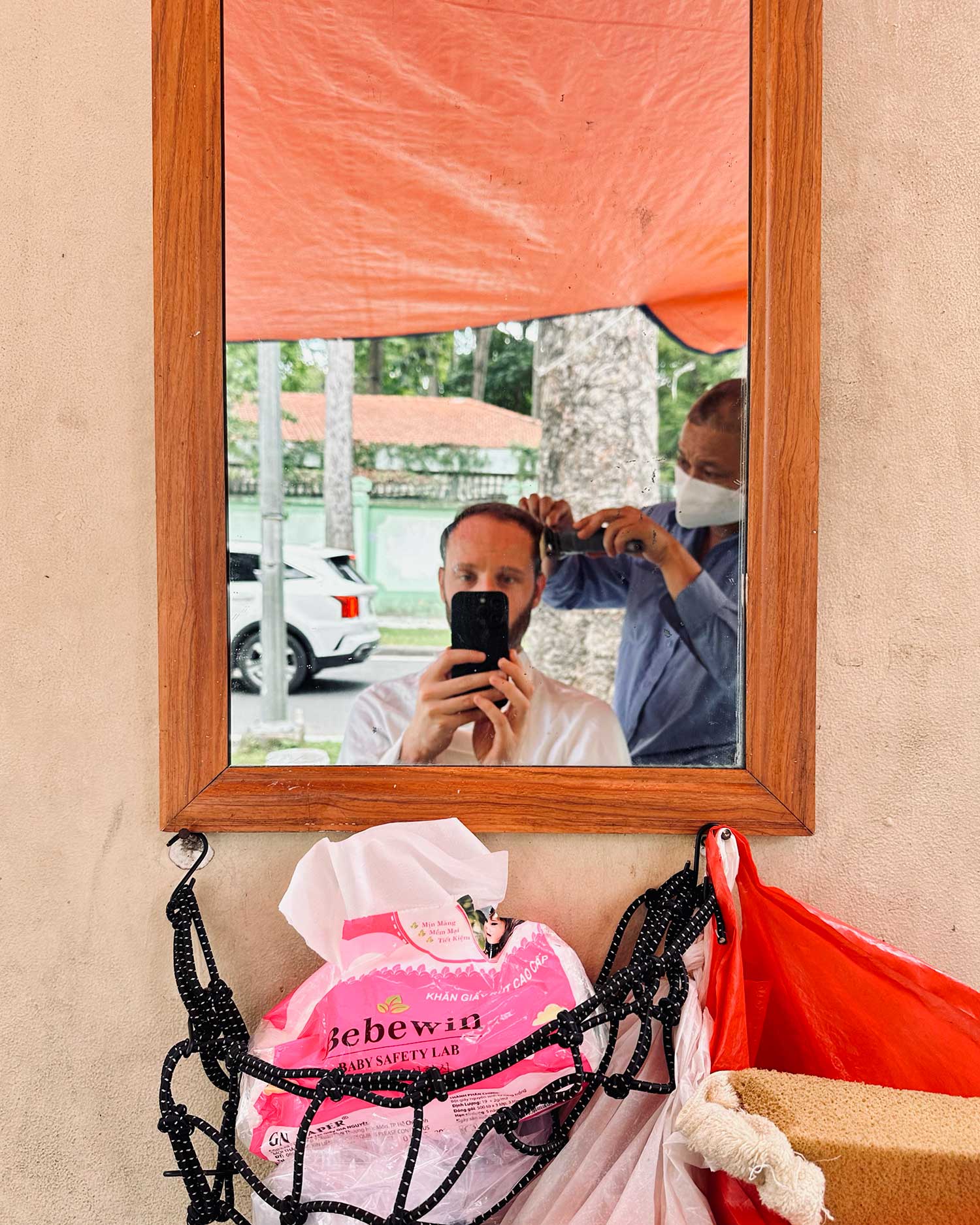
He shaved my cheeks and forehead. Then the tip of my nose. And—to my astonishment—eyelids. Phuong did it deftly, holding my head steady with one hand while the other danced across my eye. I held my breath.
He finished with an invigorating neck-and-scalp massage that almost dislocated my jaw. I ran my tongue around my gums to check for missing teeth. A few thwacks to the back of the head and we were done.
Afterwards, with help from Google Translate, we chatted under the shade of a nearby tamarind tree. Phuong told me he’s been cutting hair on this same stretch of pavement for more than 20 years. “Before,” he gestured, sweeping his arm across the sidewalk, “many barbers. Now? Only a few.”
Even a decade ago, the city pavements, especially in District 1, were home to countless sidewalk barbers. Most were veterans of the trade with modest kits: a mirror, clippers, a pair of scissors, a chair and maybe a stool or two for waiting customers. But their presence was social, almost neighborhood glue. These were scenes that once defined the character of HCMC’s street life.
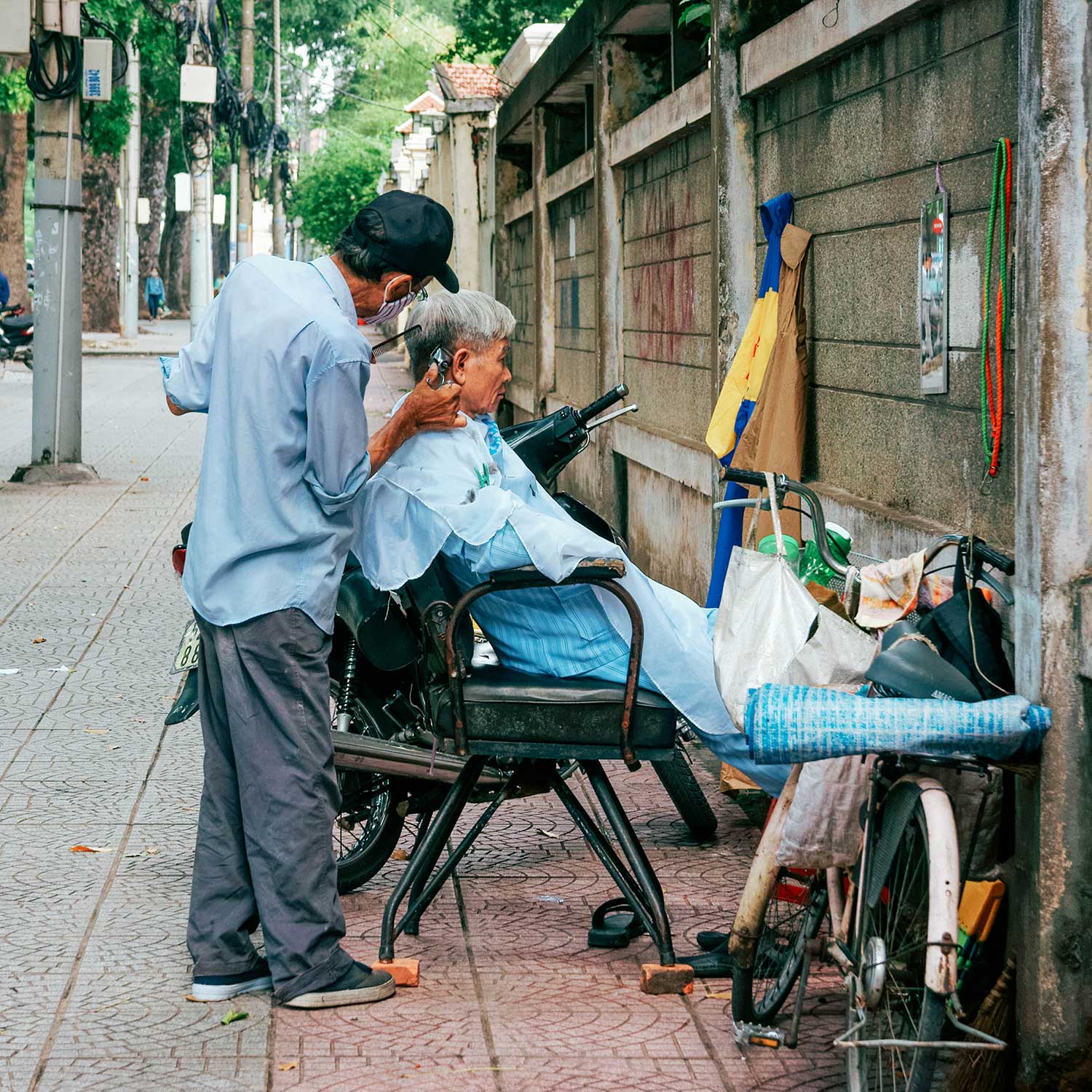
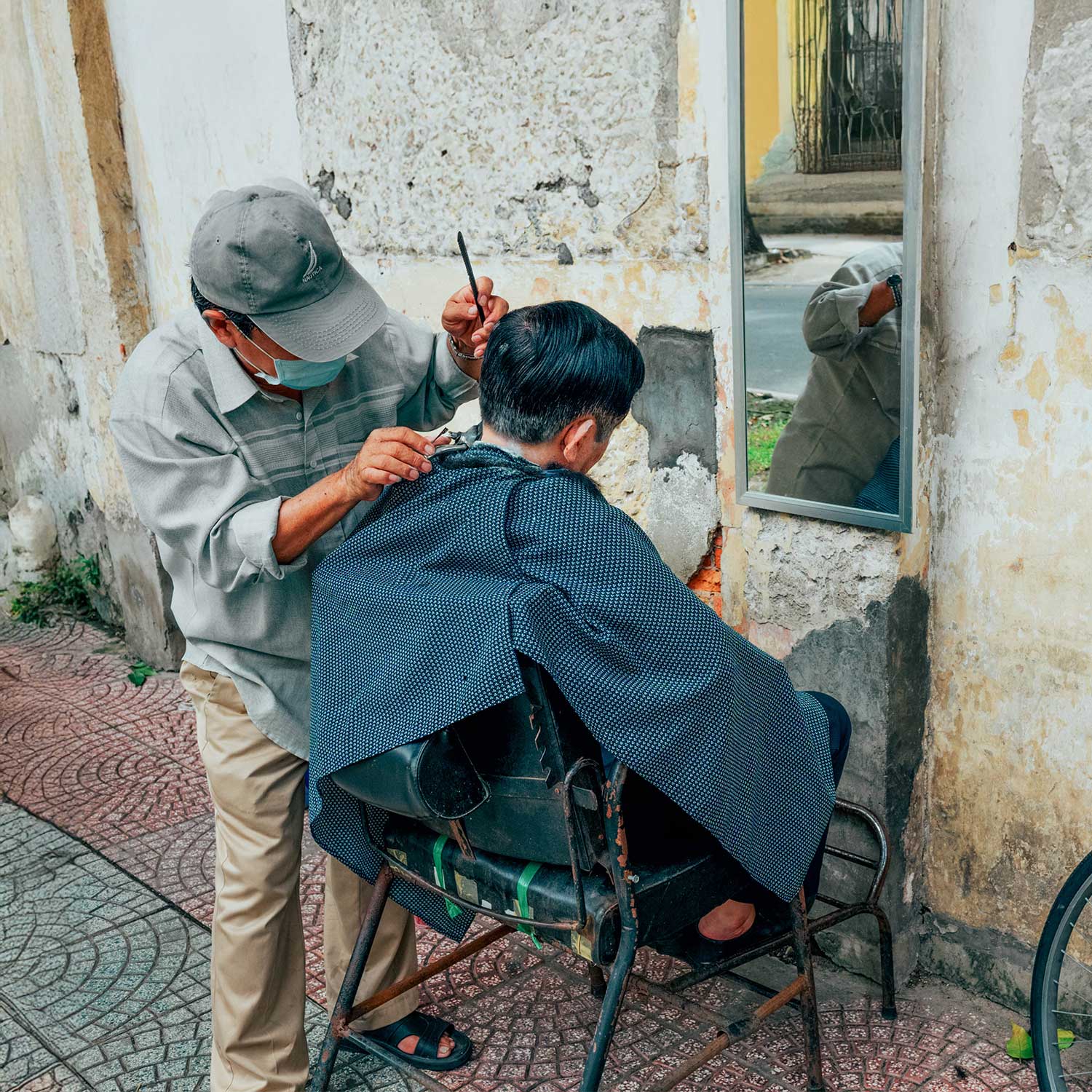
Today, they’re increasingly hard to find. Since 2017, a sweeping sidewalk-clearing campaign has pushed many informal businesses off the streets. The city, in its rush toward modernity, has tried to clean up its image, sometimes quite literally. District officials once talked about turning HCMC into a “Little Singapore.” Whether that meant more order or less soul depends on who you ask.
Phuong said most barbers don’t work full days anymore. “Too hot,” he shrugged. “Too quiet.” He didn’t seem bitter. Just realistic. The city is changing. Maybe too fast.
As I walked back toward the bustle of modern-day HCMC, running my fingers over my newly manicured jawline, the sidewalk scene felt even more evocative. An orange canopy strung between trees. A tatty mirror fastened to a yellow wall. An ageing man in a pressed shirt, still offering haircuts with the same tools he’s used for decades.
It’s easy to romanticize the past. But what makes places like Phuong’s barber chair so compelling isn’t nostalgia. It’s resistance. The quiet kind. The kind that doesn’t fight the towers but stays put in their shadow. A little off the map. Just a few hundred meters from the zoo gates.
And for now, at least, still open for a close shave.