


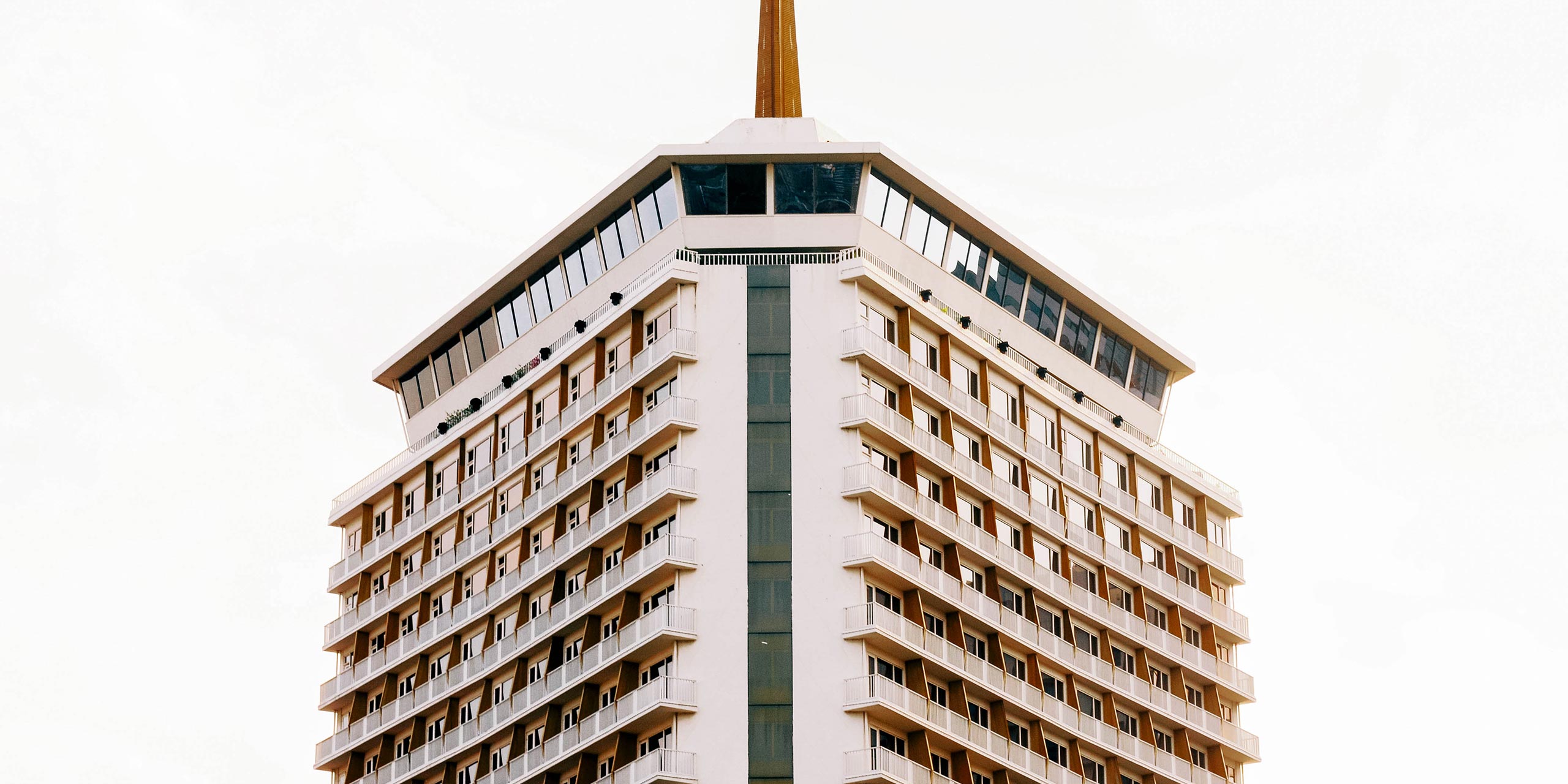
For the past six months or so, I’ve been tramping Bangkok‘s sun-beaten sidewalks most mornings, mainly to get my young daughter out of the house. Long, slow, sweaty loops through Sathorn, Silom and the streets near the river, usually with no real destination in mind.
I’ve lived in the Thai capital for a decade and a half and can confidently say that aimlessly walking its streets has never once been my idea of fun. Even a quick trip to the 7-Eleven can feel like a low-level endurance event at times.
Then I received a copy of Walter Koditek’s Bangkok Modern: Architecture of the 1950s–1970s, a hefty, obsessive survey of the city’s postwar modernist buildings and the stories behind them.
In it, he writes that he walked about 250 kilometers to capture and record these architectural marvels. So, I checked my phone, and it turned out I had covered roughly the same distance.
It felt faintly absurd. Koditek had walked with intent, camera in hand, recording Bangkok’s overlooked modernist landmarks. I, meanwhile, was pushing a stroller over treacherous paving slabs, through unrelenting heat and past khlongs (canals) fragrant enough to discourage lingering.
But along the way, guided partly by Koditek, I started seeing another Bangkok: modest apartment blocks, old offices, schools, banks and civic buildings from the 1950s, ’60s and ’70s that I had passed for years without ever really noticing.
The Thai capital is usually viewed through its oldest and newest forms. Gilded temple roofs and royal palaces. The charm of low-rise timber neighborhoods on the riverside. Glass towers, shopping malls and the endless hum of construction. Between them sits a different city of mid-century buildings, often half-hidden above shopfronts or beside flyovers, blurred by trees, signs, wires and air-conditioning units.
Koditek gives that Bangkok a map. Part coffee-table object, part field guide, his book runs to more than 500 pages and gathers more than 300 examples. Even as he compiled it, major buildings from the period were disappearing, including Scala Cinema and the original Dusit Thani hotel.
Yet the book is just as compelling when it leaves the landmarks behind and turns to everyday Bangkok: bank branches, apartment blocks, schools and old hotels half-lost in the city’s clamor. These buildings were part of a postwar boom linked to the US military presence during the Cold War, foreign aid, and the economic expansion of the 1970s.
Behind them was a generation of Thai architects returning from the United States and Europe with modernist ideals. In Bangkok, those ideas had to contend with the harsher realities of fierce sun, humid air, monsoon rain, and a city changing at speed.
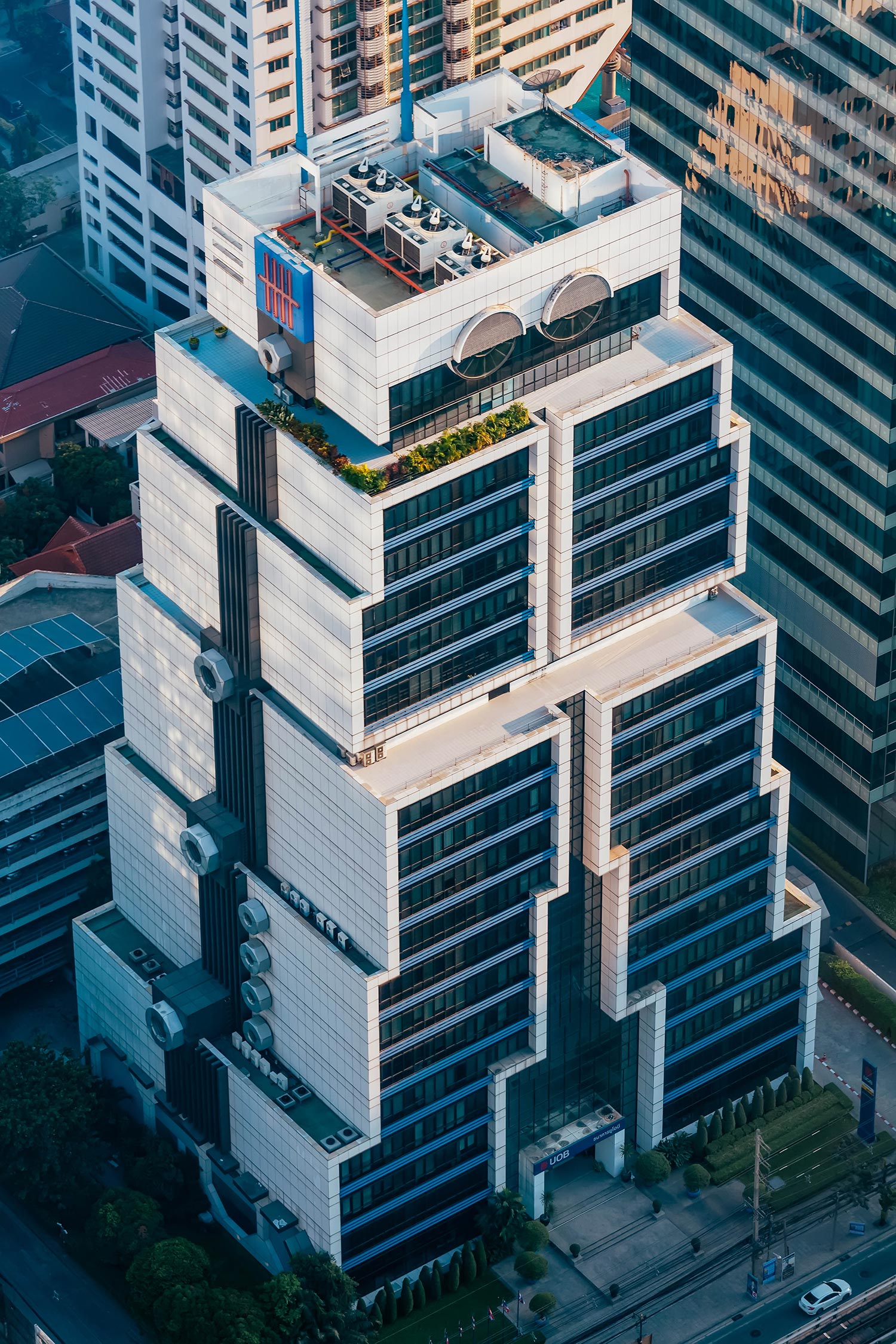
What emerged, Koditek argues, was something distinctly Thai, with “an element of playfulness in architecture.” Traditional motifs recast in concrete. Sun screens turned into decorative patterns. Buildings conceived with outright wit, such as Sumet Jumsai’s Robot Building. More often, though, the playfulness was less obvious. A grille, balcony, stairwell or shaded entrance might begin as a practical response to heat and rain, then become the detail that gives a building its character.
Many of those nuances now look a little worse for wear, which is part of their appeal. I’ve always had a soft spot for the bits of cities that seem to have escaped the march of progress. When I was a kid, that meant scrubland behind houses, a strip of woodland beside a road, an old graveyard near a factory. I doubt I thought of them as anything more than decent places to disappear for a while. But the feeling stayed with me.
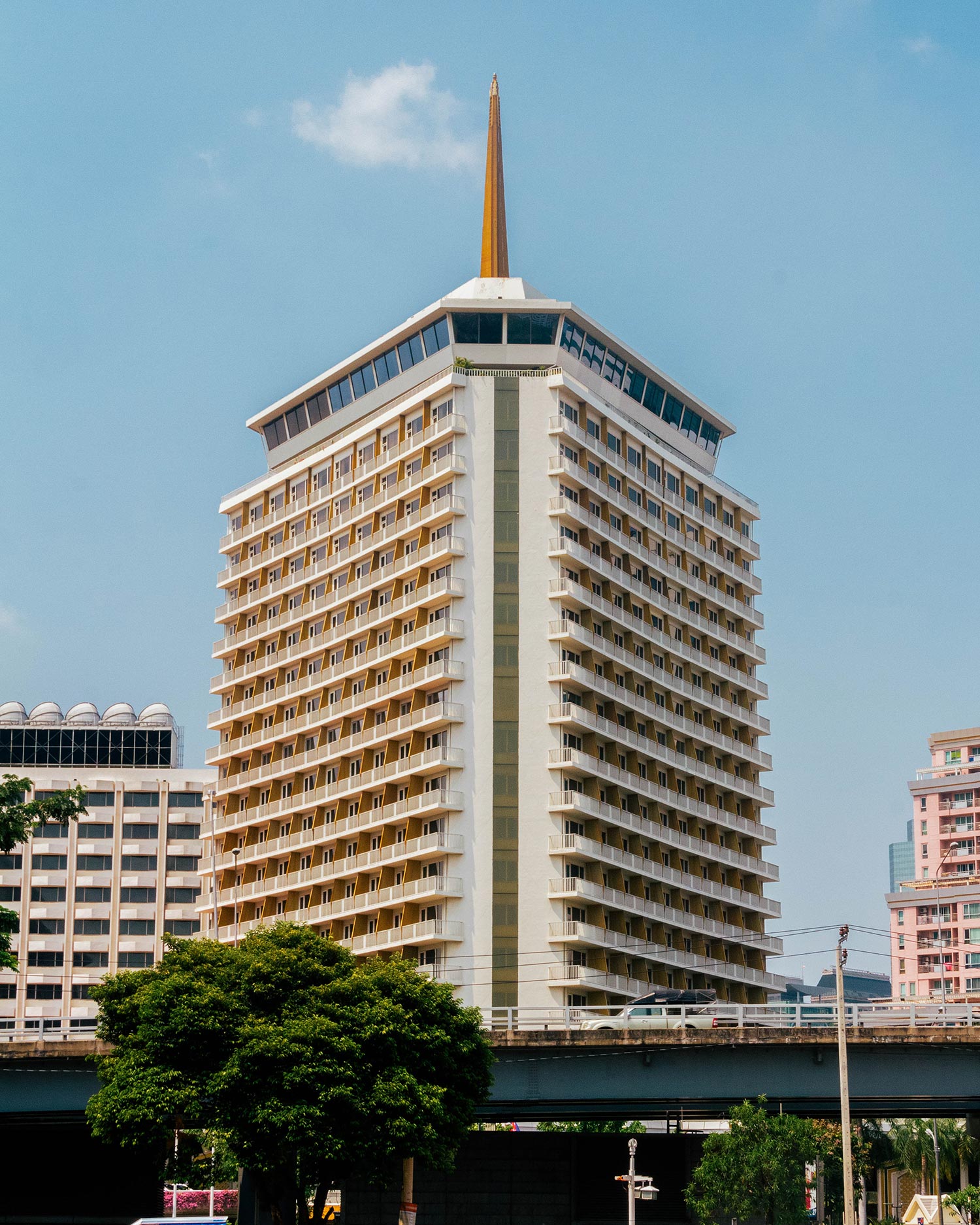
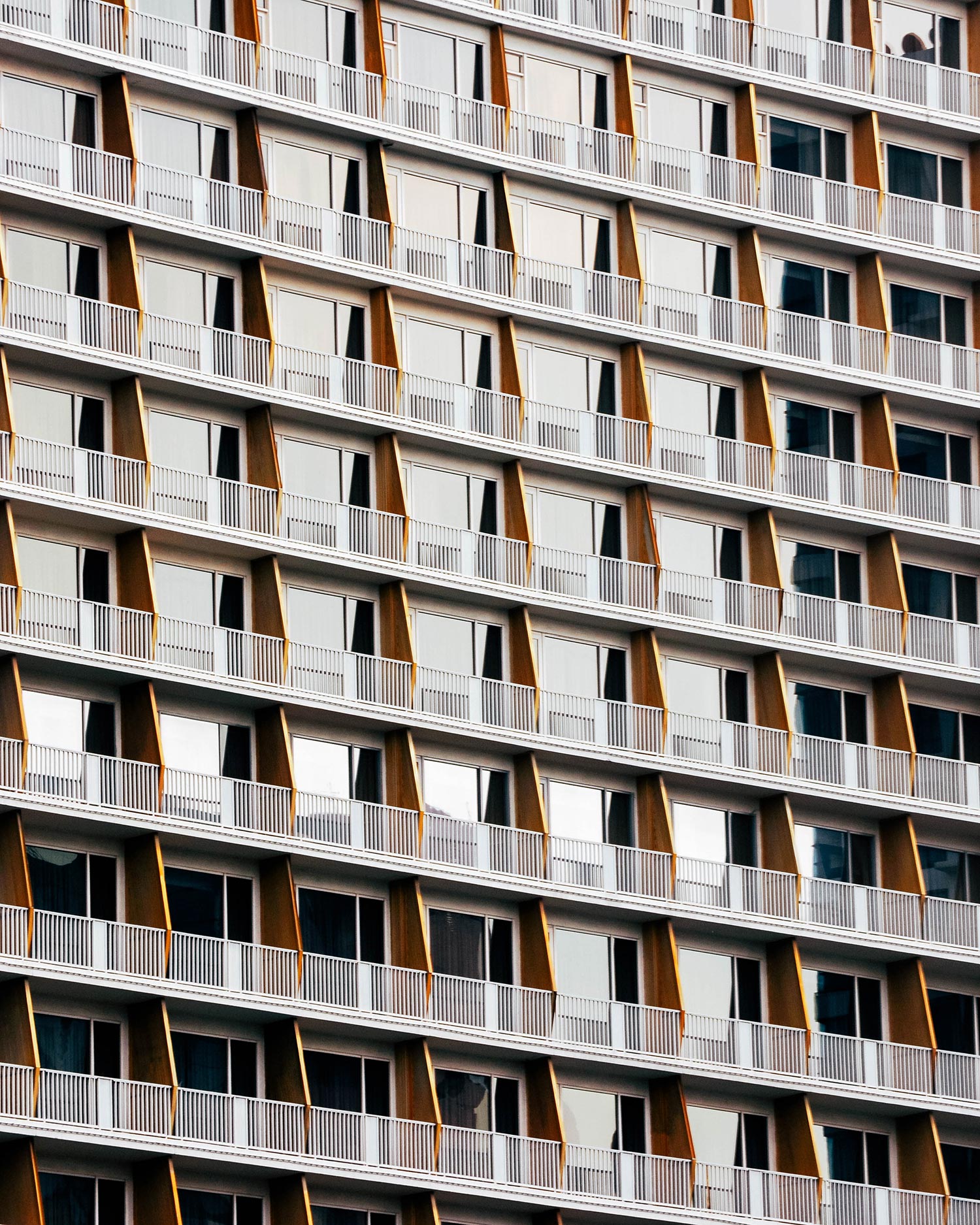
Bangkok’s mid-century buildings have that same pull. They’re easy to miss until some small detail catches the eye: a patterned screen, a shaded stairwell, a flash of concrete geometry above a row of shopfronts. Enough, sometimes, to make another hot, awkward walk feel like a small adventure.
To Korrakoth “Orr” Charoenthurayont, those details reveal the practical intelligence of the period. The founder and design director of Chiang Mai-based design practice TULA, she says the strength of Bangkok’s mid-century buildings lies in their “refusal to reject the climate.”
“The best examples did not pretend Bangkok was somewhere else,” she says. “They worked with heat, light and humidity through overhangs, shaded façades, ventilation corridors and semi-outdoor spaces.”
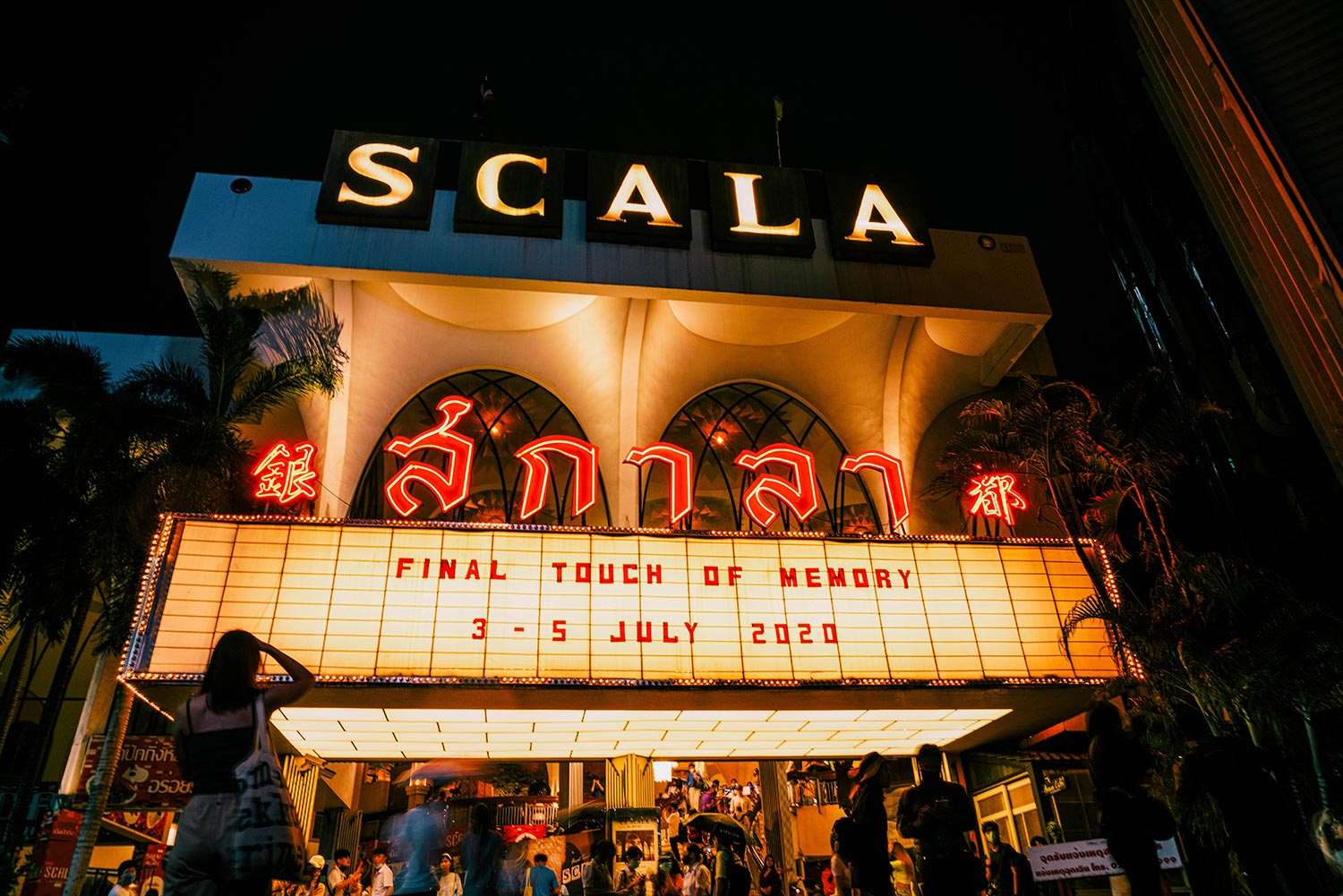
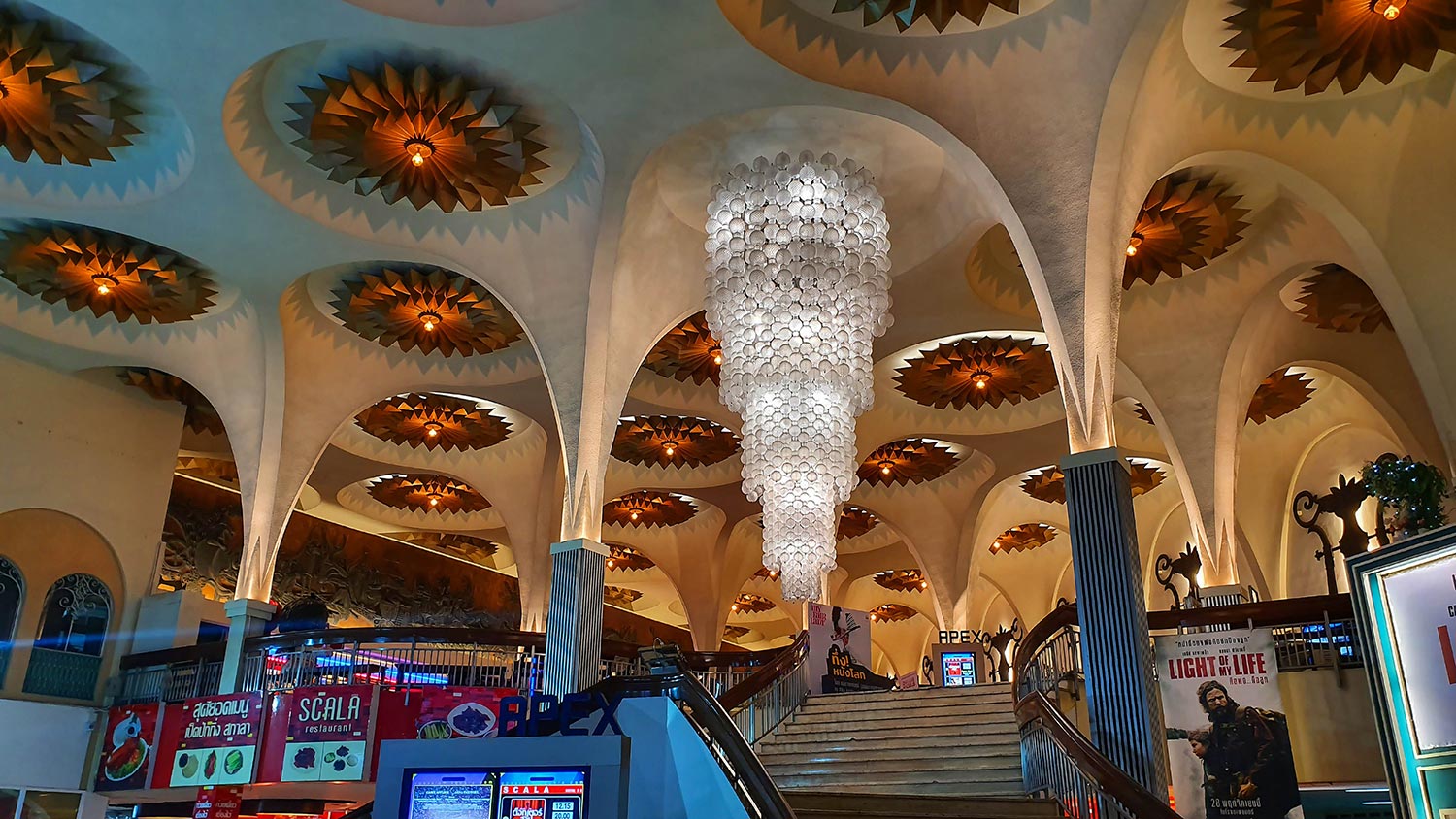
When Orr discusses the passage from street to interior, she points to Scala Cinema. Designed by Chira Silpakanok and opened in Siam Square in 1969, it was Bangkok’s last great standalone cinema when it closed in 2020.
“It was a carefully designed spatial experience created for gathering and waiting, not simply a façade or space for watching films,” she explains. “Its strength was in the sequence. The approach from Siam Square, the lobby, the staircase, and the pause before entering the auditorium. Everything worked together to create a sense of arrival. It had pomp, but still felt open and human.”
“It’s tragic to think it’s no longer there.”
Scala’s loss hit me hard too. For years, it was one of the few buildings in Bangkok I felt genuine affection for, mostly because I used it. I spent one long Sunday there watching a matinee of The Godfather (though I may have slipped out halfway through Part III).
Its demolition was depressing, although hardly surprising. There was a campaign to save it at the time, but in Bangkok, land values and redevelopment pressure tend to settle such arguments before sentiment gets much of a say.
I still find the city’s callous approach to architectural heritage hard to take and regularly roll my eyes at the rise of another pointless tower. Yet these morning walks with my daughter have made me a little less gloomy, or at least more conscious of what remains.
Much of that surviving modernism can be found in the supposedly mundane. It turns up in apartment blocks and institutional buildings, often in places where nobody seems to be making much effort to preserve it.
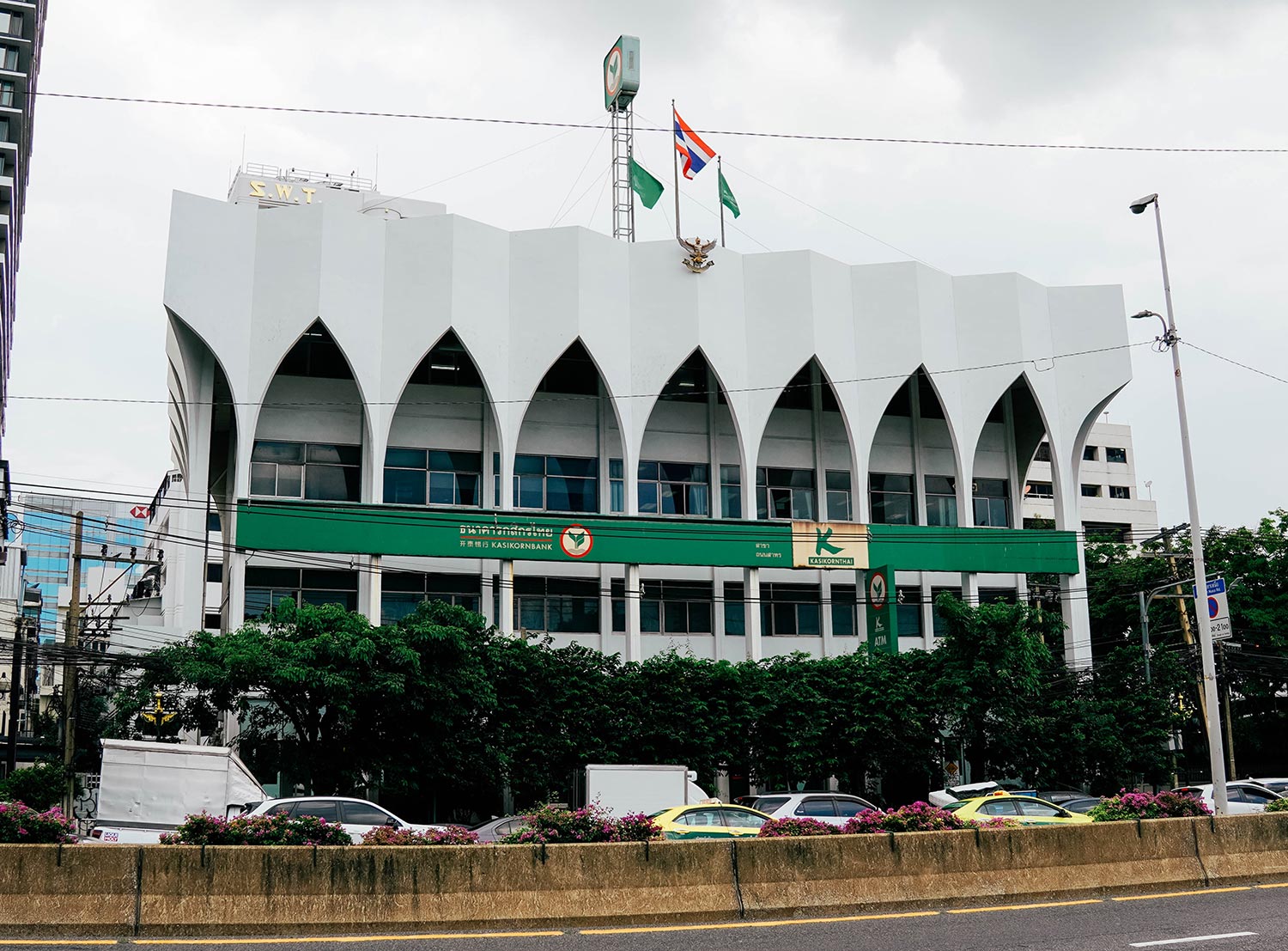
Orr points to the old Kasikorn Bank branches, where the frontage became “an architectural language.” These buildings were more than branding exercises. Their screens gave the bank a public identity while reducing glare and heat.
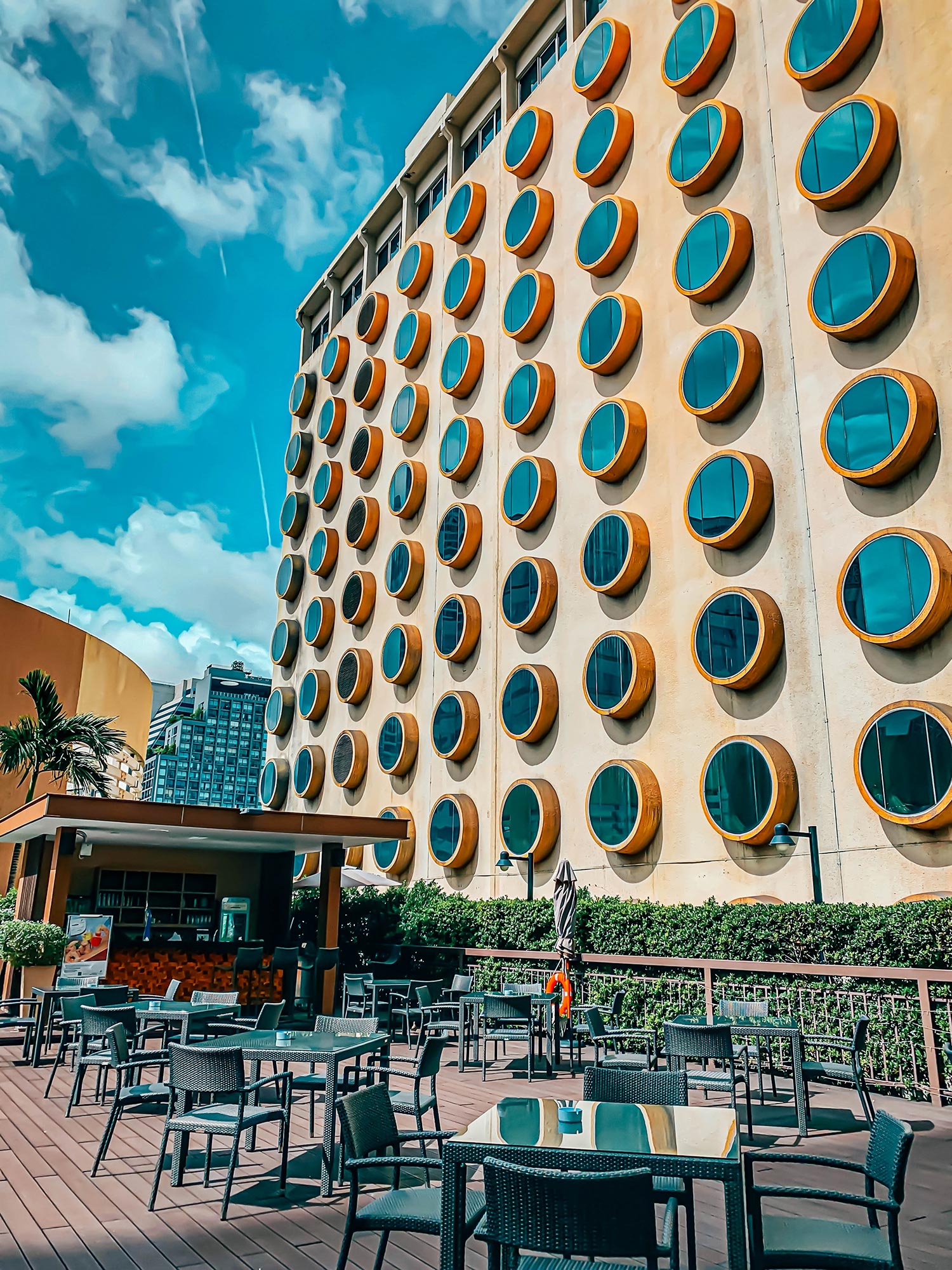
Koditek’s cover image makes the same point in more spectacular fashion. The Holiday Inn Silom, designed by Dan Wongprasat, is all projection and rhythm, its bay windows pushing out from the façade with a kind of cheerful precision. The bays, he notes, are “deep enough that you can sit in the window,” which is exactly the sort of detail that separates this architecture from surface styling. The design is playful because it works.
“What we should learn is not the form, but the way of thinking,” Orr adds. “The point is not to reproduce breeze blocks, grilles and balconies as retro decoration. It is to understand why they were there: to make buildings that respond to light, heat, rain and the street before sealing themselves off from all four.”
And once you start seeing those buildings as negotiations with the city, the walks become less punishing.
Somewhere between the pungent khlongs, crumbling sidewalks, menacing tree roots and piles of rubbish, Bangkok became a bit easier to love. Now I take detours for reasons that would have seemed deranged six months ago, or stop mid-walk to inspect the odd bit of masonry. Not ideal when pushing a stroller through Bangkok traffic.
But after 15 years of doing everything I can to avoid walking the city, it does feel like progress.