


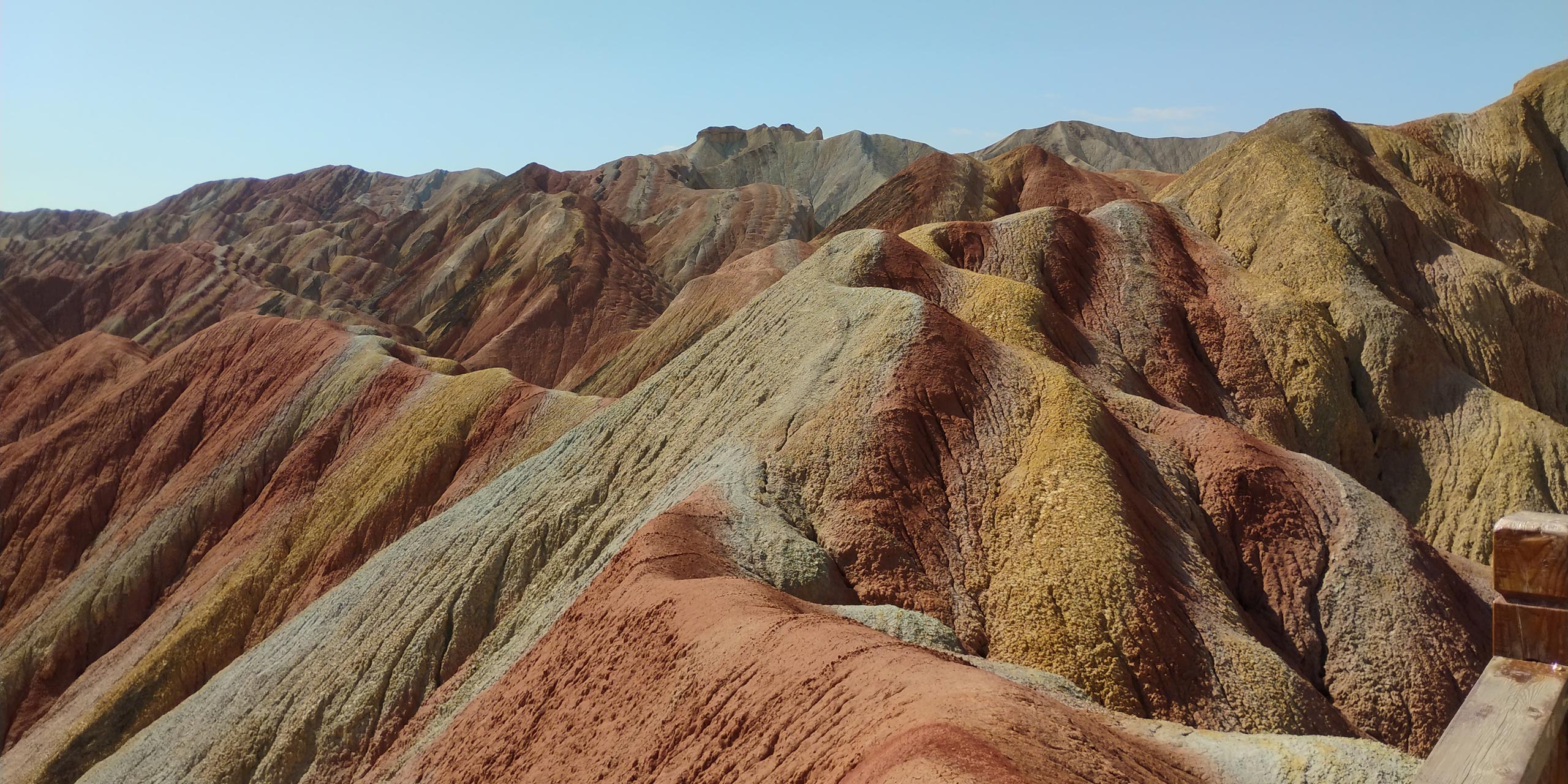
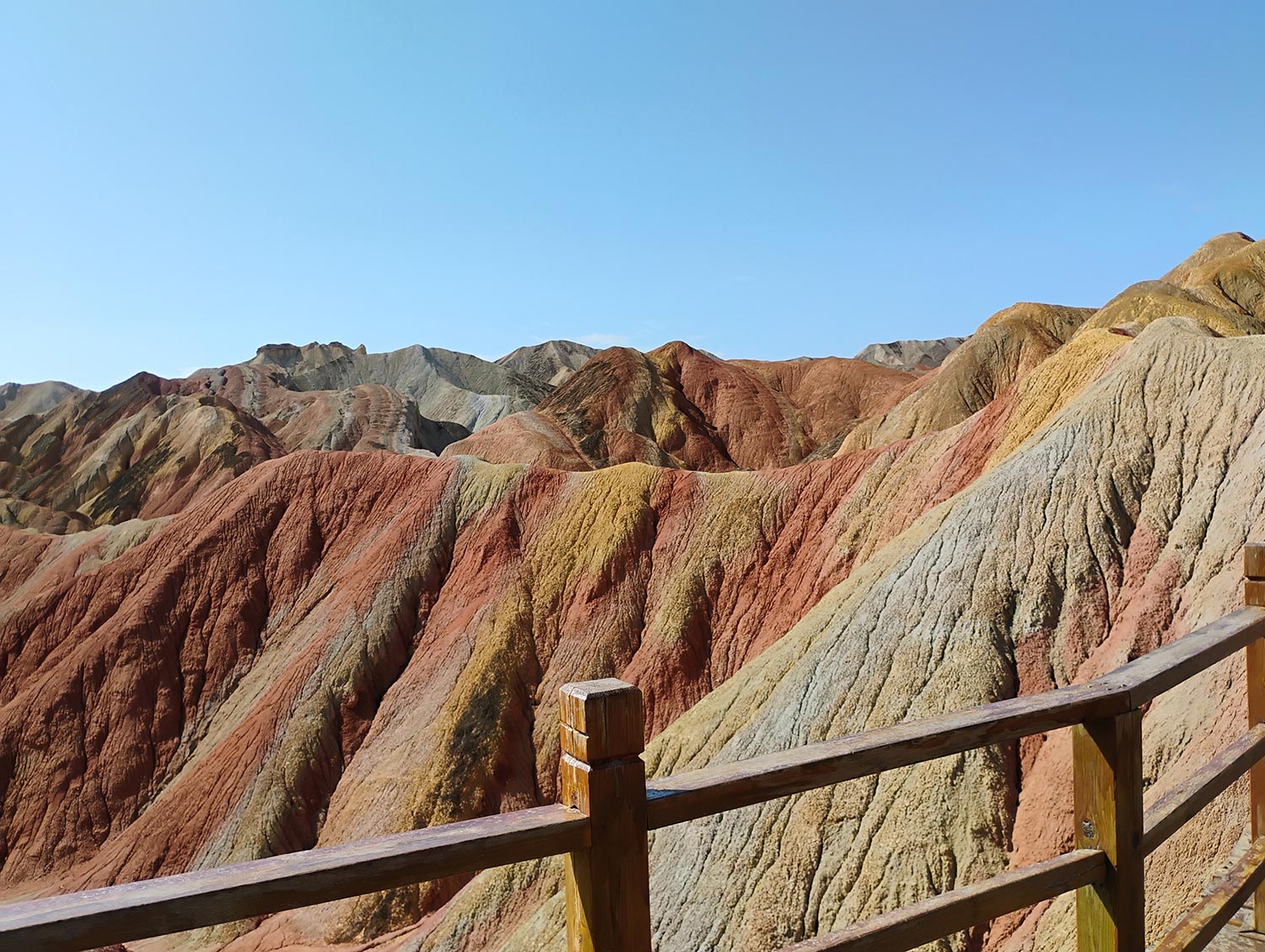
Crimson, orange, yellow, green, gray-blue and cream. Striped and wrinkled, the Rainbow Mountains of northwest China look as though a celestial artist has taken a paintbrush to Gansu province’s rugged landscape.
Among China’s most striking natural wonders, these Grand Canyon-like formations are part of the Zhangye UNESCO Global Geopark, designated in 2020. The sandstone hills even made an appearance in Disney’s Mulan, the story of a legendary Chinese heroine who disguises herself as a man to fight in battle.
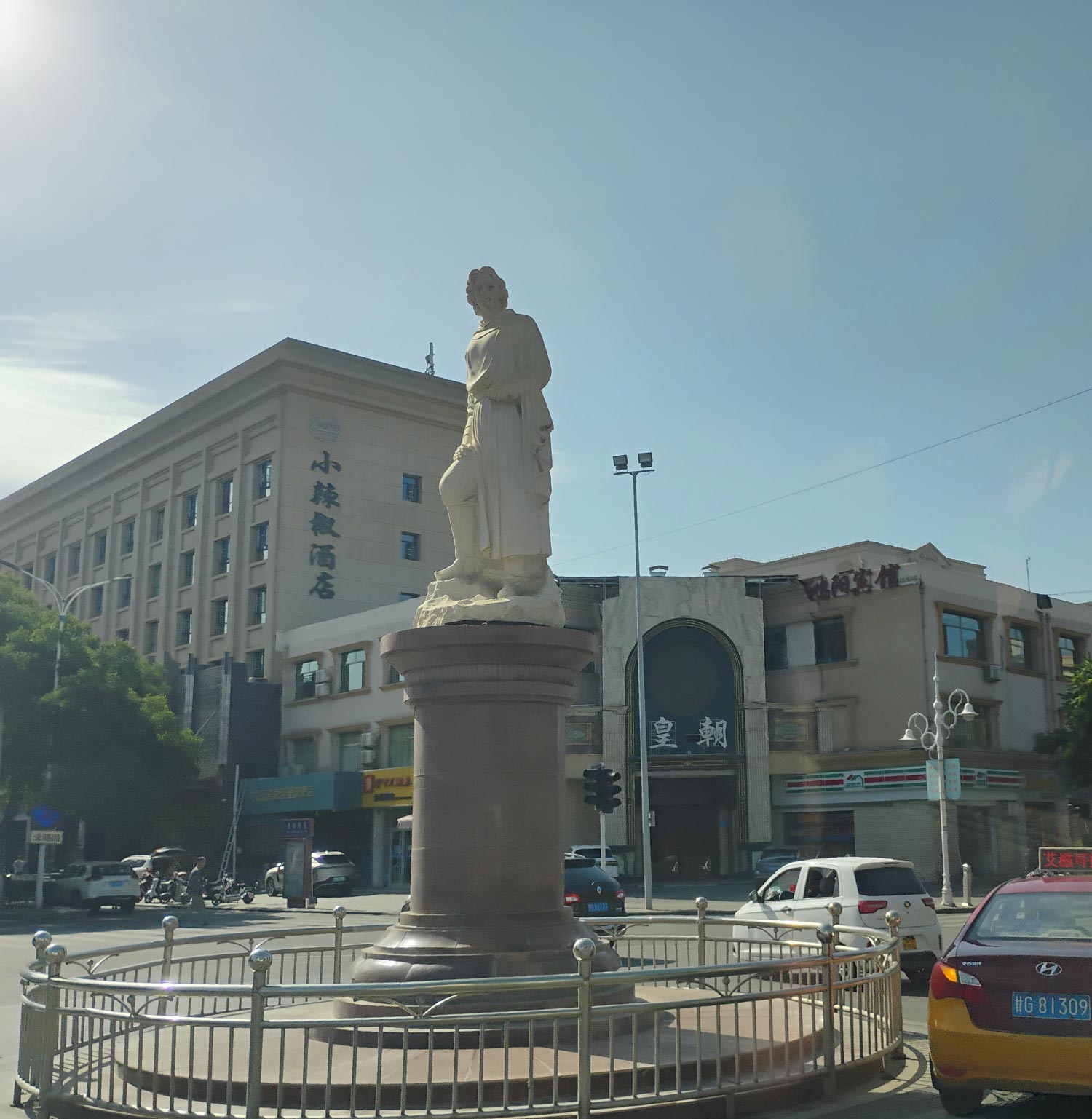
The geopark lies about a half-hour drive northwest of Zhangye, a historic Silk Road city where Marco Polo is believed to have spent a year in the 13th century. The Venetian explorer called it Campichu, and a statue in the city commemorates his visit.
The mountains owe their extraordinary appearance to millions of years of geological upheaval. Layers of sedimentary rock were folded and uplifted by tectonic forces, then sculpted by wind and water. Mineral deposits provide the colors: iron oxides produce reds, limonite contributes yellow-brown tones, and chlorite lends shades of green. The effect is especially striking at sunset and after rain.
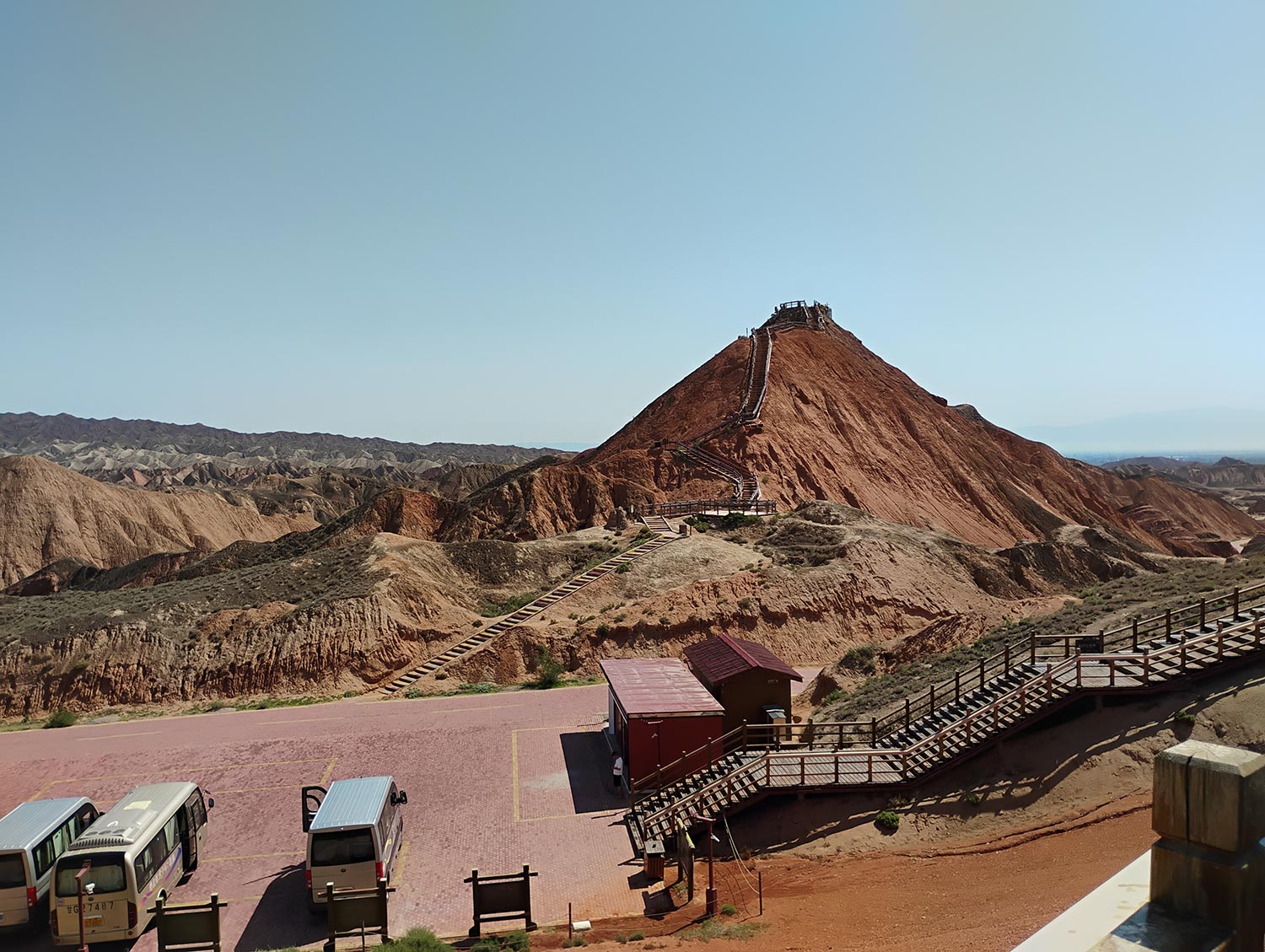
Shuttle buses transport visitors between viewing areas, but I opted for the VIP service, which ventures farther into the landscape and stops at three elevated platforms offering sweeping views of the multicolored hills.
For a different perspective, hot-air balloon and helicopter rides offer bird’s-eye views of the formations.
In Chinese, danxia means “rosy clouds,” a poetic description of the reddish rock landscapes found across China. The term has literary roots stretching back centuries, but geologist Feng Jinglan helped establish its modern geological meaning in 1928, drawing inspiration from Mount Danxia in Guangdong province.
The nearby Binggou Danxia area offers a different spectacle. Here, wind and water have sculpted sandstone into fantastical pillars and towers known as hoodoos. Some could easily belong in Utah’s Bryce Canyon or the deserts of New Mexico.
I wandered among formations bearing wonderfully imaginative names, including “Camel Looking Back at Its Relatives,” “Crouching Dragon, Slouching Tiger,” and “Old Turtle Thinking About Mortality.” One imposing reddish sandstone structure had been christened “Phantom of the Louvre.”
The word hoodoo also refers to a form of folk magic, an appropriate association for formations that seem almost supernatural. In parts of North America, Indigenous traditions have their own stories about such rocks, including legends of people transformed into stone.
Unlike the Rainbow Mountains’ designated viewing areas, Binggou allows visitors to explore some sections on foot. It was the final stop on my VIP shuttle tour and an opportunity to appreciate these curious formations up close.
The colors followed me back to my accommodation. At the Danxia Pearl Hotel, a luxury property opposite the geopark’s north gate, I dined from plates decorated with Rainbow Mountains designs, accompanied by matching chopstick holders. Gold Chinese characters on the tableware spelled out “Colorful Danxia.”
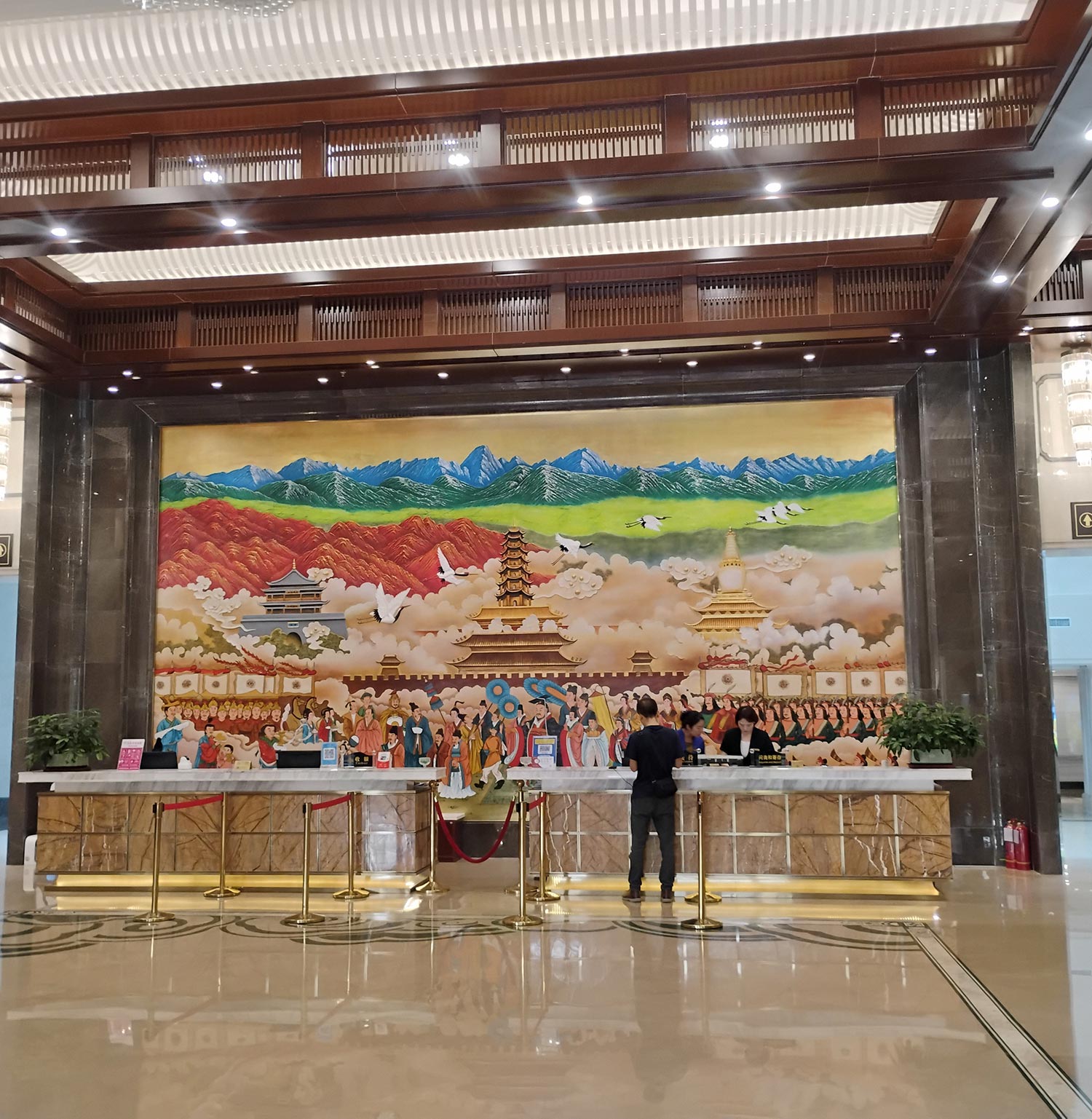
At Zhangye Hotel, my accommodation in a tranquil lakeside park, a vivid mural of the mountains brightened the reception area. Above my bed hung an intricate needlework landscape depicting traditional Chinese pavilions.
But Zhangye’s attractions extend beyond its remarkable geology.
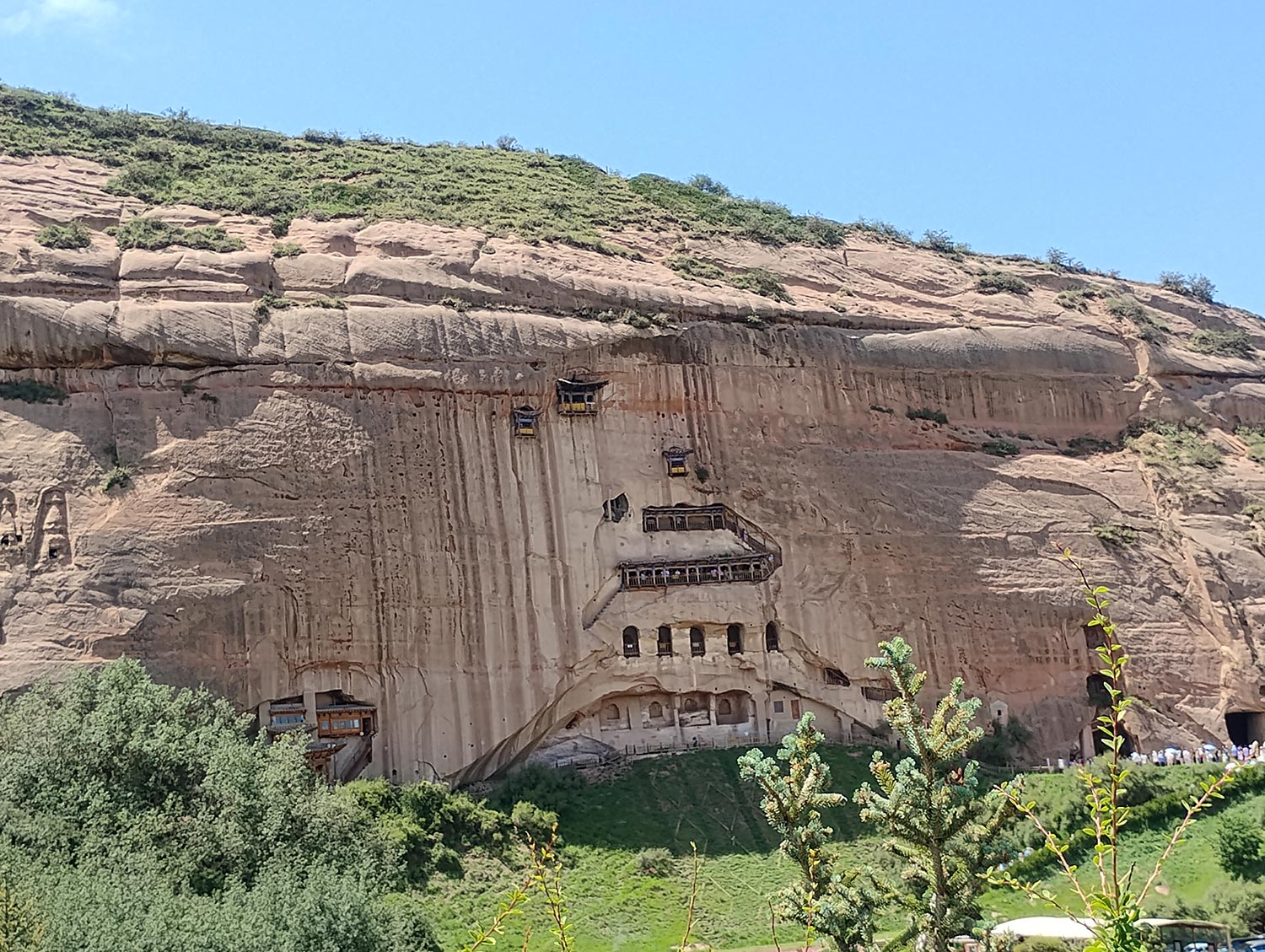
About 40 miles south of the city lies Mati Temple, also known as Horse Hoof Temple or Horseshoe Temple. Carved into sandstone cliffs, this remarkable Buddhist complex contains 37 grottoes adorned with murals and hundreds of sculptures, some dating back to the fifth century.
According to legend, a celestial horse descended from heaven and left its hoofprint on the roof of a cave, giving the temple its name.
Mati is among the great Buddhist sites of the Hexi Corridor, the narrow passage between the Tibetan Plateau and the deserts to the north that served as a vital Silk Road trading route for centuries.
Other important sites include the UNESCO-listed Mogao Caves near Dunhuang, home to an extraordinary collection of Buddhist murals and sculptures, and the Yulin Grottoes, another treasure trove of Buddhist art.
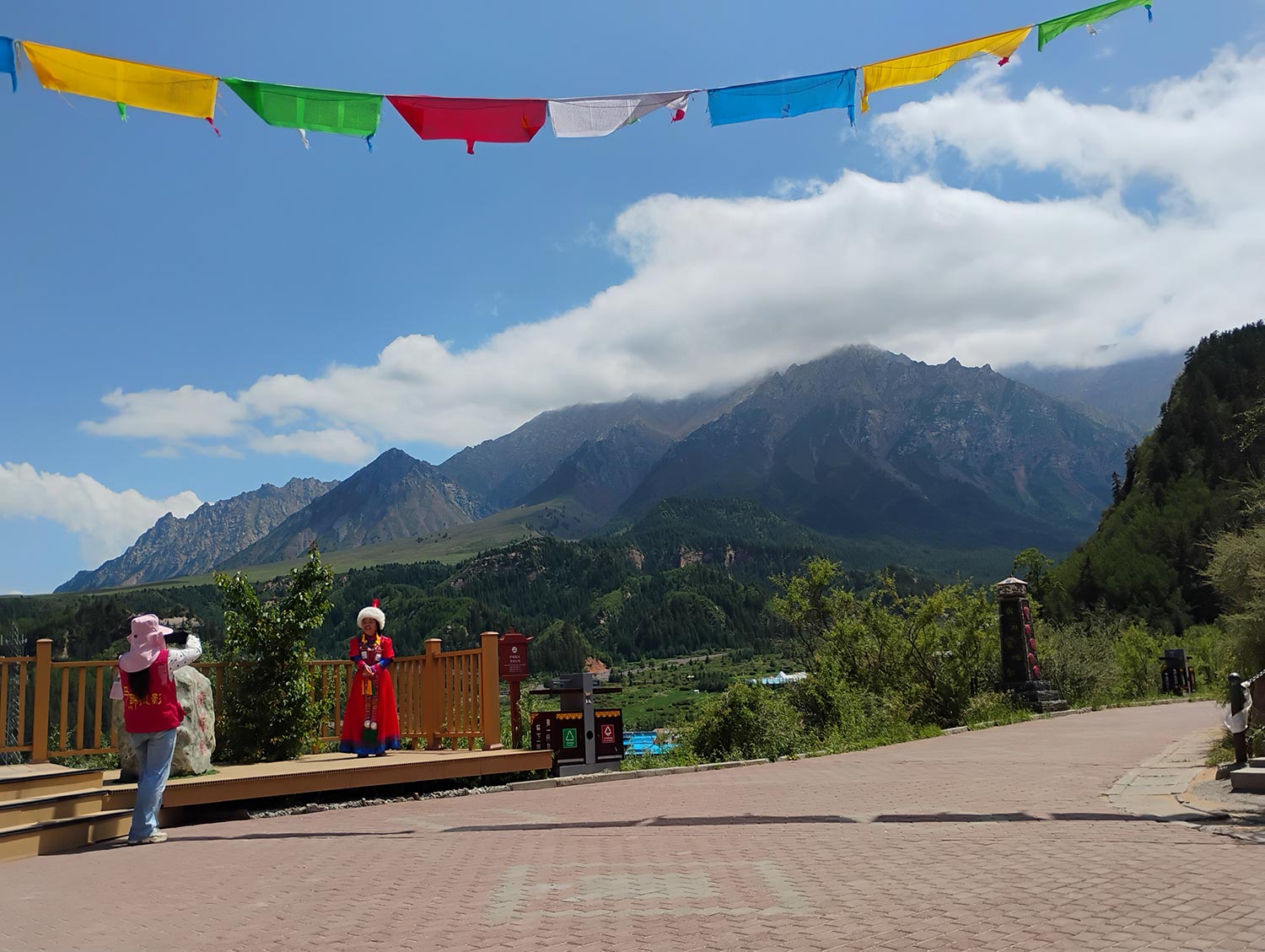
The setting at Mati is almost as impressive as the caves themselves. At a viewpoint overlooking the Qilian Mountains, alpine meadows and forests stretch toward the distant peaks. Nearby, Chinese visitors happily posed for photographs in brightly colored traditional costumes available to rent.
The surrounding region is also home to a rich mix of cultures. The Yugurs, Tibetans, Mongols, Hui, Dongxiang and Bonan are among the ethnic communities whose histories and traditions have helped shape this stretch of the Silk Road.
Their languages, religions and customs reflect centuries of movement and exchange between China, Central Asia and the Tibetan Plateau.
It is another reminder that this corner of Gansu has long been a meeting place of cultures, its remarkable landscapes providing the backdrop to centuries of human history.