

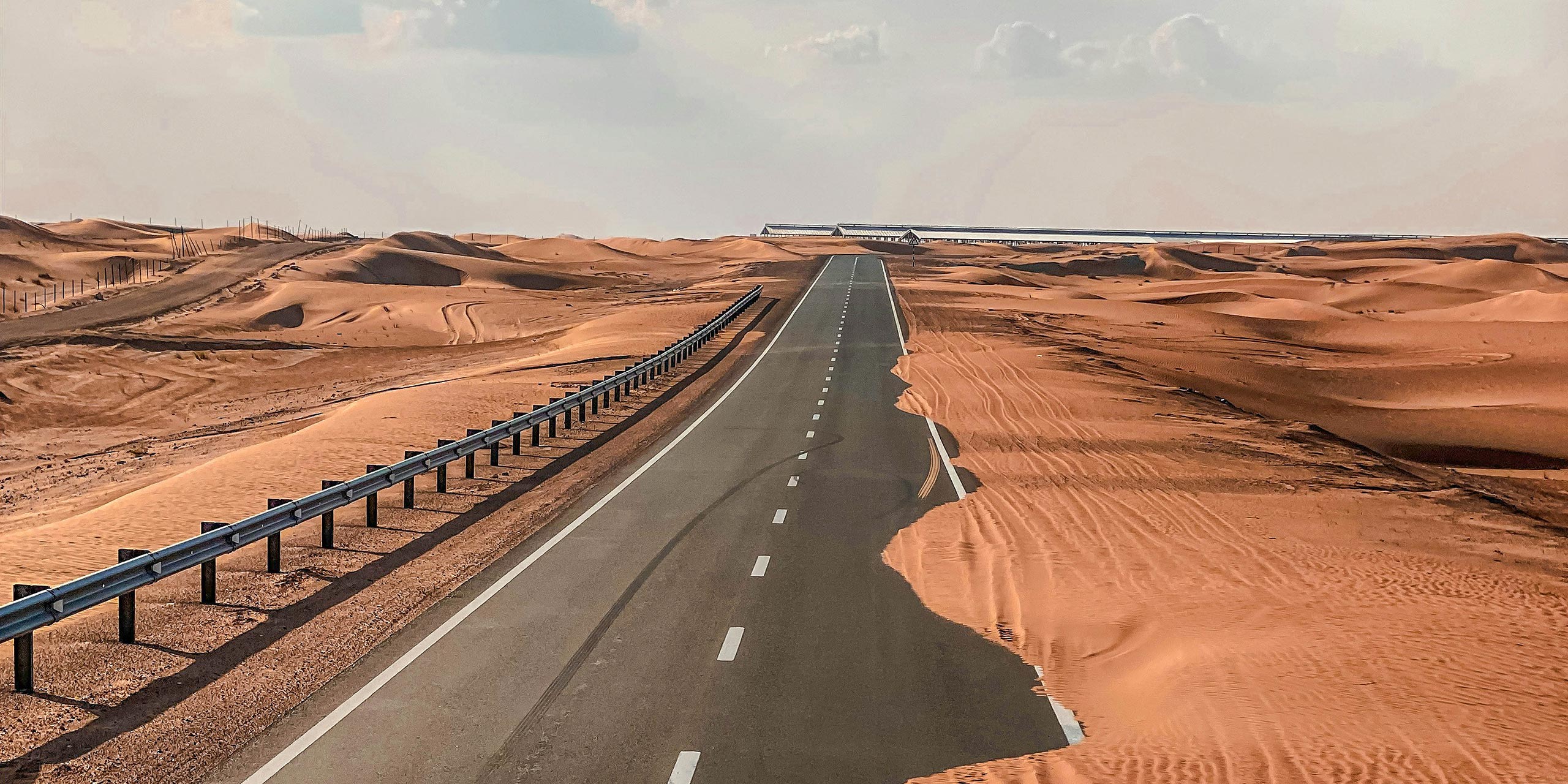
As soon as my friend Yves and I leave the gleaming island of Abu Dhabi behind, waves of sand rise on both sides of the road. We are headed for Al Ain, an oasis city on the Omani border.
The highway cuts through an immense desert landscape, with dunes stretching towards the horizon and enormous four-wheel drives thundering past. The sand promises nothingness and eternity at the same time. Somewhere beyond it lies Al Ain, whose history as a desert oasis predates the highways and high-rises of the modern Emirates.
The city’s streets are busy, while shops and restaurants are staffed by workers from across South Asia and beyond. Indians, Pakistanis, Afghans, Bangladeshis, Nepalese and Sri Lankans are among the many nationalities who live and work here.
At a small restaurant, our table quickly fills with hummus, mutton curry, salad, rice and bread.
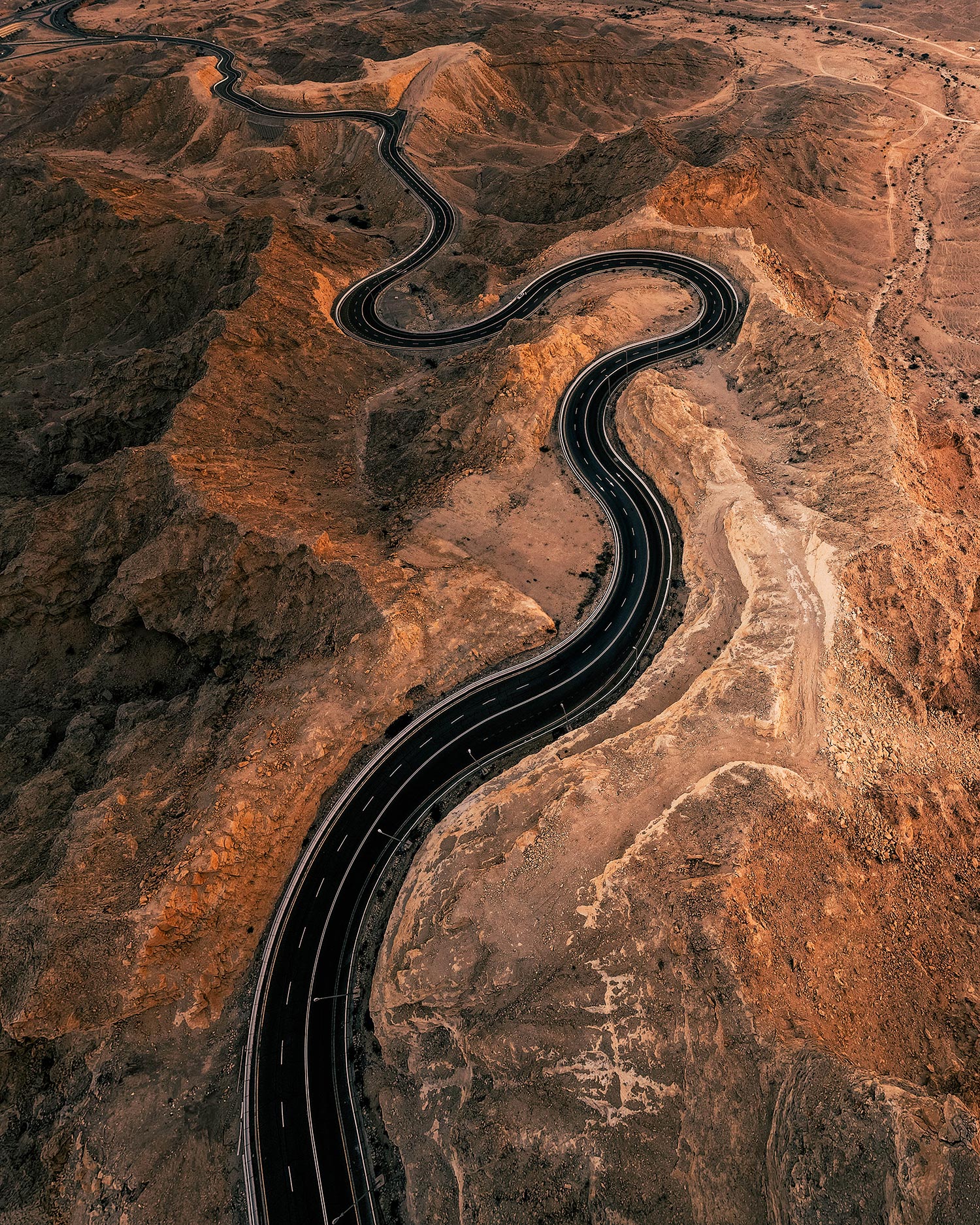
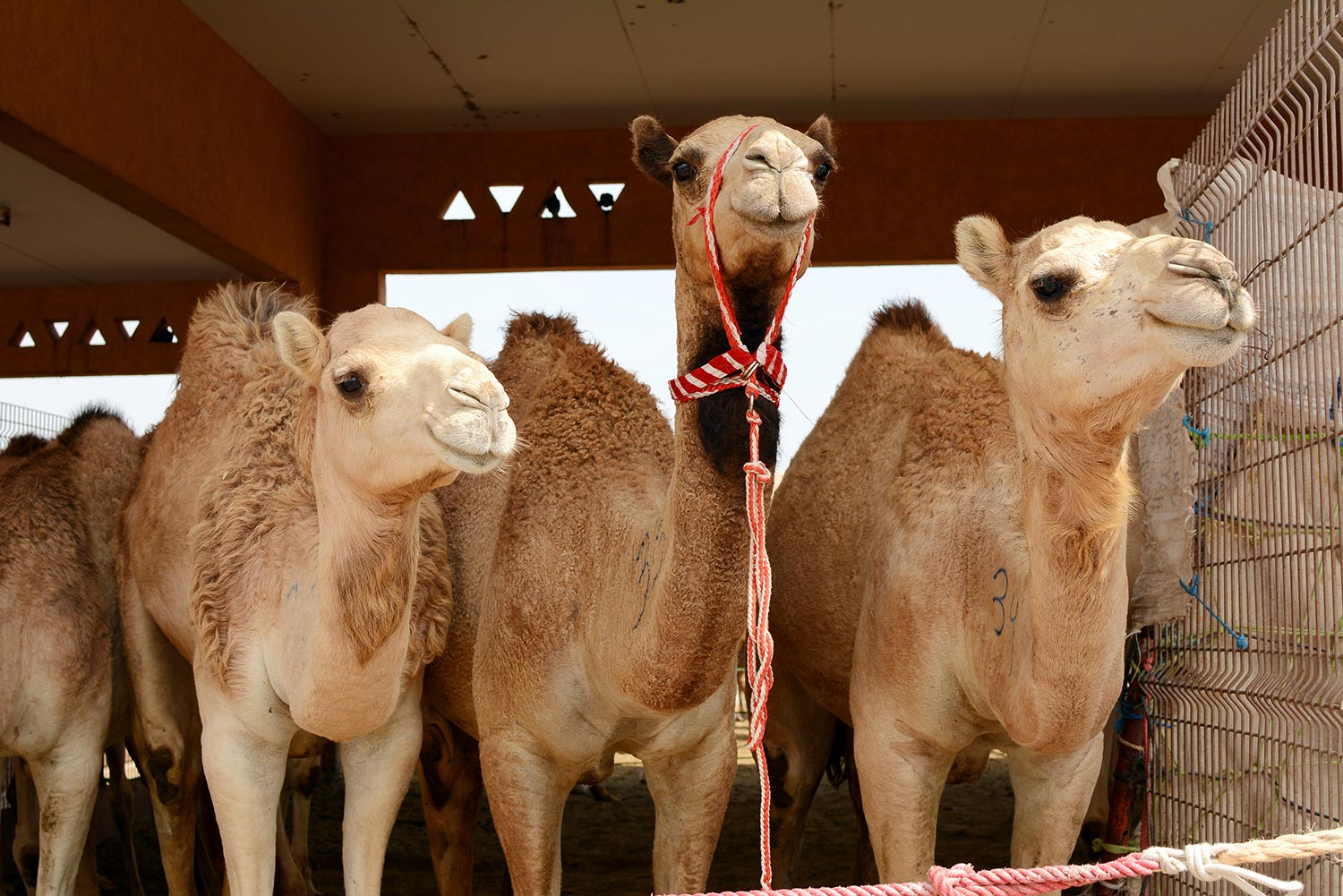
Down at the livestock market, traders buy and sell truckloads of sheep and goats. Local men, dressed in flowing white kanduras, arrive in large vehicles to inspect the animals. At the camel market, hundreds of animals stand in the sun or jostle in the backs of pickup trucks. There are camels bred for milk, others for meat, and still others for racing. Prices vary enormously, with valuable racing animals commanding extraordinary sums.
In the city’s shopping malls, women in black abayas browse French lingerie, expensive perfumes and imported food from around the world. The shelves are as cosmopolitan as anything in Delhi or Bangkok. French cheese, Thai noodles, Chinese prawn crackers, Mexican beans: almost everything is available.
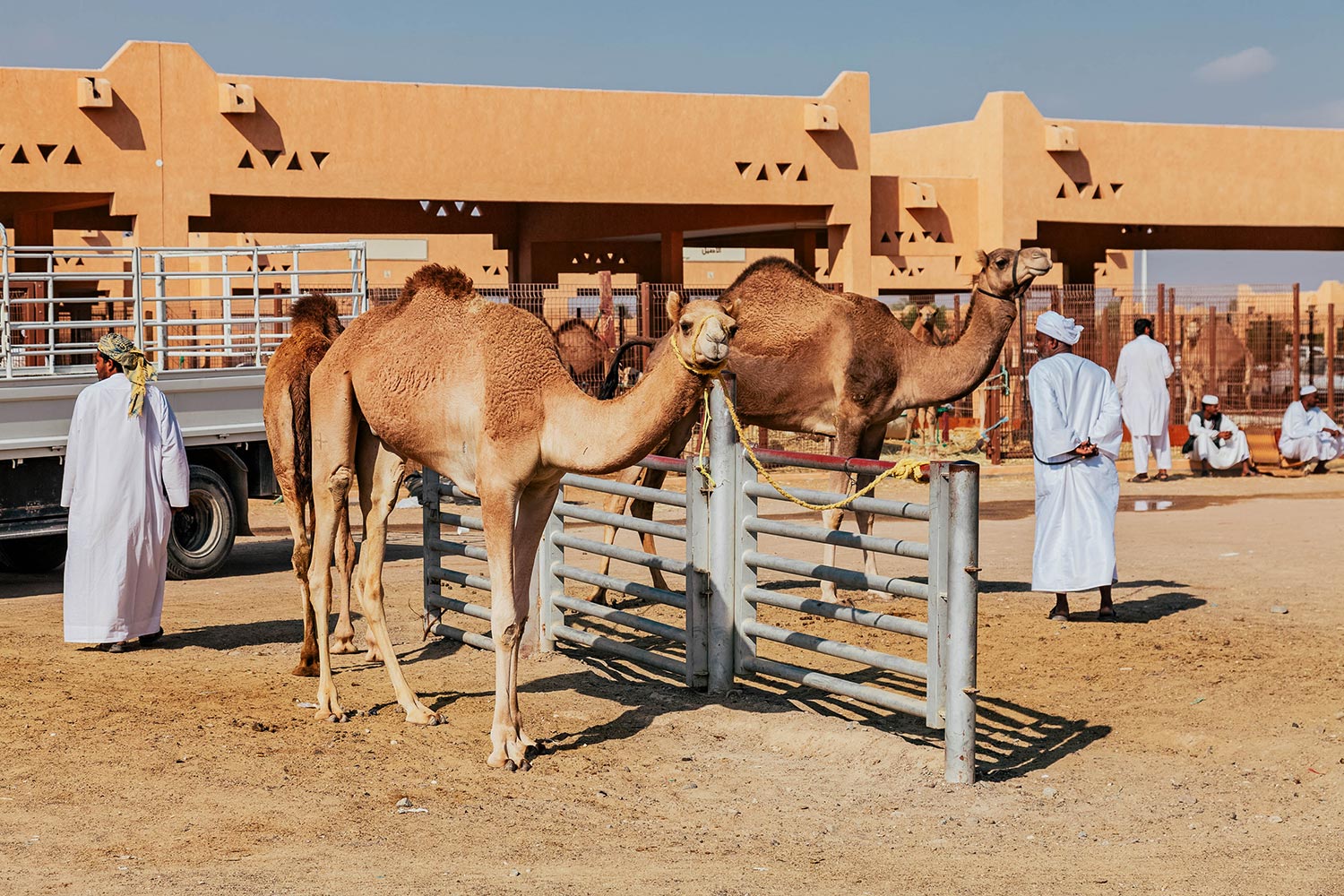
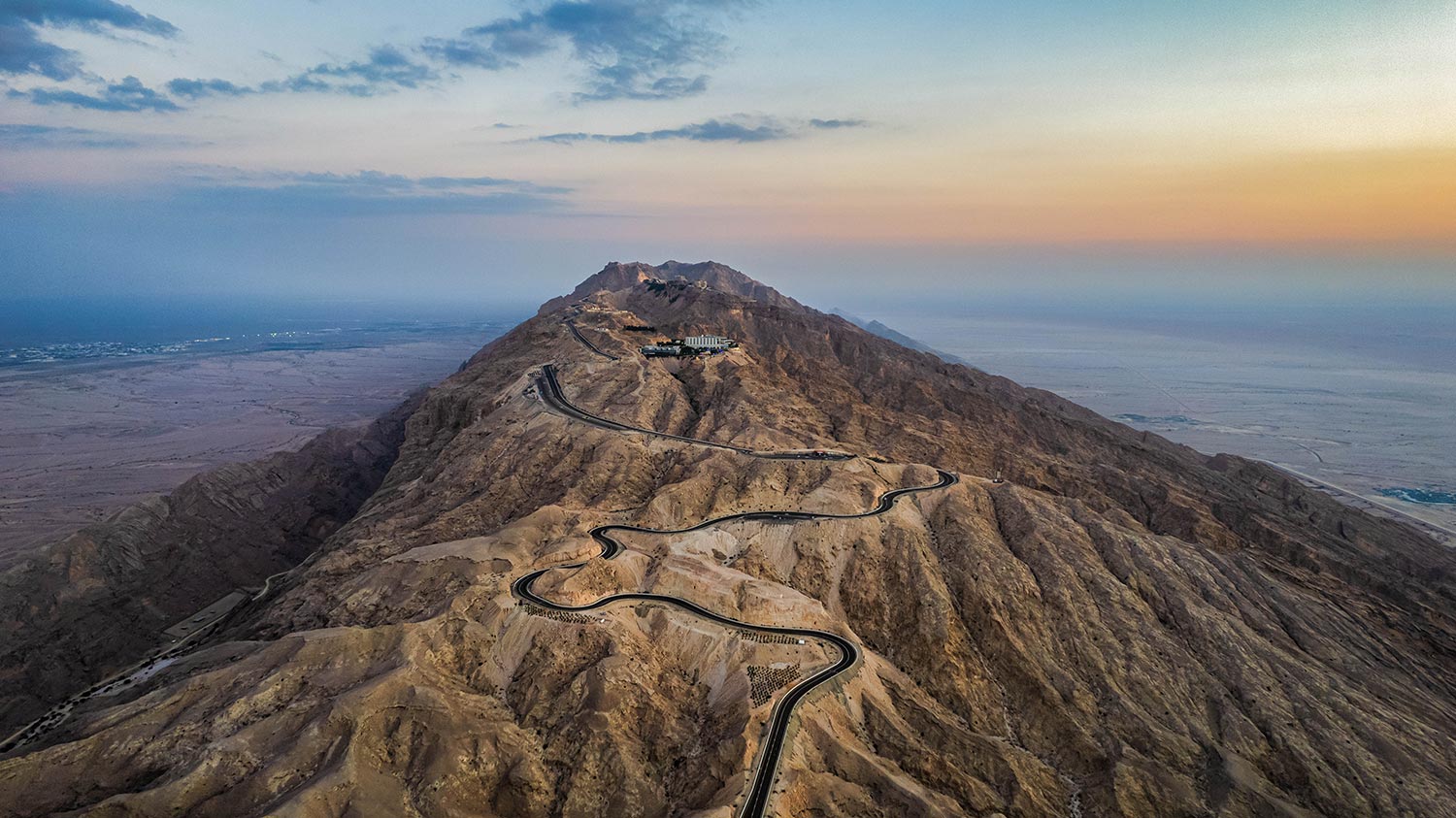
South of Al Ain, Jebel Hafeet rises more than 1,200 metres above sea level, a great mass of rock standing over the surrounding desert.
A broad highway leads from the city towards the mountain. Beyond it, the landscape becomes increasingly stark. As far as the eye can see, there are few trees or bushes. Sand dunes, shifting golden mountains of dust, meander towards the hazy horizon. Large birds circle lazily on hot air currents, their wingspans silhouetted against a perfectly blue sky.
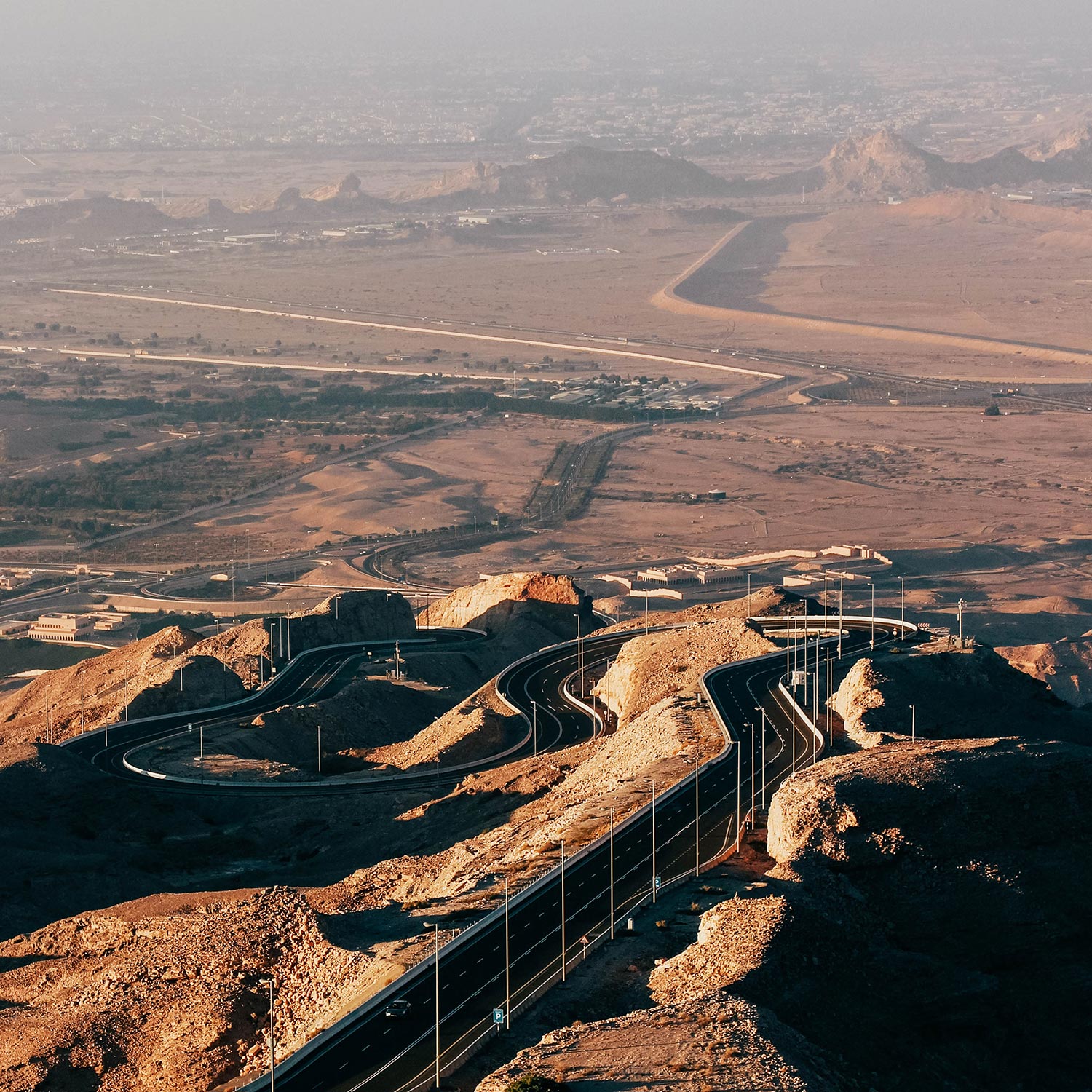
The road up Jebel Hafeet is steep, hewn from the rock face, curving and twisting past enormous boulders and crags. Anywhere else in the world, a surfaced single-lane ascent would be an engineering marvel. Here, a broad ribbon of immaculate tarmac winds towards the summit, complete with street lighting.
The road is a remarkable feat of engineering, designed as much for the pleasure of the journey as for reaching the summit. There is little traffic on our ascent, and with every turn, the views become more spectacular, the surrounding mountains casting long shadows across the empty landscape.
At the top, there are no trinket sellers or bustling crowds, just an enormous car park, big enough to land a small plane on. It’s deserted and very hot.
Across from the summit, clinging to a steep ridge, stands a magnificent palace. Like a mirage, or something from One Thousand and One Nights, it seems almost unreal.
A wide driveway leads to automatic gates. A sign reads “Private Property”. There isn’t a soul in sight, and the palace windows reflect the fierce sunlight like mirrors.
The location is extraordinary, with the residence commanding sweeping views across the mountains and desert far below.
The car park is windswept and covered in tyre marks. Someone’s been joyriding their Ferrari above the clouds.
An Indian man in orange overalls moves slowly around the enormous space, picking up scraps of litter.
Far below, the desert stretches away in a grey expanse, dotted with farms and settlements, with Al Ain visible through the haze. Directly at the foot of the mountain, a patch of green stands out against the surrounding rock and sand.
We descend and follow the road towards the greenery. The low hills are covered with carefully maintained vegetation, an extraordinary sight against the barren landscape.
Soon, the view opens onto a narrow valley beneath the sheer cliffs of Jebel Hafeet. Water rushes along a concrete channel, while pavilions dot the landscaped slopes, filled with afternoon day-trippers.
A group of women dressed in black prepare food in one of the shelters. A few metres away, men smoke shisha and drink tea. We cruise from pavilion to pavilion, watching families unwind in the improbable surroundings, where the facilities include pools fed by the area’s natural hot springs.
At one, three men sit with their feet dangling in the water, talking and soaking up the late afternoon sun.
We find another unoccupied pool. Yves is about to strip off and plunge in when we discover that the clear water is almost unbearably hot.
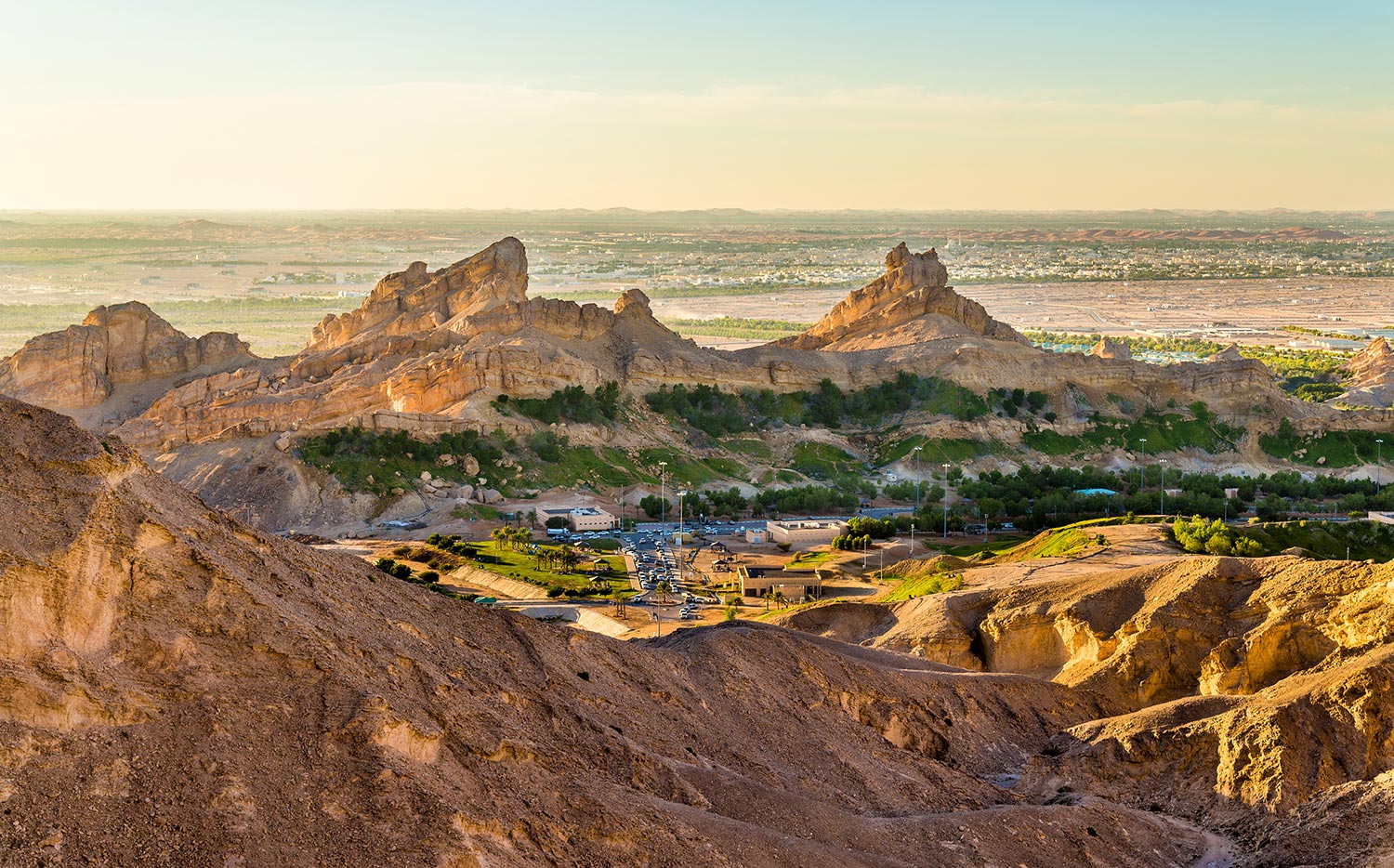
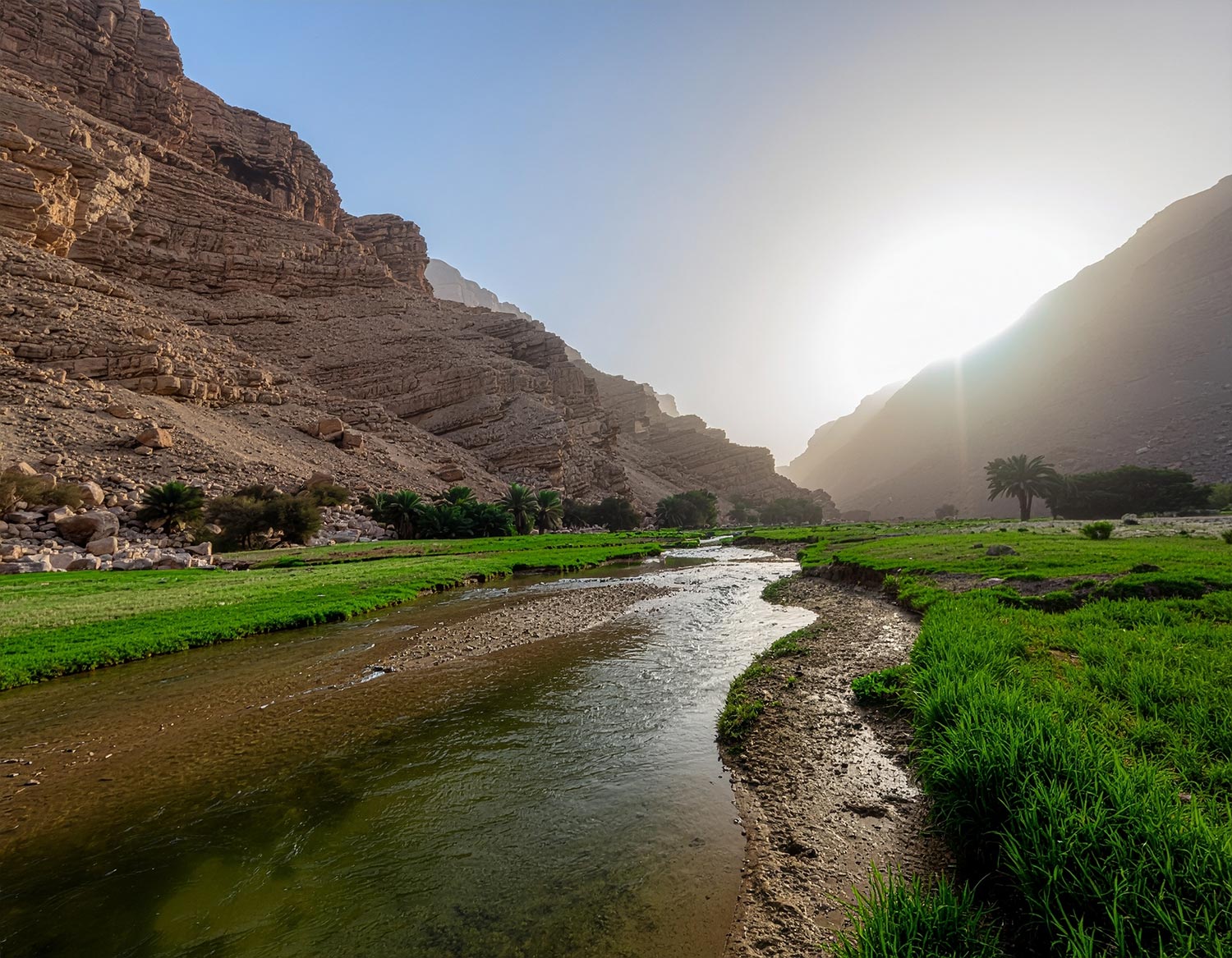
The area around Green Mubazzarah, at the base of Jebel Hafeet, is known for its natural hot springs. The mineral-rich water emerges from underground and has helped turn this corner of the desert into a popular recreational retreat.
Sprinklers dot the surrounding hills, sustaining the greenery against the relentless heat. Beyond the landscaped slopes, there is nothing but sand, rock and the looming mountain.
As we make our way back towards Al Ain, the call to prayer sounds across the city. The mosques draw worshippers from the surrounding streets, while traffic continues along the broad avenues.
Looking back towards the immensity of Jebel Hafeet, I think of the three men sitting with their feet dangling in the hot water, surrounded by manicured greenery, enjoying their moment of camaraderie and respite from the miles of inhospitable desert around us.