


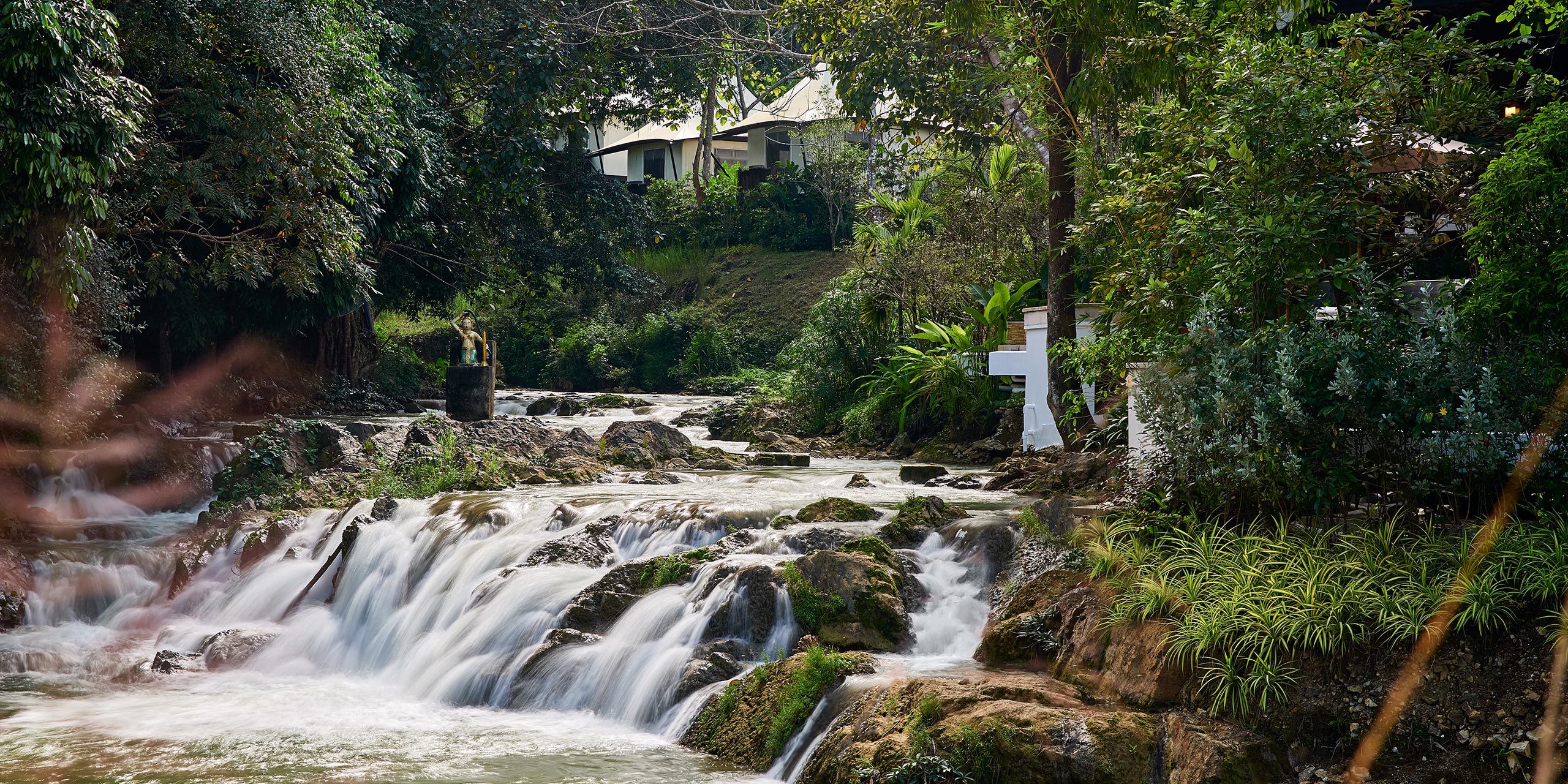
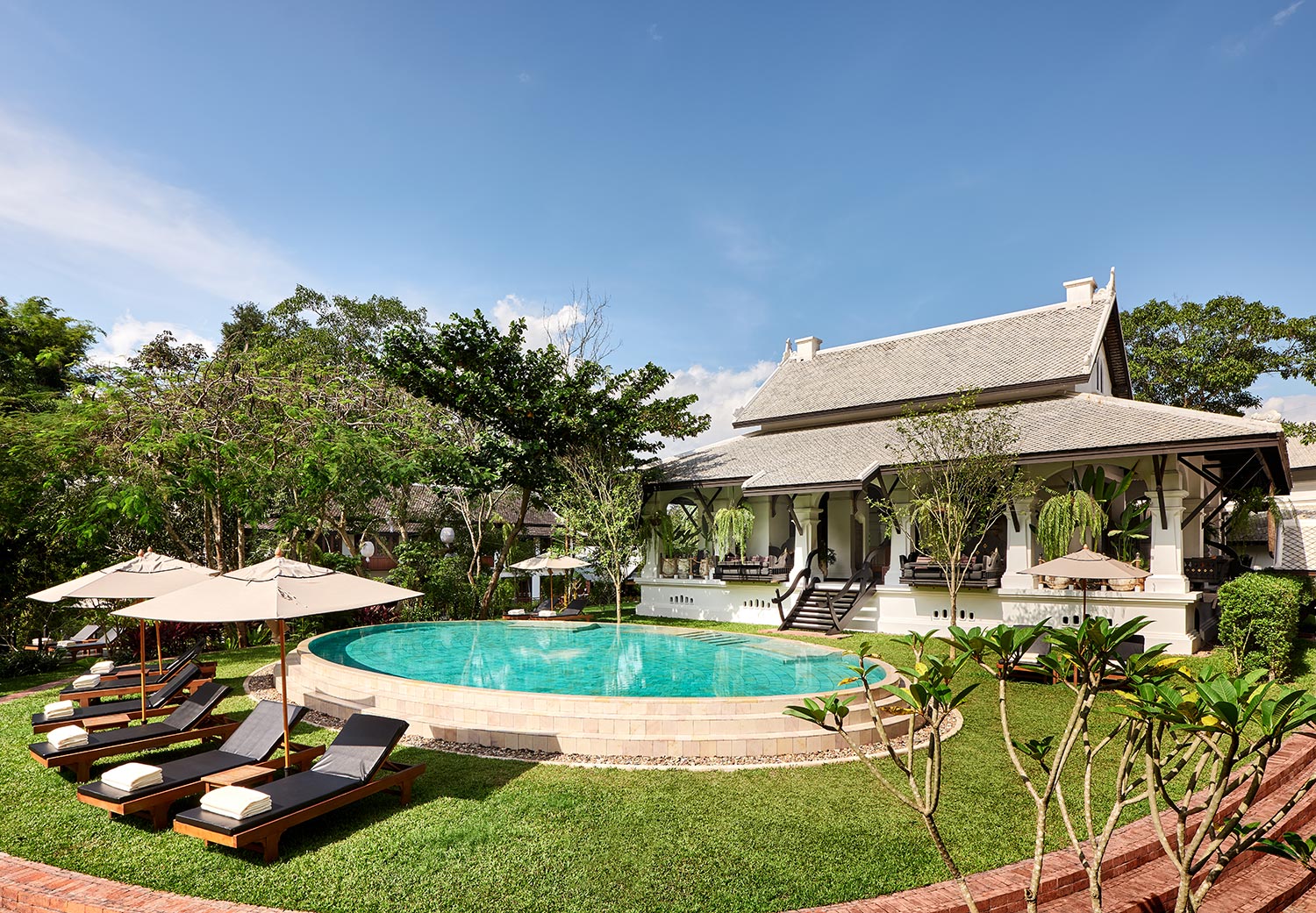
The swimming pool had competition. Just beyond the umbrellas and clipped lawn at Rosewood Luang Prabang, a waterfall was putting on a considerably livelier show. Swollen by recent thunderstorms, the Nam Dong River tumbled over a rocky ledge before rushing through the grounds. The pool could wait.
My wife, Yupin, and I arrived in the early green season, when the vegetation thrived, and the waterways were busy. Reaching our pool villa meant crossing the river at the Elephant Bridge Bar, following a jungle-fringed embankment, and crossing a suspension bridge over an irrigation canal. Farther up, another canal ran along the hillside. Water seemed to accompany us everywhere.
It all looked suspiciously well arranged. Surely someone had engineered these channels to deliver the requisite tropical-resort atmosphere?
“We used the river exactly as it was—we didn’t touch it,” says hospitality consultant Jason Friedman, who has served as the owner’s representative and asset manager throughout the resort’s development. The same applied to the khongs, traditional irrigation canals that still serve the local community. These were working waterways, and altering them was off the table.
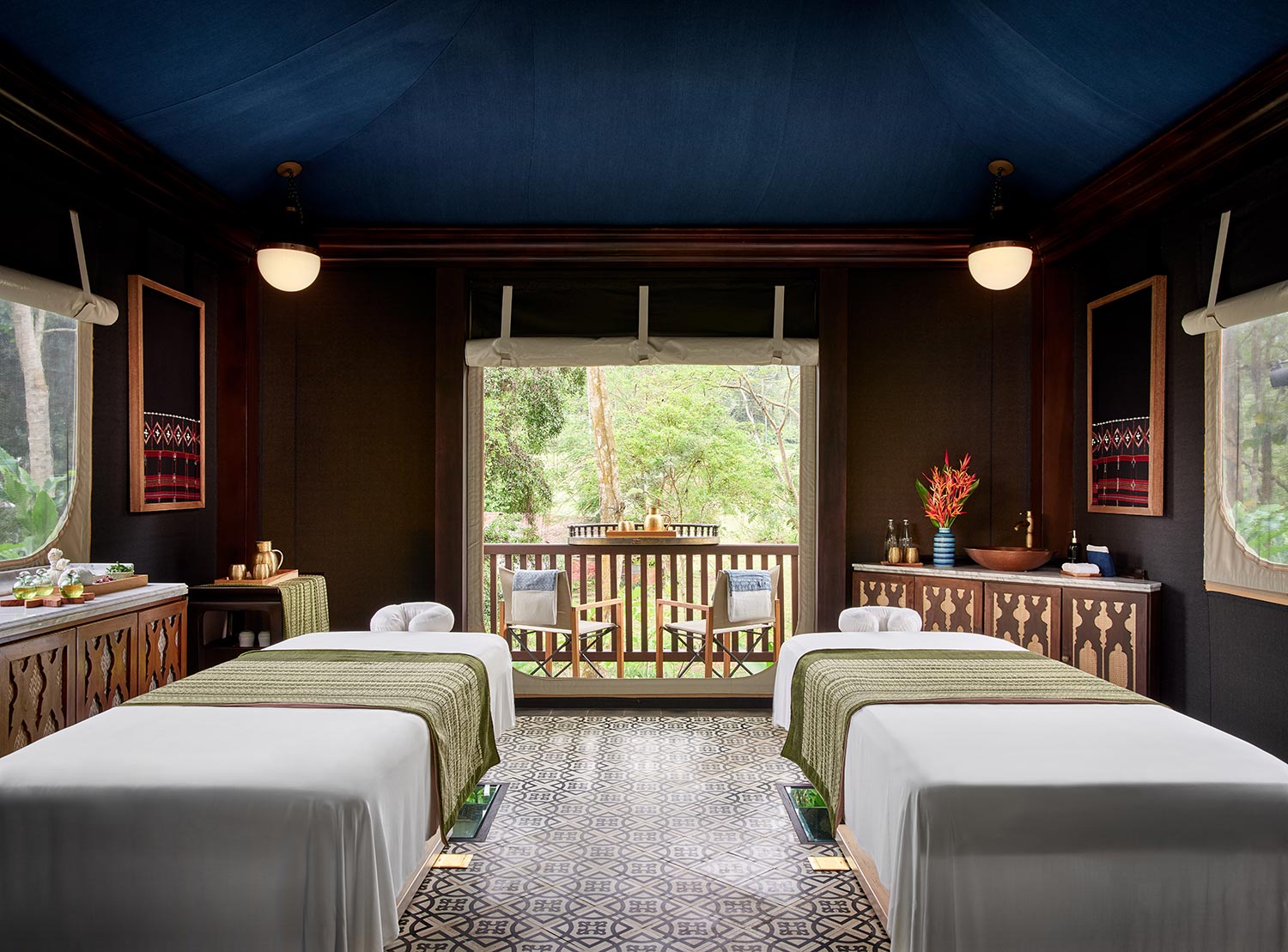
Their presence prompted some of the hotel’s most appealing design decisions. In the hillside spa tents, windows in the floor sit directly beneath the massage beds. Lie face down, and you can watch the canal flowing below you. It’s an unusually good reason to keep your eyes open during a treatment.
The waterfall dictated the larger plan. Both the Great House, which accommodates the lobby, lounge, and restaurant, and the oval pool face toward it. Guests may come for the architecture, antiques, or a few days of doing very little, but the river gets their attention first.
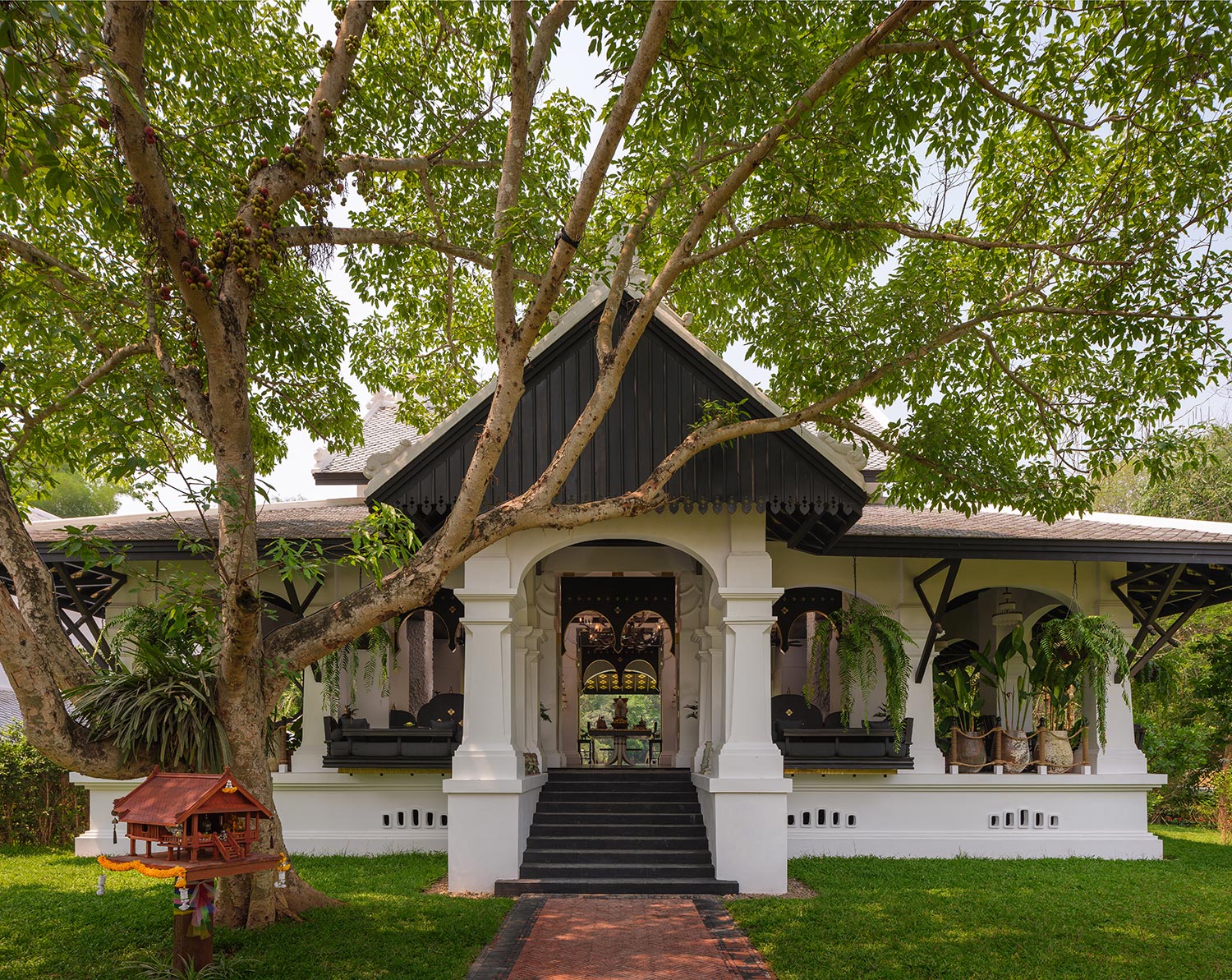
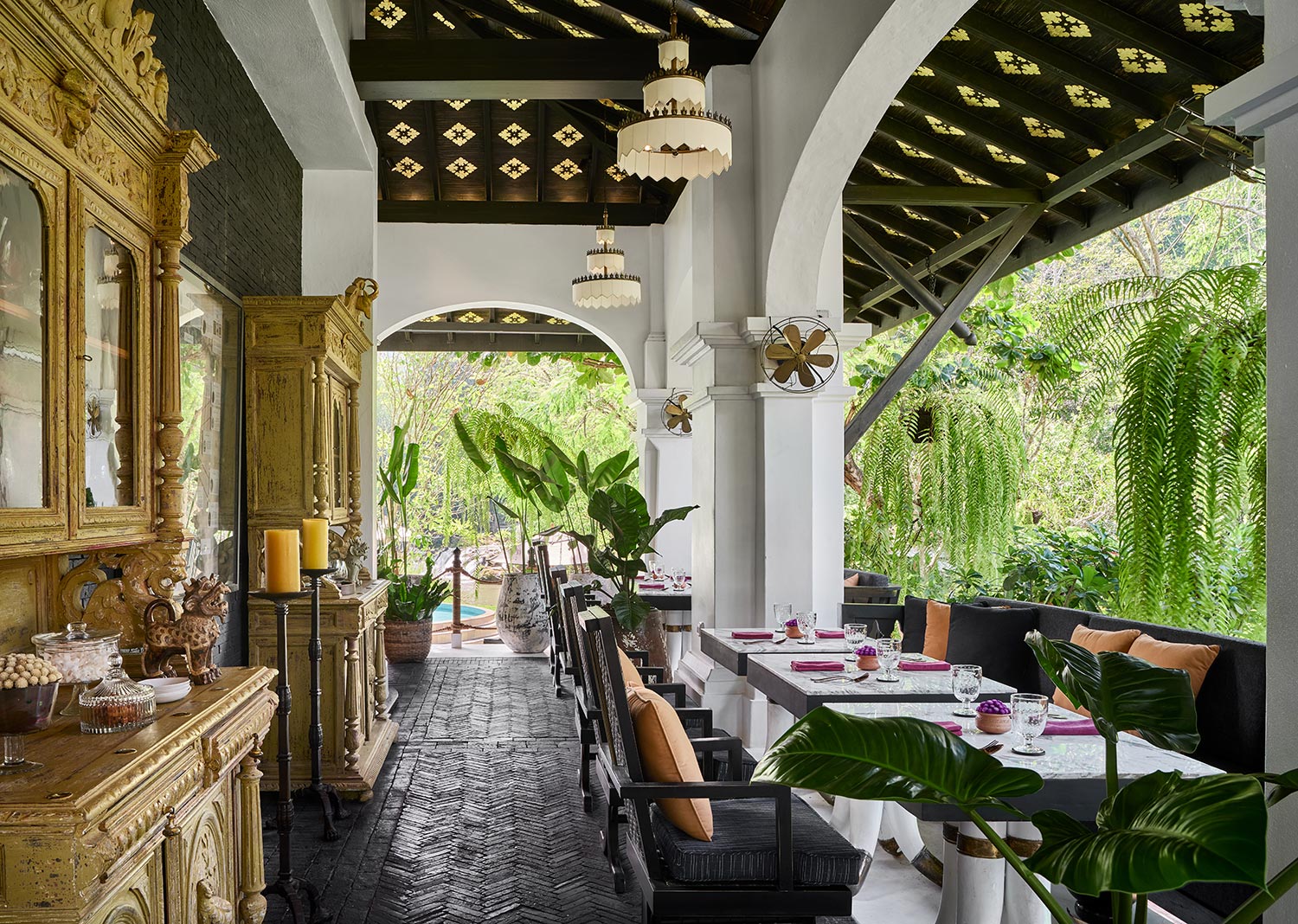
Friedman developed the property with Bill Bensley, the hotel designer, artist, and conservationist with whom he has collaborated since the 1990s. Here, Bensley had plenty to work with: forested slopes, the waterways, and the architectural riches of Luang Prabang, roughly four miles away.
He also had restrictions. According to Friedman, the site falls within the UNESCO World Heritage zone, bringing strict guidelines intended to protect the town’s architectural character. These suited a designer who is happy to enlist UNESCO when a developer’s ambitions need reining in.
“Developers, naturally, often want more: more rooms, more floors, more height, more saleable area and ideally another 55-storey building somewhere nobody asked for one,” Bensley says.
His response? “When UNESCO is involved, I can point across the table and say, ‘I am terribly sorry, but the bad people at UNESCO will not allow it.’”
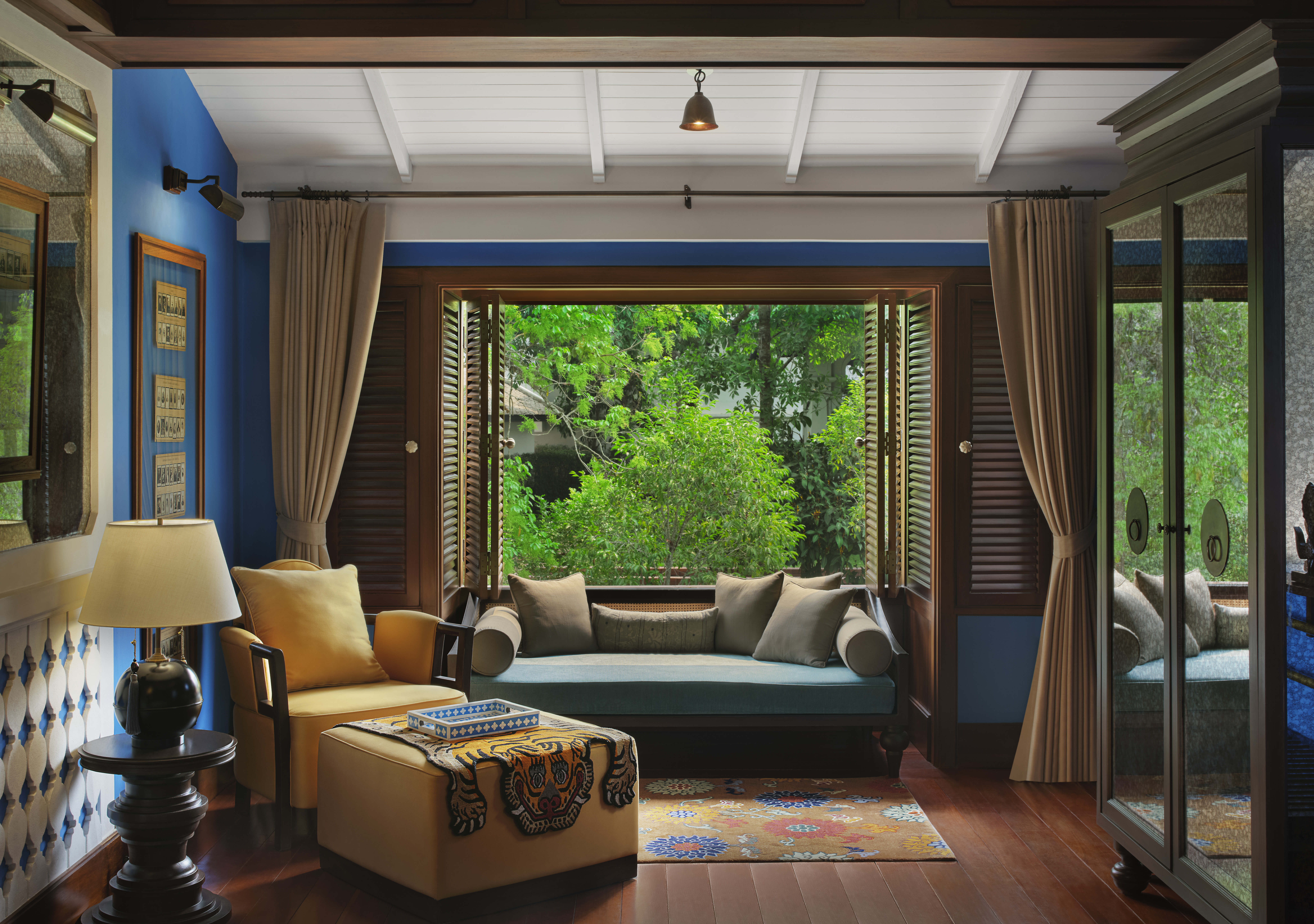
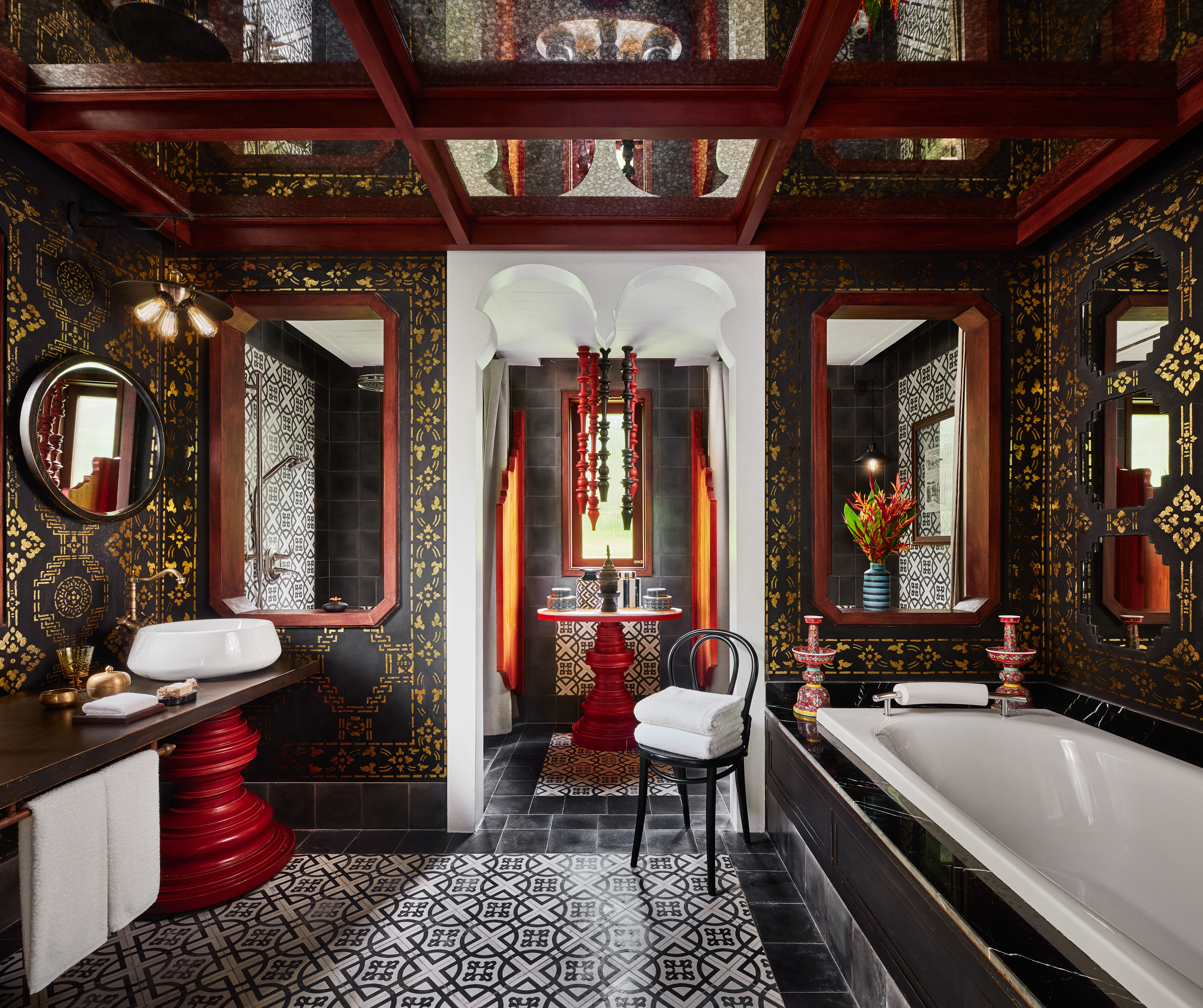
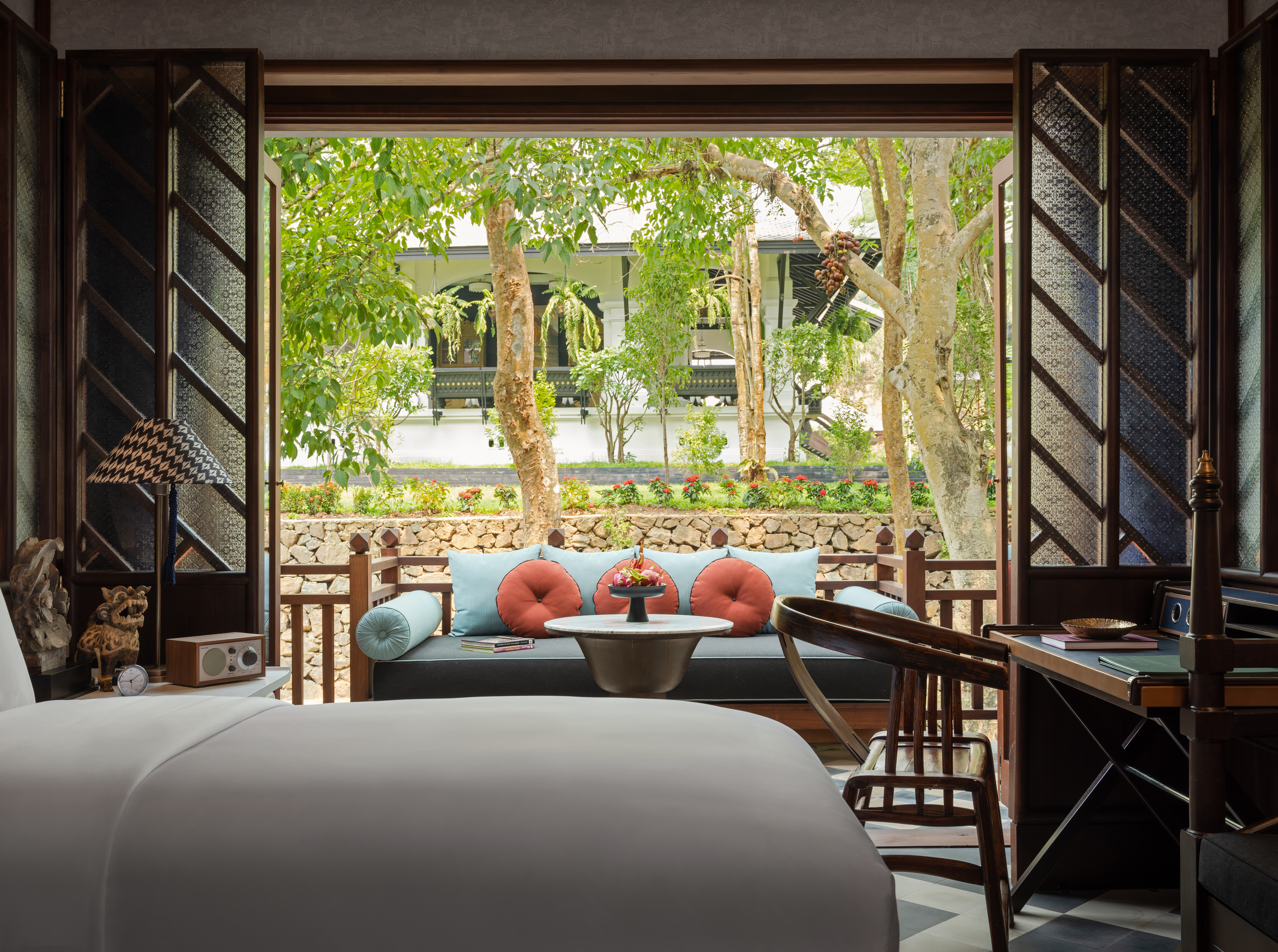
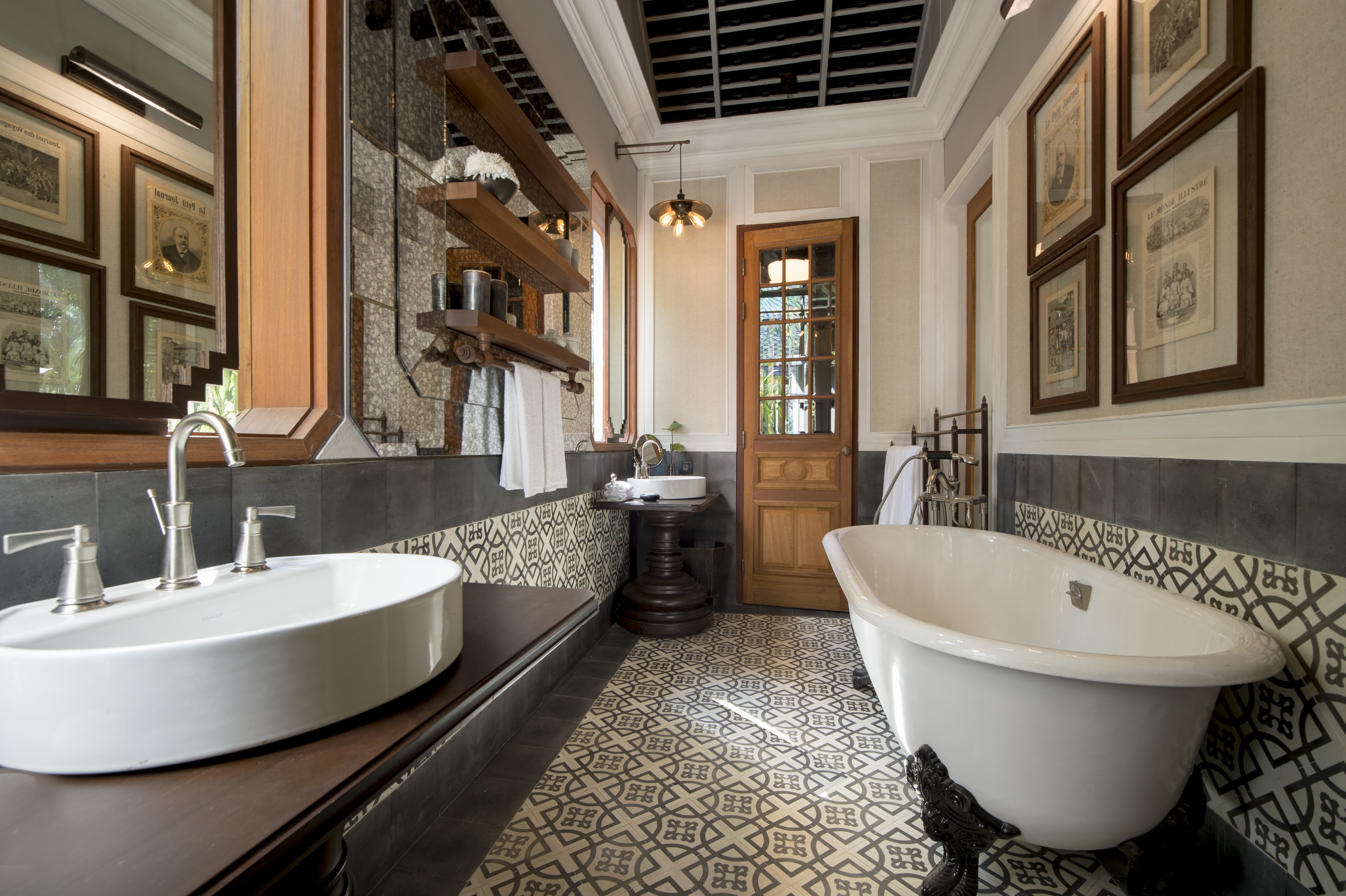
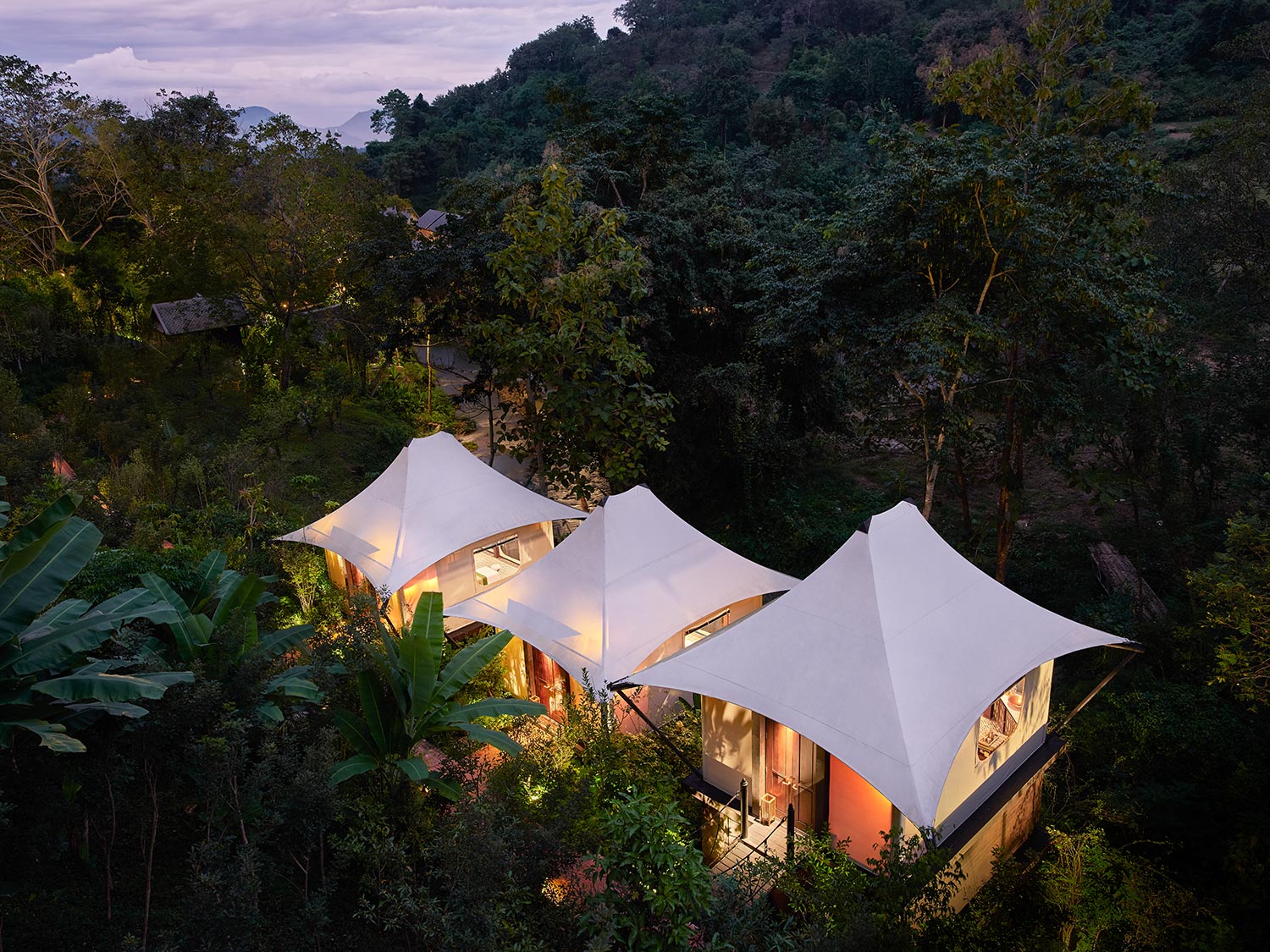
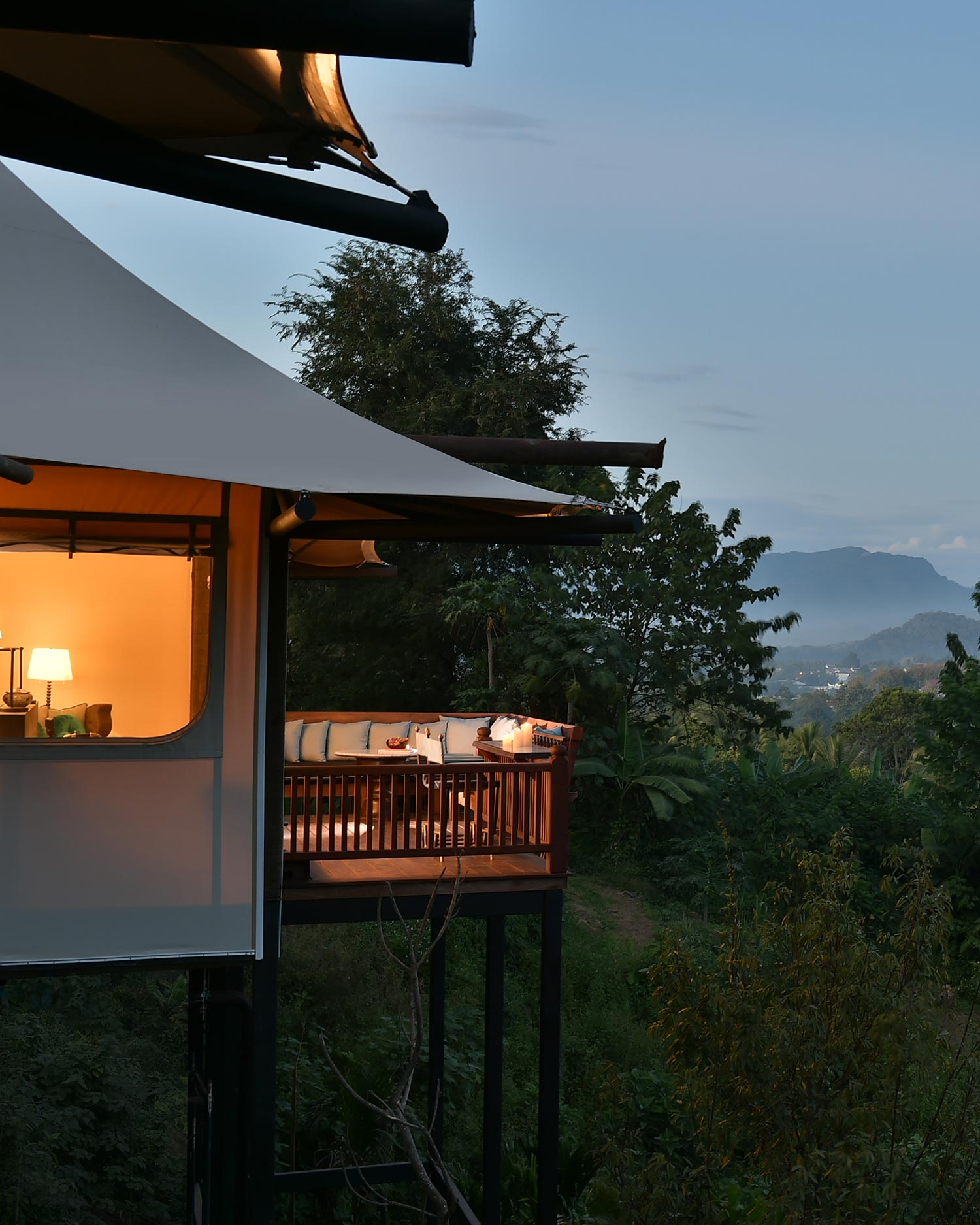
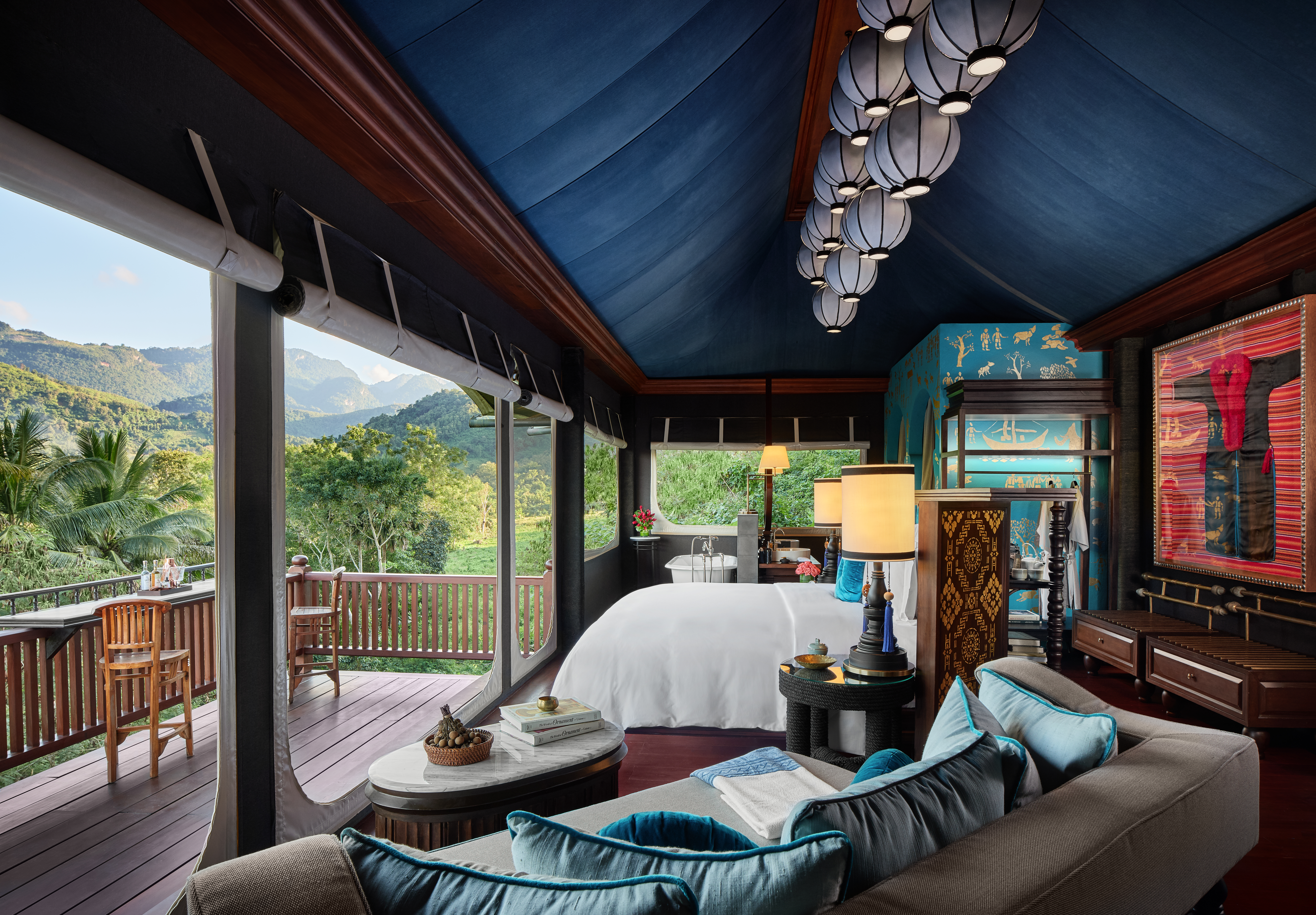
At Rosewood, the resulting buildings give the landscape room to assert itself. Accommodations climb the hillside, with tents occupying the highest ground. Reaching them requires a short uphill walk, rewarded with elevated views and a closer acquaintance with the breeze.
Down below, the Great House has a reassuring solidity. Broad staircases and substantial wooden banisters invite you to slow down; daybeds and booth seating extend from the terrace, making a convincing case for staying put. Dark teak gives the interiors weight, while gilded patterns, elaborate carvings, and an eclectic assortment of objects keep them from becoming overly solemn.
Bensley’s appetite for antiques helped shape these spaces. Friedman describes a process that began with finding things worth using again. New furniture followed when a suitable existing piece could not be found.
The effect encourages a little nosiness. An arrangement of oars recalls the region’s river trade. Decorative details borrow from Luang Prabang’s temples and royal buildings. Rooms, villas, and tents introduce explorers imagined as possible guests of Auguste Pavie, the French explorer who became a colonial diplomat. These imagined encounters provide the design with characters and stories to play with.
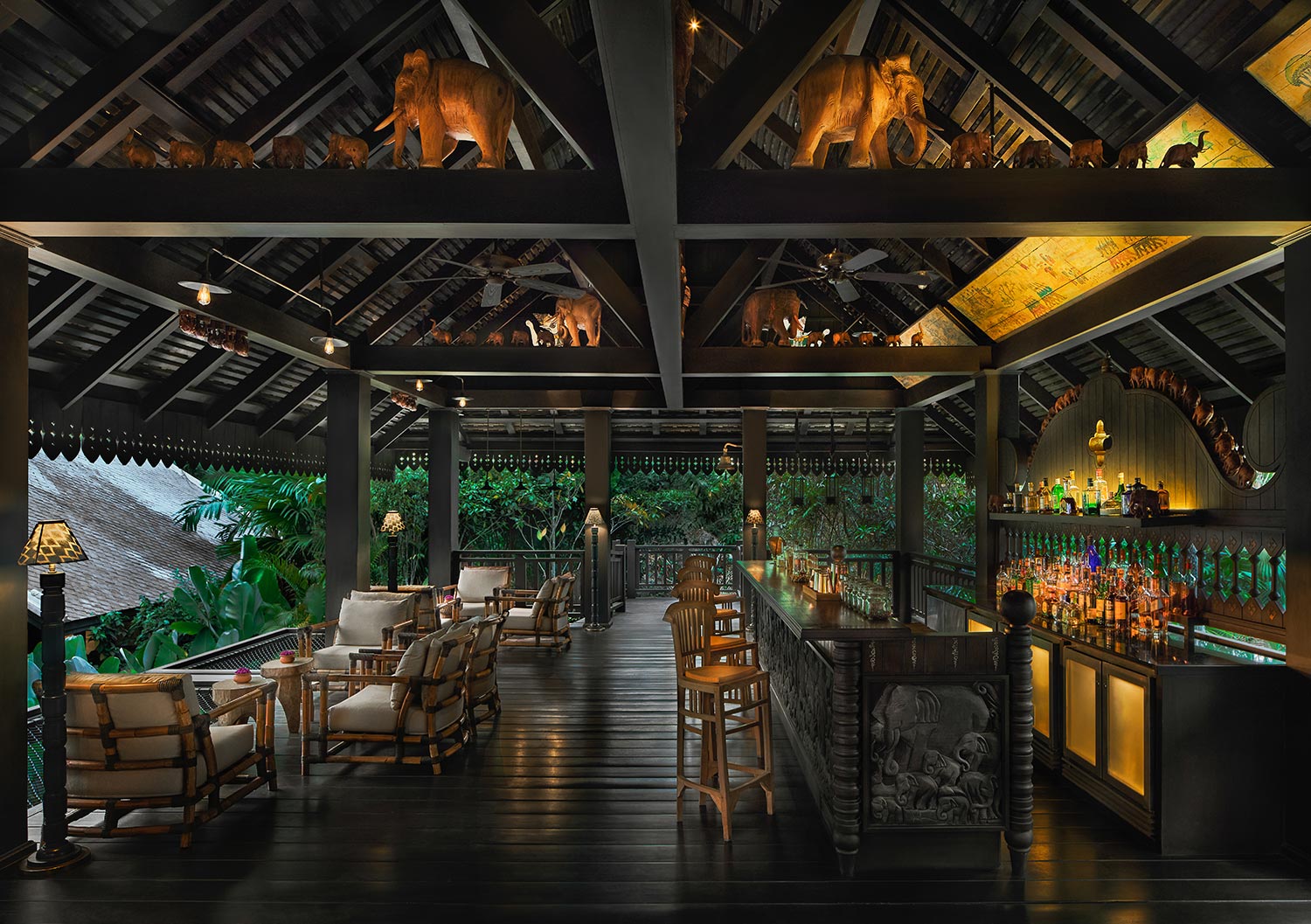
The Elephant Bridge Bar is perhaps the most entertaining expression of this approach. Spanning the river between the resort’s two sides, it turns the practical business of getting across the water into an opportunity for a drink. Dozens of carved elephants populate the space, recalling Luang Prabang’s history as a capital of Lan Xang, the kingdom of a million elephants.
It was also where the elemental idea behind our stay began to make a little more sense. Traditional Lao medicine describes health through the balance of Earth, Water, Fire, and Wind. You could find those associations throughout the property, although the place hardly needed a theory to explain its appeal. There was water beneath the bridges, wind around the hilltop tents, and enough substantial timber to give Earth its due.
Fire made its most persuasive appearance at dinner.
Chef Wochirawish “Ice” Lerttanapornsit guided us through the Laotian Signature menu, including kaeng som pa, a sour and spicy catfish soup with some of the aromatic punch of tom yum. Garlic, lemongrass, and galangal came from the resort’s Secret Garden, an organic plot above the suspension bridge. The black-pepper-infused Mountain Ritual cocktail supplied another kind of warmth.
For all the objects gathered inside the hotel, some of its most revealing details only registered once we left. This was my second visit to Luang Prabang, and parts of the Great House had struck me as familiar without my being able to place them. Walking past the temples and shophouses of the Old Quarter, I began to recognize the sources: a decorative flourish, a shape, a proportion.
Bensley has called Luang Prabang his favorite village in Southeast Asia. Back at Rosewood, that affection was easier to read. I found myself looking more closely at the woodwork and carvings, then looking past them toward the waterfall. It was still giving the swimming pool a run for its money.