

“At Ongcor, there are… ruins of such grandeur… that, at the first view, one is filled with profound admiration, and cannot but ask what has become of this powerful race, so civilized, so enlightened, the authors of these gigantic works?” (Henri Mouhot, 1826–1861)
Imagine being an explorer in the 19th century, hacking your way through the jungles of Cambodia and coming face-to-face with what we now know to be the largest temple complex in the world, entangled by tree roots and vines.
Such was the experience of Henri Mouhot, a French naturalist and explorer, who in 1860 described Angkor Wat in such alluring detail that adventurers across Europe longed to follow in his footsteps.
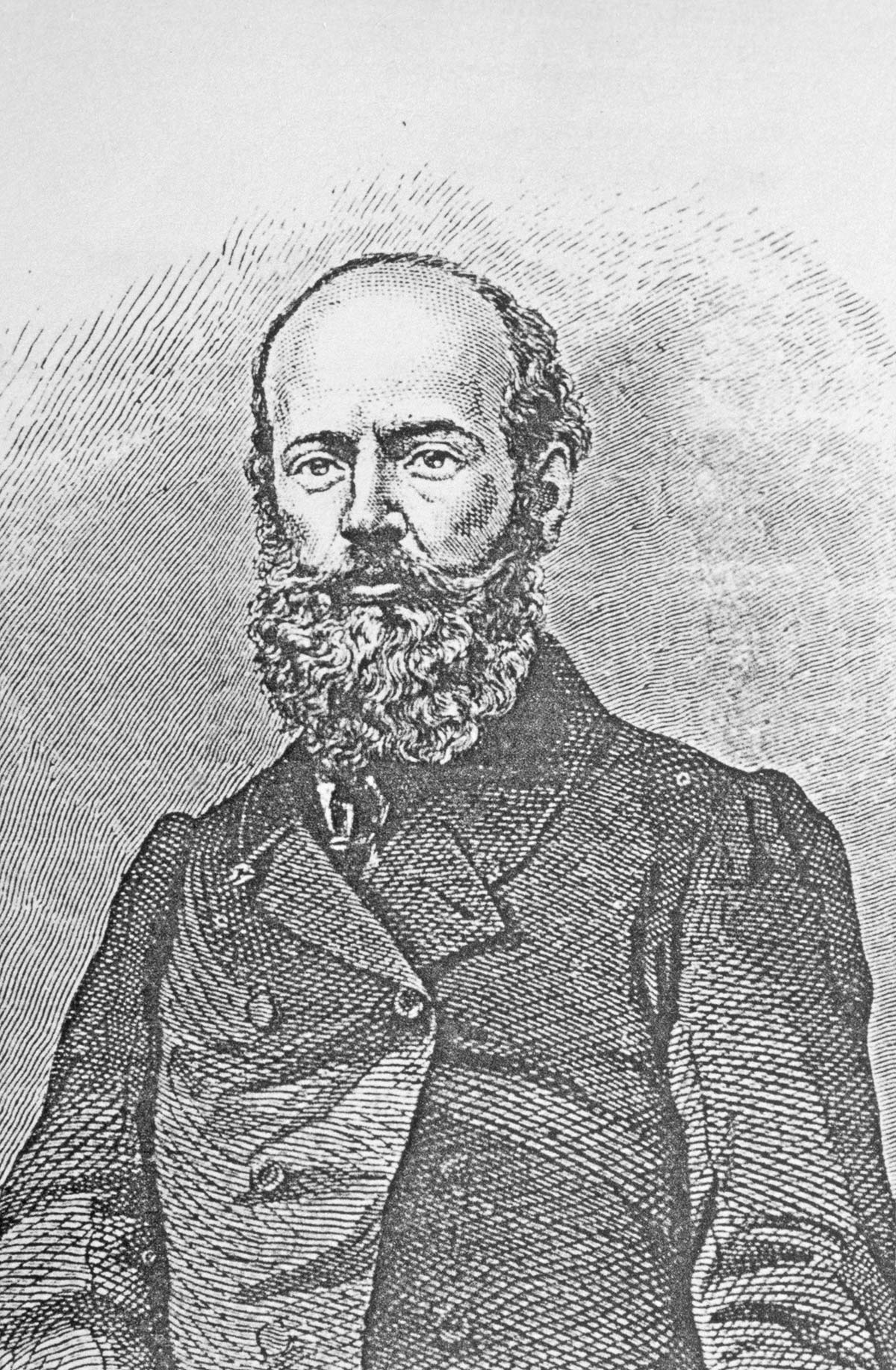
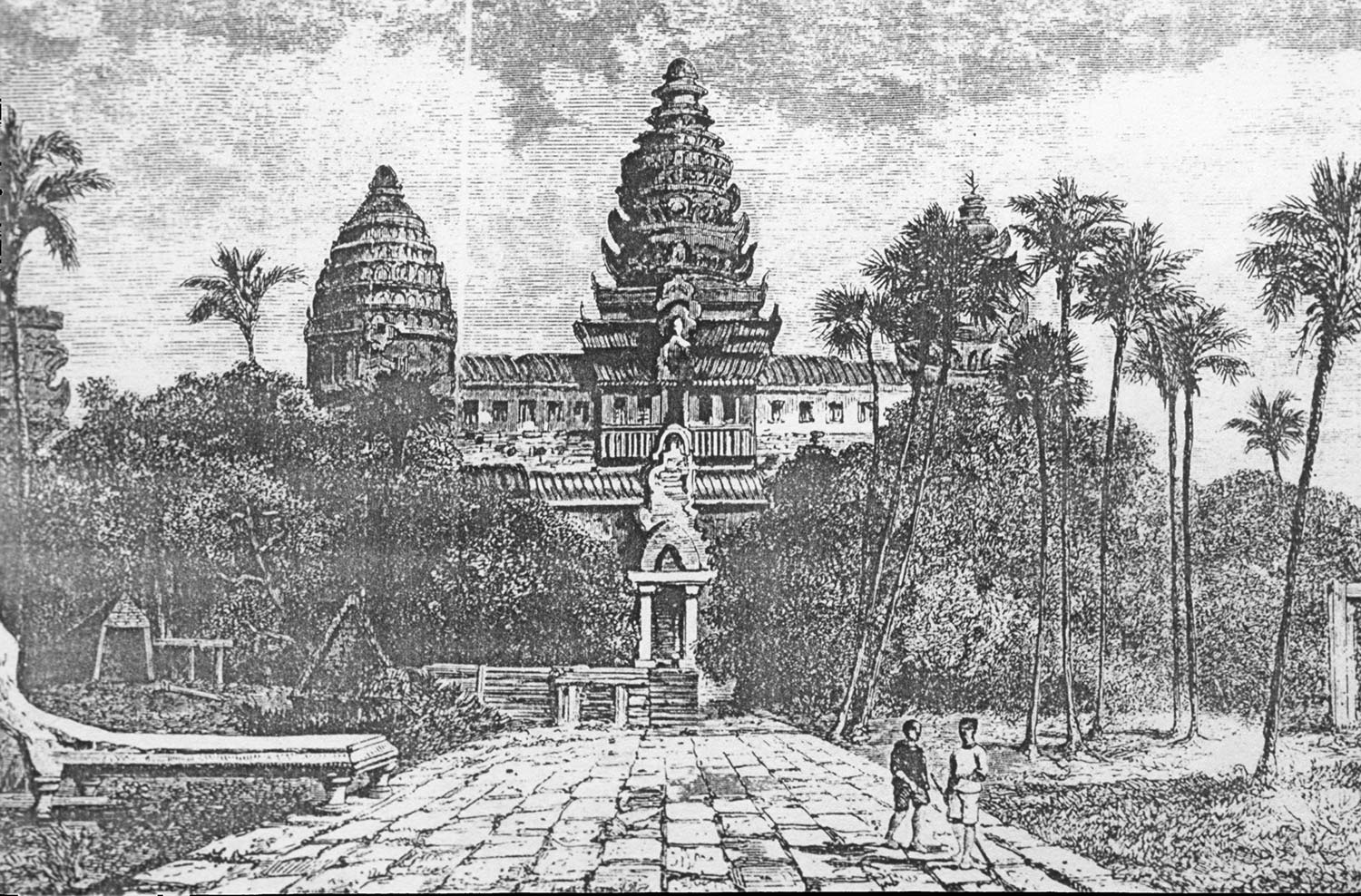
Since then, thousands of travelers have marveled at the beatific Buddhas and towering temples hidden in the Cambodian forest, though few have experienced the hardships Mouhot endured during his daring expeditions into largely uncharted territory.
Mouhot was not the first to encounter this extraordinary site. In his journals, he mentions Father Bouillevaux, a French missionary who had visited five years earlier, while Portuguese travelers in the 16th century had also written about the ruins.
Yet such is the power of the written word that when Mouhot’s Travels in Siam, Cambodia and Laos, 1858–1860 was published, readers were captivated by his evocative descriptions.
“One of these temples—a rival to that of Solomon and erected by some ancient Michael Angelo—might take an honorable place beside our most beautiful buildings.” This, of course, referred to Angkor Wat itself, the largest of many temples in the region.
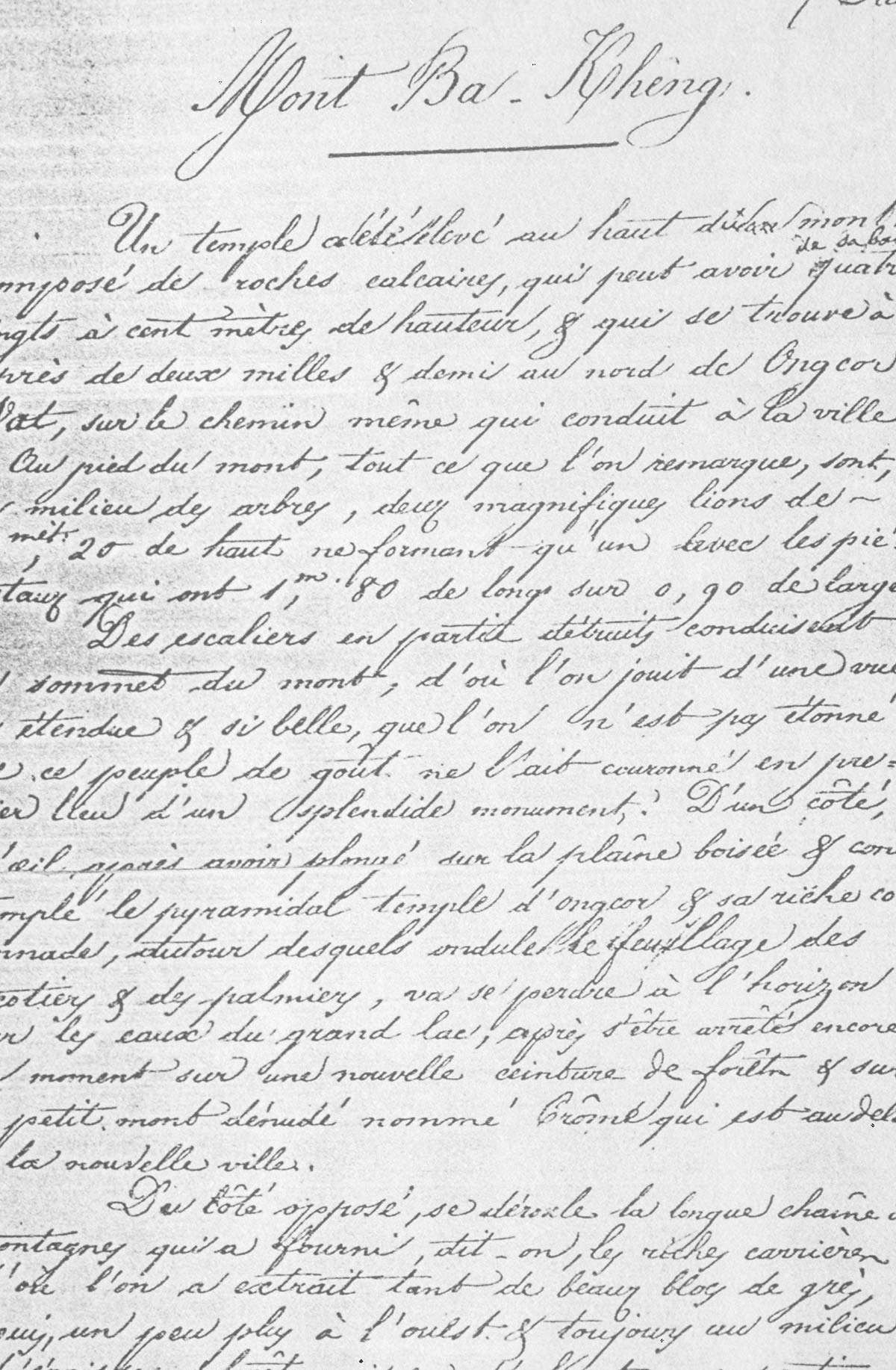
Despite “making no pretension whatever to architectural or archaeological acquirements,” Mouhot went on to record remarkably precise descriptions, noting compass directions and measurements of balconies and balustrades, galleries and porticos, columns and cornices.
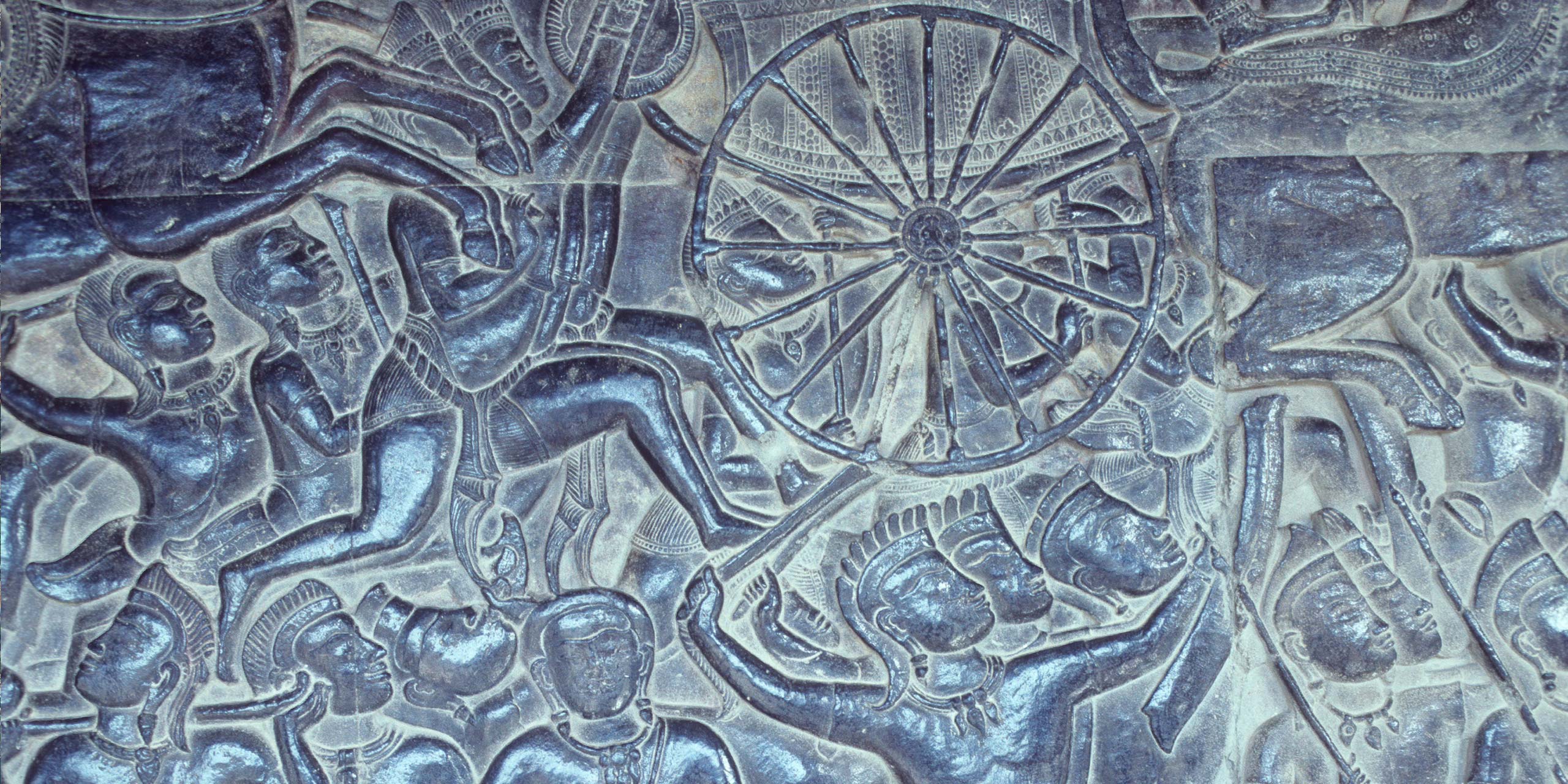
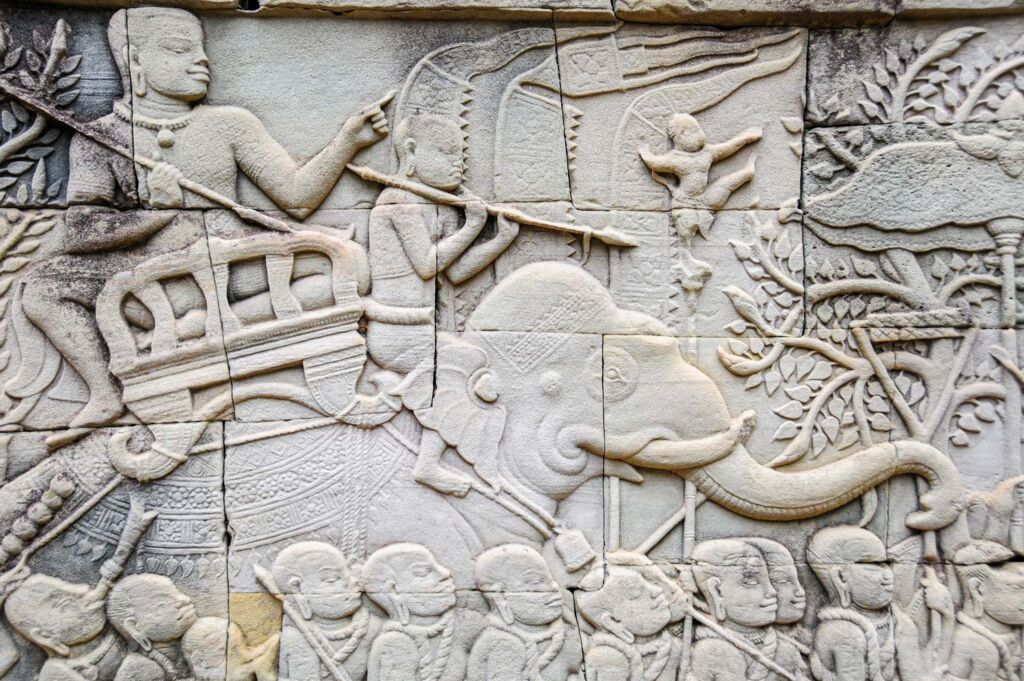
His detailed accounts of the bas-relief carvings in the galleries around Angkor Wat’s lower level must have stirred the imaginations of his contemporaries. He wrote of warriors mounted on tigers, angels borne aloft by griffins, and souls entering Paradise.
“These bas-reliefs are perfect; the rest are inferior in workmanship and expression,” Mouhot pronounced, and experts in stone carving continue to agree that they are without equal.
Although Mouhot lived during an era of colonial expansion, he was broad-minded enough to question the supposed benefits of European domination.
His journal is peppered with reflective passages: “Will the present movement of the nations of Europe towards the East result in good by introducing into these lands the blessings of our civilization? Or shall we, as blind instruments of boundless ambition, come hither as a scourge, to add to their present miseries?”
Though his expeditions were planned primarily around the collection of zoological specimens, he frequently diverged to consider the deeper implications of his travels.
Before his epic journey to Angkor, Mouhot acclimatized himself to tropical conditions during a trip up the Chao Phraya River from Bangkok to Ayutthaya, the former capital of Siam. There, he immediately encountered what would become a constant scourge of his Asian travels: mosquitoes, or, in Mouhot’s words, “those pestilent little vampires.”
Later, he would face fiercer adversaries, including tigers, leopards, rhinoceroses, crocodiles, scorpions, centipedes, and armies of leeches. Of these bloodsuckers, he observed, “Often my white trousers are dyed as red as those of a French soldier.”
Fortunately, Mouhot proved remarkably resilient and avoided serious illness, attributing his good health to “abstinence, all but total, from wine and spirits, and drinking only tea.”
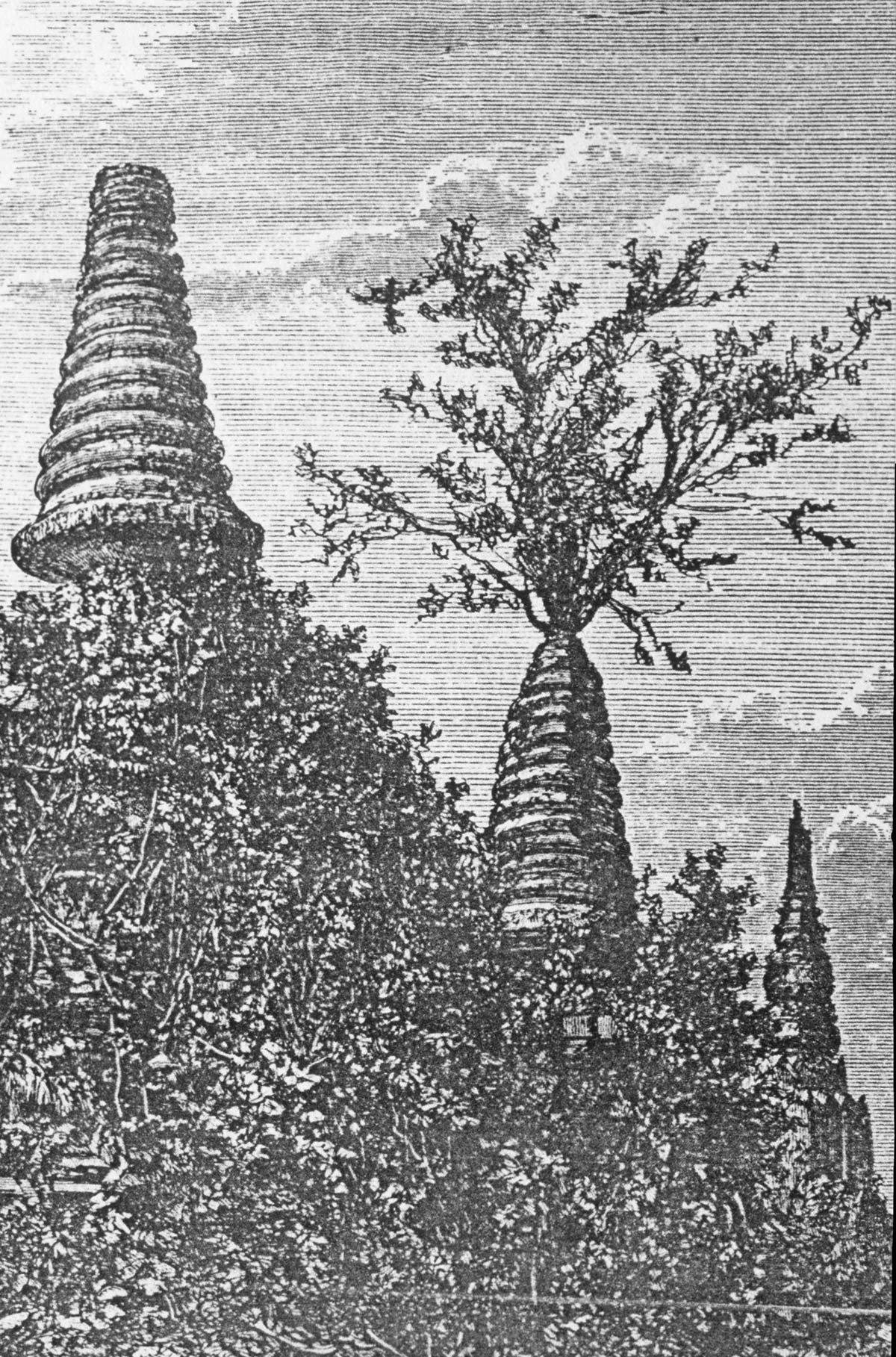
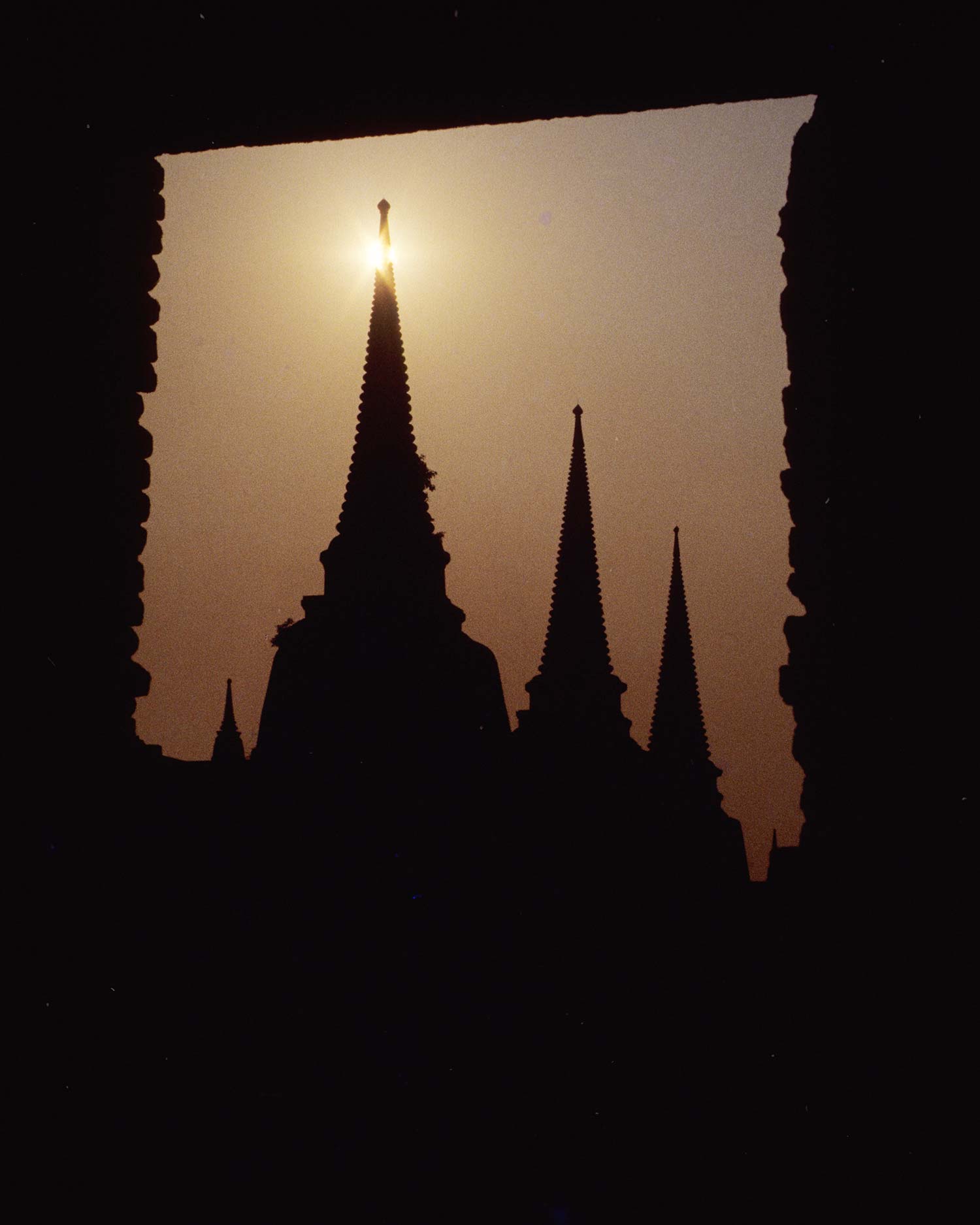
Though he wrote little about the ruins of Ayutthaya, his sketches reveal instantly recognizable sights, such as the three slender stupas at Wat Phra Si Sanphet, despite the vegetation that covered them in Mouhot’s day.
In December 1858, Mouhot embarked on his second and longest journey, lasting until April 1860 and including three weeks of detailed observation at Angkor, then known as Ongcor. Once again, the journey was far from comfortable. While recuperating in Chanthaburi from an infected cut on his foot, he remarked that “great spiders and other disgusting creatures, crawling about under the roof, would startle me by dropping on my face.”
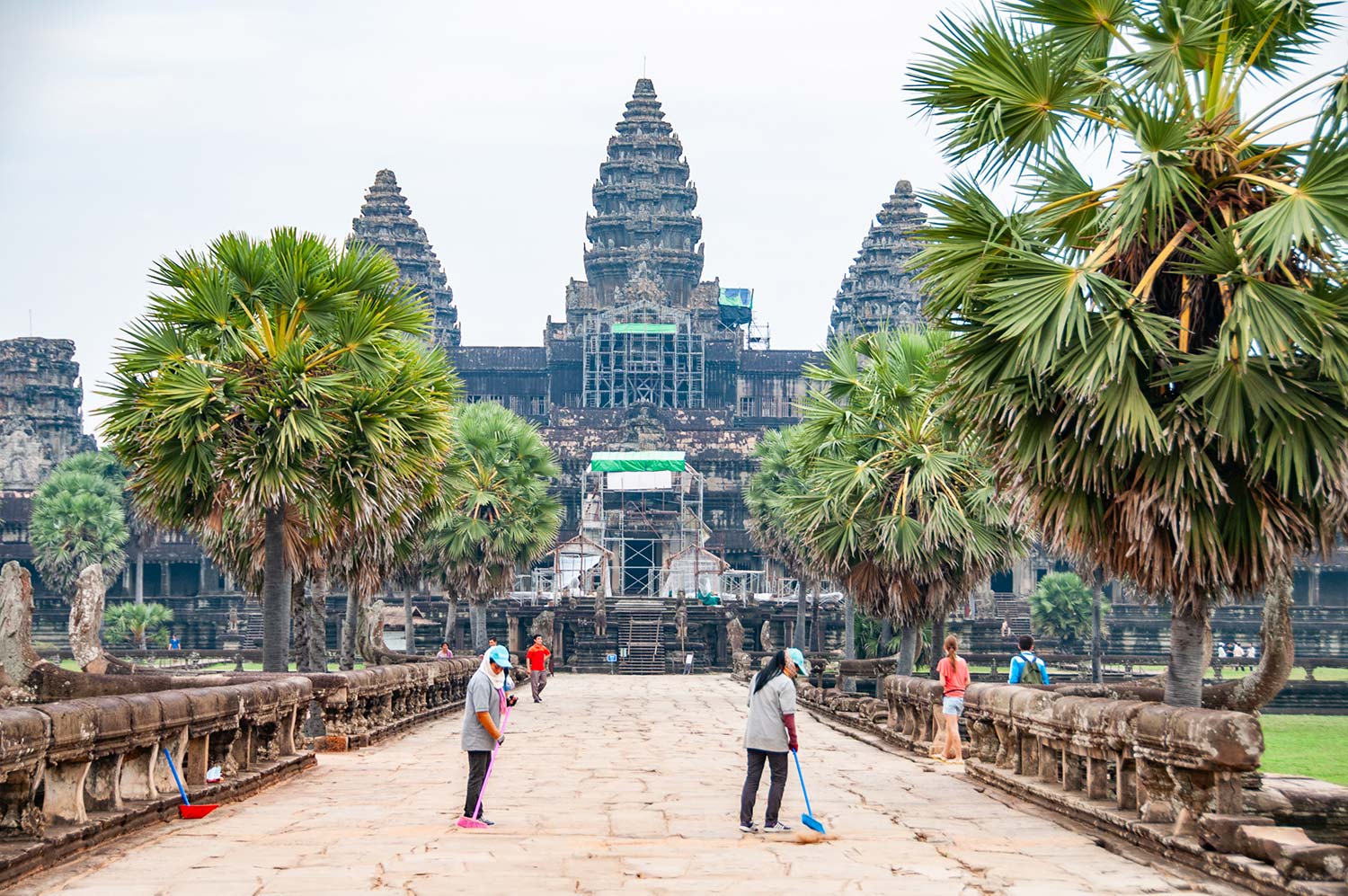
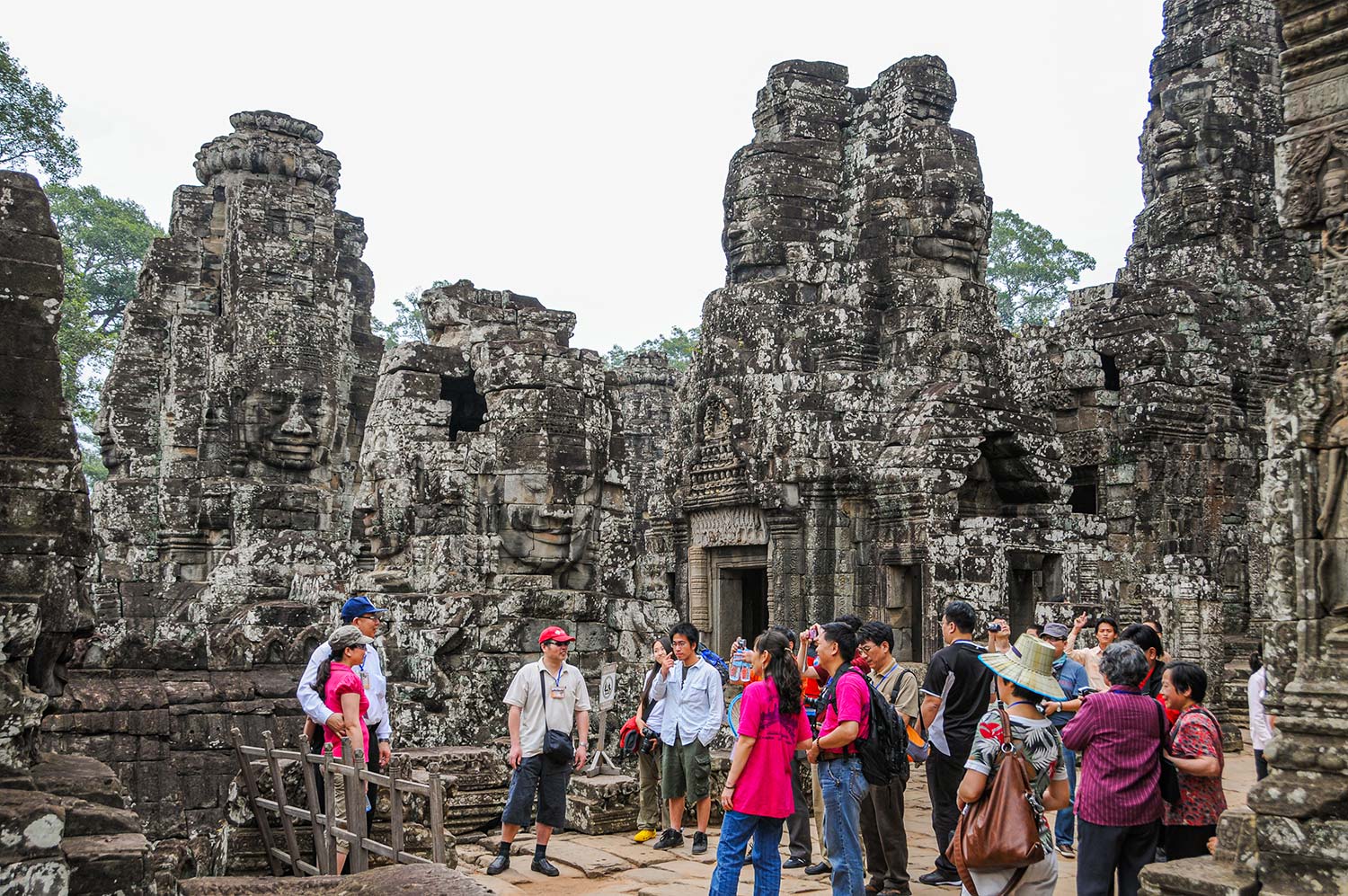
As with Ayutthaya, the scene at Angkor has changed little since Mouhot’s visit, apart from the presence of tour groups. He wrote, “All this region is now as lonely and deserted as it must have been full of life and cheerfulness; and the howling of wild animals, and the cries of a few birds, alone disturb the solitude.” Today’s visitor, by contrast, must contend with souvenir vendors and jostling crowds in search of the perfect photograph.
Thanks to the foresight of archaeologists who cleared the jungle around Angkor Wat and Angkor Thom, modern visitors can still appreciate the dramatic interaction between nature and architecture at Ta Prohm, a large temple complex east of Angkor Thom. Left largely in its natural state, Mouhot’s observation remains apt: “An exuberant vegetation has overgrown everything, galleries and towers, so that it is difficult to force a passage.”
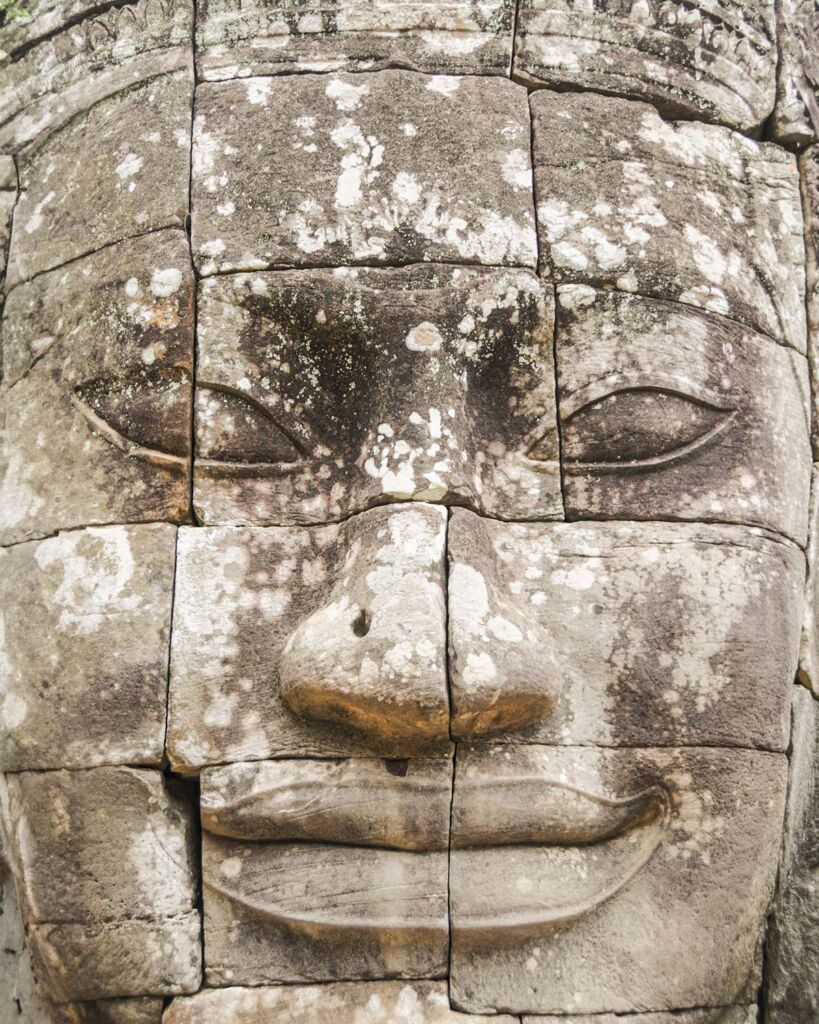
The crowning glory of this “exuberant vegetation” is the towering fig and silk-cotton trees, many of which straddle the temple walls and grip the stones in a vice-like embrace. For many visitors, this image of nature reclaiming architecture is Angkor’s most enduring memory.
Mouhot’s third journey was a brief trip to Petchaburi in 1860, after which he encountered seemingly insurmountable obstacles while attempting to travel north into Laos. Setting out in October 1860, he was refused permission to proceed by an official in Chaiyaphum and returned to Bangkok in February 1861.
Persistence finally paid off. In July 1861, Mouhot entered Luang Prabang, the former royal capital of Laos, which he described as “a delightful little town,” a sentiment shared by many visitors today. With no reliable prior accounts to guide him, he wrote, “To consult any existing maps of Indo-China for my guidance in the interior of Laos would have been a folly, no traveler… having penetrated east Laos, or published any authentic information respecting it.”
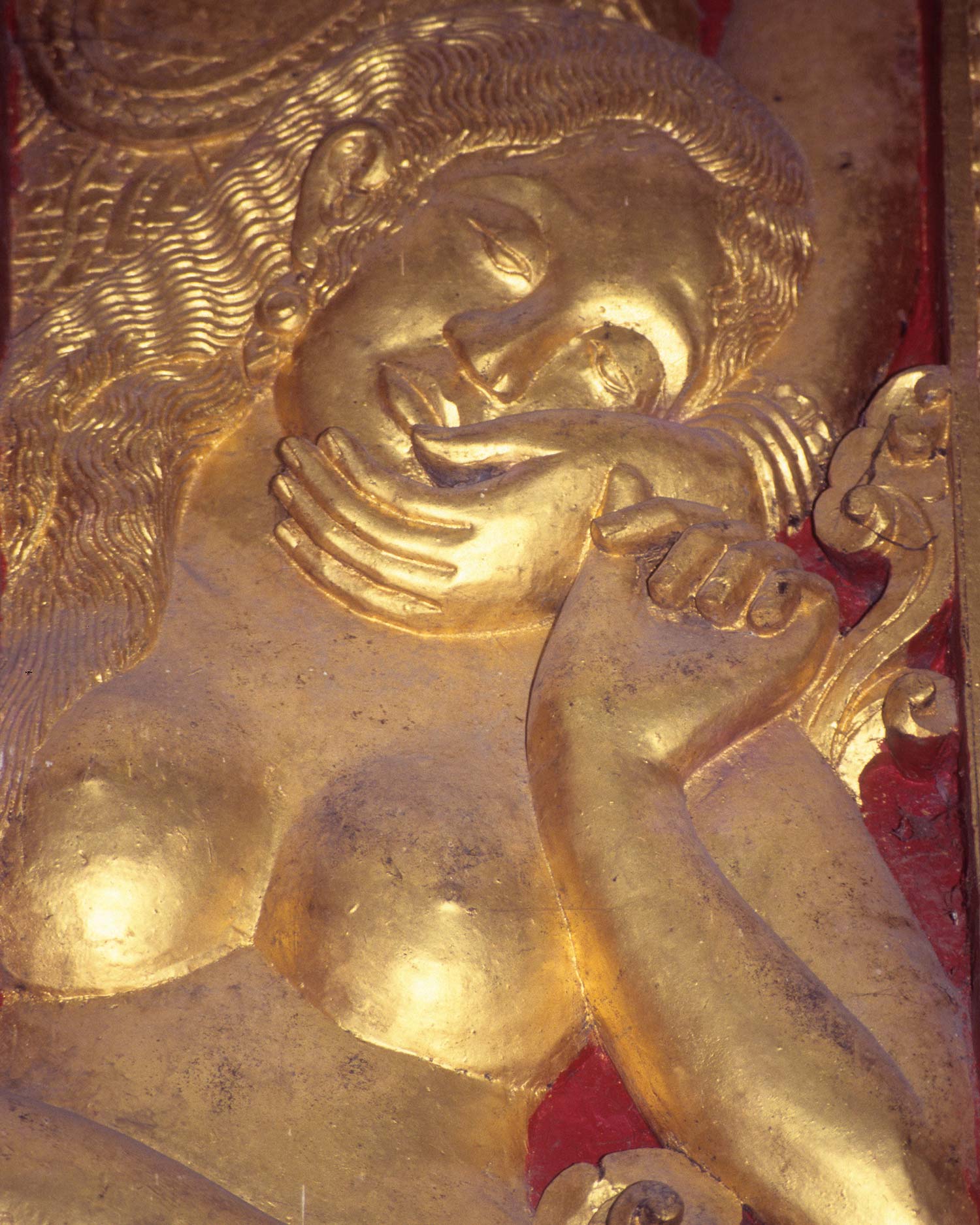
Situated on a narrow, phallic-shaped spur of land at the confluence of the Mekong and Nam Khan rivers, Luang Prabang is compact enough to explore its ancient temples on foot. The most striking is Wat Xieng Thong, originally built in 1560, with its sweeping eaves, vivid mosaics on the Red Chapel, and sensual carvings on the Funerary Carriage Hall. Mouhot found the people affable and intelligent, and was received with great pomp by the local king.
He took pride in the many new species he had collected, writing poignantly that “even if destined here to meet my death, I would not change my lot for all the joys and pleasures of the civilized world.” He also recorded his plans: “…next January or March I will try to go north or east… and go down the Mekong in July or August 1862.”
It was not to be. Despite surviving every imaginable tropical hardship, Mouhot succumbed to a sudden fever, likely malaria, and died in November 1861. One of his final journal entries recounts a rhinoceros hunt, during which a village chief reserved the honor of delivering the killing blow for Mouhot himself.
Perhaps Mouhot’s greatest achievement, beyond his bravery as an explorer and skill as a naturalist, was his ability to form deep and genuine relationships with people from all walks of life. He wrote movingly of the sadness he felt when one of his servants, Song, left him in Luang Prabang to return to Bangkok, worrying deeply for the young man’s safety.
The devotion of his favorite servant, Phrai, is evident in the fact that he somehow transported all Mouhot’s journals and specimens back to Bangkok, from where they were shipped to Europe. Without such loyalty, the name of Henri Mouhot might have faded into obscurity, and his tomb on the banks of the Nam Khan River near Luang Prabang would be as overgrown as any forgotten temple.