
In a potato field in Attapeu Province, a farmer named Mr. Hat made a discovery that would stop most hearts: three American 500-pound bombs, buried in his soil for more than half a century.
UXO Lao teams destroyed them in May 2026. A month earlier, in a coffee plantation near Paksong, village chief Somphone Duangchampa, already scarred by a UXO accident decades ago, cleared grass and found another. And on an ordinary January morning in Luang Prabang Province, an excavator operator digging foundations for a new house uncovered a 250-pound MK81 bomb.
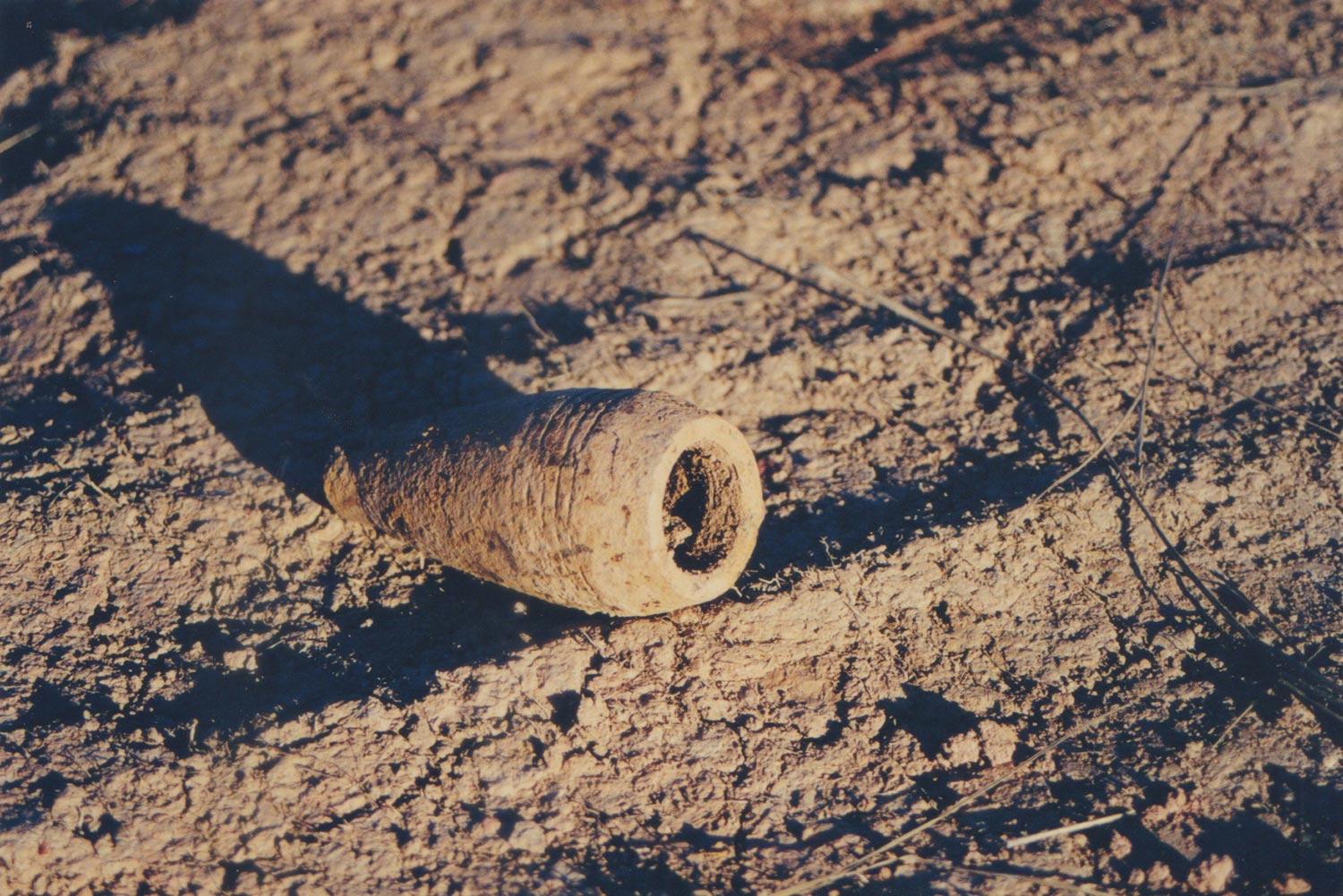
The discoveries keep coming, week after week, year after year. More than fifty years after the last American bomber left Laotian skies and the US lost an almost decade-long covert war to the Laotian communists, the country is still digging itself out from under the largest aerial bombardment in the history of warfare.
In 2007, I co-wrote The Most Secret Place on Earth, a history of the US covert war in Laos (1964–1973), with the film’s director, Marc Eberle. The documentary aired in some thirty countries and remains the gold standard on one of the most savage conflicts the US instigated after World War II. Part of the film examined the war’s bombing legacy.
In more than half a million bombing runs, the US Air Force dropped over two million tons of bombs on Laos in an effort to disrupt the Ho Chi Minh Trail, a supply network from North to South Vietnam that ran through parts of Laos and Cambodia.
On average, US planes dropped the equivalent of a B-52’s payload on Laos every eight minutes, 24 hours a day, for nine years. This makes Laos the most heavily bombed country, per capita, in the history of warfare. The Ho Chi Minh Trail remained elusive, the movement of supplies never stopped, and despite the US killing more than a million people in Vietnam, Laos, and Cambodia, it lost the war across the region, packed up and left. But the legacy continues to reverberate, playing out cruelly in the Laotian countryside to this day.
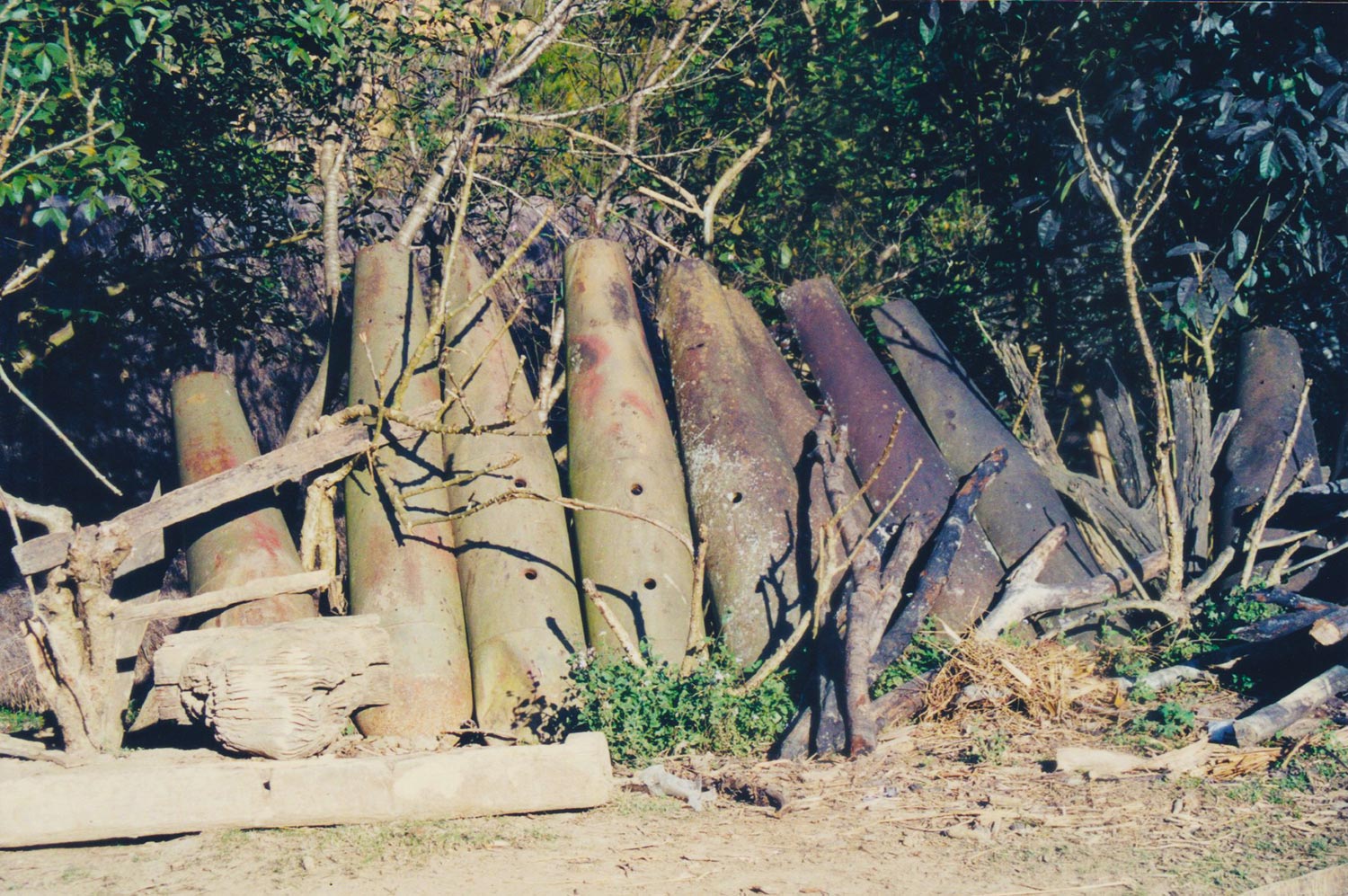
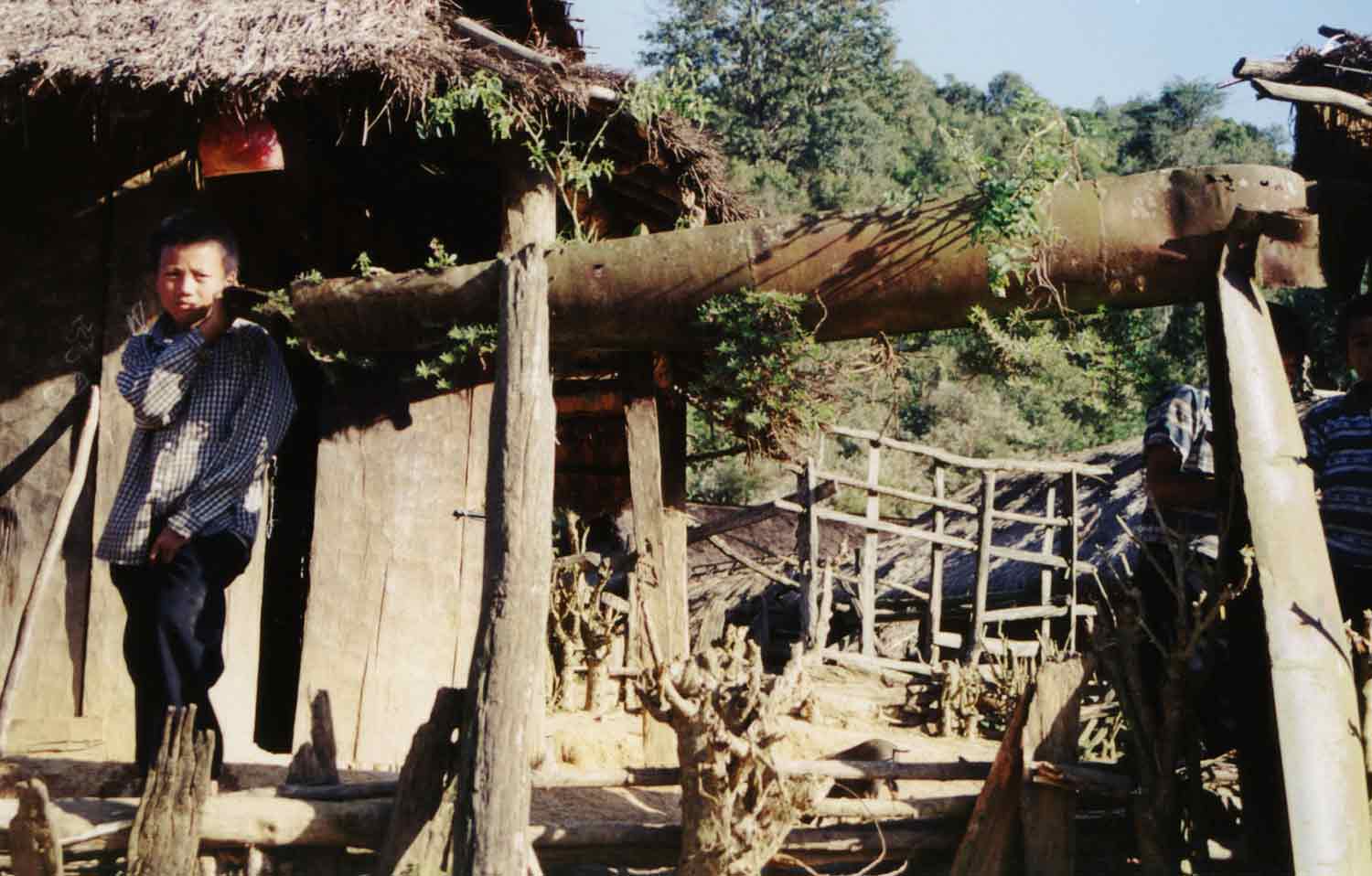
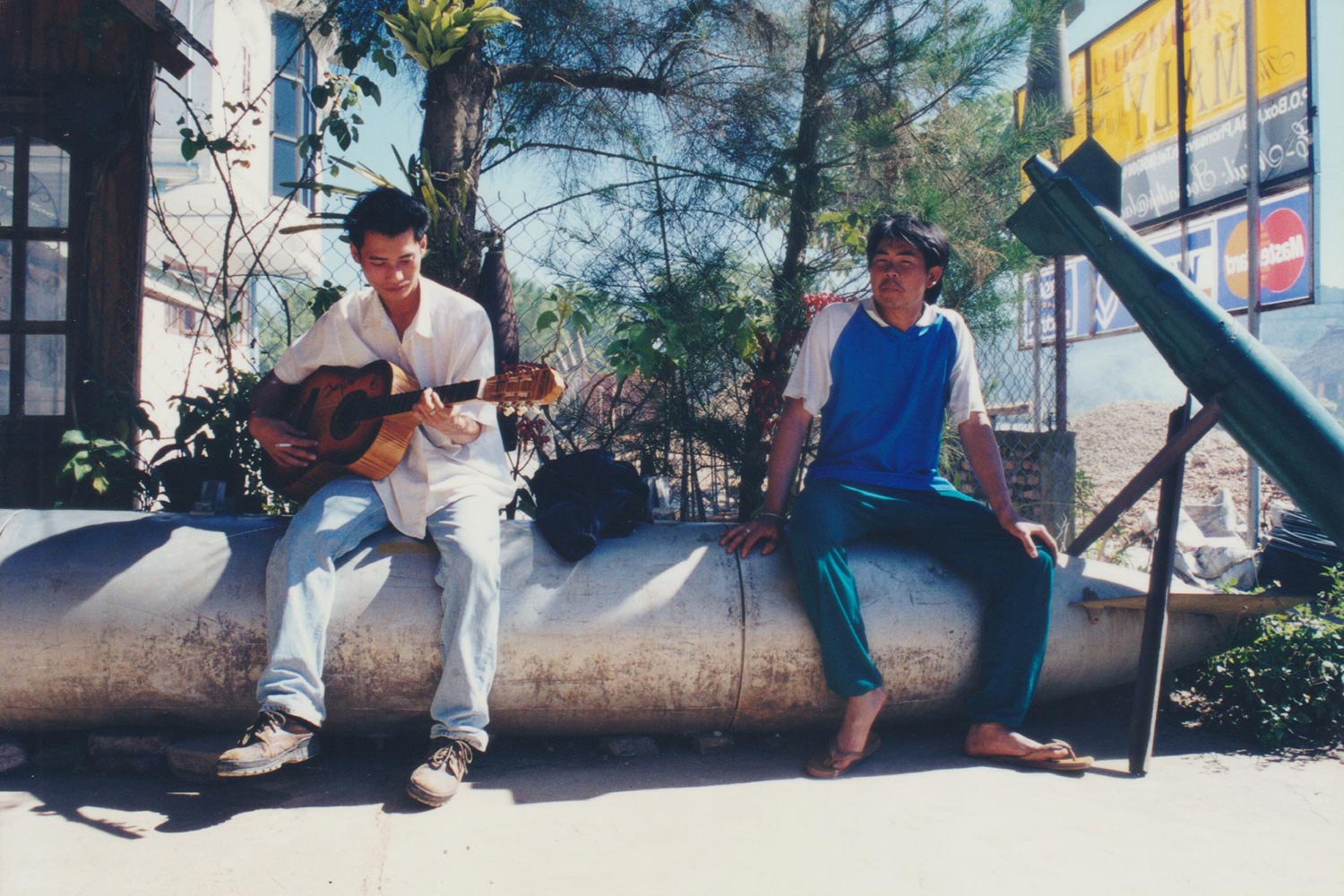
On the Plain of Jars, the most contested part of Laos during the war, the countryside looks like a giant’s golf course, a sea of green pitted with bomb craters. During our research in the area in 2003, we found entire villages built from war scrap, along with plenty of rusty bombs and other military hardware.
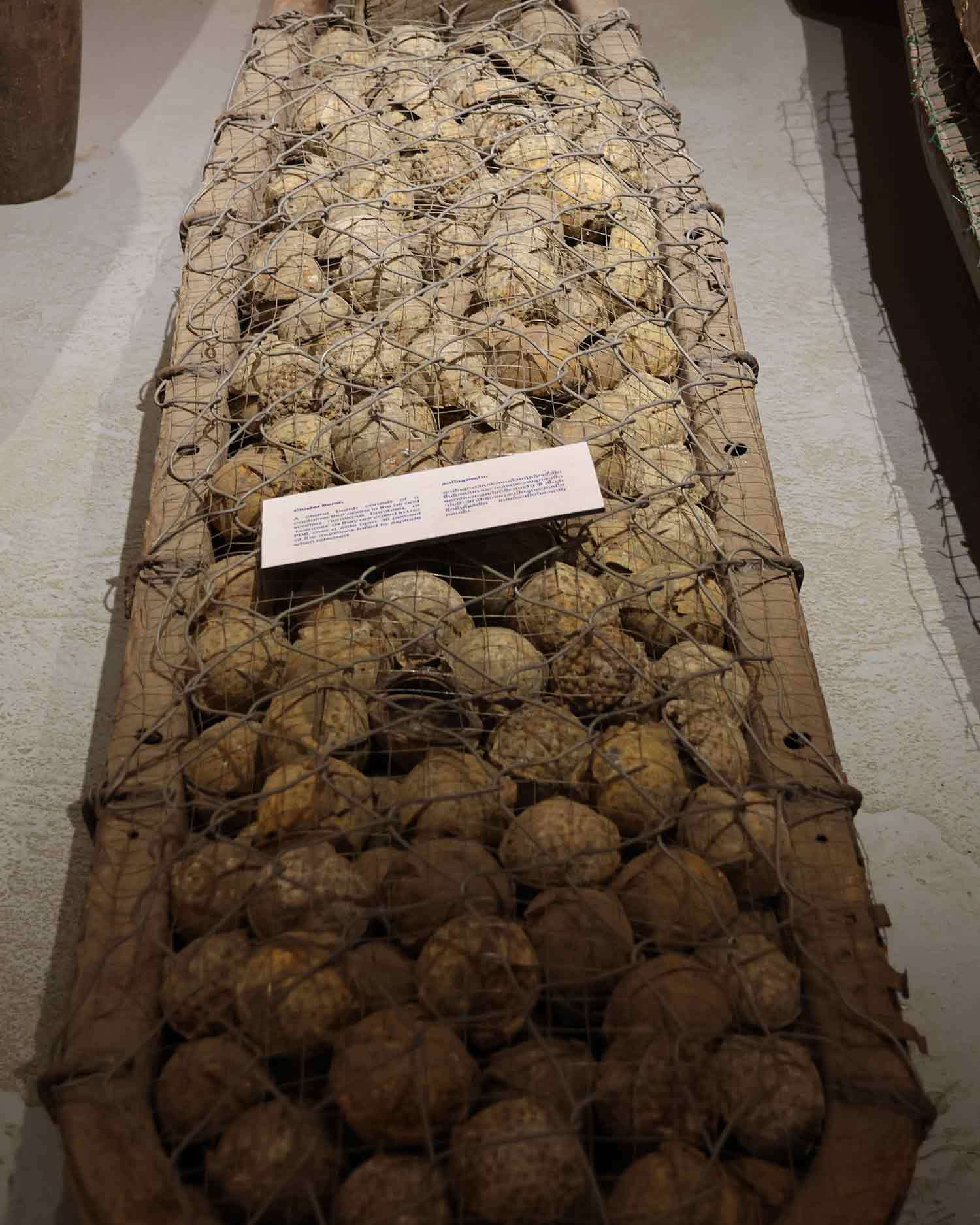
The US dropped some 270 million cluster submunitions on Laos more than 50 years ago. An estimated 30% of these bomblets failed to detonate, often disappearing into the earth with the monsoon rains, and remain a danger today. Since 1975, some 22,000 Laotians have been killed or maimed by unexploded munitions, half of them children, who often find and play with the bomblets. In 2025 alone, 15 accidents resulted in 25 victims, including six fatalities. Beyond the human toll, UXO hobbles agricultural development and the country’s economy.
The Lao government established the Lao National Unexploded Ordnance Programme (UXO Lao) with support from UNDP, UNICEF and other partners in 1996. Through explosive ordnance risk education, the task force has reached over 4.9 million people across more than 14,000 villages, including over 2.1 million children. More than 58,000 hectares have been cleared. Technical surveys have identified over 6,700 Confirmed Hazardous Area sites covering more than 59,000 hectares. In total, over 1.89 million UXO items have been destroyed, comprising more than 1 million cluster munitions and over 800,000 other items such as aircraft bombs and landmines. Since the 1990s, the US has invested hundreds of millions of dollars in clearance, victim assistance, risk education and training for Lao agencies through its Conventional Weapons Destruction program, though many observers say this is grossly insufficient. All clearance work combined amounts to just 2.25% of the estimated UXO littering the country.
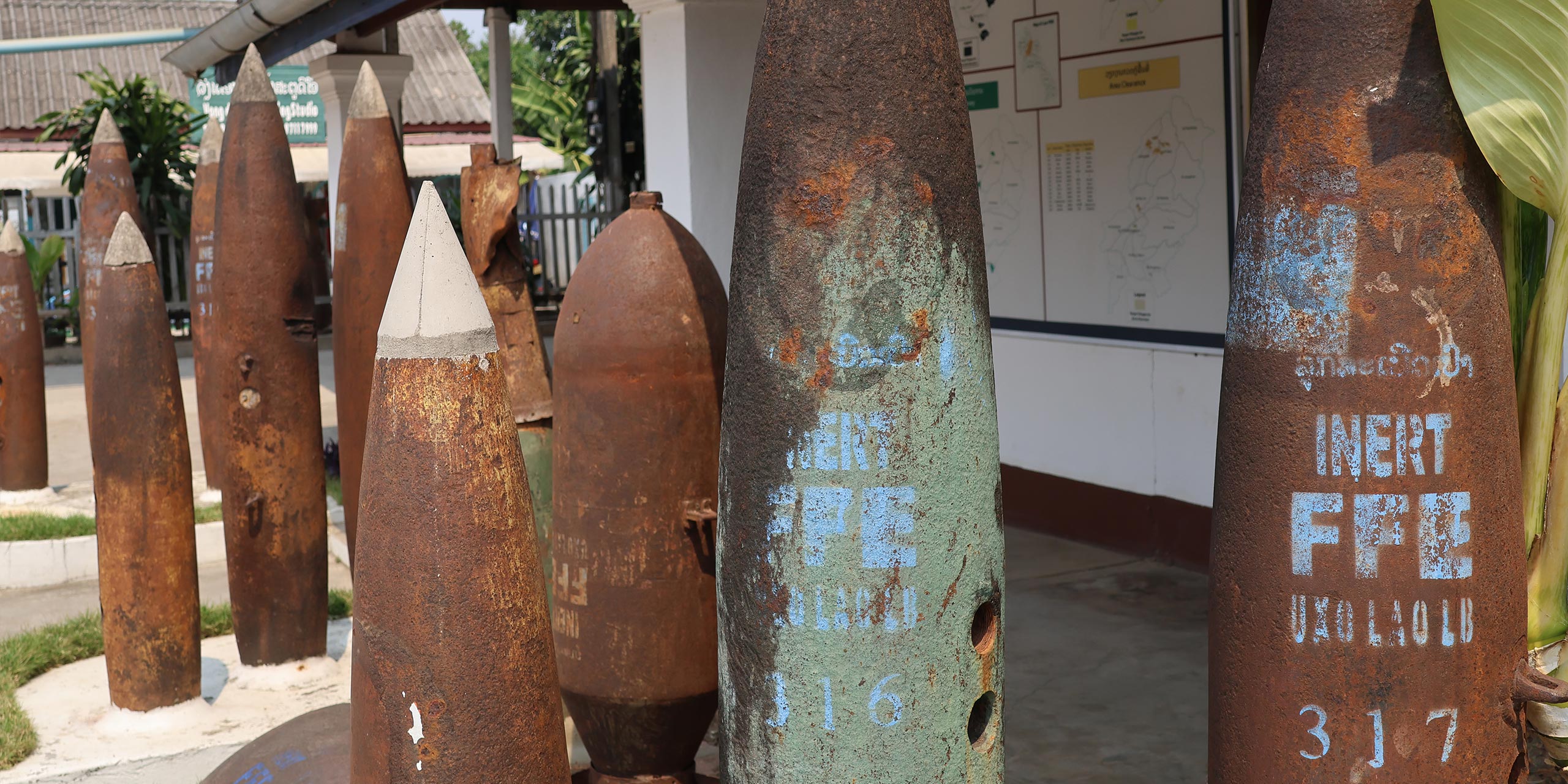
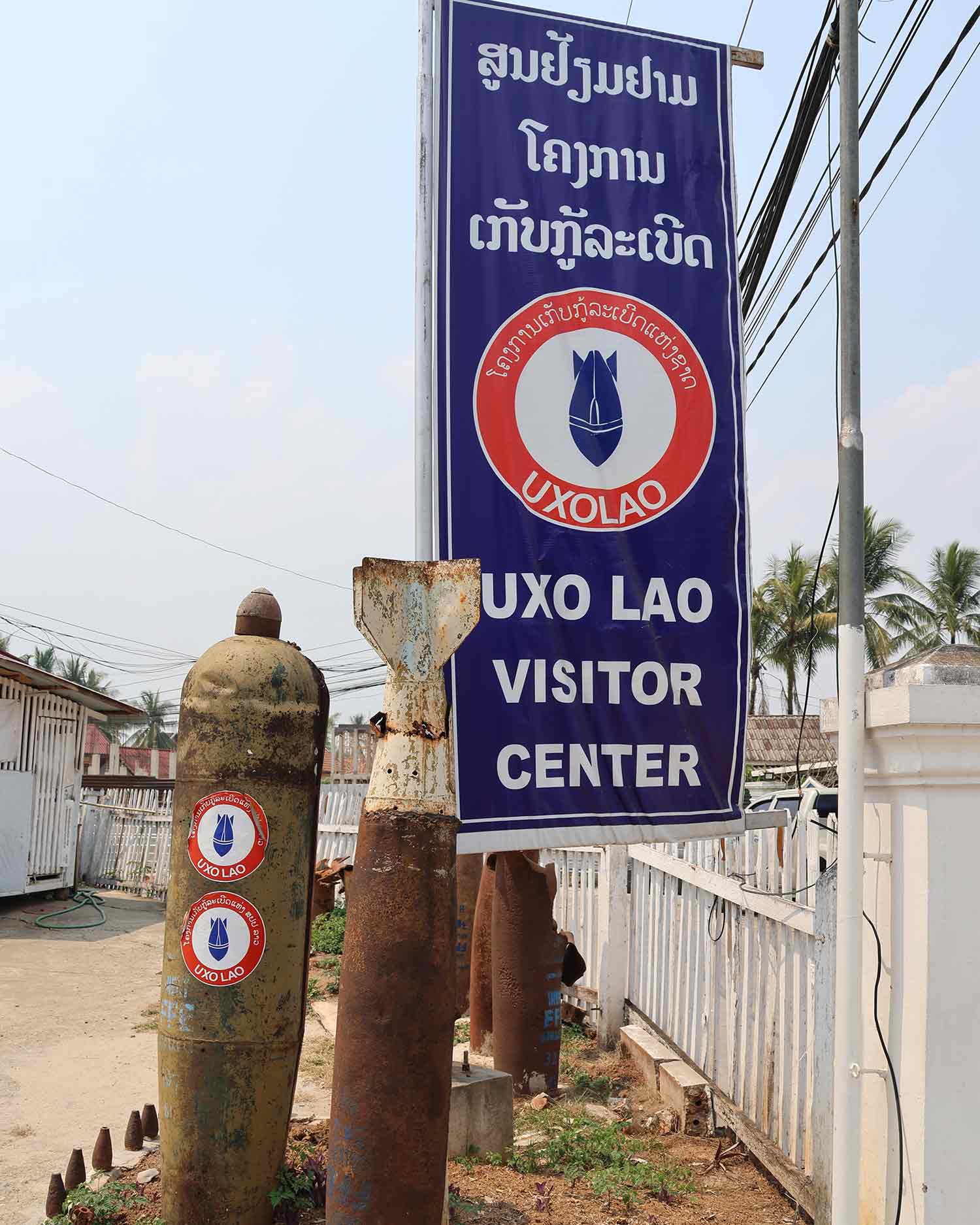
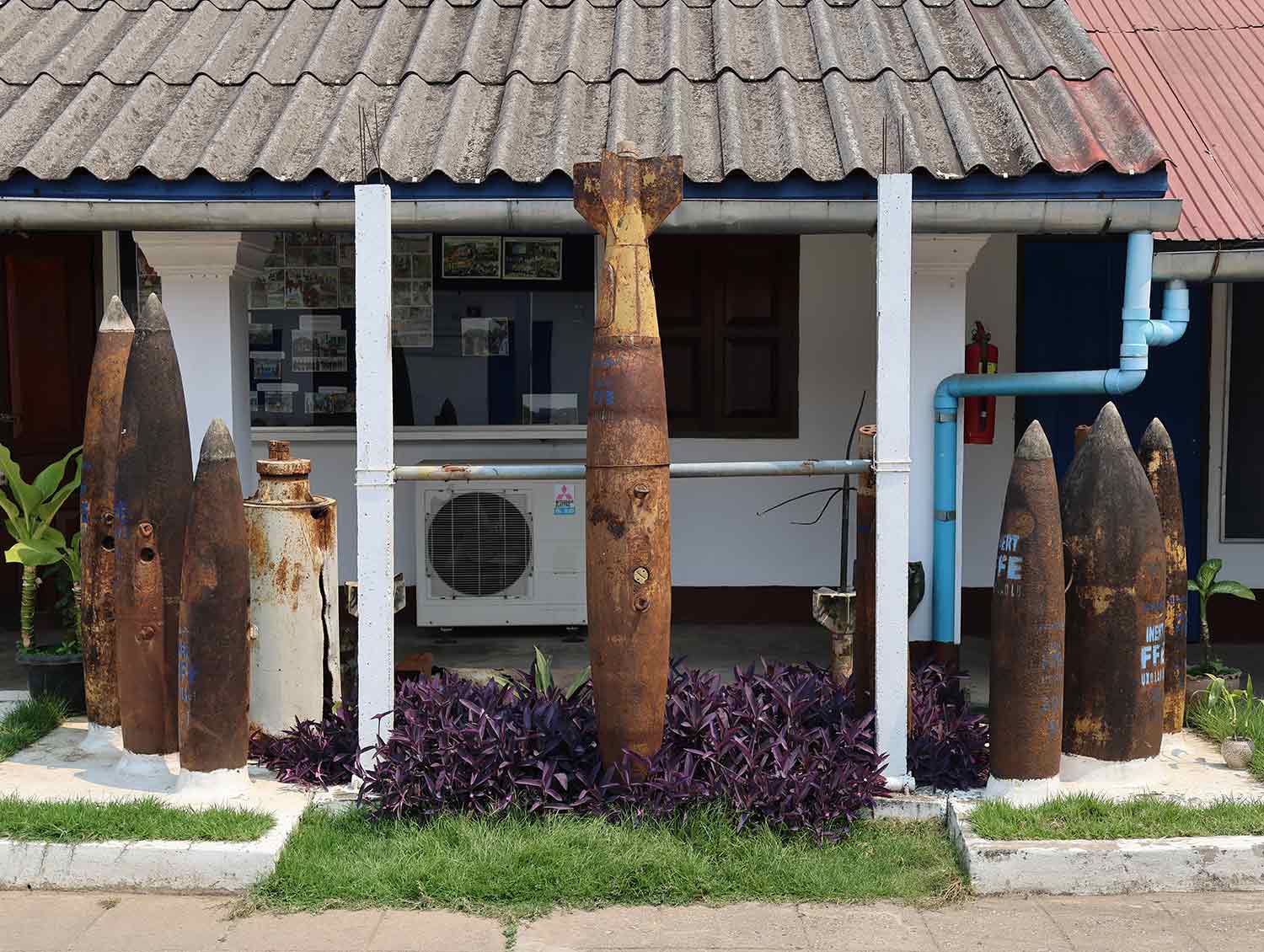
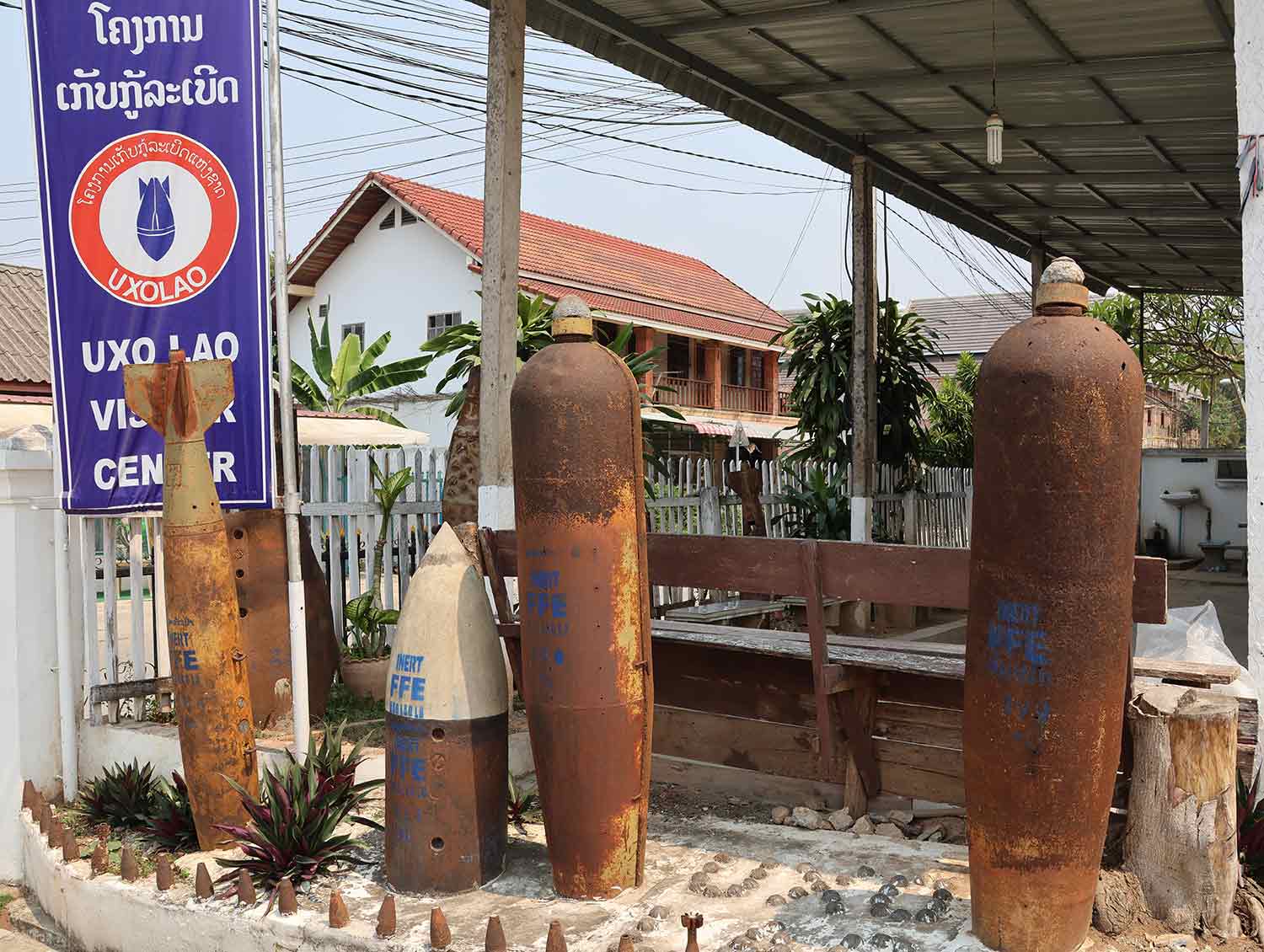
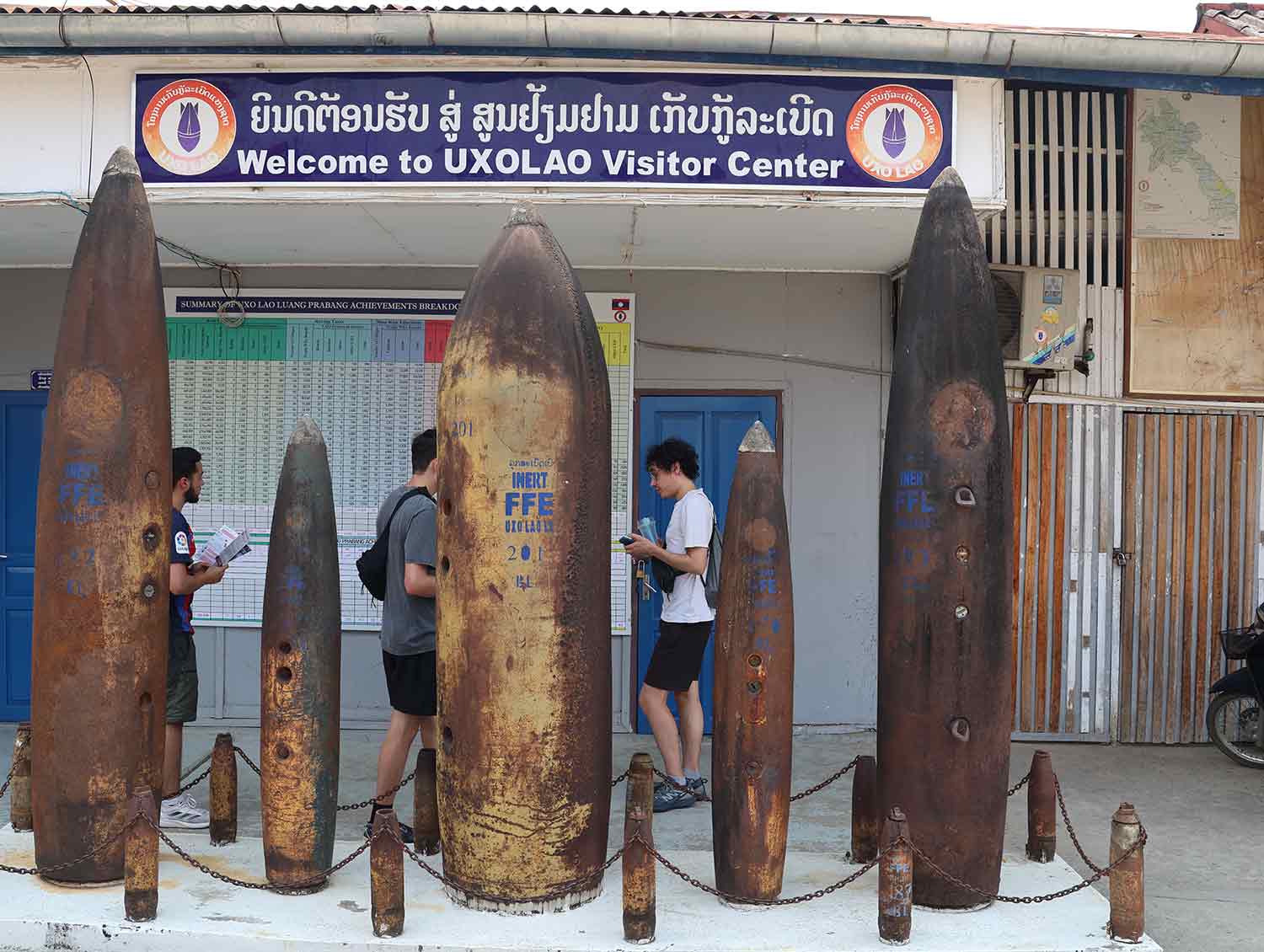
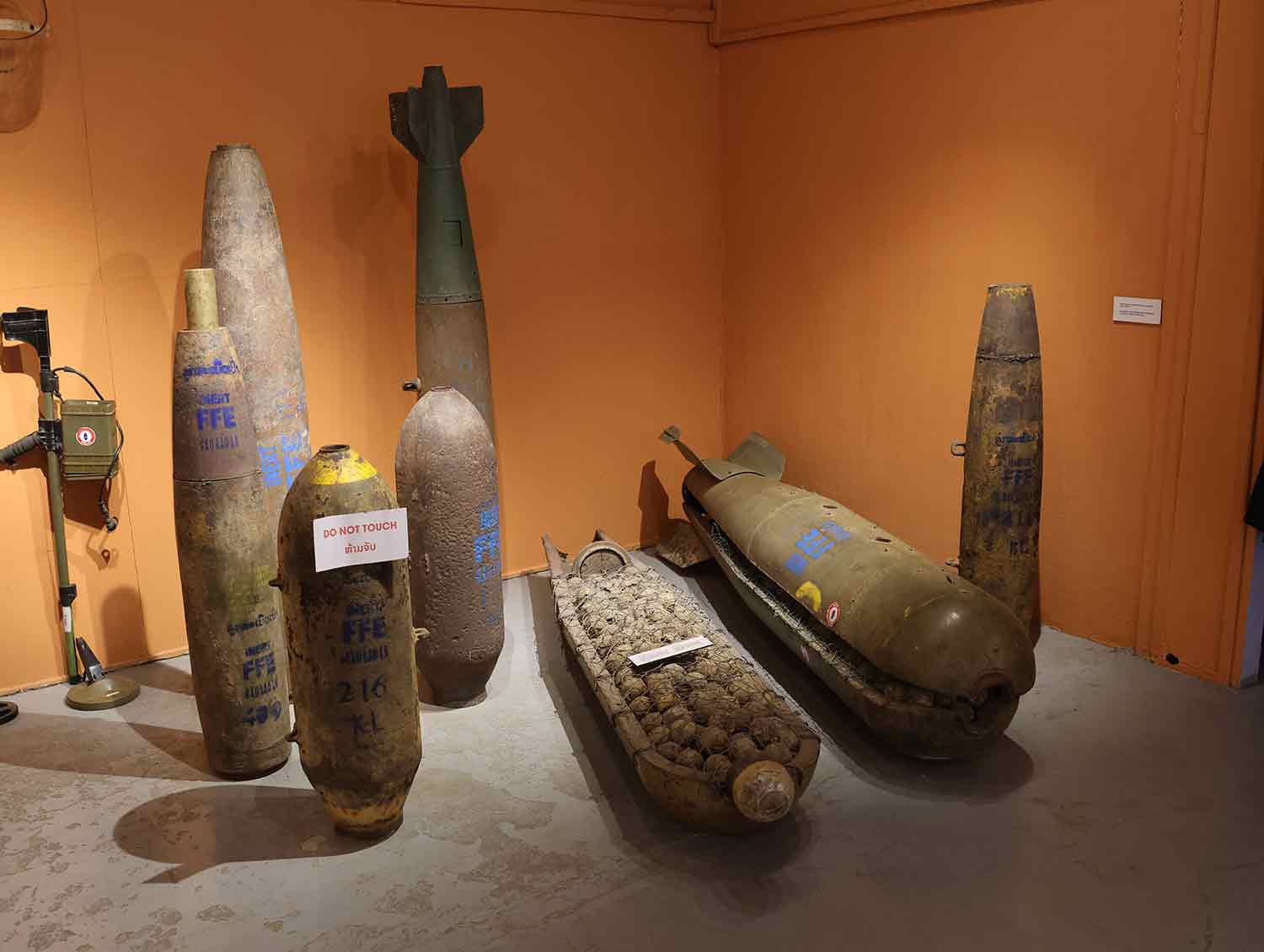
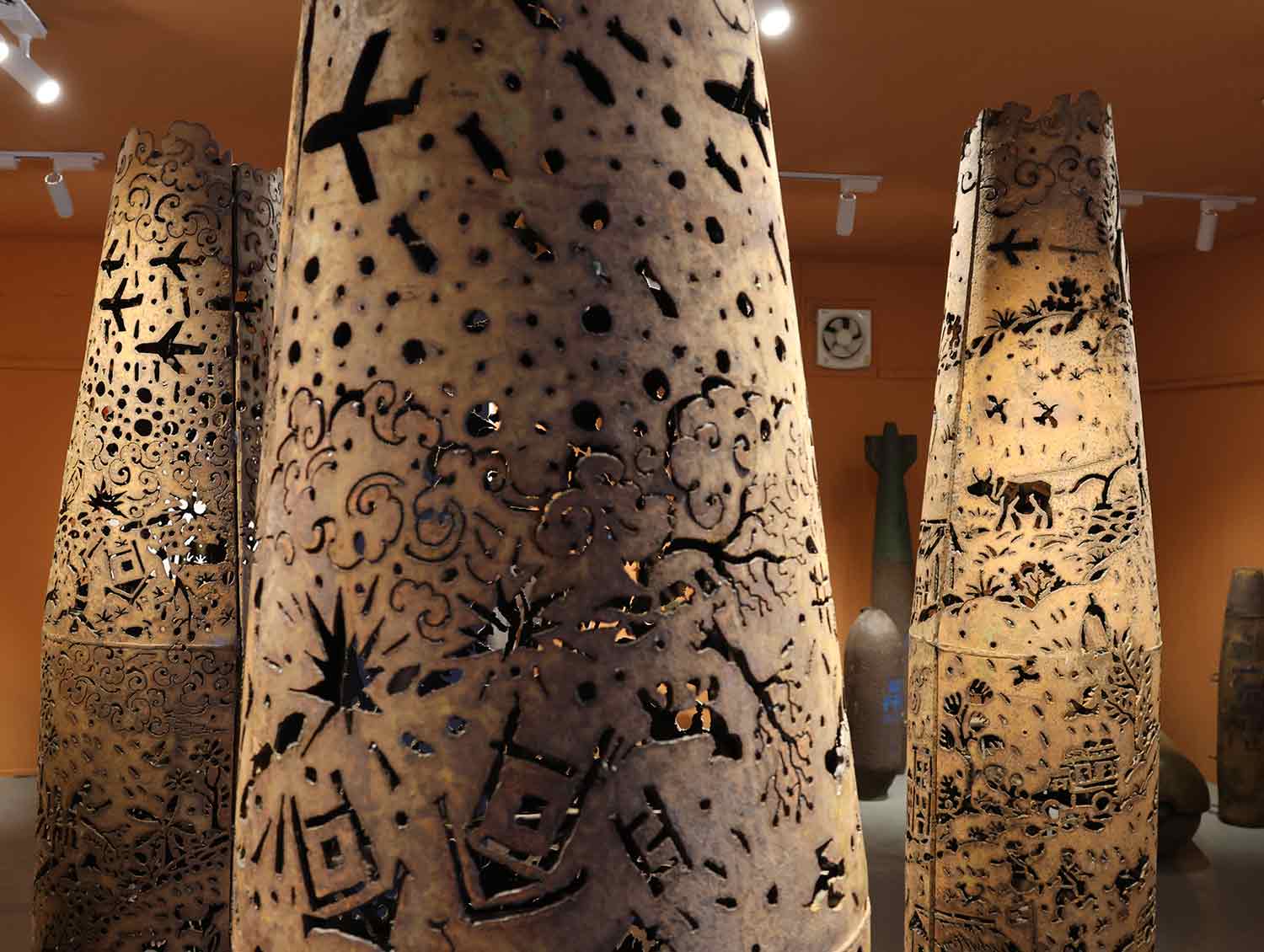
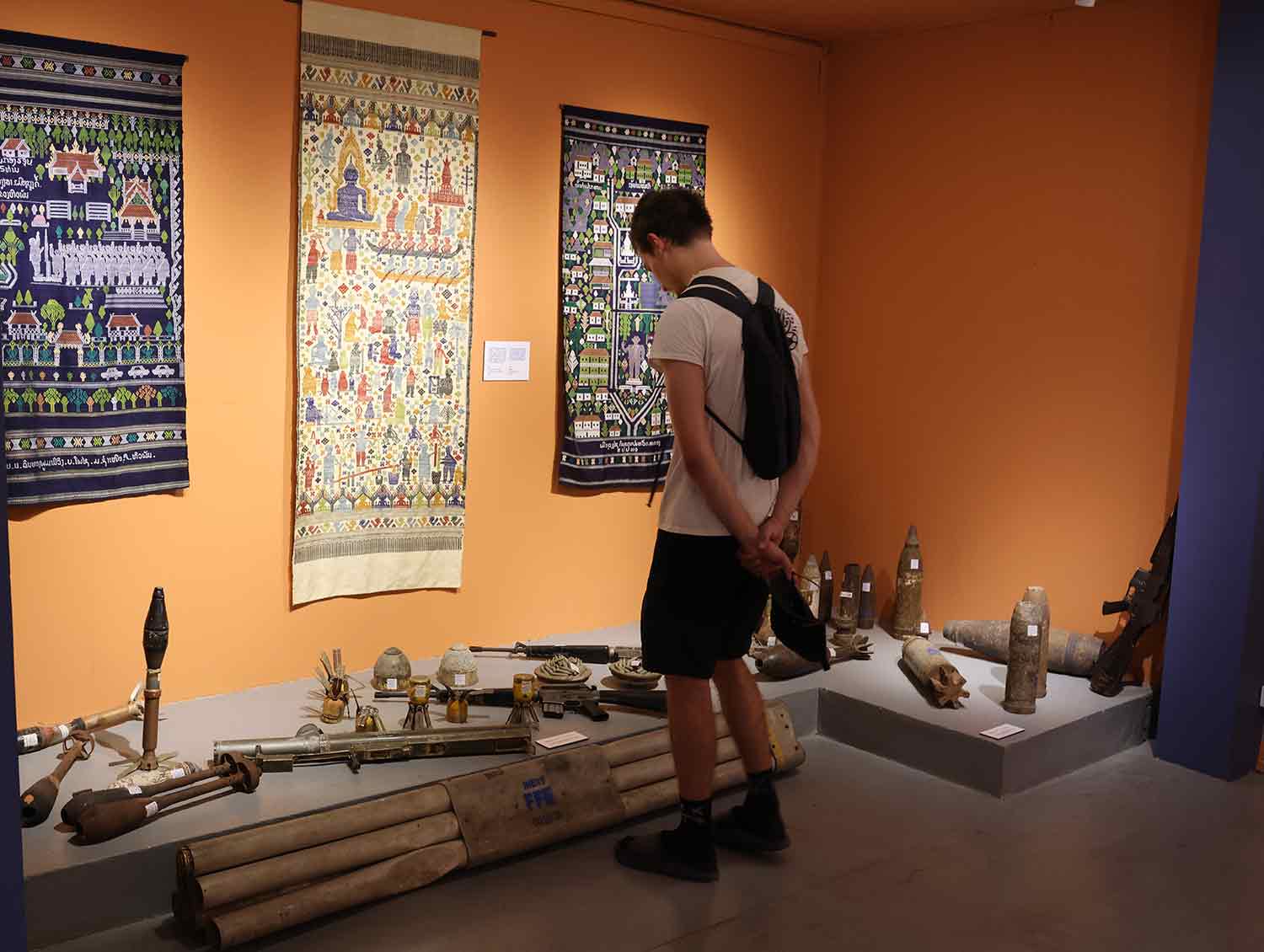
The reality behind these statistics is documented at the UXO Lao Visitor Centre in Luang Prabang, a small museum supported by UNDP and the Australian government. In the courtyard, rows of large munitions stand like sentinels, while visitors can view smaller UXO inside. A screening room shows heartbreaking accounts of children who happened upon UXO while playing near their villages.
One of them, Keurk, an eleven-year-old boy from Bangrang Village, recounts how he and his friends went digging for worms.
“As I was digging, I saw a piece of metal. It exploded. Out of the three of us, I was the only one injured. My friends got my parents to come and get me. They put herbal medicine in my eye. I didn’t go to hospital as we didn’t have any money. Now the sun hurts my eyes when I take the cows out. When I play marbles, I always miss. At night I trip over everyone because I can’t see.”
The future for UXO-injured children in Laos is harsh. Keurk explains that he studied well before his accident. “Since I lost my eyesight, it’s difficult. I get headaches when I try to read. And other children get all the fruit, and there is none for me. If I ask them to give me some and they don’t, then I have nothing to eat.”
In 2005, while researching The Most Secret Place on Earth, we accompanied Fred Branfman to Ban Sam Amuk, a former refugee camp near Vientiane. Branfman was a former American Peace Corps volunteer who moved to Laos in the late 1960s and became the principal whistleblower on the US bombing. In Ban Sam Amuk, he interviewed refugees who described the US carpet bombing.
A woman named Kham told him about her experience as a teenager: “When I heard the planes, they were already over my head. Everything happened very fast. I fell to the ground, the explosions were deafening, and the earth was shaking. The people who didn’t make it into a shelter were hit by stone and gravel. Many were hit by shrapnel; some broke their legs. There was blood everywhere. Their faces and bodies were totally charred.”
The documentary also featured archive footage of former US pilots talking about their bombing runs over Laos. “When it gets down to people in Laos, whatever moved was shot at, was bombed, was napalmed.”
Charlie Weitz, a former Air America pilot who flew combat search-and-rescue missions in Laos and Vietnam and appeared in the documentary, also remembered the bombing: “I was sitting on the tac end pad, looking into the valley and suddenly, the whole valley just exploded. It must have been terrifying for anyone who survived that.”
At the UXO Lao Visitor Centre, the US is barely mentioned. It’s almost as if the bombs were dropped by forces unknown, which, at the time, must have been the reality for many of the farmers the Americans killed.
Whistleblower Branfman wrestled with this reality until he died in 2014: “I realised that there had been secret bombings going on for five years that had killed thousands of people and driven whole populations underground and no one even knew about it.”
The UXO Lao Visitor Centre in Luang Prabang is a small step towards ensuring that the world remembers one of the most sustained bombing campaigns in the ignominious history of warfare.