

Boats were already moving across the water as Kratie stirred along the riverfront. Beyond them, Koh Trong stretched along the opposite bank, a low green strip of palms, rice fields and pomelo orchards.
My friend Nick and I had reached town in darkness the previous night after several days riding through Cambodia’s eastern provinces. Our motorbikes, now streaked with red dust, stood outside while the morning traffic gathered along the promenade.
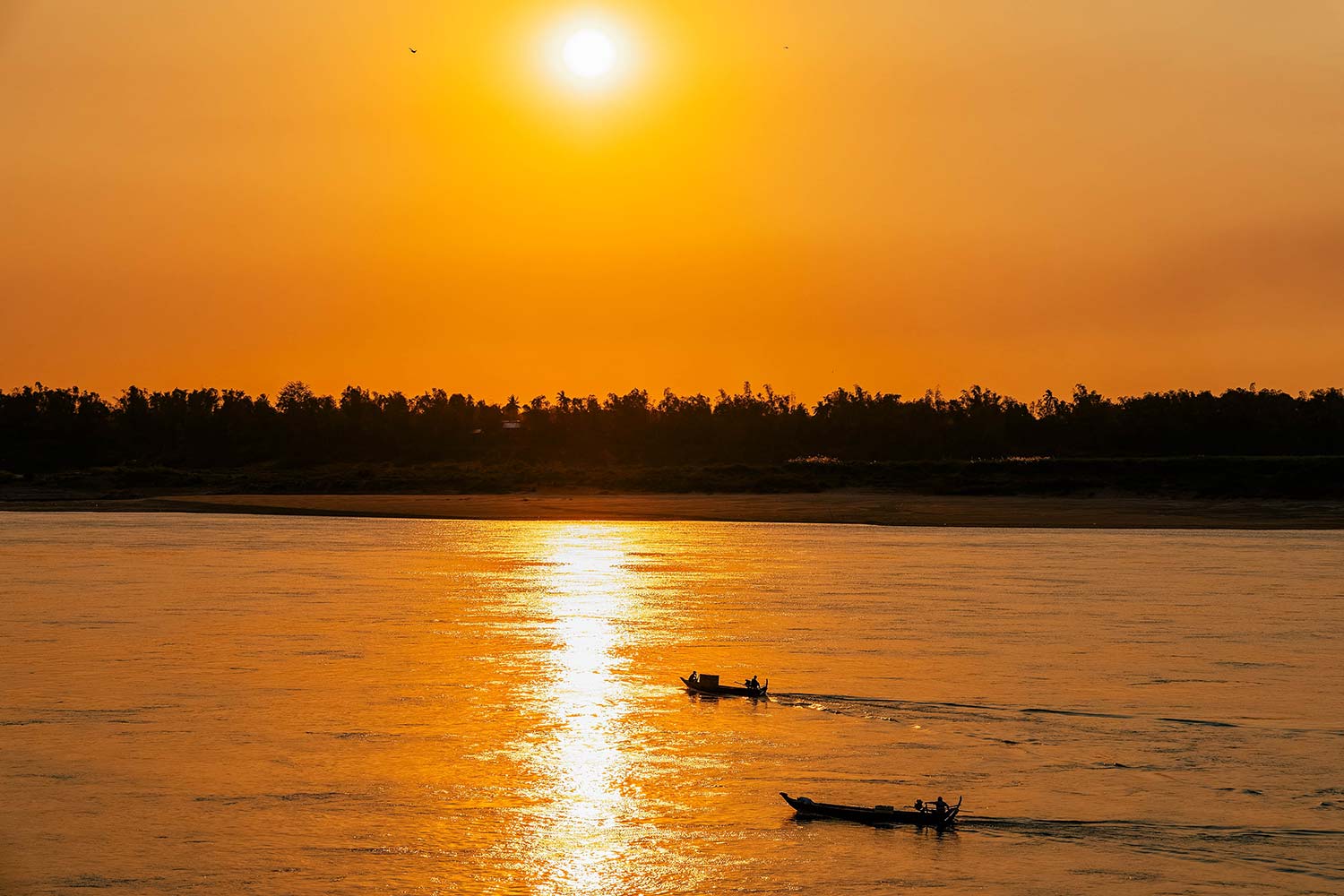
Until Kratie, the journey had been defined by forested hills, border roads and the occasional disagreement with Google Maps. Here, the landscape opened onto the Mekong. North of town lay the deep pools used by its remaining Irrawaddy dolphins. Southward, the river passed islands, Cham Muslim villages and former trading ports on its way towards Phnom Penh.
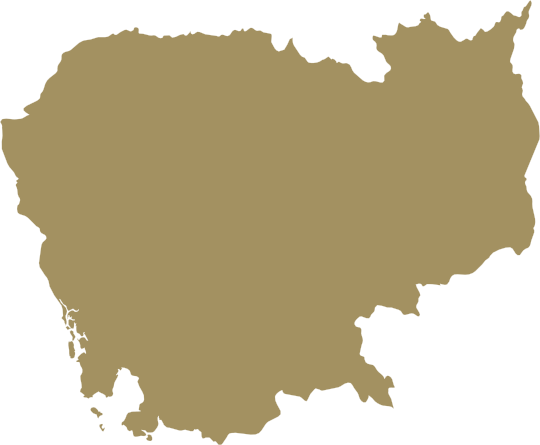
We had set out to see more of Cambodia’s wild east, travelling overland from Phnom Penh into the forested highlands of Mondulkiri before turning west towards Kratie and following the Mekong home.
Our departure from Phnom Penh had taken barely 15 minutes. The ferry from Koh Pich carried us beyond the city’s cranes and apartment towers, depositing us among paddy fields on the opposite bank.
A couple of hours later, the road disappeared into a village wedding. Women and girls in brilliant pink, yellow, orange and blue dresses moved between guests and motorbikes. Snacks were pressed into our hands, we were pulled into photographs with the bridesmaids, and eventually we were waved onwards.
By late afternoon, we were following the Vietnamese frontier. Near Anlong Chrey, our position on Google Maps slipped into Tân Biên district, and the signs turned Vietnamese. There was no checkpoint, barrier or obvious border crossing. For a short stretch, Cambodia appeared to be on the other side of the line.
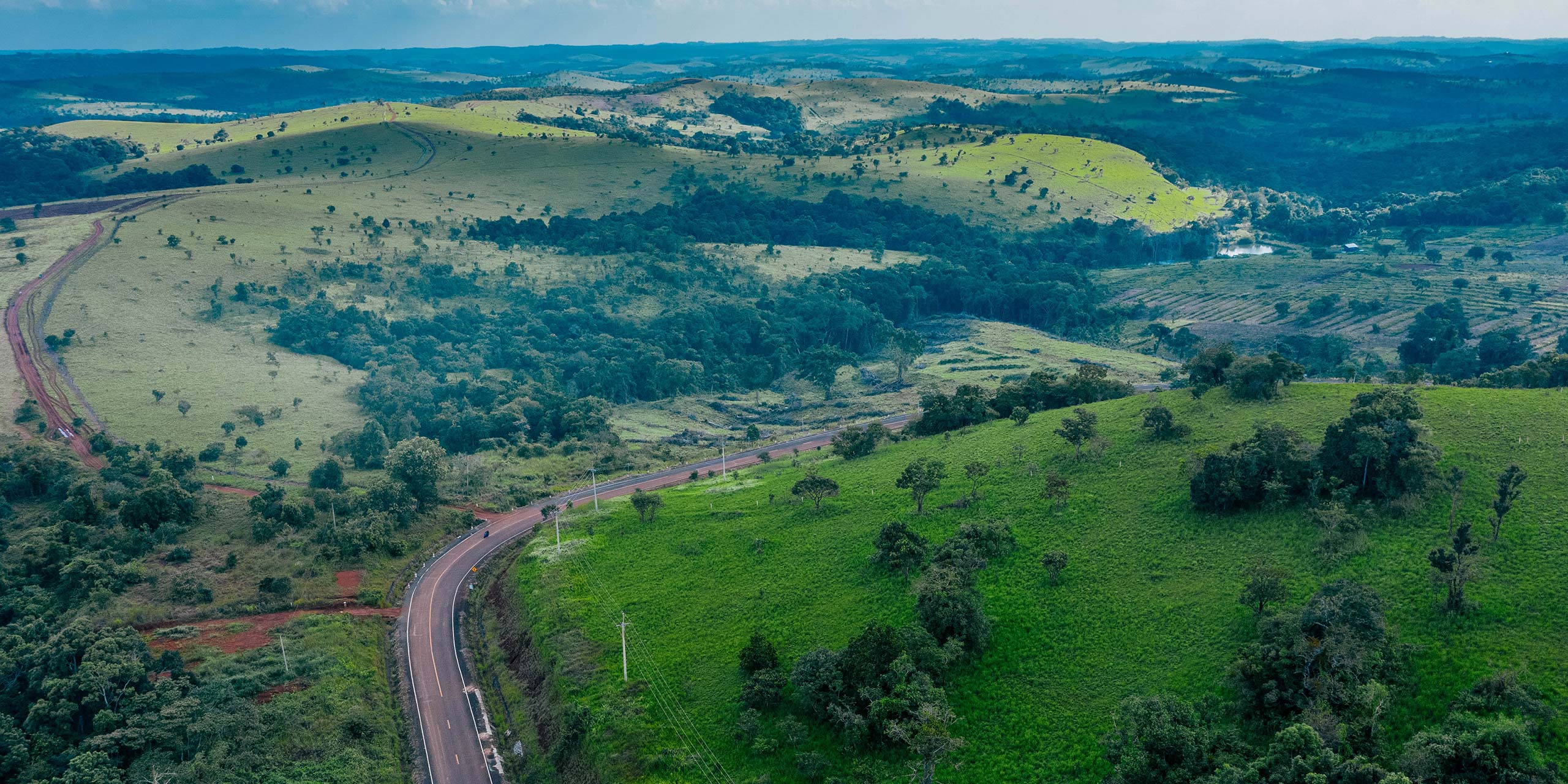
The following day, the flat eastern lowlands began to rise into the first ridges of Mondulkiri. The temperature dropped as the road climbed towards Sen Monorom, the provincial capital. After hours on the plains, the cooler air was welcome. But the view was less reassuring.
Several peaks had been stripped almost bare. Mondulkiri still contains some of Cambodia’s most important wildlife habitat, but plantations, mines and roads are changing the highlands quickly. Dense forest gives way to cassava fields, rubber trees and exposed hillsides the colour of rust.
Towards sunset, we pulled into Sea Forest Resort, a hilltop viewpoint outside Sen Monorom that doubles as an open-air photo park. The highlands appeared through a carnival of oversized props: butterfly wings, a giant hand and an electric guitar several times the height of the monk waiting to pose beside it.
Beyond them, the ridges faded from green to blue as the sun dropped.
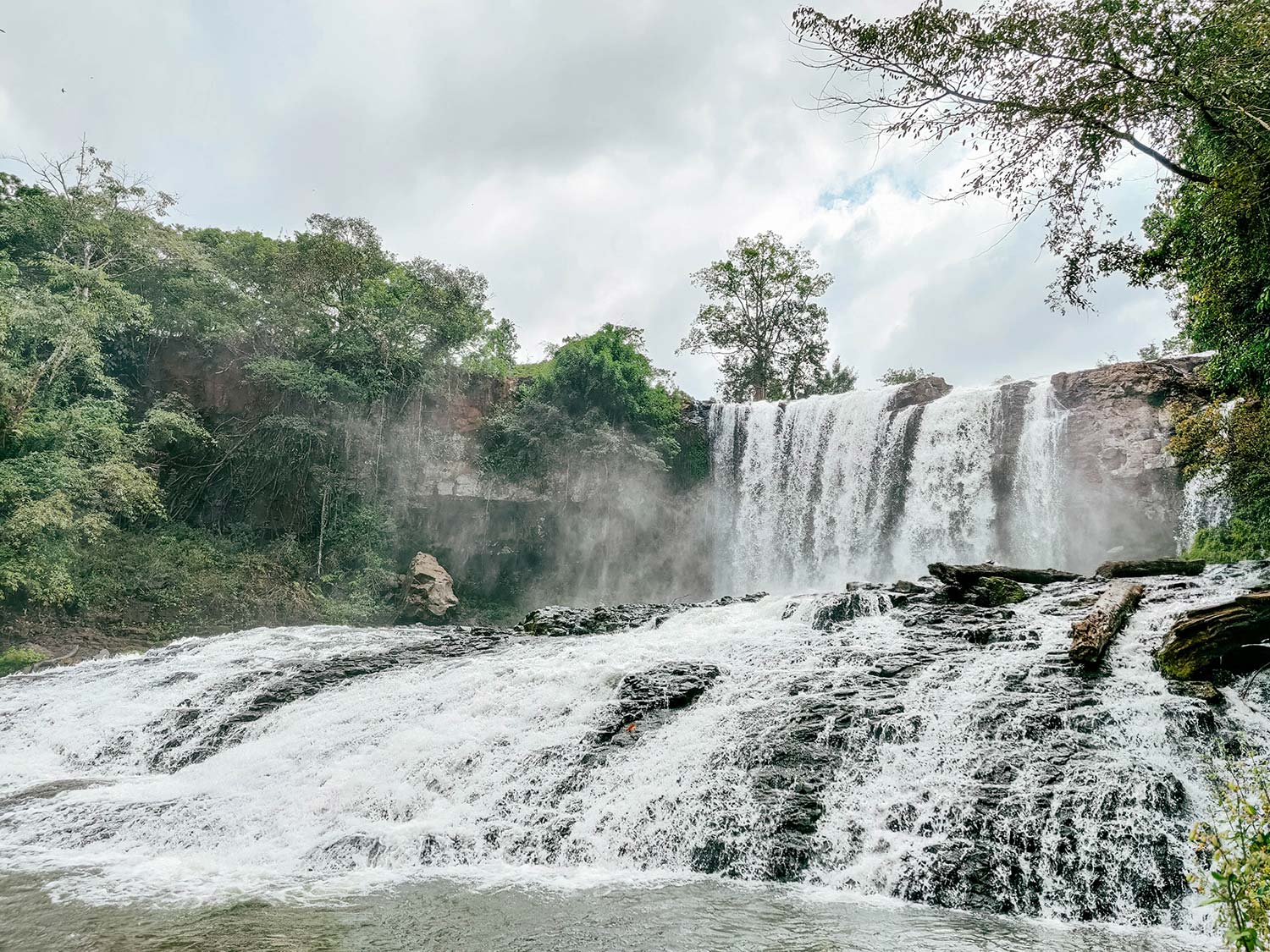
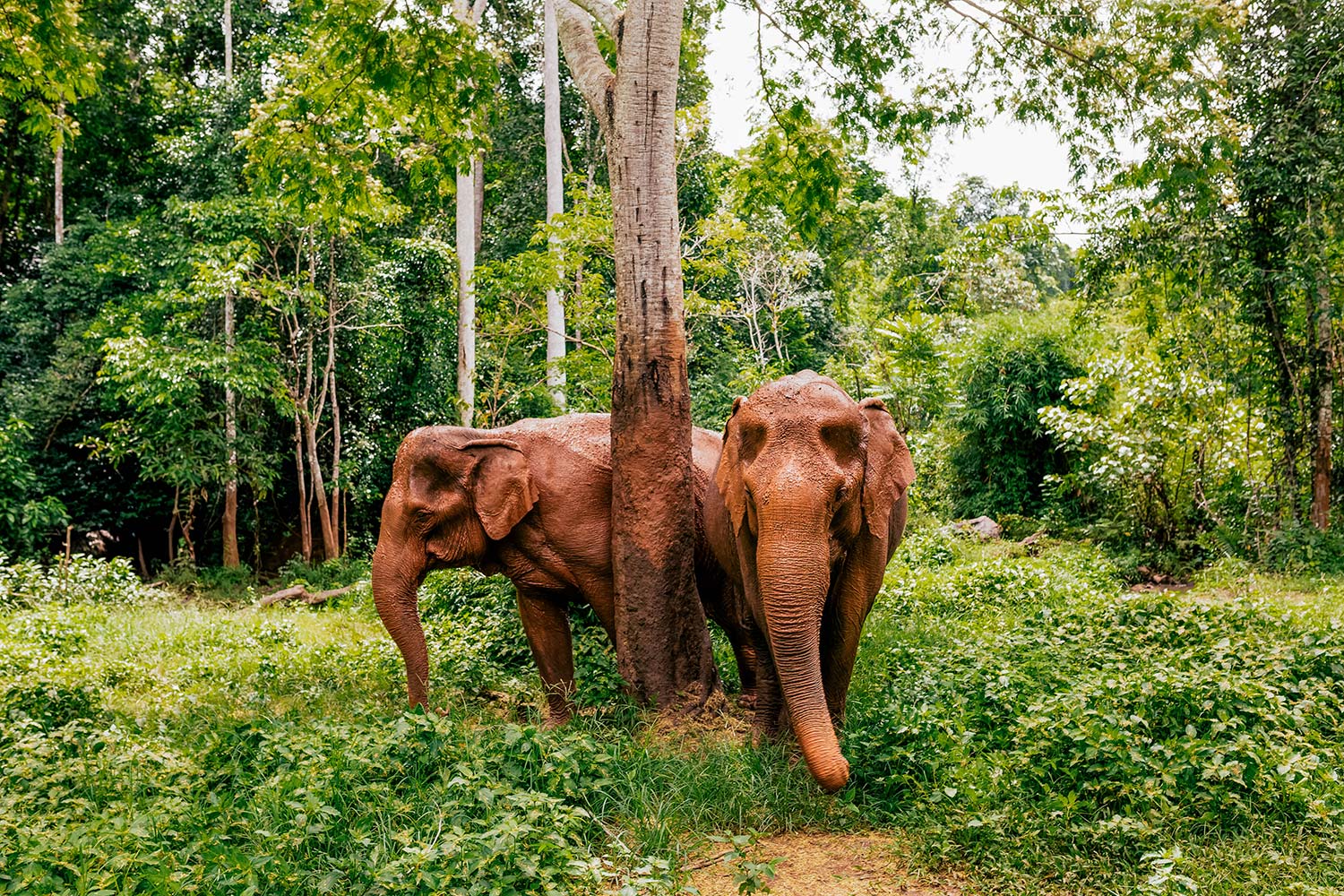
There are good reasons to linger around Sen Monorom. At the Elephant Valley Project, retired working elephants roam forest, grassland and bamboo groves, with visitors following on foot rather than riding, feeding or bathing them. East of town, Bou Sra Waterfall tumbles through two broad tiers amid the forests and Bunong communities of rural Mondulkiri.
Our route instead turned west towards Kratie.
Deep in the forest lay the Okvau gold mine, approached along a broad access road that ran improbably straight between the trees. At the gate, guards looked at the two scooters and pointed us back the way we had come. The road was private.
A smaller track appeared to continue in roughly the same direction. It changed from red earth to stone, then deep sand, before disappearing into a dry riverbed.
For several hours we edged through the forest until the rocks finally gave way to compacted earth and then tarmac. We emerged with barely any daylight left and continued towards Kratie.
The following morning, we headed north towards the dolphin pools. At the riverbank, we climbed into a narrow wooden boat and travelled upstream. The boatman cut the engine and allowed the current to take over.
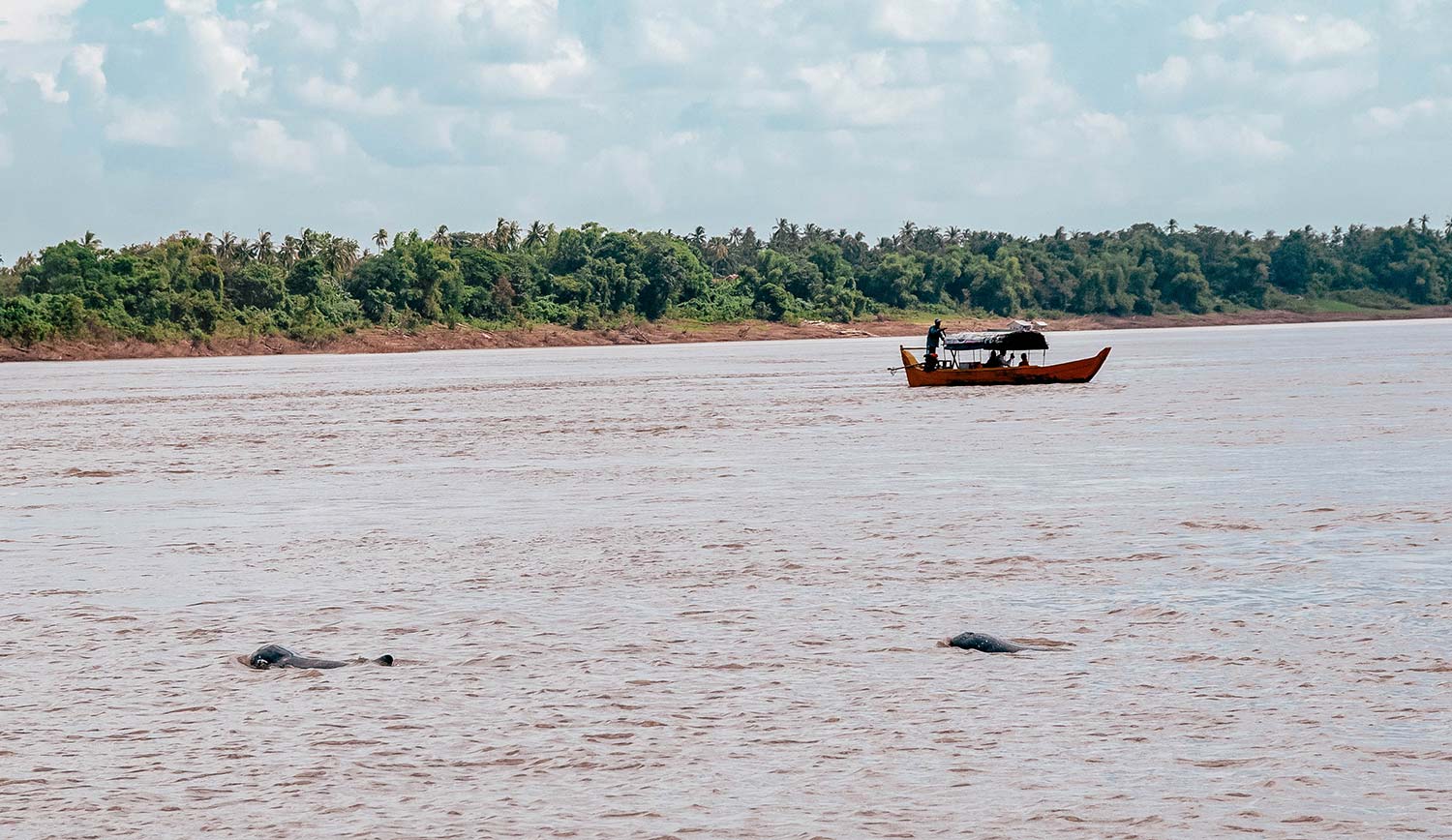
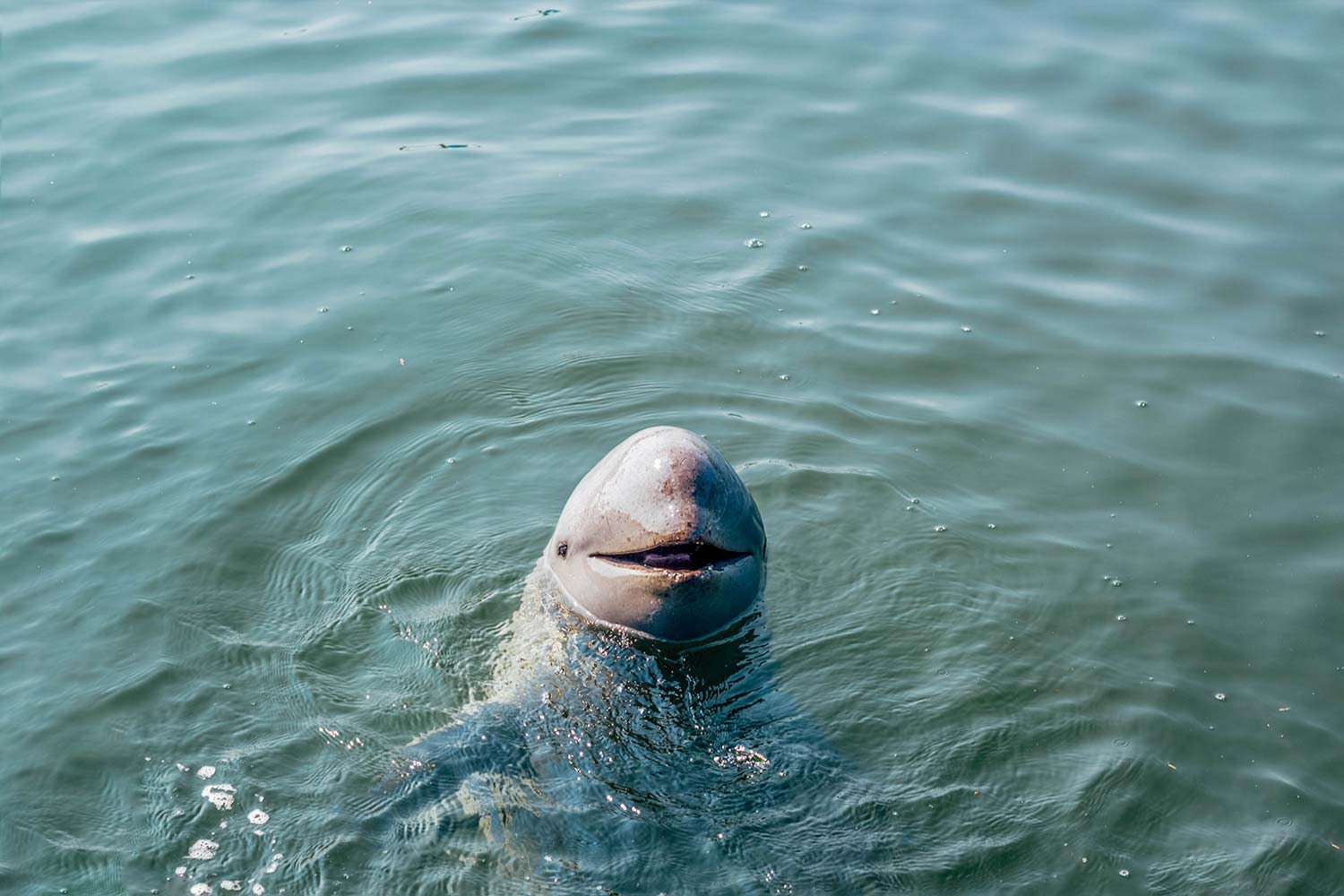
The first sign of an Irrawaddy dolphin is often little more than a breath. A dark back briefly clears the brown-green water, sometimes followed by the animal’s rounded forehead. Then the river closes over it again. Several minutes may pass before another surfaces. The waiting makes every ripple suspicious and every exhalation audible across the water.
The Mekong population remains critically endangered, although recent figures provide some encouragement. Six calves were recorded during the first four months of 2026, bringing the official count to 118.
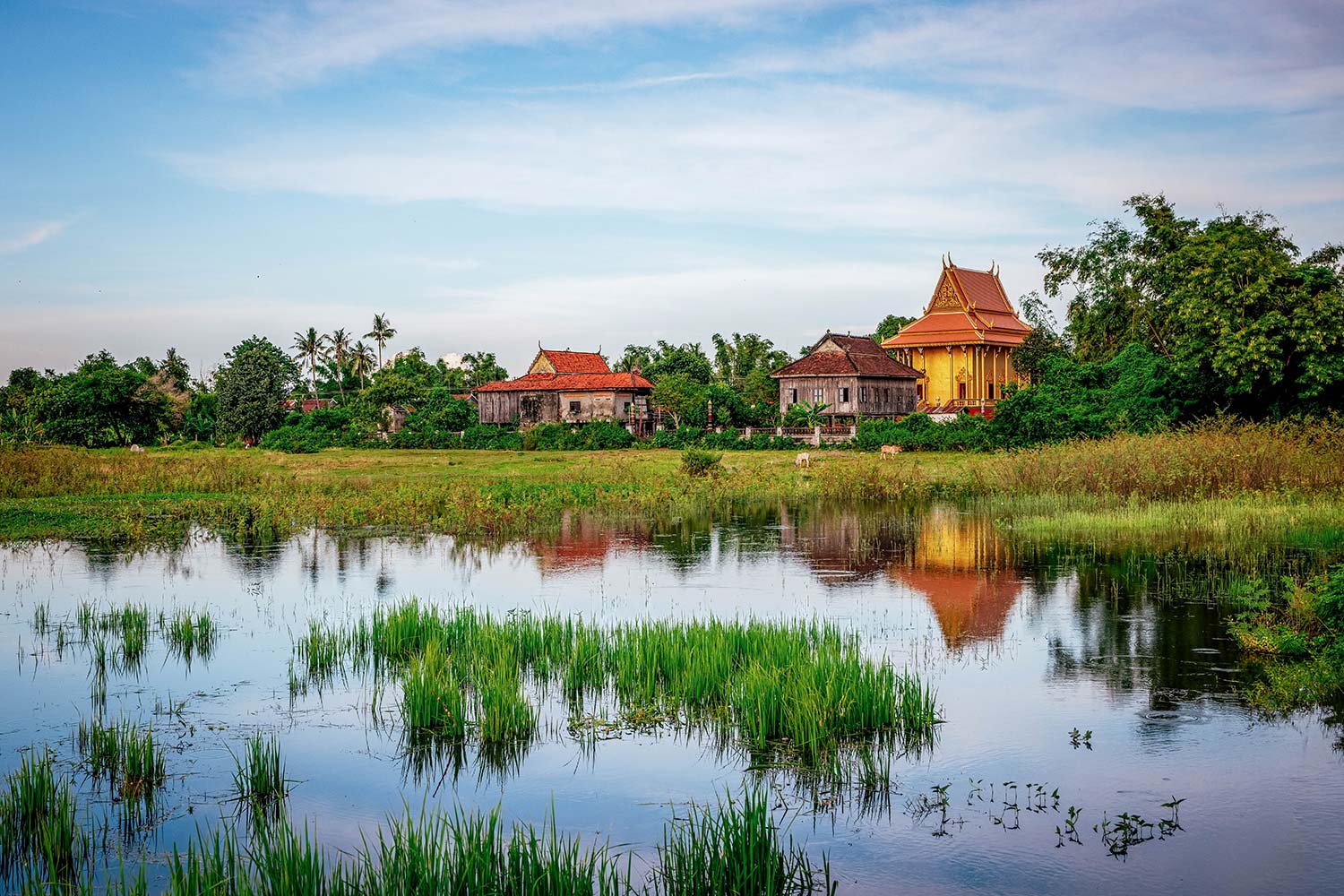
Across the river, Koh Trong offered a slower counterpoint. A narrow road loops through timber houses, temples and orchards producing some of Cambodia’s most highly regarded pomelos. Children cycle between villages, cattle wander beneath the palms, and Kratie remains visible across the water.
South of town, the road followed the Mekong through Cham Muslim villages, passing houses, mosques and makeshift jetties. When it ended at a broad dirt slipway, we joined muddy pickups and motorbikes aboard a low open ferry.
From midstream, the villages formed a thin band between the river and the trees. Farther out, dredgers scooped sand from the riverbed.
At Svay Khleang, a weathered tower drew us off the road. Known locally as a Seun or Medara and built around 1843, it rose through a series of circular galleries, part minaret and part watchtower. The village remains an important centre of Cham Muslim life and was also a site of resistance and brutal reprisals under the Khmer Rouge.
A village elder eventually came over. Our improvised conversation began with the tower, then turned to the dredging.
“Before, the bank was farther out. Every year the water comes closer. They take the sand. We lose the land,” he explained through Google Translate.
His account echoed research elsewhere on the Mekong linking intensive sand extraction to lowered riverbeds and unstable banks.
Later that day, we pulled into Le Relais de Chhlong, a riverside mansion completed in 1916 for the Koy family, whose fortunes grew when Chhlong was an important commercial port.
Historical photographs lined the walls. The receptionist paused beside them.
“Timber,” she said, tapping one of the images. “That was how the family made its money. In those days, this was one of the grandest houses in Cambodia.”
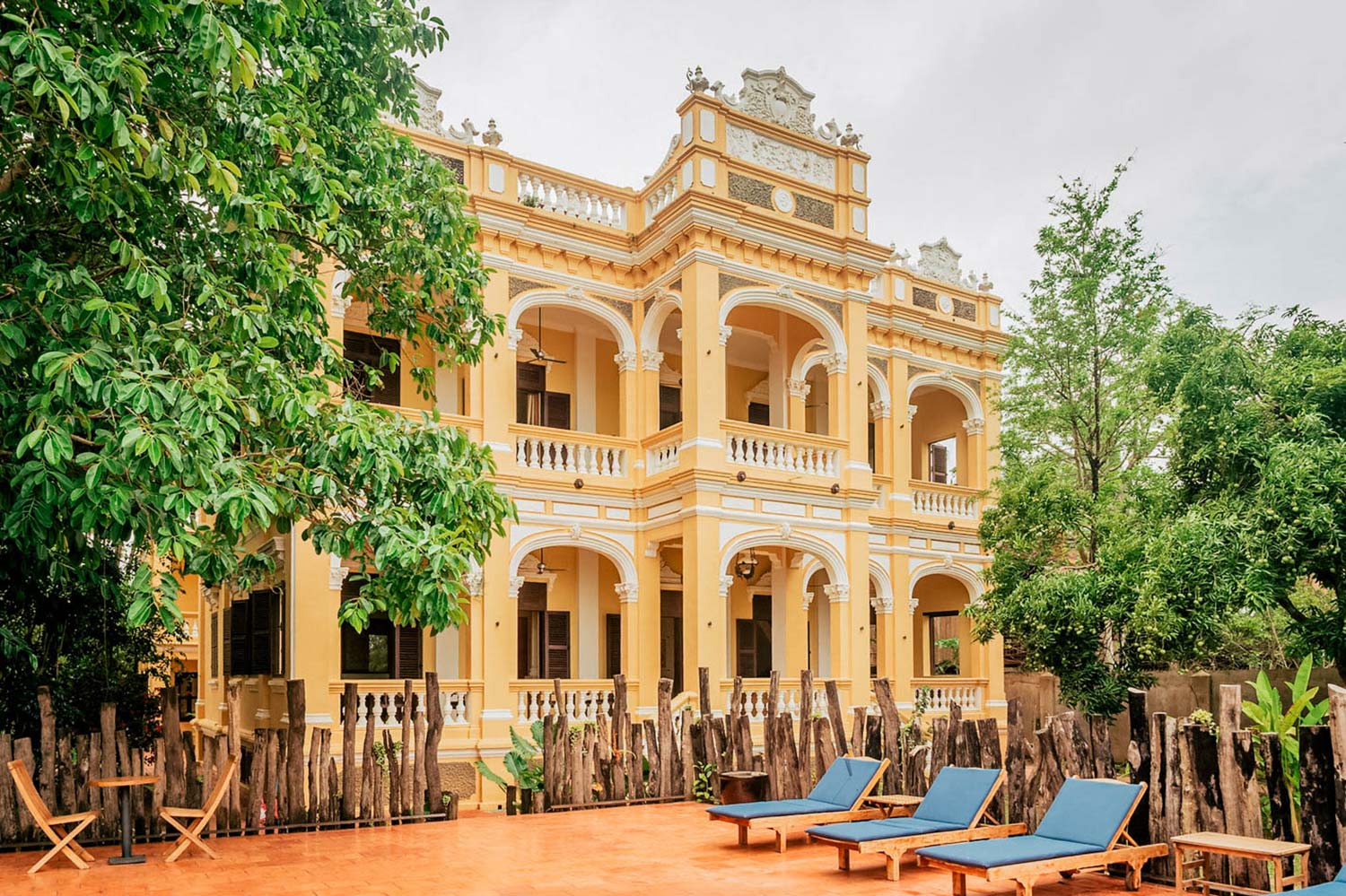
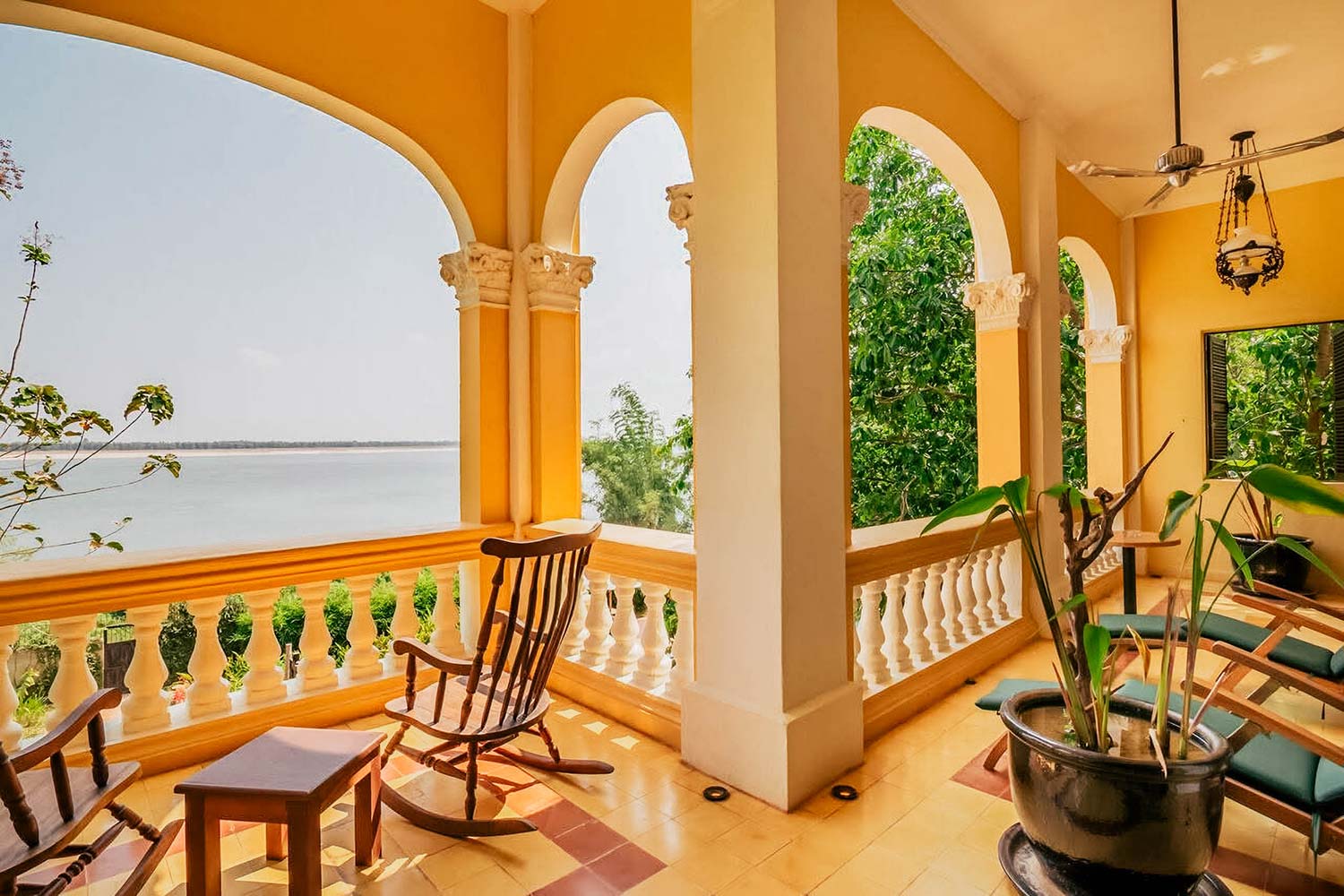
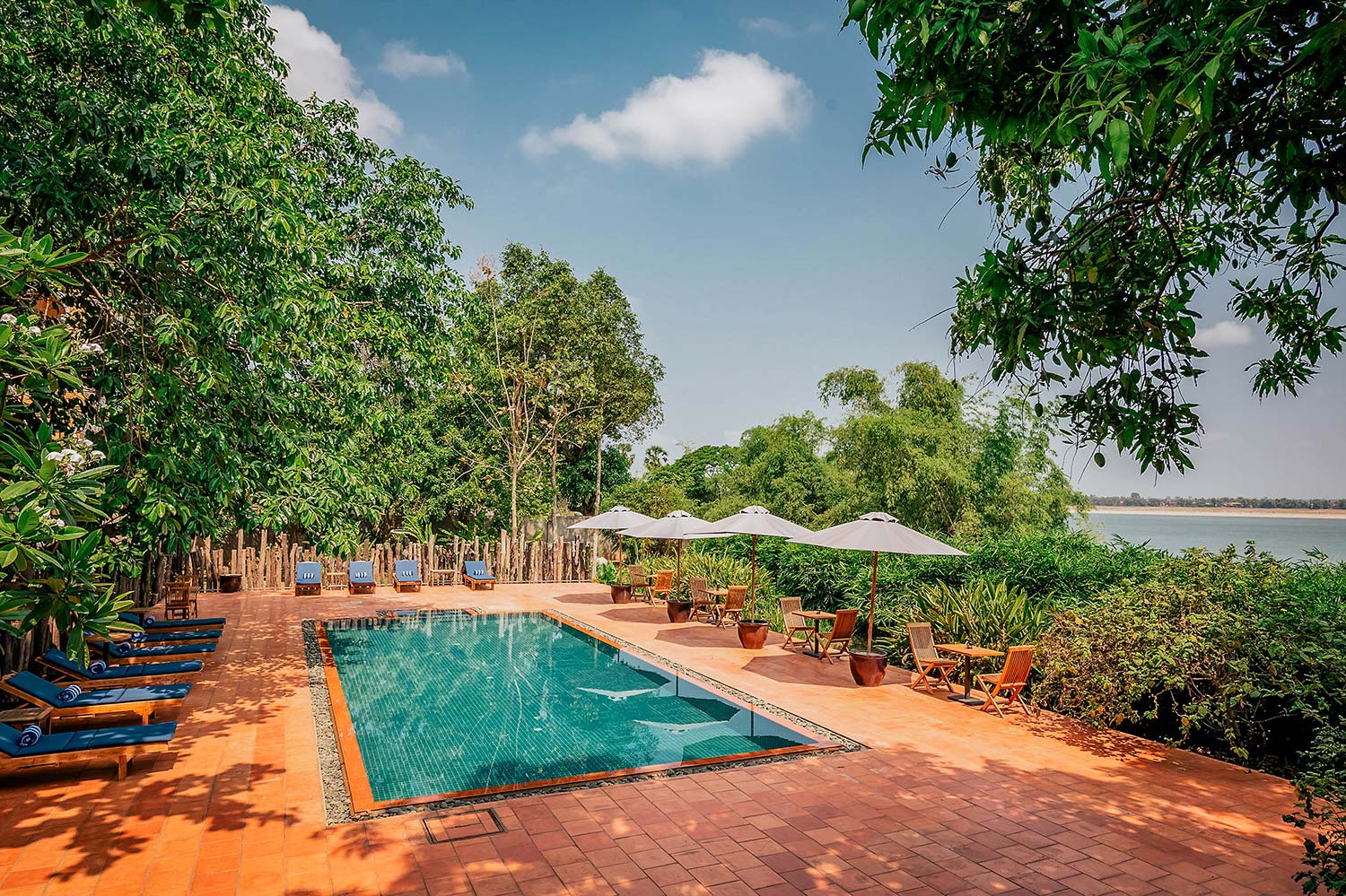
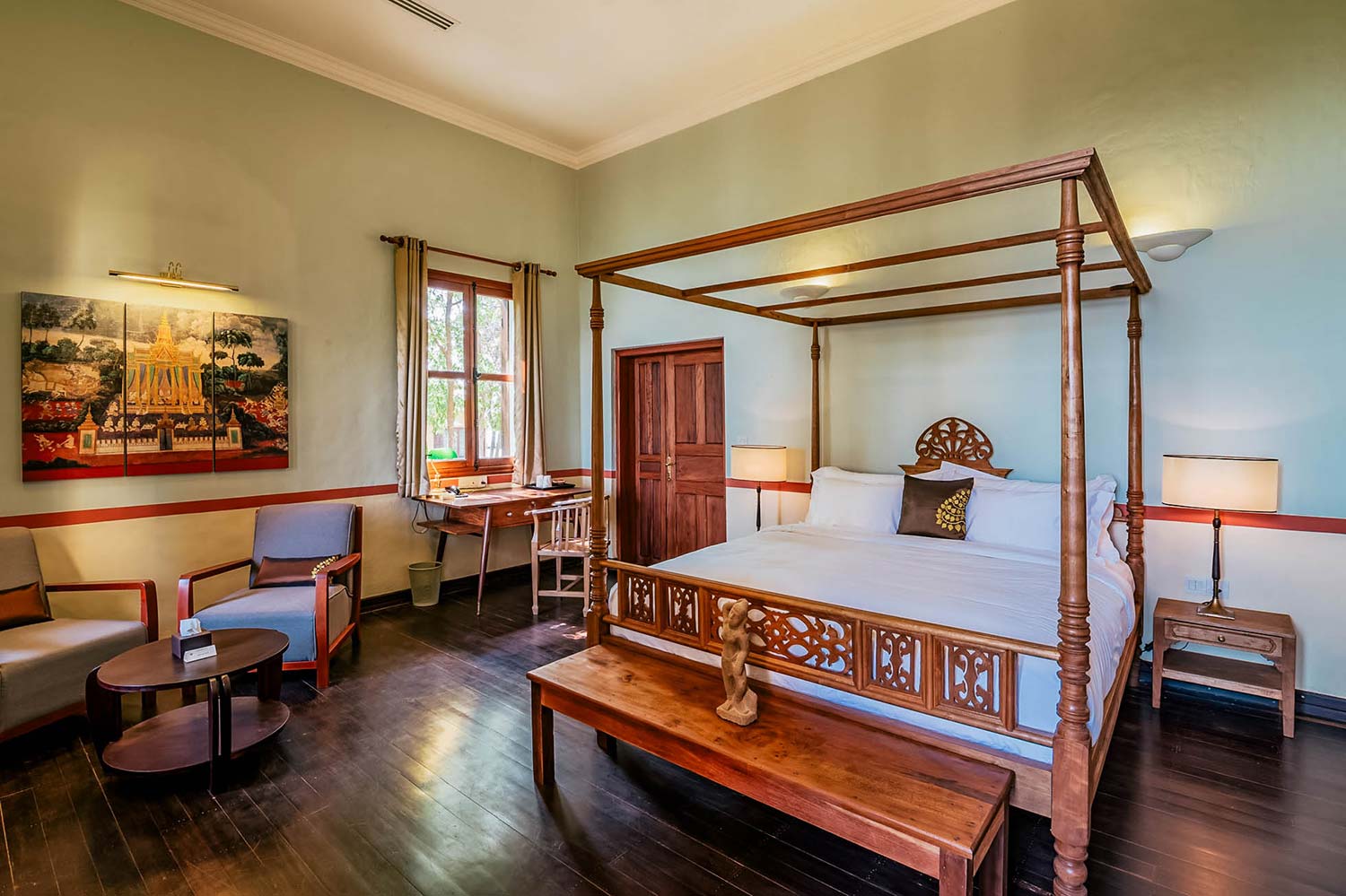
The mansion later became a customs residence and stood empty during years of conflict before being restored as a hotel. Inside, shutters held back the afternoon heat and ceiling fans turned overhead. Beyond the gardens, the Mekong continued south. After the red roads and river crossings, the mansion’s faded formality recalled the French plantation sequence in Apocalypse Now.
The Koy family had operated a sawmill, while the smaller Chhlong River was dredged to accommodate timber boats. A century before commercial gold mining at Okvau and the dredgers farther upriver, extraction from the eastern forests was already creating fortunes along the Mekong.
Beyond Chhlong, trucks reappeared, motorbikes multiplied, and roadside settlements began to merge. By late afternoon, we reached the slipway opposite Koh Pich and wheeled the scooters onto the ferry.
Just a few days earlier, the same crossing had carried us away from Phnom Penh. Now we joined the afternoon commuters as the skyline reassembled on the horizon.
Mondulkiri’s stripped ridges, the private road to Okvau, the shrinking bank at Svay Khleang. At Le Relais, photographs of a fortune built on timber suggested that none of this was especially new. The resources differed, but the direction of travel remained much the same: wealth drawn from the provinces, growth concentrated in the capital.
Ahead, Phnom Penh’s cranes rose through the haze.