

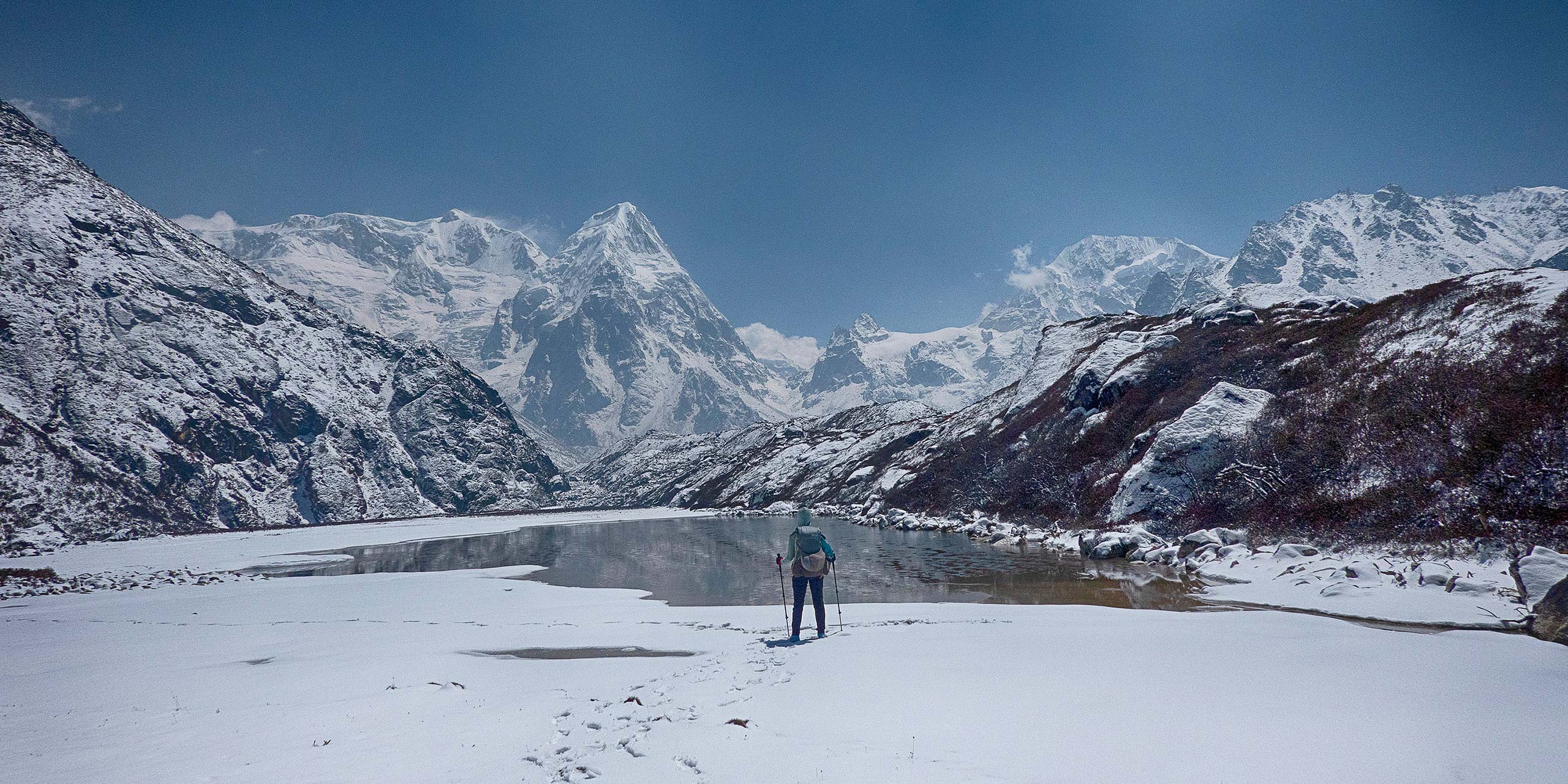
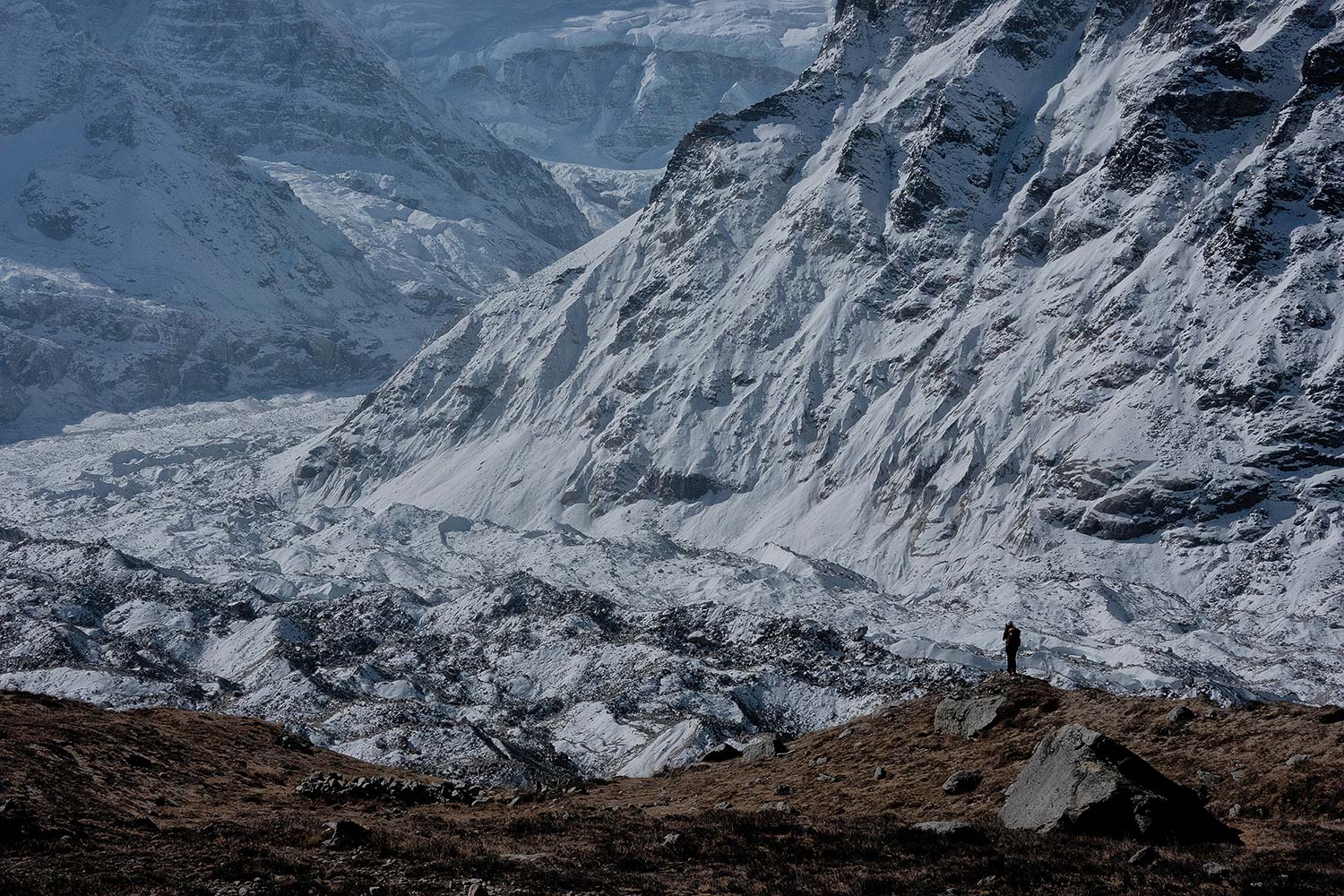
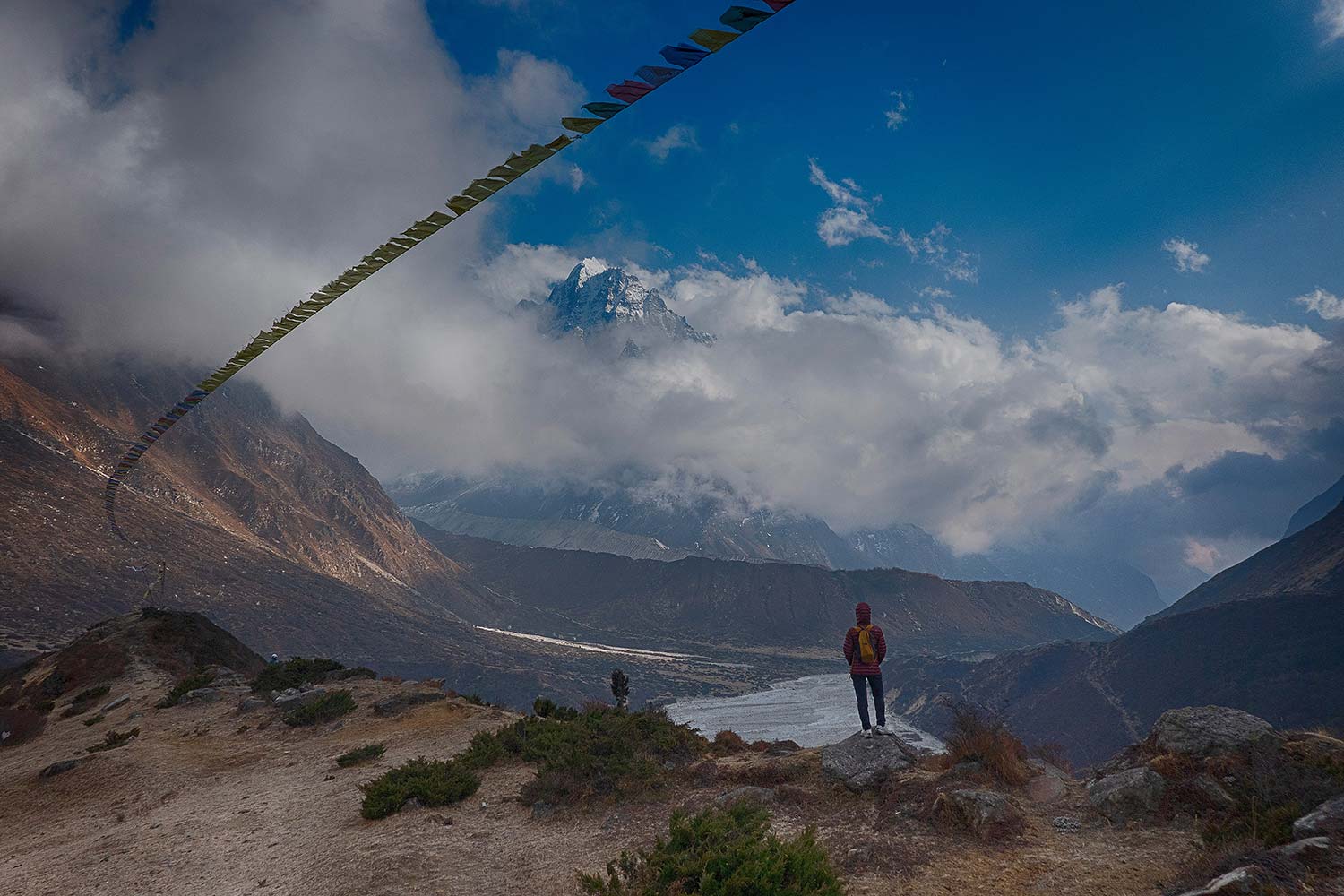
I’m standing at the edge of the world. At least it feels that way. Feeling acclimatized and strong, I’m ahead of my wife and the rest of our group of trekking friends this morning, and without a rope, ice axe, or other glacial gear, I’ve walked as far as is safely possible.
Before me lies a vast expanse of ice: the immense Kanchenjunga Glacier, flowing down from its namesake massif, whose highest summit stands at 8,586 meters (28,169 feet), making it the third-highest mountain in the world. You’d think that in this era of travel bucket lists, the third-highest peak on Earth would attract a crowd—or at least a small throng of camera-clickers and Instagrammers—but I’m completely alone.
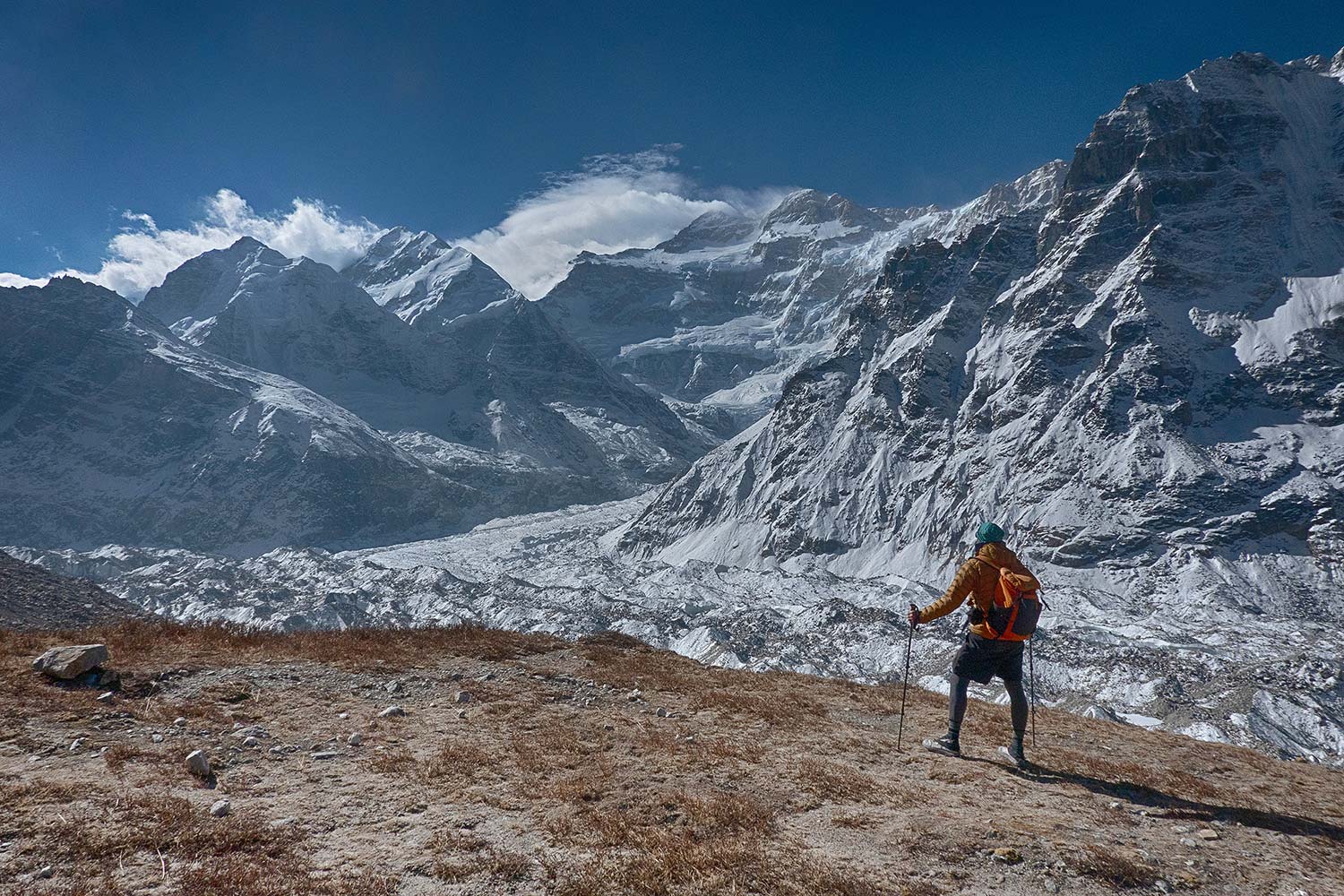
I chuckle at the improbability of it. Further west, Everest Base Camp sees about 40,000–50,000 trekkers per year, and if you’re standing at EBC or Kala Pattar (the best viewpoint of Everest), you can bet your down jacket you’ll be in a scrum. Meanwhile, in 2023, fewer than 1,000 trekkers visited Kanchenjunga in the entire year.
Standing in nature surrounded by a horde is not my idea of adventure travel, let alone a vacation. Here at Kanchenjunga, I find myself in a vast wilderness that truly feels like the edge of the world.
I’m not completely alone. Nearby, a herd of bharal—blue sheep—graze on the hillside. Normally skittish, these creatures bolt if you so much as breathe in their direction, but these pay no attention to me. I can walk within ten feet to take photos, and they remain engrossed in foraging. They, too, are untouched by the masses.
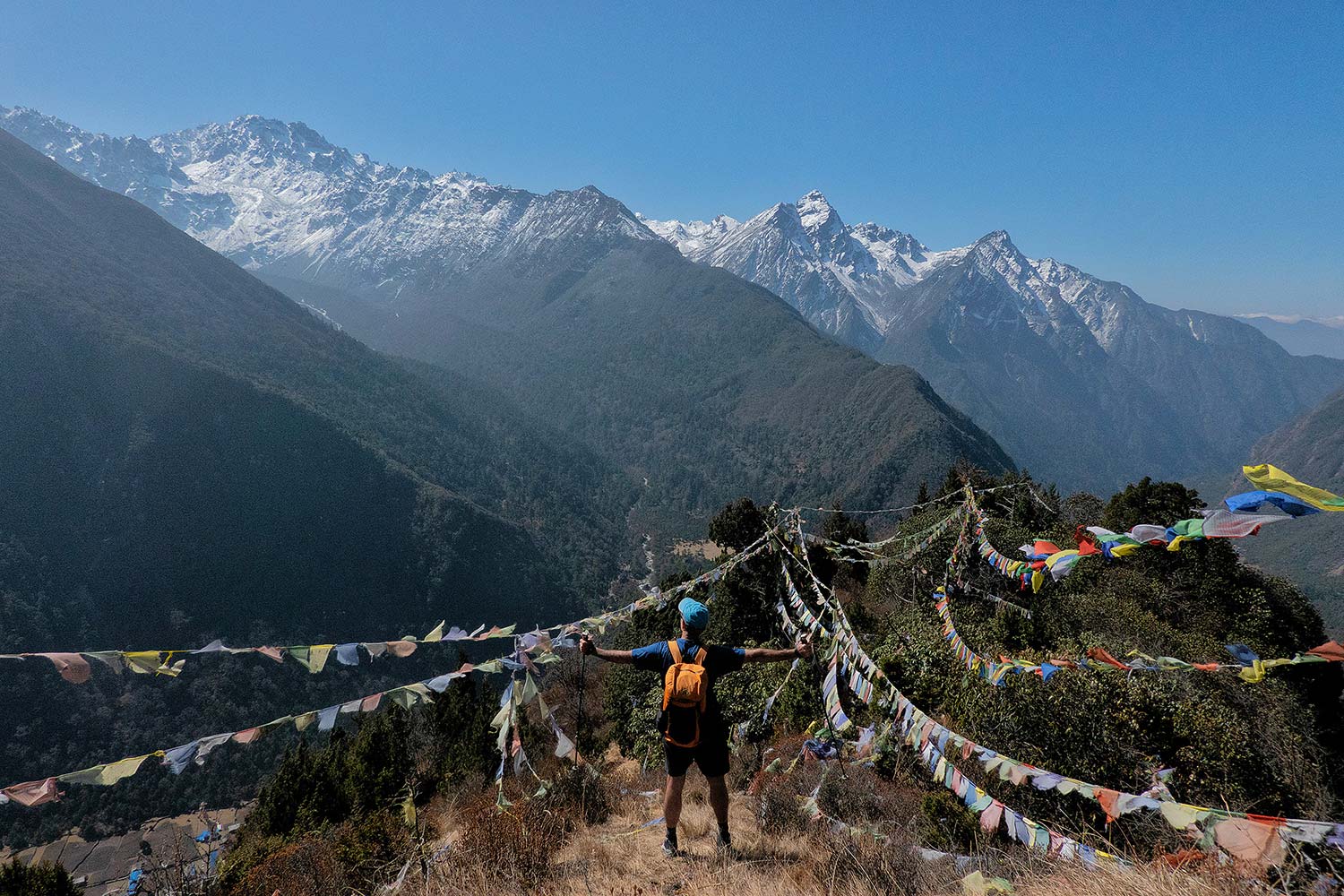
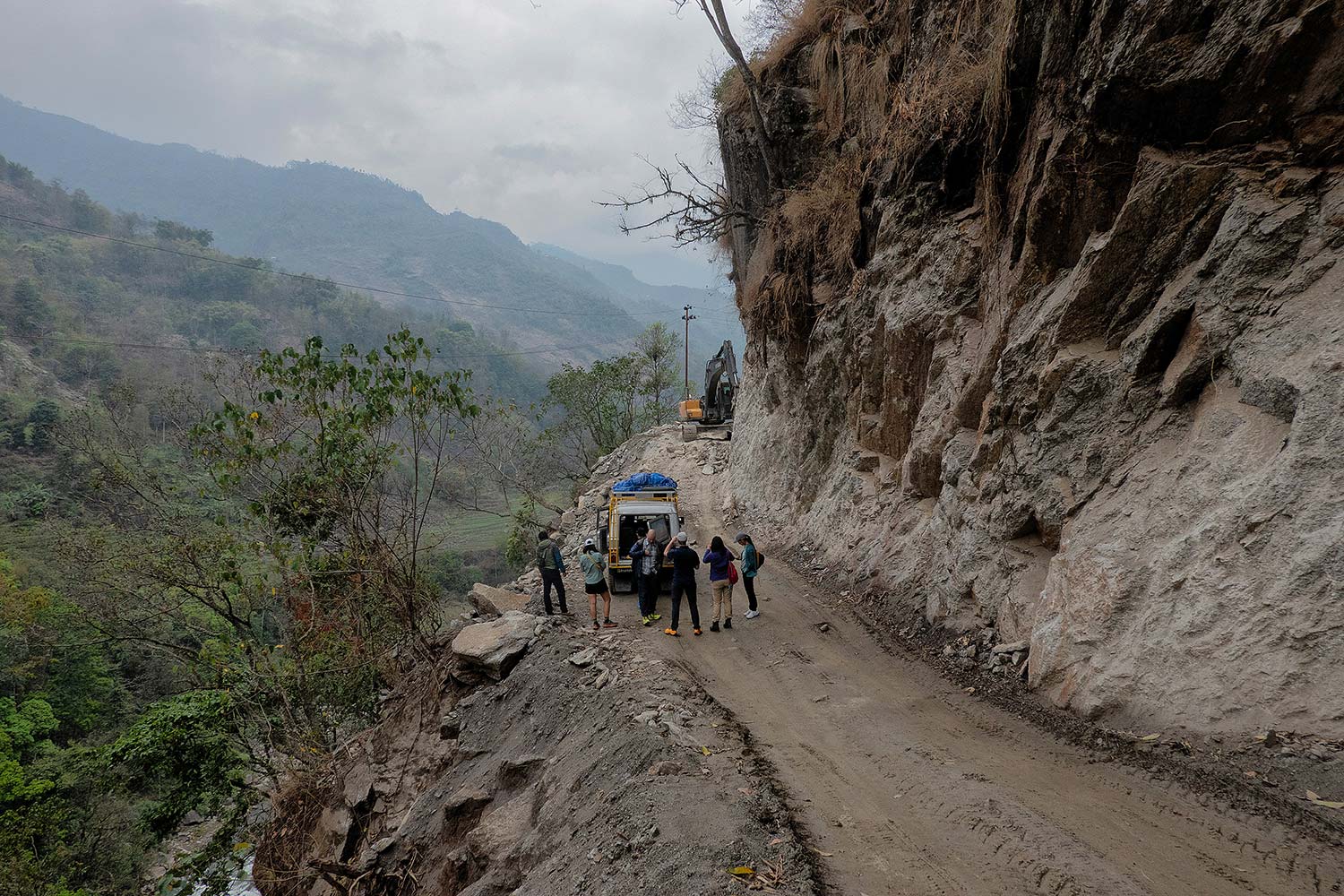
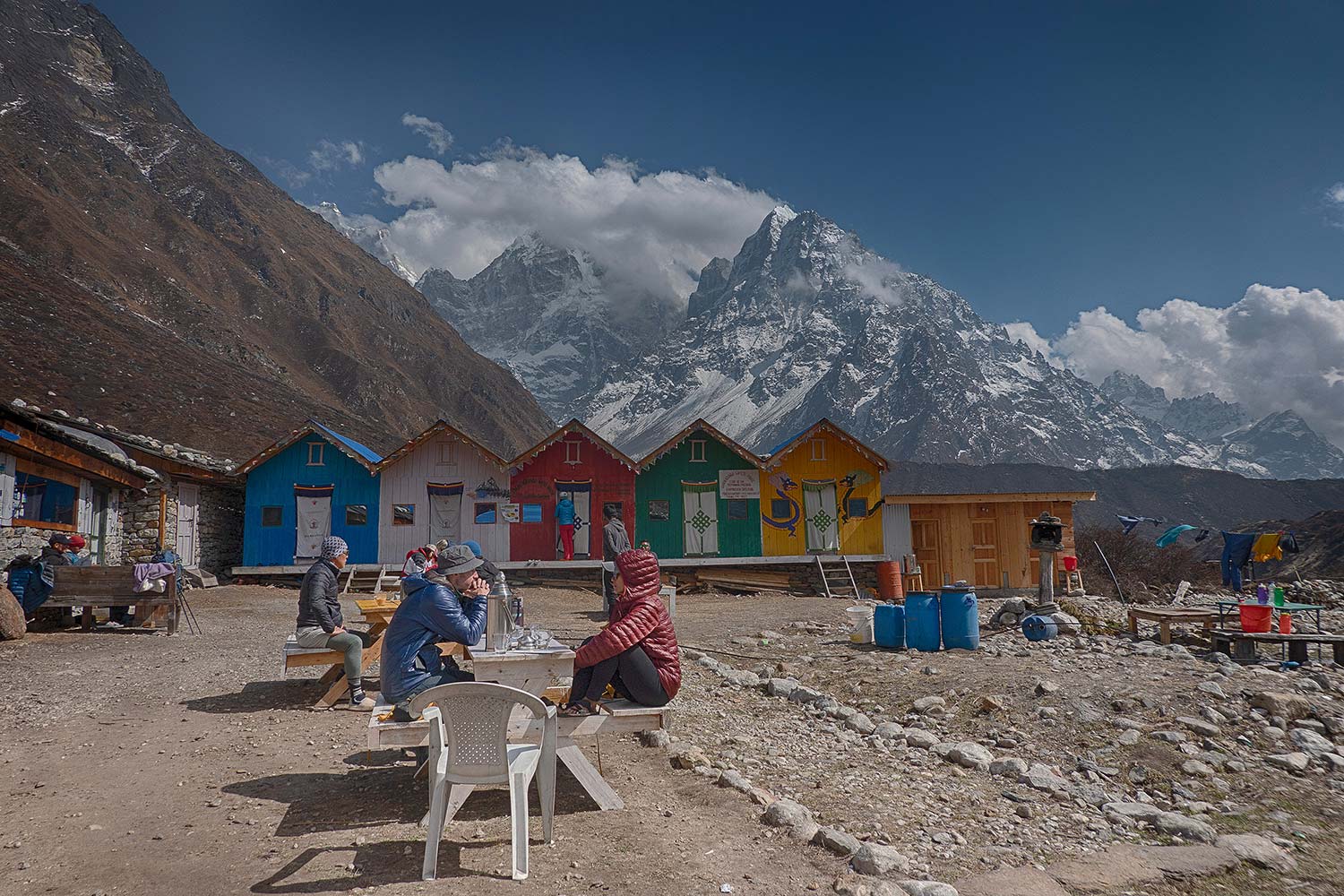
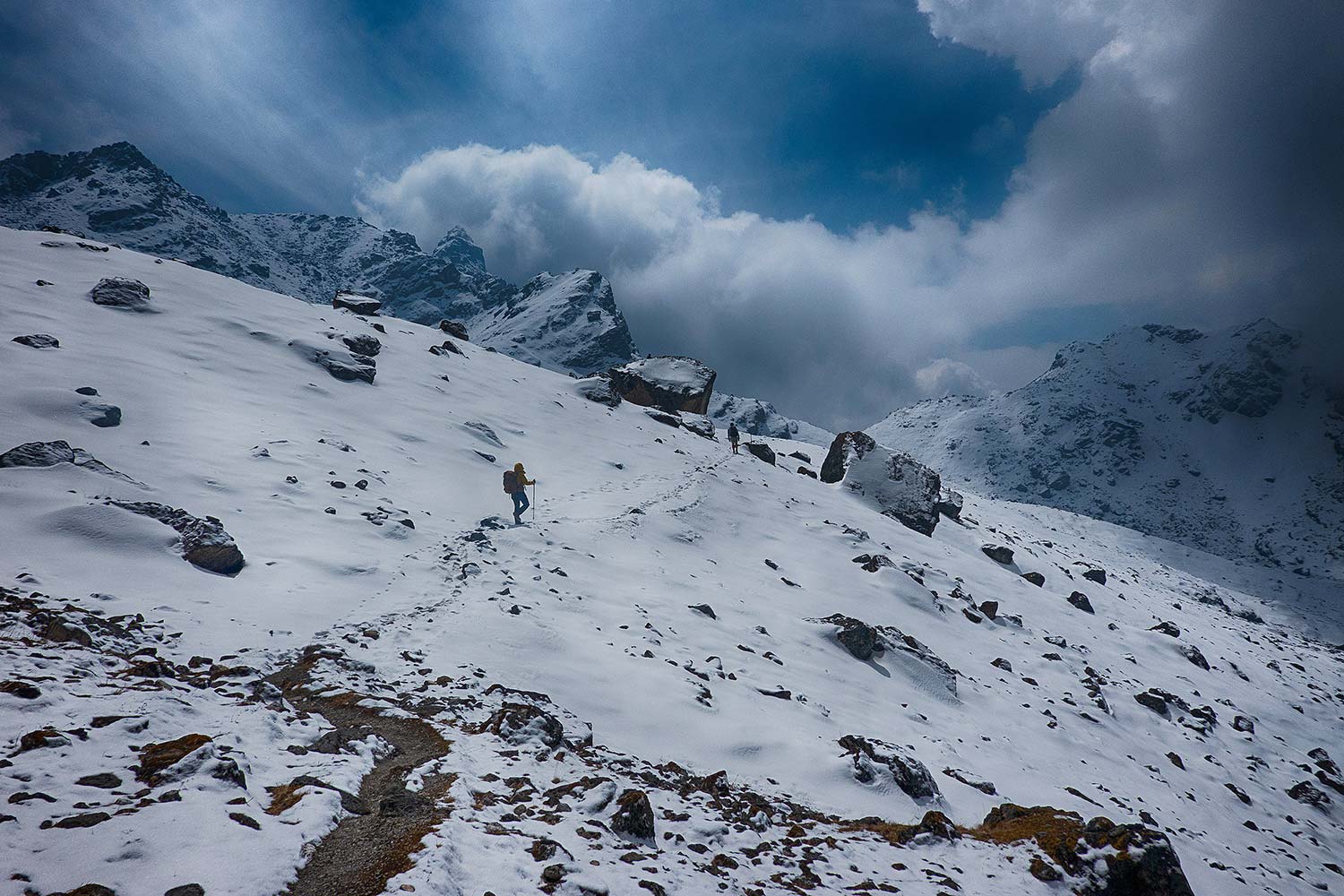
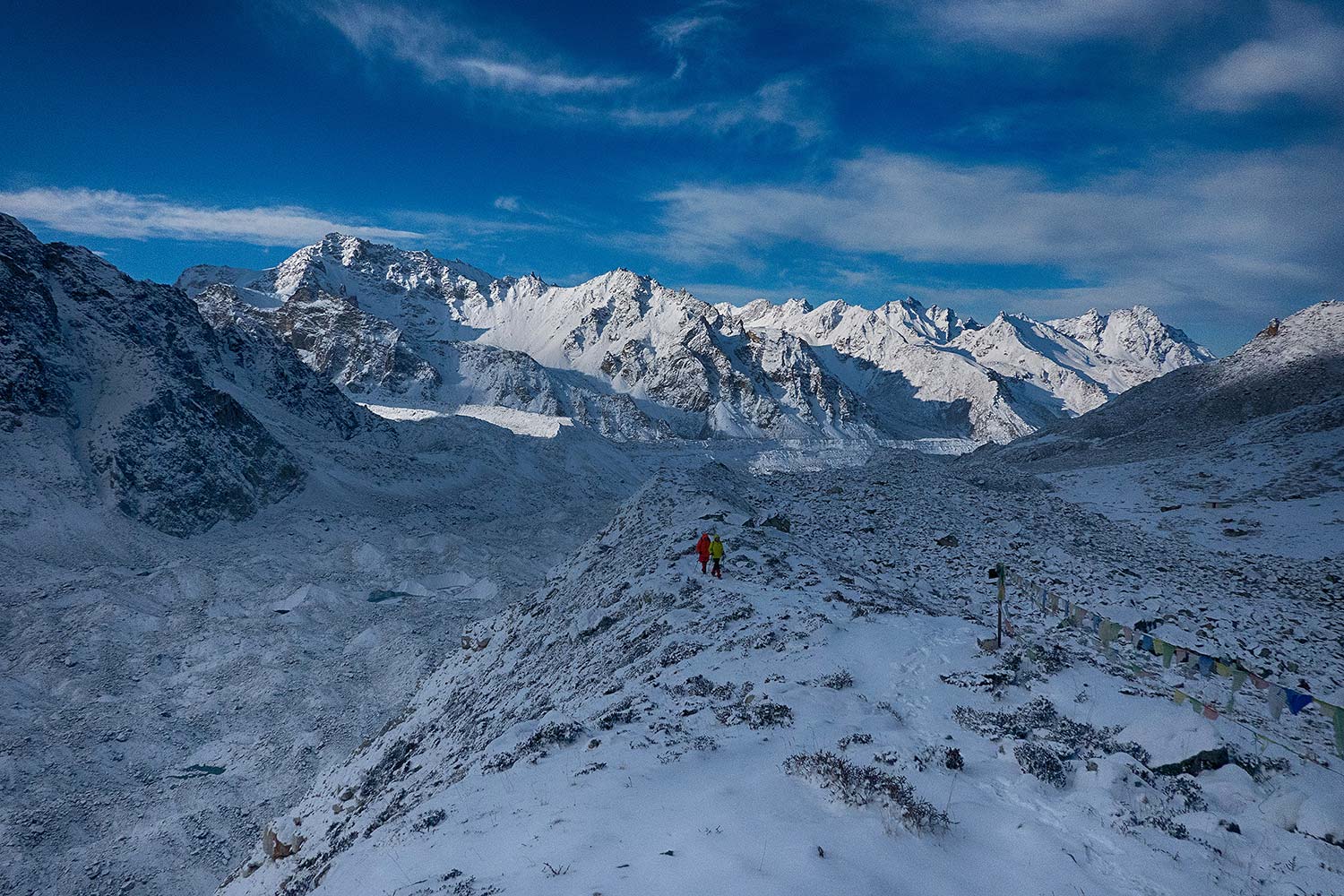
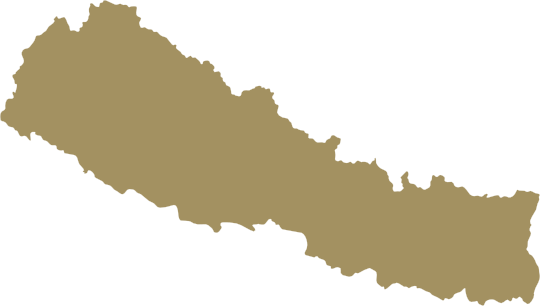
It’s easy to see why a journey to Kanchenjunga remains one of the great intrepid travel experiences in the world. Set in far eastern Nepal on the border with India’s Sikkim, you can’t simply fly here. During our more than two weeks of trekking, we saw only one helicopter heading up the valley. In the Everest region, the skies resemble a freeway, with at least ten choppers an hour disturbing the peace.
Getting here is no easy feat. You can either fly to the lowland airstrip at Bhadrapur on the Terai plains, followed by two days of jeep rides on rough mountain roads just to reach the trailhead, or endure 20 hours of grueling land transport from Kathmandu—still followed by those same brutal jeep rides. After that comes the trek itself, climbing from the subtropical foothills to alpine terrain on trails the Nepalis describe as “Nepali flat, a little up, a little down”—which means hours of quad-burning ascents and descents on relentlessly steep slopes.
It’s entirely worth it. Along the way, you pass through some of the most varied and beautiful scenery on the planet, as well as the captivating villages of the Sherpa, Lumba, and other Nepali ethnic groups en route to the high country. Compared to what getting here once entailed, it’s practically a cakewalk.
Kanchenjunga was first climbed in 1955 by a British team after years of failed attempts. English occultist Aleister Crowley attempted an expedition in 1905, reaching about 21,000 feet before avalanches forced a retreat and killed several members of the party. Numerous other teams—most notably German—reached high on the mountain but were turned back by bad weather and route-finding challenges.
Compared to the other Himalayan giants, Kanchenjunga stands apart. Its position near the Bay of Bengal means it is the first peak to receive the brunt of storms coming in from the sea. On our spring trek, we experienced rain, snow, or even full-on blizzards nearly every night. These were usually followed by clear mornings and blue skies for half a day—ideal for early starts and reaching camp before the clouds rolled in again.
Trekking here was restricted until 1989 due to the mountain’s proximity to the border. When it did open, there were no teahouses or facilities beyond a few inhabited villages, meaning expeditions required tents, food, and porters. Today, small teahouses—more reminiscent of Everest and Annapurna in the 1990s—have been established about a day’s walk apart. It’s now possible to trek to North Base Camp and then cross a series of high passes to reach South Base Camp, assured of a bed and hot food each night.
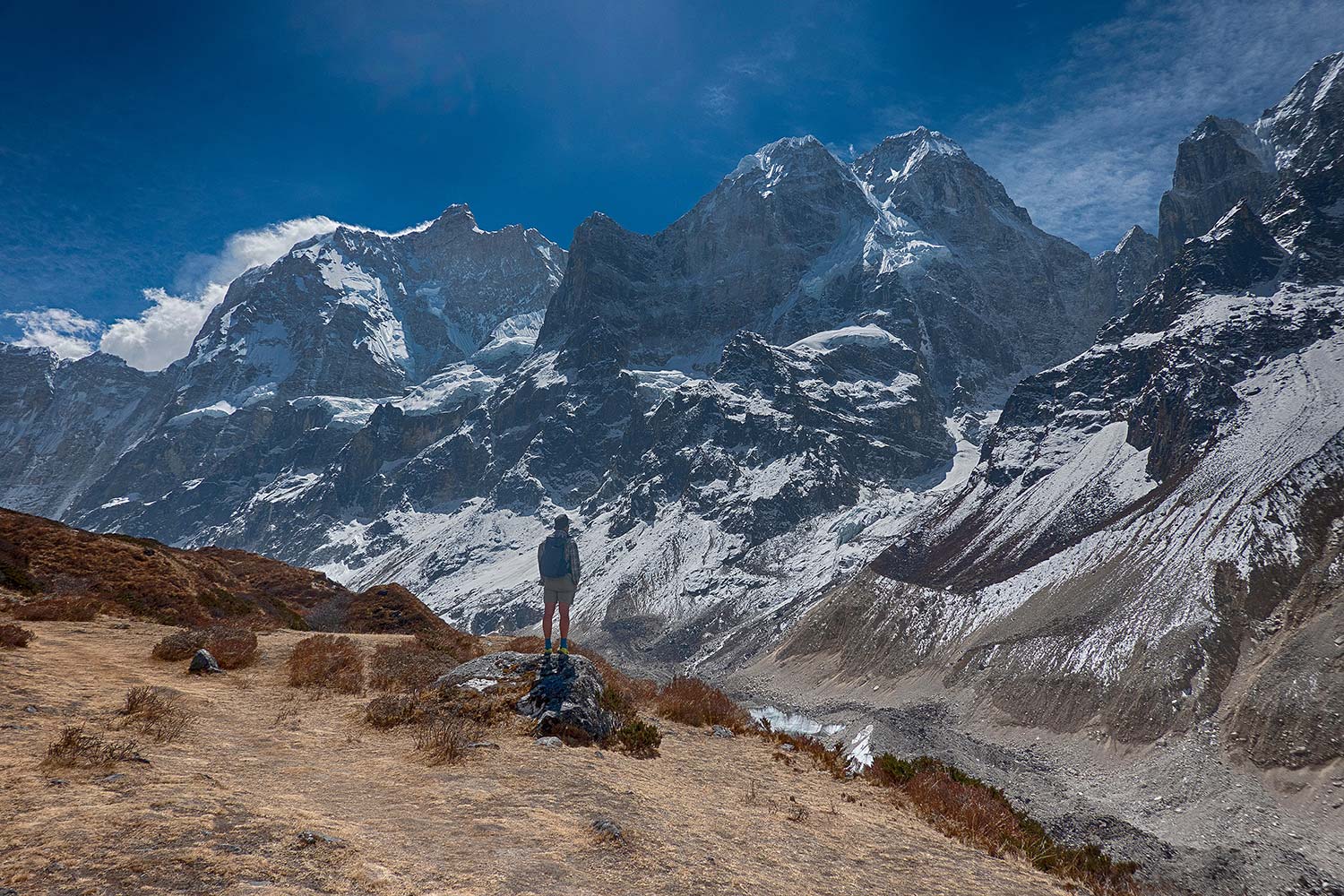
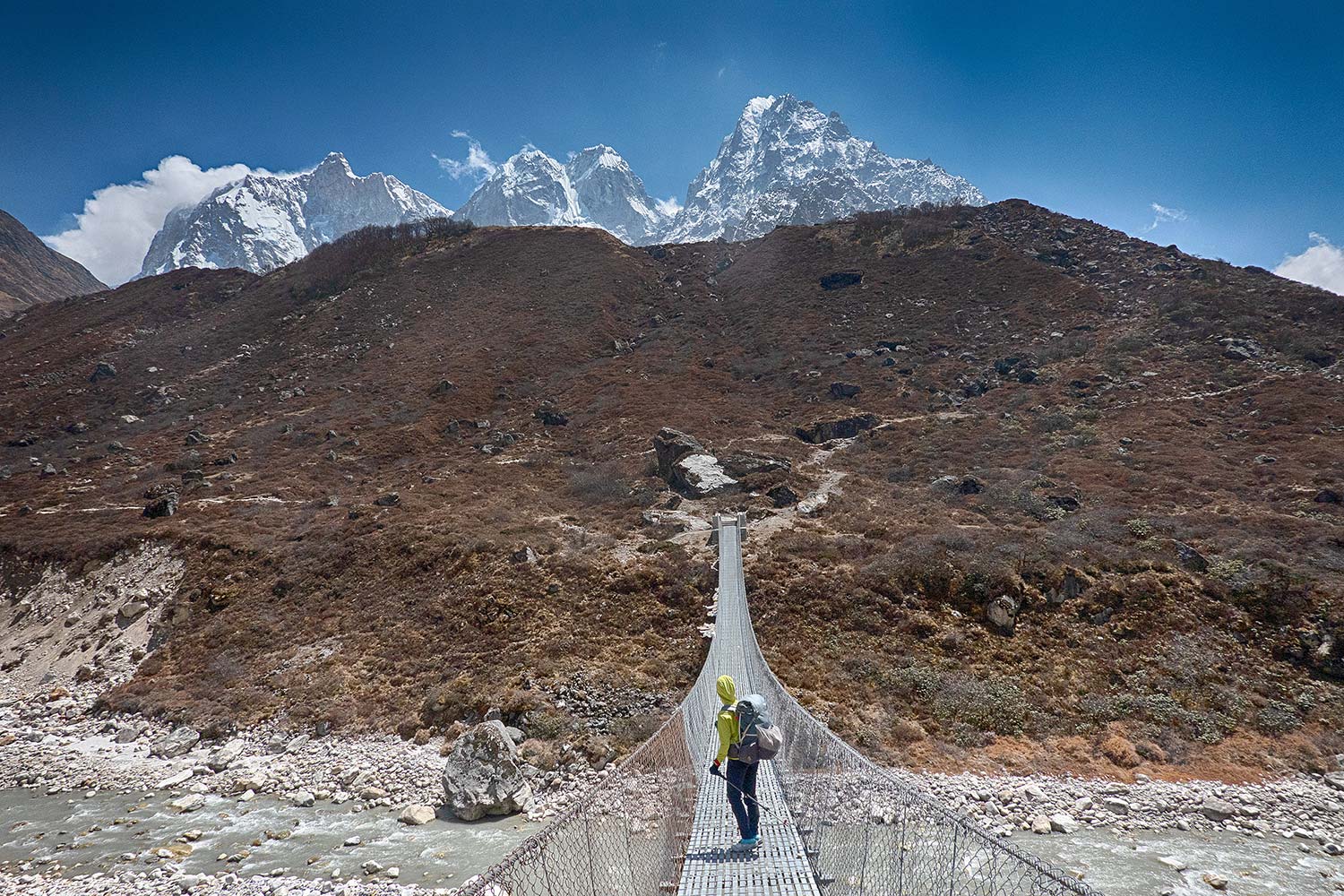
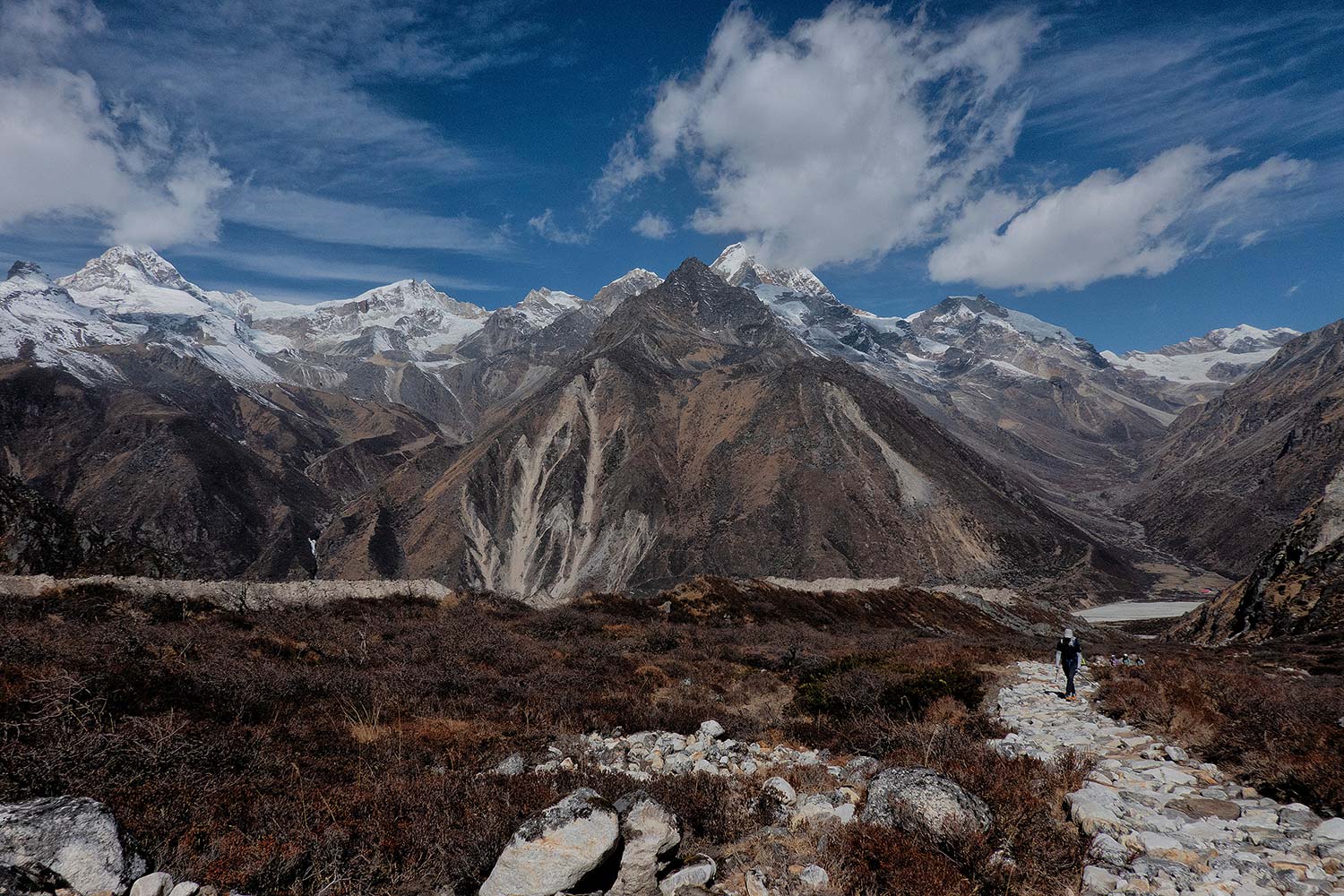
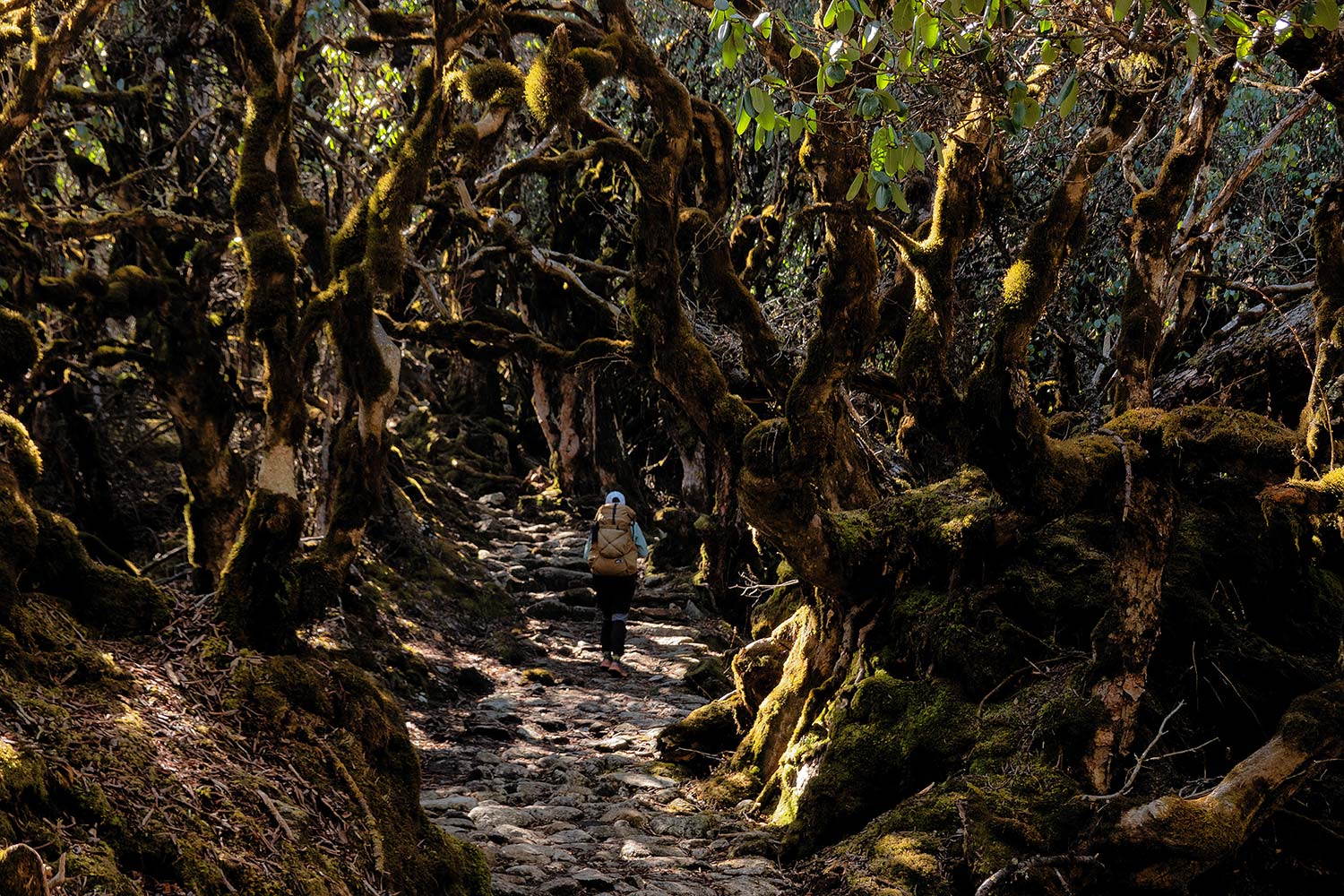
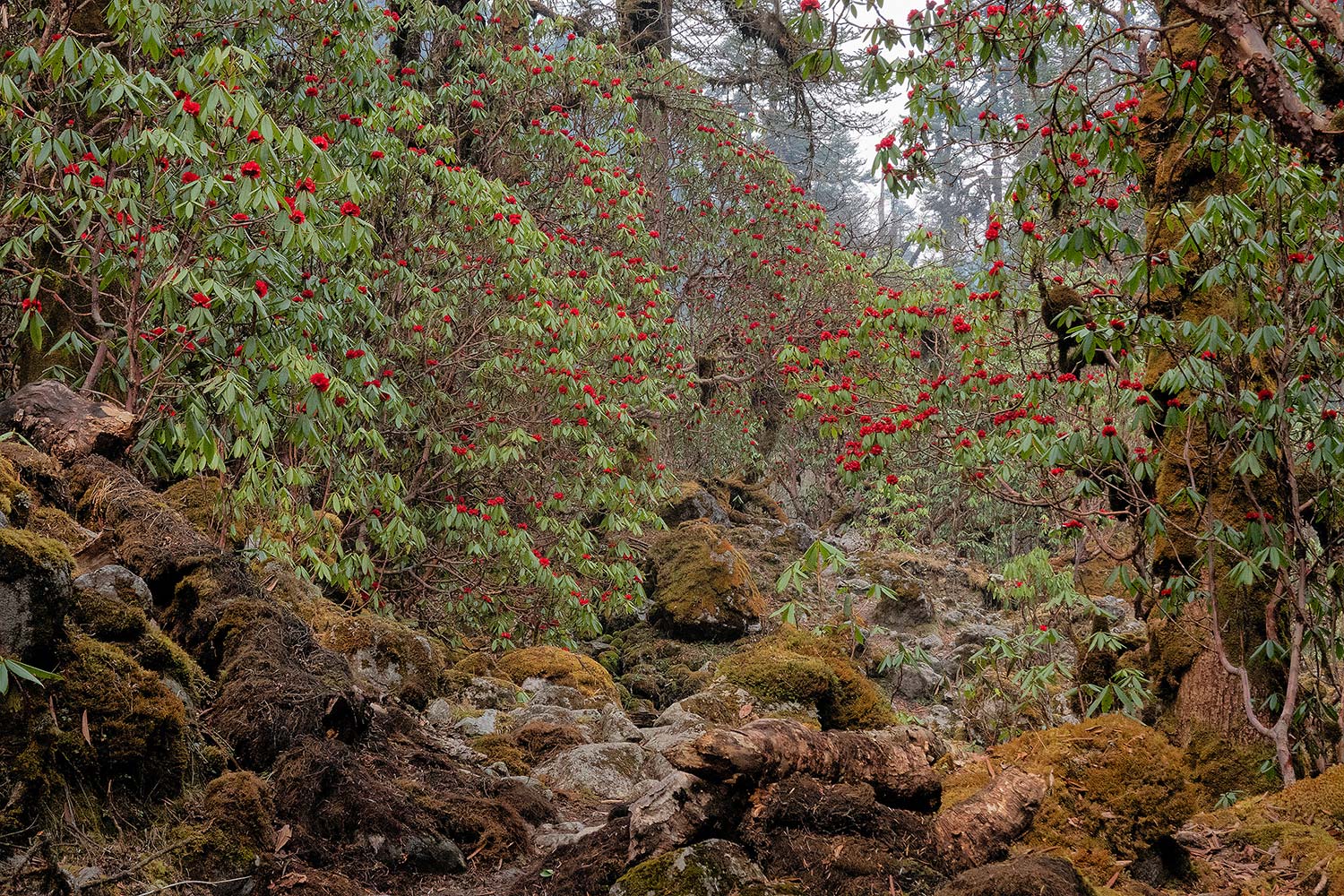
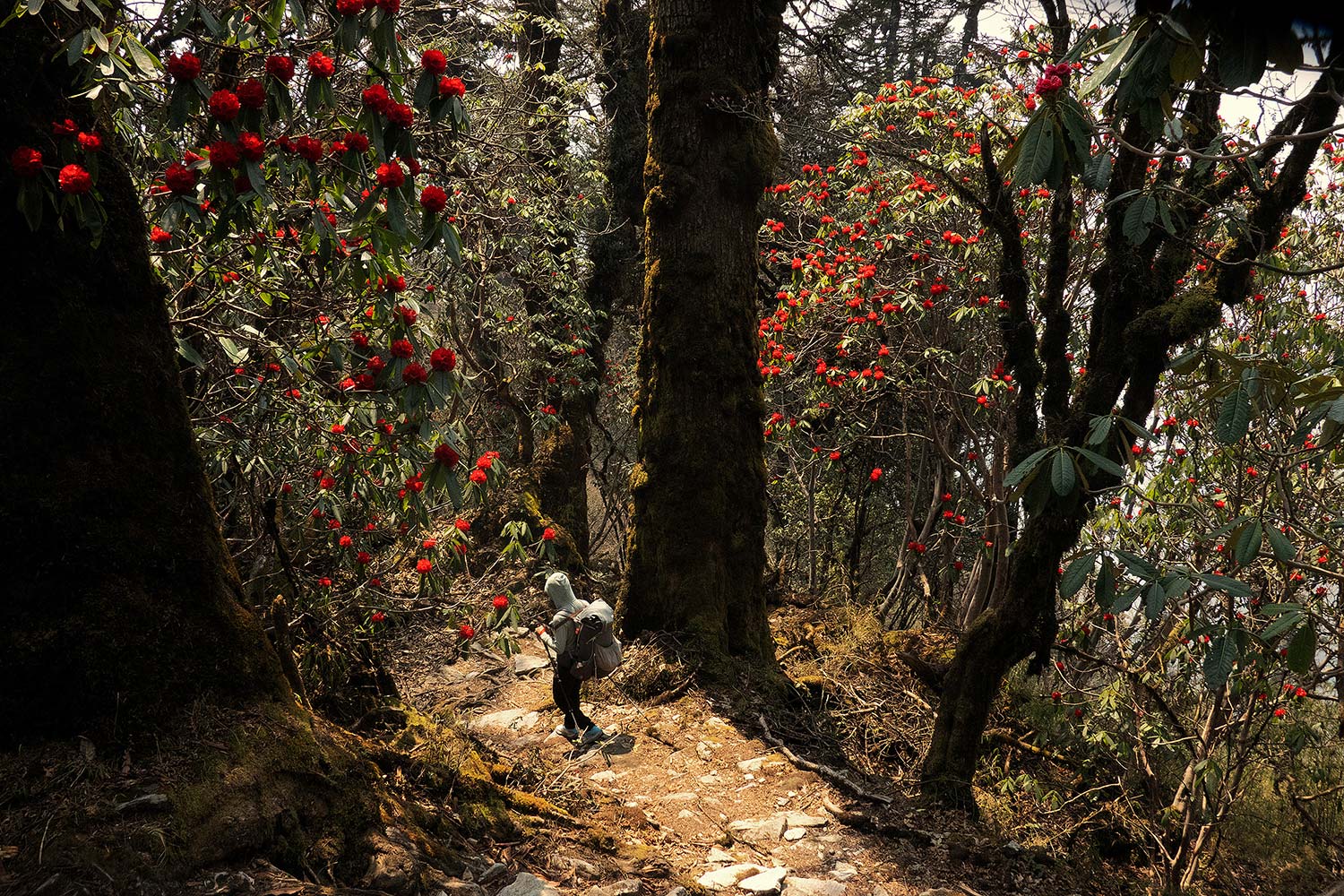
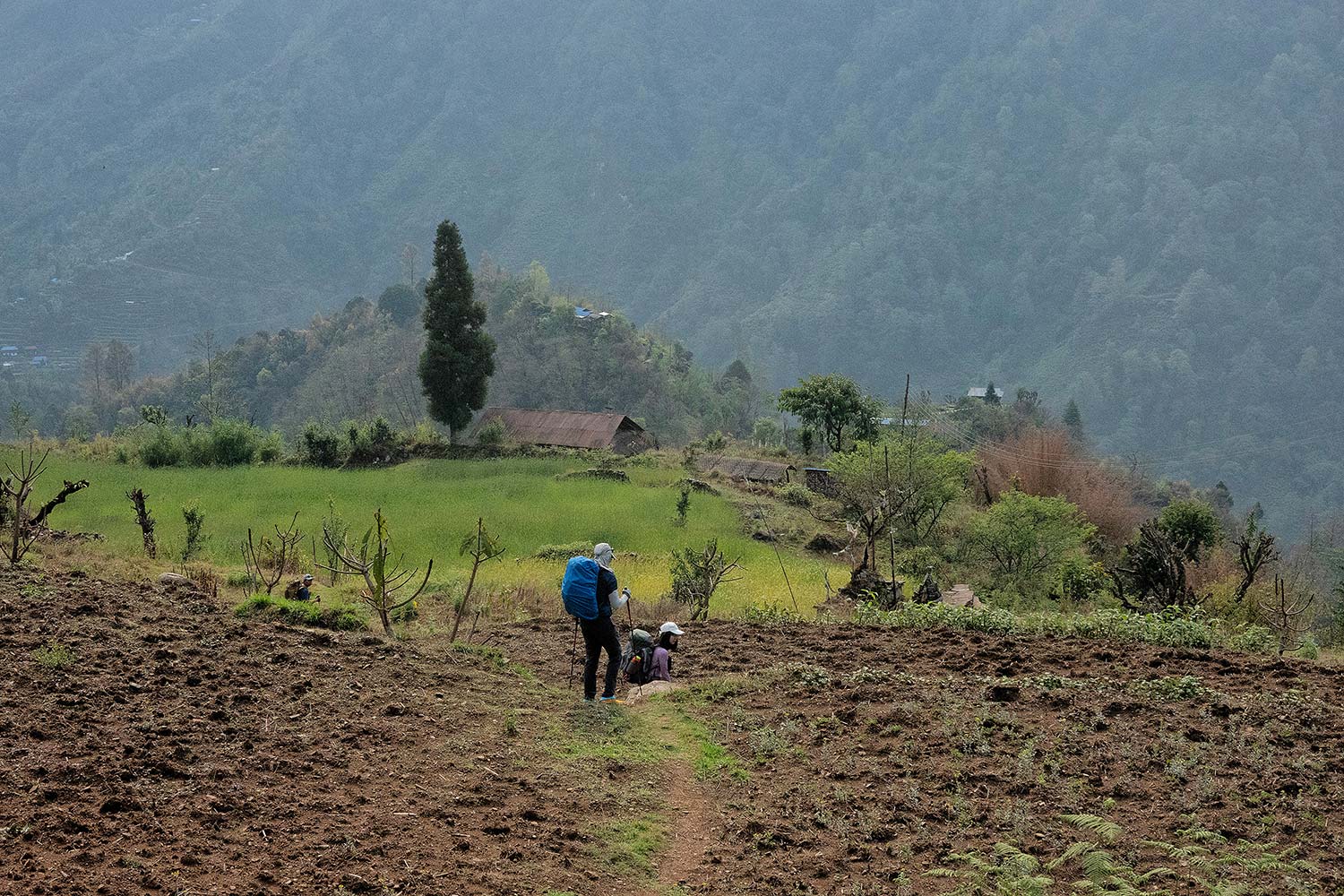
You get the full range of a Nepal mountain experience here. The trek begins in the lowlands, passing through humid cardamom plantations and rice paddies, with grinding climbs through dense bamboo. These gradually give way to misty rhododendron forests that look straight out of The Lord of the Rings, with twisting roots and moss-covered stones creating an atmospheric backdrop. We chose early April to catch the rhododendron blooms and were rewarded with forests ablaze in red, pink, and maroon flowers that helped distract us from the steep climbs.
The rhododendrons eventually yield to higher, drier pine and larch forests. Soon after, the trail climbs into a high-altitude desert—not of sand, but of ice and glacial moraine—at 4,000–5,000 meters.
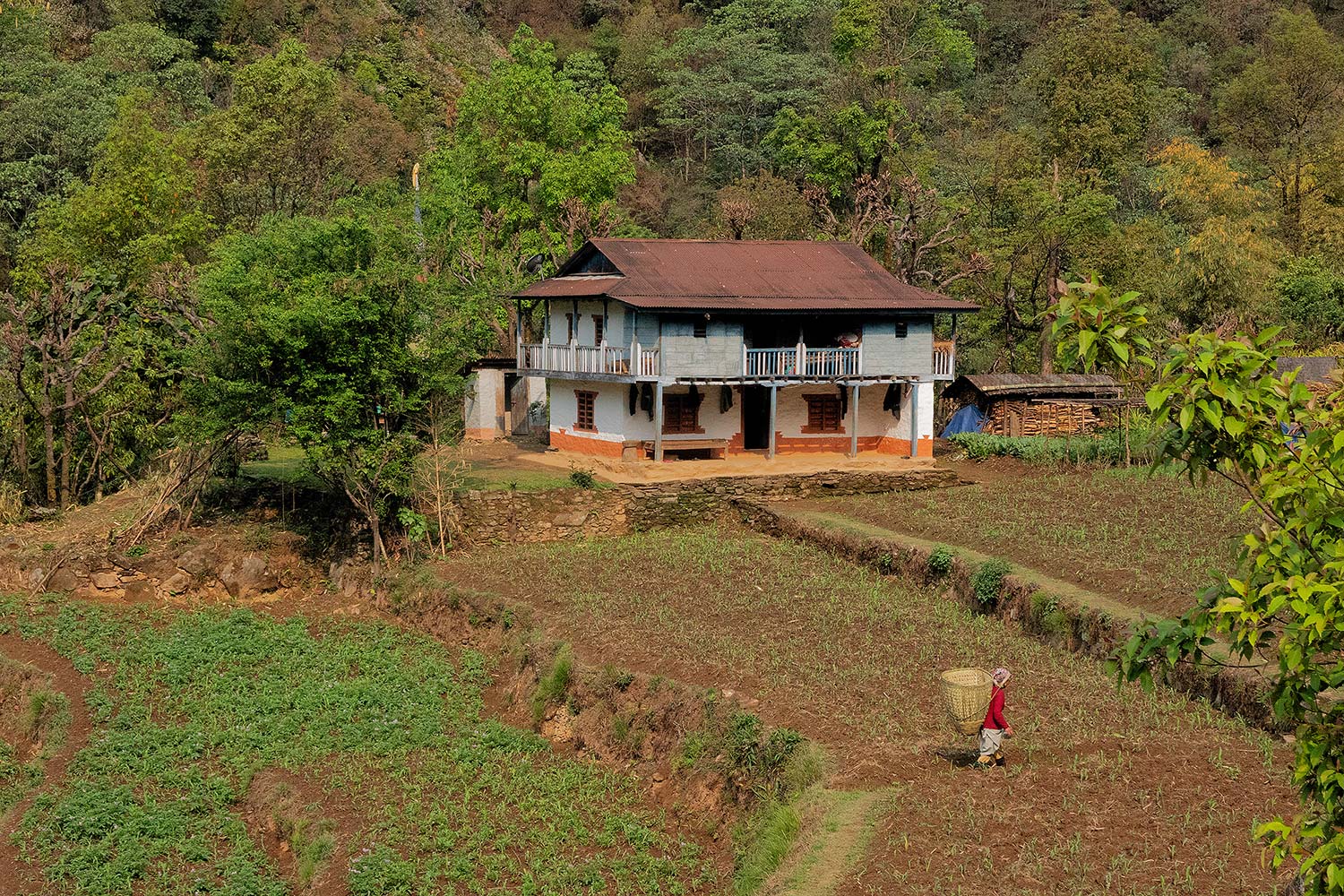
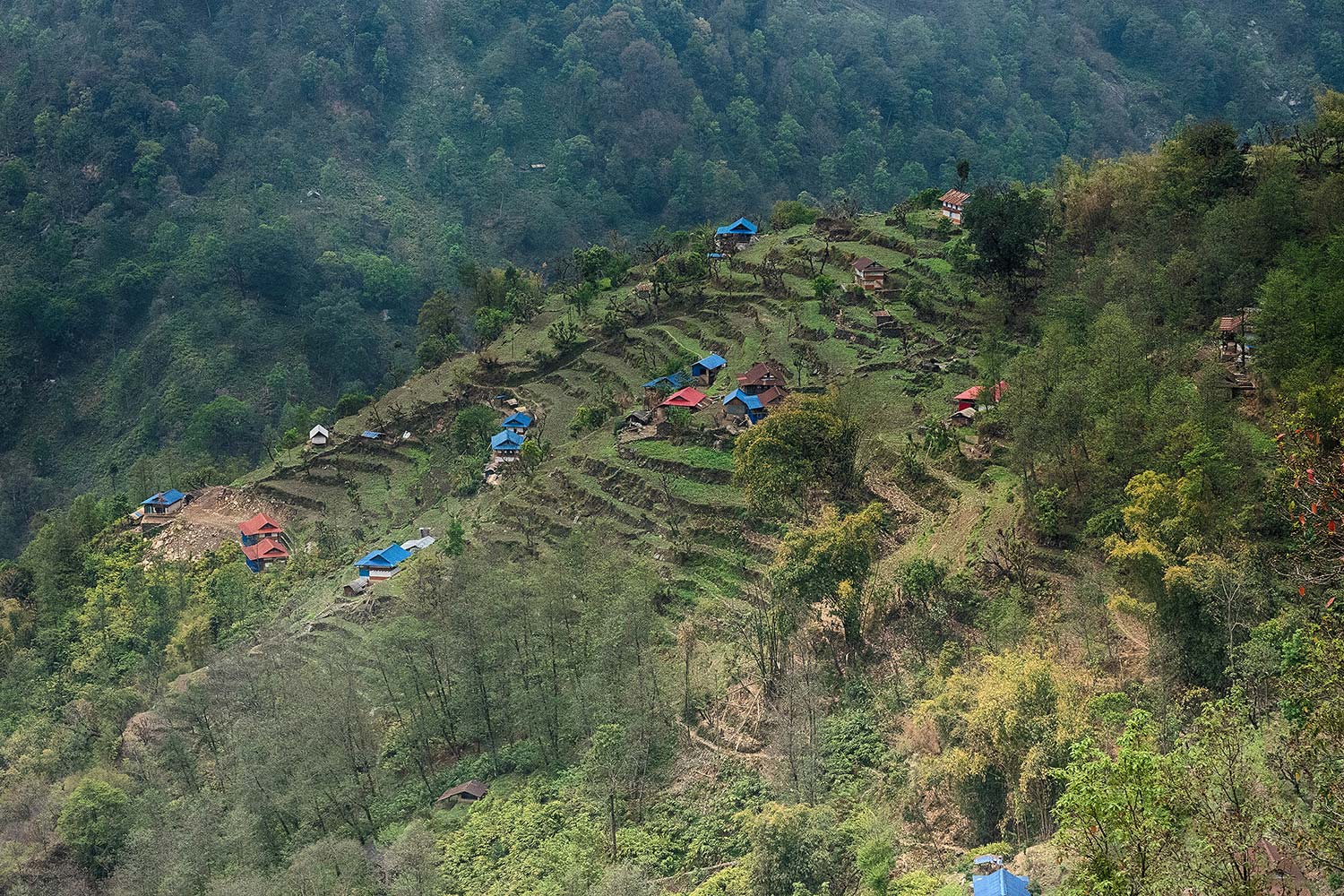
The villages mirror the landscape. In the foothills, homes are surrounded by lush gardens and thatched roofs. Higher up, sturdier tin-roofed dwellings appear, with villagers growing millet and wheat as staple crops. Above 4,500 meters, little survives beyond potatoes and barley, which is used to make tsampa—the roasted flour Tibetans mix with butter tea for energy and sustenance. Houses here are simpler still, with heavy stones weighing down wooden-shingled roofs to protect against high-altitude winds and storms.
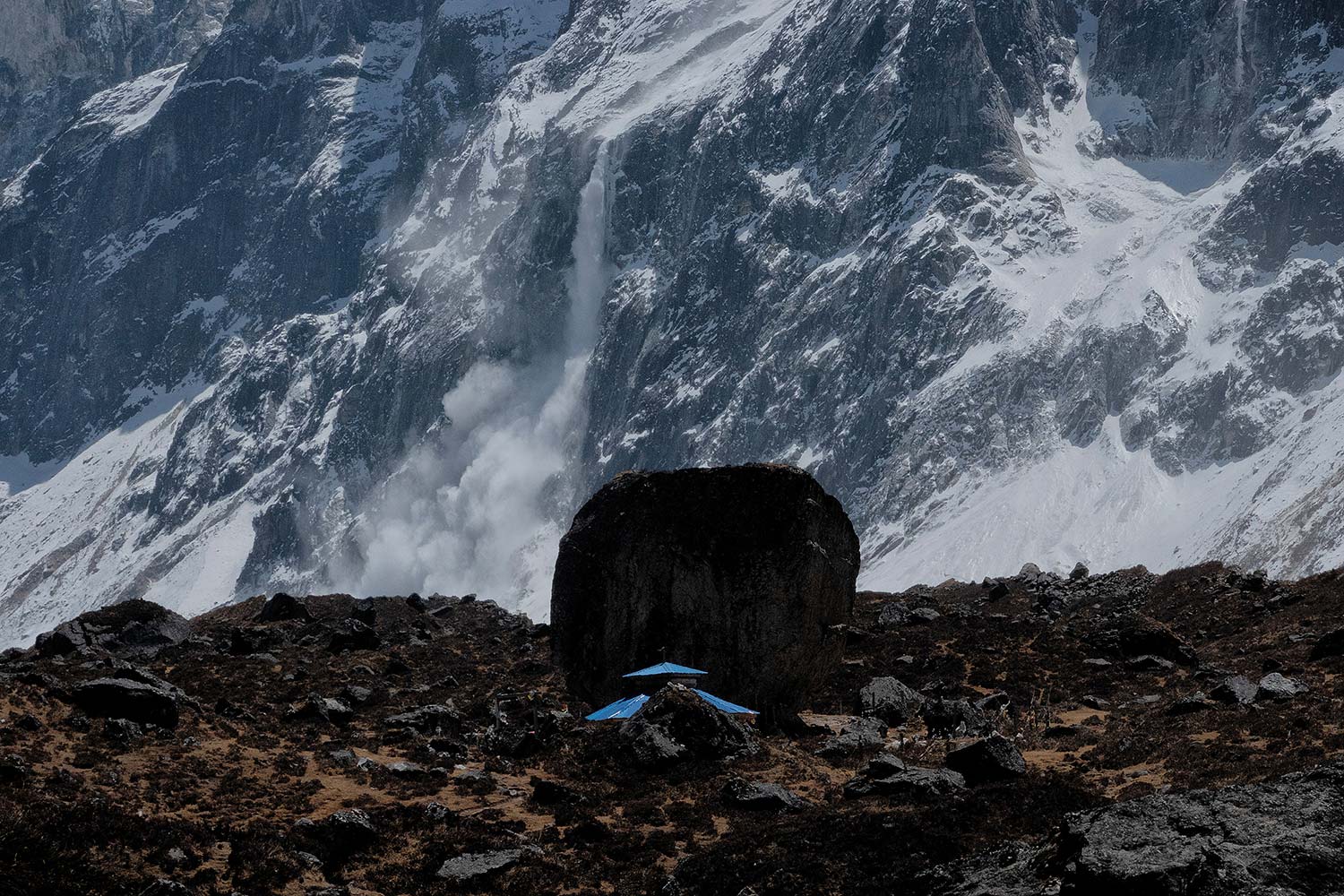
While the views of Kanchenjunga from its north and south sides are arguably the trek’s greatest highlights, I found the surrounding landscapes just as compelling. To acclimatize for the 5,100-meter base camps, we took extra days to climb high and sleep low. In the village of Kambachen, we made a day trip to the Jannu Glacier, gazing at a surreal amphitheater of peaks crowned by the pyramid-shaped Jannu—also known as Khumbakarna—considered one of the most technically demanding climbs in the world. The valley felt profoundly remote. A lone gompa built by locals faced the sacred peak, and the only sound was the thunderous crack of ice breaking from the Khumbakarna icefall and rumbling into the valley below.
Several days later, we crossed a series of snow-covered high passes to reach South Base Camp. Once again, we were nearly alone, save for one other group. With the trail erased by whiteout conditions and no tracks to follow, it felt like stepping into the boots of early explorers, navigating valleys woven among gargantuan peaks.
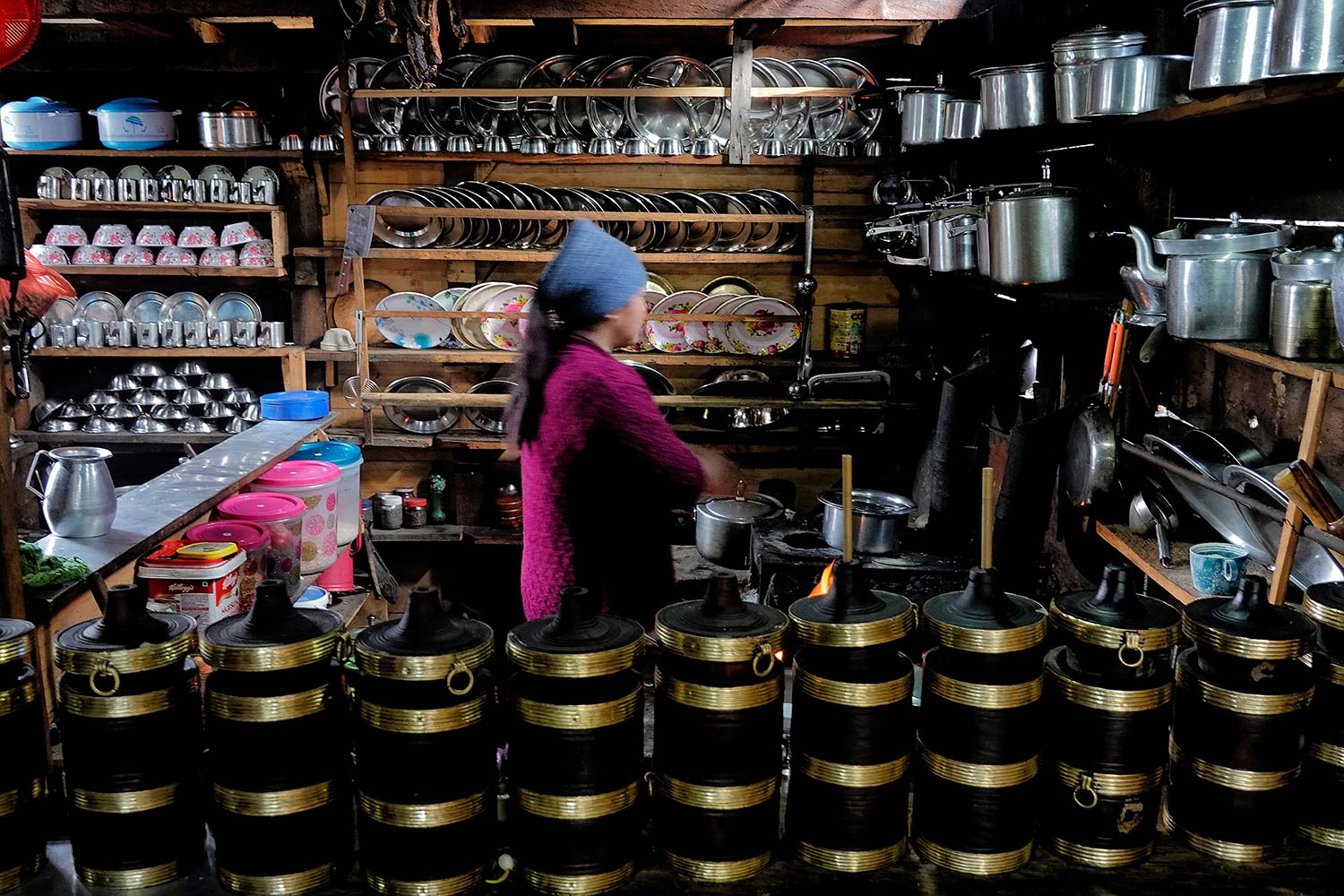
Descending from the cold, the air thickened with oxygen. In small hamlets near Yamphuddin, there were no teahouses at all—only local homestays, often run by elderly couples with weathered faces. They would tidy a spare room for us, head to their fields to pick fresh kale and potatoes for dinner, and invite us to sample homemade tongba, a fermented millet drink served in tall wooden vessels and sipped through a straw.
After a long, exhilarating day, I reflected on how rare these wild, authentic places have become. Yet they still exist—for those willing to make the effort. And they are worth every step.