


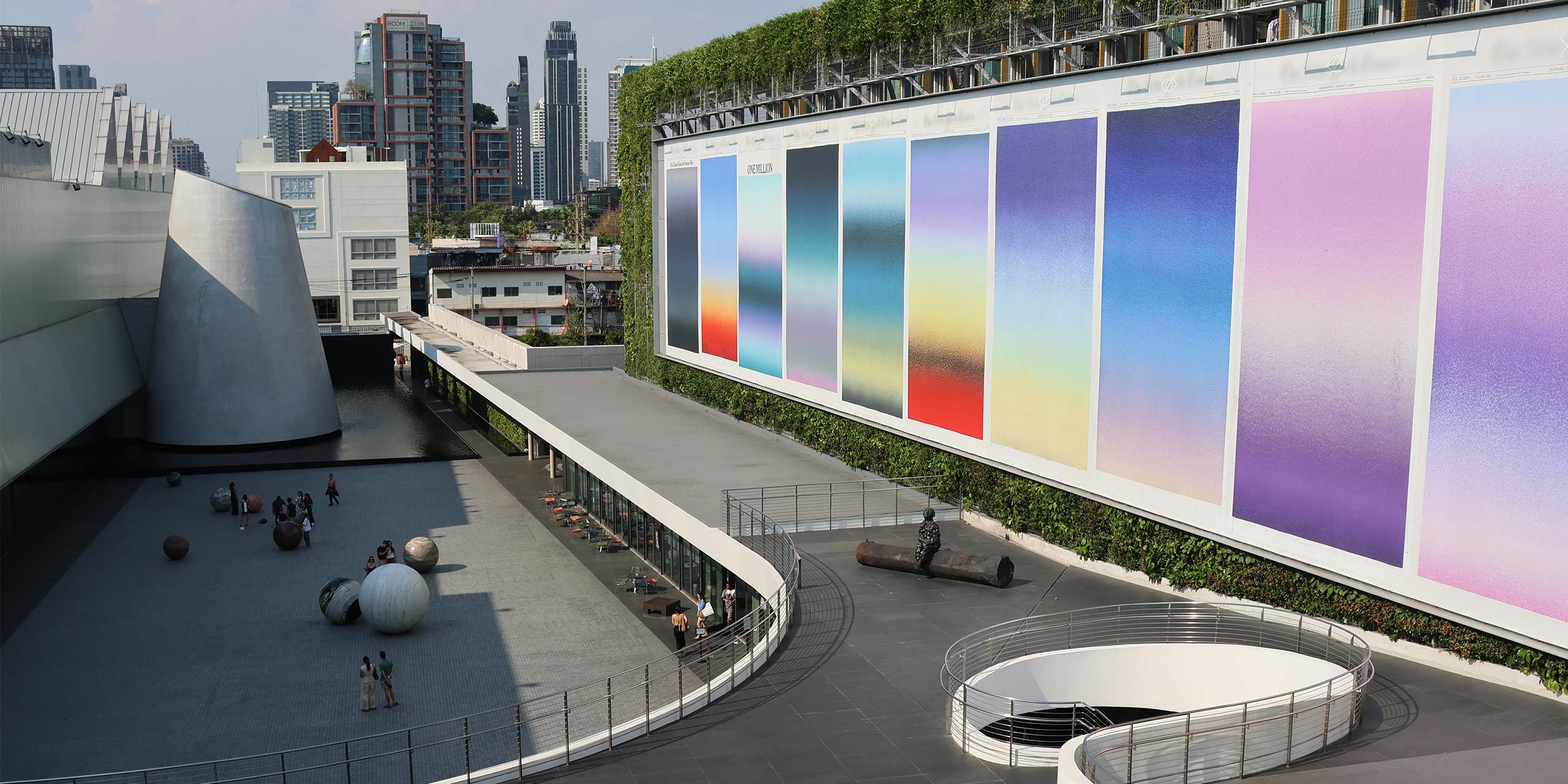
Dib Bangkok, the city’s first international contemporary art museum, opened its doors in December 2025. It is a privately funded museum built around the extensive art collection of Petch Osathanugrah, the former CEO of Osotspa, the beverage company best known in Thailand for its M-150 energy drinks.
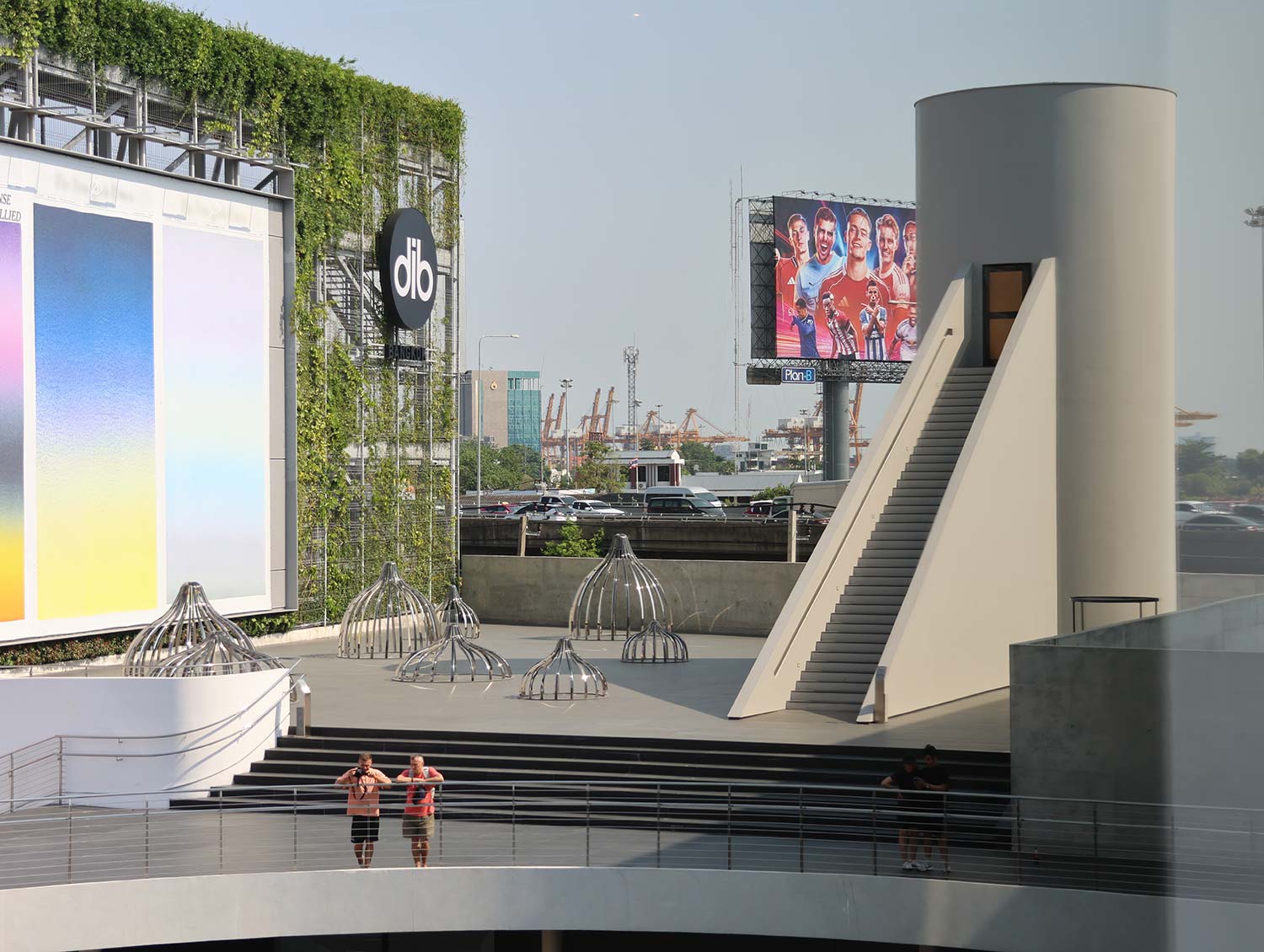
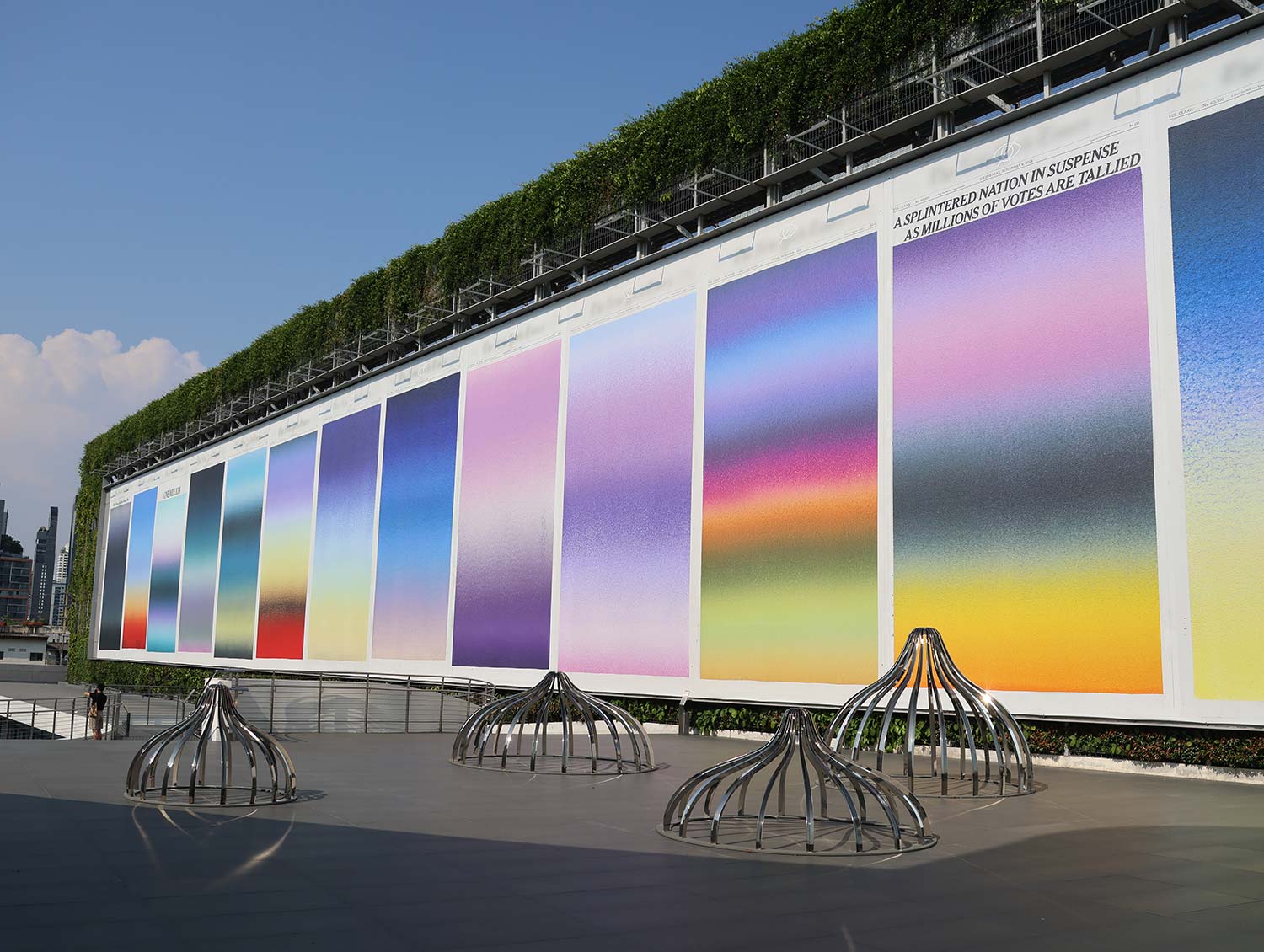
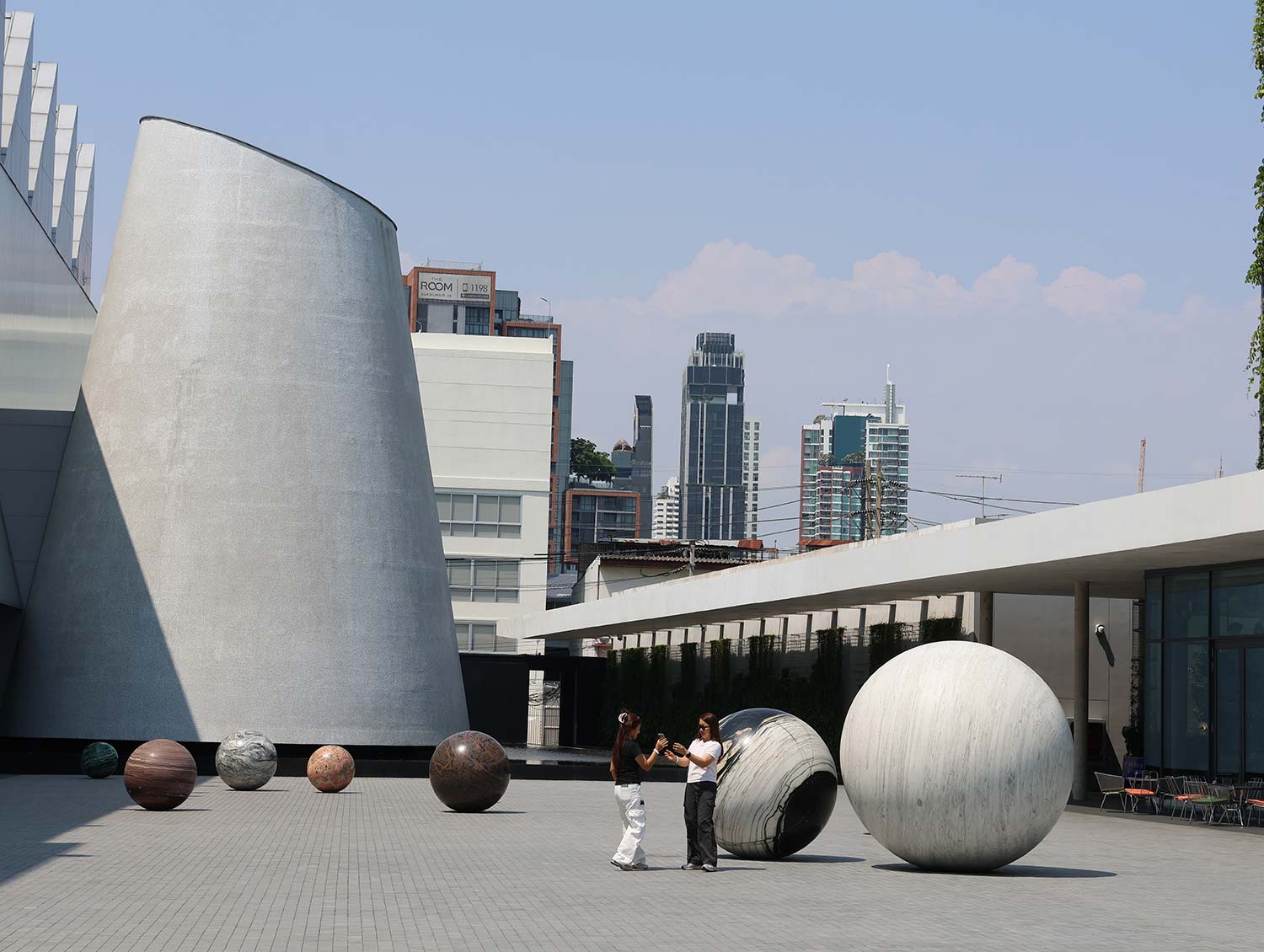
Located in a stunningly redesigned warehouse near the Thai capital’s port, the museum is vast, with 7,000 square metres of gallery space. At first glance, Bangkok‘s newest addition to its burgeoning contemporary arts scene stands in complete contrast to its host city. Dib Bangkok is a space of bright, deliberate emptiness. Its exterior is dominated by a series of eleven perfectly round natural stones—Alicja Kwade’s Pars pro Toto sculpture—that appear to echo our solar system without directly representing it, alongside a conical tower resembling the chimney of a steamship. Together they are arranged around a vast courtyard framed by three floors of galleries on one side and a gift shop and café on the other.
Inside, visitors are greeted by near silence, and much of the art on display lacks any human form. Instead, there are only traces of human presence: a swingable baseball bat, an inverted car seat, a photocopied question mark. Dib Bangkok is less concerned with who we are than with what remains once we have gone.
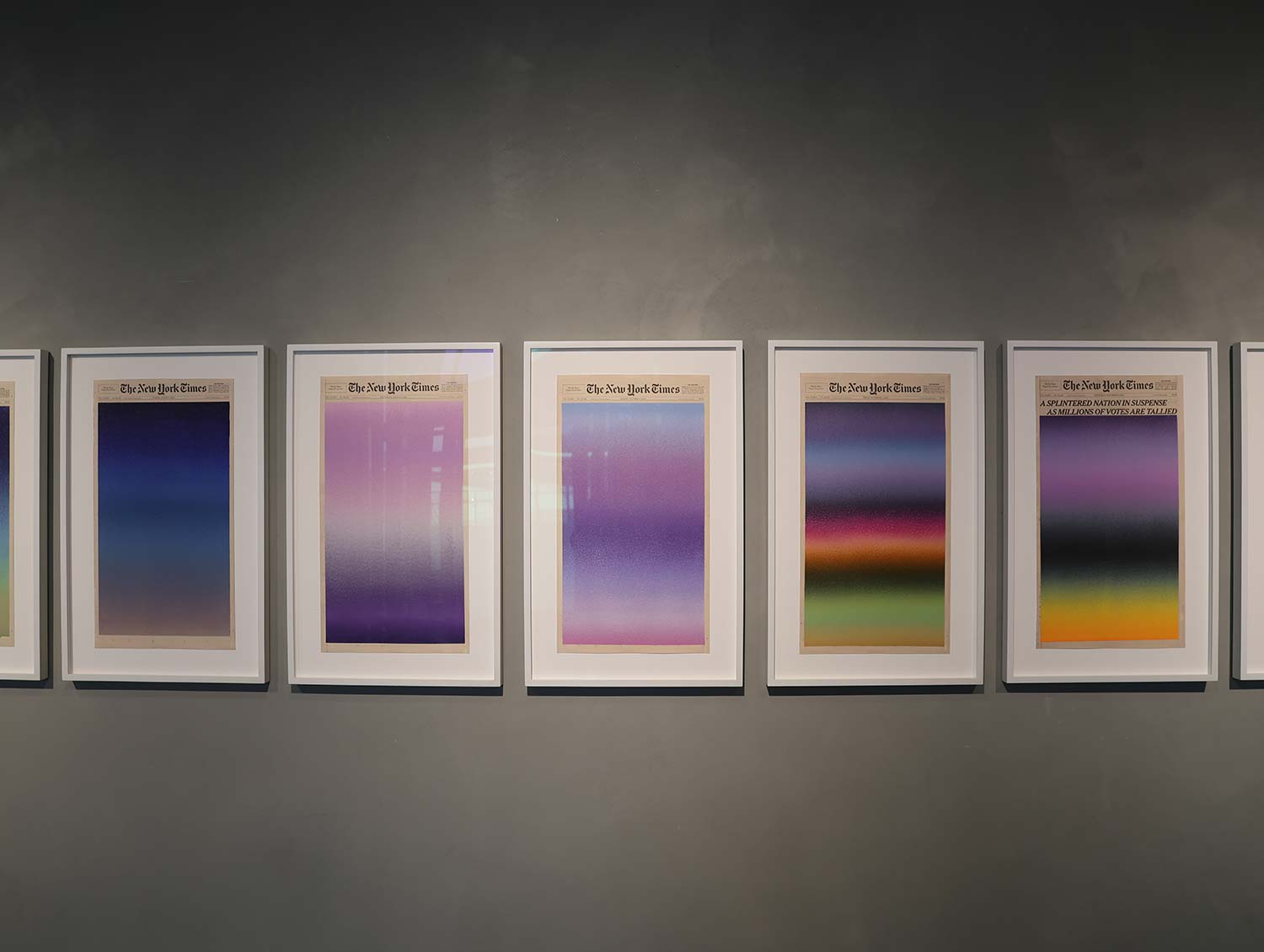
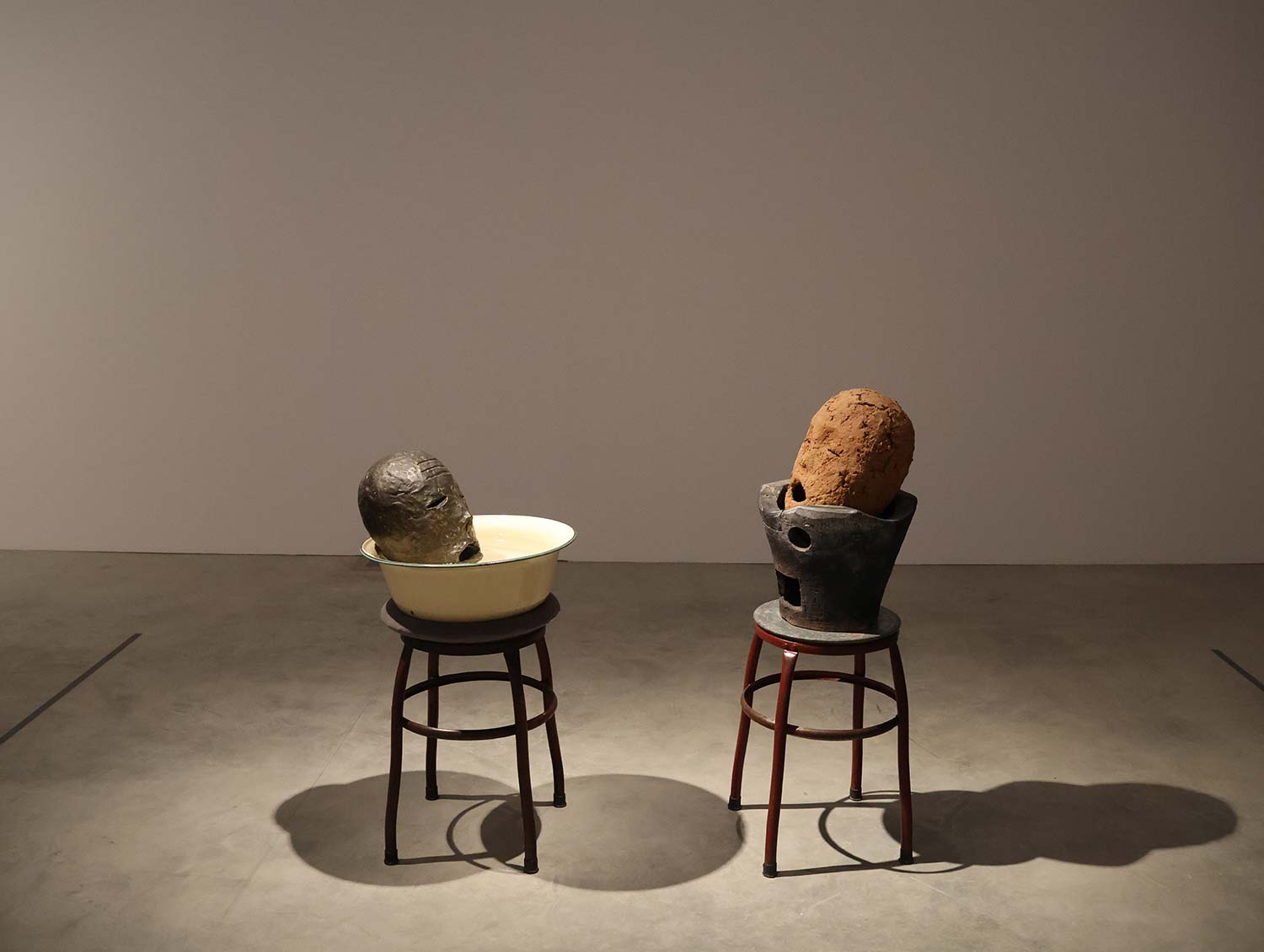
The installations, sculptures, and paintings, drawn from a collection of more than a thousand works, collectively convey a sense of calm and reflection. Stepping inside from a typically crowded, sweaty, kaleidoscopic Bangkok street is like passing through a cultural airlock into a universe that seems almost anathema to the lived realities of most Bangkokians. A visit to Dib Bangkok is a commitment. It suggests exclusivity. Yet this contrast between the exuberant, freewheeling nature of Bangkok and the museum’s calm, carefully controlled interior may be its greatest strength, bringing something genuinely disruptive and new to the city, even if it appears to speak to only a narrow slice of its residents and visitors.
The museum’s director, Dr Miwako Tezuka, who previously held key roles in New York’s contemporary art world, acknowledges Dib Bangkok’s distinctive position within Thailand’s evolving arts scene: “While the infrastructure may have been limited, many artists, curators, and thinkers in Thailand have long worked with remarkable independence, dedication, and vision. That history is important to acknowledge, not as a gap to be filled, but as a foundation that continues to shape the conditions we are working within today. With that comes a certain responsibility. For Dib, it is about contributing with care, rigor, and a long-term vision, about building structures that support artists and audiences alike, while remaining attentive to the local context and its evolving needs.”
Tezuka suggests the opening of Dib Bangkok offers an opportunity to extend what has come before while opening new possibilities for how contemporary art can be experienced and understood in Thailand and beyond.
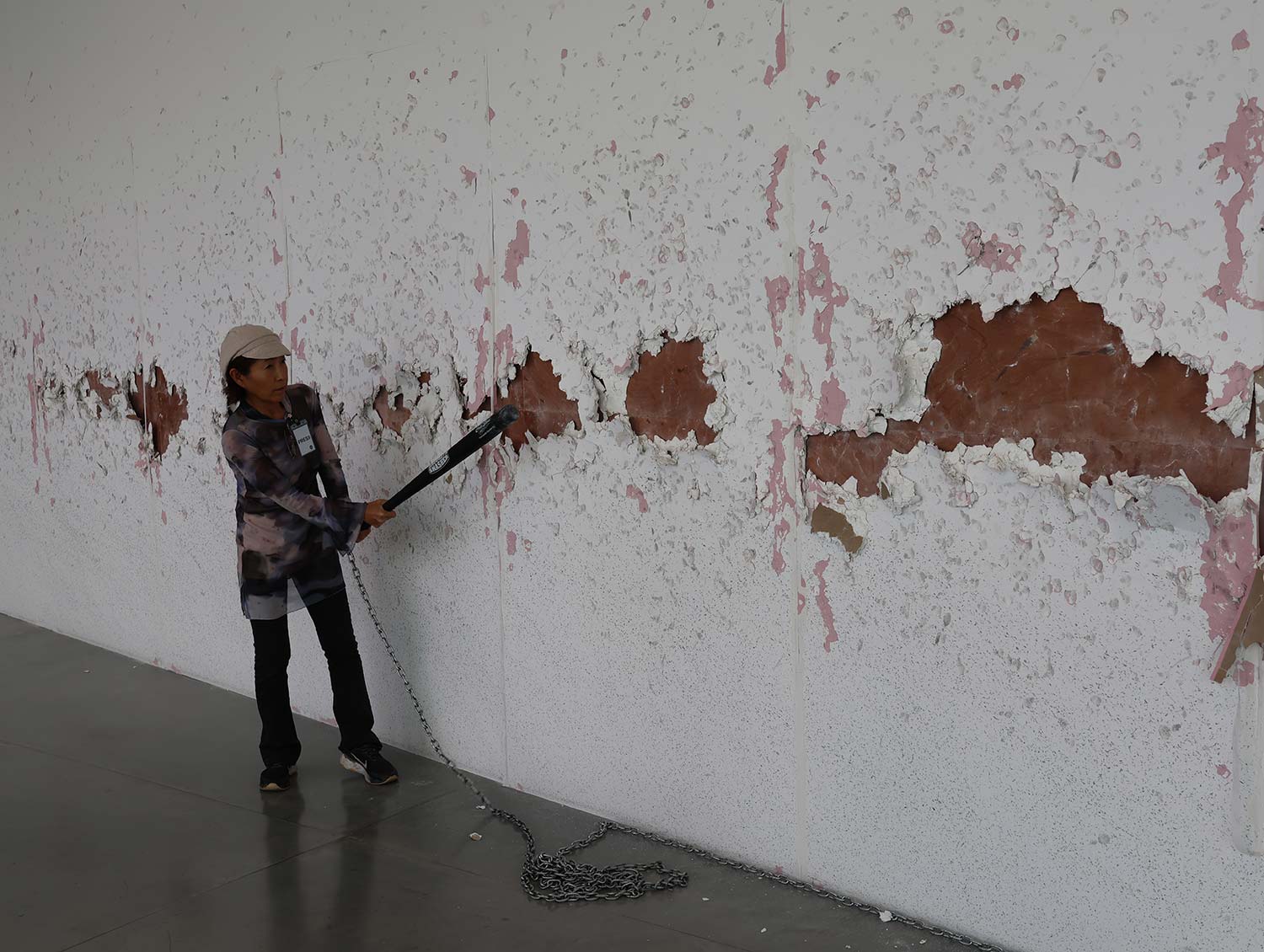
Upon entering the first ground-floor gallery, visitors follow a long white wall until they reach Marco Fusinato’s Constellations: a baseball bat suspended from a chain. Visitors are encouraged to swing it directly into the wall, producing a thunderous report amplified by a hidden sound system. The effect is striking because it reinforces the exhibition space’s prevailing silence. The corridor then opens into a vast hall dominated by South Korean artist Lee Bul’s Willing To Be Vulnerable, a gleaming silver zeppelin suspended from the ceiling. It is the first work in Dib Bangkok’s opening exhibition, (In)visible Presence, which features works by forty contemporary artists.
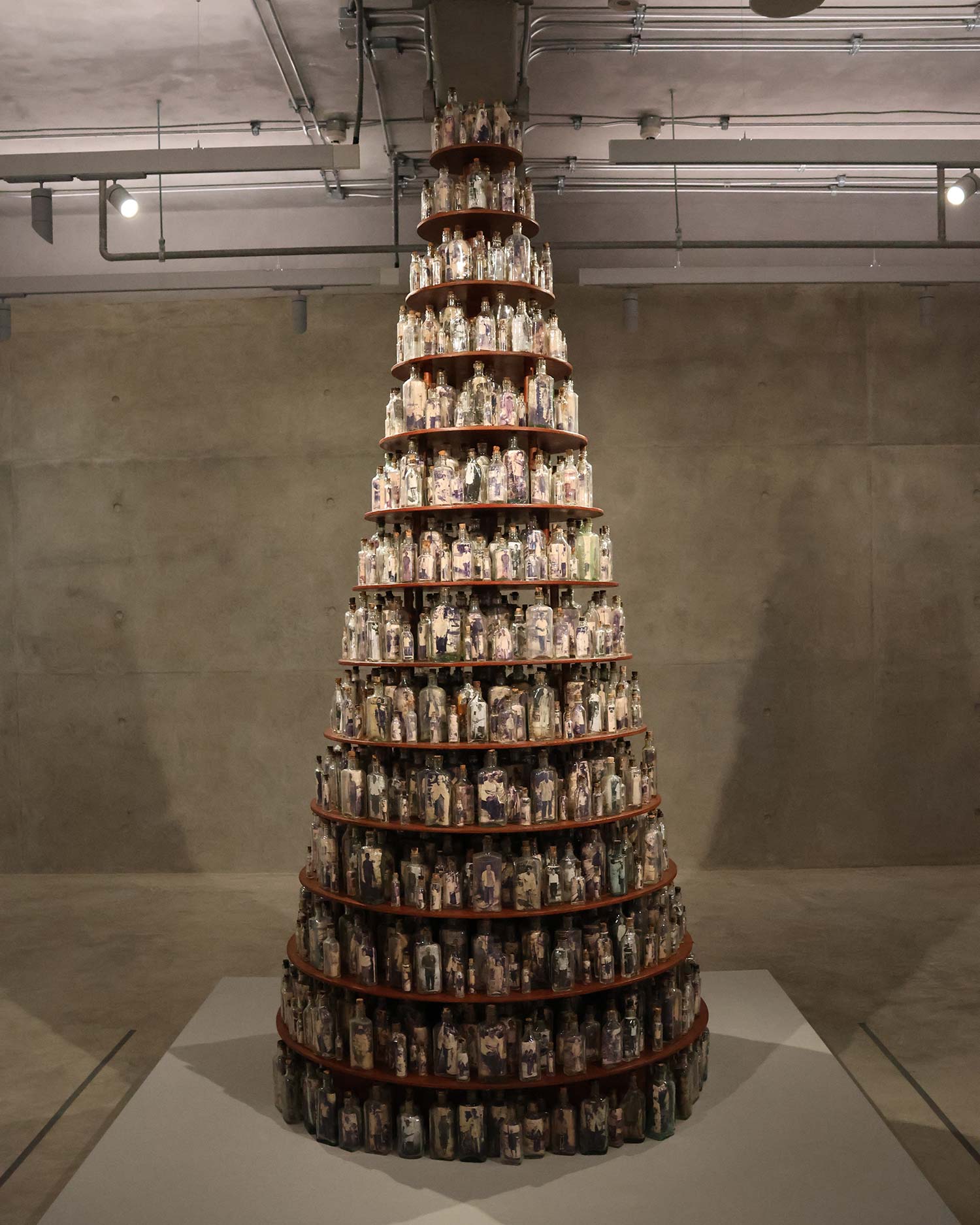
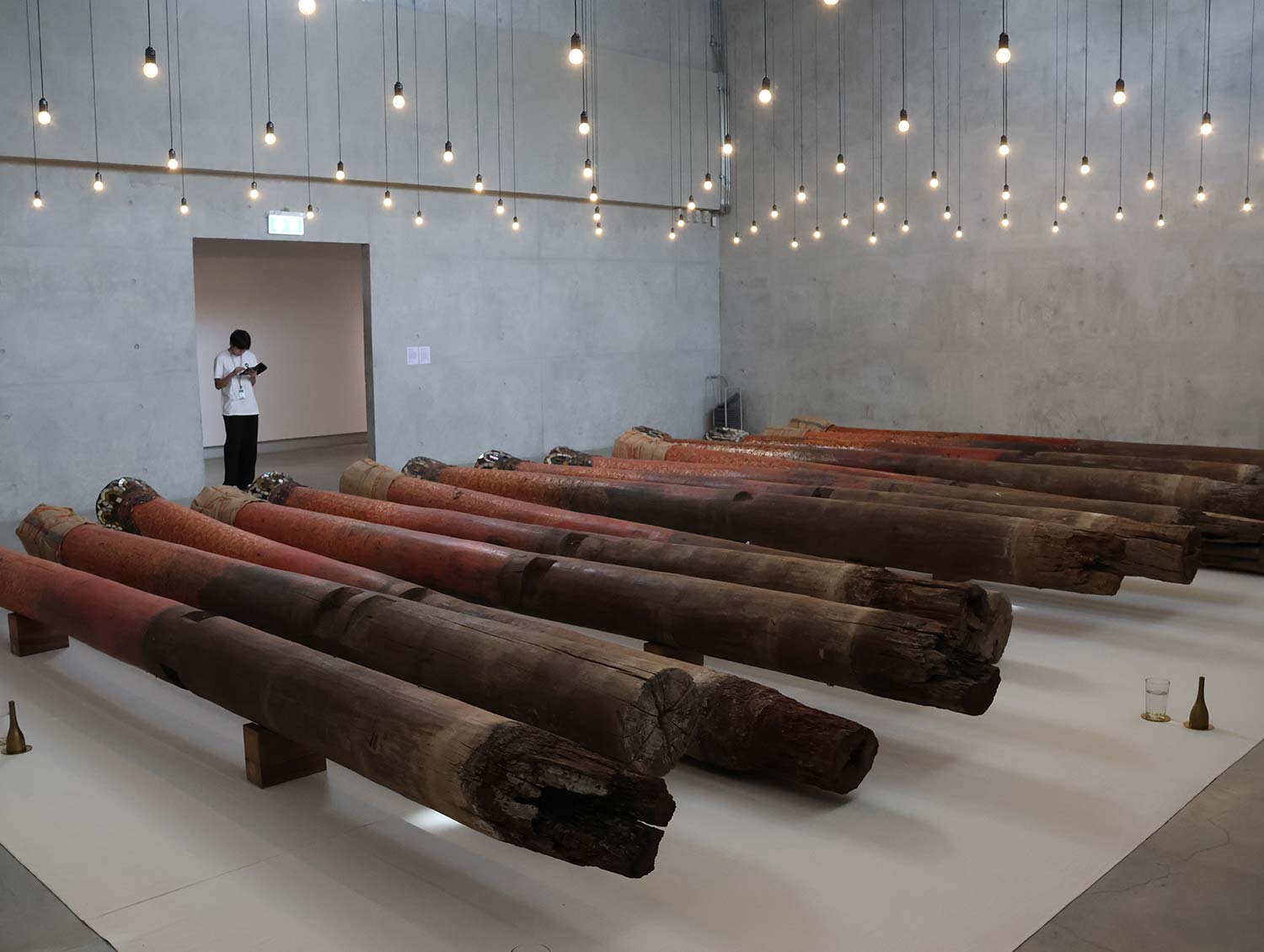
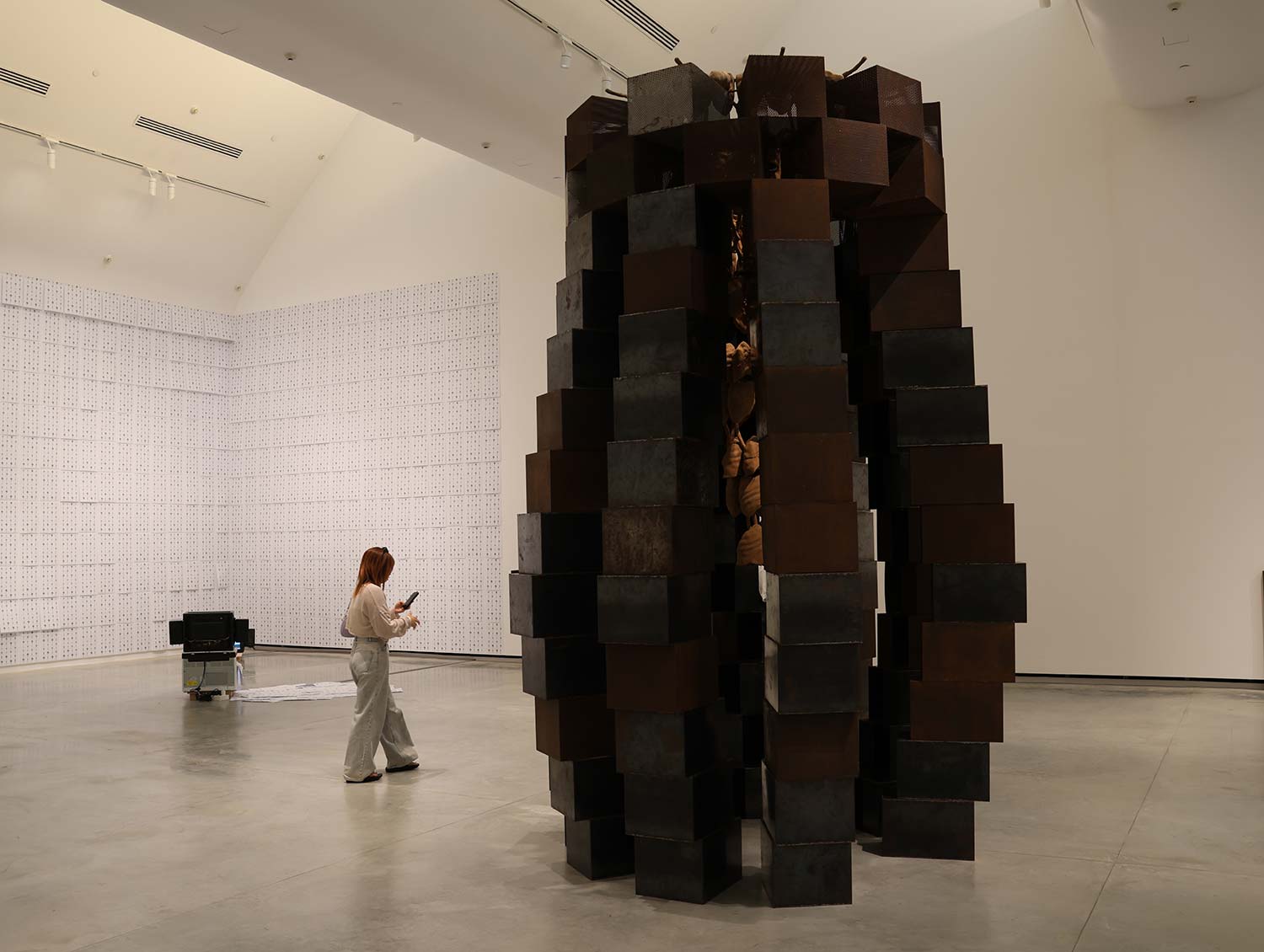
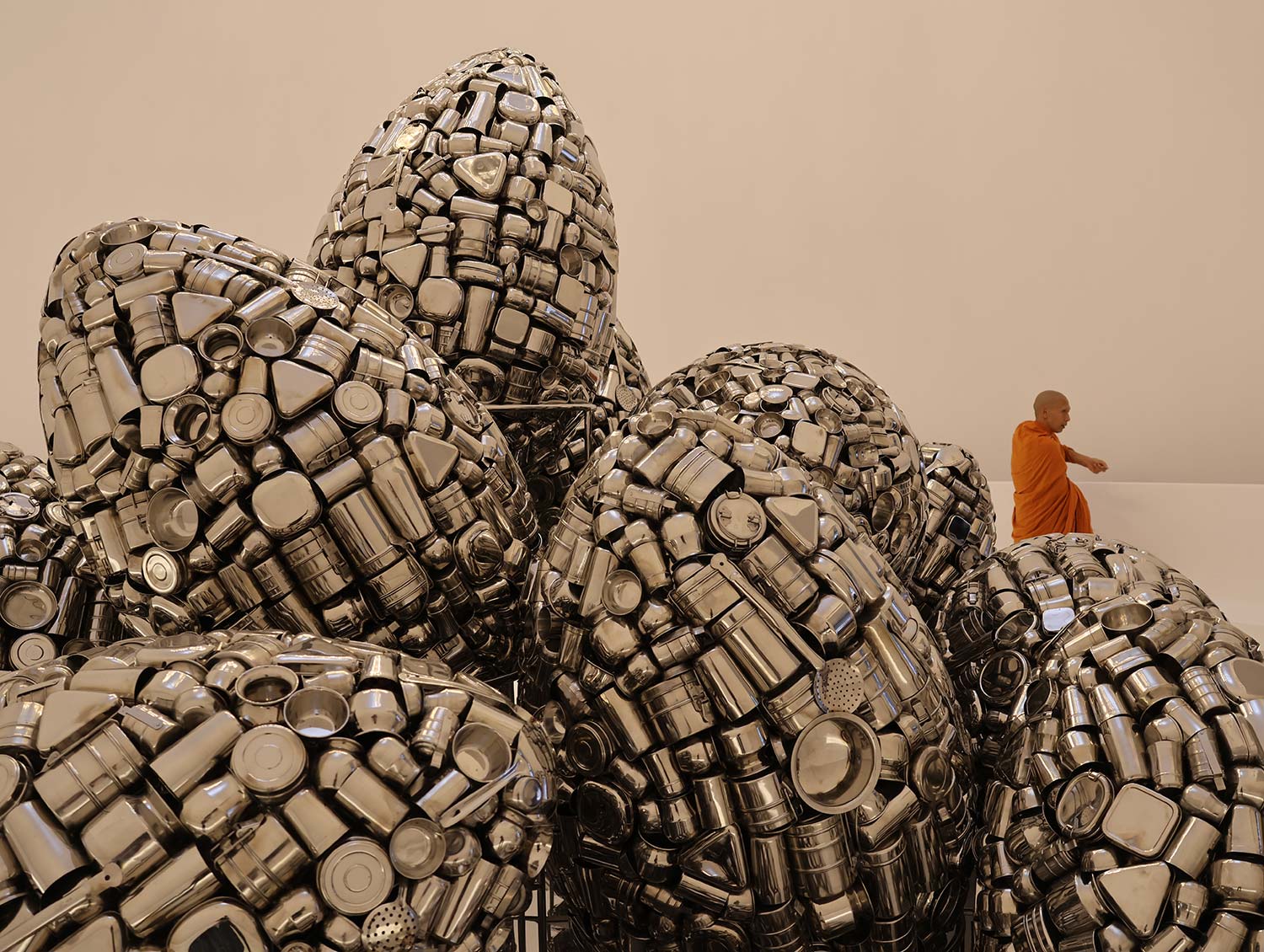
Among the exhibition’s highlights is Subodh Gupta’s Incubate, an uneven pyramid of stainless-steel eggs that, on closer inspection, appear to have been assembled from tiffin boxes. The sculpture is displayed to great effect inside The Chapel, a narrow circular chamber housed within the tower that resembles the steamship chimney from outside.
Dib Bangkok is immaculately photogenic. The Alicja Kwade planets outside. The long white corridors. Lee Bul’s silver zeppelin. Every angle feels like a frame waiting for Instagram. The visitors oblige—fashionably dressed young Thais in particular, posing, snapping photographs, and stepping back to check their phones. The museum seems designed for this. The participatory works invite bodies into the frame, while the silence and emptiness become backdrops. None of this feels accidental. Dib Bangkok understands that in the 21st century, a museum competes not only with other museums but also with the phone in your pocket. Rather than resisting that reality, it embraces it. Whether this makes Dib Bangkok a museum for our time or simply a very expensive photo studio remains an open question.
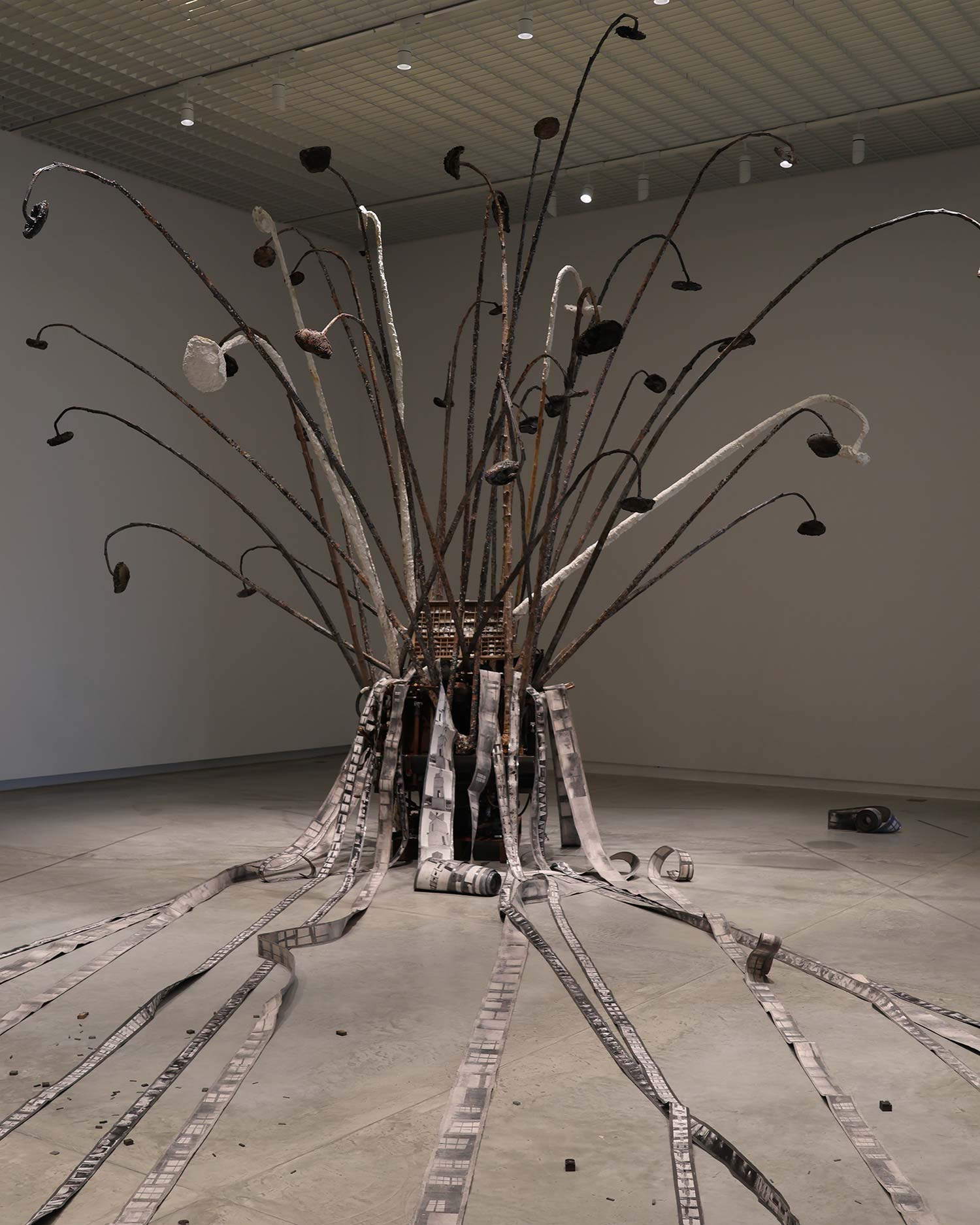
Giving substantial space and voice to Thai artists is another of the museum’s strengths. There is the wonderfully playful Emotional Machine by Surasi Kusolwong: a disassembled Volkswagen Beetle, its body suspended upside down and open to visitors to lounge inside while a video screen plays, among other images, a sunset over the Eiffel Tower. Its engine, wheelbase, seats, doors, and other components are carefully arranged across the floor. While Kusolwong appears to question established hierarchies between art, design, and everyday life, the work’s participatory nature also reflects Dib Bangkok’s wider ambition to draw visitors physically into the artworks themselves.
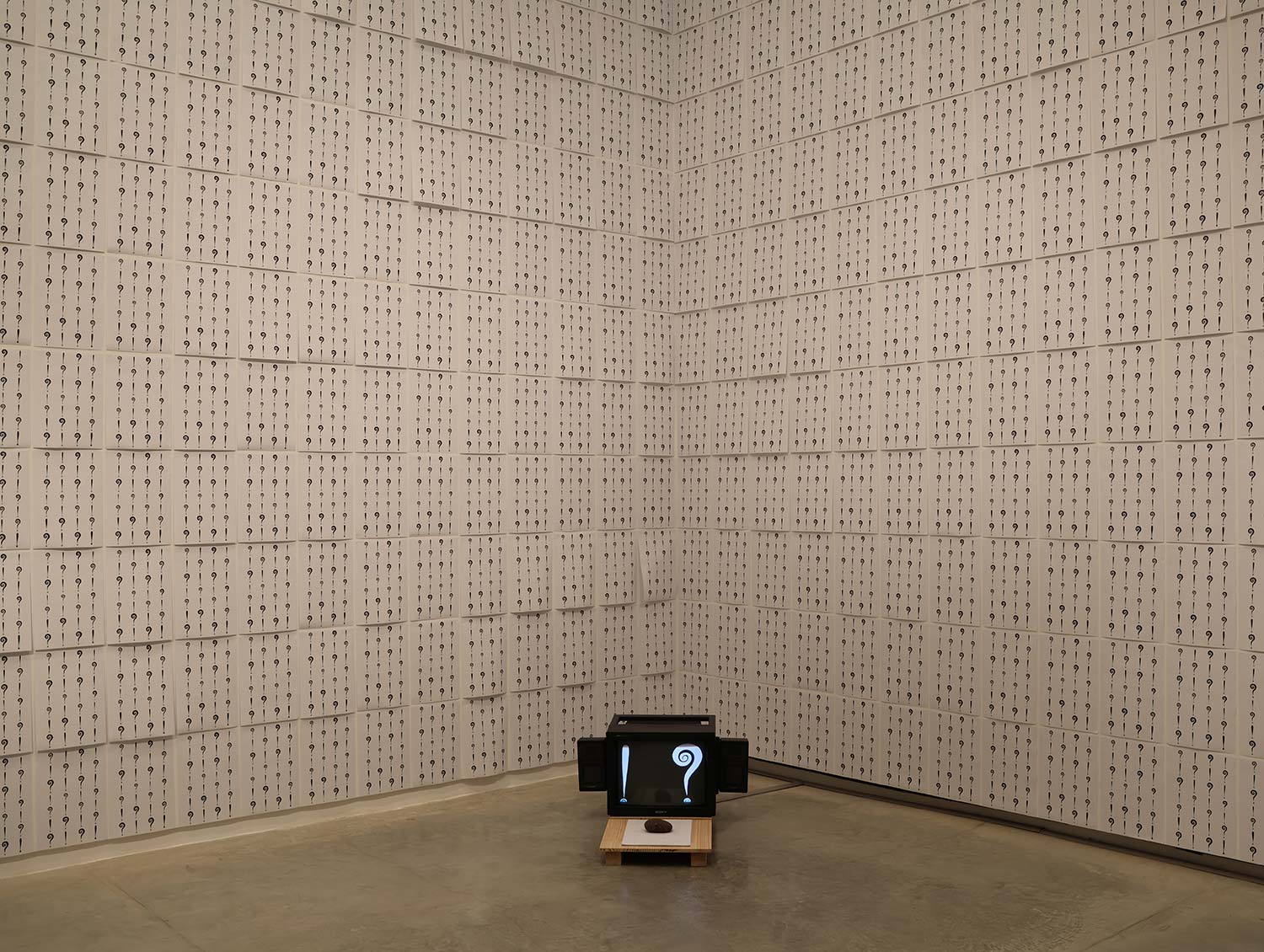
Several installations by Montien Boonma similarly invite visitors to linger. The most poignant is Prayer for Abhisot, a multimedia installation combining technology with traditional spiritual questioning. A television monitor displaying a question mark sits atop a Xerox machine, endlessly producing pages of question marks inside a room whose walls are covered in the same symbol. Created in 1994 after the artist’s wife died of breast cancer, the work grew from Boonma’s refusal to leave her bedside. Unable to paint, he instead created a four-channel installation in Sydney that cut between the endless question marks and images of the artist touching them as though in prayer, trapped in an endless, futile cycle.
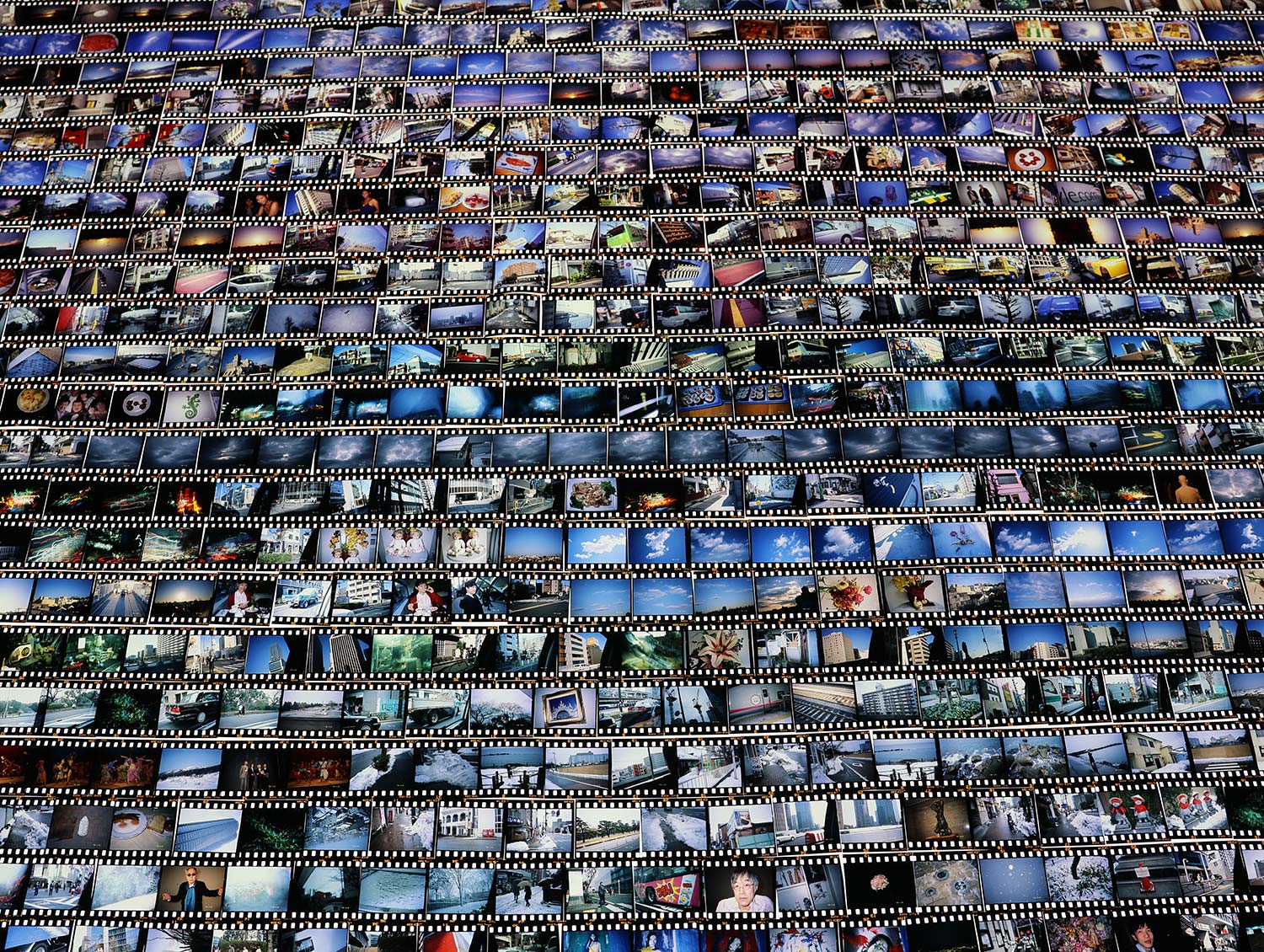
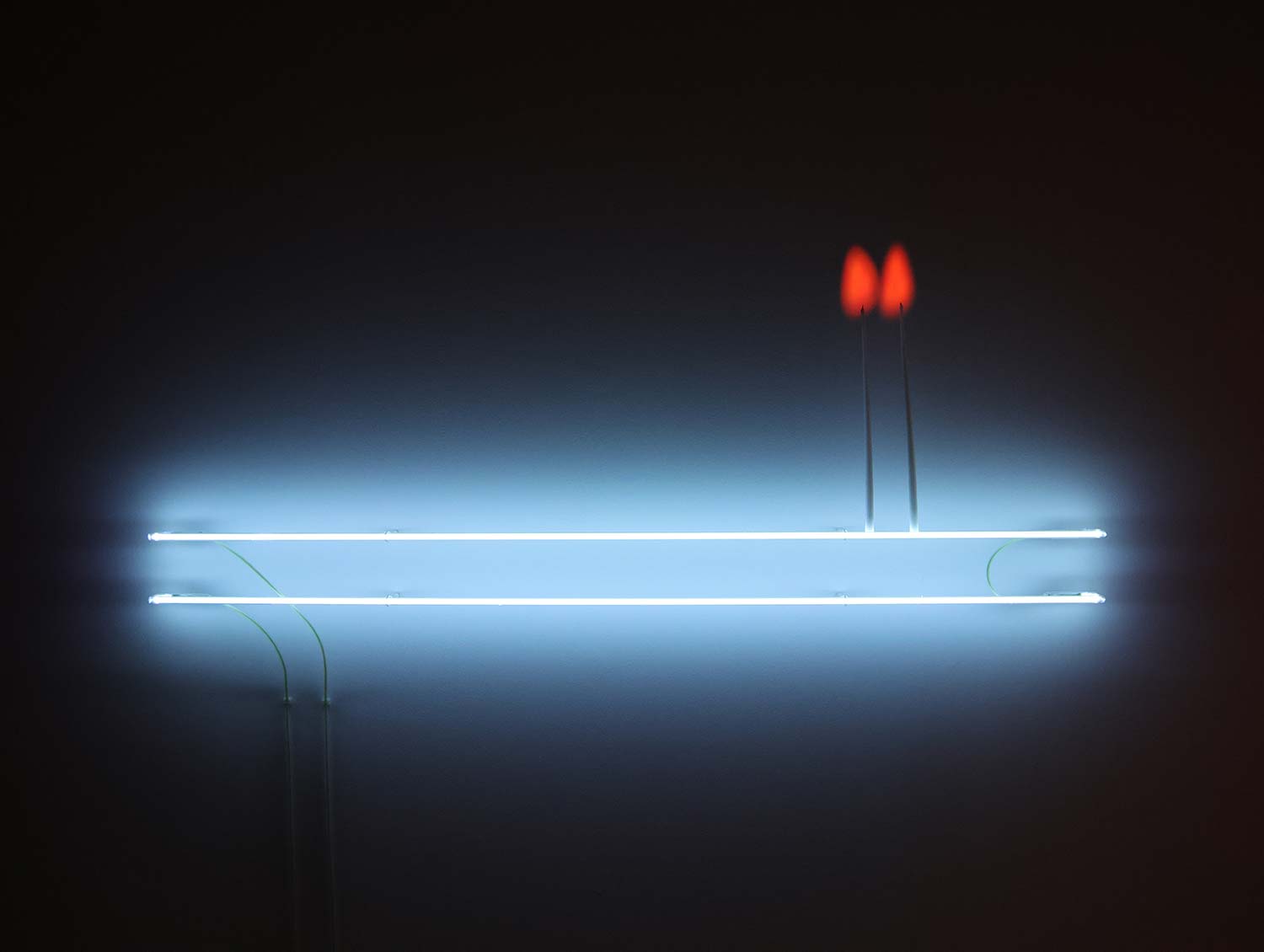
None of this is riotous or intentionally unsettling. The contemplative nature of the exhibitions avoids easy provocation in favour of reflection. As with Boonma’s work, many of the artists’ journeys are deeply personal. Rebecca Horn’s The Lover’s Bed, a bed frame inhabited by mechanical butterflies, recalls Horn’s stay in a sanatorium and her imagined journey beyond illness. Nobuyoshi Araki’s Future 2015.11.14–2040.5.25 presents an extraordinary sequence of slides arranged across a long light table. By manipulating the time settings on his camera, Araki produced images extending into the future, ending on what would have been his 100th birthday. The tiny photographs of clouds, dance performances, portraits, city walks, and nude figures become a meditation on survival from an artist living in a nation almost destroyed by war.
In a city defined by heat and movement, Dib Bangkok’s cool stillness feels almost like a quiet challenge. Visiting is a little like stepping out of Bangkok’s midday swelter into an air-conditioned refuge. There is a moment of shock, followed by relief. There is space to catch one’s breath, to remember and to imagine, before stepping back into the city’s chaotic, unpredictable glory.
Dr Tezuka acknowledges the importance of Dib’s location and suggests some of Bangkok’s unpredictability has found a worthy counterpart in the museum: “Bangkok is deeply connected to the world. It is not isolated, but in dialogue. A museum here offers fertile ground for new forms of understanding and new ways of experiencing art.”