

Long before Krabi became a global tourism draw—before limestone karsts rose out of teal waters on Instagram feeds—it was simply a small port on the Andaman Sea. Back then, as now, people in Ban Khlong Rua were building boats.
At first glance, the village resembles countless others along the mangrove-lined coast: modest houses clustered together, children and dogs roaming freely, the air thick with the scent of drying fish. But at the water’s edge, master woodworkers continue a craft that is slowly disappearing.
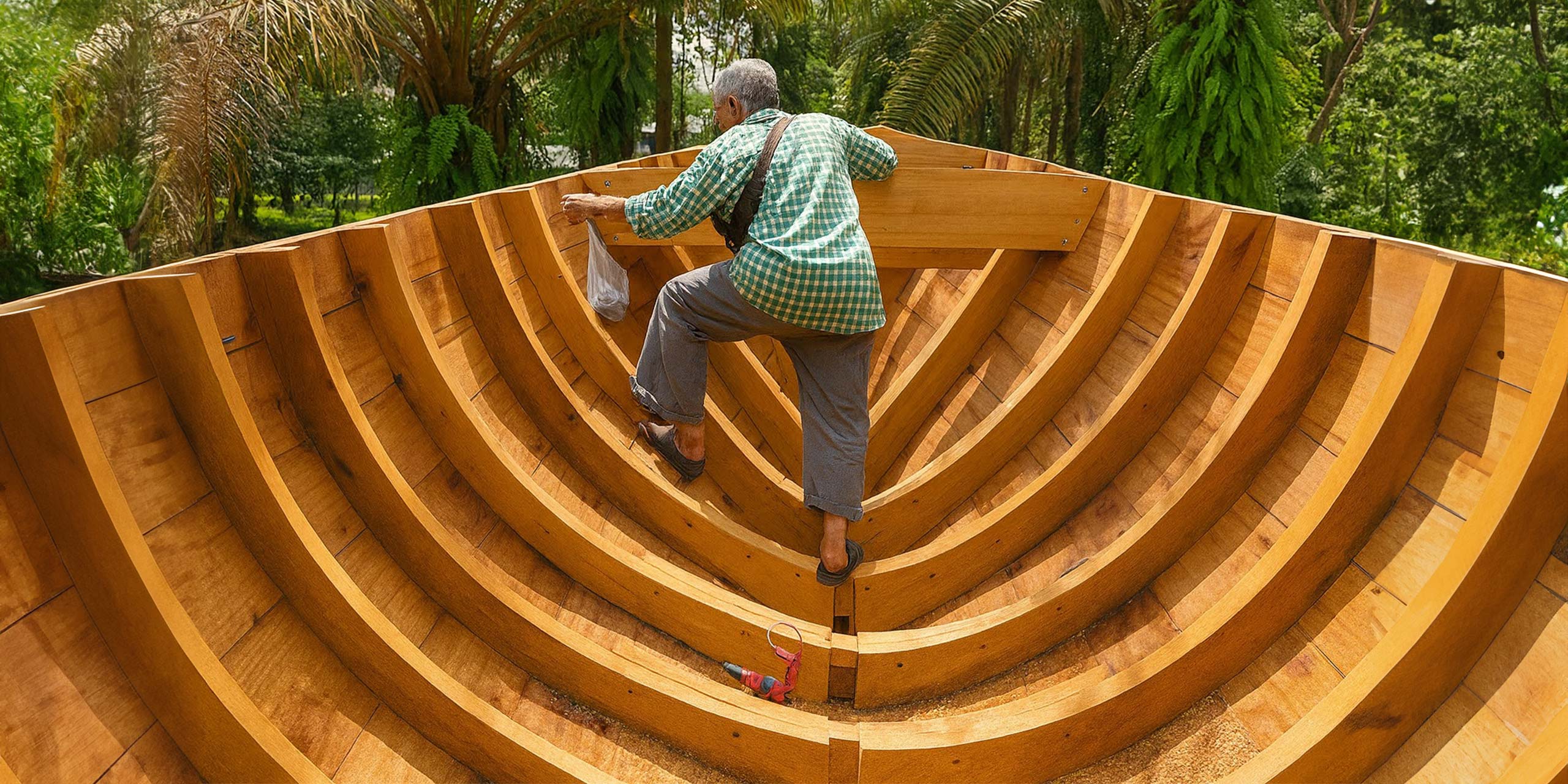
Here, where sawdust mixes with brine, boatbuilders shape rua hua tong—the traditional long-tail workboats of the Andaman coast. The steady rhythm of adzes and chisels cuts through the coastal stillness, echoing skills passed down through generations of fishermen and craftsmen.
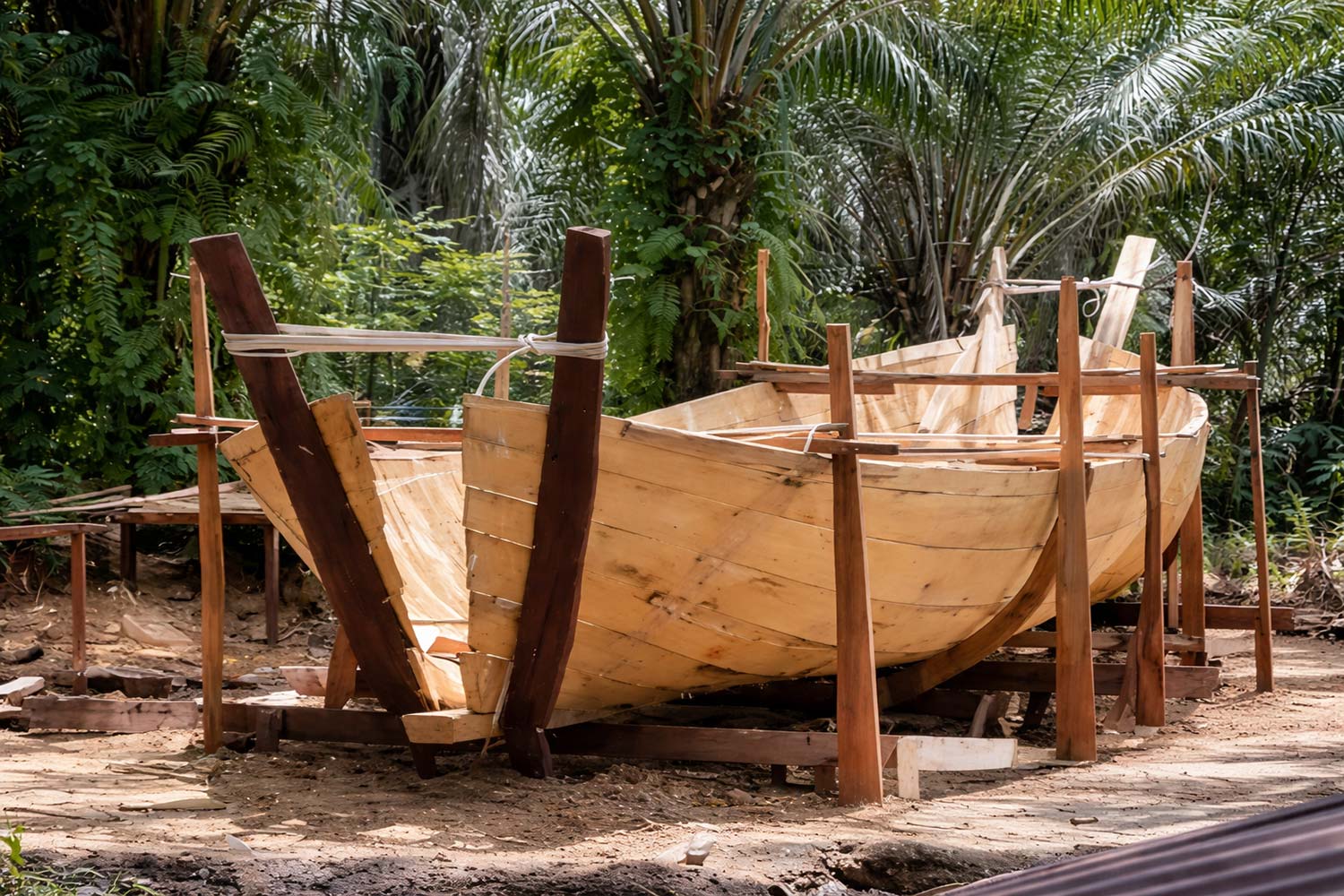
These boats are the product of centuries of adaptation. Built for function rather than display, their high, sweeping prows cut through choppy seas while shielding fishermen from crashing waves. Deep hulls carry nets, traps, ice, and the day’s catch without sacrificing stability.
Traditionally constructed from dense hardwoods once abundant in southern Thailand, a well-made boat can last up to 30 years. That longevity comes not just from engineering, but from belief. In Ban Khlong Rua—literally “boat canal village”—a boat is more than a tool; it holds a vital place in spiritual life.
Each rua hua tong begins with both carpentry and ceremony. Aik, the village’s youngest master builder at 34, explains the role of the jao reua—the spirit believed to inhabit boats that venture into dangerous waters. This spirit must be respected throughout construction. Before work begins, craftsmen burn incense and offer quiet prayers, asking permission from the wood and giving thanks to the spirits of both timber and sea.
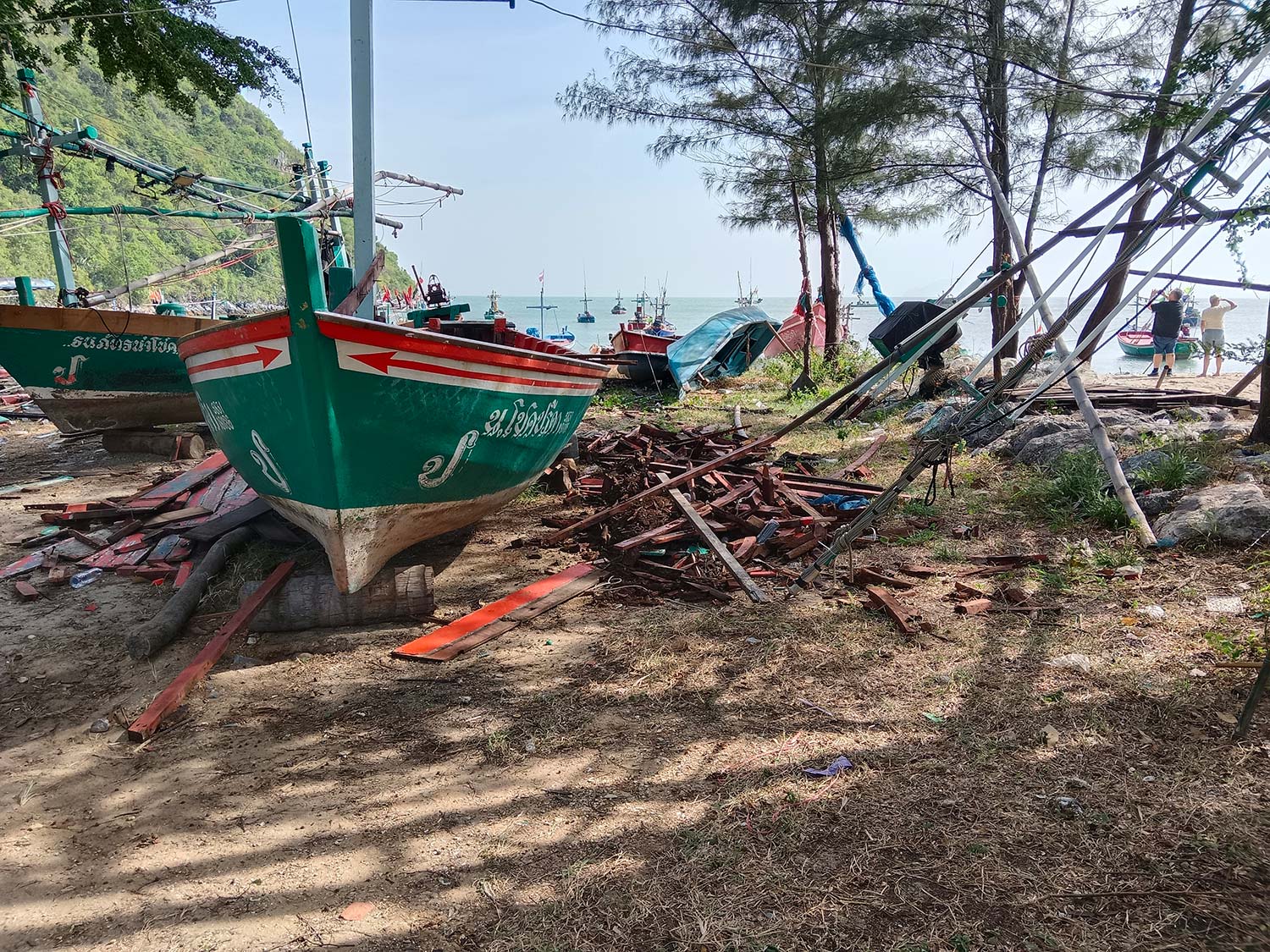
One of the most visible traditions is the cloth tied around the prow. Often brightly colored—red, yellow, pink, or green—these fabrics act as protective charms, ensuring luck, safe passage, and a good catch. Like offerings at Thai spirit houses, they honor and appease unseen forces.
Paint carries meaning as well. Visitors may admire the vivid stripes and sweeping curves, but every detail serves a purpose. Painted eyes on either side of the hull allow the boat to “see” its way home in darkness or heavy seas. Arrows at the prow invite favorable winds. Colors are chosen carefully: red for strength, blue for protection, yellow for prosperity, and green for harmony with nature.
I learned how seriously these beliefs are taken years ago while crossing the Isthmus of Kra. As I stepped off the boat to climb a ladder to an isolated immigration tower, I used the prow—the most sacred part of the vessel—as a foothold. The boatman scolded me sharply, washed the prow with seawater, and whispered a prayer. By the time I returned minutes later with my passport stamped, the boat had already left, stranding me until the next one arrived.
The final blessing comes before a new boat touches the water. Monks are invited to chant, sprinkle holy water, and mark the prow with sacred ash. Only then is the vessel considered “awake” and ready to meet the sea.
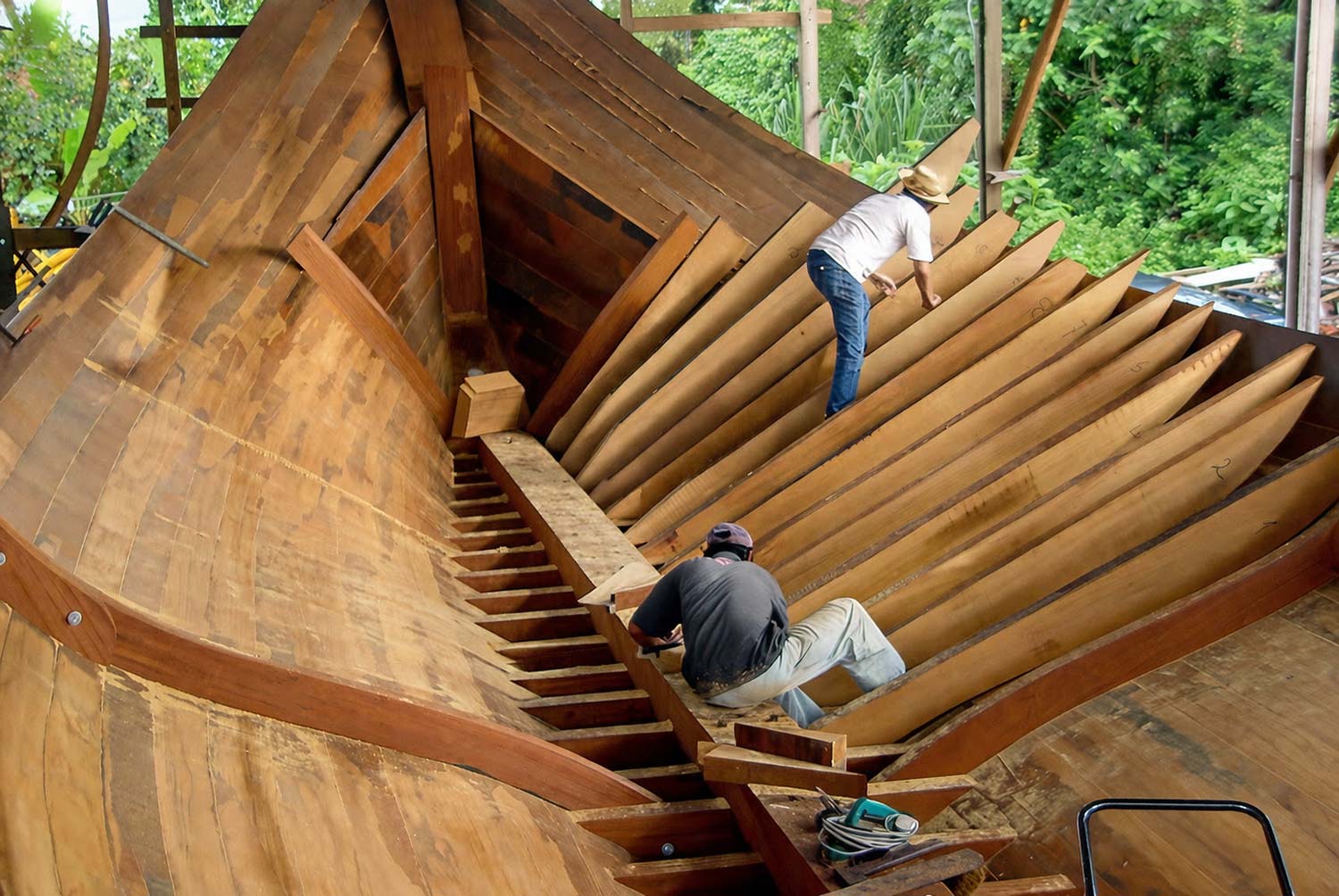
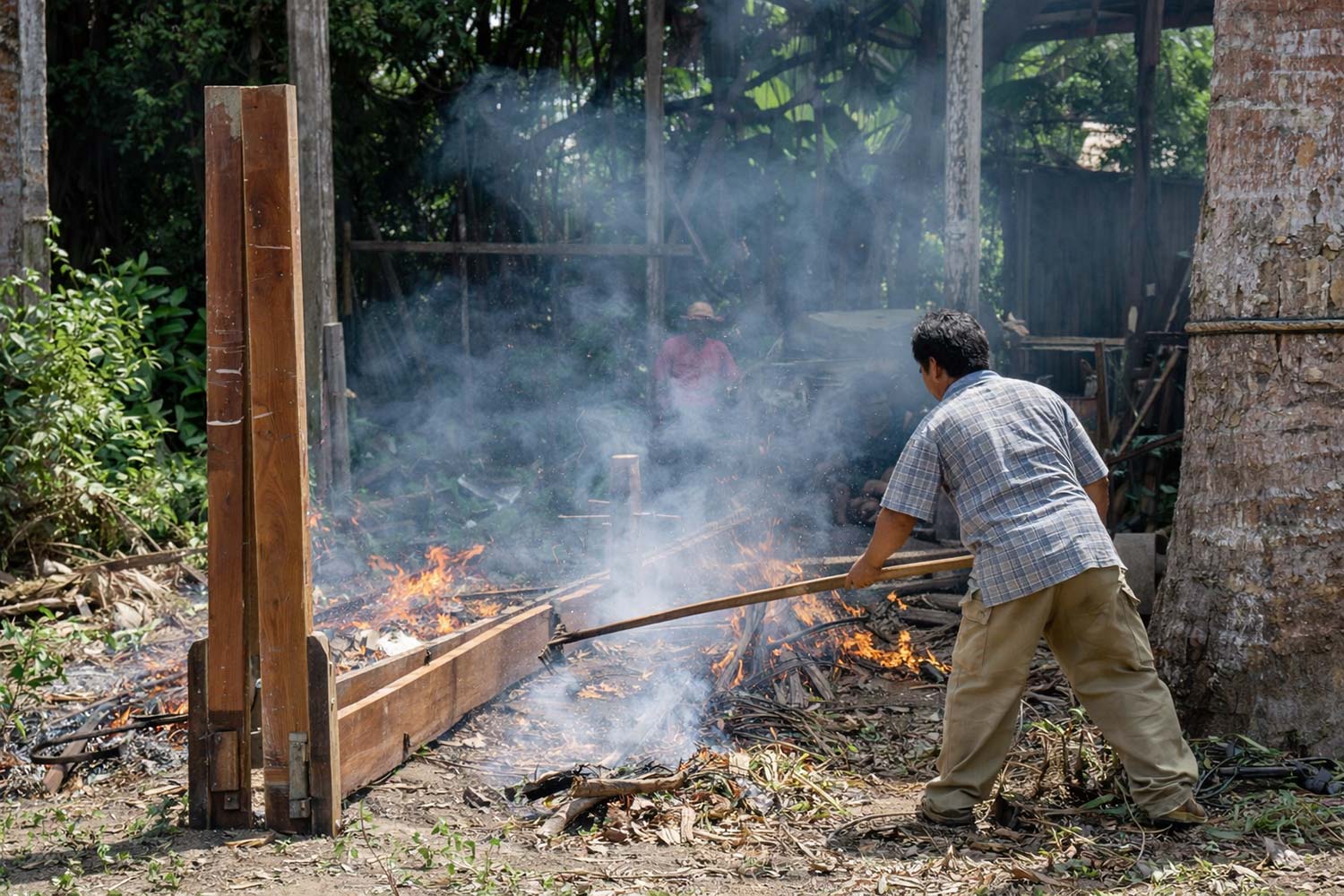
Today, only a handful of elders in Ban Khlong Rua possess the full knowledge of rua hua tong construction. They learned as boys, sweeping workshops and fetching tools long before shaping wood themselves. There are no formal plans or blueprints. Builders judge curves by eye, relying on experience to steam and bend planks into a watertight hull.
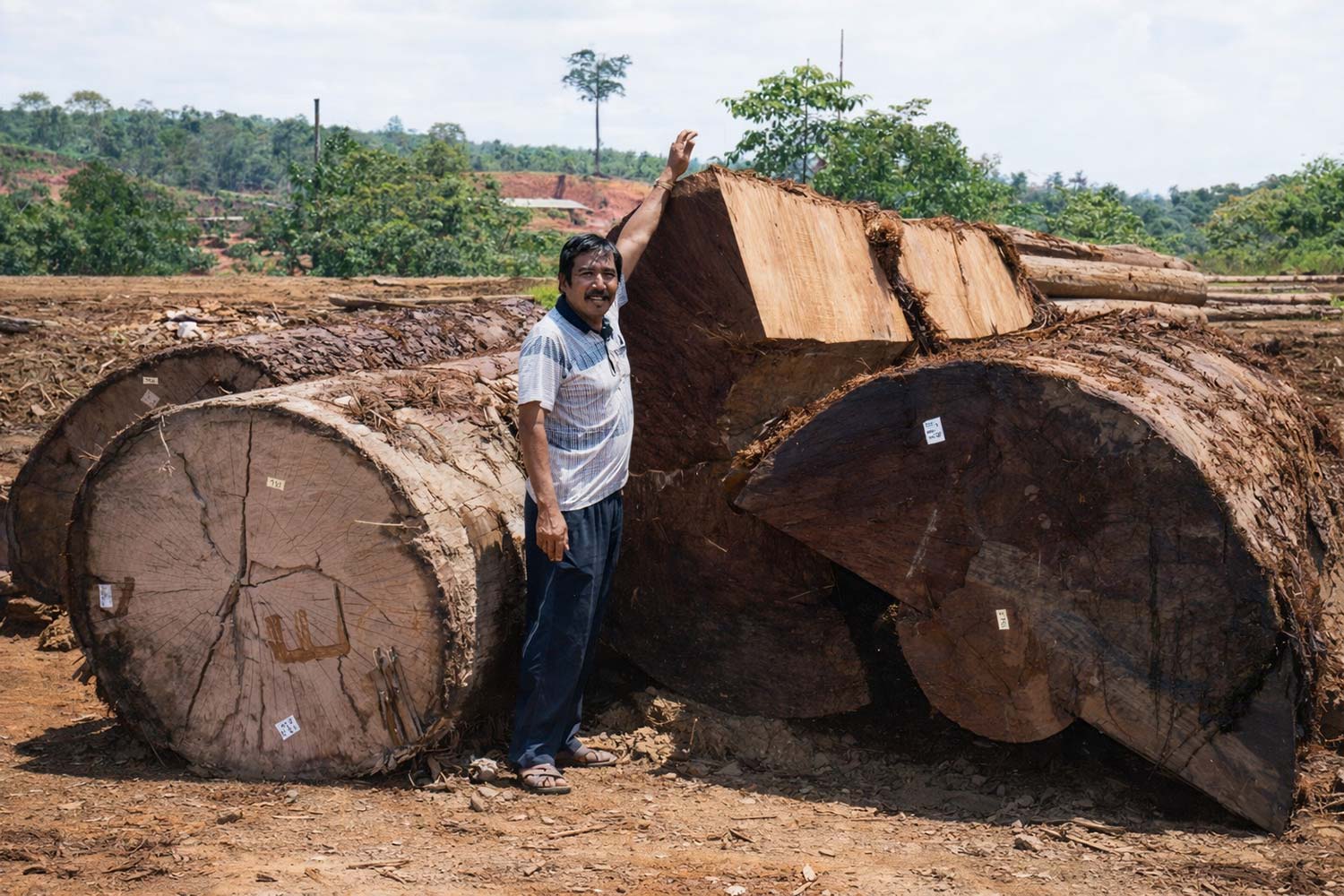
The greatest challenge now is not skill, but material. The hardwoods once used for hulls are increasingly scarce, restricted, or prohibitively expensive. Builders rely more on reclaimed timber salvaged from old or wrecked boats—a practice once avoided, as each piece was believed to belong to a single vessel. As Aik puts it: “Like a finger to a hand, a hand to an arm, and an arm to the body.”
At the same time, tourism is reshaping the region. Younger villagers are leaving for jobs in resorts, restaurants, and transport. Fishing is no longer the reliable livelihood it once was, and boatbuilding—never a full-time trade—is in decline. Most craftsmen now juggle fishing, repairs, guiding mangrove tours, and seasonal work.
Aik, who works with several resorts and takes tourists fishing and snorkeling when he isn’t building boats, puts it simply: “Nobody can live on boatbuilding anymore. Before, we fished. Now people work in restaurants or drive trucks. There are fewer fish, so there’s less need for new boats or repairs each year.”
Watching a long-tail boat take shape makes clear just how much material goes into each vessel. Fishing boats range from six to sixteen meters in length, with the largest weighing up to eight metric tons. That weight keeps them stable in heavy chop, and the heavy construction is why they endure the harsh conditions of the Andaman Sea.
But that durability comes at a cost. As hardwood becomes harder to source, prices rise. The largest boats can cost up to 1.5 million baht—around $125,000—a significant investment in a declining industry.
Modernization has brought some changes. Once powered by oars and sails, most rua hua tong now use gasoline or diesel engines with long-shaft propellers. They are effective but loud, often trailing black smoke. Aik notes that some fishermen are considering electric propulsion as e-bikes and EVs gain popularity, but the shift is slow. Batteries remain expensive, and charging infrastructure is nonexistent in the remote mangroves where these boats operate.
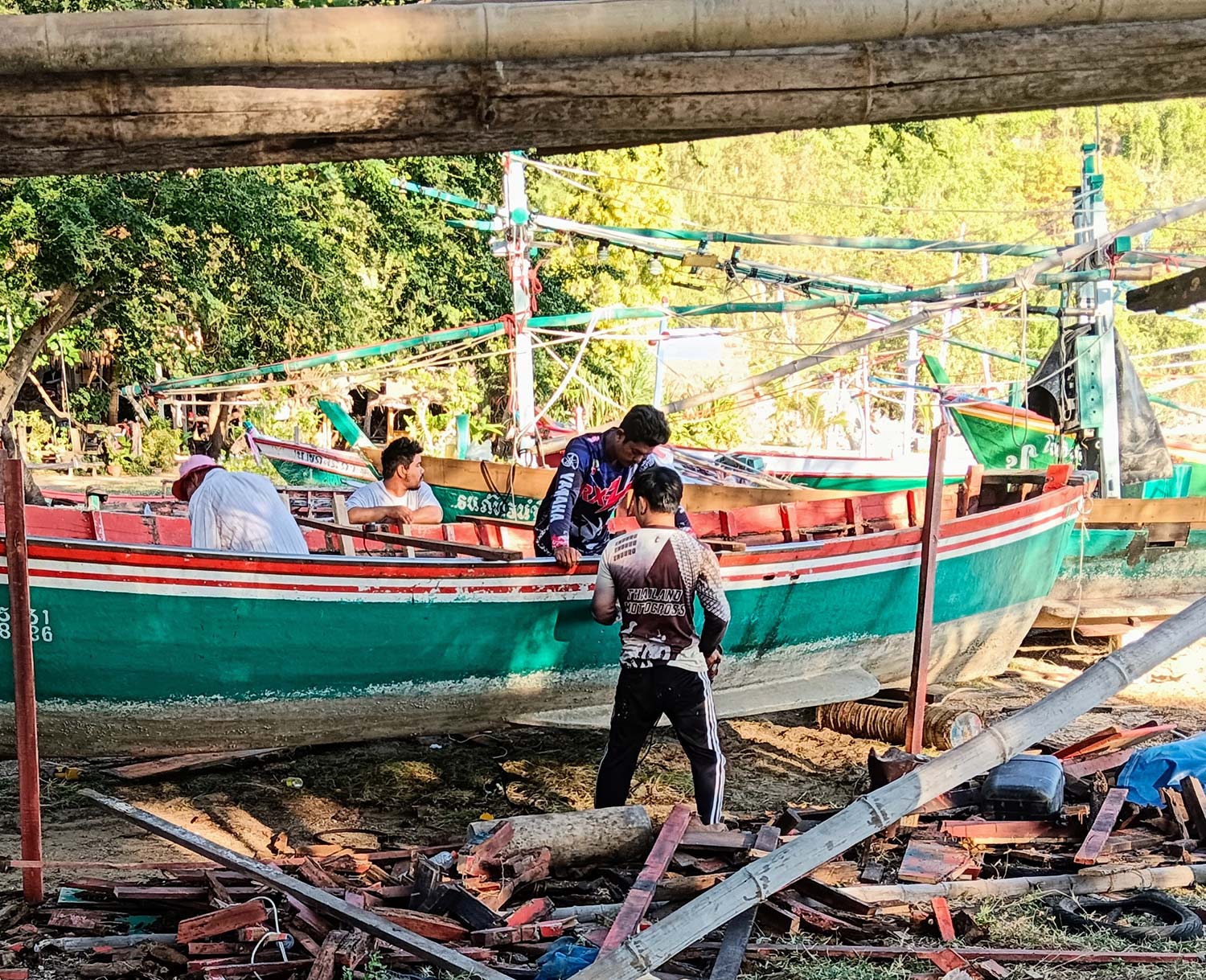
Other changes have been easier to accept. Power tools are now common, though hand tools remain essential for shaping each boat’s character. Rituals, however, remain untouched. No matter how modern the engine, the prow will always carry its cloth, and the jao reua will always be honored.
Ban Khlong Rua stands at a fragile crossroads. The knowledge survives, but only just. The masters are still working, but apprentices are few. The sea still provides, though less than before.
And yet, along the shoreline, wooden boats continue to rise—bright with paint and cloth, shaped by hand, and infused with both craftsmanship and belief.