

“This won’t do. Not in the slightest,” says Akhil Sarkar with a sigh and a shake of his head. “Not only is it rude,” he adds, pointing at a deserted stoop outside a residential home in Shobhabazar, a warren of twisting lanes in historic North Kolkata. “It’s totally against the nature of this city.”
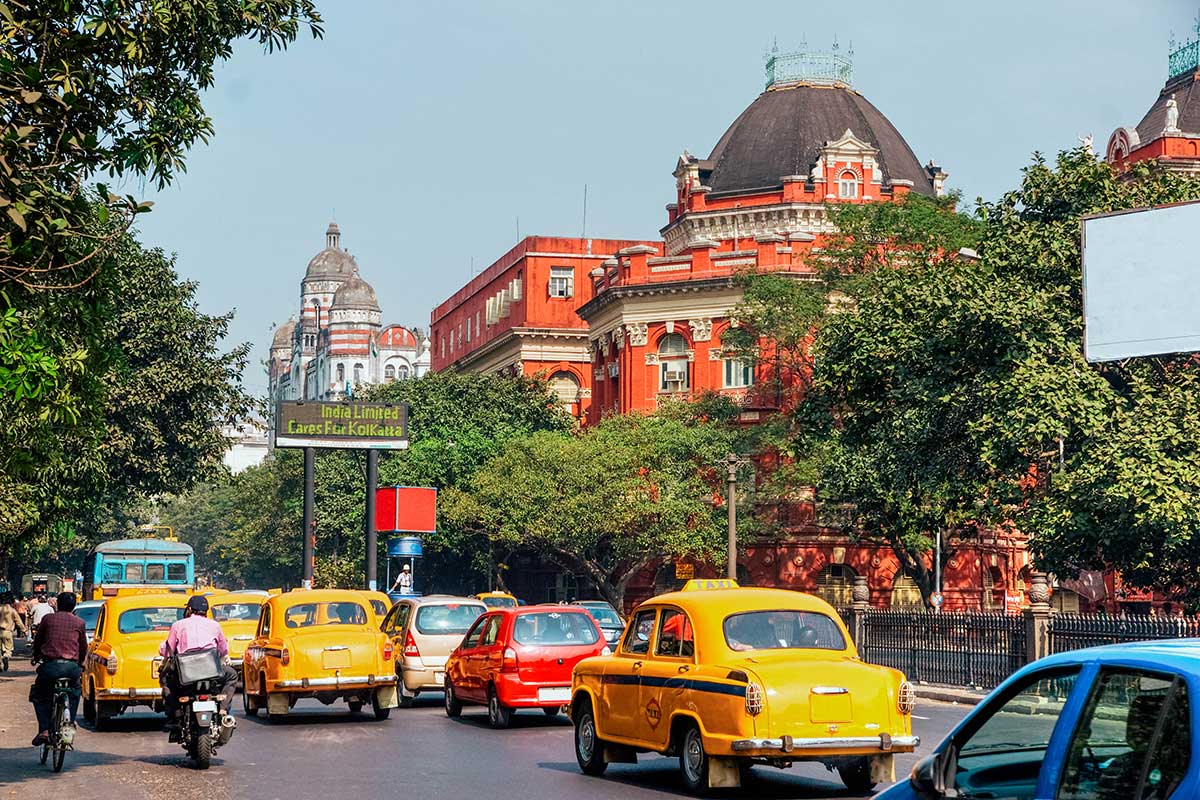
On the main drag, pedestrians stare as a gentleman gets his mighty moustache trimmed and waxed. Down shadowy alleys dusted by patches of early morning sun, meanwhile, the city’s vivid character and architectural legacy come into focus at decaying mansions, hidden courtyards and temples devoted to the mind-boggling cast list of Hindu deities.
Sarkar, however, is preoccupied with the tainted stoop: a former site for adda – the Bengali custom of informal conversation — which has now been guarded by its owner against human posteriors with uncomfortable-looking protrusions.
“In Kolkata, we value intellect over everything else,” he explains. “This is one of the few cities in India where the artist or the author is respected more than the businessman. Therefore, these adda sessions are as integral to the city’s lifeblood as street food or Durga Puja (the great annual festival of the Bengalis).”
A learned, humorous, but occasionally spiky character, Akhil’s displeasure at this single tarnished porch seems somewhat disproportionate. But his passion for elevated discourse is not out of place among a populace that takes immense pride in its historic reputation as India’s most literary-minded city.
Kolkata was a cerebral force to be reckoned with practically from the get-go. As the capital of British India, second only in importance to London, it was a hub for learning; a fertile, simmering petri dish for new ideas and modern thinking within India.
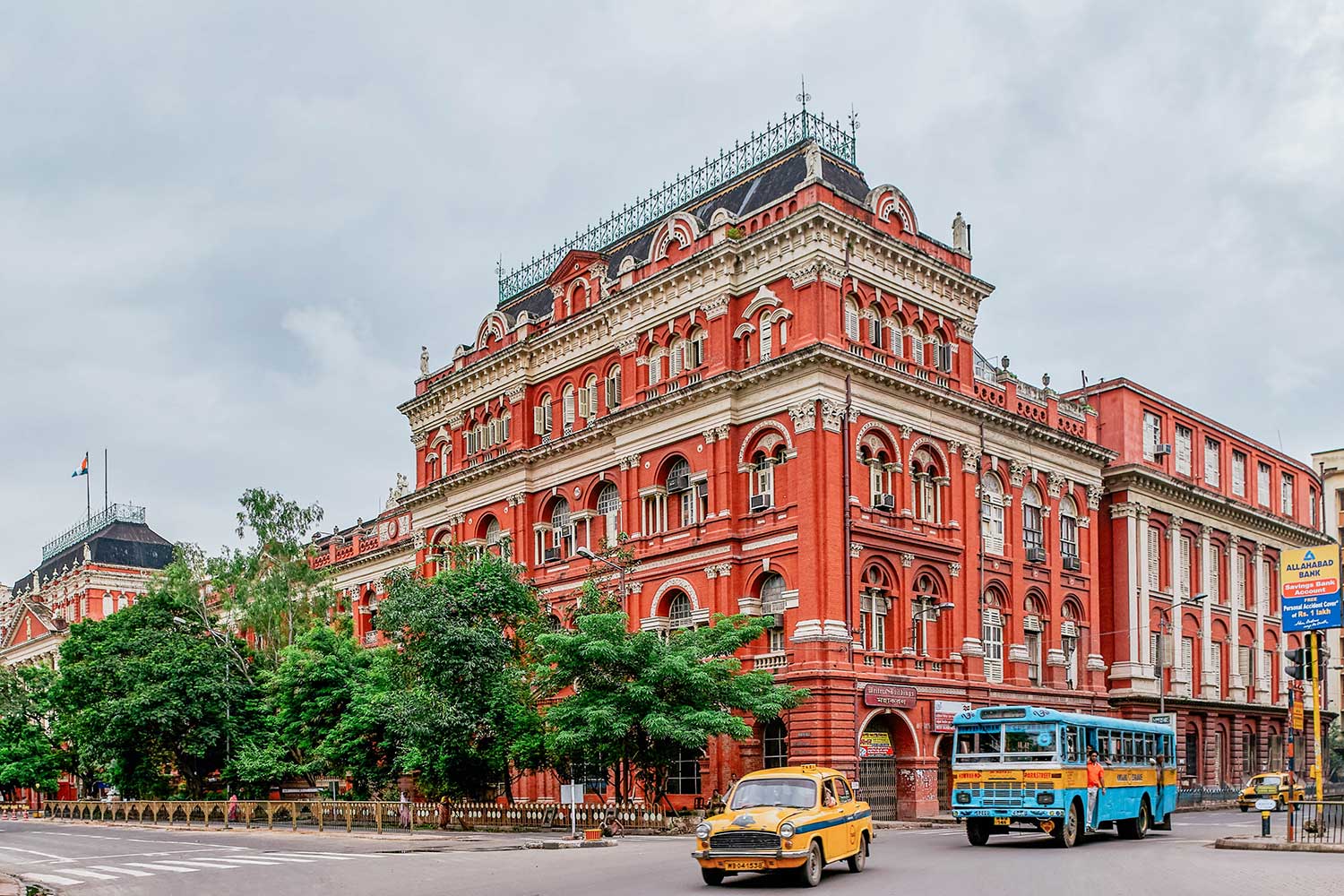
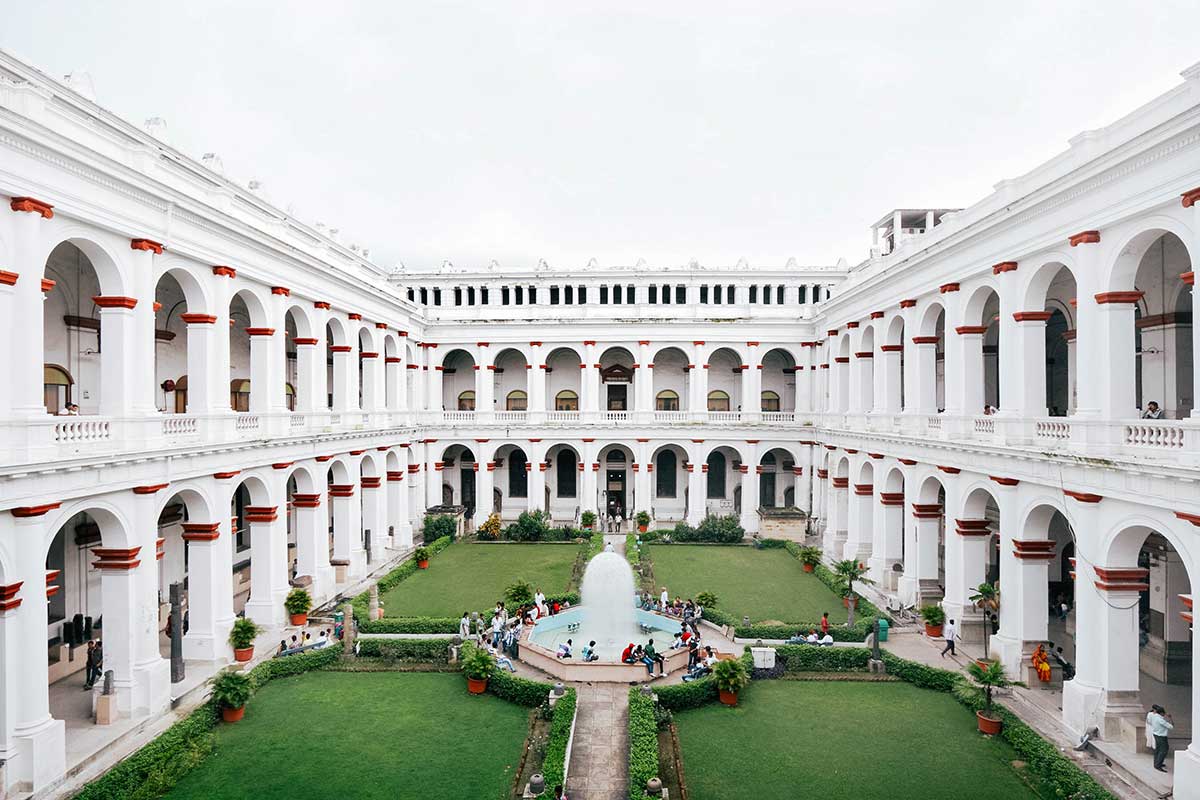
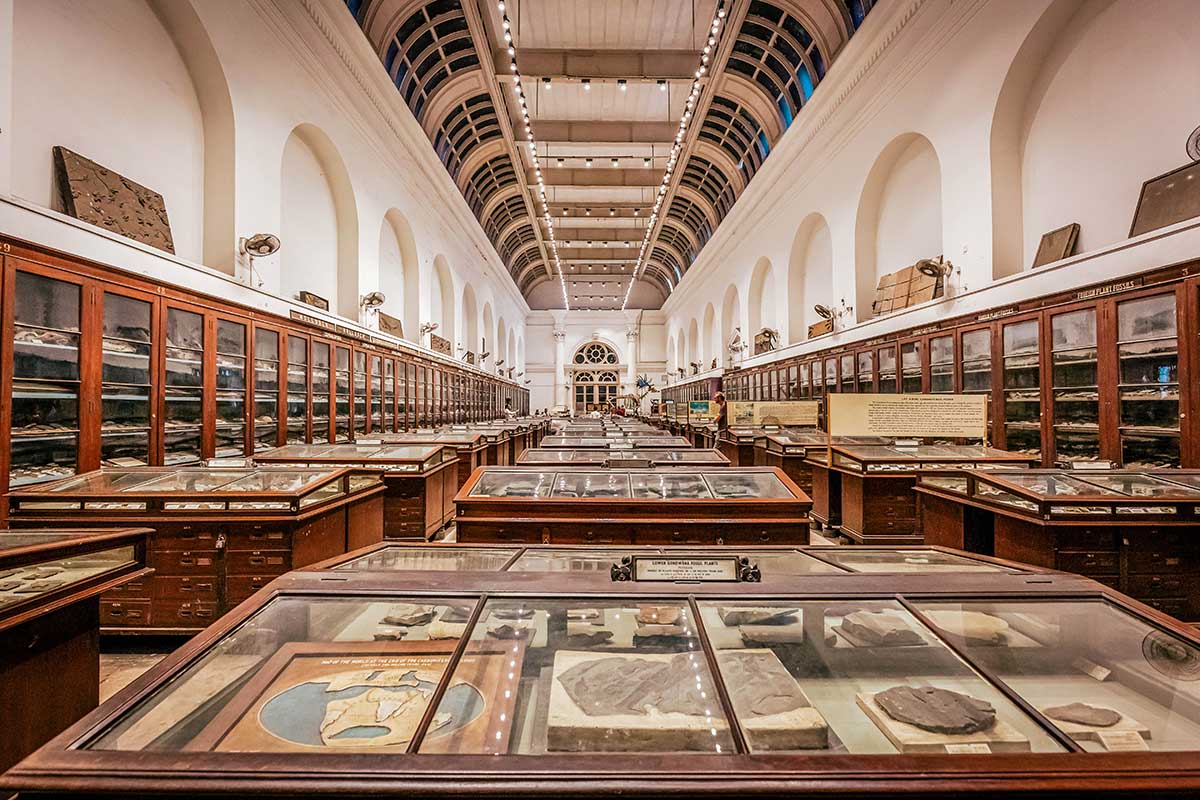
It is home to the nation’s first museum, the Indian Museum, its printing industry nurtured India’s book trade, while its prestigious schools and seats of learning sowed the seeds for the Bengali renaissance—a cultural and intellectual flowering that produced home-grown literary colossuses such as Michael Madhusudan Dutt, Bankim Chandra Chattarjee and Rabindranath Tagore.
Kolkata’s strategic importance has long been superseded by other Indian metropolises. Its economic struggles too are well documented. As other major cities steamed into the new millennium, their coffers bolstered by boom industries like IT, tech and outsourcing, Kolkata failed to diversify during 34 years of Communist rule in West Bengal.
Therefore, while well-heeled residents of Delhi, Bangalore and Mumbai peruse glitzy shopping malls and drink at sleek sky bars, Kolkata’s upper crust content themselves with the occasional hipster coffee shop.
For something fancier, an itch is scratched by institutions such as Mocambo, where waiters in red turbans serve up “continental” recipes straight from a 1960s cookbook, such as over-sauced prawn cocktail and Fish a la Diana (river fish stuffed with prawn and cooked in cream).
Another time-warped charmer is Flury’s, a venue dating back to 1927 that serves tea, English breakfast and saccharine-sweet cakes. But what Kolkata lacks in spending power, it compensates for with cultural capital.
“In Kolkata, you can’t kick a stone without hitting a poet or a writer,” laughs Anjum Katyal, Co-Director of the Apeejay Kolkata Literary Festival, as she outlines the city’s cultural creed over cups of cardamom-scented masala chai at the 100-year-old Oxford Bookstore on Park Street, Kolkata’s grandest thoroughfare. “Other cities in India have caught up with and in many ways overtaken Kolkata, but you could say that we have a beginner’s advantage. There’s an ingrained love and understanding of literature here.”
A profusion of literary jamborees (the Apeejay Kolkata Literary Festival is one of three that takes place every January) is one of the many manifestations of Kolkata’s love of the written word.
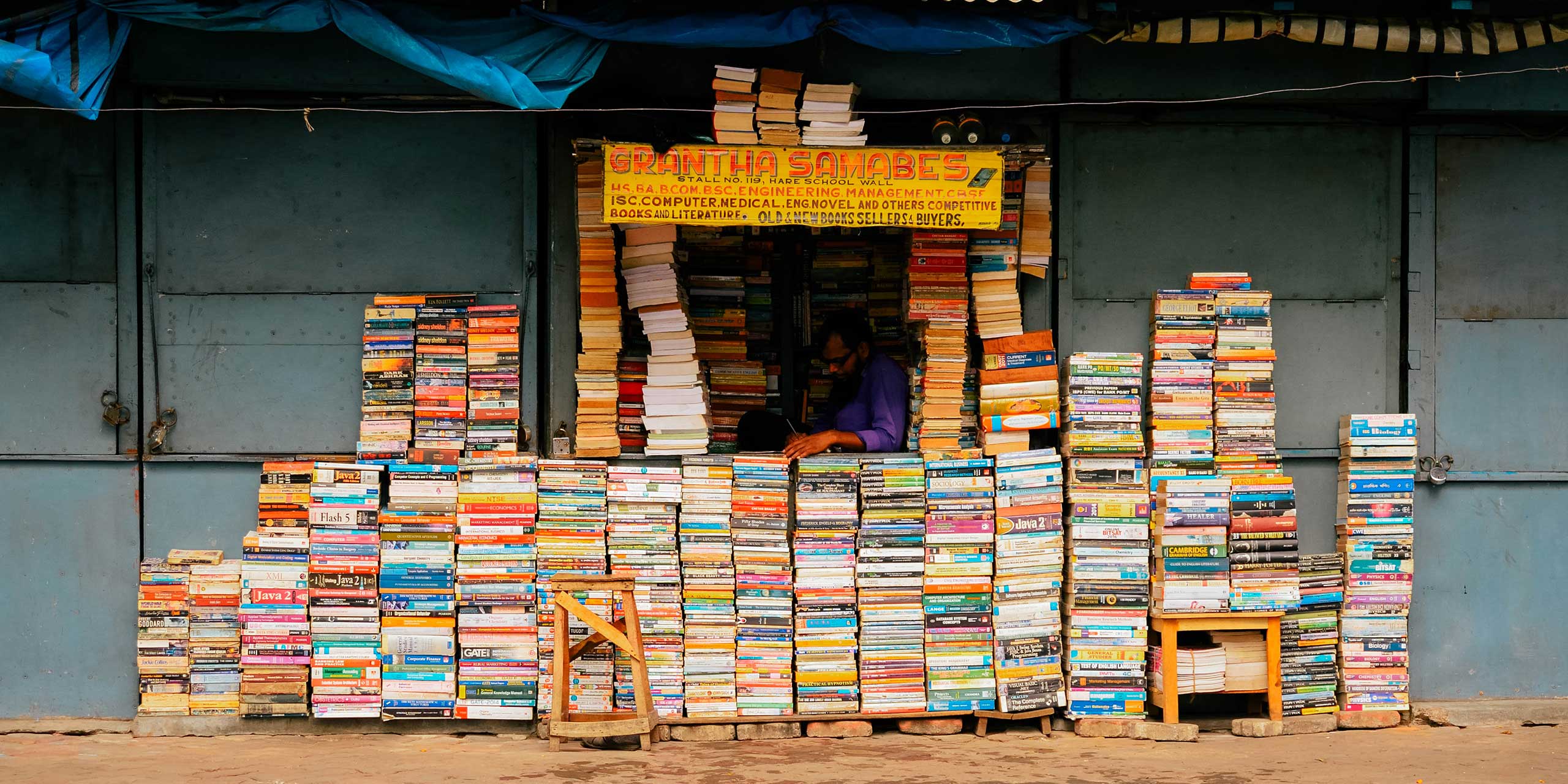
Just around the corner from Oxford Bookstore, on bustling Free School Street, used book stores stocking everything from well-thumbed volumes of Tagore poetry to the entire works of Tom Clancy pour their haul out onto pavements crammed with chai wallahs, juice vendors and loitering rickshaw drivers. Tagore, indeed, is omnipresent in Kolkata 84 years after his death. Piped versions of his songs echo from shops and transistors, while his extraordinary body of work is revered by everyone I speak to. “He was a true titan,” says Katyal.
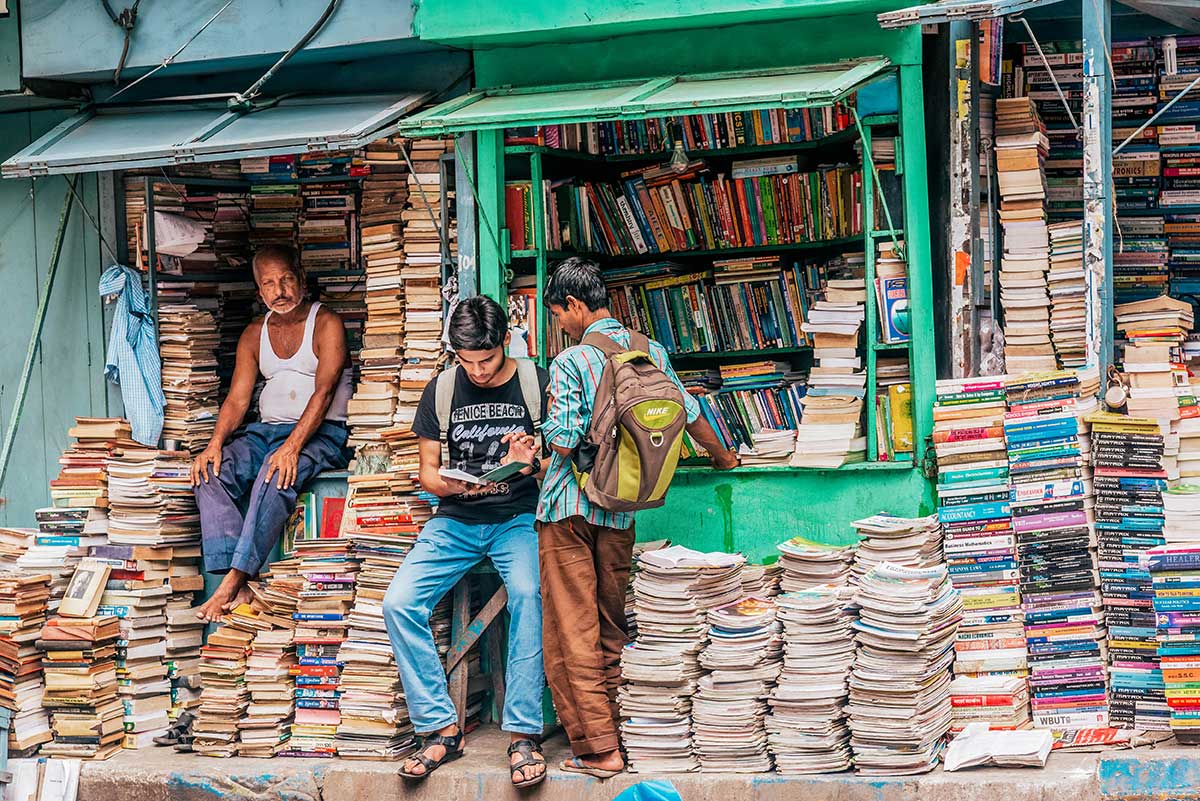
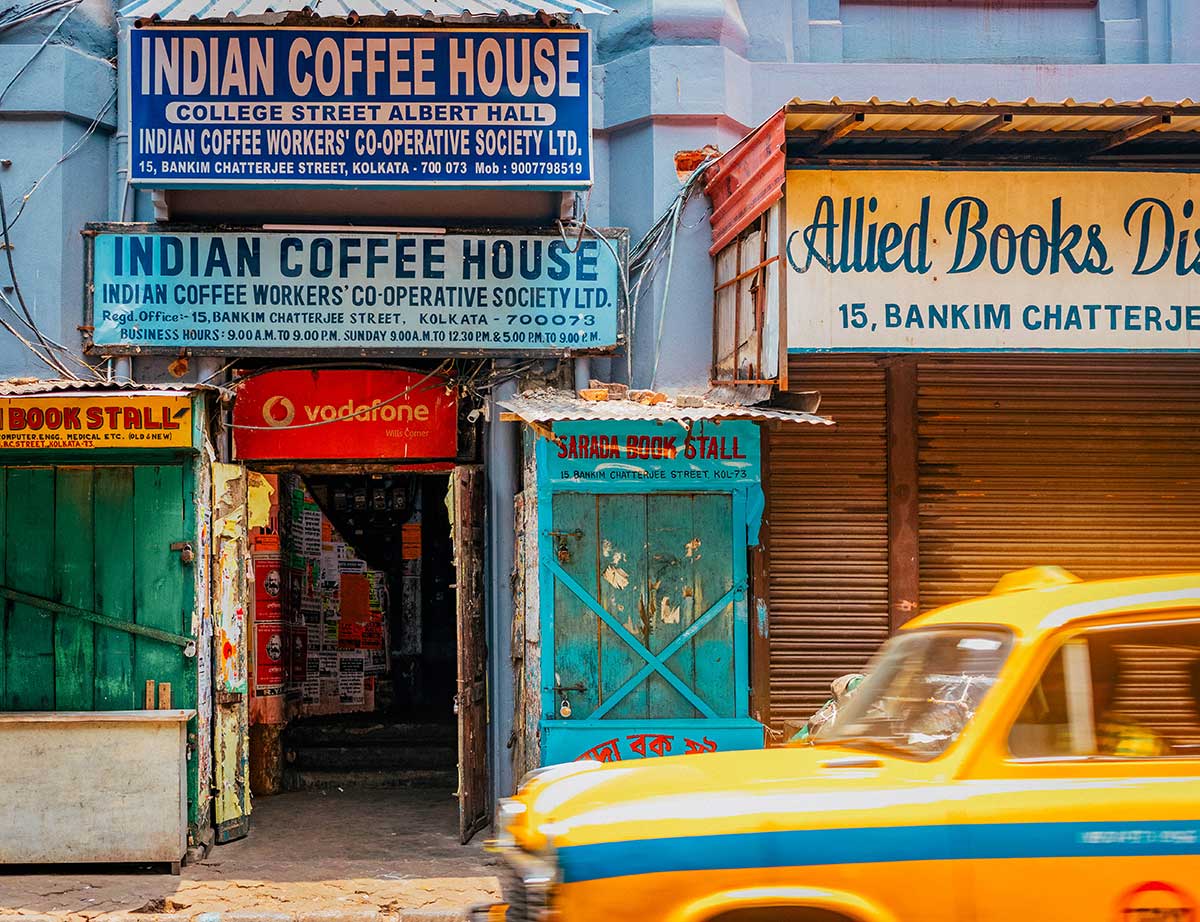
Other literary hubs, meanwhile, include College Street, nicknamed boi para (colony of books) due to its profusion of second-hand bookstores. In truth, these days the stores stock mostly dry academic books, of interest only to students. But a febrile intellectual atmosphere can still be sampled at the Indian Coffee House, one of the city’s most legendary spots for high-minded adda sessions.
The venue has been the rendezvous of innumerable Bengali thinkers, who have come to hatch manifestos and perfect plot lines over cups of sugary coffee and egg and tuna sandwiches. Regular patrons include filmmaker and author Satyajit Ray, actress and screenwriter Aparna Sen and Nobel Laureate economist Amartya Sen.
Nandana Sen, the daughter of the latter, and a polymath whose credentials include screenwriting, activism, authoring children’s books and starring acting roles in acclaimed Indian movies including Tango Charlie, My Wife’s Murder, and Rang Rasiya, recalls a Kolkata upbringing immersed in books and shaped by adda.
“I grew up in a dusty old house built by my poet grandparents where to this day, we get chased out of rooms by growing piles of books from all over the world,” says Sen. “As a child, I was taken to poetry meets and bookstore readings much more often than to the zoo or cartoons – and that seemed perfectly normal. We love to discuss, debate, and disagree for hours. And we adore argumentative Indians—in Kolkata, at least one public intellectual needs security like rock stars do in other parts of the world.”
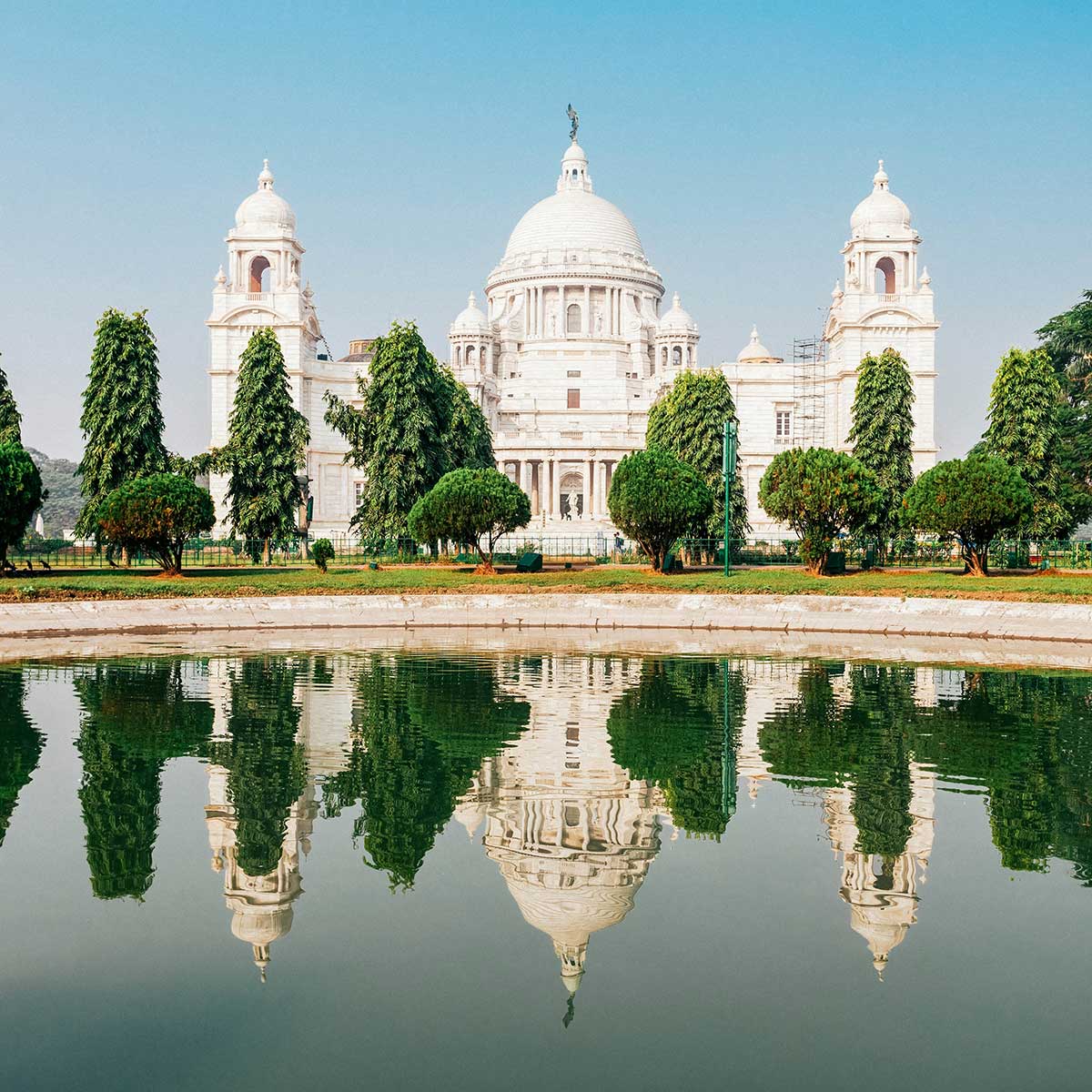
Reverence for intellectual levity is also a feature at the Taj Bengal, my sumptuous digs in the city. The hotel, a luxurious pile set in lush, manicured grounds near Alipore Zoo and the Victoria Memorial, a marble marvel built in honour of Queen Victoria that is Kolkata’s most recognizable landmark, doesn’t shirk its five-star requirements. My expansive suite overlooks the hotel’s palatial swimming pool, while the property’s Indian restaurant Sonargaon dishes up Bengali specialties such as chingri malai curry (fresh river prawns cooked in coconut cream) as well as gold-standard naan.
Its literary qualities also stand out. Not only is it located a stone’s throw from the National Library of India (the country’s largest, naturally), but it’s a prominent venue for events during the annual Kolkata Literary Meet, another of the city’s January book festivals. The hotel’s club room, then, with its leather-bound tomes of Bengali literature, is an appropriate place to catch up with Amit Chaudhuri, one of the city’s most famous literary sons.
Chaudhuri, an award-winning novelist, essayist and critic, was born in Kolkata but grew up in Mumbai. After spending over 20 years in London, he returned to West Bengal to spend more time with his elderly parents.
The writer has, by his own admission, a shifting connection with his place of birth that isn’t always positive. In one of his books, Calcutta: Two Years in the City, he relates his affection and (equally frequent) ambivalence and bafflement towards his place of birth through a montage of loosely interlinked vignettes.
“I always loved Kolkata when I was growing up in Mumbai,” he says. “It struck me as one of the most interesting places I had ever seen: at once derelict and energised. It had a stink about it, but that stink has a life-giving force.”
While Chaudhiri does not foresee a reprise of the Bengali renaissance anytime soon, he takes some heart from the work of contemporary authors from Kolkata, such as Sunetra Gupta, as well as recent conversations at gatherings around the city.
“I have encountered writers, and they have spoken in ways that make me think that the creativity that Kolkata is known for is still happening,” he adds. There’s something to be said for the city’s dysfunctionality. The dysfunctionality becomes a form of functionality. It has not yet been fully globalized, and creative people still have many freedoms here.”