


With smooth highways, plentiful signage and a lack of big cities, Oman is one of the best places in the Middle East for a rookie to take a road trip.
Even so, I’m struck by uncertainty as I approach the oasis town of Nizwa, famous for its high-walled souq, giant fort and its stirring location amidst some of the nation’s loftiest mountains.
Side streets jut off the main drag, and I start to doubt my bearings. Thankfully, Omar, a concierge and navigational sensei back at The Chedi Muscat, my palatial base in the Sultanate, has my back.
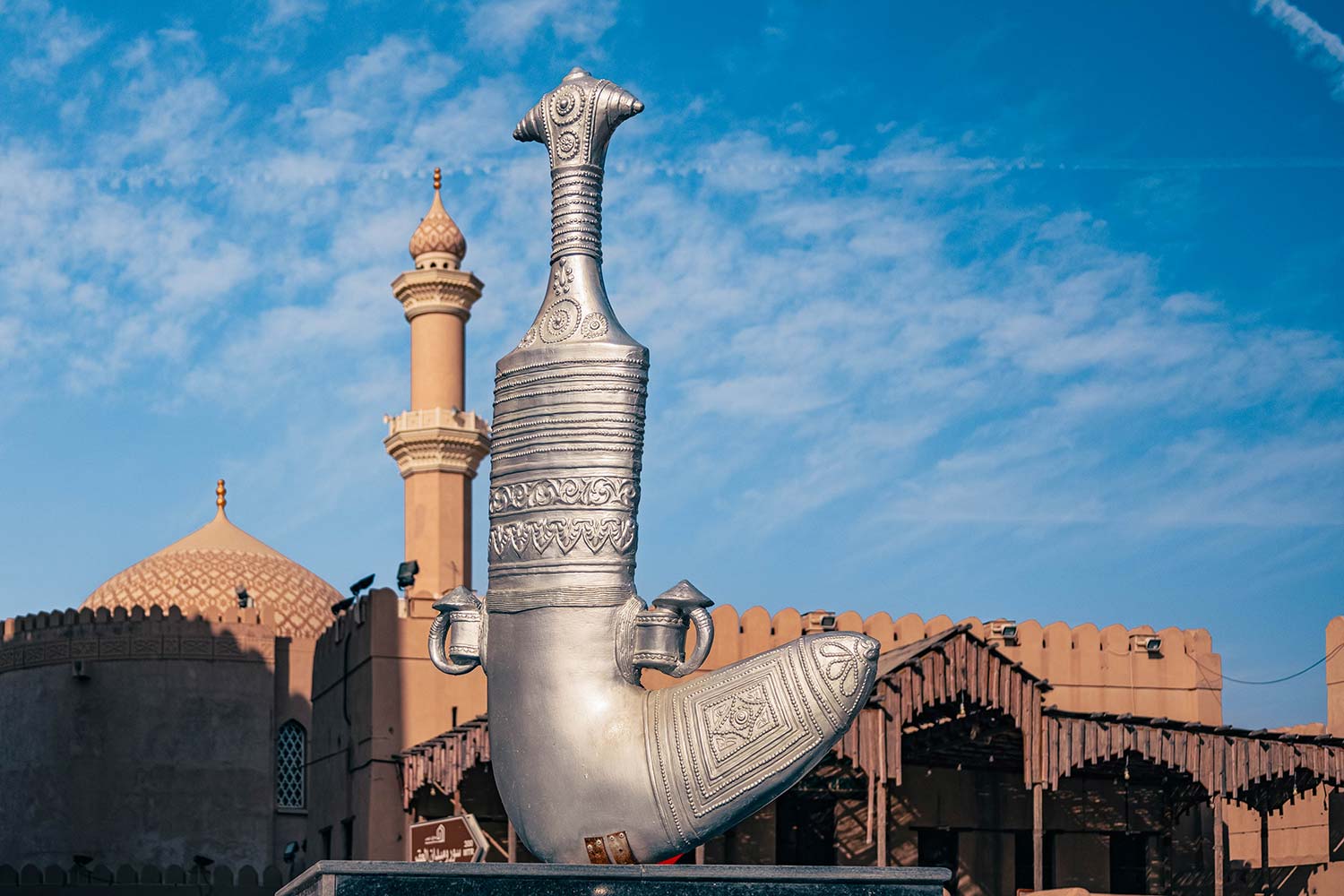
“Just make a right at the Khanjar Roundabout,” he told me as I kicked the Land Cruiser into gear back in the capital. “You can’t miss it.”
After a couple of hundred more meters, my goal heaves into view: a giant circle of lush grass and well-tended bushes with a silver sculpture of a hook-like dagger standing proudly in its center.
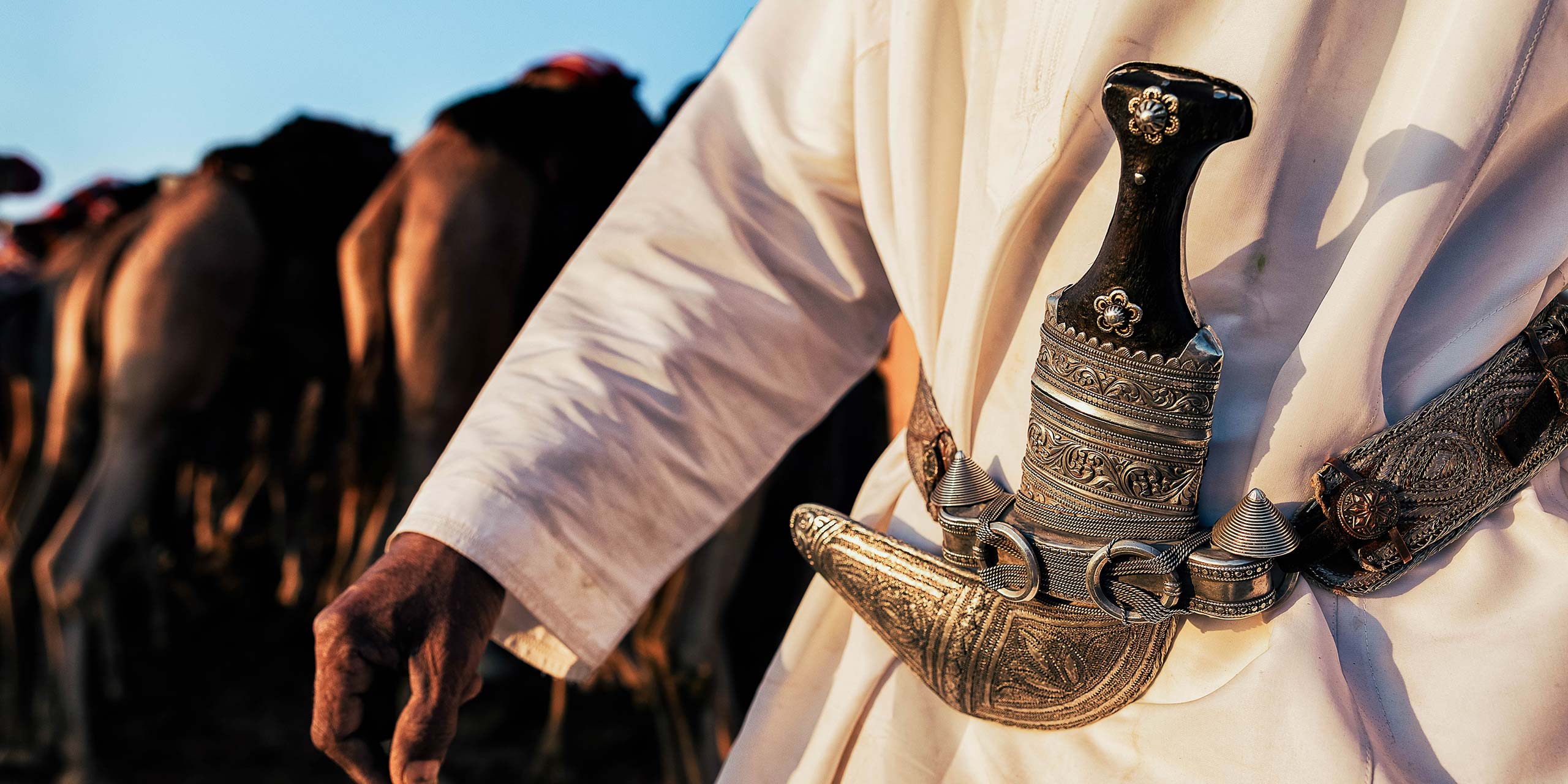
One of Oman’s most potent national symbols, the khanjar is everywhere. And it fills far grander functions than guiding uncertain visiting drivers through the vagaries of Nizwa’s traffic system.
The distinctive J-shaped knife is as integral to the Omani sense of identity as other proud traditions such as seafaring, trade, and a tolerant, yet devout, Islamic culture. It is the nation’s emblem, and can be spotted on the Omani rial, the country’s currency.
It is depicted on postage stamps issued by the Sultanate and has been adapted for or incorporated into the logos of some of the nation’s flagship companies, such as national carrier Oman Air and telecommunications behemoth Omantel. It was even utilized for bottles of men’s cologne by Oman-based luxury perfumiers Amouage, whose Gold For Men line features a cap inspired by the handle of the khanjar.
The origins of the dagger are shrouded in mystery as beguiling as a complex scent. Nevertheless, historical accounts point to an emergence in the 17th century when communications were scrawled on cave walls rather than barked through smartphones.
Rock carvings depicting the dagger were discovered on gravestones located in the Ru’us al Jibal region of the country. They are said to have predated the Wahhabi revival, which occurred in the late 1700s. A note on khanjars was also made by a Robert Padbrugge of the Dutch Republic, who mentioned them in his account of a journey to Muscat in June of 1672.
Whatever the specifics of the origin story, what is a fact is that the daggers migrated outwards from Oman. They were carried by Ottoman policemen in the Balkans. They were later adopted as a part of the national dress in other Arabian Peninsula nations, including Yemen, the UAE and Qatar.
It is in Oman, though, that emotional ties to the dagger are strongest. Created as a weapon of combat, it is now utilized solely for ceremonial purposes such as weddings, parades, meetings and diplomatic functions.
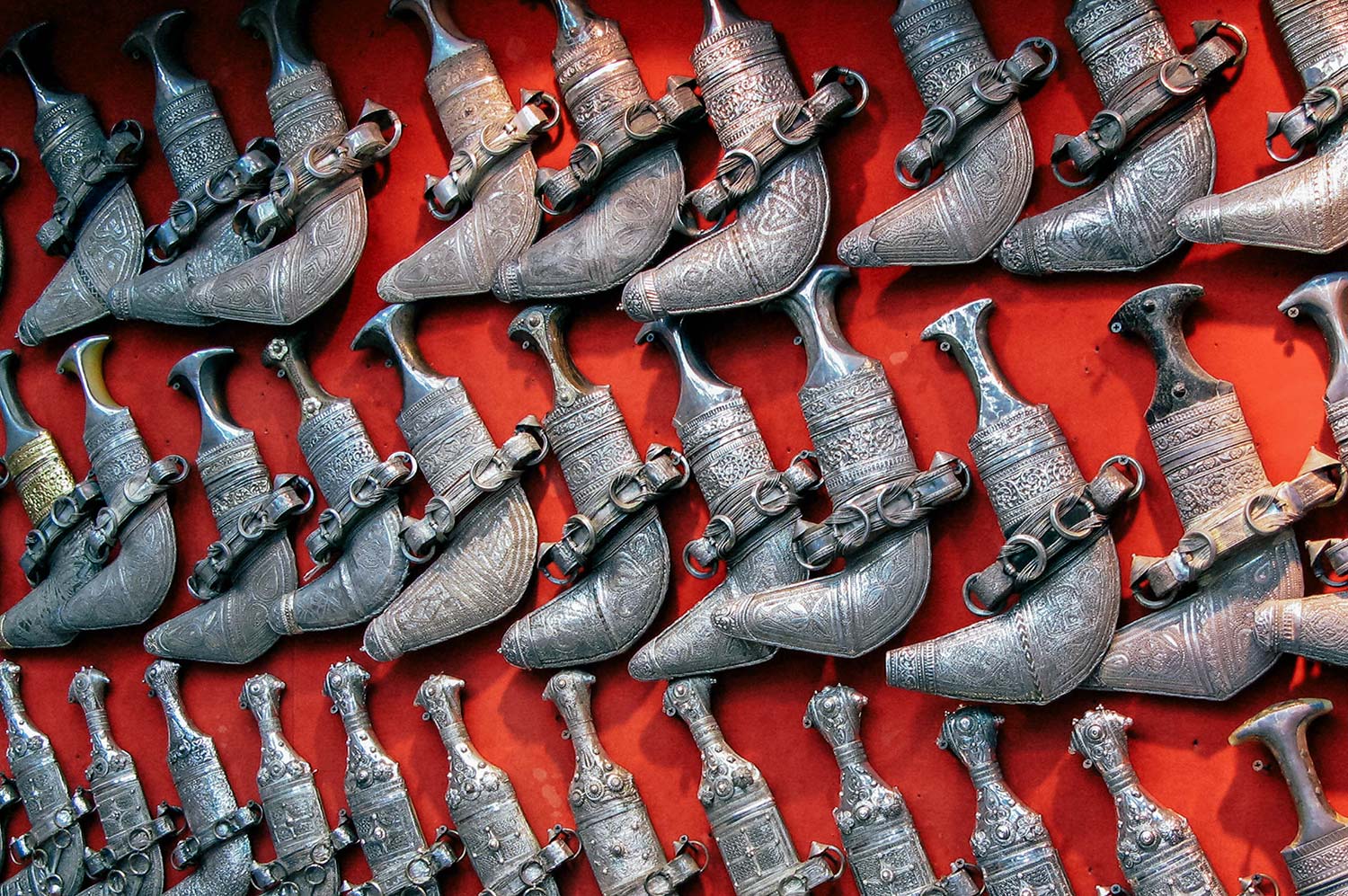
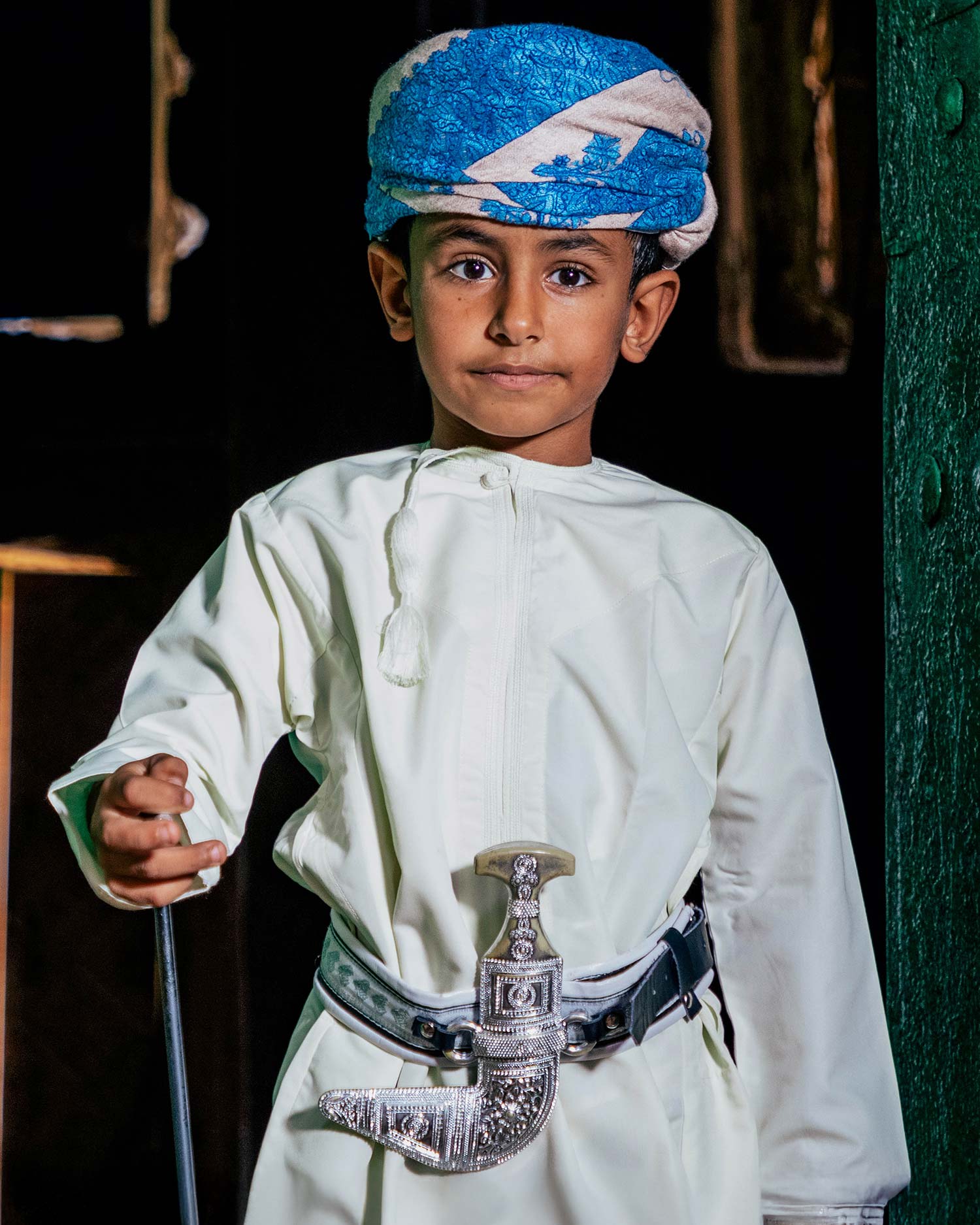
While most Omani men will never use their khanjar in anger, it is regarded as a symbol of manhood. Daggers are often bestowed on young men by their families as they hit adolescence.
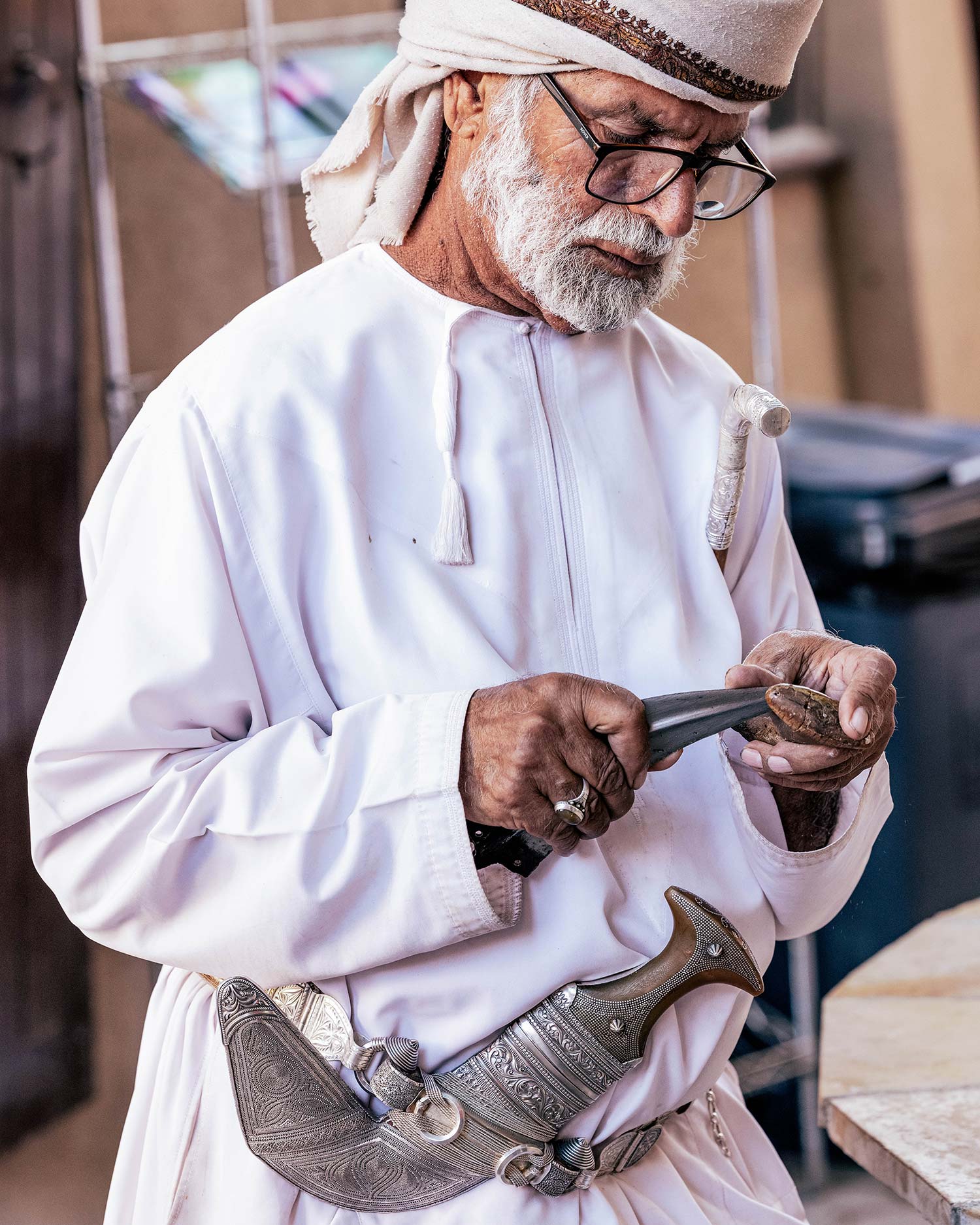
The khanjar is also a sign of status dictated by the design and the metals and other materials used to make it. For instance, gold or silver would be used for the finest quality daggers, while other indicators of elevated class include sheaths adorned with gold or ivory handles.
Mass-produced khanjars—ubiquitous at tourist-focused markets such as Muttrah Souq in Muscat—are easy to produce. A crafted khanjar, though, can take anywhere from three weeks to several months to manufacture.
Back in Nizwa, I take some time to explore the souk. Passing by the cheaper khanjars on sale, I find a tiny photography shop: its walls adorned with black and white images from the town’s past. Stern-faced men, noble and proud, pose outside Nizwa Fort, their khanjars prominently tucked underneath their waist belts. It’s a vivid way of appreciating a symbol that remains as potent as any in Oman to this day.