


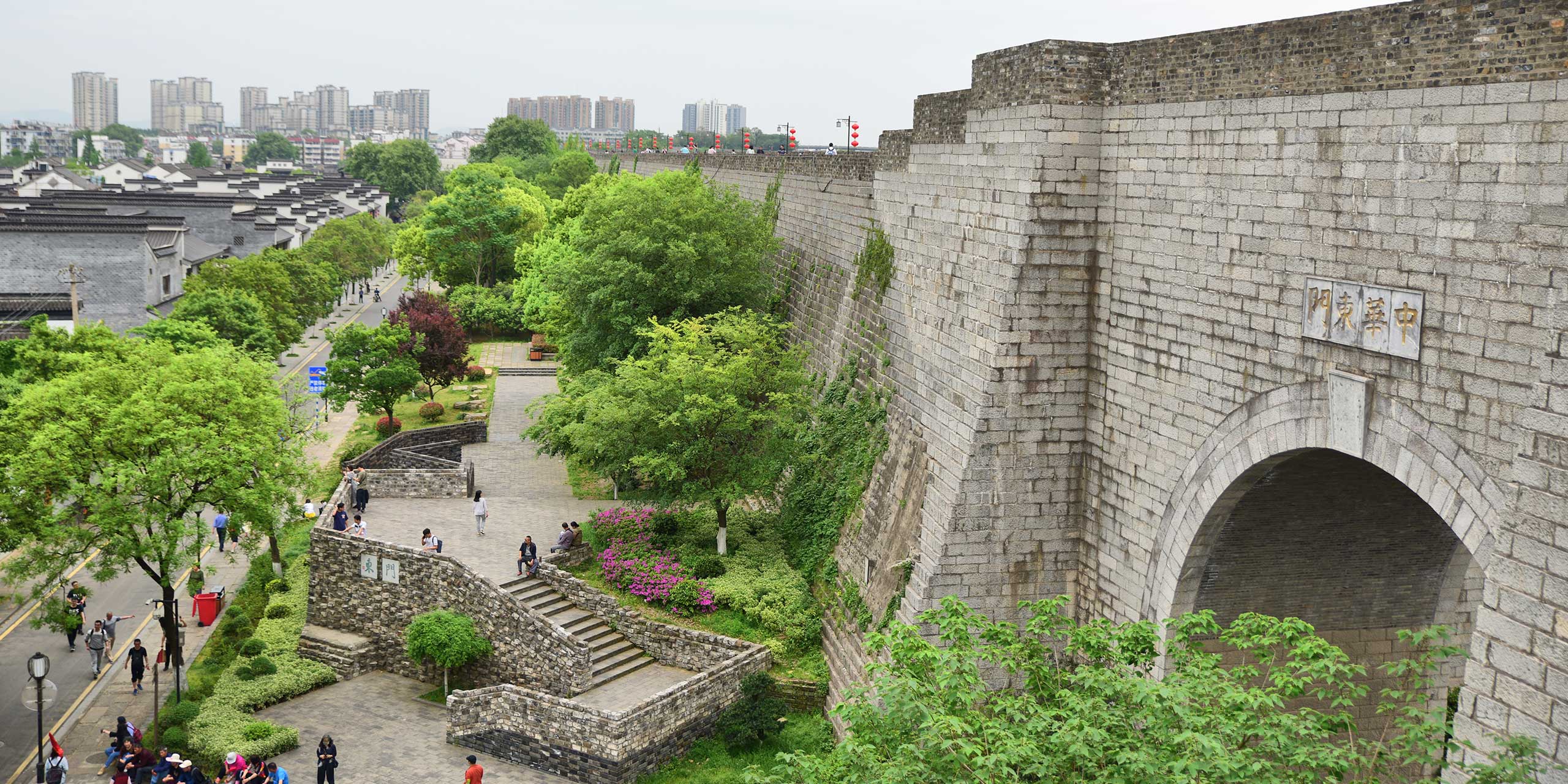
To the Chinese, it is a national treasure, yet few foreigners are aware of its existence. About 250 kilometers northwest of Shanghai lies a city home to this extraordinary structure, built to withstand the tsunamis of violence that regularly engulfed China’s richest settlements.
Nowadays, both the city of Nanjing and its mighty City Wall are greatly overshadowed. The former is eclipsed by Shanghai, a global tourism magnet, and the latter by the Great Wall of China, a construction so vast (21,000 kilometers) that it defies belief.
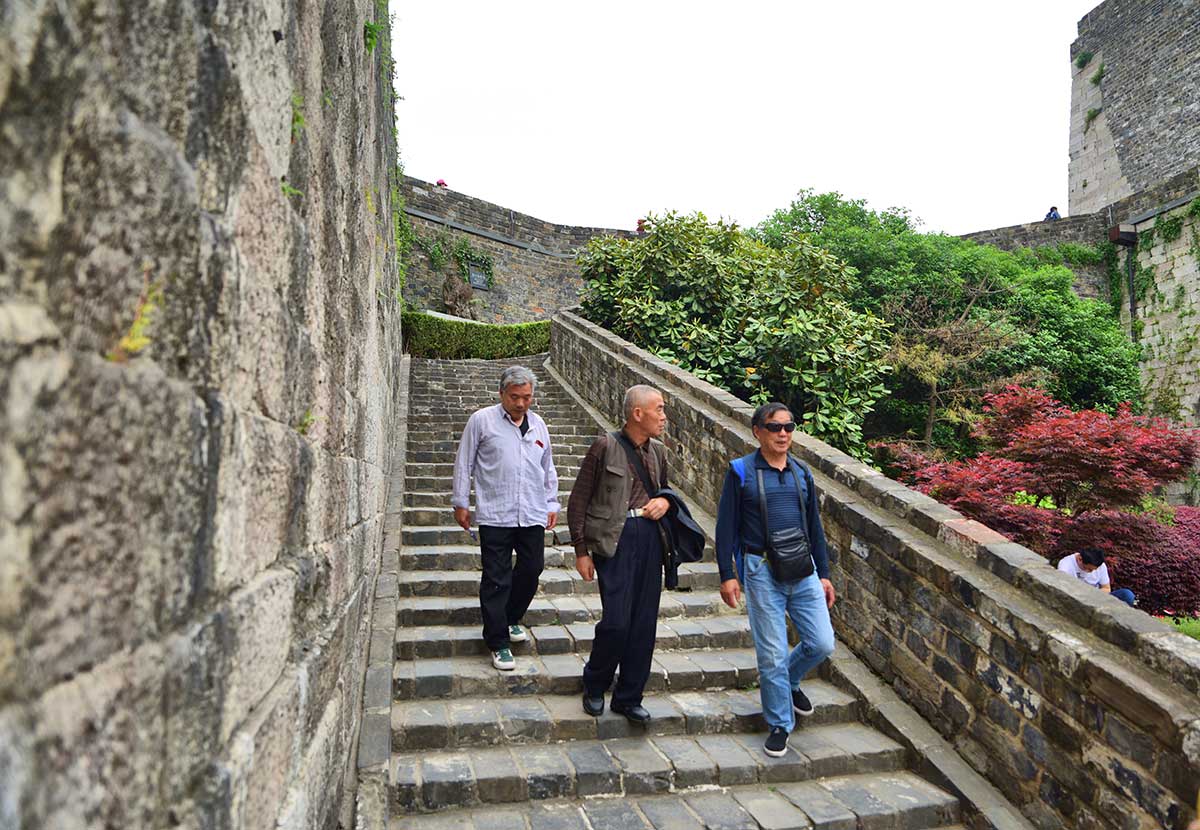
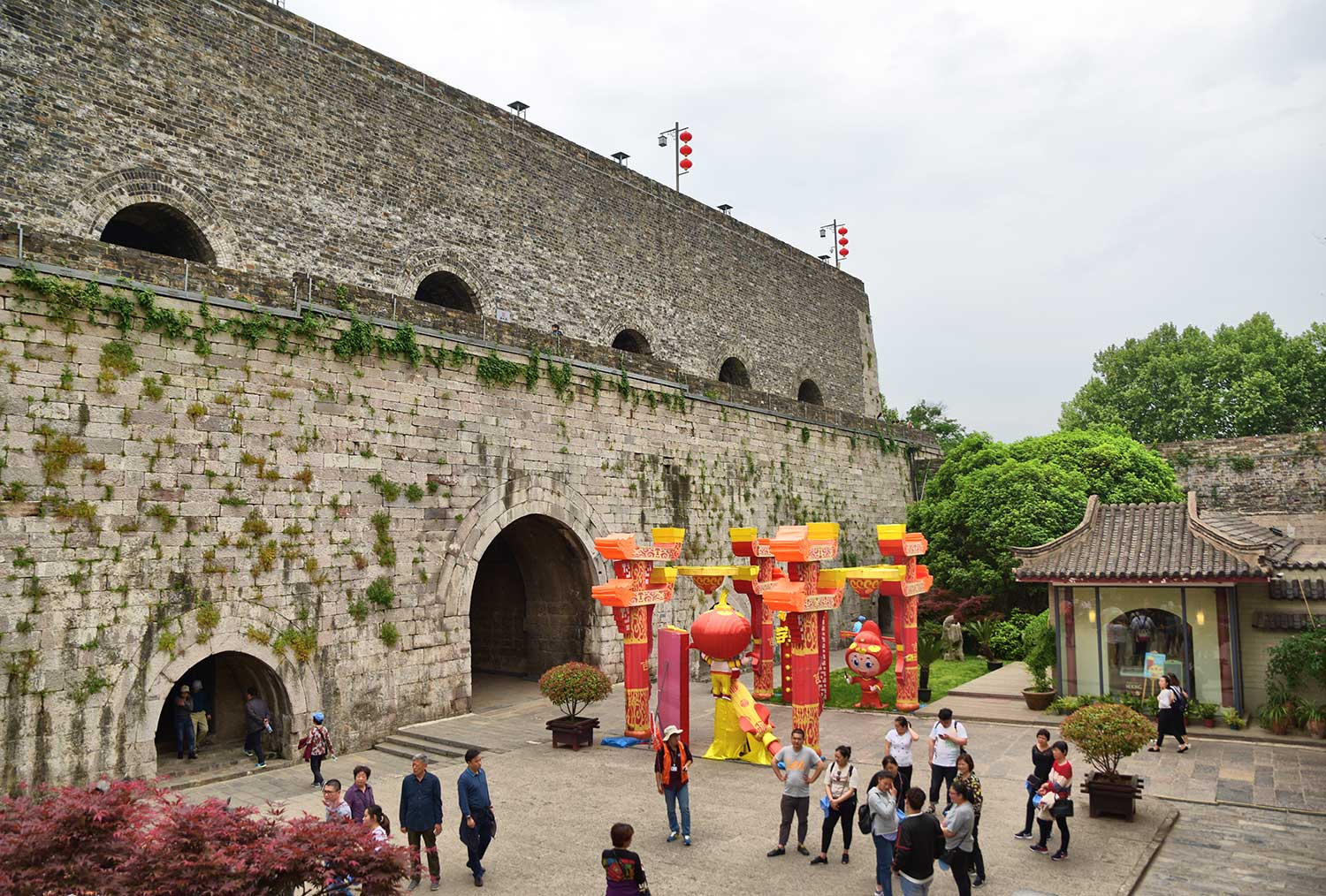
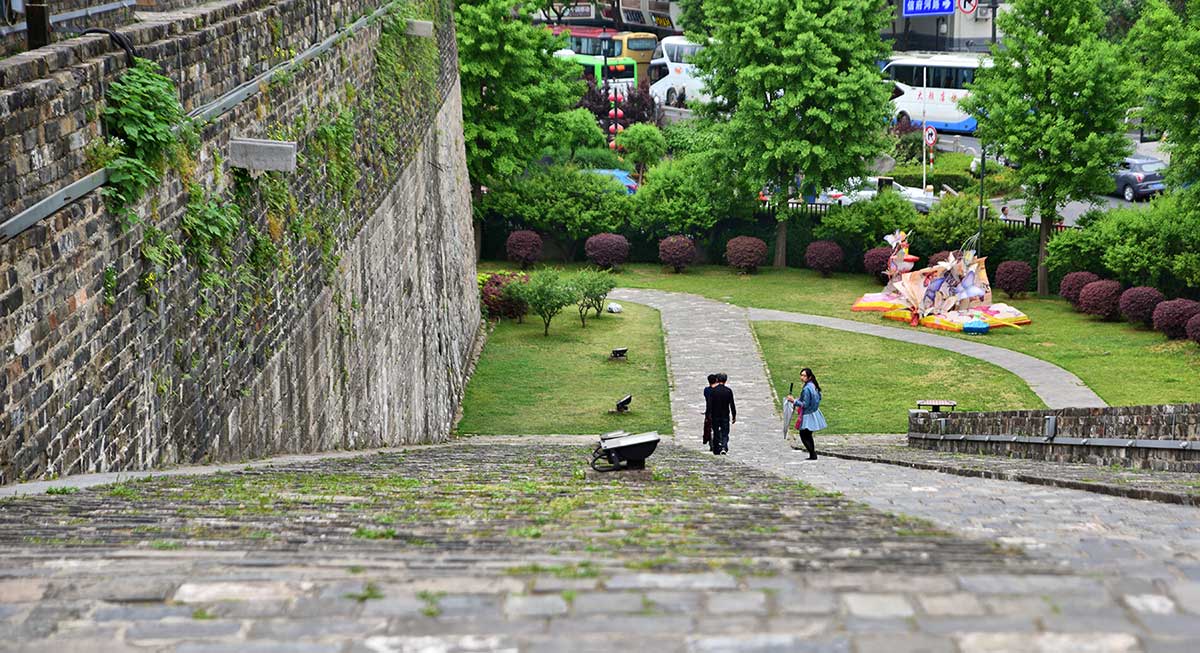
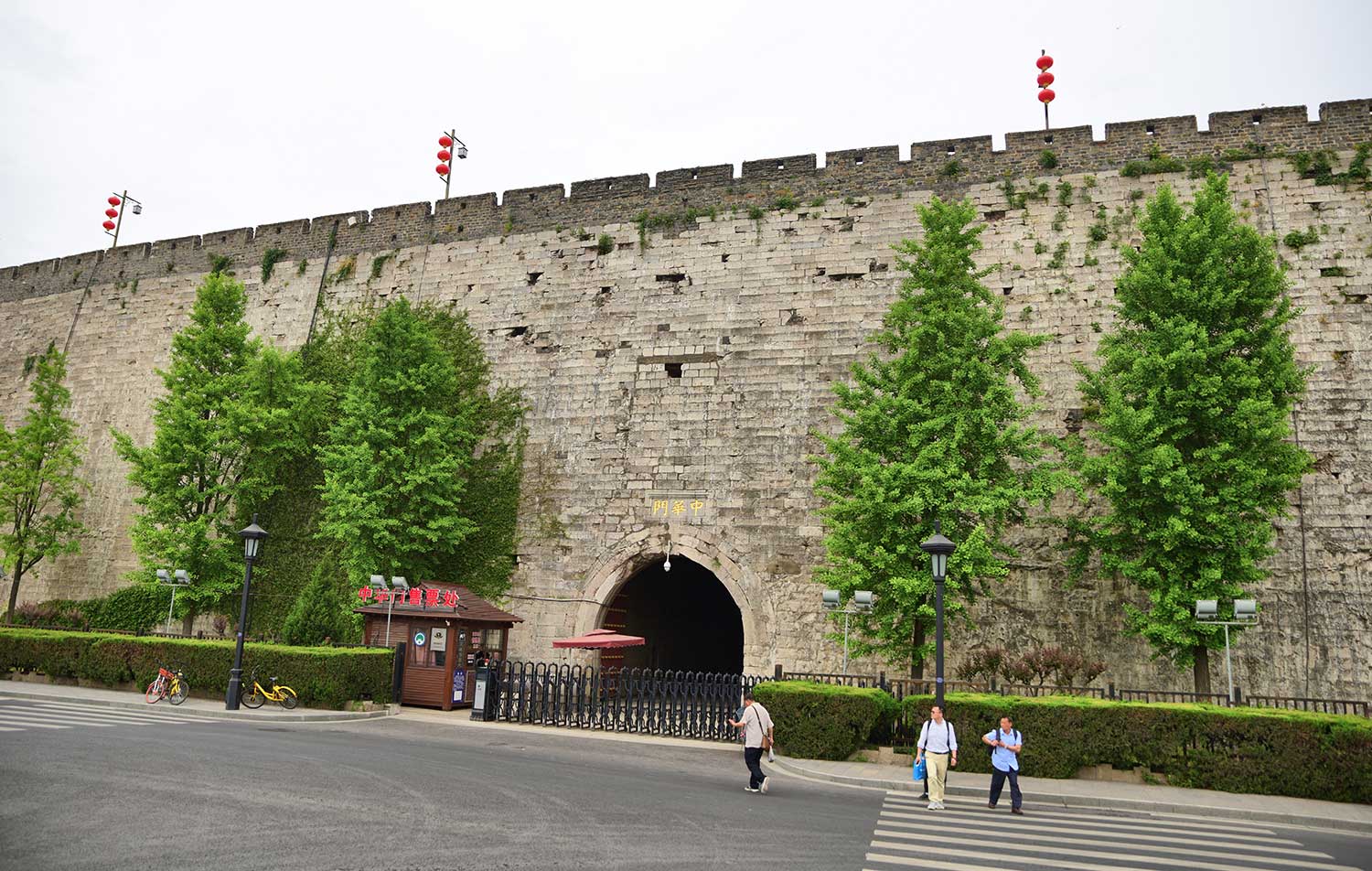
Some 600 years ago, however, Nanjing loomed above all of China. Back then, it was not only the national capital but also the largest metropolis on the planet, enclosed by the longest city wall ever erected. Nanjing is still ringed by this giant fortification, 25 kilometers of which remain intact.
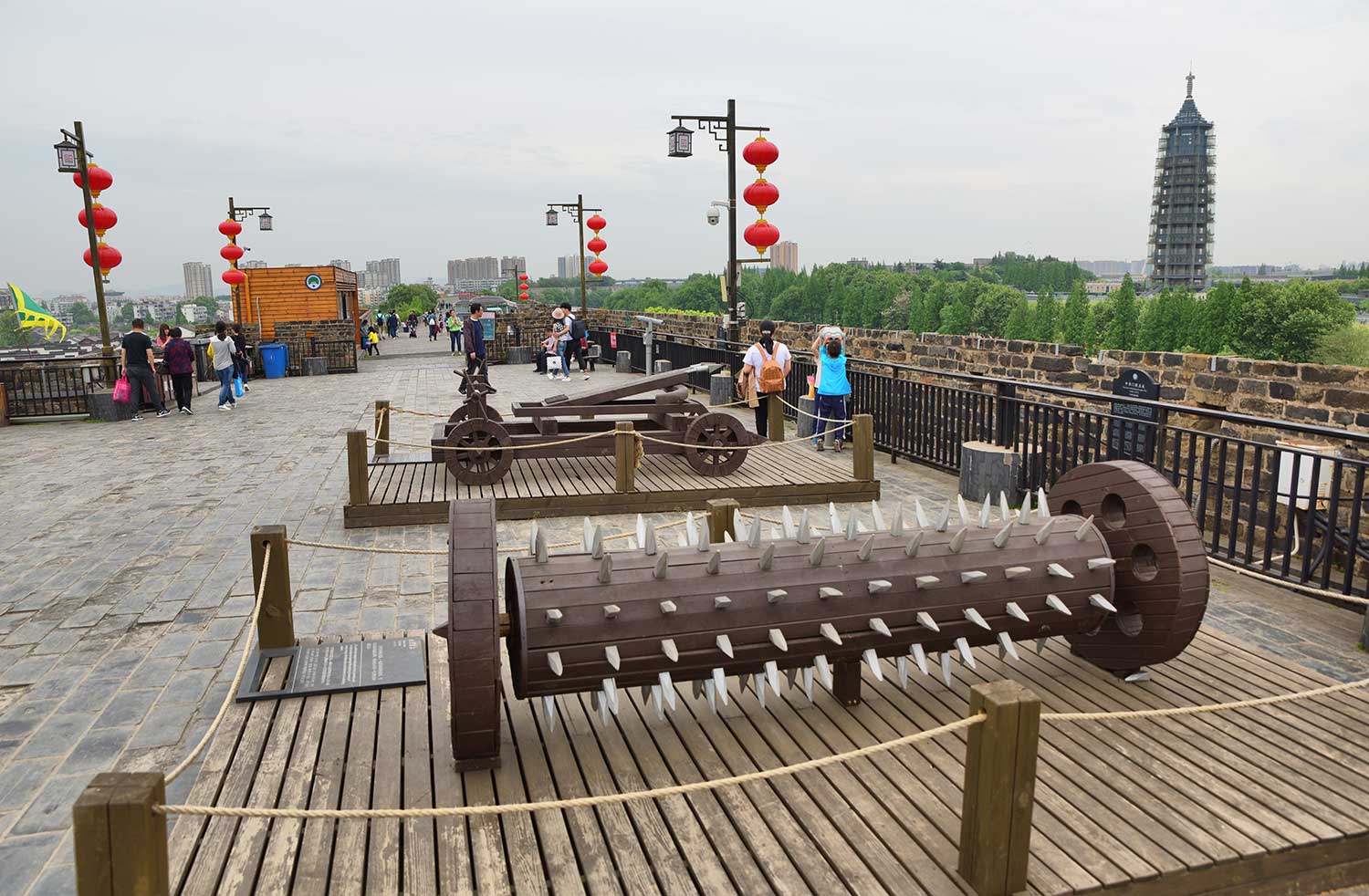
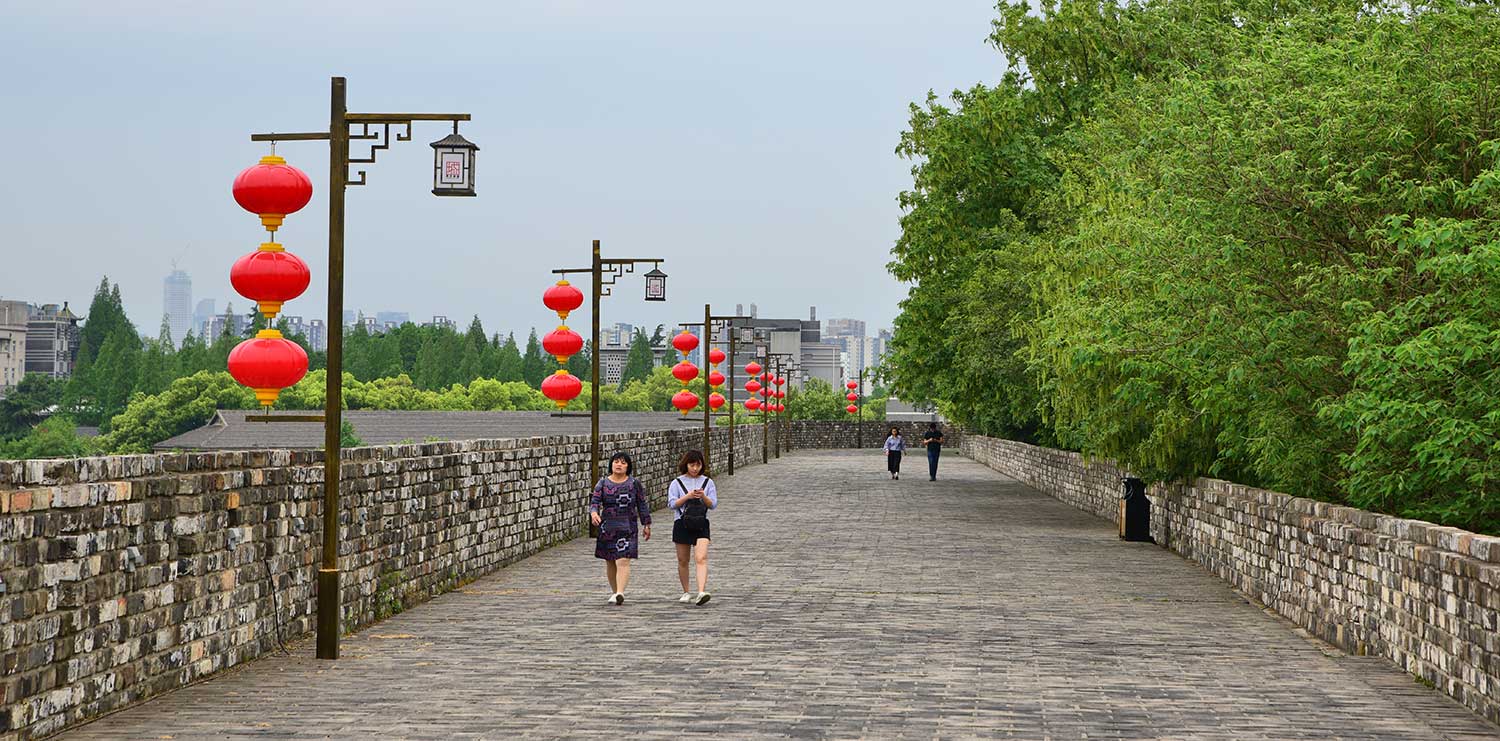
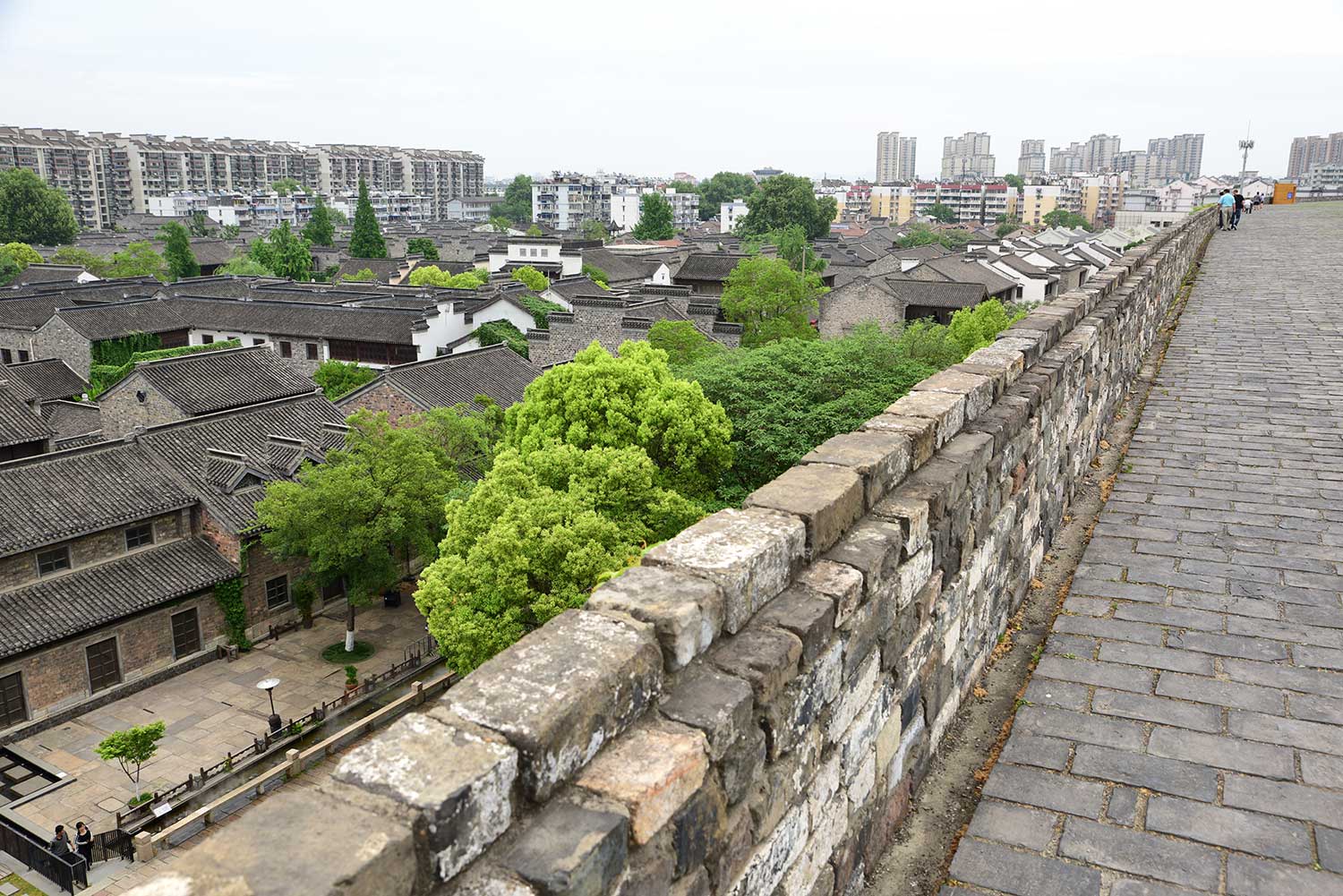
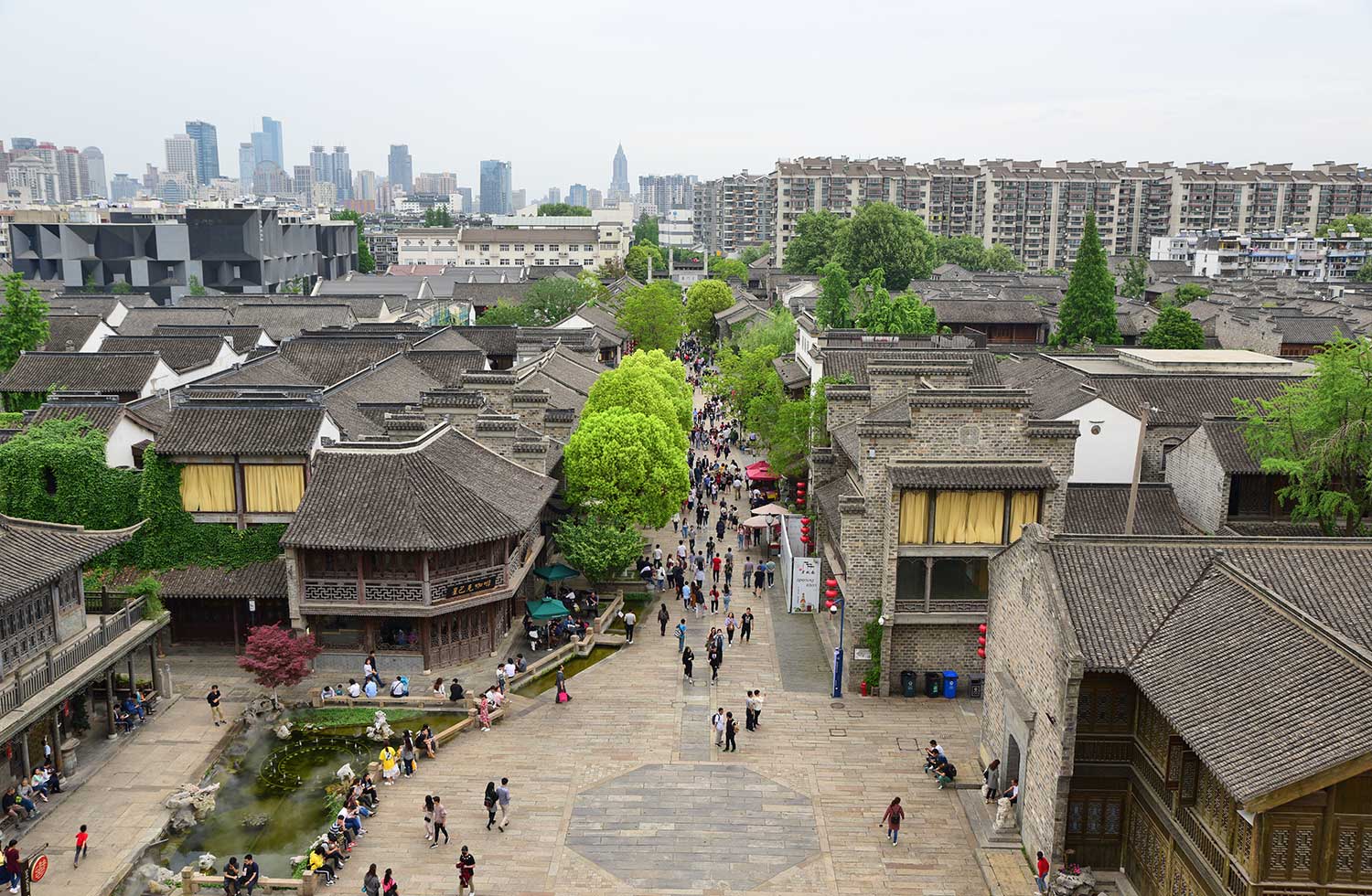
What makes the Nanjing City Wall such a rewarding tourist attraction is that visitors can climb stairs to the crest of its 20-meter-high ramparts. From there, they can peer down at some of Nanjing’s most historic neighborhoods as they walk its perimeter.
Now a modern city of 10 million people, spiked with skyscrapers, Nanjing was the capital of China not once, not twice, but three times. It is recognized as one of China’s four ancient capitals, along with Beijing, Xi’an, and Luoyang.
Its first stint as capital came in the third century, and its last in the 16th. But Nanjing’s true golden era was its reign from 1368 to 1421, when the Ming Empire ruled the world’s greatest superpower. No nation, kingdom, or sultanate could match its wealth, equal its sophistication, or dream of possessing equivalent military might.
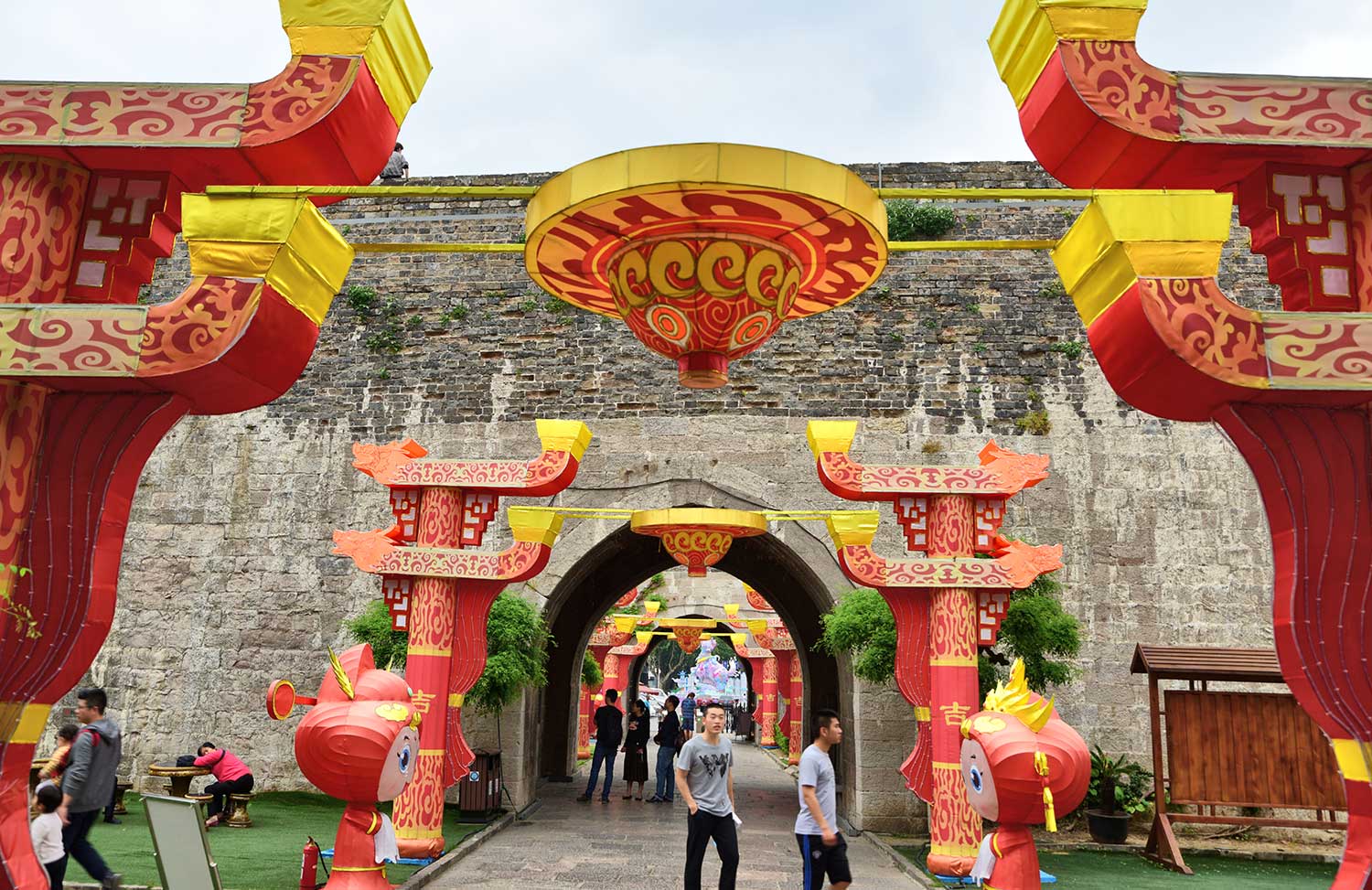
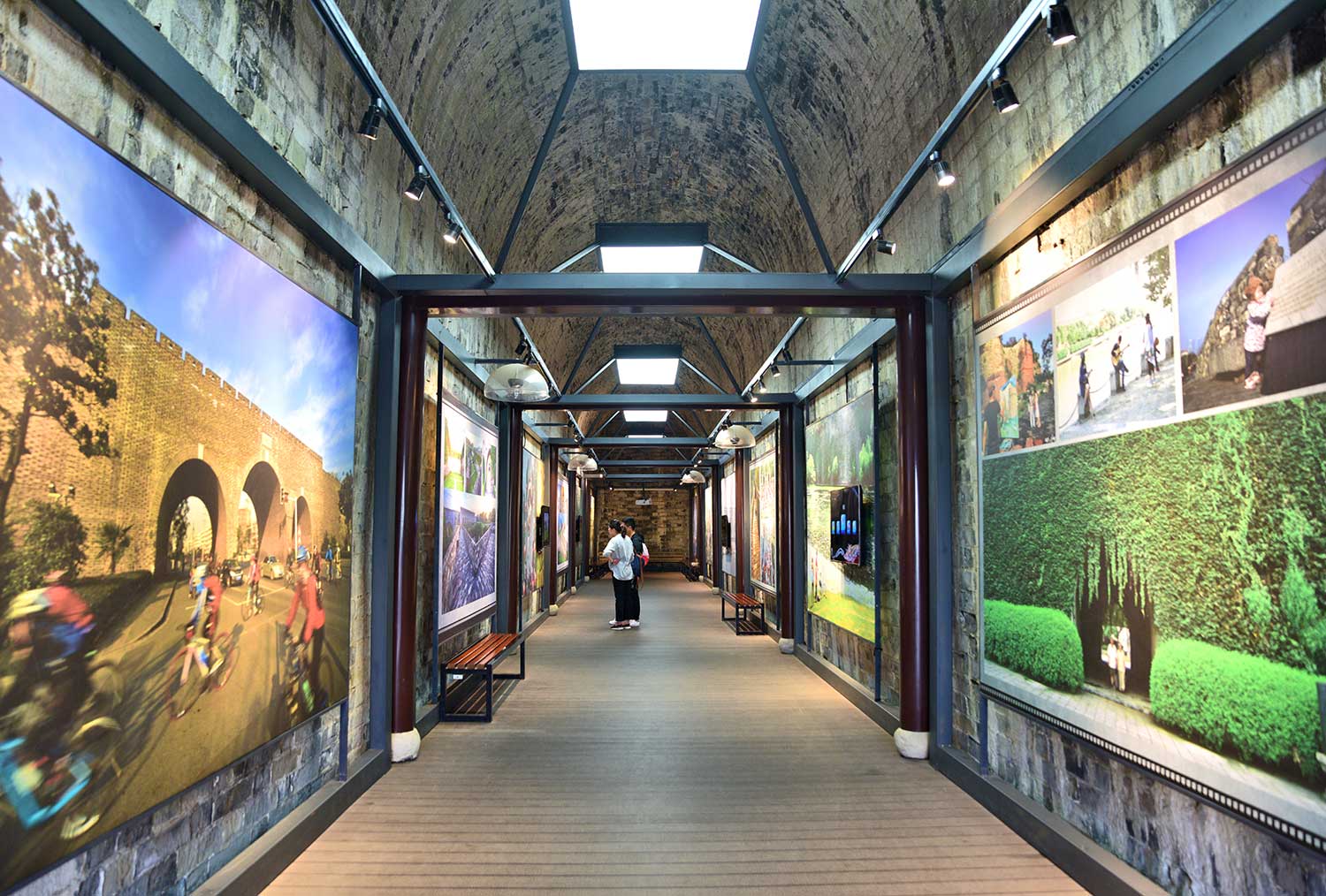
China’s success did not breed complacency. The Ming Empire realized that even with the world’s largest standing army, estimated by some historians at up to a million troops, it could not deter all foes. Still fresh in its collective memory were the humiliations it had suffered in the previous century at the bloodied hands of the Mongol hordes, who repeatedly invaded, pillaged, and occupied China.
Soon after Nanjing became the capital in 1368, Emperor Zhu Yuanzhang ordered it to be fortified. He had chosen Nanjing as his headquarters for its natural defenses: mountains on one side and lakes on the other meant that any invading force would have to take a long, indirect route before confronting its monumental fortifications.
Even today, with skyscrapers soaring up to 450 meters, Nanjing’s City Wall remains an imposing sight. As I stood at its base, climbed its stairs, and wandered its crest, I could not help wondering how this gigantic heritage structure is not a far bigger tourist draw.
Then again, China is so vast and so ancient that its list of significant heritage sites is extraordinarily long. Each of its famed historic attractions has a kind of twin elsewhere, another site similar in style and nearly as impressive.
For example, tourists awed by Beijing’s colossal Forbidden City can explore that city’s equally lavish royal compound, the Summer Palace. Travelers who cannot make it to Zhangjiajie National Forest Park, famed for its sandstone pillars, can instead marvel at the spiked karst peaks of Guilin. Even Xi’an’s revered Terracotta Warriors, thousands of clay soldiers guarding an imperial tomb, have an impressive counterpart in the nearby Tomb of Emperor Jingdi, where ceramic figures once played a similar role and are now on display.
And of course, there is the Great Wall of China, unmatched not only in China but anywhere in the world. Yet the country is home to many other ancient walls that are magnificent, historically significant, and well worth visiting.
A thousand years ago, Chinese cities were commonly ringed by walls, vital fortifications against fierce invaders such as the Mongols, who breached many of them in the 1200s and wrought bloody devastation. Still standing today are sections of the walls that once surrounded Beijing, Xi’an, Pingyao, Jinzhou, Xiangyang, Kaifeng, Dali, and Fenghuang. All, however, are eclipsed by the Nanjing City Wall.
Nanjing itself remains overlooked by foreign tourists, which is understandable given China’s staggering wealth of beautiful cities, historic landmarks, and national parks. During each of my three visits to Nanjing, I barely saw another foreigner, which is a pity. Nanjing is an outstanding city, larger than London, rich in history, cutting-edge architecture, serene parks, memorable temples, and an elite food scene.

It is also easily accessible. Direct flights connect Nanjing with major hubs such as Shanghai, Beijing, Xi’an, and Guangzhou. But the easiest and most enjoyable way to reach it is by China’s incredible bullet train system, which is modern, efficient, comfortable, inexpensive, and links every major city in the country.
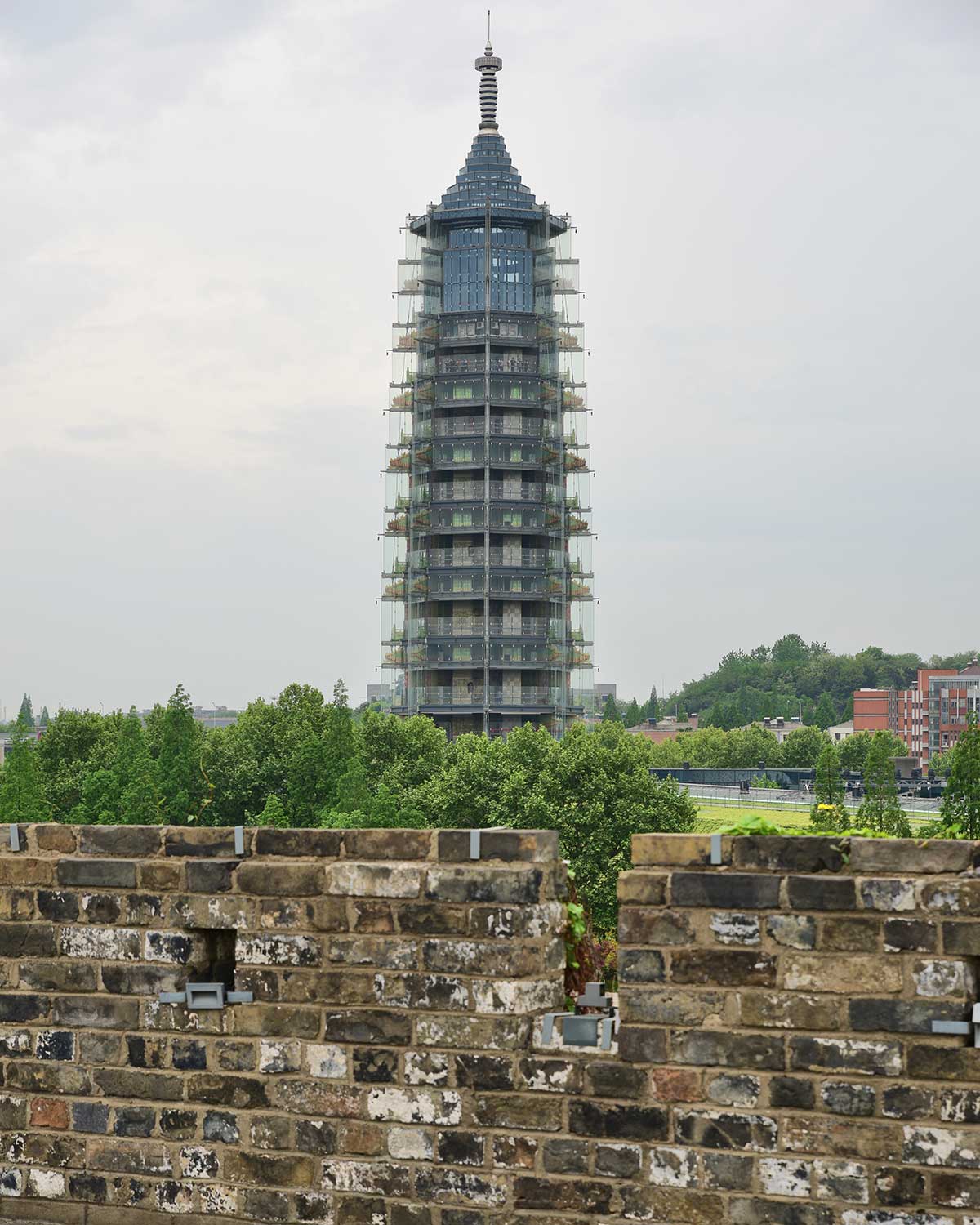
Upon arriving from Shanghai by train, I immediately embarked on one of China’s most fascinating walks, not along hills or through forests, but atop the Nanjing City Wall. From its crest, I could see vast swathes of the metropolitan area as I strolled along three separate sections.
Originally, Nanjing was protected by four fortifications. Its Royal Palace was enclosed by the palace city wall, followed by the imperial city wall, then the inner city wall, and finally the outer city wall. The outer wall stretched 60 kilometers, about 45 of which have been preserved.
Most famous, though, is the inner wall, originally 35 kilometers long and punctuated by 13 gates. Today, 25 kilometers of it remain intact, a testament to Nanjing’s once-lofty status and to the skill of the tens of thousands of workers who built the largest city wall the world has ever seen.