
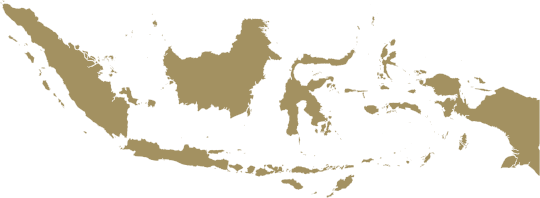

When people say “Aceh,” they often refer to Pulau Weh, a jigsaw-shaped island that marks Indonesia‘s Kilometer 0 and floats to the north of the provincial capital, Banda Aceh. Truth be told, the rest of the province, partly because of its perceived Islamic conservatism, has long remained under the radar of international tourism.
But a province the size of Aceh cannot just be entirely dismissed for a small island. I imagined that Aceh would be the perfect place for a slow, immersive, and authentic adventure across its mountainous and forested interior. Then I planned to start from the province’s south, where the jungles of Gunung Leuser National Park still hold one of the world’s last orangutan habitats.
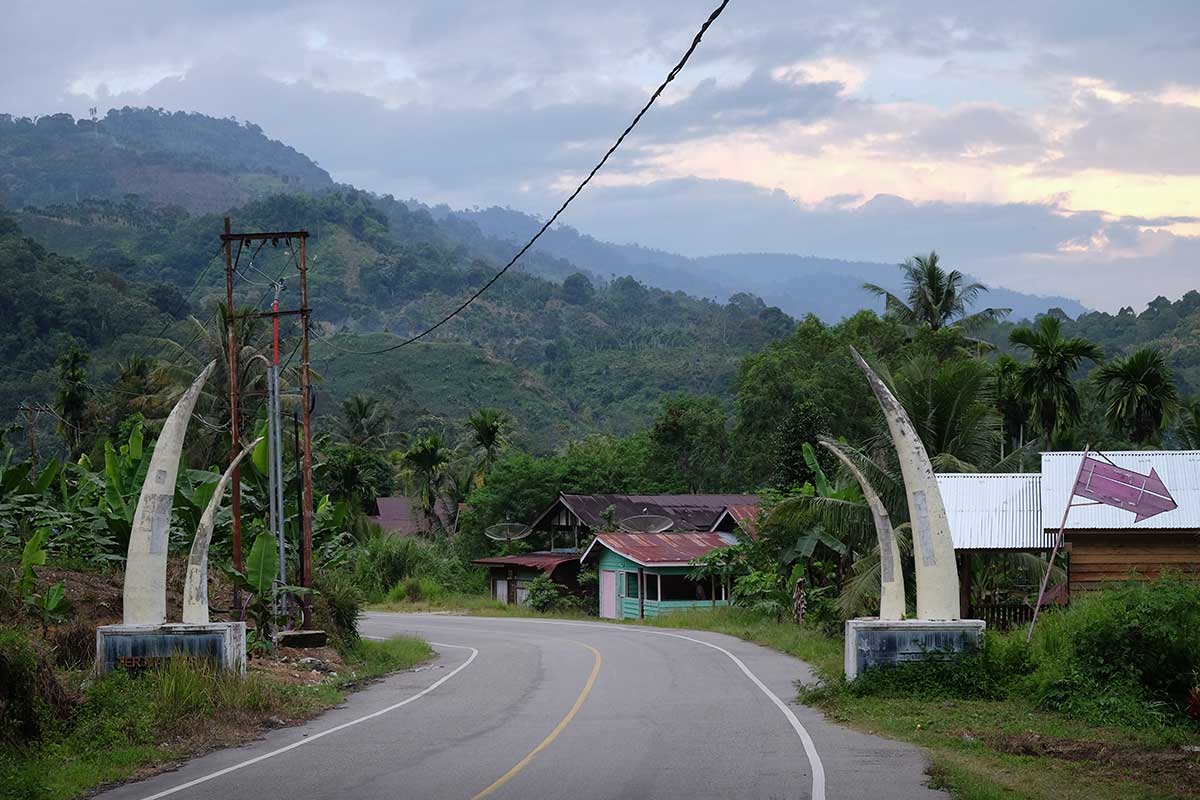
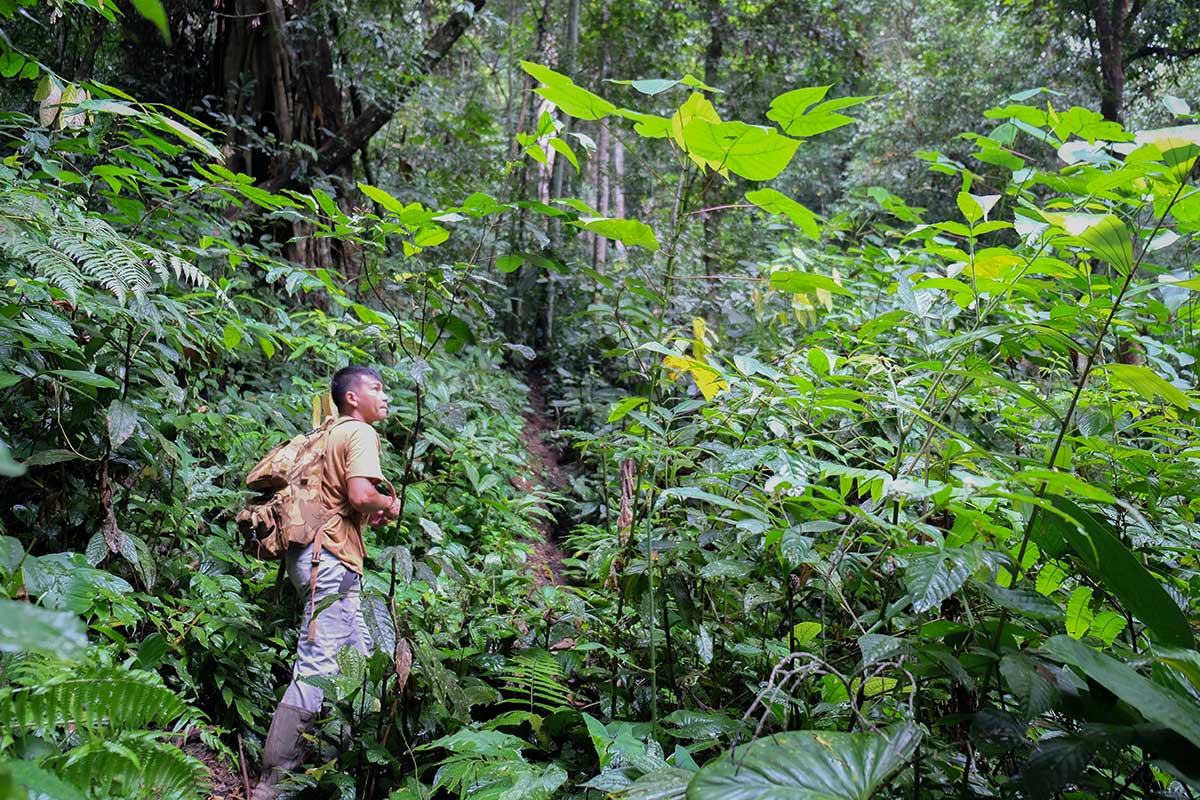
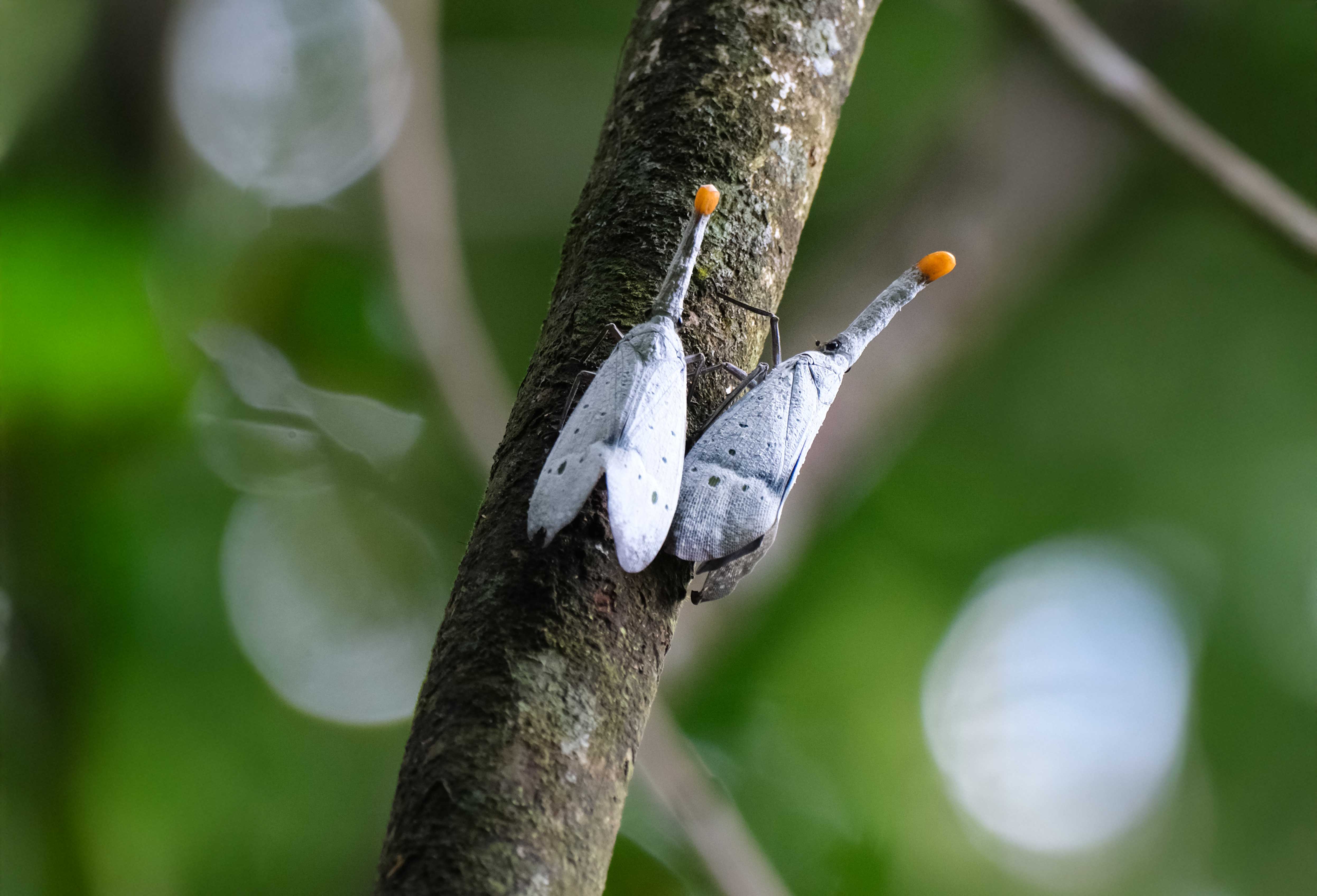
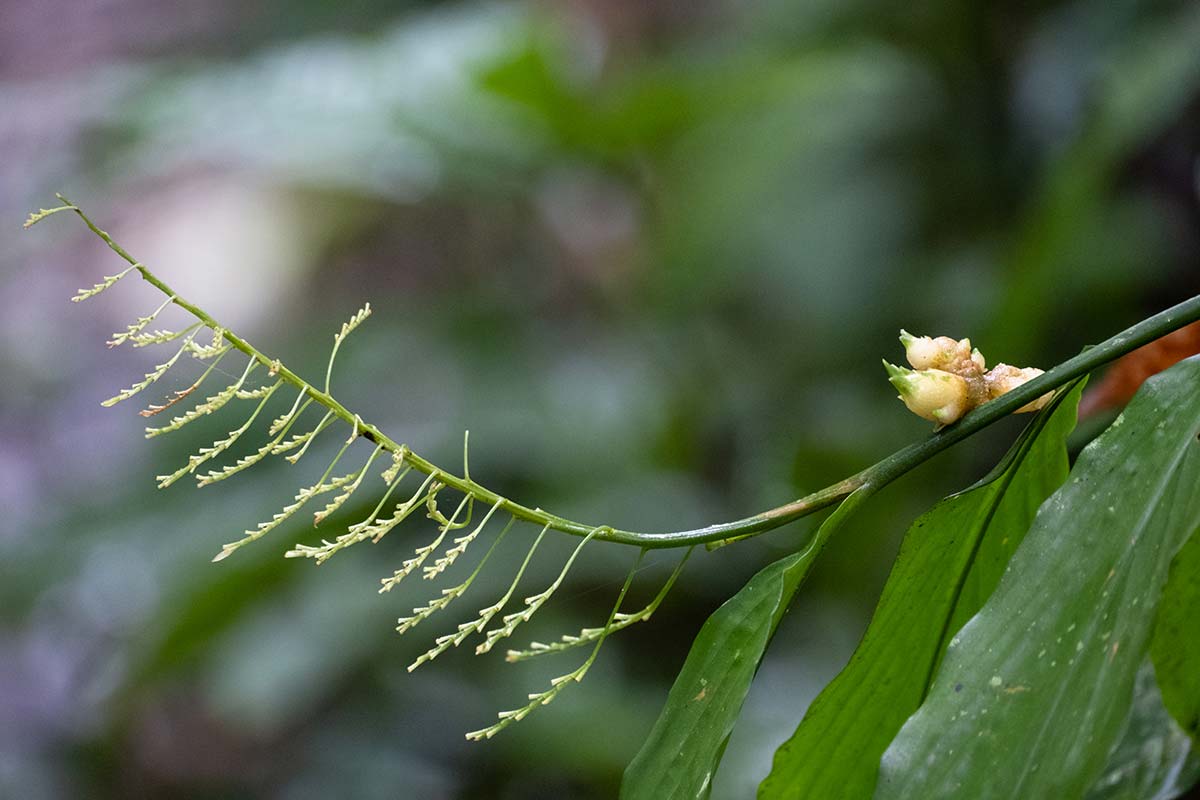
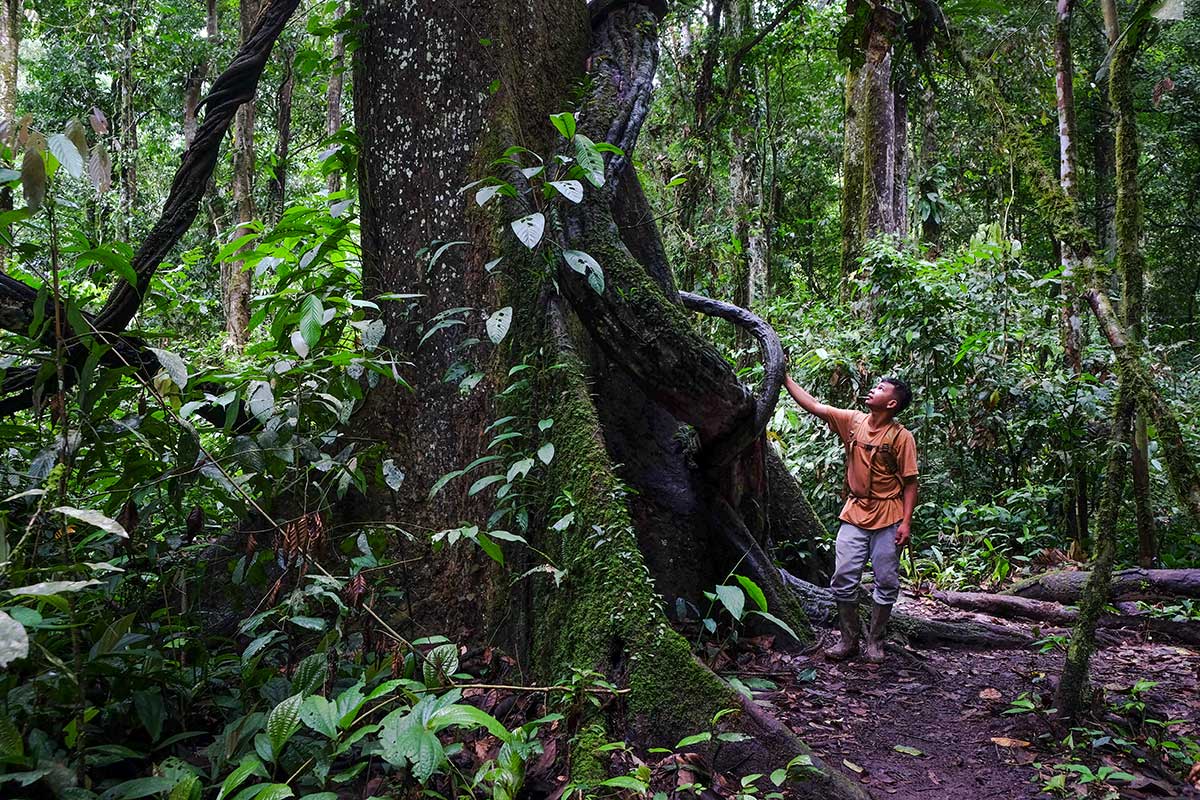
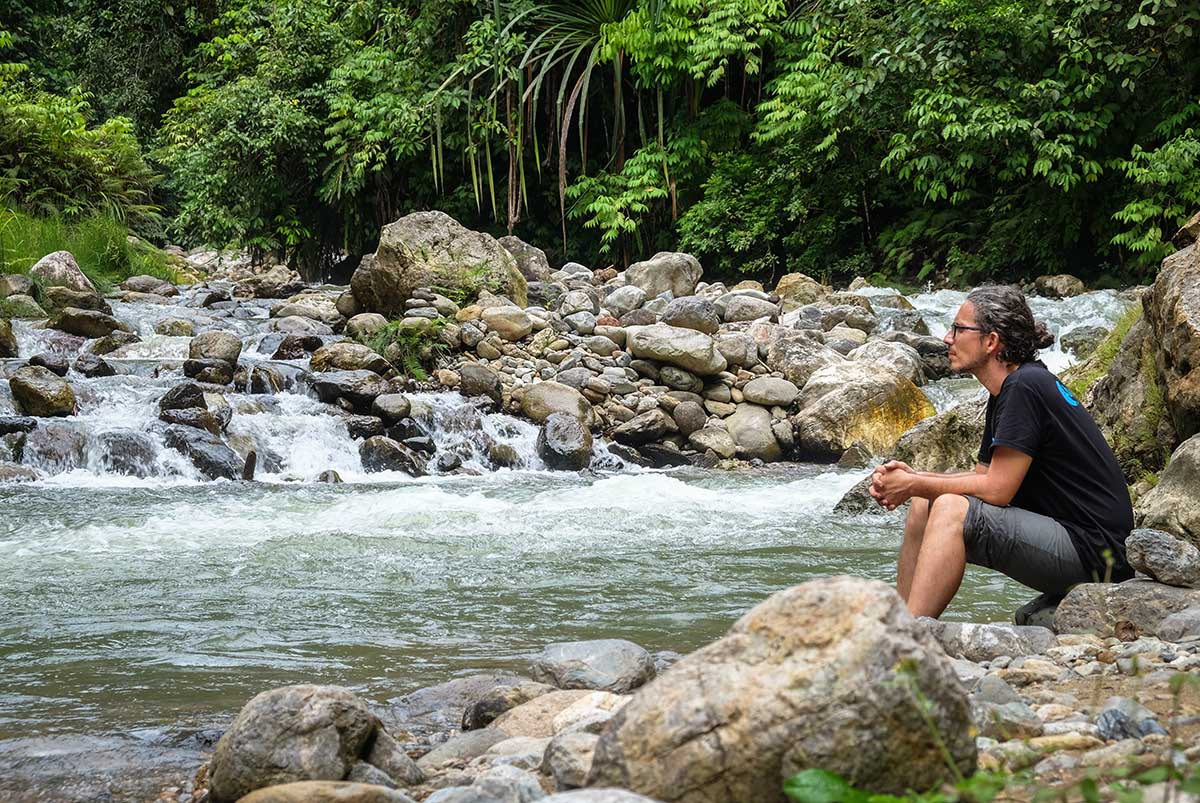
The village of Ketambe, a veritable one-horse town, is flanked by forests filled with wild mawas—the Indonesian lingo for orangutans—and has the same, or even larger population of wild orangutans than northern sibling Bukit Lawang, set on the opposite side of the reserve.
I set out with my guide Salat to try my luck at chasing apes for half a day. In this type of trekking, where finding wildlife is the key expectation, the first hour is always filled with a strange sense of anticipation that makes one’s head jerk upwards every time a branch cracks or the wind blows, ruffling the thicket. But as the second hour ticked in, I started wondering if the furry orange apes would ever show up.
I was almost ready to give up when, as we rested on a fallen tree trunk, Salat lifted his arm and muttered. “Look over there.” The foliage slowly turned into a flurry of orange. It was a young, solitary male—they separate from their mothers after six to eight years in symbiosis, placidly choosing the best leaves for their never-ending lunch.
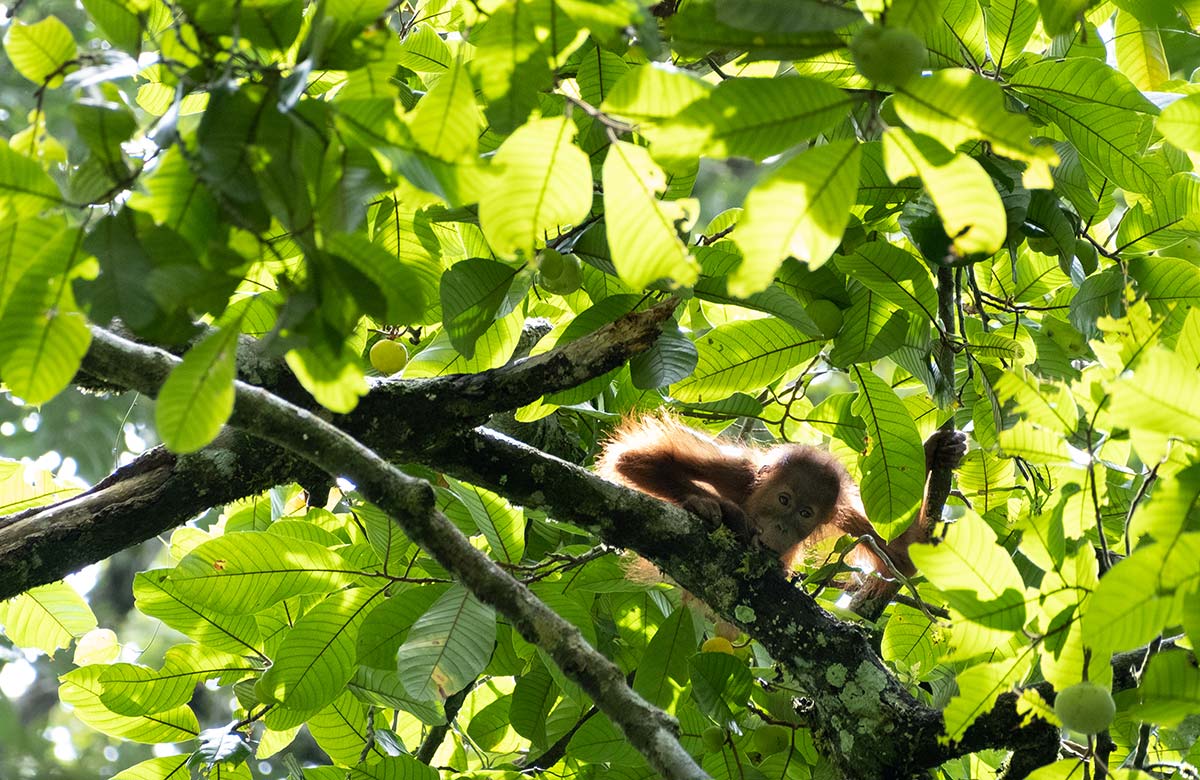
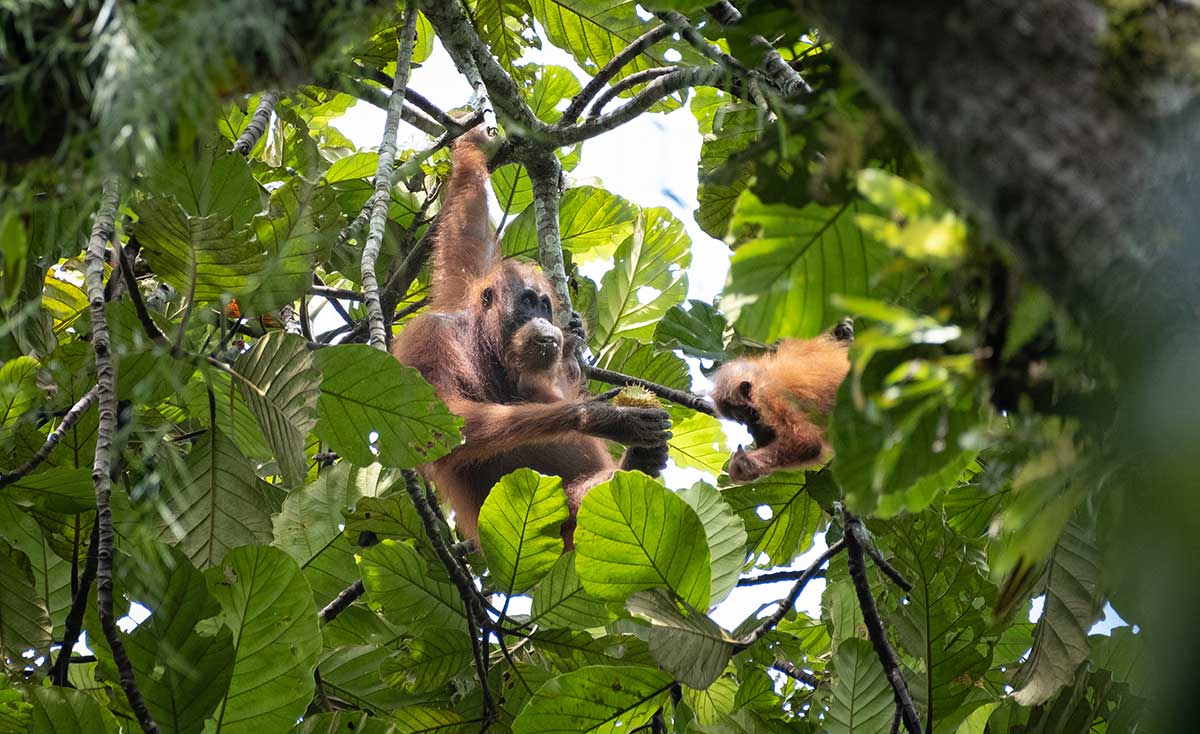
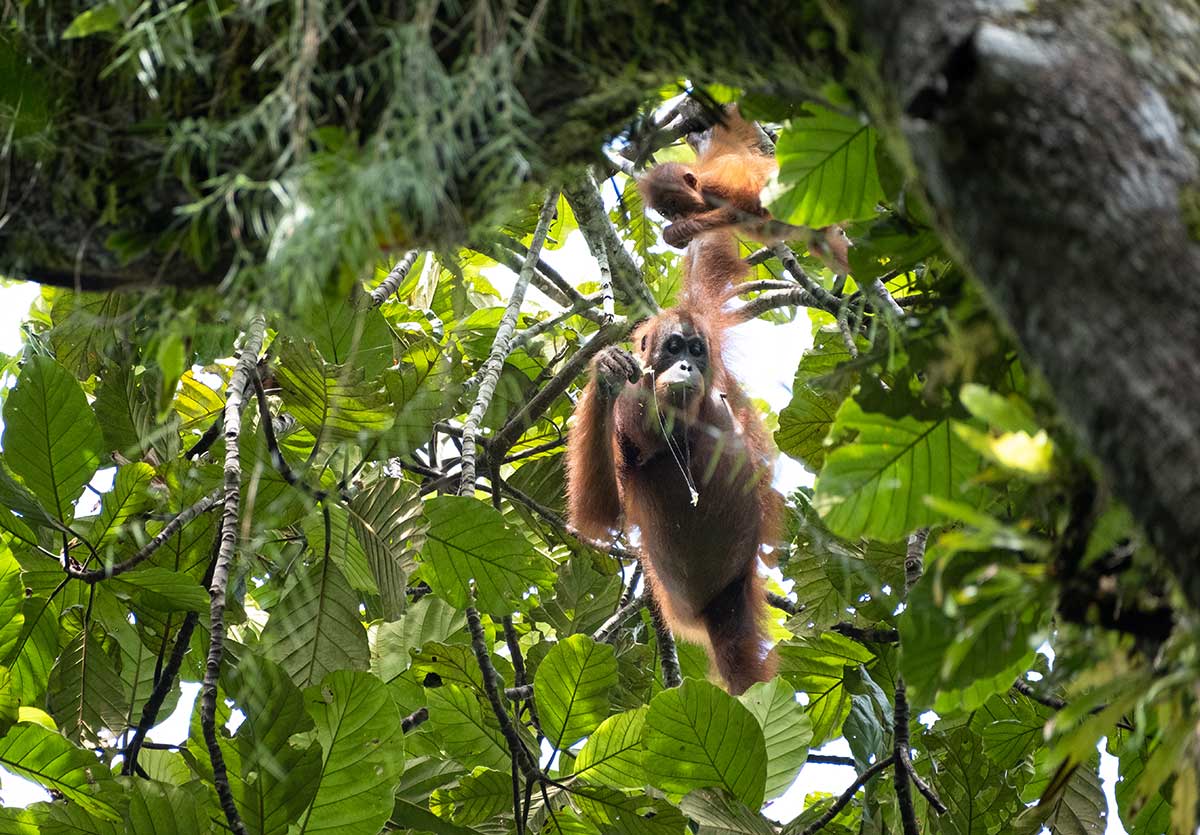
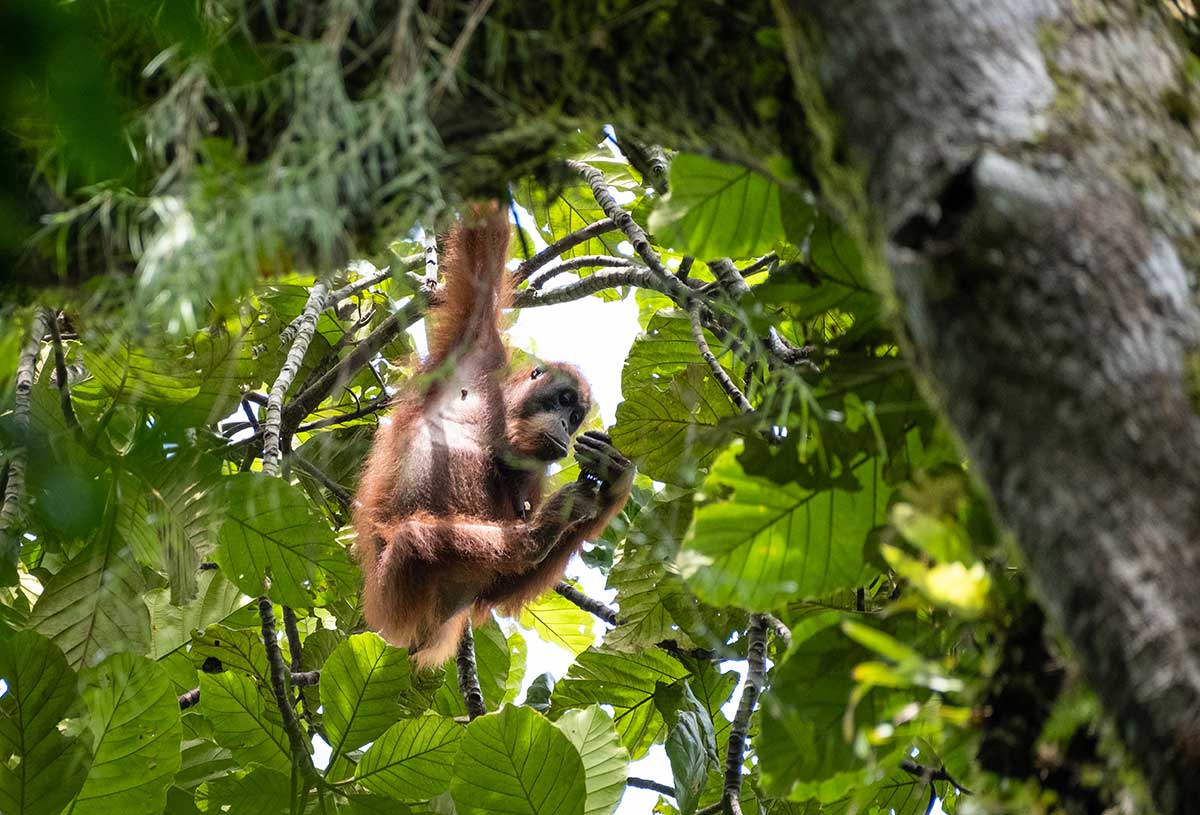
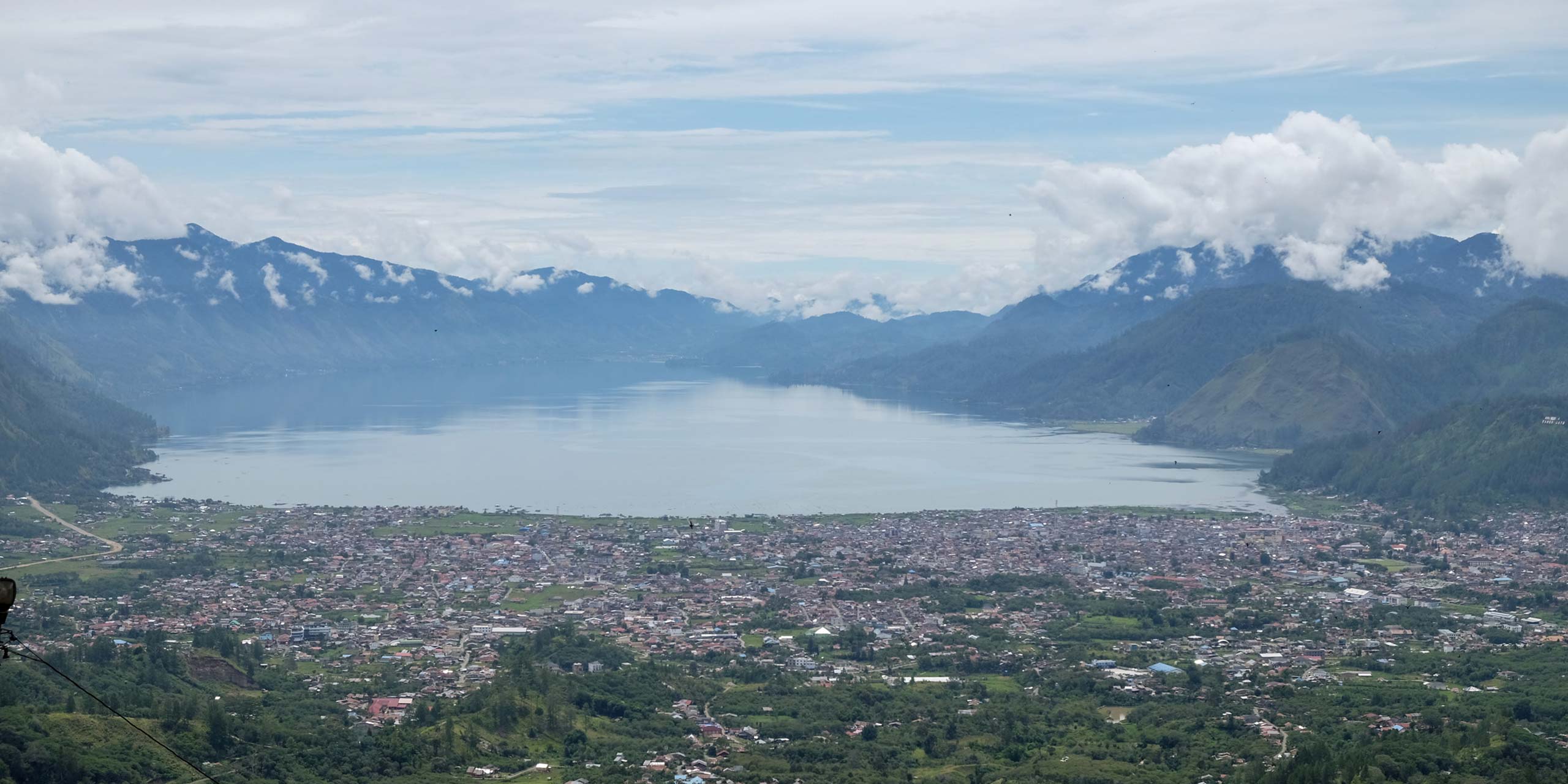
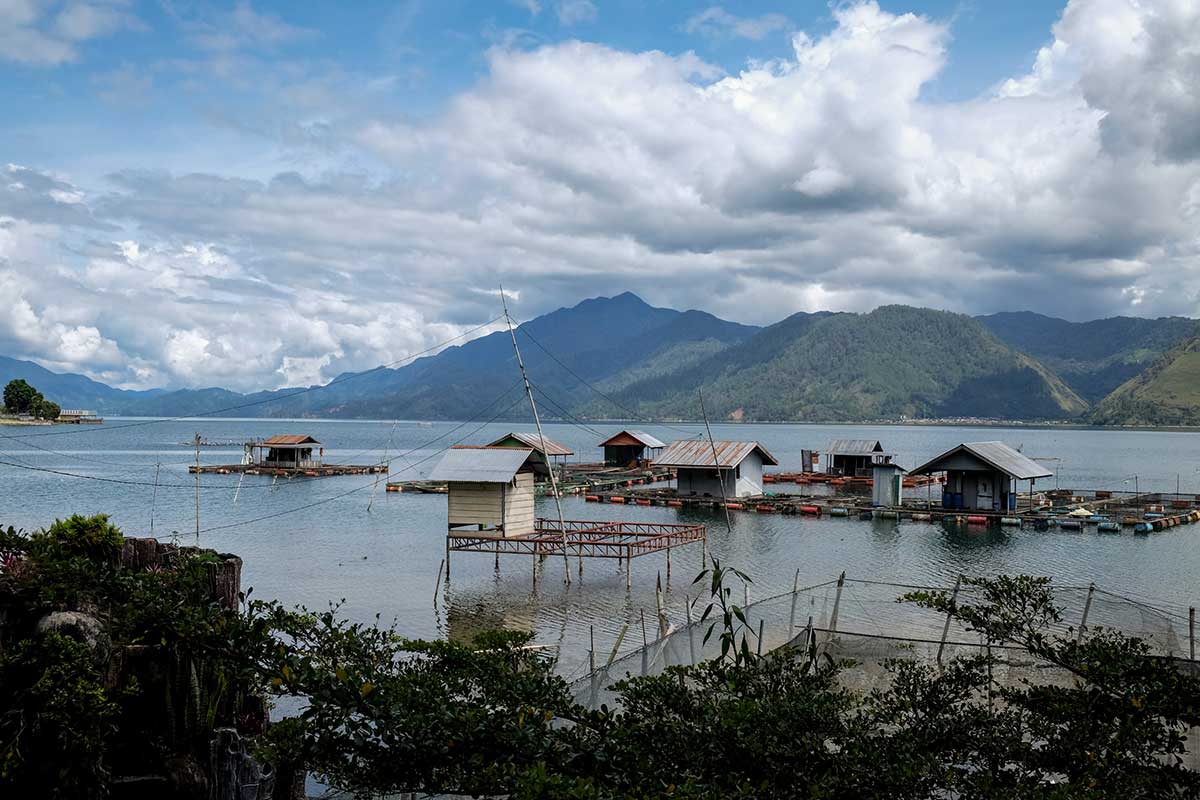
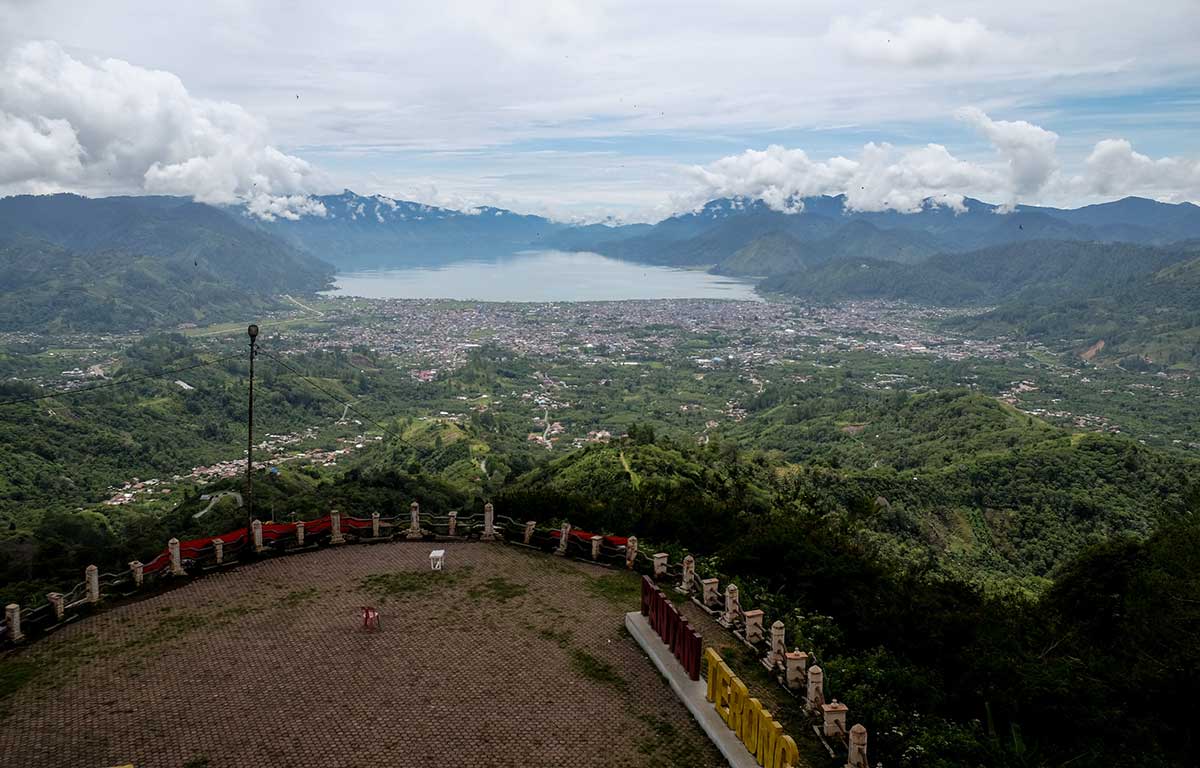
By 3pm, we hit an orangutan jackpot. Five more apes that seemed more surprised to see us than we were—and I left Ketambe with my wildlife-spotting dreams duly fulfilled. My next stop was a seven- to eight-hour drive west to the 1,200-meter-high Takengon. Surrounded by the soaring backdrop of the steep, coffee-growing Gayo hills, the town sits next to the shore of Lake Tawar, which stretches for 26 km like a large, translucent mirror encased by misty peaks.
Pantan Terong is the town’s most popular viewpoint, set 1800 meters above the spot where Takengon town nestles against the lake’s northern end. The viewpoint sits high above hills shaped like a carpet, covered with fields of abundant, plump coffee cherries of the local Gayo variety, one of the best in Indonesia. From the top, the morning light makes Lake Tawar shine like crystal at the bottom of the jigsaw hills.
On the northern shore of the lake, the Putri Pukes Cave welcomes visitors into an underground world where rock formations resemble human figures. It’s the setting of the popular legend of a lovelorn princess who transformed into one of those rocks.
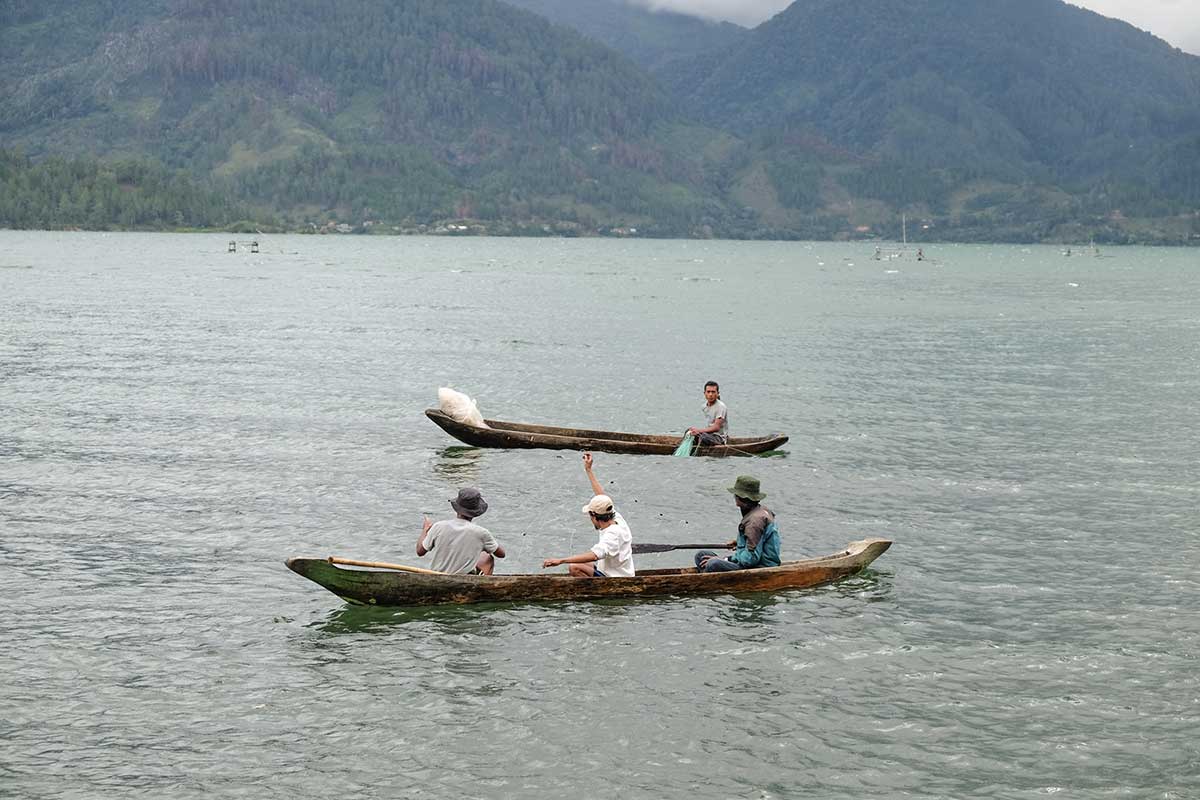
Outside, the lakeshore is an unending spectacle of floating boats, waterside villages, and beautiful stretches of coast where entrepreneurial young Indonesians have set up campsites and arty cafes by the lake—easy spots to get a taste of that prized Gayo coffee.
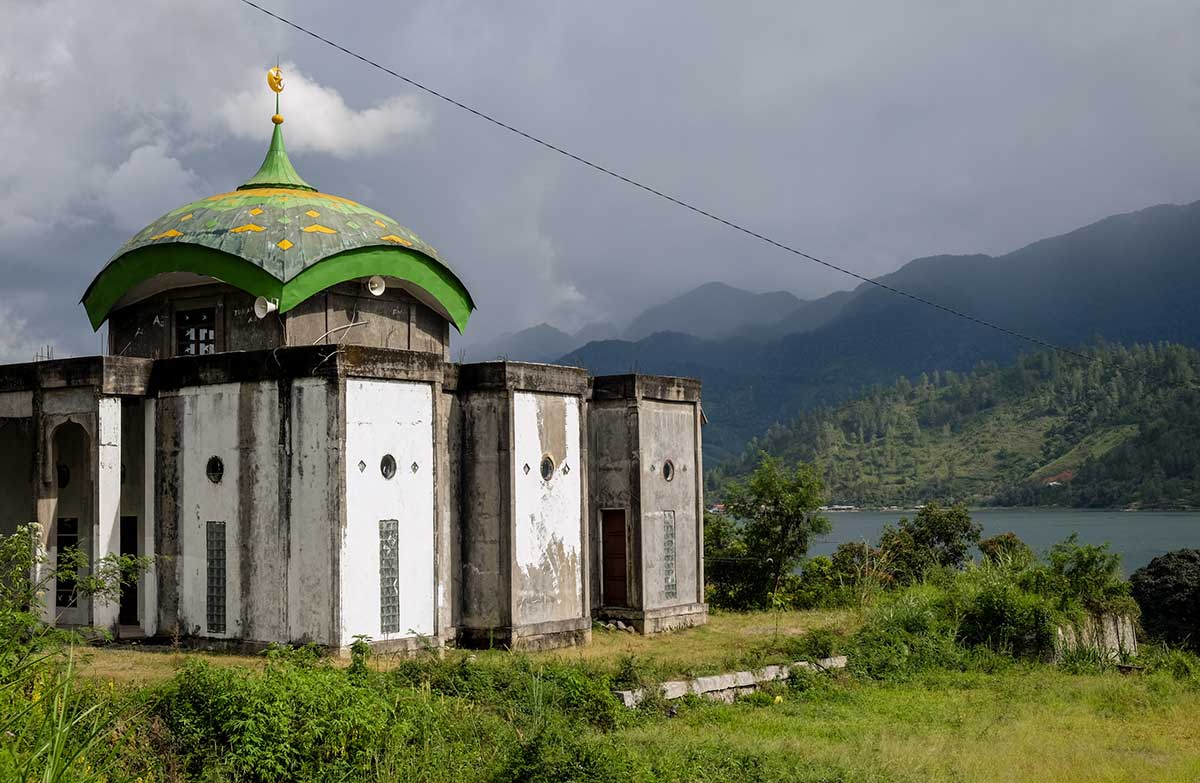
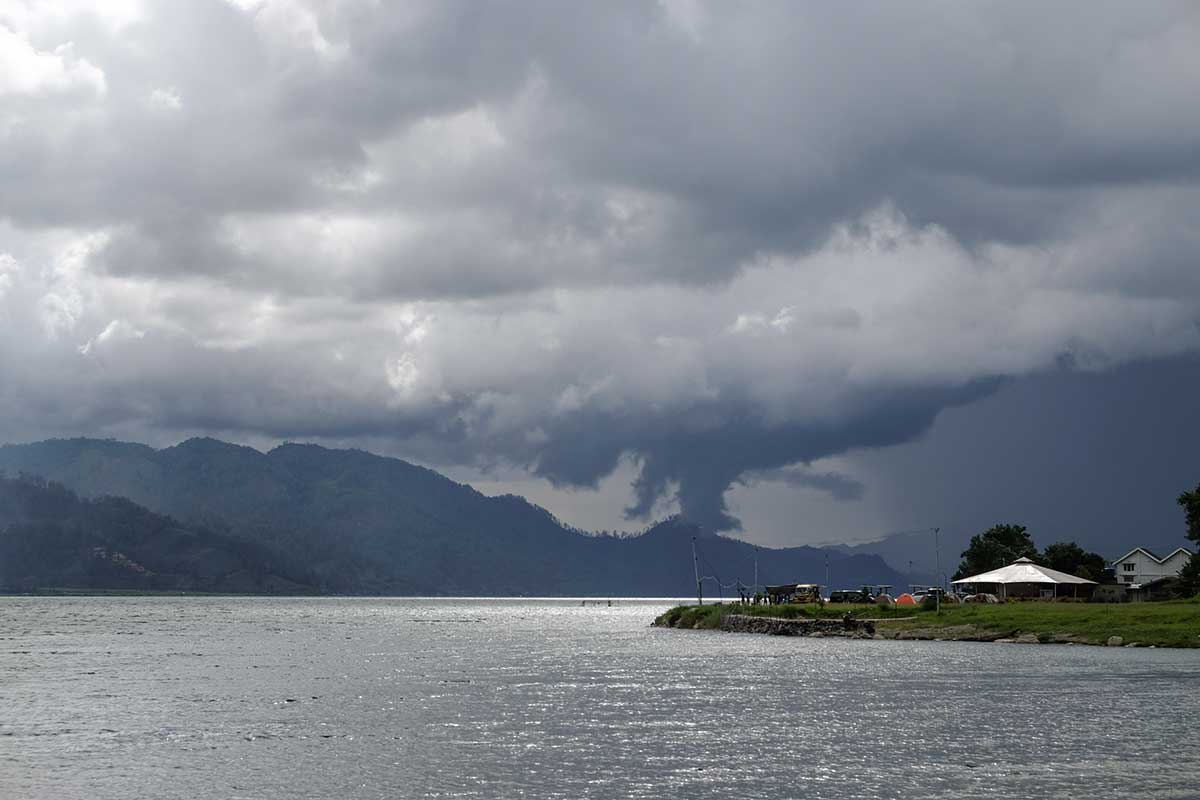
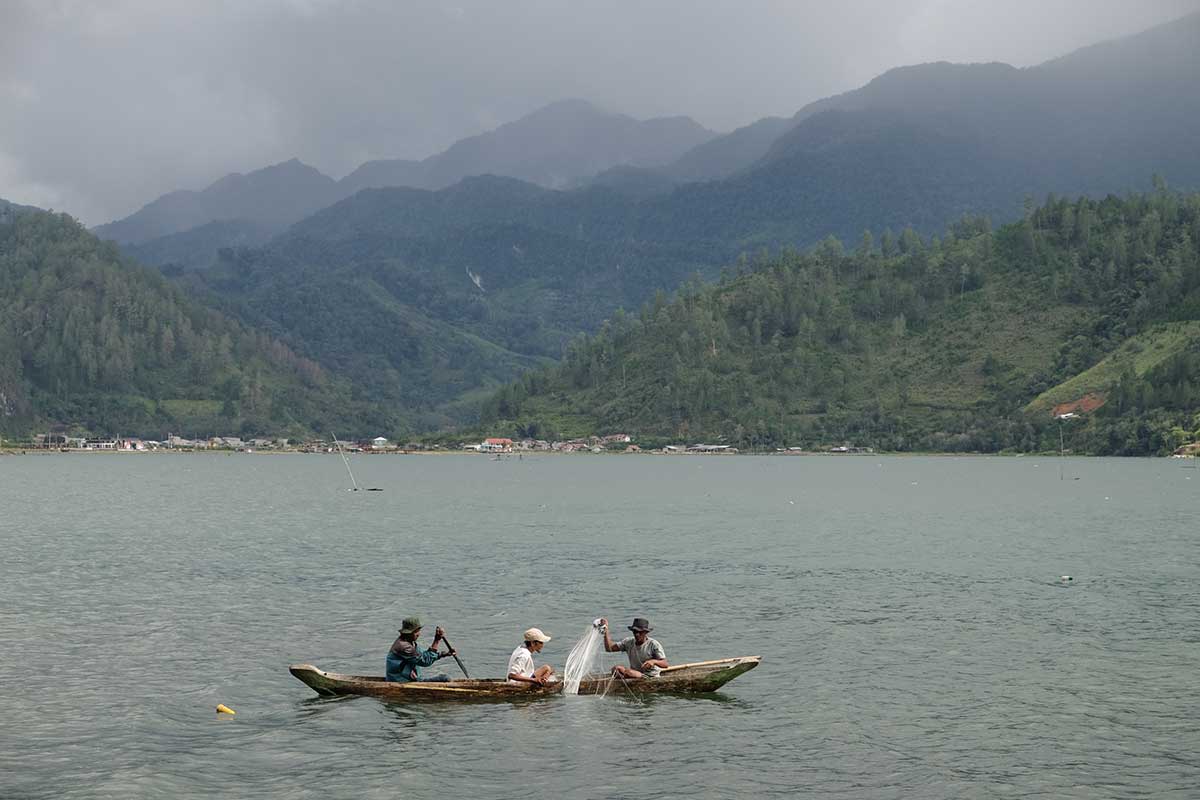
After Takengon, I crossed the upper half of Aceh to the provincial capital, Banda Aceh, a devoutly Islamic city that was the worst affected by the deadly 2014 tsunami.
“You see that line over there?” an old man in a sarong and Muslim skullcap points at a horizontal yellow line etched about two meters from the ground on a wall in front of us. “It reminds us of how high the water surged… it was only for a few hours, but we will never forget.”
This survivor and I are facing the massive Kapal Apung, the main attraction of Museum PLTD Apung, in what was once a neighborhood. In 2004, waves topping 100 feet in height and travelling at 500 mph lifted the former 2,600-ton electric generator barge we are facing from a point a few kilometres out at sea, and flung it over this plot of land, crushing homes and lives under its dead weight. It’s been there ever since.
Of all the badly affected areas of India, Sri Lanka and Thailand, Banda Aceh was the closest to the tsunami’s epicentre, and the first to be hit. The killer waves then diverted to other neighboring countries. But 170,000 alone perished in Aceh’s capital and its surrounding areas. Twenty years later, the city has turned its scars into tourist attractions and memorials.
Museum PLTD Apung is only a fifteen-minute walk away from Aceh’s Tsunami Memorial Museum, set on the southeastern corner of the central Lapangan Blang Padang, a swathe of green amidst the city’s coils of concrete and controlled chaos.
Dark like its history, the Tsunami Memorial’s circular building is both a staunch reminder of the past and a way to face an uncertain future of climate change and potential new calamities.
On the outside, a police helicopter turned into what looked like a twisted metallic tennis ball, setting the tone for the grim scale of the disaster. But the people I saw gathered happily inside the memorial’s modernist halls, all filled with nuanced and informative exhibits, and in the manicured gardens outside, have all chosen to push the pedal to life—another lesson in humility and resilience.
For sure, I could have continued to the beaches of Pulau Weh to mingle with other travelers, but I preferred to stay in Banda Aceh and soak in its hopeful, forward-looking atmosphere. Many visit the nearby famous island, but I guess more should start considering a slow jaunt through the heart of Aceh—a sadly forgotten, yet incredibly underrated land.