

North Korea appears oddly ordinary upon first sighting.
For most Westerners, perceptions of the hermit kingdom have been shaped by images of missile launches, goose-stepping soldiers, and grim tales of totalitarian control. Yet the first glimpse of the world’s most secretive state comes as something of a letdown.
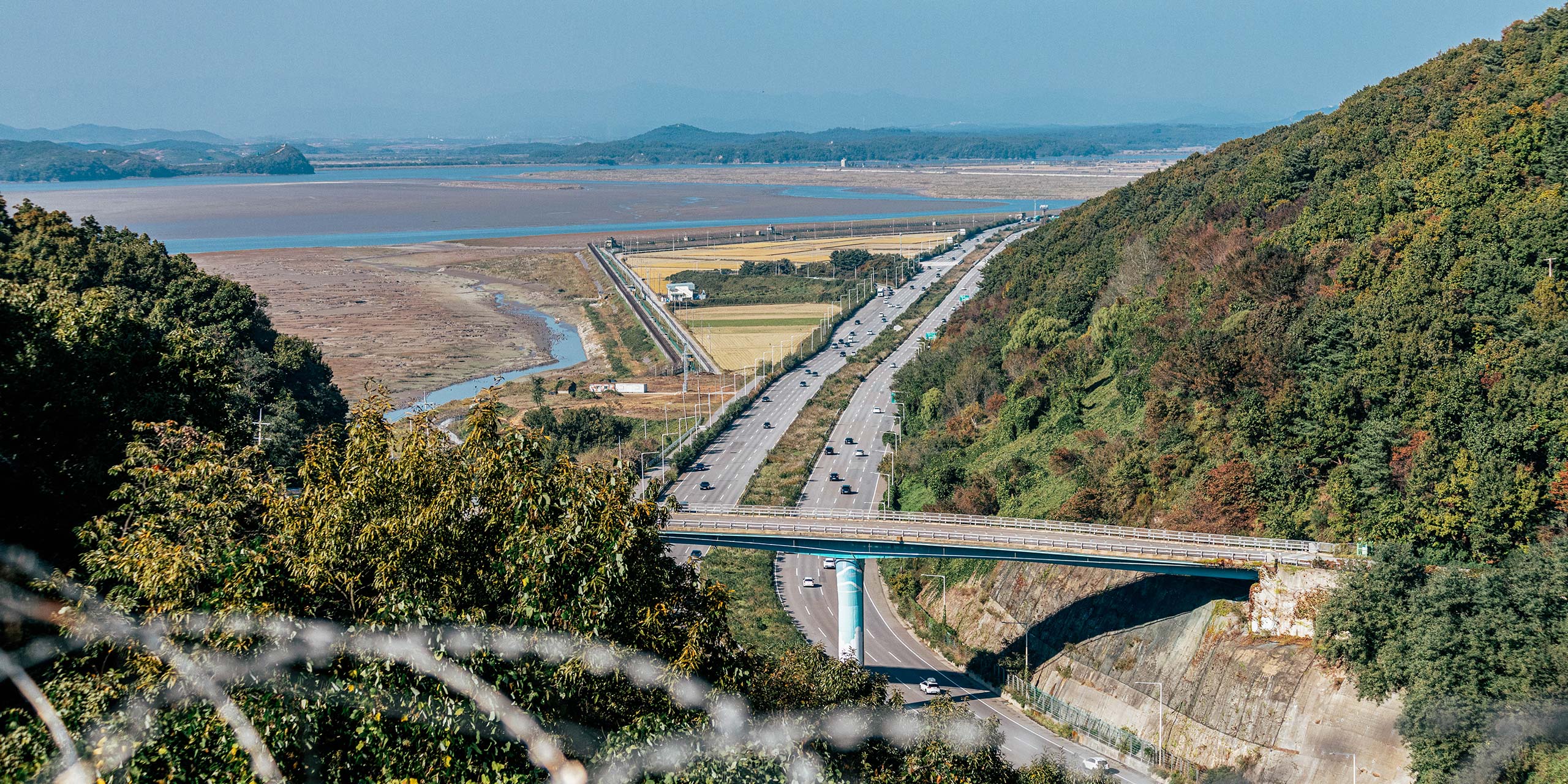
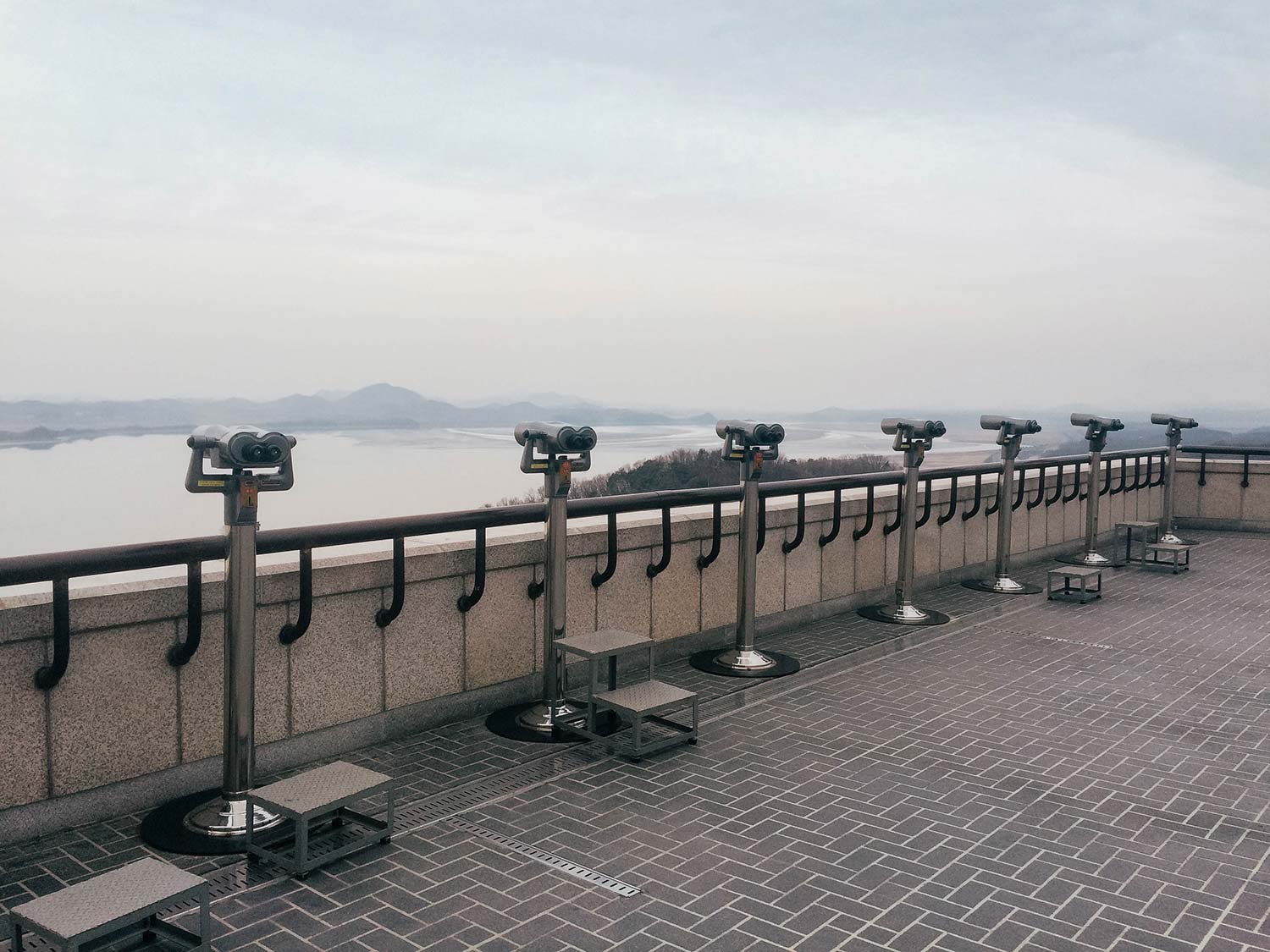
Across the river from the Odusan Observatory sit a few pale tower blocks, silent-looking farmland, and distant hills disappearing into haze. Visitors casually scan the landscape through coin-operated telescopes while drinking iced coffees. For one of the world’s most feared borders, the atmosphere is strangely low-key.
This somnolence is a continuation of the day’s theme. A few hours earlier, Seoul looked half-dead, similarly.
In Itaewon, survivors of the previous night’s Halloween excess were still scattered across the streets as we pedalled towards the Han River. Bodies slumped over convenience-store tables, clutching canned coffees. Smokers stared silently into the void. One determined individual with bleached hair and shaved eyebrows kept hammering on the shutter of a closed bar, seemingly convinced the party might somehow restart if he believed hard enough.
One minute we were weaving through one of Asia’s loudest nightlife districts; the next we were cycling towards the most fortified border on earth, vaguely wondering whether pausing too long beside a fence might count as suspicious behaviour.
Most travellers encounter the Korean Demilitarised Zone through organised tours from Seoul. Buses head north towards a familiar collection of sites: the Dora Observatory, the Third Infiltration Tunnel, military briefing halls, and Panmunjeom’s Joint Security Area, where North and South Korean soldiers still face one another across the dividing line. The experience is fascinating, but tightly choreographed.
Cycling towards the border feels entirely different.
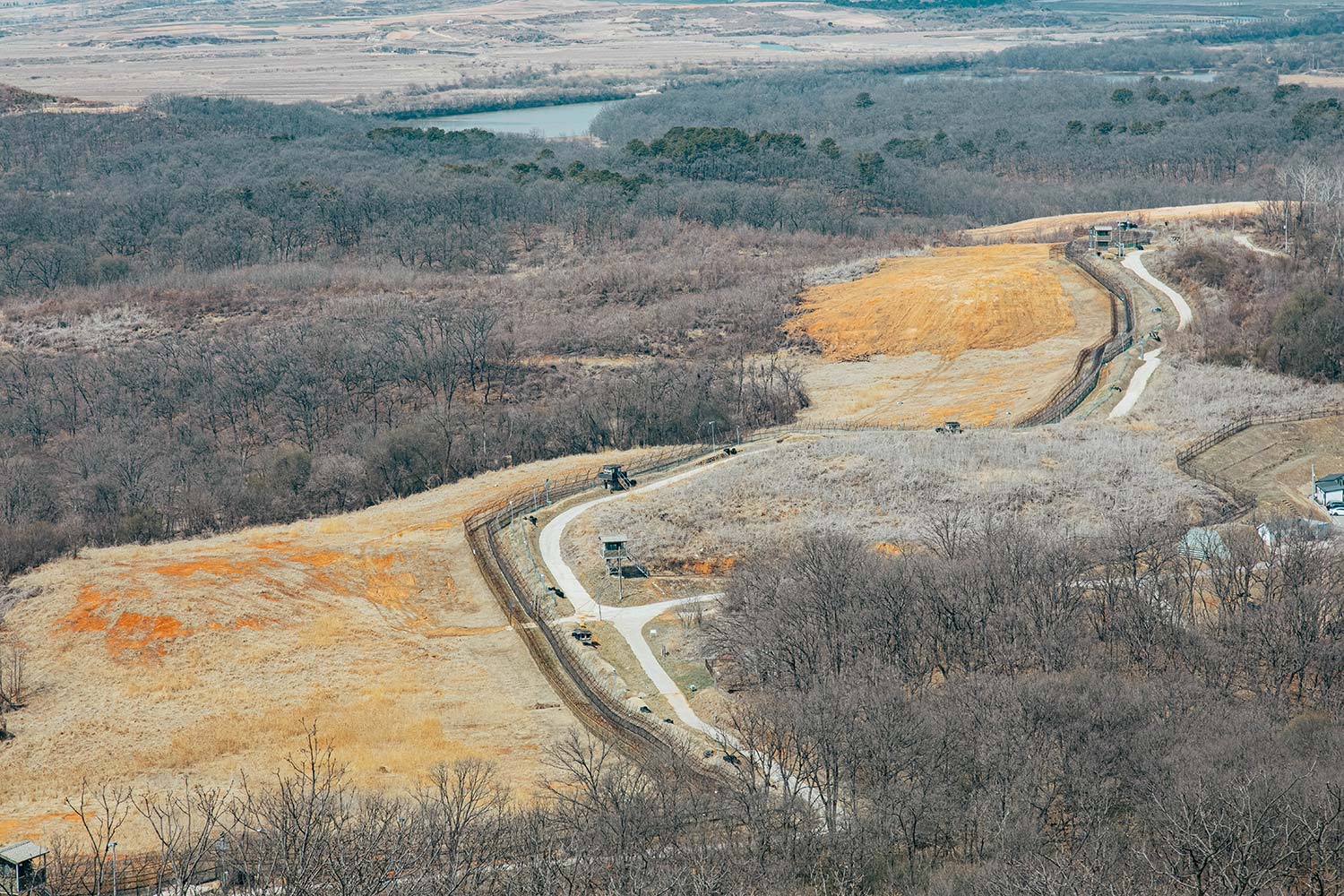
The DMZ Peace Trails, a network of walking and cycling routes opened in recent years, cut through restricted frontier regions that remained inaccessible for decades. Rather than arriving suddenly at the border, you feel yourself gradually drawn towards it.
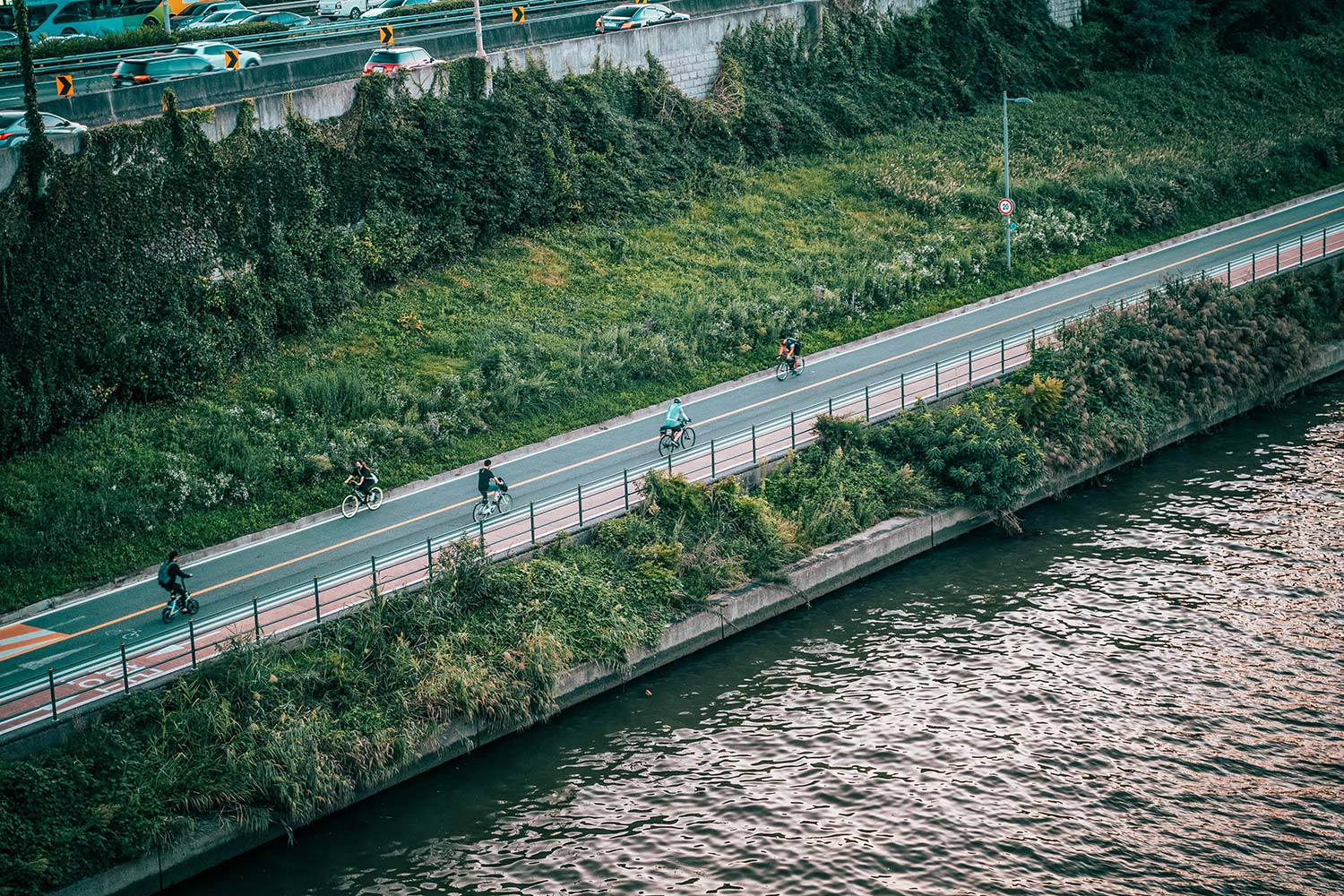
The ride out of Seoul begins innocently enough. The Han River cycle paths are packed with grim-faced men in expensive Lycra riding carbon-fibre bikes with the intensity of fighter pilots. Elsewhere, things feel aggressively wholesome. Families wobble along in rented tandems. Couples cruise past on matching bicycles. Elderly hikers stretch beside the river with such commitment that it looks as though they are preparing for Olympic qualification.
Against all this, our vague boys-own fantasy of cycling towards a frozen Cold War frontier starts to feel faintly ridiculous.
Beyond the river paths, Seoul gradually loosens its grip on the landscape. Tower blocks give way to warehouses. Warehouses become cabbage fields and scrappy industrial towns. Apartment complexes thin into stretches of farmland.
Eventually, the first warning signs start appearing beside the road: Civilian Control Zone.
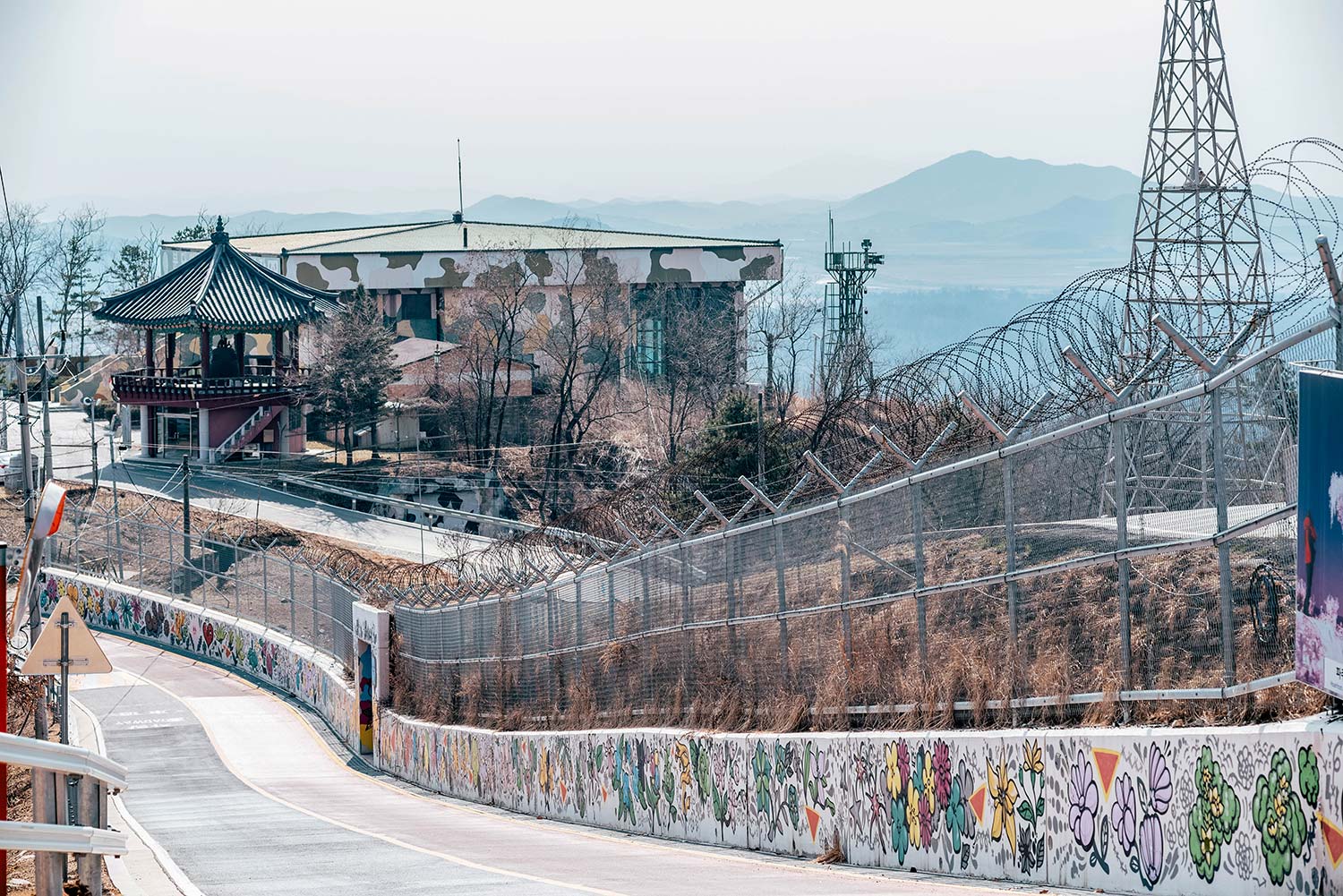
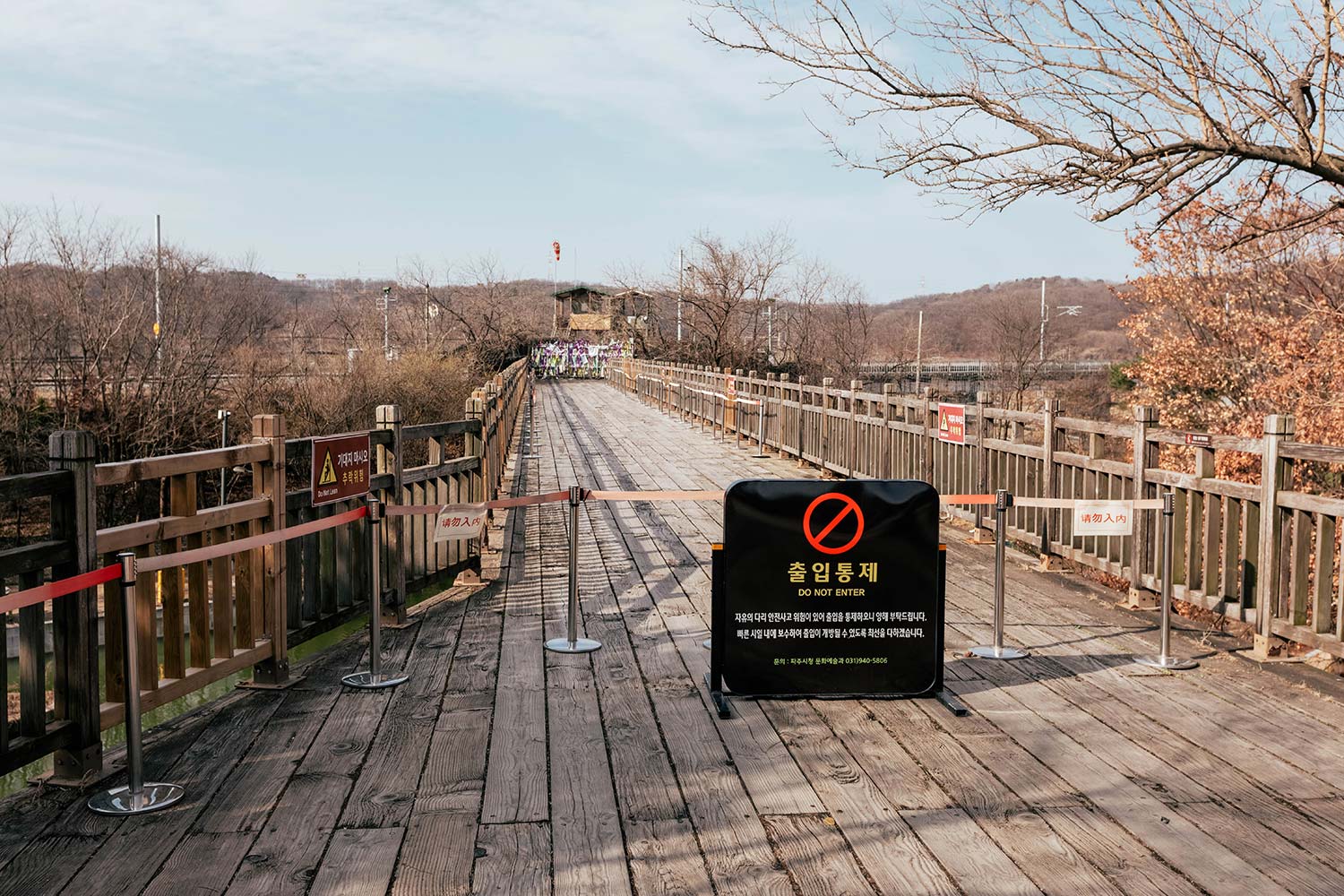
Soldiers waved us through checkpoints without much interest. One young conscript watches our bikes disappear up the road with an expression suggesting he’d happily trade military duty for an afternoon cycling through the autumn sunshine.
Past the checkpoints, the frontier region opens out into wetlands and thick walls of reeds. Decades of restricted access have accidentally created one of the strangest wildlife zones in Asia. Birds circle lazily overhead with the sort of confidence that comes from decades of minimal human interference.
The irony is difficult to ignore. While politicians and armies spent seventy years glaring at one another across the border, nature quietly reclaimed the space in between.
The reminders of division never entirely disappear, however. Barbed-wire fences shadow sections of the route. Warning signs emerge periodically from the roadside. Military installations sit abandoned, looking in empty fields like Cold War film props forgotten after production wrapped decades ago.
Villages appear sporadically along the trail. A school here. A cluster of houses there. Restaurants serving bubbling bowls of kimchi-jjigae to passing cyclists, the savoury smell briefly cutting through the cool afternoon air before fading again.
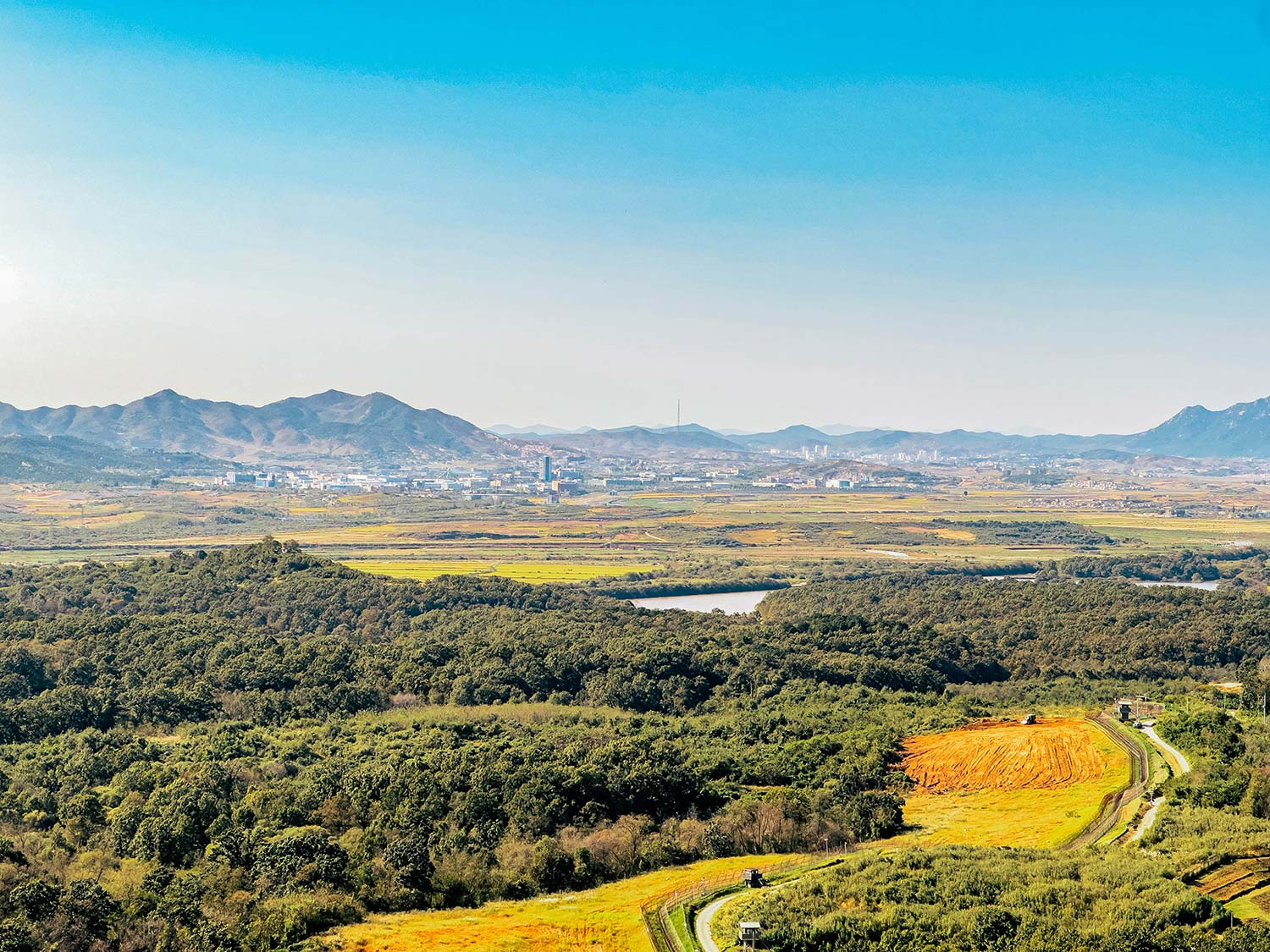
Near Odusan, the landscape tightens around the river until North Korea finally emerges across the water. Korea’s division dates to the aftermath of Japanese occupation in 1945, when the peninsula was split along the 38th parallel. What began as a temporary arrangement hardened quickly into permanent separation. War erupted in 1950. Three years later, the fighting stopped without a peace treaty, leaving North and South Korea technically still at war and divided by the four-kilometre-wide buffer zone known today as the DMZ.
Yet for all the border’s geopolitical weight, life around it often feels ordinary. Fishermen cast lines into the river beneath distant guard posts. Cyclists stop for convenience-store coffees. Farmers work in nearby fields. Life simply adjusts itself around the tension.
Across the river, North Korea remains inscrutable. Through the observatory telescopes, visitors scan apartment blocks, empty roads, and silent hillsides searching for signs of movement that rarely come.
By late afternoon, we are riding back into Seoul. Traffic thickens. Neon signs flicker awake. Restaurant smoke drifts through the streets.
And in Itaewon, the zombies are beginning to reanimate for another night out.
After a day spent pedalling through checkpoints, wetlands, and barbed-wire borders, the city somehow feels stranger than the frontier itself.