Remote Lands is the world’s foremost ultra-luxe travel designer focused exclusively on Asia. We love to blog about our travel experiences and share our photos, videos and opinions. We hope you’ll enjoy reading & sharing too.
In the past I’ve had the opportunity to visit DMZ from the North Korean side , and on a recent trip to South Korea I decided to head up again to see it from the South. With security tensions between the two Korean nations at its highest point in years during my visit, I wanted to get a look at the situation for myself.
The entire region of Southern Laos is beautiful and must rank as one of the last great pristine travel destinations in Southeast Asia. Four Thousand Islands and Champasak come to mind when one thinks of organizing a trip to this part of Laos – but the hill tribes of the Bolaven Plateau are truly worth making the journey through Salavan, Paksong, Sekong, and Attapeu. Most people go to southern Laos to experience some of the most beautiful waterfalls in Southeast Asia, or the Angkor-period ruins at Wat Pho. I have done this before, and these places are well worth visiting.
A giant freshwater lake located in the middle of Taiwan, Sun Moon Lake is a popular vacation spot for Taiwanese tourists and foreign visitors alike. A large, sweeping expanse that reflects the bright, powder-blue skies, the lake has long been home to a number of Taiwanese aboriginal tribes, as well as a small population of Han Chinese settlers – many of whom are Christian.
I stay at a lovely homestay near Itashao pier, operated by a local artist, his wife, and several staff, some of whom seem to be of Aboriginal descent. The inn is furnished with original artwork, dark, wooden fixtures, and is surrounded by a quaint garden whose vegetables often end up on the dining table.
Every country has its one marquee attraction, that one destination that visitors simply cannot miss – Cambodia has Angkor Wat, China has the Great Wall…and Vietnam has Halong Bay.
One of the most spectacular and instantly recognizable sites in Asia, Halong Bay consists of over 1500km2 containing some 2000 limestone islands & karsts dating back over 500 million years. The combination of this stunning scenery, floating fishing villages, misty mornings and sun-kissed afternoons makes Halong a magnet for tourists – and indeed there are concerns that, like Angkor Wat, there are simply too many of them with the most popular areas of the Bay frequently crowded with boats.
But of course, at Remote Lands we don’t follow the crowds – we prefer our Halong Bay trips to be quiet, stylish & off the beaten track, and that’s exactly what I did on my last visit.
Mrauk U in Myanmar’s western Rakhine State has captured my imagination over a long period of time. It has many elements that make up a great trip such as a comfortable hotel, an ancient kingdom with impressive ruins, a lively local culture, as well as interesting Chin tribal villages that can be seen in a long but worthwhile daytrip.
The town of Mrauk U is located not far (about five miles or so) from the Kaladan River. There are lakes, mangroves and marshes decorating the landscape, which is very pretty indeed. Mrauk U means “The First Accomplishment,” and was once the powerful center of the Arakanese (Rakhine) Kingdom. This was an epoch that began back in 1430 and stretched until 1785.
Of all the amazing destinations in Asia, Angkor Wat might be one of the most well known. Seeing it from the ground is stunning, but doing so via helicopter only takes it to a whole new level – proverbially and literally. I have had the chance to fly high over Angkor Wat and the surrounding area on several occasions, wearing the headset and listening to the whirling of the rotors.
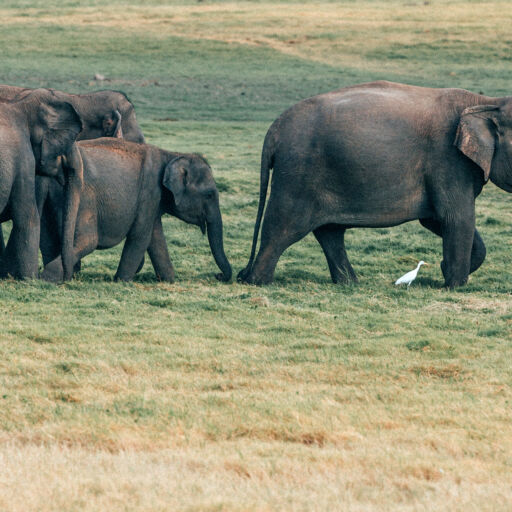
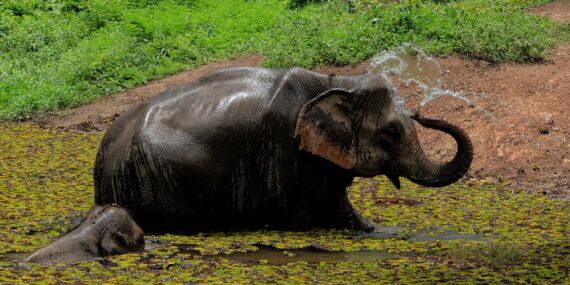
Sri Lanka is one of my favorite countries in Asia. Its small size and amazing variety make it unrivaled — beautiful beaches, amazing wildlife sanctuaries featuring wild elephants and leopards, ancient cities and the stunning natural beauty of the tea growing regions. Each of my visits usually includes a night in the tea growing areas of Sri Lanka’s Central Highlands. Most frequently visited are Nuwara Eliya and the areas around Hatton, which is two hours away in the Bogawantalawa Valley and famous for its tea estates.
Flores itself has long enchanted visitors. The Portuguese first sent traders and friars here back in the 1500’s. The Dutch eventually followed, buying Flores for 200,000 Florins from the Portuguese back in the 1850’s. The Japanese came just before World War II broke out. Flores dominated world headlines in the early 1990’s when a huge earthquake of 7.8 killed over 2,500 people.
Most visitors to Labuan Bajo, the gateway to Komodo island, will immediately get on a live-aboard schooner, or plan their activities around seeing the Komodo Dragons and the diving in the amazing reefs in the area. And for good reason: these are some of the most rewarding activites in Indonesia. Indeed, the main reason for my trip to Flores was all of the above. However after arriving in Labuan Bajo, we instead first headed forty-five minutes out of town to a small village named Melo to experience a bit of the unique Flores culture. I must admit, when I first heard about this, I thought it would be “touristy” and not something I really would enjoy. I do my very best to seek out authentic experiences and a fake cultural show is simply not my thing.
Thailand’s Similan Islands are located in the North Andaman Sea, just a few hours by boat off the coast of Phuket. Its nine islands now form a National Park thanks to the abundance of marine life there – during my trip I was hoping to see such creatures as whale sharks, barracudas, and the elusive manta rays, and in general I wasn’t disappointed!
In some respects Songkran is similar to Christmas for the Thais – it’s the longest and most awaited public holiday in Thailand and is a time of celebration, getting together with family and friends and over-indulgence in food and alcohol. Though there are two major factors differentiating Songkran from Christmas: water and heat. Songkran is held at the hottest time of year in Thailand, which comes in handy with the ritualistic water sprinkling, pouring and drenching.
Recent Comments